18 Italian Vegetarian Recipes for Meatless Mondays 2026
Real vegetarian Italian cooking is older than pasta with sauce — cacio e pepe, pasta alla norma, risotto, and ribollita are meatless originals, not compromises.
Affiliate disclosure: AislePrompt may earn a commission on qualifying purchases made through Amazon and Instacart links in this article, at no additional cost to you. See our affiliate policy →
Italian cooking is one of the world's great vegetarian traditions — it just doesn't get marketed that way. Cacio e pepe, pasta alla norma, risotto, minestrone, pizza bianca, most gnocchi, and virtually every Tuscan bean dish are meatless originals, not modern substitutions. If you're looking for a Meatless Monday dinner in 2026 that reads as "real food" rather than a compromise, Italian is where the deepest bench lives. Below are 18 vegetarian Italian recipes worth cooking on a weeknight, sorted by shape of the meal — pasta, risotto and grains, baked mains, soups, and the sides that finish the plate.
Introduction: Italy's Underrated Vegetarian Tradition
The reason so many Italian classics are meatless isn't ideology — it's geography and history. Meat was expensive across most of Italian history, and regional Catholic fast days (Wednesday, Friday, and the ember days) meant that entire cuisines developed around vegetables, cheese, eggs, and legumes. What we now call "vegetarian Italian" is often just Italian cooking with the modern add-ons stripped back out. La cucina povera — literally "the cooking of the poor" — is the source of pasta e ceci, ribollita, pasta e fagioli, spaghetti aglio e olio, and roughly half of the small-plate antipasti you'd order at a trattoria. It's not a niche; it's the substrate.
That matters for a Meatless Monday plan because you don't need to lean on faux meat, protein powders, or complicated substitutions. You lean on umami — long-cooked tomato sofritto, aged parmesan and pecorino, fried eggplant, wild mushrooms, cured olives, sun-dried tomatoes, capers, and mushroom or bean broth — and the food tastes complete on its own. Editorial coverage from Serious Eats, Bon Appétit, and The New York Times cooking all converge on the same core dishes we cover here: pasta alla norma, cacio e pepe, mushroom risotto, eggplant parmesan, and the bean-and-bread soups of Tuscany. Those aren't accidents. They're the load-bearing beams.
How to Choose a Meatless Italian Dinner (By Occasion)
Not every meatless Italian dish fits every night. Here's a quick decision matrix for a typical week:
| Occasion | What to reach for | Why |
|---|---|---|
| 25-minute weeknight | Cacio e pepe, aglio e olio, penne arrabbiata | Pantry-only, one pot, ready in a single Bosch timer buzz |
| Sunday-slow | Lasagna, eggplant parmesan, ribollita | Layered or braised — improves in the oven and reheats brilliantly |
| Dinner party | Risotto, gnocchi with sage brown butter, caponata antipasto | Finish-at-the-table showmanship, cheese-forward richness |
| Cold night | Minestrone, pasta e fagioli, Tuscan white bean soup | Bean-and-broth density that holds up on a repeat lunch |
| Hot night | Caprese-stuffed portobellos, pasta alla norma with cold basil | Tomato- and eggplant-driven, no long braise |
| Kid-friendly | Margherita pizza, gnocchi with brown butter, aglio e olio | Familiar textures, no assertive spice |
If you cook Italian more than twice a week, keep one dry pasta shape (bucatini or rigatoni), one long pasta (spaghetti), one gnocchi pack, one arborio rice, one polenta bag, one canned white bean, one canned San Marzano tomato, and one wedge each of parmesan and pecorino in the fridge. That single-page pantry covers roughly 14 of the 18 recipes below.
Pasta Mains (6 recipes)
Pasta is the fastest lane for a Meatless Monday because most Italian pasta sauces are naturally vegetarian — the meat came in later, as a regional add-on. These six span 20-minute pantry cooking, tomato-forward Southern classics, and the two great bean pastas of Northern Italy.
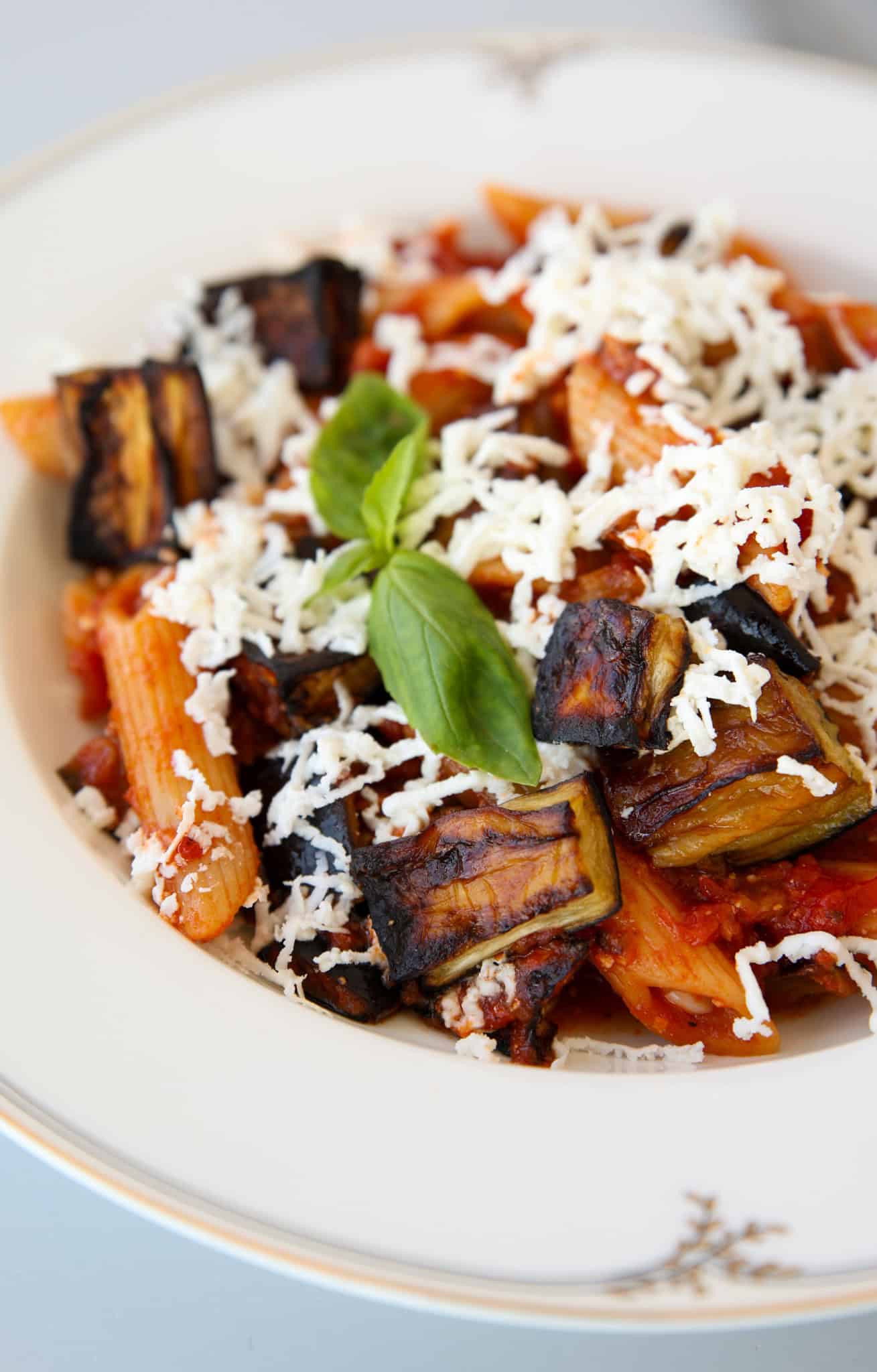
1. Sicilian Eggplant Pasta alla Norma. The Meatless-Monday flagship. Fried eggplant, San Marzano tomato, torn basil, and a shower of ricotta salata (or pecorino if you can't find it). Roughly 480 kcal and 18g protein per serving thanks to the cheese. If you don't fry the eggplant separately first, you don't have pasta alla norma — you have pasta with eggplant, which is fine but not the same dish. Budget 35 minutes.
2. Bucatini Cacio e Pepe with Black Pepper Cream. The two-ingredient miracle that isn't actually two ingredients — pecorino romano, freshly cracked black pepper, and the reserved starchy pasta water are the whole show, and the ratio matters. Bucatini's hollow strand carries more sauce per bite than spaghetti. Twelve minutes cook time, technique-heavy but forgiving once you've done it twice. 20g protein per serving, all from the cheese.
3. Classic Penne Arrabbiata with Chili and Garlic. Angry pasta — literally. Whole garlic sizzled in olive oil, dried Calabrian chili, canned San Marzano, penne, parsley. Fifteen minutes. If you want a version that scales to a Sunday, this is also the base you build into a bigger baked ziti with mozzarella and ricotta on top.
4. Authentic Neapolitan Spaghetti Aglio e Olio. Four ingredients — spaghetti, garlic, olive oil, chili — plus pasta water. The classic 1am hunger fix that's actually a legitimate Meatless Monday dinner if you finish it with parsley and a Microplane grating of parmesan. Ten minutes, pantry-only, hard to mess up as long as you don't burn the garlic. Every home cook should be able to make this from memory by the end of the year.
5. Classic Pasta e Fagioli with Cannellini Beans. The Tuscan bean-and-pasta soup-stew that eats like a full dinner. About 22g protein per serving between the beans and the pasta. Ditalini or maltagliati work best because the small pasta shape rides in the spoon with the beans. Keeps three days in the fridge and thickens as it sits — thin with a splash of stock on reheat.
6. Chickpea and Spinach Pasta with Lemon and Olives. The modern spin on pasta e ceci. Chickpeas smashed lightly into a lemony-olive-oil sauce with wilted spinach and Castelvetrano olives. Roughly 18g protein per serving. Ten to twelve minutes once the pasta water is on. Serve with parmesan or, for a vegan swap, nutritional yeast.
Risottos & Grain Dishes (3 recipes)
Risotto is Italy's other great vegetarian format. The stirring gets talked about too much — the real skill is toasting the rice, keeping the stock hot, and salting the finish correctly. All three of these can be built from a pantry stock (dried porcini, parmesan rinds, onion, and water make a serviceable "vegetarian brown broth" in 30 minutes).
7. One-Pot Wild Mushroom Risotto with Thyme. The one to master. Dried porcini rehydrated for depth, cremini for body, arborio for the starch release, parmesan for the mount. Roughly 18g protein per serving, 550 kcal. Uses one 12-inch skillet or one 5-quart Dutch oven — no stockpot needed. Thirty-five minutes start to finish.
8. Italian Herb-Infused Creamy Polenta with Wild Mushrooms. Polenta is the Northern Italian answer to mashed potatoes, and mushroom ragù on top turns it into a full plate. This version leans on rosemary and thyme, a splash of white wine in the mushrooms, and a lot of parmesan mounted into the finished polenta. Vegan-friendly if you drop the parmesan and finish with olive oil and toasted breadcrumbs.
9. Baked Ratatouille-Caponata with Fresh Basil and Parmesan. Not technically a grain dish, but it lives here because it eats like a grain-forward main when spooned over polenta or farro. Eggplant, zucchini, bell pepper, tomato, sultana raisins, capers, and pine nuts, baked slow. Improves overnight. Great cold on toast the next day.
Baked & Casseroled (4 recipes)
The Sunday-slow lane. Everything in this section rewards a 40- to 60-minute oven session and reheats brilliantly for a Meatless Monday lunch on Tuesday.
10. Portobello Mushroom Lasagna with Ricotta and Spinach. Three layers of noodle, a ricotta-and-spinach mix, and roasted portobellos in a tomato base. About 28g protein per serving. Yes, you can make it Saturday and bake it Sunday — that's actually the recommended path. Serves 6-8. A good 9×13 bakeware dish and a Microplane for the parmesan finish are the only specialty tools you need.
11. Italian Oven-Baked Caprese Stuffed Portobello Mushrooms. The 30-minute answer to "I want something Italian and I want it now, but I'm not in a pasta mood." Portobello caps roasted with a stuffing of tomato, fresh mozzarella, torn basil, and a balsamic glaze. Two caps per person, roughly 20g protein each. Naturally low-carb if you care about that.
12. Italian Herb-Roasted Eggplant with Parmesan and Basil. The lighter cousin of eggplant parmesan — no breading, no frying. Eggplant medallions roasted on a sheet pan with olive oil, garlic, thyme, and torn basil, finished with grated parmesan while still hot. Serves as a main over polenta or as a side with any of the pasta mains.
13. Pan-Fried Gnocchi with Sage Brown Butter and Aged Parmesan. The most impressive-to-effort ratio on this list. Pillowy potato gnocchi crisped in brown butter, wilted sage leaves, and a shower of parmesan. Fifteen minutes if you buy fresh or vacuum-packed gnocchi. Serves 4 as a main, 6 as a first course.
Soups & Stews (3 recipes)
Italian soup is dense, spoon-standing food — closer to stew than to broth. The Northern versions run on bread and beans; the Southern versions run on vegetables and pasta. All three of these hold three or four days in the fridge and thicken on the second day, which makes them ideal Sunday-cook, Monday-eat candidates.
14. Tuscan-Style White Bean and Kale Soup. Cannellini beans, lacinato kale, garlic, rosemary, a Parmesan rind simmered in the broth, and a heavy pour of good olive oil at the finish. Roughly 20g protein per serving. Serve with a slice of grilled sourdough rubbed with garlic — that turns it from a soup into a proper dinner.
15. Minestrone with Hand-Chopped Vegetables. The classic pantry-clearing soup — carrot, celery, onion, tomato, seasonal greens, cannellini beans, and a small handful of ditalini. Improves on day two. If you don't have fresh basil, dry oregano and parsley cover the gap. Roughly 400 kcal and 15g protein per bowl.
16. Italian Chickpea and Spinach Minestrone Soup. The chickpea-forward variation. Higher in protein than the classic minestrone (about 20g per bowl) and a bit heartier. If you're going to eat it as a full dinner, tear a slice of ciabatta into the bottom of the bowl before you ladle over.
Sides That Round Out the Meal
If the pasta or risotto is the star, one green side and one antipasto build a full plate. These two are the standard-issue pairings that appear in the "contorni" section of every trattoria menu.
17. Sicilian-Style Caponata with Roasted Eggplant and Sweet Tomato Sauce. Sweet-and-sour eggplant relish with celery, capers, olives, and a splash of red wine vinegar. Serve at room temperature on toasted bread, alongside cheese, or as a spooned relish on top of grilled polenta. Keeps a week refrigerated.
18. Charred Broccoli Rabe with Garlic and Chili Flakes. The bitter green that anchors the plate. Blanched for 90 seconds, then charred fast in a hot cast-iron skillet with garlic and Calabrian chili. Ten minutes. Slightly aggressive on its own; perfect next to cacio e pepe or gnocchi in brown butter.
What to Buy for Your Kitchen
If you cook Italian more than twice a week, five tools cover about 90 percent of the recipes above. Everything else is optional.
| Tool | Why | Rough budget |
|---|---|---|
| 12-inch stainless or nonstick skillet | Cacio e pepe, aglio e olio, gnocchi, all pan-fried pastas | $80-140 |
| 5-quart Dutch oven or heavy pot | Risotto, minestrone, pasta e fagioli, tomato sauce | $60-350 |
| 8-inch chef's knife | Chopping onion, garlic, herbs, eggplant, kale | $50-180 |
| Microplane grater | Parmesan, pecorino, lemon zest, nutmeg on the finish | $15-25 |
| Fine-mesh strainer | Reserving pasta water, straining beans, draining ricotta | $10-20 |
You'll find our current picks on the shop side — start with cookware for the skillet and Dutch oven, and add an 8-inch chef's knife once you're cooking more than a couple of times a week. A wooden spoon, a pair of tongs, and one heavy 9×13 bakeware dish for lasagna and gratins finish the kit.
If you cook Italian more than twice a week, add a good box grater and a mandoline for eggplant and zucchini — both under $30 and worth it. A pasta scoop with the drainage holes helps too, but honestly a slotted spoon from your existing utensil drawer is fine.
Real-world numbers
Approximate calorie and protein counts per serving, all vegetarian:
| Dish | kcal | Protein | Cook time |
|---|---|---|---|
| Cacio e pepe | 620 | 22g | 15 min |
| Pasta alla norma | 480 | 18g | 35 min |
| Aglio e olio | 550 | 14g | 12 min |
| Penne arrabbiata | 490 | 15g | 20 min |
| Pasta e fagioli | 430 | 22g | 45 min |
| Wild mushroom risotto | 550 | 18g | 35 min |
| Portobello lasagna | 520 | 28g | 90 min |
| Caprese portobello | 340 | 20g | 30 min |
| Eggplant parmesan (roasted) | 380 | 20g | 45 min |
| Gnocchi in brown butter | 610 | 16g | 15 min |
| Tuscan white bean soup | 380 | 20g | 40 min |
| Classic minestrone | 400 | 15g | 45 min |
| Chickpea minestrone | 420 | 20g | 45 min |
| Caponata (as side) | 190 | 4g | 40 min |
| Broccoli rabe | 130 | 5g | 12 min |
The pattern is consistent: protein tops out around 20-28g per serving without any meat substitution — cheese, beans, and eggs do the work.
Common pitfalls
- Cooking pasta in undersalted water. The pasta water needs to taste like the sea. Undersalted water flattens every sauce you build in step two.
- Draining pasta bone-dry. Reserve a cup of pasta water before you drain — you'll need the starchy liquid to emulsify cacio e pepe, aglio e olio, and arrabbiata sauces.
- Skipping the eggplant salt-and-drain step. For pasta alla norma and eggplant parmesan, salting the eggplant for 30 minutes and pressing out the moisture is what keeps the dish from turning greasy.
- Buying pre-grated parmesan. The anti-caking powder blocks the cheese from melting into the sauce cleanly. Grate from a block every time.
- Cranking heat on the risotto stock. The stock has to be hot but not boiling, and it goes in a ladle at a time. Skip either and you get gummy risotto.
When NOT to reach for these
If you're feeding kids under six who won't touch a spice, skip the arrabbiata and the broccoli rabe. If you're cooking for someone lactose-intolerant, the cheese-forward pastas (cacio e pepe, risotto) don't convert cleanly — the arrabbiata, aglio e olio, and Tuscan bean soup are the safer picks. If your goal is a strictly high-protein cutting-diet week, the pasta mains land in the 14-22g protein range, which is fine but not exceptional — pair them with a side of the charred broccoli rabe or a legume-forward soup and you'll clear 30g.