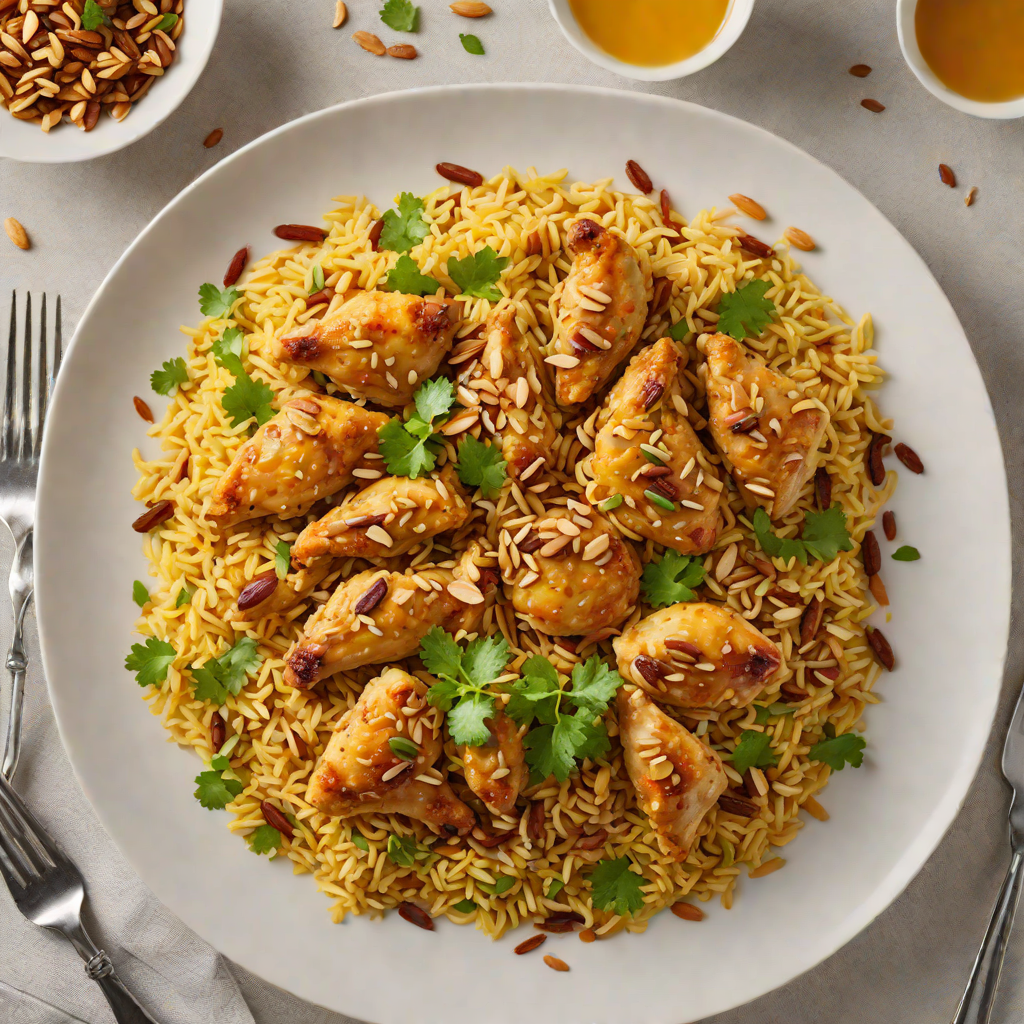
18 Middle Eastern Rice Recipes: Pilaf, Mujadara & Kabsa Feasts
Vermicelli pilaf, mujadara, kabsa-style machboos and crispy tahdig, with the rinse-soak-steam method and real liquid ratios behind every pot.
The best Middle Eastern rice recipes are techniques you learn once and reuse: toast the grain in fat, add a measured amount of liquid, then steam it undisturbed until every grain stands apart. Below are 18 recipes from the AislePrompt catalog, covering pilafs, mujadara, one-pot kabsa-style feasts and Persian tahdig, with real liquid ratios, cook times and per-serving nutrition.
Get a free week of easy dinners
Seven weeknight dinners with the shopping list already totalled, sent Sunday. No account needed, unsubscribe in one click.
No spam, unsubscribe in one click. Recipes, shopping lists and Instacart carts all work without an account either way.
Introduction: why Middle Eastern rice is a technique, not a side dish
In most American kitchens, rice is the plain thing next to the main event. Across the Levant, Iraq, the Gulf, Egypt and Iran it is often the main event. Chicken, lamb or fish gets cooked into the pot or laid on top of it, and the rice takes on the broth, spices and fat.
The dishes have deep roots. The first recorded mujaddara recipe appears in Kitab al-Tabikh, a cookbook compiled by al-Baghdadi in 1226, according to Wikipedia's mujaddara entry. Maqluba, the upside-down rice cake, also first shows up in a 13th-century cookbook titled Kitāb al-Ṭabīkh, as noted in Wikipedia's maqluba entry. Seven centuries of cooks have tuned the method, and it shows.
What ties these recipes together is a short list of moves:
- Fat first. The grains, or vermicelli, get stirred in butter or oil before any liquid goes in. Coated grains absorb liquid more evenly and are less likely to clump.
- Warm spice, not heat. Cinnamon, allspice, cumin, cardamom and saffron do the work. Almost nothing here is spicy-hot.
- A crunchy garnish. Toasted almonds, pine nuts or deeply browned onions go on at the end.
- Measured liquid, lid on. You don't stir rice once the lid goes on, and you let it rest before fluffing.
Get those four right and the 18 recipes below become variations rather than 18 new things to learn. If you want more one-pot rice from other cuisines, our one-pot rice recipes roundup covers paella, jambalaya and biryani.
The 4 rice varieties that show up most (basmati, long-grain, medium-grain, freekeh)
You don't need a shelf of specialty rice. Four grains cover every recipe on this list.
| Grain | Where it shows up | Texture when cooked | Recipes here that use it |
|---|---|---|---|
| Basmati | Gulf, Iraqi, Persian and Yemeni dishes | Long, separate, fragrant grains | 10 |
| Long-grain white | Levantine lentil dishes, kabsa | Separate but softer than basmati | 5 (plus 2 that just say "rice") |
| Short- or medium-grain | Stuffed vegetables, some mujadara | Slightly clingy, holds a shape | 0 (swap in for maqluba if you like a firmer cake) |
| Freekeh | Levantine grain pilafs | Chewy, smoky, nutty | 1 |
Basmati is the workhorse (our basmati rice guide covers the rinse-soak-steam method). Ten of the 18 recipes call for it by name, including the machboos, the mandi, the maqluba and the tahdig. Its long grains stay separate after steaming.
Long-grain white rice shows up in the Levantine lentil dishes and the classic kabsa. Plain American long-grain works fine here; basmati also works if that's what you have.
Medium-grain rice clings a little and holds a shape, which is why some cooks prefer it for an upside-down maqluba. None of our picks require it, but it's a reasonable swap for the maqluba below.
Freekeh isn't rice at all. It is green durum wheat that is roasted and rubbed to create its flavor, per Wikipedia's freekeh entry. The roasting leaves it smoky and nutty. Cook it like a pilaf grain. Because it is wheat, it contains gluten, so don't serve it to anyone avoiding gluten.
6 pilaf-style recipes (Lebanese hashweh, Egyptian koshari, vermicelli rice)
These are the everyday rices: a pot on the stove or a dish in the oven, done in under an hour of catalog time. Koshari appears in the lentil section below, because lentils are what define it.
1. Baked Iraqi Rice Pilaf with Vermicelli and Toasted Almonds — 65 min, 250 cal, 5g protein, serves 6.
This is vermicelli rice, the most common everyday rice across the region. You toast broken vermicelli in butter until golden, stir in soaked basmati and bake it covered at 350°F for 35 to 40 minutes. The oven gives you even heat with no scorching, which helps if your stovetop runs hot.
2. Herb-Infused Syrian Rice with Lamb and Toasted Almonds — 50 min, 480 cal, 35g protein, serves 4.
This is the closest recipe in our catalog to Lebanese hashweh ("stuffing" rice). Hashweh usually uses ground meat, while this one uses cubed lamb stew meat with cinnamon and allspice. Finish it with parsley, cilantro and slivered almonds. At 35g of protein, it is a full dinner.
3. Sumac-Spiced Lamb and Rice with Pine Nuts — 60 min, 530 cal, 34g protein, serves 4.
This one is closer to hashweh because it uses ground lamb. Brown the lamb with dried mint and sumac, add 1.5 cups rice and 3 cups water, then bake it covered at 375°F for 35 minutes. Stir in pine nuts and lemon juice at the end.
4. Saffron-Infused Basmati Rice Pilaf with Toasted Pine Nuts and Raisins — 65 min, 320 cal, 6g protein, serves 6.
This is a special-occasion side. Steep saffron in hot water for 10 minutes, soak the basmati for 30, then simmer 15 minutes and rest 10 more. Cinnamon and cardamom perfume the rice, and golden raisins and pine nuts get folded in at the end.
5. Sumac-Infused Lemon Rice Pilaf with Toasted Almonds — 30 min, 280 cal, 6g protein, serves 4.
This is the fastest recipe on the list and the one to make on a weeknight. It skips the soak and coats the rice in 1.5 tablespoons of sumac before the water goes in, then finishes it with lemon zest, lemon juice, cilantro and parsley. It's bright enough to pair with grilled fish.
6. Freekeh Pilaf with Caramelized Onions and Almonds — 50 min, 320 cal, 8g protein, serves 4.
This is the grain-pilaf version. Simmer freekeh in vegetable broth (1.5 cups grain to 3 cups broth) for 20 to 25 minutes while an onion caramelizes slowly. Remember it contains gluten.
5 mujadara and lentil-rice combinations
Mujaddara is the Arabic word for "pockmarked," because the lentils among the rice look like pockmarks, per Wikipedia. The dish is lentils, rice and a lot of browned onions, and that's the whole trick. The onions need time: The Mediterranean Dish's mujadara recipe cooks them for about 40 minutes. Our catalog versions call for 15 to 30. If your onions are pale when the timer goes off, keep going.
7. Mujadara with Slow-Caramelized Onions and Brown Lentils — 55 min, 350 cal, 15g protein, serves 4.
This is the classic. Simmer brown lentils for 20 minutes, add the rice and cook another 15, then finish with cumin, cinnamon, lemon juice and a pile of onions browned for 20 to 25 minutes.
8. Syrian Mujaddara with Caramelized Onions and Lentils — 60 min, 320 cal, 14g protein, serves 4.
This version has more spice: 2 teaspoons of cumin and ½ teaspoon of allspice. It also uses more onions, three of them cooked for 25 to 30 minutes. Par-cook the lentils for 15 minutes, drain them, then cook 1 cup rice in 2 cups fresh water for 18 to 20 minutes.
9. Lebanese Lentil and Rice Pilaf with Caramelized Onions — 55 min, 280 cal, 12g protein, serves 4.
This one builds everything in one skillet. Toast the rice with cumin and cinnamon right in the caramelized onions, then add the par-cooked lentils and 1½ cups vegetable broth. Pine nuts go on top.
10. Chickpea and Spinach Mujaddara with Caramelized Onions — 60 min, 350 cal, 15g protein, serves 4.
This is the one to make when mujadara needs to be a complete dinner. Wilt 3 cups of spinach and a cup of chickpeas into the onions for the last 3 minutes, then pile it over the lentil rice.
11. Cairo Heritage Koshari — 75 min, 480 cal, 18g protein, serves 6.
Koshary is Egypt's national dish and a street food staple. The traditional version layers pasta, rice, vermicelli and brown lentils under chickpeas, garlicky tomato sauce, garlic vinegar and crispy fried onions, as Wikipedia's koshary entry describes. Our catalog version keeps the lentils, rice, pasta and cumin-spiced tomato sauce, but it swaps in a tahini-lemon drizzle for the vinegar. For the street-cart taste, add a splash of garlic vinegar and a can of chickpeas. The pasta contains gluten.
4 kabsa, mansaf, and one-pot meat-and-rice dishes
These are the feast dishes, where the meat and rice share one pot and one set of spices. Kabsa is commonly regarded as a national dish across the Gulf Cooperation Council countries, according to Wikipedia's kabsa entry. The same entry lists its usual spices as cardamom, saffron, cinnamon, black lime, bay leaves and nutmeg, and it names machboos as a variation.
A note on mansaf: the Jordanian lamb dish is cooked in a yogurt sauce. Our catalog's only mansaf recipe is served over flatbread rather than rice, so we left it off a rice list rather than link you to a mismatch.
12. Authentic Chicken Kabsa — 60 min, 400 cal, 32g protein, serves 6.
This is a pared-back kabsa. Chicken thighs brown with cumin, cardamom and saffron, then simmer with tomato puree and 4 cups water before 2 cups long-grain rice go in for 20 minutes. It calls for a full teaspoon of saffron threads, which is generous; half that still colors the pot. To get closer to the Gulf flavor, add a bay leaf and a pierced dried black lime to the pot.
13. Saffron-Infused Chicken Machboos with Toasted Almonds — 75 min, 520 cal, 38g protein, serves 4.
This is the kabsa cousin from the Gulf, and the photo at the top of this article. It uses two stages. First, simmer the chicken in 4 cups of broth with turmeric, cumin, cinnamon and bay leaves for 25 minutes. Then pull the chicken and cook the rice in that seasoned broth with saffron. Lay the chicken back on top for the last 5 minutes. The rice picks up all the chicken flavor.
14. Chicken Mandi with Cinnamon-Infused Rice — 80 min, 650 cal, 45g protein, serves 4.
Traditional mandi is cooked in a pit, with the meat suspended over the rice and cooked by steam and heat, per Wikipedia's mandi entry. This home version uses two pots on the stove: chicken simmered with cumin, coriander, turmeric and chili, and basmati cooked separately with cinnamon and cardamom. It is the highest-protein dish on the list.
15. Mo's Family-Style Maqluba with Lemon-Tahini Drizzle — 60 min, 520 cal, 30g protein, serves 4.
Maqluba means "upside-down": the meat, rice and vegetables go into a pot that is flipped when served. This is a simpler weeknight version. Chicken thighs sear, the basmati cooks in broth with tomatoes and a cinnamon stick, and then you set the chicken on top and invert the pot onto a platter. For the classic look, line the pot with fried eggplant or cauliflower before the rice goes in; those are the traditional vegetables Wikipedia lists.
3 Persian rice showpieces (tahdig, jeweled rice, dill-and-fava)
16. Golden Herb Tahdig with Crispy Browned Rice — 50 min, 380 cal, 6g protein, serves 4.
Tahdig means "bottom of the pot": it is the crisp, caramelized rice taken from the base of the pot, and it is traditionally served to guests, per Wikipedia. This version cooks soaked basmati with onion, parsley, dill and turmeric for 15 minutes covered. Then you pour ¼ cup oil and a tablespoon of butter over the top and let the crust form on medium-high for 10 to 15 minutes. The recipe uses only 1½ cups water for 2 cups rice, so if the grains are still firm at the 15-minute mark, add a few tablespoons of hot water before the oil goes in.
17. Saffron-Infused Rice with Toasted Almonds and Raisins — 45 min, 250 cal, 5g protein, serves 5.
Our catalog doesn't have a true jeweled rice, which usually includes barberries and candied orange peel. This saffron rice is the base it is built on: slivered almonds and golden raisins toasted in butter, then basmati steamed with saffron for 15 minutes. To make it jeweled, fold in dried barberries or chopped dried cranberries, slivered orange zest and pistachios after fluffing.
18. Baharat-Spiced Chicken with Fava Beans and Rice — 50 min, 420 cal, 35g protein, serves 4.
Persian baghali polo layers rice with fava beans and a lot of dill. Our closest match is actually Iraqi: chicken thighs, a can of fava beans, baharat and long-grain rice simmered together for 25 minutes. To push it toward the Persian original, stir in a big handful of chopped fresh dill when you fluff the rice.
The technique that makes every version better: soak, rinse, steam-then-fluff
Rinse until the water runs clear. 13 of the 18 recipes above start this way. Rinsing removes surface starch, which is what makes rice gummy. The Mediterranean Dish's basmati guide recommends washing four or five times.
Soak when the recipe calls for it. The saffron pilafs, the vermicelli pilaf and the tahdig soak basmati for 20 to 30 minutes, which helps long grains cook evenly. The same basmati guide says you don't have to soak basmati, so don't stress if you skip it for a weeknight pilaf.
Measure the liquid, and account for the soak. The basmati guide uses 1 cup rice to 1½ cups water on the stovetop. Our recipes range widely, from about 1:0.75 for the soaked tahdig to 1:2 for the unsoaked lemon pilaf and the oven-baked lamb rice, because soaking, tomatoes, lentils and oven time all change how much water the grain needs. Follow each recipe's ratio rather than a universal one.
Steam without stirring, then rest. Once the lid is on and the heat is low, leave it. Most recipes above want 15 to 20 minutes covered, then 5 to 10 minutes off the heat. Fluff with a fork, never a spoon.
Cool leftovers fast. Cooked rice that isn't refrigerated properly is a classic source of Bacillus cereus food poisoning, because the bacterium's spores can survive cooking, as Wikipedia's B. cereus entry explains. Get leftovers into shallow containers and into the fridge promptly, and eat them within 3 to 4 days.
Real-world numbers: all 18 recipes at a glance
| # | Recipe | Catalog time | Calories | Protein | Serves |
|---|---|---|---|---|---|
| 1 | Vermicelli pilaf | 65 min | 250 | 5g | 6 |
| 2 | Syrian lamb rice | 50 min | 480 | 35g | 4 |
| 3 | Sumac lamb rice | 60 min | 530 | 34g | 4 |
| 4 | Saffron pine nut pilaf | 65 min | 320 | 6g | 6 |
| 5 | Sumac lemon pilaf | 30 min | 280 | 6g | 4 |
| 6 | Freekeh pilaf | 50 min | 320 | 8g | 4 |
| 7 | Classic mujadara | 55 min | 350 | 15g | 4 |
| 8 | Syrian mujaddara | 60 min | 320 | 14g | 4 |
| 9 | Lebanese lentil pilaf | 55 min | 280 | 12g | 4 |
| 10 | Chickpea spinach mujaddara | 60 min | 350 | 15g | 4 |
| 11 | Koshari | 75 min | 480 | 18g | 6 |
| 12 | Chicken kabsa | 60 min | 400 | 32g | 6 |
| 13 | Chicken machboos | 75 min | 520 | 38g | 4 |
| 14 | Chicken mandi | 80 min | 650 | 45g | 4 |
| 15 | Chicken maqluba | 60 min | 520 | 30g | 4 |
| 16 | Herb tahdig | 50 min | 380 | 6g | 4 |
| 17 | Saffron almond rice | 45 min | 250 | 5g | 5 |
| 18 | Baharat chicken and fava rice | 50 min | 420 | 35g | 4 |
Calories and protein are per serving. Catalog time is prep plus cook as listed on each recipe. The onion steps often run longer in practice, so budget an extra 10 to 15 minutes for the mujadara recipes.
What to buy: heavy-bottom pot, rice cooker, spice grinder
You can make every recipe here with a pot and a lid. Three tools make it easier:
- A heavy-bottomed Dutch oven. Thin pots scorch rice before it steams through, and tahdig depends on even heat across the base. The Amazon Basics 6-quart enameled cast-iron Dutch oven (about $42) is big enough for the machboos and mandi and goes into the oven for the baked pilafs.
- A rice cooker, for plain basmati on busy nights. A fuzzy-logic cooker like the Zojirushi NS-ZCC10 5½-cup Neuro Fuzzy (about $280) handles the base rice while you work on the lamb or onions. It won't make tahdig or a baked pilaf. Compare more options in our best rice cookers of 2026.
- A mortar and pestle. Crushing cardamom pods, grinding saffron threads with a pinch of sugar or cracking allspice takes seconds in a ChefSofi mortar and pestle (about $28). Freshly crushed spices go further than pre-ground.
Prices are from our catalog as of September 2026 and change often.
How to build a Middle Eastern spice pantry without overspending
Count how often each spice shows up across the 18 recipes and the pantry sorts itself:
| Spice | Recipes here that use it | Buy first? |
|---|---|---|
| Ground cumin | 8 | Yes |
| Cinnamon (ground or stick) | 8 | Yes |
| Allspice | 3 | Yes |
| Saffron threads | 4 | When you're ready for the showpieces |
| Cardamom (pods or ground) | 3 | Yes |
| Turmeric | 3 | Yes |
| Sumac | 2 | Yes, it's cheap |
| Baharat blend | 1 | Optional; mix your own |
Three rules keep the bill down:
1. Buy cumin, cinnamon, allspice, cardamom and turmeric first. At least one of those five shows up in 13 of the 18 recipes, and a Middle Eastern or South Asian grocer usually sells them in larger bags for less than supermarket jars.
2. Treat saffron as a small splurge. Four recipes here use it, from ¼ to 1 teaspoon of threads. Steep it in hot water for 10 minutes first to get the most color from each pinch.
3. Mix baharat instead of buying it. It is a warm all-purpose blend, and you already own most of it once you have cumin, cinnamon, allspice and cardamom plus black pepper.
For more dishes that use the same pantry, see our Middle Eastern dinners roundup and our Persian recipes guide.
FAQ: reader questions on tahdig, saffron substitutes, rice-to-water ratio, vegan swaps
A few quick answers before the full FAQ below:
- Is freekeh gluten-free? No. It is green durum wheat. Swap in basmati or long-grain rice for a gluten-free pilaf.
- Can I make mujadara ahead? Yes. The lentils and rice keep well in the fridge. Store the browned onions separately so they stay crisp, and reheat them in a dry skillet.
- What goes with these dishes? Plain yogurt, a chopped cucumber-tomato salad, or pickled turnips, which the kabsa recipe suggests on the side.
Sources and further reading
- Mujaddara — Wikipedia: etymology and the 1226 Kitab al-Tabikh recipe
- Maqluba — Wikipedia: the upside-down method and traditional vegetables
- Kabsa — Wikipedia: Gulf national dish, spice list, machboos variation
- Koshary — Wikipedia: Egypt's national dish and its components
- Mandi (food) — Wikipedia: the pit-cooking tradition
- Tahdig (scorched rice) — Wikipedia: meaning and tradition
- Freekeh — Wikipedia: what the grain is and how it's made
- Authentic Mujadara — The Mediterranean Dish: onion timing and technique
- How to Cook Basmati Rice — The Mediterranean Dish: rinsing, soaking and ratio
- Bacillus cereus — Wikipedia: why cooked rice needs prompt refrigeration
Frequently asked questions
What kind of rice is used in Middle Eastern cooking?
How do I make tahdig without burning it?
Can I substitute saffron?
What is the right rice-to-water ratio for Middle Eastern rice?
Can I make these Middle Eastern rice dishes vegan?
Sources
- en.wikipedia.org
- en.wikipedia.org
- en.wikipedia.org
- en.wikipedia.org
- en.wikipedia.org
- en.wikipedia.org
- en.wikipedia.org
- themediterraneandish.com
- themediterraneandish.com
- en.wikipedia.org
Cook Middle Eastern at home this week.
Ask our AI for a week of Middle Eastern dinners — it writes the recipes, builds the shopping list, and sends the cart to Instacart. No account needed.
Plan my Middle Eastern week →