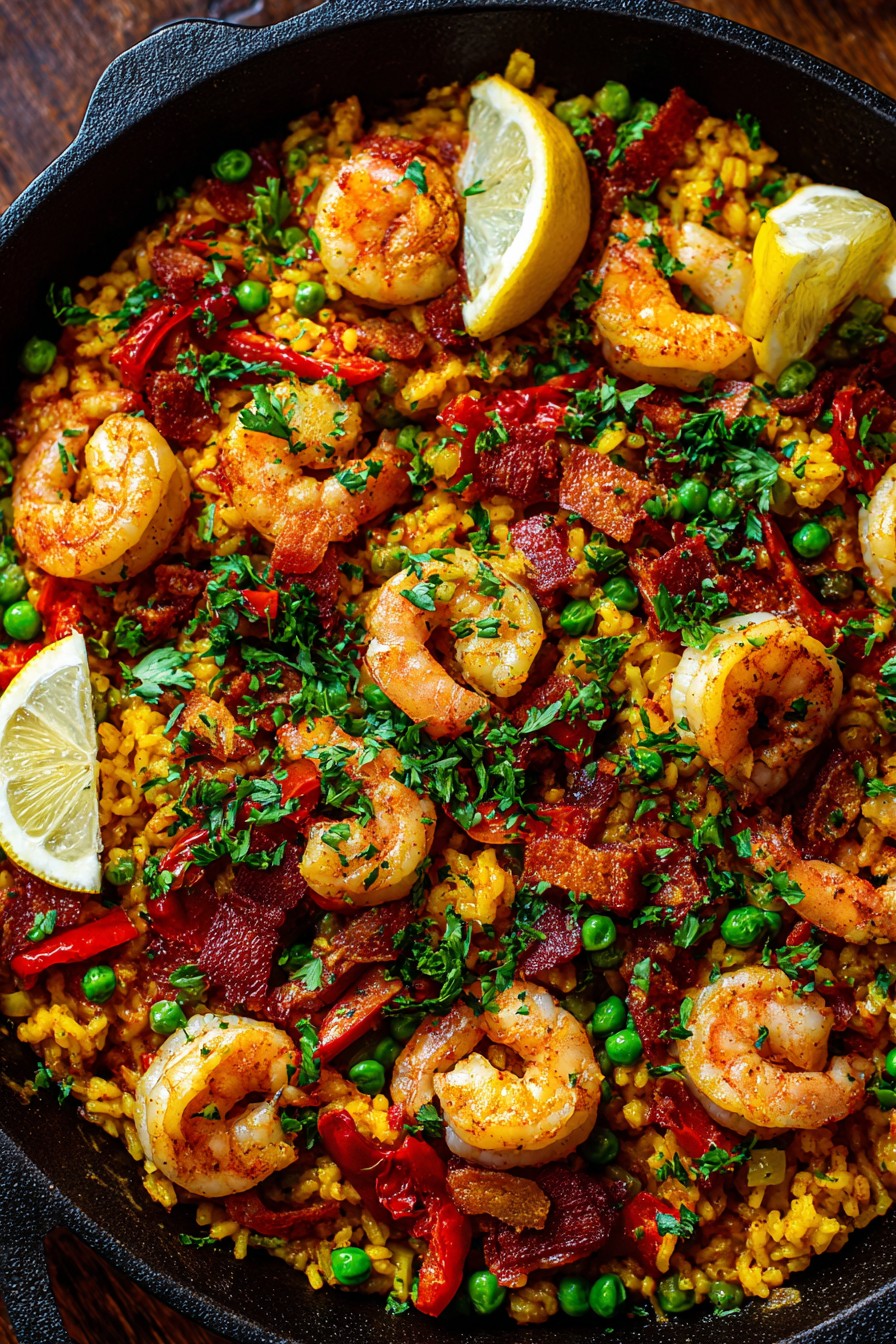
20 One-Pot Rice Recipes: Paella, Jambalaya & Arroz con Pollo
Fat, aromatics, rice, hot liquid — then leave the lid alone. One framework, twenty dinners, ten cuisines.
One-pot rice recipes work on a single ratio and a single rule: fat first, aromatics second, dry rice third, hot liquid last — then do not lift the lid. Get those four steps in order and paella, jambalaya and arroz con pollo all become the same 35-minute weeknight dish with different spices. Below are 20 one-pot rice dinners from ten cuisines, plus the rice-type cheat sheet that tells you which grain each one actually needs.
Get a free week of easy dinners
Seven weeknight dinners with the shopping list already totalled, sent Sunday. No account needed, unsubscribe in one click.
No spam, unsubscribe in one click. Recipes, shopping lists and Instacart carts all work without an account either way.
The one-pot rice framework: fat-then-aromatics-then-rice-then-liquid ratio
Every dish in this guide is a variation on one sequence. Learn it once and you can cook any of them without a recipe.
Step 1 — Fat. Two to three tablespoons for a 5-quart pot. Olive oil for Spanish and Mediterranean, ghee or neutral oil for South Asian, rendered sausage or bacon fat for Cajun, sesame or peanut oil for East Asian. The fat is where the first layer of flavor lives, so render your sausage or chorizo in it rather than adding it later.
Step 2 — Aromatics. Onion first (5–7 minutes, until translucent, not browned), then garlic and ginger (45 seconds, no more), then the dry spice bloom (30–60 seconds in the fat). Blooming whole spices in fat rather than dropping them in the liquid is the single biggest flavor difference between a good biryani and a flat one — fat-soluble compounds in cumin, cardamom and cinnamon do not extract into water.
Step 3 — Toast the rice. Add the dry, rinsed rice and stir it in the fat for 2–3 minutes until every grain is coated and the edges turn translucent. This is the step people skip. Toasting sets the exterior starch so the grains stay separate instead of collapsing into porridge.
Step 4 — Liquid, hot, all at once. Cold liquid drops the pot temperature and stalls the cook. Bring stock to a simmer separately, or use it straight from a hot kettle.
The ratios, by rice type:
| Rice | Liquid per 1 cup dry | Simmer time | Rest, lid on |
|---|---|---|---|
| Long-grain white (basmati, jasmine) | 1.5 cups | 15 min | 10 min |
| Medium-grain (bomba, calasparra, arborio) | 2.0–2.5 cups | 18–20 min | 5 min |
| Short-grain (sushi, calrose) | 1.25 cups | 15 min | 10 min |
| Parboiled / converted | 2.0 cups | 20–25 min | 5 min |
| Brown long-grain | 2.25 cups | 45 min | 10 min |
| Wild rice blend | 3.0 cups | 45–55 min | 5 min |
Two adjustments that matter. If your dish has a lot of wet vegetables (tomato, zucchini, bell pepper), cut the liquid by about 2 tablespoons per cup of rice — those release water as they cook. If you are cooking in a wide, shallow pan rather than a tall pot, add 2–3 tablespoons per cup back because you lose more to evaporation.
Step 5 — Lid on, heat low, hands off. Then rest off-heat, lid still on, for the times above. The rest is not optional: it lets the moisture gradient even out between the wet bottom grains and the drier top ones.
Rice-type cheat sheet (long-grain vs medium-grain vs basmati — when each is required)
Using the wrong grain is the most common way a one-pot rice dish fails, and it fails in a way that no amount of seasoning fixes.
Long-grain (basmati, jasmine). High amylose, low stickiness, grains stay distinct. Required for biryani, pilaf, kabsa and most Middle Eastern and South Asian rice. Basmati specifically needs a 20-minute soak before cooking so the long grains hydrate evenly and elongate rather than snapping. Rinse until the water runs clear — three to four changes.
Medium-grain (bomba, calasparra, arborio, carnaroli). High amylopectin, absorbs 2.5 times its volume without turning to mush. Required for paella and risotto. Bomba is the correct paella rice precisely because it absorbs a lot of liquid while staying firm — long-grain in a paella pan gives you dry, separate grains with none of the socarrat crust that defines the dish. Never rinse paella or risotto rice; the surface starch is what thickens the liquid.
Short-grain (calrose, sushi rice). Sticky, clumps deliberately. Right for Korean and Japanese rice dishes, wrong for anything you want loose.
Parboiled / converted. Steamed in the husk before milling, which drives nutrients into the grain and makes it nearly impossible to overcook. This is what most Louisiana cooks use for jambalaya and dirty rice, and it is why restaurant jambalaya holds on a steam table without turning to paste.
Brown rice. Bran layer slows water absorption enormously. Do not substitute it 1:1 into any recipe here — it needs roughly 45 minutes and 50% more liquid, and by then your chicken is overcooked. Cook it separately and fold it in.
6 Mediterranean & Spanish Rice Dishes (paella, arroz con pollo, koshari)
Spanish rice cooking is defined by the wide, shallow pan and by socarrat — the caramelized crust on the bottom that you get by cranking the heat for the final 60–90 seconds and listening for the crackle.
1. Spanish-Style Garlic Shrimp Paella — the entry point. Bomba rice, saffron bloomed in warm stock, shrimp added in the last 4 minutes so they do not turn to rubber. Do not stir after the liquid goes in.
2. One-Pot Spanish Rice with Chorizo and Peppers — render the chorizo first and cook everything in its paprika-red fat. Weeknight-fast at about 30 minutes.
3. Puerto Rican One-Pan Arroz con Pollo — sofrito, achiote, bone-in thighs browned skin-down first. The rendered chicken fat carries the whole dish.
4. Puerto Rican Arroz con Gandules — pigeon peas, sofrito and salt pork. The national dish of Puerto Rico and the one most likely to convert someone who thinks rice is a side.
5. Koshari with Tomato Sauce and Crispy Onions — Egypt's street-food staple: rice, lentils and pasta in one pot under a spicy tomato sauce. The crispy onions are not a garnish, they are a structural ingredient.
6. Palestinian Mujadara with Tahini Drizzle — rice and lentils cooked together with deeply caramelized onions. Twenty minutes of patient onion browning does 80% of the work.
6 South Asian & Middle Eastern Rice (biryani, kabsa, tahdig, mujadara)
This is where the spice bloom and the basmati soak earn their keep. All six want long-grain rice, all six want the whole spices hit with hot fat before any liquid arrives. For a deeper dive into this corner of the map, our 18 Middle Eastern rice recipes guide adds mujadara, machboos, maqluba and vermicelli pilaf, and is where to go for pilaf. For biryani, the layered dum method gets its full treatment in our 20 basmati rice recipes guide.
7. Vegetable Biryani with Spiced Basmati Rice — soaked basmati, layered with spiced vegetables, finished on the lowest possible heat (dum). A tight lid or a foil seal is essential.
8. Authentic Chicken Kabsa — the Saudi national dish. Loomi (dried lime) and baharat are what separate it from every other chicken-and-rice pot; both are worth sourcing.
9. Herbed Rice with Crispy Tahdig — Persian rice with a golden crust on the bottom. Parboil, drain, then steam over fat on low heat for 45 minutes. The crust is the point.
10. Saffron-Rice Pilaf with Roasted Vegetables — the simplest pilaf template. Bloom the saffron in 2 tablespoons of warm stock for 10 minutes before it goes in; dropping threads straight into the pot wastes most of them.
11. Herb-Crusted Lemon Herb Chicken with Wild Rice — wild rice needs 45–55 minutes, so this one runs longer than the rest. Worth it for the texture contrast.
12. Traditional Chicken Congee with Ginseng — the opposite end of the ratio spectrum: 8 parts liquid to 1 part rice, simmered until the grains dissolve. Proof that the framework scales in both directions.
8 Cajun, Latin & Asian One-Pot Rice (jambalaya, arroz con gandules, Hainanese chicken rice, chicken bog)
13. Cajun-Style One-Pot Jambalaya — the trinity (onion, celery, bell pepper), andouille rendered first, parboiled rice, and no stirring once the stock is in. Creole jambalaya adds tomato; Cajun does not.
14. Creole-Spiced Blackened Catfish with Dirty Rice — dirty rice gets its color and depth from chicken livers. If that is a hard no, ground pork plus a tablespoon of miso gets you 70% of the way.
15. One-Pan Chicken, Rice, and Plantains with Red Beans — Caribbean red beans and rice with sweet plantains cooked in the same pot.
16. Hainanese Chicken Rice with Ginger-Soy Dipping Sauce — the rice is toasted in rendered chicken fat and cooked in the poaching broth. Technically two vessels if you poach separately, but the rice itself is a one-pot masterclass.
17. Kimchi Beef Bibimbap — short-grain rice, crisped in a hot pan, topped and mixed at the table.
18. Most Flavorful Korean Kimchi Fried Rice — the leftover-rice dish. Day-old rice is mandatory; fresh rice steams instead of frying.
19. One-Pot Lemon Herb Chicken with Rice — the plain weeknight version of everything above. Thirty-five minutes, one pot, no specialty ingredients.
20. One-Pan Chicken and Rice Casserole with Dill and Cheese — oven-finished rather than stovetop, which is the easier path if you do not trust your burner's low setting.
Two more worth adding to the rotation: One-Pan Chicken and Rice Bake for the sheet-pan crowd, and Best-Selling Thai Green Curry with Coconut Rice where the coconut milk replaces part of the stock — cut total liquid by about 15% because coconut milk is thicker and reduces less.
Real-world numbers: cost and time per pot
These are 4-serving pots costed at September 2026 US grocery averages.
| Dish | Active time | Total time | Ingredient cost | Cost per serving |
|---|---|---|---|---|
| One-pot lemon herb chicken and rice | 12 min | 35 min | $9.40 | $2.35 |
| Cajun jambalaya (andouille + chicken) | 18 min | 45 min | $13.80 | $3.45 |
| Vegetable biryani | 25 min | 60 min | $8.20 | $2.05 |
| Shrimp paella (bomba + saffron) | 20 min | 45 min | $22.50 | $5.63 |
| Mujadara | 15 min | 50 min | $4.60 | $1.15 |
| Arroz con gandules | 15 min | 40 min | $8.90 | $2.23 |
Saffron is what makes paella the outlier — a 1-gram tin runs $12–18 and a proper paella uses about 0.15 g. Mujadara is the cheapest genuinely satisfying dinner on this list at roughly $1.15 a serving.
The mistake that ruins one-pot rice (opening the lid + why it takes 25 minutes to fix)
Lifting the lid to check on the rice vents the steam that is doing the cooking. A 5-quart pot at a simmer holds a steam layer at roughly 212°F above the liquid line; that steam is what cooks the top third of the rice, because the top third is not sitting in liquid. Open the lid and that layer is gone in about four seconds. The pot then has to re-boil enough liquid to rebuild it, which takes 3–5 minutes — except you have now also lost 3–5 minutes' worth of liquid to the room, so the bottom grains keep cooking while the top grains stall.
The result is the failure everyone recognizes: mushy on the bottom, chalky and crunchy on top, in the same pot. And there is no clean fix. The only recovery is to add 1/4 cup of hot stock, put the lid back on, drop to the lowest heat, and give it another 10 minutes plus a 15-minute covered rest — hence the 25 minutes. The rice will be edible. It will not be good.
Four related mistakes:
- Stirring paella or pilaf after the liquid goes in. Stirring releases surface starch and turns separate grains into risotto. Only risotto gets stirred.
- Using a pot that is too tall and narrow. Depth over about 2.5 inches of rice means the bottom compresses under the weight and cooks differently than the top. Wide and shallow is correct for paella; a 5-quart Dutch oven is the right compromise for everything else.
- Salting only the liquid. Season the aromatics, season the protein, then season the liquid. Rice absorbs salt during cooking; you cannot fix a bland pot at the table.
- Cooling leftovers slowly. Cooked rice left at room temperature is the classic Bacillus cereus risk — the spores survive cooking and the toxin they produce is heat-stable, so reheating does not make it safe. Get rice into the fridge within an hour, in a shallow container, and eat it within three days.
Common pitfalls with specific grains
Basmati that snapped instead of elongating — you skipped the soak, or you stirred it. Soak 20 minutes, drain, and treat it gently.
Paella with no socarrat — you never raised the heat at the end. The last 60–90 seconds go on high; listen for a crackling sound and smell for toast, then pull it.
Biryani that is wet in the middle — the lid did not seal. Traditional cooks seal the pot with dough for a reason. A sheet of foil under the lid does the same job.
Jambalaya that turned to paste — you used long-grain instead of parboiled, or you stirred it. Parboiled rice is genuinely more forgiving here.
What to buy: 5-quart Dutch oven, rice cooker, wide sauté pan
You do not need specialty equipment for any of these, but three pieces make all 20 dishes easier.
A 5- to 6-quart enameled Dutch oven is the single most useful pot for this style of cooking. Heavy walls even out hot spots from a cheap burner, and the tight lid holds the steam layer. The Amazon Basics Enameled Cast Iron Dutch Oven, 6-quart is $41.98 and rates 4.7 stars across 51,545 reviews — it does 90% of what a $400 French pot does. The 4.3-quart version at $39.88 is right for two people.
A wide sauté pan with a lid is what you want for paella and for anything where surface area beats depth. The Cuisinart 5.5-Quart Sauté Pan with Cover at $49.99 is stainless, induction-compatible and oven-safe, which covers the biryani finish too. If you prefer nonstick, the T-Fal Refresh Ceramic 5-quart Sauté Pan is $52.61 — but you will not build socarrat on a nonstick surface.
A rice cooker is the hands-off option and it removes the lid-lifting temptation entirely. The AROMA Digital Rice Cooker (4-cup uncooked) at $38.99 handles plain rice and steaming. If you want one appliance that also browns aromatics, the Instant Pot Duo 7-in-1 Mini at $89.99 sautés and pressure-cooks in the same insert — which collapses the whole framework into one vessel.
Browse the full cookware shelf for Dutch ovens and sauté pans, the small appliances shelf for rice cookers, and utensils for the wooden spatula you actually want for stirring rice (metal scratches enamel).
When NOT to cook rice in one pot
Brown rice and wild rice do not belong in a one-pot chicken dish. Their 45-to-55-minute cook time badly overcooks any protein you put in with them. Cook the grain separately and fold it in at the end.
The same goes for delicate seafood. Scallops, thin white fish and shrimp all cook in under 5 minutes, so they go on top in the last few minutes rather than in from the start — which is exactly what the paella recipe above does.
And if you are feeding more than six, split it into two pots. Doubling a one-pot rice recipe in a single vessel deepens the rice bed past the 2.5-inch threshold, and you will get the mushy-bottom, chalky-top failure without ever having lifted the lid.
FAQ
What is the correct water-to-rice ratio for one-pot dishes?
For long-grain white rice like basmati or jasmine, use 1.5 cups of liquid per cup of dry rice. Medium-grain rices such as bomba and arborio need 2 to 2.5 cups because they absorb far more. Reduce by about 2 tablespoons per cup if the dish carries wet vegetables like tomato or zucchini, and add 2 to 3 tablespoons per cup if you are cooking in a wide shallow pan where evaporation is higher. Always add the liquid hot — cold stock stalls the pot and throws the timing off.
Why does my one-pot rice come out mushy on the bottom and crunchy on top?
You lifted the lid. The top third of the rice is cooked by the steam layer sitting above the liquid, not by the liquid itself, and opening the pot vents that steam in about four seconds. The bottom keeps cooking in liquid while the top stalls, and the two never converge. Set a timer, trust the ratio, and do not check. If it has already happened, add a quarter cup of hot stock, cover, cook 10 more minutes on the lowest heat, then rest 15 minutes covered.
Can I substitute brown rice in these recipes?
Not one-for-one. Brown rice keeps its bran layer, which slows water absorption dramatically — it needs roughly 45 minutes and about 50% more liquid than white rice. Drop it into a 20-minute chicken-and-rice pot and you will have overcooked, dried-out chicken sitting on crunchy grains. The reliable approach is to cook brown rice separately and fold it into the finished dish at the end, accepting that you lose the flavor the grain would have absorbed from the pot.
Do I need to rinse rice before cooking?
It depends entirely on the dish. Rinse basmati, jasmine and any long-grain rice until the water runs clear — three or four changes — because the loose surface starch would otherwise make the grains stick together, and separate grains are the goal. Never rinse paella or risotto rice. That surface starch is what thickens the cooking liquid into the creamy body those dishes are defined by, and washing it away leaves you with thin, watery rice.
How long can I keep leftover cooked rice?
Three days in the refrigerator, and the critical part is how fast it gets there. Cooked rice is the classic vehicle for Bacillus cereus: its spores survive boiling, they germinate at room temperature, and the toxin they produce is heat-stable, so reheating a pot that sat out overnight does not make it safe. Spread leftovers into a shallow container and refrigerate within one hour of cooking. Reheat once, to steaming hot throughout, and discard anything left after that.
Sources
- Paella — Wikipedia — bomba and calasparra rice characteristics, pan geometry, and socarrat.
- Biryani — Wikipedia — regional variants and the dum layered-steaming method.
- Starch gelatinization — Wikipedia — why amylose and amylopectin content determine which rice stays separate and which turns creamy.
- Bacillus cereus — Wikipedia — the heat-stable emetic toxin behind cooked-rice food poisoning.
- FDA — Arsenic in Food — current FDA guidance on inorganic arsenic in rice and rice products.
Frequently asked questions
What is the correct water-to-rice ratio for one-pot dishes?
Why does my one-pot rice come out mushy on the bottom and crunchy on top?
Can I substitute brown rice in these recipes?
Do I need to rinse rice before cooking?
How long can I keep leftover cooked rice?
Sources
Plan a week of meals in two minutes.
Tell our AI what you have and what you like — it builds your plan, shopping list, and Instacart cart. No account needed.
Plan my week →