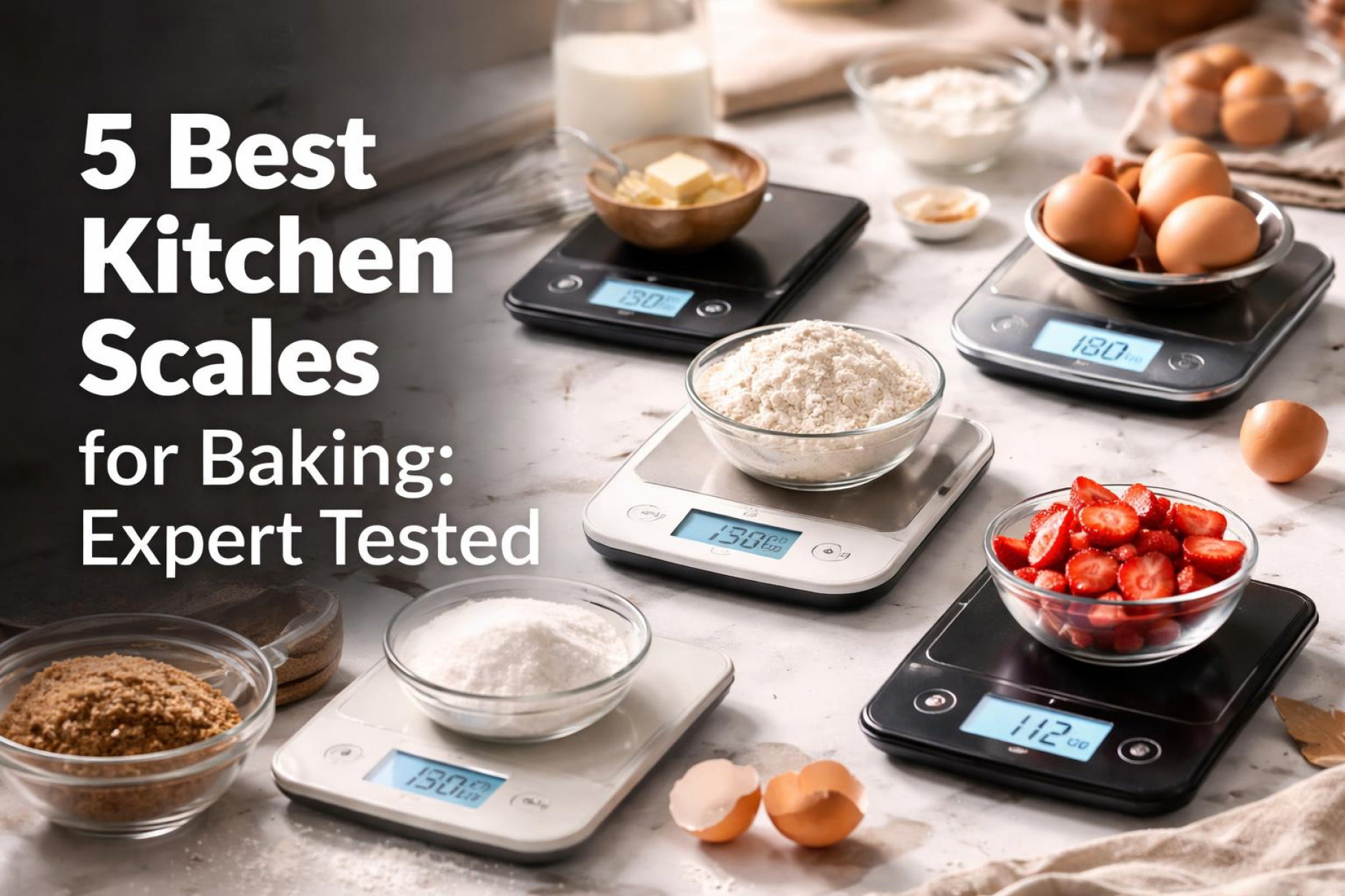
Best Kitchen Scales in 2026: Top Picks + Buying Guide
Six scales worth buying, ranked by baking, portion control, and espresso precision.
The best kitchen scale for most home cooks in 2026 is the OXO Good Grips 11-Pound Stainless Steel Kitchen Scale, which weighs up to 11 pounds in 1-gram steps and has a pull-out display you can still read under a wide mixing bowl.
Where to buy these picks
Affiliate links: we may earn a commission on qualifying Amazon purchases. Policy. Prices show only when checked in the last 24 hours.
- Best Overall: OXO Good Grips 11-Pound Stainless Steel Kitchen Scale with Pull-Out Display $62.95 at Amazon, Check price on Amazon →
- Best Value: Escali Primo Digital Food Scale $25.00 at Amazon, Check price on Amazon →
- Best for Beginners: Amazon Basics Digital Kitchen Scale with LCD Display $11.14 at Amazon, Check price on Amazon →
- Best for Espresso + Precision Baking: RENPHO Espresso Scale $24.99 at Amazon, Check price on Amazon →
- Best Dual-Platform: KitchenAid KQ909 Dual Platform Digital Kitchen and Food Scale $54.97 at Amazon, Check price on Amazon →
- Wildcard: Taylor Mechanical Kitchen Food Scale with Bowl $47.97 at Amazon, Check price on Amazon →
Which kitchen scale fits you
| Your situation | Buy | Why | Buy link |
|---|---|---|---|
| Baking in big or wide bowls | OXO Good Grips 11-Pound Stainless Steel Kitchen Scale with Pull-Out Display $62.95 | 11 lb (5 kg) capacity, 1 g increments; pull-out display a wide bowl cannot cover | Amazon → |
| Buying a cheap first scale that lasts | Escali Primo Digital Food Scale $25.00 | 11 lb, 1 g increments, two buttons, NSF-listed; 6-in platform, so wide bowls overhang | Amazon → |
| Trying a scale for the first time | Amazon Basics Digital Kitchen Scale with LCD Display $11.14 | 11 lb (5 kg), 1 g increments, stainless platform, 2x AAA; auto-off after about two minutes | Amazon → |
| Pulling espresso shots or baking with precision | RENPHO Espresso Scale $24.99 | 3 kg, 0.1 g increments, built-in timer and flow-rate indicator, USB-C rechargeable; a second scale, too small for big bowls | Amazon → |
| Weighing espresso doses too | KitchenAid KQ909 Dual Platform Digital Kitchen and Food Scale $54.97 | 11 lb platform at 1 g plus a 16 oz pull-out platform at 0.1 g, in one unit | Amazon → |
| Going battery-free | Taylor Mechanical Kitchen Food Scale with Bowl $47.97 | 11 lb analog dial with bowl, 25 g graduations; too coarse for baking | Amazon → |
Quick answer
Which kitchen scale fits a different budget or need?
The best value is the Escali Primo Digital Food Scale: the same 11-pound, 1-gram range with two buttons, though its 6-inch platform is small for wide bowls. The Amazon Basics Digital Kitchen Scale is the budget first scale, with the same 11-pound, 1-gram range on a stainless platform. The RENPHO Espresso Scale is the precision pick for espresso and baking, with 0.1-gram increments up to 3 kg, a built-in timer and USB-C charging, though it is too small for big bowls. The KitchenAid KQ909 puts two scales in one unit, an 11-pound platform plus a 16-ounce pull-out platform at 0.1 gram for spices and small doses. The Taylor Mechanical Kitchen Food Scale needs no batteries, but its 25-gram graduations are too coarse for baking.
Introduction — why every serious cook owns a scale
If you weigh a cup of all-purpose flour ten times using ten different scoops, you'll get ten different weights — anywhere from about 113 grams to 156 grams (4 to 5.5 ounces) depending on how you dip, tap, and level the cup, according to a King Arthur Baking flour-measuring study. That swing of more than a third is the single biggest reason a beginner's cake comes out dense and a beginner's bread comes out flat. A kitchen scale eliminates the problem in exactly one step: put the bowl on the platform, tare it to zero, add ingredients until the display reads the number you want. Professional bakers work by weight for exactly this reason (it is why King Arthur Baking publishes an ingredient weight chart), and plenty of home cooks get tired of dirtying six measuring cups per recipe and switch too.
What you'll use with it
Weighed flour is the difference between a tender cake and a dense one. The bakeware guide’s layer-cake pick is a pair of 9 x 2-inch aluminum rounds, the size most layer-cake recipes are written for. Read the bakeware guide →
Bakeware guide’s Best for Layer Cakes pick: Fat Daddio's Anodized Aluminum Round Cake Pans, 9 x 2-Inch, Set of 2 $26.99 at Amazon, Check price on Amazon →The rimmed half sheet is the piece of bakeware you touch most: cookies, roast vegetables, bacon for twelve. The baking sheets guide picks five that hold up to daily use, led by a 13-gauge aluminum half sheet. Read the baking sheets guide →
Baking sheets guide’s top pick: Nordic Ware Naturals Aluminum Half Sheet (13 gauge) $35.00 at Amazon, Check price on Amazon →
The good news in 2026 is that a great general-purpose kitchen scale is inexpensive, a dedicated espresso scale costs a bit more, and the market is boring in the best possible way — the same handful of models have led the category for years, and none has been squeezed out by a worse gadget. Below are our six picks. Specifications cited are manufacturer claims from each current listing, cross-checked against the independent reviews listed under Sources.
0.1-gram or 1-gram precision: does baking need it?
No. 1-gram precision is enough for bread, cakes, cookies and all general cooking, and it is what the OXO Good Grips 11-Pound scale has, along with an 11-lb capacity and a pull-out display. Add a 0.1-gram scale such as the RENPHO Espresso Scale (3-kg capacity, 0.1-gram precision, USB-C rechargeable) only for 18-gram espresso doses, macaron shells, chocolate work and other jobs where 2 grams matters.
Top picks
#1 Best Overall — OXO Good Grips 11-Pound Stainless Steel Kitchen Scale with Pull-Out Display
Verdict: 11-lb capacity, 1-gram precision and a pull-out display; it runs on 4x AAA batteries. The scale you should probably just buy.
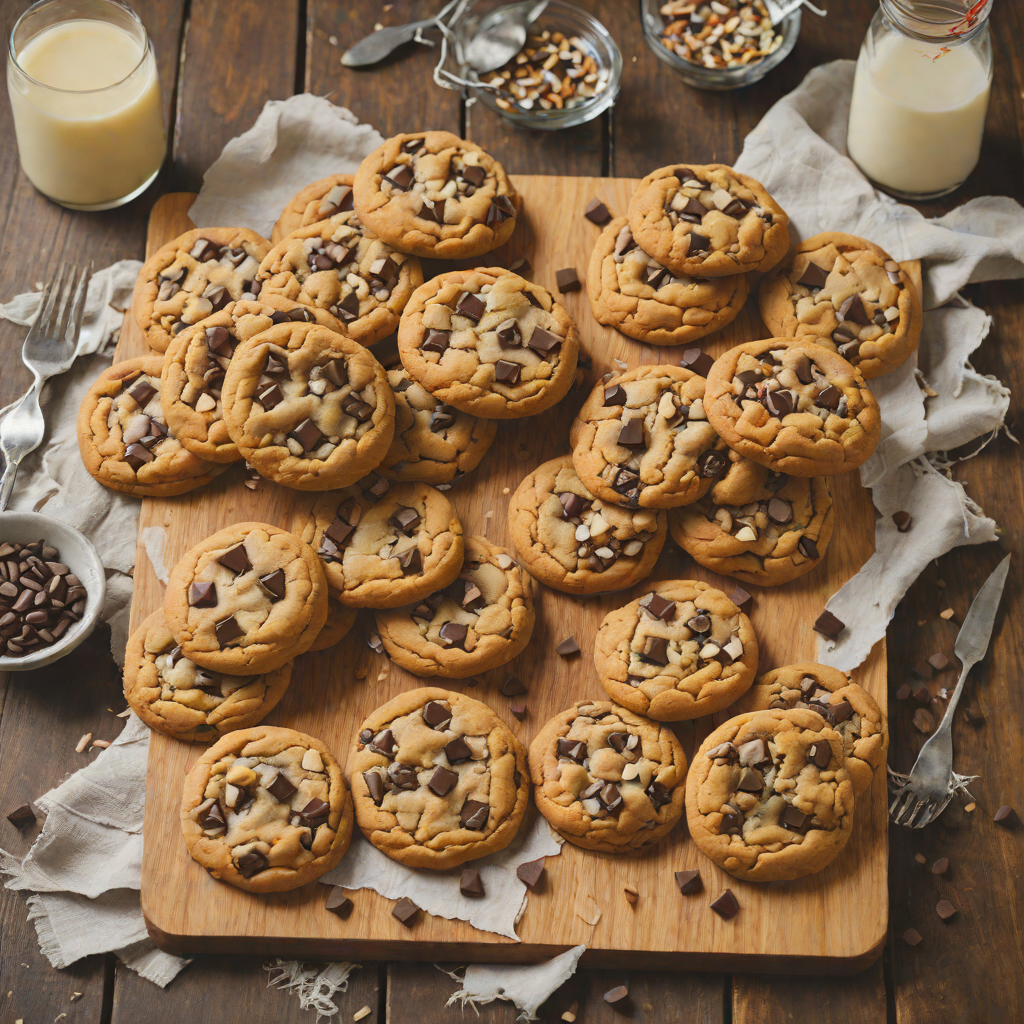
The pull-out display keeps the readout visible under a wide bowl. Weigh a mixing bowl for a big batch of chocolate chip cookies and the bowl covers a fixed display completely — the OXO's four-inch pull-out slides forward on a plastic tongue so you can read grams while flour is spilling over the edge of the platform. The stainless-steel platform lifts off for washing, and the underneath is a smooth wipe-clean plastic with no crumb-trapping seams. Runs on 4x AAA batteries for years of light use.
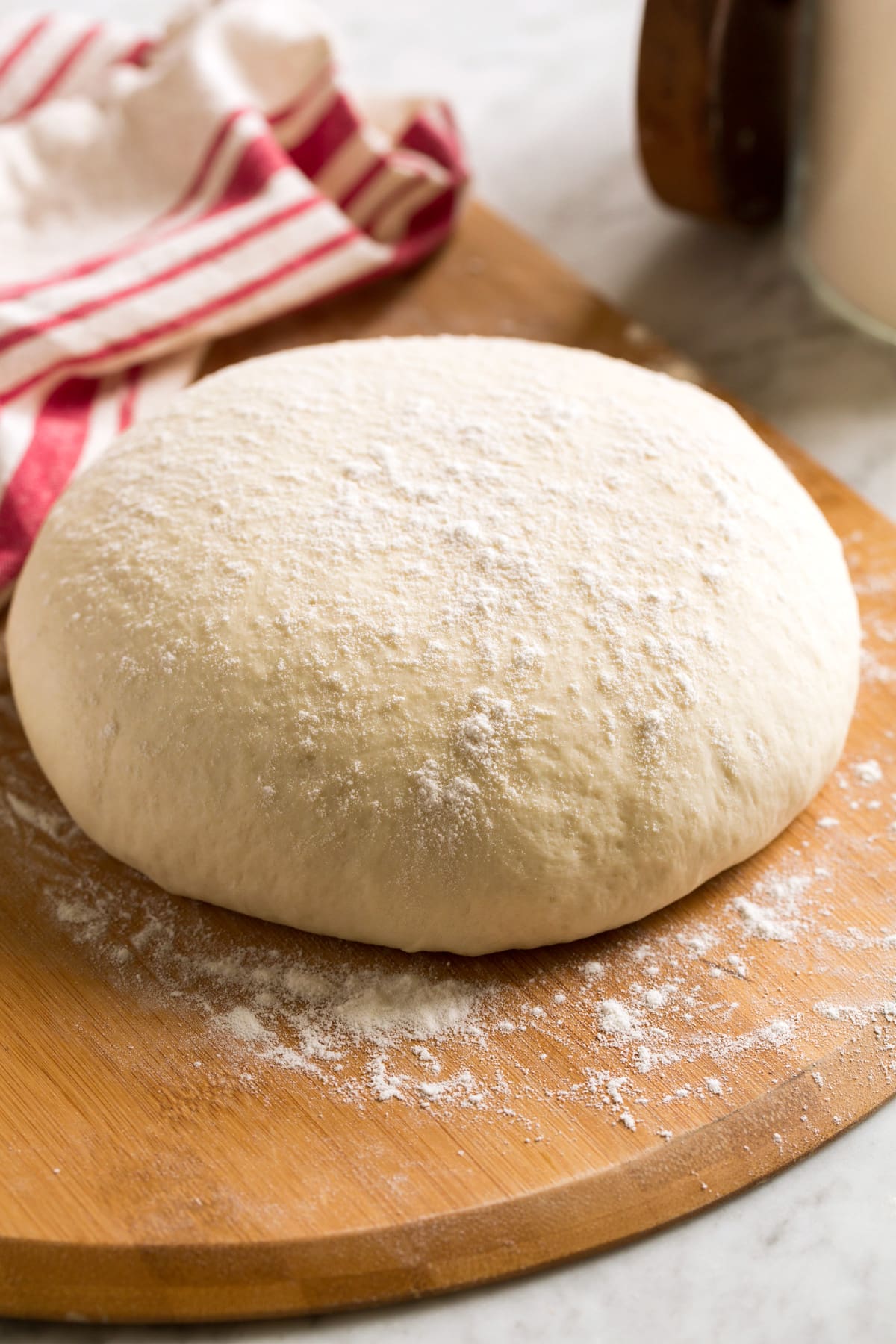
The 11-pound capacity is what makes this our #1: it's enough for a full pizza dough batch or a Costco-run box of chicken breasts you want to portion into meal-prep bags. Taring zeroes the display, but the container's weight still counts toward the 11-lb limit, so weigh heavy loads in a light bowl. Precision is 1 gram from 0 to 11 pounds — plenty for an overnight pizza dough and every non-espresso task. If the OXO name sounds familiar, it's the same brand that makes the ergonomic peelers and can openers you already own; the scales share the same "make one thing that lasts a decade" philosophy.
The one place the OXO isn't perfect: it doesn't have a 0.1-gram mode, so it's not the right pick for pulling 18-gram espresso doses or measuring 2 grams of dry yeast for a small pizza dough. For that, see pick #4. But as the one scale in your kitchen if you can only own one, it's the pick all three independent reviews listed under Sources land on.
#2 Best Value — Escali Primo Digital Food Scale
Verdict: 11-lb capacity, 1-gram precision and six colors; it runs on 2x AAA batteries. The scale you buy for your college kid.
The Escali Primo is the scale that lives in professional recipe-test kitchens because it just doesn't stop working. It's plastic-bodied, unremarkable to look at, and has exactly two buttons (tare + unit switch). Precision from 0 to 11 pounds is 1 gram, same as the OXO. Runs on 2x AAA batteries — the auto-off timer is set at four minutes, which is the sweet spot for baking (long enough that you don't lose the tare when you turn to fetch the sugar, short enough that batteries last a year of daily use).
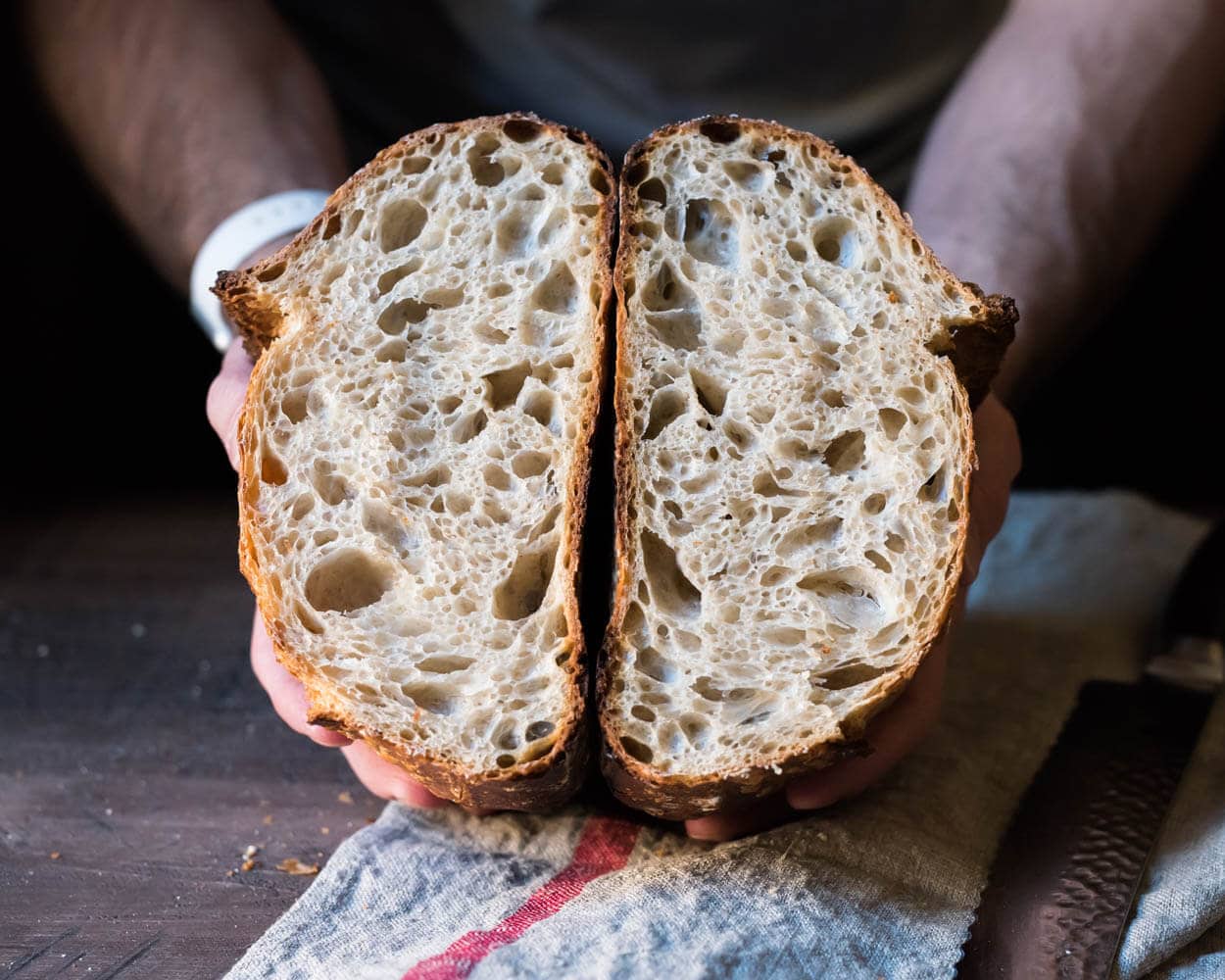
The platform is on the small side (six inches square) so a wide mixing bowl overhangs. That's the main compromise at this price. But if you're weighing 500 grams of bread flour for a classic sourdough loaf directly into a straight-sided bowl, the overhang doesn't matter — the load cell reads through the platform regardless of what's above it. The tare button is small but tactile. NSF-listed (which means you can put it on a commercial kitchen counter without a health-inspector eyebrow raise).
That's the buy story. At this price you can hand one to a teenager going to college and expect it back in ten years still working.
#3 Best for Beginners — Amazon Basics Digital Kitchen Scale with LCD Display
Verdict: 11-lb capacity, 1-gram precision and a stainless-steel platform; it runs on 2x AAA batteries. Everyone's first scale.
If you're brand-new to weighing ingredients and you want to try the workflow before spending more than a lunch on a scale, this is it. Amazon Basics is not a lifelong brand and this scale doesn't feel premium, but it does what it says: 1-gram precision, 5-kg capacity, tare button, unit switch, big LCD digits. Runs on 2x AAA batteries. Auto-off is aggressive (about two minutes) which occasionally trips you up mid-recipe but saves batteries. Non-slip feet on the underside.
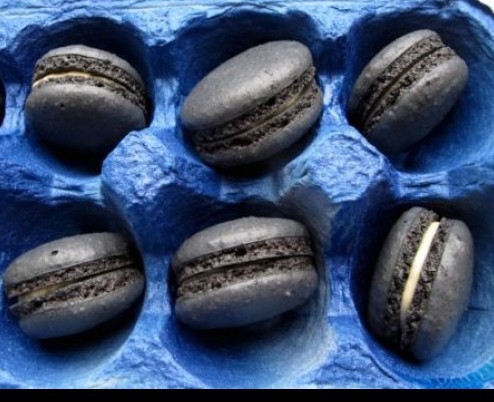
The reason we include it as a top pick instead of dismissing it: for someone learning to bake — someone whose first project is a batch of black sesame and chocolate macarons with a friend on a Saturday — the ceremony of the OXO is unnecessary. The Amazon Basics scale gets weighing habits started. After a year you'll know if you're the type who bakes every weekend (upgrade to OXO) or you're the type who bakes twice a year (this scale is fine forever). The stainless platform is easier to clean than budget-scale plastic. Read the reviews and you'll see the same story over and over: "bought it as a stopgap, still using it three years later."
#4 Best for Espresso + Precision Baking — RENPHO Espresso Scale
Verdict: 3-kg capacity, 0.1-gram precision, USB-C rechargeable, silicone cover, built-in timer.
When you cross into precision baking and coffee, you need 0.1-gram precision — a full order of magnitude better than the OXO. The RENPHO Espresso Scale is the pick because it does both: pull-over coffee brewing (with a built-in timer and flow-rate indicator) and precision baking of laminated dough, chocolate work, and macaron shells where 2 grams matters. USB-C rechargeable means no batteries; a full charge lasts three months of daily use.
The silicone cover is genuinely useful — you can weigh 18 grams of espresso beans directly onto it, then when the shot pulls it wipes clean without water getting into the load cell. The built-in timer starts automatically when weight changes, so pour-over technique gets a lot more repeatable ("30 grams in 45 seconds, then a 200-gram pour to 30 seconds") without needing a phone timer on the counter. If you're building 18-gram doses for espresso, this is the scale.
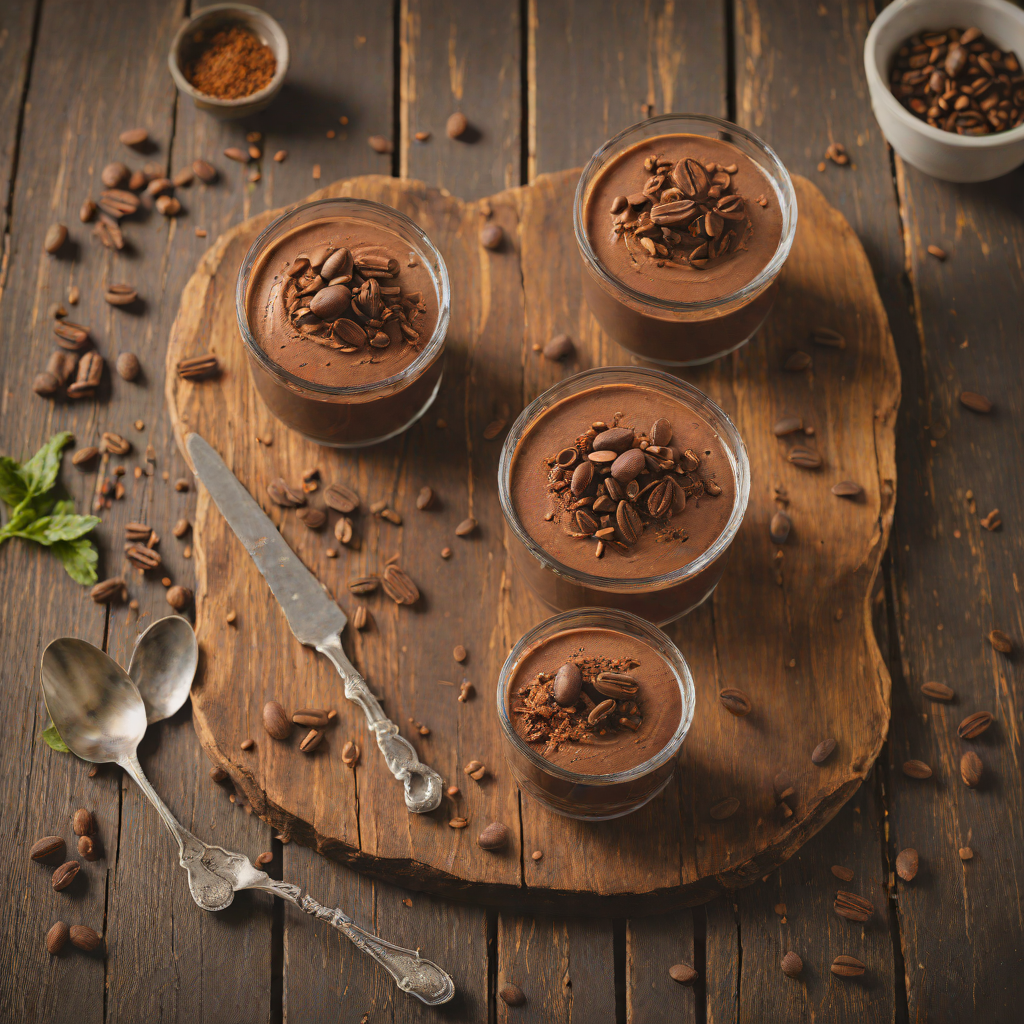
For pure precision baking (macarons, financiers, pâte à choux, laminated dough for bon mots French chocolate mousse with espresso — you make the pâte à choux by weight to hit the exact ratio), the RENPHO's 3-kg cap is enough for any home recipe. The only reason it's #4 instead of higher: at 3 kg the capacity is too small for weighing a chicken or a big bowl of pizza dough, so it's a second scale in your kitchen, not the first one.
#5 Best Dual-Platform Pick — KitchenAid KQ909 Dual Platform Digital Kitchen and Food Scale
Verdict: 11-lb + 16-oz dual platforms with 1-gram + 0.1-gram precision; battery-powered.
The clever pitch here is two scales in one physical unit: a big 11-pound platform on top for everyday weighing, and a smaller pull-out precision platform underneath that handles up to 16 ounces at 0.1-gram resolution. You get an OXO-class general scale plus an espresso-class precision scale without needing counter space for two units. The KitchenAid branding is real (not licensed) and the build quality reflects the price.
The tradeoffs are real too: it's the most expensive scale on the list, the small pull-out platform is a bit fiddly (you need a small dish or espresso portafilter that fits within a 3.5-inch square), and the 16-ounce cap on the precision mode means you can't precision-weigh anything heavier than a big Kilner jar of yeast. But if you have a small kitchen and want one unit that does both jobs, this is the answer. Big families with counter space should just buy the OXO + RENPHO pair for $115 total.
#6 Wildcard — Taylor Mechanical Kitchen Food Scale with Bowl
Verdict: 11-lb capacity, 25-gram graduation, no batteries ever.
We include this one for readers who philosophically don't want batteries or electronics in the mix. The Taylor mechanical scale is an analog dial with a spring — dead-simple, will still read weight correctly during a hurricane, and comes with a mixing bowl that snaps on top. Precision is 25 grams (about an ounce), which is fine for a stew or portion of chicken but nowhere near baking-accurate.
Buy this for a cabin, a boat galley, or a preparedness kit where you want a scale that requires zero maintenance. Do not buy it as your only kitchen scale if you plan to bake — the graduation is too coarse. But as a #2 scale that lives in the back of a cabinet? Genuinely useful, and it's the last scale you'll ever buy for the purpose it serves.
What to look for: capacity, precision, tare function, display, battery vs USB
There are five specs that matter and five that don't. Here's what to actually read on the back of the box:
Capacity. How much can the scale weigh at maximum? 5 kg (11 lb) is the practical minimum — enough for any single-bowl recipe including a whole chicken. 3 kg is fine for coffee-only scales but too small for general cooking. 10 kg (22 lb) is nice for big meat portions but overkill for 95 percent of home cooks.
Precision (graduation). How small an increment does the scale distinguish? 1 gram is right for all general cooking and baking. 0.1 gram is right for espresso, chocolate work, macaron shells, and precision baking. 5-gram or 25-gram graduation (mechanical scales) is fine only for large portions of meat or pantry-jar refills.
Tare function. Every scale in this guide has one. Tare zeros the scale with a bowl already on it, so you can pour flour and read "500 g" instead of "500 g + bowl weight." The subtle-but-important feature: does the tare button work at any weight, or only when the display is stable? Cheap scales lock the tare until stable, which slows you down. All six of our picks tare instantly.
Display. The two things that matter: readability at a working angle (some LCDs go dim when you look down at them from cooking-standing height), and whether the display gets covered by a wide bowl (see the OXO's pull-out solution). Back-lit displays are nice in a dim kitchen. Big digits (0.6-inch tall or larger) are what you want for reading across the counter.
Battery vs USB-C. USB-C rechargeable (the RENPHO) means one charge every three months and no dead-battery moments mid-recipe. Replaceable batteries (AAA or CR2032) mean you can swap in fresh cells during a marathon baking session and keep going. If you weigh daily, get USB. If you weigh twice a month, batteries are simpler and the scale sits ready for years without maintenance. Both are fine choices — this is not a make-or-break spec.
Things that don't matter as much as manufacturers claim: color, brand name (the load-cell hardware is largely the same across all reputable digital scales — a budget Escali and a premium chef-branded scale often use identical cells), "smart" features that connect to an app (unnecessary for 99 percent of cooking), and included accessories like tape measures or thermometers.
Head-to-head at a glance
| Model | Capacity | Precision | Battery | Best for |
|---|---|---|---|---|
| OXO Good Grips 11-lb | 5 kg | 1 g | 4x AAA | Best overall / big families |
| Escali Primo | 5 kg | 1 g | 2x AAA | Best value / gift |
| Amazon Basics LCD | 5 kg | 1 g | 2x AAA | First scale / beginners |
| RENPHO Espresso | 3 kg | 0.1 g | USB-C | Precision baking / espresso |
| KitchenAid KQ909 | 5 kg / 450 g | 1 g / 0.1 g | AAA | Two-scales-in-one, small kitchens |
| Taylor Mechanical | 5 kg | 25 g | none | Off-grid / no-battery kits |
Grams vs ounces — why weighing beats volume in baking
If you've ever wondered why professional bakers publish recipes in grams and home-recipe blogs publish them in cups, the answer is that grams are honest and cups are not. Flour, brown sugar, powdered sugar, cocoa, chopped nuts, shredded cheese — all of them pack, aerate, and settle differently depending on humidity, how tightly they were packed by the manufacturer, and how you scoop. Water and neutral oil are the only common ingredients where a cup and a weight are perfectly correlated (a cup of water is 236 grams, always).
Here's what that means in practice. A published-in-cups recipe for a French black sesame and chocolate macarons that calls for "1 cup almond flour" is expecting somewhere between 96 grams and 130 grams depending on how tightly packed the flour is in the bag when you dip. The exact same measuring cup, filled by two different bakers, will produce shells that look wildly different — one thin and cracked, one thick and hollow. Weighed to 100 grams, both bakers get the same shell every time. This is why every serious pastry book from the last twenty years leads with weights.
Grams are also faster once you're used to them. Weighing is one motion (dump ingredient, watch the number climb, stop). Volume is three motions (find the right cup size, level with a knife, dump). Over a full batch of cookies you save five minutes and dirty three fewer utensils. The switch is a two-week adjustment period after which you'll never go back.
As of 2026, the King Arthur Flour ingredient weight chart is the reference we recommend: 120 grams for a cup of all-purpose flour, 200 grams for a cup of granulated sugar, 213 grams for a cup of brown sugar packed. Print it and put it inside a cabinet door for the first month; after that, you'll have most of the ratios memorized.
Portion control, macro tracking, and the health-tracking use case
Not everyone buying a kitchen scale is baking. A large fraction of new scale owners in January every year are tracking food intake for weight loss or muscle gain, and 1-gram precision matters here for a completely different reason: nutritional-label accuracy. A "portion" of peanut butter labeled as 32 grams on the jar is a wildly different amount than "two tablespoons" as scooped by the average person — depending on scoop technique, you might be consuming 45 grams (140 percent of the label calories) without realizing it.
For macro tracking, the workflow is: put the empty container on the scale, tare, add food, read the weight, log it in an app (MyFitnessPal, Chronometer, or Cronometer). The 1-gram precision of any of our picks is plenty for this — you don't need 0.1-gram precision to log a chicken breast. What you do want is a large enough platform to hold a dinner plate, which rules out precision espresso scales for this use case. The OXO, Escali, and Amazon Basics are all great picks.
For portion-controlled meal prep — like batch-cooking pesto pasta salad with cherry tomatoes and mozzarella into five 300-gram lunch containers — a scale collapses fifteen minutes of "eyeballing then transferring" into three minutes of "dump, weigh, transfer, dump, weigh, transfer." Kitchen scales pair naturally with the meal-prep storage containers in our /k/storage category — a scale plus a stack of glass rectangular containers is the whole meal-prep kit for most people.
A note on the "1 gram of protein per pound of bodyweight" internet rule that's popular in 2026: whatever your target macros are, a scale makes them 4-5x more accurate than eyeballing. Studies of dietary self-report show untrained eyeballing underestimates food intake by roughly 25-40 percent. A scale in your kitchen won't make you lose weight, but it will make the number you log actually resemble the calories you consumed, which is the entire point of tracking.
Care, cleaning, and calibration
Digital kitchen scales are extremely low-maintenance. Three things to know:
Cleaning. Wipe the platform with a damp cloth after any use that produces stickiness (flour paste, dough, honey, batter). Never submerge the whole scale — the load cell lives under the platform and water in the cell will kill accuracy. If the platform lifts off (OXO, KitchenAid), wash it in the sink separately. For messy jobs like weighing raw chicken or sticky syrup, cover the platform with plastic wrap first — cheap insurance.
Batteries. Store the scale with batteries out if it'll sit unused for more than three months — cheap alkaline cells leak and destroy the terminals. Rechargeable USB scales are safer here; leave them at 50 percent charge for storage.
Calibration. Most consumer scales are pre-calibrated at the factory and hold accuracy for years — often the entire life of the scale. Test yours occasionally: a US nickel is exactly 5.00 grams, a US quarter is exactly 5.67 grams, and a US dime is exactly 2.27 grams. Put one on the scale and see what it reads. If the reading is more than 5 percent off, most scales have a calibration mode you enter with a button sequence (check the manual) and a reference weight (500 grams or 1 kilogram; $10 online). Calibration weights come in class F1 (best) through F5 for kitchen use; F4 or F5 is fine. You'll probably never need to calibrate a modern scale, but it's nice to know how.
Scales in the /k/bakeware category and general utensils in /k/utensils all follow the same care rules — the load cell is the fragile part, everything else is dishwasher-friendly hardware. Consider a small hook or vertical stand for scale storage; laying it flat on a counter under other things eventually cracks the platform.
Sources
We cross-checked our picks against three external reviews:
- Cook's Illustrated — The Best Digital Kitchen Scales — the deepest lab methodology in the category, with drop tests and repeatability under repeated tare cycles.
- Serious Eats — The Best Digital Kitchen Scales — Kenji López-Alt's team on kitchen ergonomics and everyday-cook workflow.
- NYT Wirecutter — The Best Kitchen Scale — long-term durability testing (Wirecutter re-tests the same models years later, which matters).
The cup-to-gram figures in this guide come from the King Arthur Baking ingredient weight chart.
All three of those independent reviews also land on the OXO Good Grips 11-Pound as best overall, and the Escali Primo as best value. Where our list differs is the espresso pick — Wirecutter recommends the Acaia Pearl (an excellent $200 espresso scale), but at three times the price of the RENPHO with only marginal precision gains for home use, we couldn't recommend it as the pick for readers building a first home espresso setup. Browse the full assortment in /k/gadgets for scales, and /k/bakeware for the mixing bowls and sheet pans you'll be weighing into.
Frequently asked questions
Why weigh ingredients instead of using measuring cups?
What is a good precision for a kitchen scale?
What is the tare button for?
Do kitchen scales need calibration?
USB rechargeable or replaceable batteries?
How we picked
This guide is researched, not bench-tested. We shortlisted products from the AislePrompt kitchen catalog and compared them on published manufacturer specifications (such as materials, size and capacity), on what owners report in published reviews, and on any third-party sources linked in this guide. The guide was drafted with AI assistance. We did not run lab or hands-on tests of these products, so any measurement quoted here comes from the manufacturer or a cited source. Prices change often: use the “Check price on Amazon” buttons for today’s price.
Recipes to try with accurate measuring
Put your gear to work — save any recipe to My Recipes (no account needed) and send its ingredients to Instacart in one tap.
Shop kitchen gadgets on AislePrompt →Browse the full kitchen shop →