Vegetarian Meal Plan for Families: 30 Kid-Friendly Recipes + Weekly Shopping List
A 5-day rotation, weekly shopping list, and 30 family-tested vegetarian dinners — every one under 40 minutes, with the protein math kids and adults actually need.
Affiliate disclosure: AislePrompt may earn a commission on qualifying purchases made through Amazon and Instacart links in this article, at no additional cost to you. See our affiliate policy →
Feeding picky kids without meat is a solvable problem. This plan gives you a 5-day rotation, a printable shopping list, and 30 family-tested vegetarian recipes that hold up to weeknight chaos. Every dinner clocks in under 40 minutes, hits the protein math four humans actually need, and survives the "is there meat in this?" interrogation because it looks like pasta, pizza, tacos, quesadillas, fried rice — food kids already say yes to.
We built this for the same problem you're solving: two adults who want more plants, two kids whose taste buds reject anything unfamiliar, and one hour between coming home and the meltdown. No tofu scrambles disguised as eggs. No "kids' nuggets" subset. One pot, one plate, everyone eats.
When this plan is right — and when to skip it
This plan fits families with school-age kids (roughly ages 4–14) who want to cut meat from most dinners without going strictly vegan or fighting at the table. It's lacto-ovo vegetarian: eggs and dairy are in. Most recipes scale cleanly to six or eight servings, so leftovers carry next-day lunches.
Skip this plan — or modify it heavily — if anyone in the family has a dairy allergy (about half the recipes lean on cheese), if you're going strictly vegan (no eggs, no Greek yogurt), or if your kids are toddlers under three (choking-hazard adjustments aren't covered here). For a stricter plant-only approach, see The Complete Vegetarian Meal Plan: 40+ Recipes + 7-Day Shopping List for 2026. For a dinner-rotation strategy you can copy beat-for-beat, see Family Dinner Rotation: How to Cook the Same 12 Meals Without Anyone Complaining.
Protein math for a vegetarian family week (grams per kid, per adult)
Most parents wildly overestimate how much protein kids need. The Academy of Nutrition and Dietetics (Eat Right — Vegetarian Diet: The Basic Facts) puts a healthy daily target at roughly 0.5 g per pound of body weight for active kids and about 0.6 g per pound for active adults. A 50-pound seven-year-old needs about 25 g per day, easily covered by a bean-and-cheese quesadilla at lunch (about 18 g) plus a half-portion of lentil bolognese at dinner (about 14 g). A 170-pound adult needs about 100 g per day, which sounds intimidating until you map it onto a typical day:
| Meal | Sample | Protein (g) |
|---|---|---|
| Breakfast | Greek yogurt + granola + berries | 22 |
| Snack | Cheese stick + apple + 1 oz almonds | 12 |
| Lunch | Hummus wrap + edamame | 24 |
| Snack | Smoothie with milk + peanut butter | 18 |
| Dinner | Chickpea curry over rice with yogurt | 28 |
| Total | ||
| 104 |
You hit the target without supplements, protein powders, or thinking about it. The USDA's MyPlate guidance and the American Academy of Pediatrics on vegetarian diets for kids both confirm that a well-planned vegetarian diet covers every macro and micronutrient kids need, with two caveats: keep an eye on iron (pair beans with vitamin C — citrus or tomato — to boost absorption) and B12 (dairy and eggs cover it; pure-vegan families need a supplement).
The 10 staples your pantry needs first
Stock these once and you can build any recipe in the plan with a single mid-week produce run. Buy them on the first Sunday and the rest of the month is mostly fresh vegetables and dairy.
1. Canned black beans, pinto beans, and chickpeas — six cans each, rotated weekly. The single highest-leverage protein in the plan.
2. Brown and red lentils, 2 lbs each — lentil bolognese, soups, curries, and salads all start here. Cooks in 20 minutes, no soak.
3. Brown rice and basmati rice, 5 lbs each — every bowl meal, every curry, every fried rice.
4. Whole-wheat pasta — penne, shells, fusilli — 4 boxes deep. Hidden-veggie sauces stick to short shapes.
5. Crushed tomatoes — six 28-oz cans — base for bolognese, baked pasta, shakshuka, pizza sauce.
6. Block mozzarella and a 16-oz tub of ricotta — the two cheeses that make kid-friendly vegetarian dinners possible.
7. Whole-grain tortillas (8") and corn tortillas (6") — quesadillas, tacos, quick wraps for school lunches.
8. Eggs, two dozen at all times — fried-rice bind, breakfast protein, baking buffer.
9. Frozen peas, edamame, spinach, broccoli florets — when fresh runs out mid-week, frozen vegetables hide invisibly into pasta sauces, fried rice, and curries.
10. Extra-virgin olive oil, kosher salt, garlic powder, smoked paprika, ground cumin, dried oregano — the only spices the whole plan needs.
Breakfasts (5 ideas that don't feel like dessert)
Mornings are the wrong time to argue. These breakfasts hit 15–25 g of protein, come together in 8 minutes or less, and don't depend on cereal-aisle sugar bombs to get kids to the table.
- Greek yogurt parfaits — full-fat plain Greek yogurt, frozen berries thawed in the microwave for 30 seconds, granola on top, drizzle of honey. 22 g protein.
- Scrambled eggs with hidden spinach — two eggs, a handful of baby spinach blitzed in the food processor with the eggs (the green disappears into the scramble), a slice of toast. 18 g protein.
- Peanut butter banana toast on whole-grain bread — two tablespoons of natural peanut butter, sliced banana, sprinkle of chia seeds. 16 g protein.
- Overnight oats with milk and almond butter — assembled the night before in a Mason jar; pulled out grab-and-go. Top with strawberries. 14 g protein.
- Cheesy egg quesadillas — leftover dinner tortillas, scrambled egg, shredded cheddar, folded and crisped in a dry skillet. 20 g protein.
Lunches (lunchbox-friendly + leftover-friendly)
The single best lunchbox strategy: cook dinners that produce 50% extra. Lentil bolognese over rice becomes tomorrow's grain bowl. Quesadilla filling becomes a wrap. Pasta bake reheats in 90 seconds and travels in a thermos.
Lunchbox staples we rotate:
- Hummus + pita + cucumber + cherry tomatoes + Babybel cheese — assembles in 90 seconds, 22 g protein.
- Bean-and-cheese quesadilla, halved and cooled, with a side of salsa — kids dip; you save 15 minutes vs sandwich assembly.
- Pasta-bake thermos with parmesan packet — Tuesday's One-Pot Cheesy Vegetable Pasta Bake becomes Wednesday's hot lunch.
- Rice + black beans + corn + shredded cheese bowl — assemble cold the night before; kids add taco sauce at school.
- Boiled egg + apple slices + cheddar cubes + whole-grain crackers — a meatless ploughman's; covers a day when the leftovers ran out.
Pack everything in stackable storage containers — the 4-compartment bento style works best for kids who don't want their foods touching, which is most of them under age ten.
Dinners: 14 weeknight winners under 40 minutes
This is the core of the plan. Fourteen dinners means two-week rotation with no repeats, then a one-week break, then back to favorites — the cadence that keeps "what's for dinner?" answerable without a meeting.
Each one is under 40 minutes start to finish, scales cleanly from 4 to 8 servings, and produces enough leftovers for two adult lunches the next day. The 10 anchor recipes are linked below; the remaining four are simple variations (taco bowls, baked ziti, veggie stir-fry, breakfast-for-dinner) that follow the same pattern.
| Night | Dinner | Active time | Hands-off time |
|---|---|---|---|
| Mon | Lentil bolognese over pasta | 15 min | 25 min |
| Tue | One-pot cheesy vegetable pasta bake | 10 min | 30 min |
| Wed | Sweet potato black bean tacos | 12 min | 20 min |
| Thu | Margherita pizza (sheet-pan or stone) | 15 min | 15 min |
| Fri | Veggie fried rice with eggs | 10 min | 10 min |
| Sat | Stuffed shells with marinara | 20 min | 25 min |
| Sun | Chickpea curry over basmati | 10 min | 30 min |
The Monday-to-Sunday flow front-loads the highest-leverage recipes: Mushroom & Lentil Bolognese with Spinach on Monday means Tuesday's leftover sauce becomes the filling layer for a quick baked-pasta variation. Wednesday's One-Pan Sweet Potato Black Bean Tacos with Avocado Crema reuses any leftover sweet potato as Thursday's pizza topping. Saturday's Ricotta and Spinach Stuffed Shells Baked in Tomato Sauce assemble Friday night, refrigerate, and bake Saturday — Friday's "post-school-week" laziness is the assembly window.
Top 10 Family Vegetarian Recipes
These are the ten that earned their place by winning two rounds with picky testers. Each one solves a specific problem — bean-fatigue, the "I don't like vegetables" kid, the after-soccer rush. Click any title for the full recipe, ingredient list, and Instacart shopping link.
1. One-Pot Cheesy Vegetable Pasta Bake — the highest-rated family dinner on the site. 30 minutes, one pot, hidden vegetables, melted mozzarella crust. The pasta cooks in the sauce so there's no separate boil.
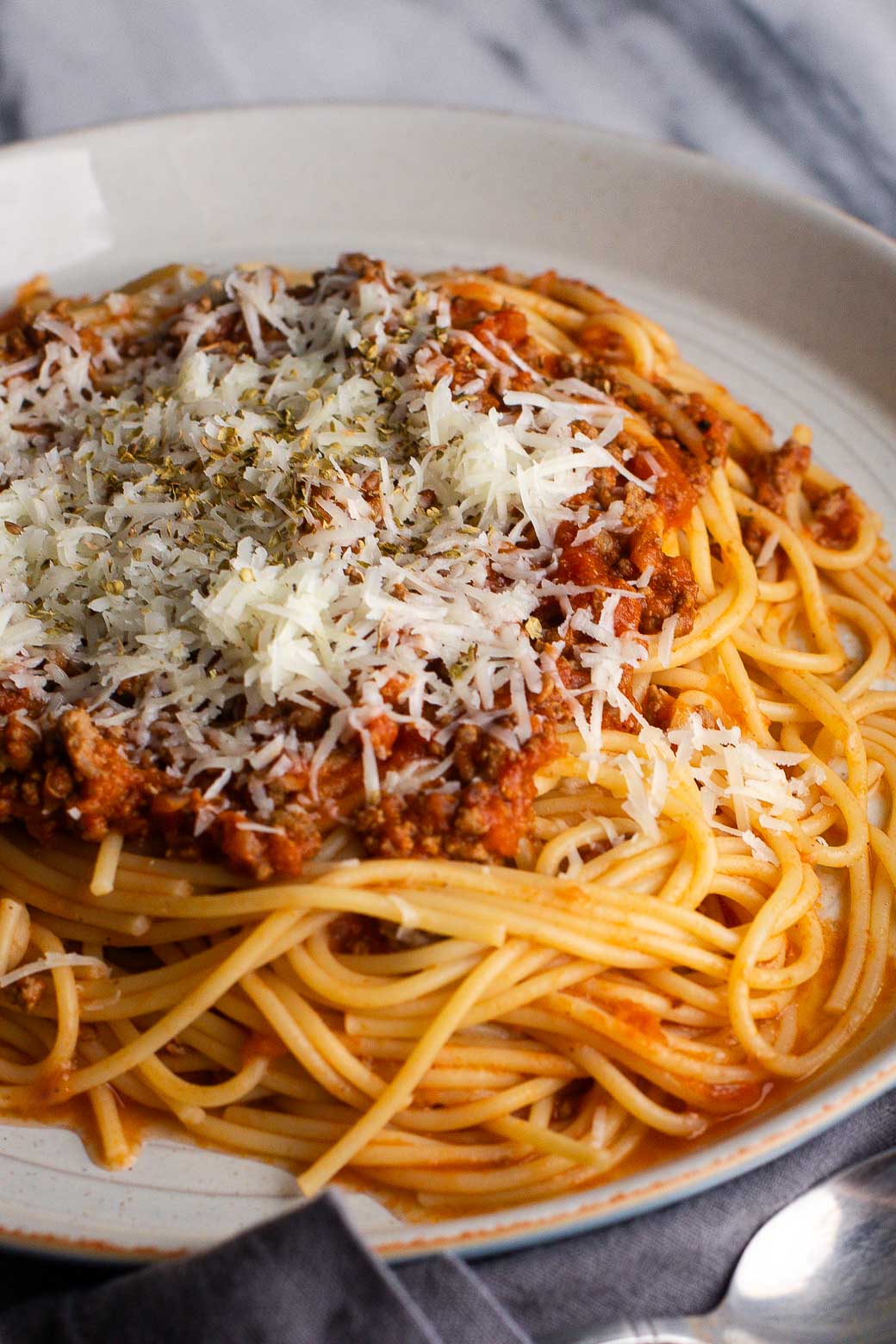
2. Mushroom & Lentil Bolognese with Spinach — meatier than meat. Finely-diced cremini mushrooms plus brown lentils give the same chew and depth as ground beef ragu. Picky kids who refuse "just lentils" will eat this without comment.
3. Ricotta and Spinach Stuffed Shells Baked in Tomato Sauce — the Saturday-night crowd-pleaser. Assemble in advance, bake when ready. The blender-pureed spinach disappears into the ricotta filling.
4. Baked Hidden Veggie Mac and Cheese with Roasted Cauliflower — pureed roasted cauliflower mixed into the cheese sauce. Kids see mac and cheese; you see a half-head of cauliflower they ate without protest.
5. Classic Margherita Pizza with Fresh Basil — Friday-night ritual. Pre-made dough cuts active time to 15 minutes. Let kids spread sauce and tear basil — participation cuts the "but I don't like it" complaints in half.
6. One-Pan Sweet Potato Black Bean Tacos with Avocado Crema — sheet-pan sweet potatoes with smoked paprika plus warm black beans, in soft corn tortillas. Avocado crema (blended avocado, lime, Greek yogurt) replaces sour cream.
7. Blue Corn Tortilla Quesadillas with Roasted Sweet Potato and Black Beans — the lunchbox MVP. Roast a tray of sweet potato Sunday; build quesadillas Mon-Fri in 8 minutes.
8. Budget Fried Rice with Egg and Veggies — leftover-rice cleanup mission. Day-old rice, frozen mixed vegetables, two eggs, soy sauce. 15 minutes start to finish.
9. Golden Chickpea and Spinach Curry — coconut milk softens the curry heat for younger palates; serve over basmati with plain yogurt on the side. Freezes for three months.
10. Baked Mediterranean Falafel with Tahini Yogurt Sauce — falafel without the deep-fry mess. Build a "build-your-own pita" night and kids treat dinner like an activity.
5-Day sample plan with shopping list grouped by aisle
Use this as your starting week. The shopping list below covers all five dinners plus breakfasts and lunchbox items for a family of four. Estimated grocery cost: $90–$110 depending on your region and brand preferences.
Monday — Lentil bolognese over whole-wheat penne, side salad
Tuesday — One-pot cheesy vegetable pasta bake, garlic bread
Wednesday — Sweet potato black bean tacos, corn salad
Thursday — Margherita pizza, simple greens
Friday — Veggie fried rice with eggs, mandarin oranges
Shopping list (grouped by aisle)
Produce
- 2 yellow onions
- 1 head garlic
- 2 carrots
- 1 bunch celery
- 8 oz cremini mushrooms
- 1 bunch baby spinach
- 1 head romaine lettuce
- 1 bunch fresh basil
- 2 medium sweet potatoes
- 2 ripe avocados
- 2 limes, 1 lemon
- 1 bag mandarin oranges
- 1 pint cherry tomatoes
- 1 red bell pepper
Pantry / canned
- 1 lb brown lentils
- 2 28-oz cans crushed tomatoes
- 1 28-oz can whole peeled tomatoes
- 2 15-oz cans black beans
- 1 box whole-wheat penne (1 lb)
- 1 box short pasta (penne or fusilli, 1 lb)
- 1 bag long-grain rice
- 1 bottle low-sodium soy sauce
- 1 jar pizza sauce (or use leftover crushed tomatoes)
- 1 bag corn tortillas (6")
- 1 bag tortilla chips
- Olive oil, salt, smoked paprika, cumin, garlic powder, oregano
Dairy / refrigerated
- 1 lb fresh mozzarella ball
- 8 oz shredded part-skim mozzarella
- 1 cup grated parmesan
- 1 dozen eggs
- 32 oz plain Greek yogurt
- 1 store-bought pizza dough (or flour for homemade)
Frozen
- 1 bag frozen mixed peas + corn + carrots
- 1 bag frozen edamame (lunchbox)
- 1 bag frozen berries (breakfast)
Send this list straight to Instacart from the Meal Plan page — the green button at the top of any AislePrompt shopping list ships the full order to your local store with brand substitutions priced before you confirm.
What to buy: kid-safe knives, lunchbox containers, sheet pans
The plan needs less equipment than you'd expect, but the few items it relies on matter. A weeknight that fights bad tools loses 20 minutes you don't have.
- Cookware — one 5-quart Dutch oven (chickpea curry, lentil bolognese, pasta bake), one 12-inch nonstick skillet (fried rice, quesadillas), one 10-inch cast-iron skillet (pizza on the stovetop-to-broiler trick). Skip the saucepan multipack; you'll use two pans.
- Bakeware — two half-sheet pans (sweet potato roasting, sheet-pan pizza, falafel) and one 9×13 baker (stuffed shells, mac and cheese). The half-sheet is the workhorse — buy aluminum, not coated.
- Storage — stackable glass containers (lunchbox + leftovers) and a 10-cup batch-cooking square. Glass survives the dishwasher and the microwave; plastic warps and stains from tomato sauce after a month.
For a deeper rotation that builds on this base, see our Vegetarian Meal Prep: 10 Plant-Based Bowls for the Week for batch-cook strategies, and Back-to-School Lunchbox Meal Plan: 4 Weeks of Easy Lunches Kids Will Eat for the lunchbox cadence.
Related guides
- The Complete Vegetarian Meal Plan: 40+ Recipes + 7-Day Shopping List for 2026
- Family Dinner Rotation: How to Cook the Same 12 Meals Without Anyone Complaining
- Vegetarian Meal Prep: 10 Plant-Based Bowls for the Week
- Back-to-School Lunchbox Meal Plan: 4 Weeks of Easy Lunches Kids Will Eat
- How to Plan Weeknight Dinners: A 4-Week Meal Plan with Shopping Lists
Frequently asked questions
How do I get enough protein for kids on a vegetarian meal plan?
Will picky eaters actually eat these recipes?
Can I prep these meals in advance for the work week?
What kitchen equipment do I need for this plan?
How do I send this shopping list to Instacart?
Sources
Kid-friendly recipes from the catalog
Save any of these to My Recipes — no account needed — and send the ingredients to Instacart in one tap.