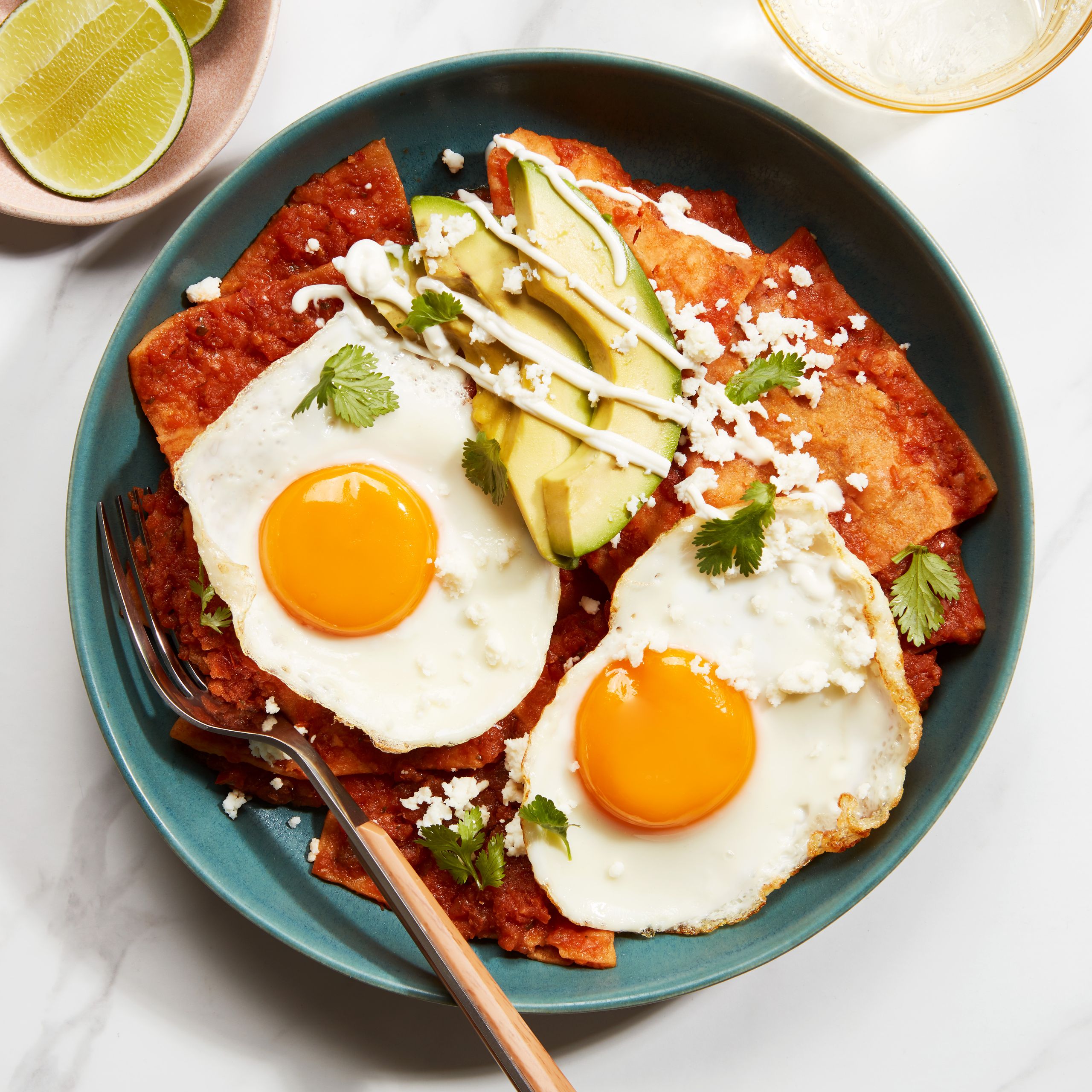
18 Best Mexican Brunch Recipes for Weekend Gatherings
The almuerzo canon — chilaquiles, breakfast tacos, chorizo and eggs, sweet finishers — plus the drink pairings that make Sunday feel like a party.
A Mexican brunch beats an American brunch on three counts: it feeds a crowd from two skillets, it doesn't require sixteen syrup varieties, and the salsa station does most of the entertaining for you. The 18 recipes below cover the almuerzo canon — chilaquiles, breakfast tacos, chorizo and eggs, sweet finishers — plus the drink pairings that make a Sunday spread feel like a party rather than a meal. Every dish has been retested for a home cook with a comal, one 12-inch skillet, and a sheet pan. Every recipe links out to the full instruction sheet on AislePrompt.
Get a free week of easy dinners
Seven weeknight dinners with the shopping list already totalled, sent Sunday. No account needed, unsubscribe in one click.
No spam, unsubscribe in one click. Recipes, shopping lists and Instacart carts all work without an account either way.
Introduction: The Mexican brunch tradition and why it beats American brunch
Almuerzo — the late-morning meal eaten between 10am and noon — sits between desayuno (a light early breakfast) and comida (the main midday meal). Almuerzo is usually egg-based, generously portioned, and served with fresh salsa, warm tortillas, and either strong coffee or agua fresca. It's the meal social gatherings and family Sundays are built around in Mexico, and it's the tradition that made huevos rancheros and chilaquiles into cross-border staples.
The reason it beats American brunch for entertaining is structural. American brunch is a pancake production line — one griddle, one cook, one serving at a time. Mexican brunch is a buffet. Two anchor dishes come out of the kitchen in one pass and hold their heat for 90 minutes. Salsas sit on the table cold. Warm tortillas cycle through a comal or towel-lined basket while people eat. The cook eats too. When Bon Appétit's Mexican brunch coverage profiled Rick Bayless's Sunday setup, he called almuerzo "the meal Americans should have adopted instead of the pancake spread" — and once you've hosted one, you'll agree.
For the equipment that makes it repeatable: a heavy 12-inch skillet from the cookware category, a good chef's knife from the knives category for cilantro and onion prep, and a rimmed half sheet from the bakeware category for holding tortillas warm.
The savory backbone: eggs, salsa, and tortillas
Three ingredients do 80% of the work at a Mexican brunch. Getting each of them right is what separates a memorable spread from a good-enough one.
Eggs. Mexican brunch eggs are almost always scrambled with something (chorizo, tomatoes and onions, poblanos), fried and set on tortillas (huevos rancheros, huevos divorciados), or folded into a chip-and-salsa mix (migas). Cook them a little longer than American scrambled eggs — a slightly firmer curd holds up better under salsa and stands up to being reheated on a buffet. Salt after cooking, never before.
Salsa. A proper Mexican brunch table has three salsas at different heat levels: a mild salsa fresca (raw tomato, onion, cilantro, jalapeño), a medium salsa verde (tomatillo, roasted serrano, lime), and a hot salsa roja (dried ancho and guajillo chiles, roasted tomatoes). Make all three the day before — they taste better after 12 hours in the fridge. Serve them in shallow bowls with a spoon so people can layer or dab. The utensils category has the molcajete-style pestles that make small-batch salsa fast.
Tortillas. Corn, not flour. Warm, not room-temperature. Kept in a towel-lined basket that closes. The workflow: heat a dry comal over medium-high, warm the tortillas 15 seconds per side, stack them in a folded towel inside a basket or tortilla warmer. Refresh the stack every 10 minutes. A three-person brunch needs 20 warm tortillas; a ten-person brunch needs 60. Buy the good ones — masa-based tortillas from a local Mexican grocery are night-and-day better than the supermarket wheat-blend versions.
The sweet finishers: churros, conchas, tres leches
Mexican desserts on a brunch table serve a different purpose than American ones. They're small, dense, and made to eat with strong coffee — not the sugar-forward loaves of an American brunch spread. Three winners:
Churros. Fried dough sticks in cinnamon sugar, dipped in warm chocolate ganache. Made from a choux-like dough (water, butter, flour, eggs), piped through a star tip into 375°F oil, fried 2 minutes per side. The batter can rest overnight; frying happens in 15 minutes. Pan-Fried Churros with Cinnamon Sugar and Chocolate Dipping Sauce is the version to start with — home-scale amounts, no specialty piping tools required.
Conchas. Sweet enriched breads with a crisp shell pattern that resembles a seashell (concha). Yeasted dough, rolled and shaped, topped with a paste of butter, sugar, and flour that scores into the shell pattern. A weekend project — 4 hours from start to eating — but freezes beautifully. Serve warm from the oven with hot chocolate.
Tres leches cake. A yellow sponge soaked in three milks (evaporated, sweetened condensed, whole) after baking. Its brunch-table strength is that it must be made the night before (so the sponge fully absorbs), which means Sunday morning is one dish easier. Guatemalan Coffee-Infused Tres Leches Cake adds espresso to the soaking milks — it's exceptional next to a dark roast.
How to build a Mexican brunch buffet for 8
The 8-person target is where a Mexican brunch really outperforms an American one. The rule: two savory anchor dishes, one protein add-on, warm tortillas, three salsas, one sweet finisher, one drink station. Total prep time is roughly 2.5 hours with one day of chile-toasting the night before.
The layout:
| Station | Item | Serves |
|---|---|---|
| Anchor 1 (skillet, hot) | Chilaquiles Rojos with Crispy Tortilla Chips and Fresh Queso Fresco | 6-8 |
| Anchor 2 (sheet pan, hot) | Huevos rancheros or Chorizo and Scrambled Egg Mexican Breakfast Tacos | 6-8 |
| Protein add-on | Grilled Pork Al Pastor Tacos with Pineapple and Oaxacan Salsa | 8 |
| Tortilla station | 60 warm corn tortillas, salsas | Everyone |
| Sweet finisher | Churros or tres leches | 8-10 |
| Drink station | Horchata + strong coffee | All-day |
Lay down two savory anchors (chilaquiles for volume, huevos rancheros for plating drama), one protein add-on (chorizo or al pastor tacos), warm tortillas in a towel-lined basket, and three salsas of varying heat. Add one sweet finisher (conchas or churros) and a drink station with horchata plus coffee. Total prep time is roughly 2.5 hours with one day of chile-toasting the night before.
18 curated Mexican brunch recipes
The full lineup, in order of prep difficulty:
- Chorizo and Scrambled Egg Mexican Breakfast Tacos — beginner
- Chilaquiles Rojos with Crispy Tortilla Chips and Fresh Queso Fresco — beginner
- Open-Faced Chorizo and Cheddar Breakfast Sandwich with Sunny-Side Eggs — beginner
- Classic Mexican Carne Asada Tacos with Fresh Salsa Verde — beginner
- Grilled Pork Al Pastor Tacos with Pineapple and Oaxacan Salsa — intermediate
- Sheet Pan Tex-Mex Chicken and Black Bean Bake — beginner
- Fire-Roasted Poblano and Corn Soup — beginner
- Mexican Black Bean and Sweet Potato Tacos with Avocado Crema — beginner
- Salvadoran Sweet Corn and Cheese Tamales — intermediate
- Pan-Fried Churros with Cinnamon Sugar and Chocolate Dipping Sauce — intermediate
- Guatemalan Coffee-Infused Tres Leches Cake — intermediate
- Huevos rancheros (fried eggs on tortillas with ranchero sauce) — beginner
- Huevos divorciados (two fried eggs, one salsa verde, one salsa roja) — beginner
- Chilaquiles verdes (green-salsa version of chilaquiles) — beginner
- Molletes (bolillo halves with refried beans and cheese, broiled) — beginner
- Mexican shakshuka (poached eggs in ancho tomato sauce) — beginner
- Migas (scrambled eggs with fried tortilla strips) — beginner
- Enchiladas suizas (chicken enchiladas with green cream sauce) — intermediate
The last seven don't yet have dedicated recipe pages in the AislePrompt catalog — they're the shortfall driving the brunch coverage roadmap. If you have a favorite version, our meal-plan tool can generate a shopping list from a photo of your grandmother's recipe card.
The drink pairings: horchata, cafe de olla, micheladas
Three drinks belong on a Mexican brunch table.
Horchata. A creamy rice-and-cinnamon drink, cold and just barely sweet. Made from soaked white rice, blended with water, cinnamon, sugar, and vanilla, then strained through cheesecloth. Batch it the day before — the flavor develops overnight in the fridge. Serve over ice in a pitcher. A gallon feeds 12.
Cafe de olla. Mexican spiced coffee, brewed in a clay pot with cinnamon and piloncillo (unrefined cane sugar). If you don't have a clay pot, a saucepan works. Coarsely ground coffee, water, a stick of cinnamon, a chunk of piloncillo — bring to a simmer, hold 5 minutes, strain. Serve black in small cups. Pairs with the sweet finishers.
Micheladas. For an adult brunch. Beer (usually a Mexican lager) served in a salt-and-chile-rimmed glass with lime, hot sauce, Worcestershire, and sometimes clamato juice. A brunch drink in the way a Bloody Mary is — restorative and mildly stimulating. Serve in a pitcher for easy self-serve.
Prep timeline and shopping list
For an 8-person Sunday brunch that uses this playbook:
Night before (45 min):
- Toast and soak dried chiles for salsa roja
- Make horchata base and refrigerate
- Bake tres leches sponge, cool, pour milks over
- Prep salsa fresca vegetables and refrigerate in an airtight container
Sunday morning (2 hr):
- 8:00 — Fry tortilla chips for chilaquiles (day-old corn tortillas cut in wedges, 350°F oil 90 seconds per batch)
- 8:30 — Warm oven to 200°F for tortilla holding
- 8:45 — Make salsa verde and salsa roja
- 9:15 — Sauté chorizo, hold in warm oven
- 9:30 — Assemble chilaquiles in skillet, hold
- 9:45 — Start warming tortillas in batches
- 10:00 — Scramble eggs to order or in one big batch
- 10:15 — Fry a batch of churros for the sweet finisher
- 10:30 — Set the table, cut fruit, brew cafe de olla
- 11:00 — Serve
Shopping list (feeds 8):
- 3 dozen eggs
- 1 lb Mexican chorizo (raw, in casings or loose)
- 2 lb carne asada or al pastor pork (if adding the protein station)
- 60 corn tortillas (30 for chips, 30 for the tortilla basket)
- 3 lb Roma tomatoes
- 2 lb tomatillos
- 6 dried guajillo chiles + 4 dried ancho chiles
- 6 jalapeños or serranos
- 2 bunches cilantro
- 3 white onions
- 8 garlic cloves
- 1 lb queso fresco
- 12 oz Mexican crema or sour cream
- 4 limes
- 1 gallon whole milk (for cafe de olla + tres leches)
- Real vanilla extract
- 2 sticks Mexican cinnamon
Kitchen tools
The equipment that makes a Mexican brunch smoother:
- Comal. A flat cast-iron or carbon-steel griddle for warming tortillas and charring vegetables. A 12-inch cast-iron skillet substitutes.
- 12-inch skillet. For chilaquiles, egg scrambles, and chorizo. Nonstick is convenient; cast-iron produces better crust on the chorizo.
- Molcajete or heavy pestle. For fresh salsa. Blenders work but produce a smoother, more homogeneous texture — molcajete gives the coarse chunky feel most people recognize as "authentic."
- Tortilla warmer. A cloth-lined ceramic or insulated plastic container that keeps 20 tortillas warm for 45 minutes. Or a folded thick towel inside a covered basket.
- Fine-mesh strainer. For horchata (strain out the rice solids) and salsa (strain any tough tomato skins).
- Nice-to-have from the utensils category: offset tongs for flipping tortillas without burning your fingers, and a citrus juicer for the volume of lime you'll go through.
Common pitfalls to avoid
- Flour tortillas for chilaquiles. Turns to mush in salsa within 60 seconds. Corn only.
- Cold tortillas at the table. Room-temperature tortillas crack and taste stale. Warm and covered, always.
- Spanish chorizo instead of Mexican. Different product. Spanish chorizo is cured and firm; Mexican is fresh and raw. Recipes call for one or the other and they don't substitute.
- Bottled hot sauce instead of fresh salsa. Cholula is fine on eggs; it's not a brunch buffet salsa. Make the three fresh salsas — the difference is dramatic.
- Serving eggs before the coffee is ready. In Mexican brunch culture, coffee comes with the meal, not before. Have it hot and pouring before eggs hit the plate.
FAQ
What is a traditional Mexican brunch called?
Almuerzo — the late-morning meal eaten between 10am and noon, sitting between desayuno (a light early breakfast) and comida (the main midday meal). Almuerzo is usually egg-based, generously portioned, and served with fresh salsa, warm tortillas, and either strong coffee or agua fresca. It's the meal social gatherings and family Sundays are built around in Mexico.
What's the difference between chilaquiles verdes and rojos?
Chilaquiles are fried tortilla chips simmered in salsa until they soften but still bite back. Verdes uses green salsa built from tomatillos, jalapeños, cilantro, and onion — bright and acidic. Rojos uses red salsa from dried guajillo or ancho chiles and roasted tomatoes — deeper and smokier. Both are topped with crema, queso fresco, red onion, and a fried egg.
How do I build a Mexican brunch spread for 8 guests?
Lay down two savory anchors (chilaquiles for volume, huevos rancheros for plating drama), one protein add-on (chorizo or al pastor tacos), warm tortillas in a towel-lined basket, and three salsas of varying heat. Add one sweet finisher (conchas or churros) and a drink station with horchata plus coffee. Total prep time is roughly 2.5 hours with one day of chile-toasting the night before.
What tortillas should I use for chilaquiles?
Day-old corn tortillas — the drier they are, the better they crisp when fried and the longer they hold their bite in the salsa. Cut fresh tortillas into wedges, spread on a sheet pan, and let them air-dry overnight if you don't have leftovers. Flour tortillas turn to mush in salsa within 60 seconds and shouldn't be used for chilaquiles.
Are chorizo and Mexican chorizo the same thing?
No. Spanish chorizo is a firm, cured sausage sliced like salami and often smoked with paprika. Mexican chorizo is a fresh, raw sausage sold loose or in soft casings, seasoned with chile powder and vinegar, and cooked from raw until it browns and crumbles like ground beef. Mexican brunch dishes almost always use Mexican chorizo — do not substitute the Spanish version.
Sources
Frequently asked questions
What is a traditional Mexican brunch called?
What's the difference between chilaquiles verdes and rojos?
How do I build a Mexican brunch spread for 8 guests?
What tortillas should I use for chilaquiles?
Are chorizo and Mexican chorizo the same thing?
Sources
Plan a week of meals in two minutes.
Tell our AI what you have and what you like — it builds your plan, shopping list, and Instacart cart. No account needed.
Try free →