20 Easy Asian Vegetarian Dinners for Meatless Weeknights
Twenty dishes across six cuisines that lean on tofu, aromatics, and quick-cooked vegetables — plus the pantry list and stir-fry framework to riff on them without a recipe.
Asian cuisines are the fastest lane into meatless weeknights because they were never built around meat as the anchor. Rice, noodles, tofu, mushrooms, and quick-cooked vegetables carry the plate; a stir-fry sauce, a curry paste, or a bowl of broth ties it together in 20 to 30 minutes.
Get a free week of easy dinners
Seven weeknight dinners with the shopping list already totalled, sent Sunday. No account needed, unsubscribe in one click.
No spam, unsubscribe in one click. Recipes, shopping lists and Instacart carts all work without an account either way.
Why Asian cooking is the easiest way to go meatless
Walk through any Chinese, Thai, Vietnamese, Korean, Japanese, or Indian home kitchen and the vegetable-forward dishes outnumber the meat-forward ones. That is a survival-of-the-cheapest fact, not a modern trend. Mapo tofu, dal, pad see ew with tofu, japchae with vegetables, saag paneer — these are canonical, not compromises. The Western vegetarian tradition of "swap a soy patty for beef" produces flat food; Asian vegetarian cooking produces dishes people crave.
Three structural reasons this works on Tuesday night at 6:47 PM after a long day:
1. Umami without meat is baked into the pantry. Soy sauce, miso, gochujang, doubanjiang, dashi (kombu-only for vegetarians), mushroom powder, and fermented black beans all deliver savory depth without a single strip of bacon.
2. Tofu, eggs, tempeh, and paneer are protein bricks that cook in five minutes. They are also cheaper per gram than chicken and stable in the fridge for a week.
3. Aromatics do the flavor lifting. Garlic, ginger, scallions, chilies, curry leaves, and lemongrass build the whole plate before any protein hits the pan.
This roundup gives you 20 dinners across Chinese, Thai, Japanese, Korean, Vietnamese, and Indian traditions, plus the framework you need to riff on the ones you like without a recipe next time.
The Asian vegetarian pantry: 10 items you need on the shelf
A stocked pantry converts a random weeknight into a stir-fry in nine minutes. Here is the minimum viable list, ranked by how often you will reach for each item.
| Item | Where to find it | Life on shelf | What it does |
|---|---|---|---|
| Regular soy sauce (Kikkoman, Pearl River Bridge) | Any grocer | 2+ years, refrigerate after opening | Baseline salt + umami |
| Toasted sesame oil | Asian aisle | 6 months opened, refrigerate | Finishing aroma, never cook with it |
| Rice vinegar (unseasoned) | Asian aisle | 2 years | Bright acid without fruit sweetness |
| Chili crisp (Lao Gan Ma, Fly by Jing) | Asian grocer, Trader Joe's | 12 months opened | Instant heat + crunch |
| Gochujang | Korean aisle | 12 months refrigerated | Sweet, funky, fermented heat |
| Doubanjiang (fermented broad bean paste) | Chinese grocer | 12 months refrigerated | The taste of Sichuan |
| Kombu | Asian aisle | Indefinite | Vegetarian dashi base |
| Coconut milk (full fat) | Any grocer | 2 years unopened | Thai and South Indian curry base |
| Cornstarch | Any grocer | Indefinite | Thickens every stir-fry sauce |
| Neutral high-smoke-point oil (peanut, grapeseed, avocado) | Any grocer | 6 months | 400°F+ stir-fry heat |
With these 10 you can execute maybe 40 different weeknight dinners without shopping again. Add fresh ginger and garlic once a week; keep a mesh bag of scallions in the fridge crisper. That is the whole game.
20 recipes organized by cuisine
Chinese
1. Vegetarian Stir-Fry with Regional Tofu and Seasonal Vegetables. The template dish that teaches you the stir-fry rhythm — aromatics, protein, vegetables, sauce, finish. Once you can do this from memory, you can do a dozen variations without a recipe.
2. Stir-Fried Chinese Eggplant with Black Bean Garlic Sauce. Chinese eggplant absorbs sauce like a sponge and turns silky in three minutes. Black bean garlic sauce delivers the deep salty-umami note that carries the whole dish.
3. Crispy Tofu Stir-Fry with Broccoli and Ginger Soy Sauce. The classic gateway dinner. Extra-firm tofu, cornstarch coating, hot oil, a fistful of broccoli. Twelve minutes on a Wednesday.
4. Sichuan-style mapo tofu (vegetarian). Skip the ground pork; sub finely-diced shiitake stems or reconstituted dried shiitake. The doubanjiang and Sichuan peppercorns carry the dish — the pork was never the star.
Thai and Vietnamese
5. Authentic Vegetable Pad Thai. Real pad thai is a peanut-tamarind-fish-sauce triangle. Swap the fish sauce for a mix of soy + a pinch of miso and you keep the balance without the anchovy note.
6. Quick Thai-Inspired Coconut Curry Soup with Tofu and Vegetables. Twenty minutes from can-of-coconut-milk to bowl. Red curry paste, coconut milk, whatever vegetables are in the crisper, cubed tofu. Serve over jasmine rice or rice noodles.
7. Khao Soi-Inspired Coconut Curry Noodle Soup with Crispy Egg Noodles. Northern Thai comfort food. The double-noodle move — soft noodles in the broth, crispy noodles on top — makes the bowl.
8. Crispy Tofu Lettuce Wraps with Peanut Ginger Sauce. A Vietnamese-inflected riff on ssam. Cold, crunchy lettuce holds hot, sticky tofu. Peanut sauce for dipping, herbs on the side.
9. Sesame-Ginger Tofu Lettuce Wraps with Peanut Sauce. Same idea with a different spice trail — more sesame, less chili. Good for a mixed-heat-tolerance table.
Japanese
10. Stir-Fried Yakisoba with Bonito Flakes and Vegetables. Yakisoba is a five-minute noodle dish; for a fully-vegetarian version, skip the bonito garnish and finish with toasted sesame + a pinch of shichimi togarashi.
11. Vegetarian tamago-don (Japanese soft-scrambled egg rice bowl). Beaten eggs cooked briefly in kombu-shiitake dashi with mirin, poured over hot rice. Fifteen minutes and the whole family eats.
12. Cold soba with dipping sauce. Buckwheat soba, cold, with a mentsuyu made from kombu-shiitake dashi, soy, mirin, and a touch of sugar. Grated daikon and scallion as garnish. Ten minutes if the noodles are quick-cook.
Korean
13. Best Korean Bibimbap. Drop the beef, keep everything else — the sautéed carrots, spinach, mushrooms, sprouts, sunny egg, and the gochujang-sesame sauce carry the plate. It is a mixed-vegetable rice bowl at its Platonic ideal.
14. Kimchi jjigae (vegetarian). Aged kimchi is the flavor base; skip the pork belly, add cubed extra-firm tofu, a splash of soy, a spoon of gochujang. Twenty minutes to a bowl of red-hot stew.
15. Japchae with vegetables. Sweet potato glass noodles, slippery and chewy. Sautéed spinach, carrot, onion, mushroom, sesame oil, soy, sugar. A weeknight in Seoul.
Indian and South Asian noodle/rice bowls
16. Chana masala. Canned chickpeas, an onion, a tomato, garam masala, ginger, garlic. Thirty minutes to a curry that beats any takeout. Serve over rice or with naan.
17. Palak paneer. Blanched-then-blended spinach, cubes of pan-seared paneer, a light cream finish. Vegetarians who want the richness of a curry hall dish without buying meat aisle.
18. Dal tadka. Lentils, turmeric, salt — cooked once, then finished with a smoking-hot ghee-and-spice tempering (tadka). This is what a $6 meal that feeds four looks like.
Modern noodle bowls
19. Vegetarian Sesame Noodles with Peanut Sauce. Take-out sesame noodles you can make cold or warm. Peanut butter, soy, rice vinegar, sesame oil, sriracha. Thin with hot pasta water.
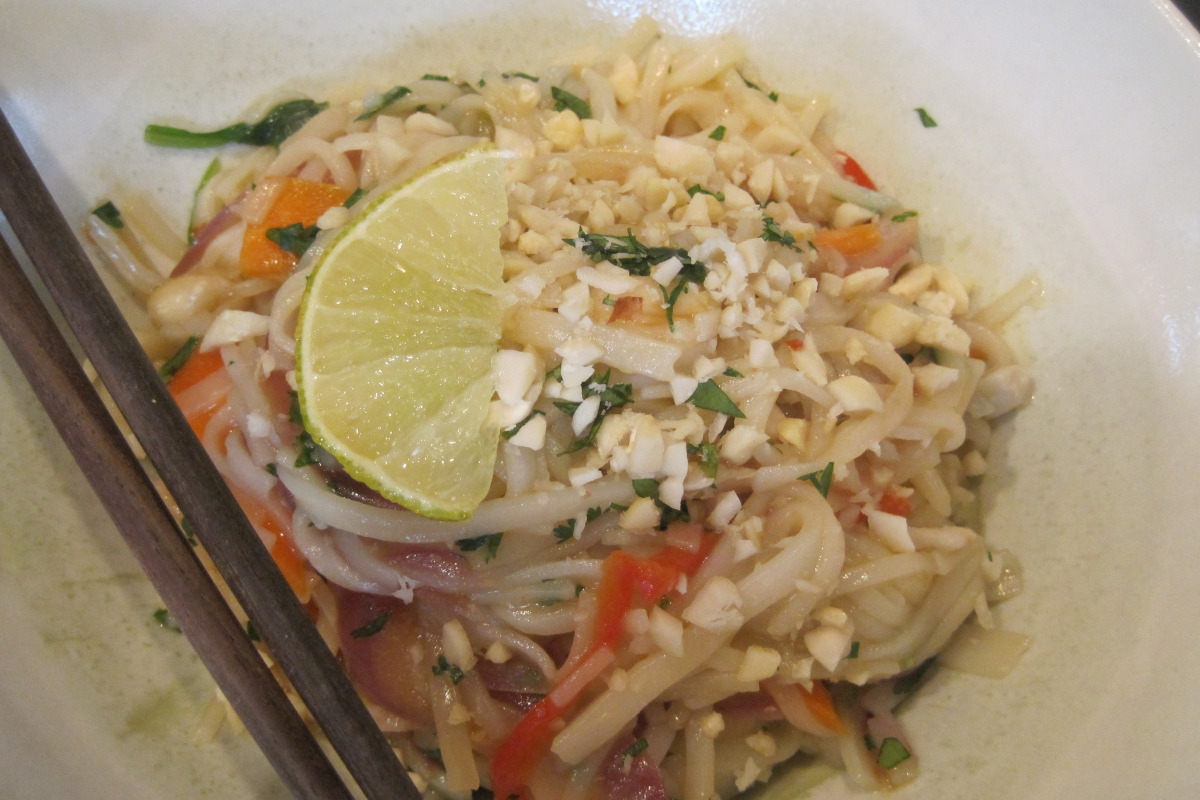
20. Vegetarian Thai Peanut Noodle Stir Fry. Rice noodles, snap peas, red bell pepper, carrots, peanut-lime sauce. Fifteen minutes, one pan, no compromises.
Bonus: Vegetarian Kimchi Fried Rice with Soft-Cooked Eggs is what you make with leftover rice and half a jar of kimchi at 9 PM.
Tofu three ways: the only technique guide you need
Tofu is the most-misunderstood weeknight protein. Three treatments cover 95% of Asian recipes.
Crispy pan-seared (for stir-fries, rice bowls, lettuce wraps)
Buy extra-firm tofu, not "firm" (too wet) or "silken" (falls apart). Press it: sandwich between paper towels under a heavy plate for 15–20 minutes. Cut into cubes or planks. Toss with 1 tablespoon cornstarch + a pinch of salt per block. Heat 3 tablespoons neutral oil in a nonstick or well-seasoned carbon-steel skillet over medium-high until it shimmers. Add tofu in one layer, do not touch it for 3–4 minutes per side. Golden on at least three sides is done.
Silky in soup (for miso, curry, hot pot)
Silken tofu — the kind sold in a tub or shrink-wrapped block that jiggles — goes into hot broth at the last minute. Cube it gently with a spoon in the tub before it hits the pot. It will not hold if you stir hard. Three minutes to warm through.
Marinated + grilled or roasted (for meal prep, salads)
Slice extra-firm tofu into ½-inch slabs. Marinate 30 minutes to 12 hours in ¼ cup soy + 2 tablespoons rice vinegar + 1 tablespoon maple syrup + 1 tablespoon toasted sesame oil + 2 cloves garlic + 1 inch grated ginger. Roast at 425°F for 25 minutes flipping once, or grill 3 minutes per side. Keeps five days.
The stir-fry framework: any vegetable + one aromatic + one sauce = dinner
If you memorize this ratio you never look at a recipe again for a weeknight stir-fry:
- 1 lb vegetables, cut into similar-sized pieces (halved snap peas, sliced carrots on the bias, broccoli florets, thin-sliced peppers, etc.)
- 1 tablespoon aromatic base: minced garlic + ginger, or shallots + Thai bird chili, or scallion whites + curry paste
- 3 tablespoons stir-fry sauce: 3 parts soy : 2 parts rice vinegar or wine : 1 part sugar/honey, plus a slurry of 1 teaspoon cornstarch + 2 tablespoons water
- 1 teaspoon toasted sesame oil, off-heat, at the very end
Sequence: hot pan → oil → aromatics 20 seconds → vegetables in order of density (carrots first, snap peas last) → sauce in when vegetables are still al dente → 30 seconds to thicken → sesame oil → done. Total time: 6–8 minutes once your prep is in a bowl.
You want the pan LOUD when everything hits. A quiet stir-fry is a boiled vegetable in disguise. If your electric range cannot maintain heat when a full pan lands, cook in two batches instead.
Quick noodle bowls under 20 minutes
Ranked by weeknight simplicity:
| Bowl | Noodle | Sauce | Total time |
|---|---|---|---|
| Peanut sesame | Instant ramen or udon | Peanut butter + soy + rice vinegar + honey + sriracha, thin with hot water | 12 min |
| Miso mushroom | Soba or udon | Miso paste + dashi + soy | 15 min |
| Coconut curry | Rice vermicelli | Red curry paste + coconut milk + lime + sugar | 20 min |
| Cold sesame | Wheat noodles | Tahini + sesame oil + soy + Chinese black vinegar + chili crisp | 15 min |
| Yakisoba | Fresh yakisoba noodles | Yakisoba sauce or Worcestershire + soy + ketchup + sugar | 12 min |
Two rules for all of them: cook the noodles in generous salted water; drain but never rinse hot noodles unless you are eating them cold. Rinsing hot noodles strips the surface starch that grabs the sauce.
Shopping list: one full week of meatless Asian dinners
Buy these on a Sunday and eat five meatless dinners without another store trip:
Fresh: 2 blocks extra-firm tofu, 1 tub silken tofu, 1 lb broccoli, 1 lb bok choy or Chinese greens, 2 red bell peppers, 1 lb snap peas or green beans, 1 large eggplant (or 2 Chinese eggplants), 1 bunch cilantro, 1 bunch scallions, 1 lb cremini mushrooms, 1 lime, 1 jalapeño or Thai chili, 4-inch knob ginger, 1 head garlic.
Refrigerated / pantry: 1 can coconut milk (full fat), 1 jar red curry paste, 1 jar kimchi, 1 pack rice noodles, 1 pack soba or udon, 1 dozen eggs, 1 jar peanut butter (natural), 1 jar chili crisp, 1 bottle mirin, 1 pack nori (optional garnish).
Assume you already have: soy sauce, sesame oil, rice vinegar, gochujang, cornstarch, neutral oil, rice.
That is roughly $65 in a US grocery store as of 2026 and covers five 4-serving dinners at ~$3.25 per portion.
Kitchen tools: what you actually need
Skip the specialty tools; a stir-fry works out of a real skillet. Here is the honest minimum:
- A 12-inch stainless or carbon-steel skillet. See our cookware guide for shortlist picks. Do NOT try to stir-fry in a nonstick pan — the coating fails above 500°F and stir-frying pushes 550°F+.
- A sharp chef's knife or Chinese vegetable cleaver. Vegetable prep IS the recipe for most of these dishes. Our knives guide has under-$100 picks that beat much fancier options.
- A wide spatula or spider. For moving tofu without breaking it and lifting noodles from boiling water. See utensils.
- Optional: a flat-bottom carbon-steel wok if you have a high-BTU burner (35,000+ BTU/hr or a proper outdoor wok burner). At home-range heat, a big skillet is functionally identical.
You do not need a rice cooker; a heavy pot with a tight lid cooks jasmine rice perfectly. You do not need a bamboo steamer for weeknight dinner; a metal steaming basket in a saucepan handles greens fine. You do not need "Asian" pans; you need a hot, wide, dry surface.
Common pitfalls (three failures we see every week)
1. Under-heated pan. If the oil is not shimmering — nearly smoking — the tofu will stick and the vegetables will steam. Preheat 60–90 seconds longer than feels right. A drop of water should dance and evaporate in under two seconds.
2. Overcrowded pan. More than 1 lb of vegetables in a 12-inch skillet means everything steams. Cook in two batches, hold the first batch warm.
3. Sauce added too early. If you pour the sauce over cold vegetables, it will pool and thin out. Add sauce only when the vegetables are 80% done and the pan is still ripping hot. It should sizzle and reduce in 30 seconds.
When NOT to reach for these dinners
Deep-flavor Asian home cooking (a long-simmered Vietnamese pho broth, a properly-lacquered Peking-style vegetable roast, a two-day-fermented dosa batter) rewards weekend project cooking, not Tuesday night. Do not attempt homemade dumplings, from-scratch ramen broth, or hand-pulled noodles after work — pick the batter-based, stir-fry, or one-bowl recipes here. When you have three hours on a Saturday, that is when the project cooking comes out.
Balancing sweet, salty, sour, spicy — the taste-as-you-go framework
Every Asian cuisine leans on the same flavor quadrant. If a dish tastes flat, one axis is off. Diagnose by asking:
- Flat and dull? Add salt — soy sauce, fish sauce (or vegetarian oyster sauce), or a pinch of MSG. 90% of "underseasoned" dishes are actually undersalted.
- Muddy and heavy? Add acid — a squeeze of lime, a splash of rice vinegar, or Chinese black vinegar for depth.
- Cloying and one-note? Add sour + heat together. Fresh chili + lime cuts through sweetness better than either alone.
- Sharp and abrasive? Add fat + sweetness — a spoon of sugar, honey, or coconut milk rounds edges.
Taste at three checkpoints: after the aromatics bloom, after the sauce integrates, and just before plating. Adjust once at each stage. That is the difference between "fine" and "why does theirs taste like the restaurant."
FAQ
The five most-asked questions are answered in our schema-embedded FAQ at the bottom of the page.
Sources and last verified
- Serious Eats — Asian vegetarian recipes collection: technique-heavy roundup with strong photography and tested procedures.
- Academy of Nutrition and Dietetics — Vegetarian diet basics: peer-reviewed nutrition context for a plant-forward diet.
- NYT Cooking — Vegetarian Asian recipes: editorially curated recipes across the region.
Last verified: 2026-07-08. Prices, product recommendations, and technique notes are current as of the review date.
Frequently asked questions
How do I make tofu that isn't rubbery?
What's the best all-purpose stir-fry sauce?
Do I need a wok or does a regular pan work?
Are all Asian sauces vegetarian?
How do I balance sweet, salty, sour, and spicy?
Sources
Plan a week of meals in two minutes.
Tell our AI what you have and what you like — it builds your plan, shopping list, and Instacart cart. No account needed.
Try free →