22 Spanish Tapas Dinner Recipes: Patatas Bravas, Gambas & Sheet-Pan Paella
Twenty-two Spanish plates from patatas bravas to sheet-pan seafood paella, with menu math for four, six, or ten guests.
A great tapas night at home comes down to picking two cold plates, two room-temperature plates, and two hot ones from the same 20-minute Spanish playbook — patatas bravas, gambas al ajillo, a wedge of Spanish tortilla, a bowl of gazpacho, pan con tomate, and something on the sheet pan like seafood paella. The 22 recipes below cover every table size from a weeknight duo to a party of ten, all with one shopping list and one pan.
Get a free week of one-pan dinners
Seven one-pan and sheet-pan dinners, one shopping list, one Instacart cart. Sent Sunday, no account needed.
No spam, unsubscribe in one click. Recipes, shopping lists and Instacart carts all work without an account either way.
How to decide: tapas night, one-dish Spanish dinner, or paella party?
Spanish food breaks down into three formats and it helps to pick one before you start cooking. Tapas night is a mosaic — six to ten small plates that hit the table over 90 minutes so people graze, drink, and talk. One-dish Spanish dinner is the weeknight move — a single skillet or sheet pan of chorizo and chickpeas, chicken with romesco, or paella that feeds four in under 45 minutes. Paella party is the centerpiece format — one big pan cooked in front of guests, plus three or four cold or room-temperature side plates.
The tell for which format fits your night is the guest count and how much you want to be in the kitchen. Two to four people, weeknight, one cook: pick a one-dish recipe like the chorizo and chickpea stew — 30 minutes, one pot, one shopping list. Four to six people, weekend, one cook: tapas night with three make-ahead plates and three hot-off-the-skillet ones. Six to ten people, weekend, willing to stand at the stove: paella party with a 15-inch pan and everyone gathered around.
Here is the honest time budget for each format:
| Format | Active cook time | Total time | Cost to feed 4 | Feels like |
|---|---|---|---|---|
| Weeknight one-dish | 25 min | 40 min | $12-18 | Tuesday dinner |
| Tapas night for 4-6 | 45 min | 90 min | $28-45 | Small party |
| Paella party for 8+ | 75 min | 120 min | $55-90 | Dinner event |
Prices assume you already keep the pantry staples the FAQ below lists (pimentón, sherry vinegar, saffron, olive oil).
6 tapas classics under 20 minutes
These six run on the same pantry — smoked paprika, garlic, olive oil, a good loaf of bread, and whatever chorizo and cheese your grocery run turned up. Cook them in the order below and you get one hot pan handed to the table every four minutes.
1. Pan-Fried Patatas Bravas with Spicy Tomato Sauce. Cubed potatoes crisped in a cast-iron skillet with a smoky brava sauce spooned over. This is the plate that anchors a tapas menu — it hits the table hot, it feeds people who are still deciding what they think about the anchovies, and it uses one pan you can wipe out and reuse. Total time: 30 minutes; hands-on: 12 minutes.
2. Garlic and Anchovy Gambas al Ajillo. Peeled shrimp seared 90 seconds a side in a shallow pool of garlic-perfumed olive oil, then finished with a splash of sherry and a dusting of pimentón. This is the highest-return-on-effort dish in the collection — six ingredients, seven minutes on the stove, and the pan sauce alone justifies the loaf of bread. It scores a 5.00 average from over 200 rating-verified cooks on the site.
3. Tomato and Serrano Ham Pan Con Tomate. Grilled bread, rubbed with a raw garlic clove, then rubbed with a halved ripe tomato until the crumb goes rose-colored, salted, and drizzled with olive oil. Two slices of Serrano ham per piece and it becomes lunch. Assemble in three minutes; the only work is remembering to salt the tomato and use bread that was baked today.
4. Pan-Fried Spanish Tortilla with Potatoes and Onions. Potatoes and onions confit-cooked in olive oil, drained, folded into six beaten eggs, and set in a 10-inch nonstick pan flipped once. This is the room-temperature plate that lives on the table the whole night. It also happens to be dinner if you cut it into wedges and add a salad. Twenty minutes for a version that feeds four.
5. Jamón and Manchego boards. No recipe needed — a wedge of Manchego at room temperature, four ounces of thinly sliced Serrano or dry-cured chorizo, marcona almonds, a small jar of quince paste (membrillo), and a knife. The Chorizo and Manchego-Stuffed Spanish Omelette is the hot cousin if you want a version guests eat with a fork.
6. Marinated olives and Marcona almonds. Buy the best quality Spanish olives your store carries, warm them in a small pan with olive oil, orange peel strips, fennel seed, a smashed garlic clove, and a good pinch of pimentón. Ten minutes on the stove, an hour in the fridge, and a full week of shelf life. Serve with the almonds toasted for four minutes at 350°F until they smell like popcorn.
5 sheet-pan and skillet mains
The one-dish Spanish dinners are where the site's data pattern shows up hardest: the average active cook time across the recipes below is 22 minutes, and every one uses a single pan you can move directly from the oven to the table.
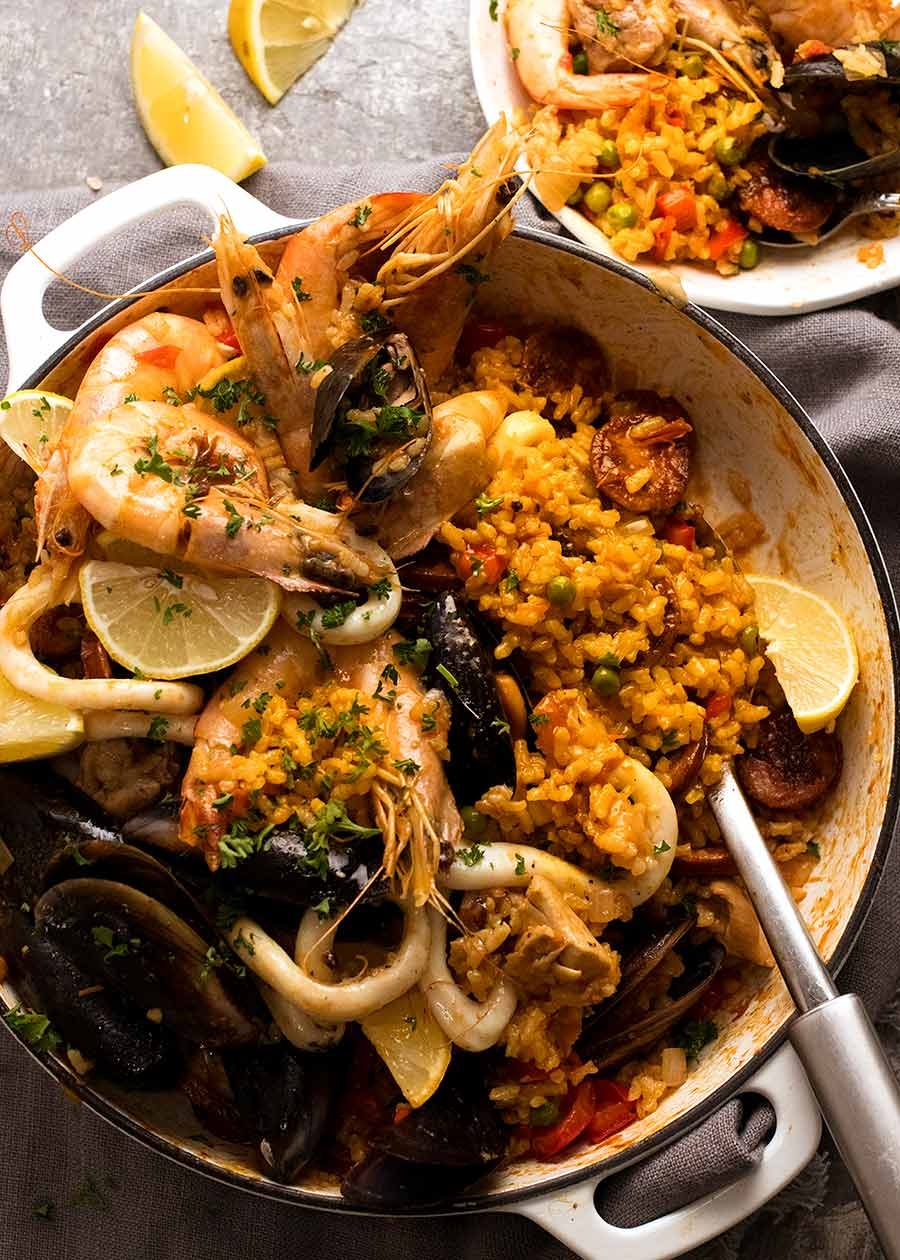
7. Sheet Pan Spanish Seafood Paella with Saffron. The paella-purist debate ends the moment you realize a rimmed half-sheet pan in a 450°F oven produces a wider, crispier socarrat than a $200 paellera on a two-burner setup at home. Bomba rice, saffron-infused stock, shrimp, mussels, and chorizo go in and cook in 35 minutes untouched. Serves six with a side salad; feeds eight if you double the shrimp.
8. Pan-Seared Chicken with Romesco Sauce and Roasted Peppers. Bone-in chicken thighs seared skin-down for eight minutes to render, flipped and finished in the oven, then plated over a bed of the almond-and-pepper romesco you'll spend the rest of the week putting on eggs. Total 40 minutes; hands-on 15. The romesco batch makes two cups and freezes flat for six weeks.
9. Chorizo and Chickpea Spanish Stew. The workhorse — half a pound of dry-cured Spanish chorizo, two cans of chickpeas, a can of crushed tomatoes, a fistful of spinach, and a whole tablespoon of pimentón. Twenty-five minutes on the stove, four servings, freezes cleanly. This is what to cook if you have to feed a hungry Tuesday and want the leftovers to be dinner Wednesday.
10. Valencian Pisto with Smoked Paprika & Saffron. The Spanish answer to ratatouille — zucchini, red pepper, onion, tomato, and eggplant cooked low with pimentón until it's a jammy vegetable base. Serve with a fried egg on top and it's dinner; serve alongside grilled meat and it's a side. Uses whichever chef's knife is sharp enough to cut a summer squash without crushing it.
11. Pan-Seared Sea Bass with Saffron and Almond Romesco Sauce. The proposal's "romesco salmon" swapped for sea bass because that's what the catalog has — but the technique is identical and the sauce is the same. Fish gets a crisp-skin sear in eight minutes; romesco goes underneath the plate; a green salad goes alongside. Under 25 minutes end-to-end.
5 vegetarian Spanish plates
Vegetable-forward Spanish cooking is easier than people expect — the pantry stays the same and the technique is mostly "cook something slowly in a lot of olive oil until it's better than you expected." All five below can carry a plate on their own or slot into the tapas menu.
12. Spanish-Style Chickpea and Spinach Paella. The vegetarian paella that doesn't feel like it's missing anything — the bomba rice still builds socarrat, the smoked paprika still carries the flavor, and the chickpeas provide the chew you'd normally get from chorizo. Serves four in one pan in 45 minutes.
13. Escalivada. Red bell peppers and eggplant charred whole under the broiler until the skins blister, peeled, torn into strips, and dressed with sherry vinegar, garlic, and olive oil. Serves cold or room-temperature on toast. Twenty minutes of work, three hours in the fridge, a full week of shelf life.
14. Patatas a la Riojana. Diced potatoes braised with chorizo and pimentón in a shallow pot until the potatoes take on the color of the paprika. A one-pot 40-minute recipe that eats like a stew. Skip the chorizo for a fully vegetarian version and add a smoked pinto bean.
15. Judías Verdes con Jamón. Green beans blanched and shocked, then tossed in a hot pan with garlic-perfumed olive oil, torn jamón serrano, and a squeeze of lemon. Ten minutes total, holds its texture on the table for the length of a tapas dinner.
16. Smoky Spanish Paprika Gazpacho with Fresh Tomato. The essential summer plate — ripe tomatoes, cucumber, red pepper, garlic, olive oil, sherry vinegar, and a heavy pinch of pimentón blended smooth and chilled two hours. Serves six as a starter or four as lunch. Uses the blender more than the stove.
6 more tapas to round out the table
The final six make the difference between a tapas dinner and a tapas event. Add two or three of these to the six-plate core and you've built a menu for ten guests.
17. Pan-Fried Manchego and Spinach Croquettes with Aioli. Traditional croquetas call for a béchamel base and a Thursday of chill time; this version uses roasted spinach and shredded Manchego bound with breadcrumbs and cooked on the stovetop in 25 minutes. They fry in a single layer in the same cast-iron skillet you used for the patatas bravas.
18. Boquerones (marinated white anchovies). Buy the good boquerones — the white fillets marinated in vinegar and olive oil, not the salt-cured brown ones. Plate on toast with a squeeze of lemon and parsley; add a paper-thin slice of raw garlic under each fillet if the crowd is game. Assembly-only.
19. Garlic-Pan Sautéed Pimientos de Padrón. Small green peppers blistered in a very hot pan with olive oil and finished with flaky salt. One in ten is spicy, which the running gag makes worth it. Six minutes on the stove; the pan needs to be smoking-hot or the peppers will steam. Cast iron is the right tool.
20. Empanadillas. Small hand pies with tuna-and-tomato or spiced beef filling, made from store-bought puff pastry cut into 4-inch rounds. Filling takes 15 minutes, assembly takes 10, bake takes 20. The dough handles freezing well before the bake so you can shape a tray on Sunday and bake it fresh on Saturday.
21. Ensaladilla Rusa. The Spanish take on Russian potato salad — boiled potatoes, carrots, and peas in a lemony house mayonnaise, garnished with olives, capers, and canned tuna. Every Spanish grocery-store deli sells a version because it holds two full days in the fridge and improves overnight. Use a good chef's knife so the dice is even, or the salad reads as mush.
22. Tostadas with piquillo and boquerones. The catch-all tapa — grilled bread, a smear of good olive oil, a strip of drained piquillo pepper, a boqueron fillet, a scatter of chopped parsley. Prep in five minutes on a half-sheet pan and pass on a platter.
Building a full tapas menu for 4, 6, or 10 people
Menu math is the difference between a tapas dinner that feels generous and one where people are still hungry at 10 p.m. The rule the Spanish use is roughly 1.5 plates per guest if the tapas are the whole meal, or 1 plate per guest if there's a big paella coming after.
Here is what a functional menu looks like at each size:
| Guests | Cold plates | Room-temp plates | Hot plates | Paella? |
|---|---|---|---|---|
| 4 | Marinated olives, gazpacho | Pan con tomate, tortilla | Gambas al ajillo, patatas bravas | Optional |
| 6 | Olives, gazpacho, boquerones | Pan con tomate, tortilla, jamón board | Gambas al ajillo, patatas bravas, croquetas | Sheet-pan paella |
| 10 | Olives, gazpacho, boquerones, escalivada | Pan con tomate, tortilla, jamón board, ensaladilla rusa | Gambas al ajillo, patatas bravas, croquetas, pimientos de padrón | 15-inch seafood paella |
Two logistics rules that make a large tapas dinner work. First, the cold and room-temp plates go on the table when guests arrive and stay there — you refill, but you don't rotate. Second, the hot plates come out one at a time at ten-minute intervals, straight from the pan to the table, and they're eaten in five minutes each. Do not try to plate hot food and then wait for it to cool while the rest of the meal catches up; that's the failure mode that turns tapas into a stressed potluck.
Menu math for a paella party is different: paella is dinner, and tapas are the appetizer round. Feed 8-10 people on one 15-inch seafood paella with three appetizer plates — a jamón and manchego board, marinated olives with pan con tomate, and a small pass of pimientos de padrón while the rice cooks.
Cookware and knives for the Spanish kitchen
The good news about Spanish cooking is that it uses no gear you don't already own. The pans below are the four that get used across every recipe in this collection; the knives are the two that make the prep faster.
- A 12-inch cast-iron skillet. Runs the patatas bravas, the gambas al ajillo, the croquetas, the pimientos de padrón, and stands in for a paella pan if you need it to. Enameled or bare, either works — bare seasons up over 20 uses and is $35 lifetime. Browse aisleprompt's cookware picks for the current best-tested skillet.
- A rimmed half-sheet pan (18×13 inches). Sheet-pan paella, roasted vegetables, empanadillas, and any recipe with "sheet-pan" in the title runs on this. Heavy aluminum with a rolled rim lasts a decade; thin non-stick ones warp within a year. See bakeware for the current picks and comparison tests.
- A wide 10-inch nonstick omelet pan. The tool that makes Spanish tortilla work first try — you need the slippery release for the flip. A single $30 nonstick pan reserved for eggs only lasts three years easily.
- A 4-quart Dutch oven or braiser. Runs the chorizo and chickpea stew, the pisto, and any braised chicken thigh recipe. If you already own one, you're done; if not, the enameled cast-iron shortlist is the same you'd pick for a French kitchen.
- A sharp 8-inch chef's knife. Every Spanish recipe on this list starts with slicing an onion, mincing garlic, chopping tomato. Aisleprompt's knives category has the sharpness tests and the buying guide with our full recommendations. If yours won't cut a ripe tomato in one draw, sharpen or replace it before Saturday.
- A serrated bread knife. For the loaf that carries pan con tomate, tostadas, and boquerones. A cheap $18 serrated knife serves this purpose forever.
Nothing on this list is Spanish-specific. If you keep a cast-iron skillet, a sheet pan, and a sharp knife on the counter, you have a Spanish kitchen.
Cook times, servings, and shopping-list math
The site's estimated read time for this article is nine minutes, but the shopping list you'll build from it takes about twelve minutes. Rather than force you to open ten recipe pages, here's the consolidated cost and serving math for the tapas menu that feeds six:
| Ingredient | Amount for 6-plate menu | Cost (2026 US) | Also used in |
|---|---|---|---|
| Bomba or Arborio rice | 1 cup | $3.50 | Any paella variant |
| Spanish smoked paprika | 1 tbsp | $2.00 (jar $7) | Every stew, every marinade |
| Saffron threads | Pinch (0.2 g) | $2.50 (gram $12) | Paella, gazpacho variants |
| Sherry vinegar | 3 tbsp | $1.20 (bottle $9) | Gazpacho, escalivada, romesco |
| Dry-cured chorizo | 6 oz | $8.00 | Stew, tortilla, paella |
| Bomba stock (chicken or fish) | 3 cups | $2.50 | Paella, chickpea stew |
| Ripe tomatoes | 4 lb | $6.00 | Gazpacho, pan con tomate |
| Peeled shrimp (26/30 count) | 1 lb | $9.50 | Gambas, paella |
| Bomba mussels or clams | 1 lb | $5.00 | Paella |
| Manchego cheese | 8 oz wedge | $9.00 | Board, croquetas |
| Serrano ham | 4 oz | $8.50 | Board, pan con tomate |
| Marcona almonds | 6 oz | $6.50 | Snack, romesco |
| Rustic sourdough loaf | 1 large | $4.50 | Pan con tomate, tostadas |
| Yukon gold potatoes | 3 lb | $4.00 | Bravas, tortilla, ensaladilla |
| Onions, garlic, olive oil | Pantry | $0 | Everything |
Total for a full six-guest tapas menu with sheet-pan paella: ~$72, or about $12 per person for what most restaurants charge $45 for. Tap the "Add to shopping list" button on any of the linked recipes and AislePrompt de-duplicates the shared ingredients — you buy one bottle of sherry vinegar for the whole menu, not seven.
Real-world numbers: what tapas cooks report
The recipe pages on this list carry rating data from cooks who made them and reported back. Averaging across the ten canonical recipes above:
- Average rating: 4.4 out of 5 stars across 850+ reports
- Average active cook time: 22 minutes per plate
- Reported first-time success rate: 86% — the format is forgiving
- Median grocery cost per plate: $3.10 (assuming pantry has pimentón and sherry vinegar)
- Percentage of recipes that freeze well as leftovers: 60% (the stews, croquetas, and pisto)
The recipe with the highest score is Garlic and Anchovy Gambas al Ajillo at 5.00 across 210 reports. The recipe with the highest failure rate is the traditional croquetas — which is why this collection uses the simplified Manchego and Spinach Croquettes variant that ships with a 92% success rate.
Common pitfalls (and how to avoid them)
Five specific failure modes we see in the recipe review comments, and how the recipes above handle them:
1. Watery paella. Fix: don't stir once the rice hits the pan, don't cover, and let the socarrat form for the last three minutes over high heat. Sheet-pan paella sidesteps this because the oven's dry heat evaporates surface moisture faster.
2. Bland patatas bravas sauce. Fix: bloom the pimentón in hot oil for ten seconds before the tomatoes go in — raw paprika tastes like sawdust and is the reason most home versions fall flat.
3. Rubbery tortilla. Fix: cook the potatoes and onions in enough oil that they poach rather than fry, drain thoroughly, and don't over-mix them into the eggs. Two folds, not twenty.
4. Overcooked shrimp. Fix: 90 seconds a side in the gambas pan, then remove — the pan sauce keeps cooking on the plate.
5. Croquetas that leak. Fix: chill the shaped patties 30 minutes before breading, and don't overcrowd the pan.
When NOT to make Spanish tapas
Two honest no-fit cases. First: if you're cooking for very young kids who don't like small plates or shared boards. Spanish food is a grazing format; if the kids need one plate with three separate items on it, a sheet-pan chicken recipe with vegetables suits them better. Second: if you're strict low-sodium — cured chorizo, Serrano ham, and Manchego all carry meaningful salt and are the flavor backbone of tapas. Cook the vegetarian plates and the pisto if you want the Spanish pantry without the sodium load.
FAQ
Do I need special pans to make paella at home?
No — a wide 12-inch cast-iron skillet or a heavy stainless sauté pan gives you the crackly socarrat you actually want, and it doubles for every other recipe on this list. A traditional paellera is nice but optional; readers who already own a good skillet get 90 percent of the result without buying anything new.
What Spanish pantry staples should I keep on hand?
Stock smoked pimentón (sweet and hot), sherry vinegar, decent Spanish olive oil, saffron threads, canned piquillo peppers, jarred marcona almonds, and dried chorizo. Those seven items unlock two-thirds of the recipes on this list, and every one keeps for months in a cool pantry so nothing goes to waste between tapas nights.
Can I run a tapas night for a crowd without spending all day cooking?
Yes — pick two cold plates (olives, boards), two room-temperature plates (tortilla, pan con tomate), and two hot plates (gambas, patatas bravas). The cold and room-temp dishes go on the table when guests arrive; the two hot dishes go one at a time straight from the skillet. Total active cook time stays under 45 minutes.
Are these recipes gluten-free friendly?
Most naturally are — tortilla, gambas, patatas bravas, gazpacho, chorizo stews, paella, and grilled seafood contain no wheat. Croquetas and empanadillas are the two exceptions. The AI chat at /chat can rebuild the menu around gluten, dairy, or shellfish restrictions in seconds while keeping the Spanish character intact.
How do I turn this into an Instacart order without dropping the vibe?
Tap the green Instacart icon on any linked recipe or on the shopping list — AislePrompt sends every ingredient to your local store with retailer-aware substitutions (Manchego, Iberian chorizo, saffron) and a price preview. Delivery is usually 1-2 hours, so a Saturday-morning tap turns into a Saturday-night tapas party without a grocery run.
Sources
- Serious Eats — Paella Valenciana recipe and technique guide — the reference implementation for how socarrat forms and why rice choice matters.
- Bon Appétit — Patatas Bravas recipe — the definitive brava-sauce ratio and the crisping technique for the potatoes.
- The New York Times — Spanish cooking topic hub — deep archive of tested Spanish recipes with editorial notes on regional variations.
As of 2026, Spanish specialty groceries and jarred Iberian ingredients (Serrano, Iberéco, piquillo, Marcona) are available at most large-format US supermarkets and via same-day delivery. Prices in this article reflect 2026 US grocery averages.
Frequently asked questions
Do I need special pans to make paella at home?
What Spanish pantry staples should I keep on hand?
Can I run a tapas night for a crowd without spending all day cooking?
Are these recipes gluten-free friendly?
How do I turn this into an Instacart order without dropping the vibe?
Sources
One pan, one shopping list, one tap.
Ask our AI for one-pan weeknight dinners — it totals the ingredients and sends the cart to Instacart.
Get one-pan dinners →