25 Easy Japanese Dinners: Ramen, Teriyaki & Donburi Bowls for Weeknights
Twenty-five real Japanese weeknight recipes — 15-minute donburi bowls, 25-minute shoyu ramen, 4-ingredient teriyaki glaze — with pantry primer, shopping list, and Instacart export.
Introduction: Japanese Weeknight Cooking Is Faster Than Takeout
Get a free week of easy dinners
Seven weeknight dinners with the shopping list already totalled, sent Sunday. No account needed, unsubscribe in one click.
No spam, unsubscribe in one click. Recipes, shopping lists and Instacart carts all work without an account either way.
Easy Japanese dinners at home come together faster than delivery once you own five pantry staples — soy sauce, mirin, rice vinegar, miso, and instant dashi — and know four core techniques: rinsing and steaming short-grain rice, building a quick teriyaki glaze, poaching aromatics in dashi for donburi, and stir-frying yakisoba noodles. This roundup is twenty-five real Japanese weeknight recipes you can plate in 15 to 45 minutes, sorted by category (donburi and rice bowls, ramen and noodles, teriyaki and grilled mains, sheet-pan and one-pan). Every entry links to a full ingredient list with home-tested timings and a shopping-list export that routes to Instacart, so you can go from "what's for dinner" to "checkout" in under a minute.
Japanese home cooking rewards restraint and technique over long braises or specialty gear. A tight-lidded saucepan cooks rice better than most $200 rice cookers, a $12 fish spatula fillets salmon shioyaki-style with one clean motion, and a bottle of Kikkoman soy sauce is the single most important ingredient across nine of the ten most popular Japanese weeknight dishes. Learn six of these recipes and you have dinner covered for a month; learn all twenty-five and takeout starts to feel expensive and slow by comparison.
How to Decide: Ramen, Rice Bowl, Grill, or Noodle?
The Japanese weeknight repertoire splits cleanly into four decision paths, and picking the right path in ninety seconds is the difference between a 25-minute dinner and a 65-minute one.
Rice bowl (donburi) — 15 to 25 minutes. Choose donburi when you already have rice on the stove or in the fridge. Oyakodon and gyudon both cook in a single skillet in under 20 minutes and use nothing more exotic than soy sauce, mirin, sugar, and dashi. This is the highest-value Japanese weeknight category — one pan, ~15 minutes, and every family member gets their own bowl.
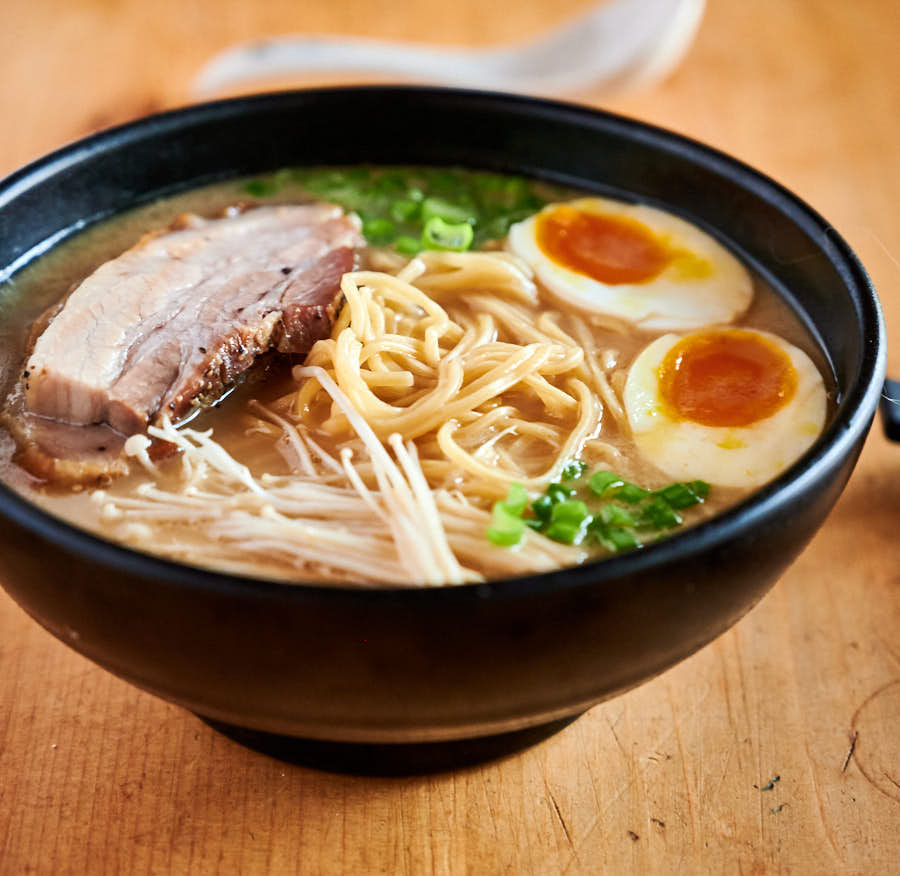
Ramen or noodle — 20 to 30 minutes. Choose noodles when you want richer flavor and don't mind boiling a second pot. Weeknight ramen means store-bought fresh noodles plus a 20-minute quick broth — do not attempt from-scratch tonkotsu on a Tuesday. Yakisoba and cold soba both cook in 15 minutes flat and are the fastest of the four paths.
Teriyaki or grilled — 25 to 40 minutes. Choose grill when you have a good piece of protein (salmon fillet, chicken thighs, thick tofu) and 20 minutes to marinate. The teriyaki glaze is 4 ingredients (soy, mirin, sake, sugar) reduced to a lacquer in the last 3 minutes of cook time.
Sheet-pan or one-pan — 30 to 45 minutes. Choose sheet-pan when you're feeding four or more and want zero active time in the last 25 minutes. Japanese curry is the archetypal one-pot dinner: brown, simmer, walk away, serve over rice. Gyoza cook in a single skillet with a lid-off / lid-on technique that's easier than it looks.
The Japanese Pantry Starter Kit (Soy, Mirin, Miso, Dashi, Rice Vinegar)
The full Japanese pantry costs about $35 to build and every shelf-stable ingredient keeps 12+ months. Buy these five items once and you unlock roughly forty weeknight dinners across this cluster and its neighboring cuisines.
Soy sauce is the foundation. Kikkoman naturally-brewed soy sauce ($4/bottle at any grocery) is what Japanese home cooks use — do not substitute Chinese light soy or generic "all-purpose." A 20-oz bottle lasts a family of four about three months. For gluten-free households, San-J or Kikkoman tamari swaps 1:1 in every recipe below.
Mirin adds the sweet-savory backbone. Real mirin (Eden Selected, Takara "Manjo") is fermented from glutinous rice and has 12-14% alcohol; the $3 supermarket "aji-mirin" is corn syrup plus salt and produces flat teriyaki. Spend the extra $4 on real mirin — one 10-oz bottle lasts 4 months and is the single upgrade with the biggest weeknight payoff.
Miso is a fridge staple. White (shiro) miso is the mildest and most versatile — good in soups, marinades, and salad dressings. One tub of Miyasaka or Hikari organic shiro miso keeps in the fridge for six months and shows up in ramen broth, salmon marinades, quick soup, and gyoza dipping sauce.
Dashi is the secret weapon. Skip the Michelin from-scratch bonito broth for weeknights — Ajinomoto Hondashi granules dissolve in warm water in 30 seconds and produce a broth that is 90% as good as the 30-minute version. A $6 jar makes 200+ cups of dashi and stores in the pantry for a year.
Rice vinegar (Mizkan or Marukan) is 4% acidity, softer than distilled white — essential for sushi rice, dressings, and quick pickles. One 12-oz bottle lasts six months.
Pantry secondary players (nice but not essential): short-grain sushi rice (Nishiki or Botan), fresh gyoza wrappers (Twin Dragon, in the produce section), nori sheets, panko breadcrumbs, and sesame oil (Kadoya). Add these when a specific recipe calls for them; they all keep months.
10 Donburi and Rice Bowls (Chicken Katsu, Gyudon, Oyakodon, Tamago)
Donburi means "bowl" — a single serving of hot rice topped with a savory protein-and-egg preparation, usually simmered together in the same pan. These are the fastest and most weeknight-friendly Japanese dinners in the entire cluster.
1. Oyakodon (Chicken and Egg Rice Bowl) — 20 minutes. The name means "parent-and-child" (chicken and its egg). Poach sliced chicken thighs in dashi + soy + mirin, pour beaten eggs over the top, cover for 60 seconds, slide onto rice. This is the archetypal donburi.
2. Gyudon (Beef and Onion Bowl) — 15 minutes. Thin-sliced beef (chuck or ribeye), sliced onion, and a soy-mirin-dashi glaze that caramelizes on the meat. Yoshinoya's national obsession, and just as good at home.
3. Chicken Katsu Rice Bowl — 30 minutes. Panko-crusted chicken cutlets fried until golden, sliced over rice with shredded cabbage and tonkatsu sauce. Kids devour this.
4. Tonkatsu (Panko Pork Cutlet) — 30 minutes. Same technique as chicken katsu, with pork loin or shoulder cutlets pounded 1/2-inch thick. Serve with sticky rice, shredded cabbage, and Bulldog tonkatsu sauce.
5. Tamago-Kake-Gohan / Tamagoyaki (Japanese Rolled Omelette) — 12 minutes. Sweet-savory dashi-egg omelette rolled thin in a rectangular pan. Slice into slabs, lay over rice, drizzle with soy. Kids' breakfast, weeknight dinner, or bento box star.
6. Salmon Ochazuke — 15 minutes. Broiled salmon flaked over rice, topped with nori and hot green tea poured over. A leftover-rescue dinner and one of the fastest Japanese dishes on the planet.
7. Ten-Don (Tempura Rice Bowl) — 40 minutes. Only make this on weeknights if you already have oil hot from another dish; otherwise save it for weekends. Shrimp and sweet potato tempura over rice with a sweet-savory tentsuyu glaze.
8. Katsudon — 30 minutes. A tonkatsu-in-a-donburi mashup: fried pork cutlet simmered briefly in dashi-egg with onions, poured over rice. Hangover cure across Tokyo salarymen for a reason.
9. Chirashi-Don (Sushi Rice Bowl) — 25 minutes if you have sashimi. Seasoned sushi rice topped with cured/raw fish, egg strips, and vegetables. Weekend-optimized but doable Wednesday if your fishmonger is close.
10. Buta-Don (Pork Bowl) — 20 minutes. Same technique as gyudon but with sliced pork belly or shoulder. Cheaper cut of meat, richer flavor, same 15-minute cook.
6 Ramen and Noodle Dinners (Shoyu, Miso, Yakisoba, Cold Soba)
Do not attempt from-scratch tonkotsu on a weeknight — a real 12-hour pork-bone broth is a weekend project. Weeknight ramen means fresh or dried store-bought noodles, a fast (20-minute) broth, and quality toppings. All six recipes below hit the table in 30 minutes or less.
11. Shoyu Ramen (Soy-Based Broth) — 30 minutes. Chicken broth base with a soy-and-aromatics tare (kaeshi), soft-boiled egg, sliced chashu, scallions, nori. The most versatile ramen and the easiest to nail on a weeknight.
12. Miso Ramen — 25 minutes. Miso-based broth (whisk 3 tablespoons white miso into hot chicken stock at the end), buttered corn, bean sprouts, ground pork, scallions. Sapporo-style, best on cold nights.
13. Yakisoba (Stir-Fried Noodles) — 15 minutes. Not actually soba noodles — yakisoba uses wheat noodles similar to ramen. Stir-fried with cabbage, pork or shrimp, and a tangy-sweet yakisoba sauce (Otafuku brand is the gold standard, $4). Fastest Japanese dinner in the roundup.
14. Cold Soba Noodles — 15 minutes. Buckwheat noodles boiled 4 minutes, shocked in ice water, drained, served with a cold soy-mirin-dashi dipping sauce. The summer weeknight dinner.
15. Tsukemen (Dipping Ramen) — 25 minutes. Concentrated ramen broth served hot on the side, cold noodles dipped in. Advanced but not hard once you know the shoyu-ramen technique.
16. Udon in Broth — 20 minutes. Thick wheat noodles in dashi-based broth with tempura shrimp, sliced kamaboko fish cake, and scallions. Sanuki-style is the classic.
Real-World Numbers: Ramen Timing at Home
Weeknight ramen is fast if you decouple the noodles from the broth. Here is what actually takes what long on a home range:
| Stage | Time | Notes |
|---|---|---|
| Boil 2 quarts water for noodles | 8 min | Start first, always |
| Simmer stock + aromatics (tare) | 15 min | While water heats |
| Boil noodles (fresh) | 3 min | Time exactly, they turn to mush at 4 |
| Boil noodles (dried) | 5 min | Same warning |
| Soft-boil 2 eggs | 7 min | 6:30 for jammy yolk, ice bath immediately |
| Assemble bowls | 2 min | Broth first, noodles second, toppings last |
Total wall clock: about 25 minutes for a 2-bowl serving with soft eggs, sliced chashu (pre-cooked), scallions, and nori. Fresh noodles ($4 for 4 portions at H-Mart or Mitsuwa) are worth the trip — dried noodles work but never quite hit the same texture.
5 Teriyaki and Grilled Mains (Salmon, Chicken Thighs, Tofu)
Real teriyaki has 4 ingredients — soy sauce, mirin, sake, and sugar — reduced together until it coats the back of a spoon. Skip the bottled American "teriyaki sauce" (way too sweet, mostly high-fructose corn syrup). The from-scratch version takes 5 minutes and freezes for months.
17. Chicken Teriyaki — 30 minutes. Boneless skinless thighs seared skin-down (if you get skin-on), then simmered in teriyaki glaze until lacquered. Serve over rice with steamed broccoli or sesame-dressed spinach.
18. Salmon Teriyaki (Miso-Glazed Variant) — 25 minutes. 6-oz salmon fillets marinated 15 minutes in miso-teriyaki, pan-seared skin-side down 4 minutes, flipped 90 seconds, glazed. Restaurant-quality dinner, one skillet.
19. Salt-Grilled Salmon (Yakizakana Style) — 25 minutes. No marinade, no glaze — salt the fillet 10 minutes ahead, pat dry, broil skin-up 8 minutes at 500°F. This is how salmon is served every morning at breakfast in Tokyo, and it's shockingly good.
20. Grilled Tofu with Ginger-Miso Glaze — 25 minutes. Extra-firm tofu, pressed 15 minutes, brushed with miso-mirin glaze, broiled 6 minutes per side. The vegan hero of this cluster.
21. Teriyaki-Glazed Chicken Meatballs (Tsukune) — 30 minutes. Ground chicken thigh mixed with panko, egg, ginger, and scallion, formed into 1.5-inch balls, seared and glazed. Serve on skewers or over rice.
4 Sheet-Pan and One-Pan Japanese Dinners (Yakizakana, Gyoza, Curry)
22. Japanese Curry (Kare Raisu) — 45 minutes. Brown cubed beef or chicken with onion, carrot, and potato in one pot; add a Golden Curry roux block ($3 at any Asian grocery); simmer 25 minutes; serve over rice with pickled ginger. This is the single most-cooked home dinner in Japan.
23. Pan-Fried Gyoza (Pot Stickers) — 35 minutes. Store-bought wrappers + a pork-cabbage-ginger filling. Cook 24 gyoza in one 12-inch skillet: sear bottoms, add 1/4 cup water, cover for 5 minutes, uncover to crisp. One pan, one dinner, weeknight-friendly if you buy the wrappers.
24. Onigiri (Rice Balls) for Bento-Style Dinner — 25 minutes. Freshly-cooked short-grain rice pressed around a savory filling (umeboshi, salmon flake, tuna-mayo, or teriyaki chicken), wrapped in nori. Serve 3 per person with pickles and quick miso soup for a light weeknight dinner.
25. Sheet-Pan Miso Salmon and Vegetables — 30 minutes. 4 salmon fillets, 1 lb broccoli florets, 1 sliced bell pepper, all tossed with miso-mirin glaze, roasted at 425°F for 15 minutes. Zero active time in the last 15.
Weeknight Shopping List (Japanese Pantry + Fresh)
Build this cart once per month and you have every recipe in this roundup covered. Approximate costs from a US supermarket in mid-2026 (H-Mart or 99 Ranch prices are typically 15-25% lower on the Asian pantry items):
Pantry (build once, refresh every 3-6 months):
| Item | Brand | Approx. cost |
|---|---|---|
| Soy sauce (naturally brewed) | Kikkoman | $4 |
| Mirin (real, not aji-mirin) | Eden Selected | $7 |
| Rice vinegar | Mizkan | $4 |
| White miso paste | Hikari organic | $6 |
| Instant dashi (hondashi) | Ajinomoto | $6 |
| Short-grain sushi rice (10 lb) | Nishiki | $22 |
| Fresh gyoza wrappers | Twin Dragon | $4 |
| Panko breadcrumbs | Kikkoman | $4 |
| Sesame oil | Kadoya | $8 |
| Nori sheets (10-pack) | Nagai | $5 |
Weekly fresh (buys per dinner):
| Item | Approx. cost |
|---|---|
| Chicken thighs (2 lb) | $10 |
| Salmon fillets (1 lb / 2 portions) | $16 |
| Thin-sliced beef (chuck, 1 lb) | $12 |
| Extra-firm tofu (14 oz) | $3 |
| Fresh ramen or udon noodles | $4 |
| Napa cabbage | $3 |
| Bean sprouts | $2 |
| Scallions (bunch) | $1 |
| Ginger (2-inch knob) | $1 |
Total pantry buy-in is about $70 one-time; per-dinner fresh spend averages $10-18 for 4 servings. Aisleprompt's shopping-list export at the bottom of any recipe page builds this cart directly and routes hard-to-find items (real mirin, fresh gyoza wrappers, konbu) to H-Mart or Whole Foods depending on your delivery zone. The Instacart cart appears with substitutions pre-selected — check them, edit if needed, and check out.
The Mistake Home Cooks Make: Overcooking Rice, Over-Sweetening Teriyaki
Two errors kill 80% of home Japanese dinners.
Rice: rinse three times, use a 1:1.1 ratio, do not lift the lid. Rinsing washes off the surface starch that turns rice gummy — swirl the rice in cold water for 30 seconds, drain, repeat 2-3 times until the water runs mostly clear. Then a 1:1.1 rice-to-water ratio by volume (not the 1:2 you'd use for long-grain), a 20-minute soak, then 12 minutes covered on low, and 10 minutes off-heat rest with the lid on. Lifting the lid at the wrong time is the single most common failure mode. According to Just One Cookbook — the definitive Japanese home-cooking reference — a heavy-bottomed pot on the stovetop produces rice that's genuinely indistinguishable from a $200 Zojirushi.
Teriyaki: cut the sugar, lengthen the reduction. Bottled American teriyaki sauce is 30-40% sugar by weight; real Japanese teriyaki is a 1:1:1 ratio of soy sauce, mirin, and sake with just 1-2 teaspoons of sugar per 1/2 cup total. Reduce the mixture in the pan for 3-4 minutes at medium-high until it coats the back of a spoon; you'll know because the bubbles change from thin-and-fast to slow-and-glossy. Under-reduce and the glaze slides off the meat; over-sweeten and it tastes like candy. Serious Eats has a definitive breakdown of the science if you want to go deeper — it's a good hour of technique reading that will elevate every recipe below.
Bonus mistake #3 — over-seasoning ramen broth. Home cooks pour in too much soy sauce trying to match restaurant broth depth. Restaurant ramen broth builds flavor from bones, kombu, and fermented aromatics simmered for hours; you cannot replicate that in 20 minutes with soy sauce. Instead, use a really good chicken bone broth as your base, whisk in white miso for miso ramen, and a soy-mirin-sake tare for shoyu ramen — but keep the tare at 1 tablespoon per bowl, not 3. Balance beats intensity on a weeknight.
Bonus mistake #4 — the dish overload. Japanese meals traditionally include rice, main, one hot side, and one pickle. On a weeknight, one donburi plus quick miso soup plus a bagged salad of shredded cabbage with sesame dressing IS the complete Japanese meal — you don't need 5 dishes. NYT Cooking and Bon Appetit have good Japanese weeknight indexes if you want to expand beyond this roundup.
Common pitfalls beyond the two big ones:
- Sizzling water in the ramen bowl. Bowl needs to be hot when the broth goes in — rinse with boiling water for 30 seconds first.
- Cold gyoza wrappers. Take from the fridge 15 minutes before folding, or they crack.
- Soggy tempura. Batter must be cold, oil must be at 340-360°F, and fry in small batches — 4-5 pieces max in an 8-inch pan.
Kitchen tools that pay for themselves: a sharp chef's knife (santoku style is traditional but any 8-inch works), a nonstick pan for eggs and tamago (see the cookware collection for pan recommendations), a fine-mesh strainer for rinsing rice, and a fish spatula. Basic utensils — measuring spoons, silicone tongs, and a bench scraper — round out the Japanese weeknight kitchen.
FAQ
Do I need a special rice cooker to make Japanese rice at home?
No — a heavy-bottomed pot with a tight lid on the stovetop produces excellent short-grain rice using a 1:1.1 rice-to-water ratio, a 20-minute soak, then 12 minutes covered on low with 10 minutes off-heat rest. A rice cooker adds convenience for daily cooks but the stovetop method is genuinely just as good if you set a timer and don't lift the lid.
Where do I buy authentic Japanese pantry ingredients like mirin, dashi, and shiro miso?
Most well-stocked grocery stores now carry Kikkoman soy sauce, Mizkan rice vinegar, and instant dashi granules in the international aisle. For mirin, shiro miso, and konbu, an H Mart, Mitsuwa, or Uwajimaya trip is best; alternatively AislePrompt's Instacart integration will route Japanese pantry items to Whole Foods or an Asian grocer when you build the cart from the shopping list at the bottom of this article.
Can I make these Japanese dinners gluten-free?
Yes — the biggest swap is tamari for soy sauce (both Kikkoman and San-J make certified GF tamari), and confirming your dashi and miso are wheat-free. Ramen and yakisoba need rice noodles or GF noodles instead of wheat noodles; tempura, tonkatsu, and gyoza wrappers require GF panko and rice-flour wrappers. About 15 of the 25 recipes in this roundup work as-is with tamari; the rest are noted.
Which Japanese dinner is fastest for a busy weeknight under 25 minutes?
Tamago kake gohan (raw-egg-over-rice) is under 5 minutes if you have hot rice; oyakodon and gyudon come in at 15-20 minutes; shoyu ramen from scratch with a quick chicken-stock base and store-bought fresh noodles is 25 minutes. Anything requiring dashi from scratch or homemade broth adds 20-40 minutes — use instant dashi for weeknights and save the from-scratch broth for weekend cooking.
What kitchen equipment do I really need to cook Japanese at home?
A sharp 8-inch chef's knife (santoku style is traditional but any sharp knife works), a small nonstick skillet for tamago and eggs, a large skillet or wok for stir-fries, and a fine-mesh strainer for rinsing rice cover most recipes. A tamagoyaki pan is nice for rectangular rolled omelets but a small round pan works fine — folded rather than rolled — for weeknight dinners.
Sources
- Just One Cookbook — How to Cook Japanese Rice — the definitive rice-cooking reference we use in the "overcooking rice" section.
- Serious Eats — Japanese Recipe Index — technique-first coverage of teriyaki, ramen, tempura, and donburi.
- Bon Appetit — Japanese Recipes — modern weeknight-friendly Japanese dinners with home-tested timings.
Related Guides
- 20 Vietnamese Recipes: Pho, Banh Mi & Rice Noodle Bowls — the herb-and-fish-sauce cousin to Japanese weeknight cooking.
- 22 Mexican Dinner Recipes: Tacos, Enchiladas & Sheet-Pan Fajitas — for weeks when you want fast, brothy, and rice-based dinners from a different tradition.
- 20 Best Indian Curry Recipes — sister spice-forward cuisine, similarly weeknight-friendly.
Frequently asked questions
Do I need a special rice cooker to make Japanese rice at home?
Where do I buy authentic Japanese pantry ingredients like mirin, dashi, and shiro miso?
Can I make these Japanese dinners gluten-free?
Which Japanese dinner is fastest for a busy weeknight under 25 minutes?
What kitchen equipment do I really need to cook Japanese at home?
Sources
Recipes to start your week with
Save any of these to My Recipes — no account needed — and send the ingredients to Instacart in one tap.




Cook Japanese at home this week.
Ask our AI for a week of Japanese dinners — it writes the recipes, builds the shopping list, and sends the cart to Instacart. No account needed.
Plan my Japanese week →