Best Colanders and Strainers for 2026: Top Picks + Buying Guide
A good colander is inexpensive and lasts for decades. Here's the size, hole diameter and base type that actually matter, plus the five worth buying.
Where to buy these picks
Affiliate links: we may earn a commission on qualifying Amazon purchases. Policy. Prices show only when checked in the last 24 hours.
- Best overall: OXO Good Grips Stainless Steel Colander, 5 qtCheck price on Amazon →
- Best value: Tiawudi 18/8 Stainless Steel Micro-Perforated Colander, 5 qtCheck price on Amazon →
- Best for beginners: Cuisinart Mesh Strainers, 3 CountCheck price on Amazon →
- Budget pick: OXO Good Grips 3 QT Plastic ColanderCheck price on Amazon →
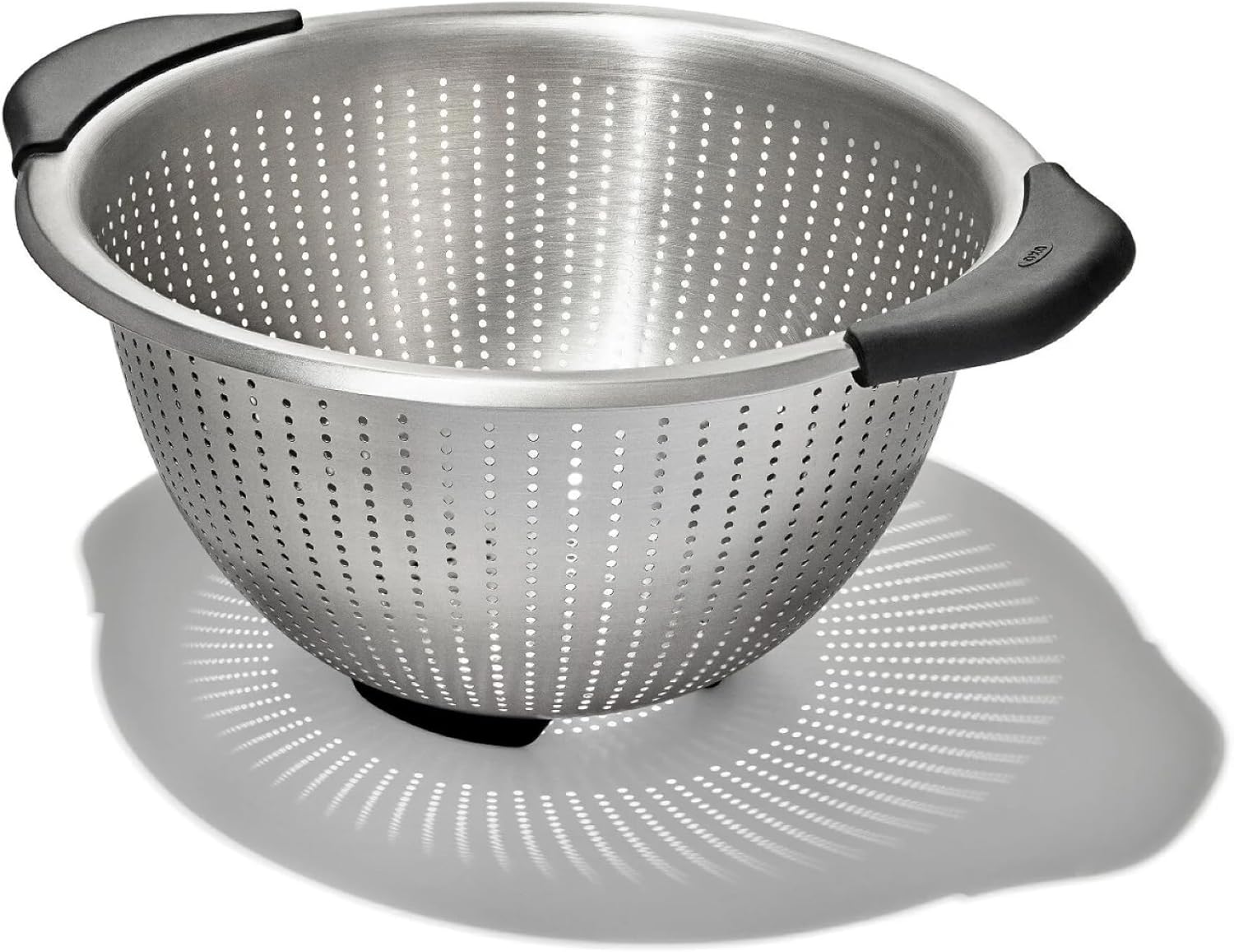
The best colander for 2026 is the OXO Good Grips Stainless Steel Colander, 5 qt at about $32 — 5 quarts drains a full pound of pasta plus its water without cresting the rim, and the elevated base keeps food out of sink backwash. Want to spend less? The Tiawudi 18/8 Micro-Perforated 5-Quart does the same job for $19. For quinoa, orzo and berries you need fine mesh instead: the Cuisinart 3-piece mesh strainer set is $16.
Get a free week of easy dinners
Seven weeknight dinners with the shopping list already totalled, sent Sunday. No account needed, unsubscribe in one click.
No spam, unsubscribe in one click. Recipes, shopping lists and Instacart carts all work without an account either way.
Why a colander matters more than home cooks think
A colander is the last tool that touches your pasta before it hits the sauce, and it is the only tool that touches your salad greens, your rinsed beans and your drained canned tomatoes. It is probably the third-most-used item in your kitchen after a knife and a cutting board — and it is almost always the cheapest, flimsiest thing in the cabinet, bought once in a hurry and never reconsidered.
Three failures cost you actual food. A colander with a flat bottom and no feet sits in whatever was already in the sink, so your drained penne picks up raw-chicken rinse water. A colander with 6 mm holes lets orzo, couscous, quinoa and small berries through — you lose maybe 15% of a cup of grains down the drain every time. And a rim that is too narrow for a 12-inch stockpot means you are pouring 4 quarts of 212°F water at a target smaller than the stream, which is how people get scalded wrists.
The fix is cheap. A good stainless colander runs $19–$32 and lasts decades because there is nothing to break — no coating, no motor, no gasket. The rest of this guide is about which shape solves which job, and where the $30 models genuinely earn the extra $12 over the $18 ones.
Top picks
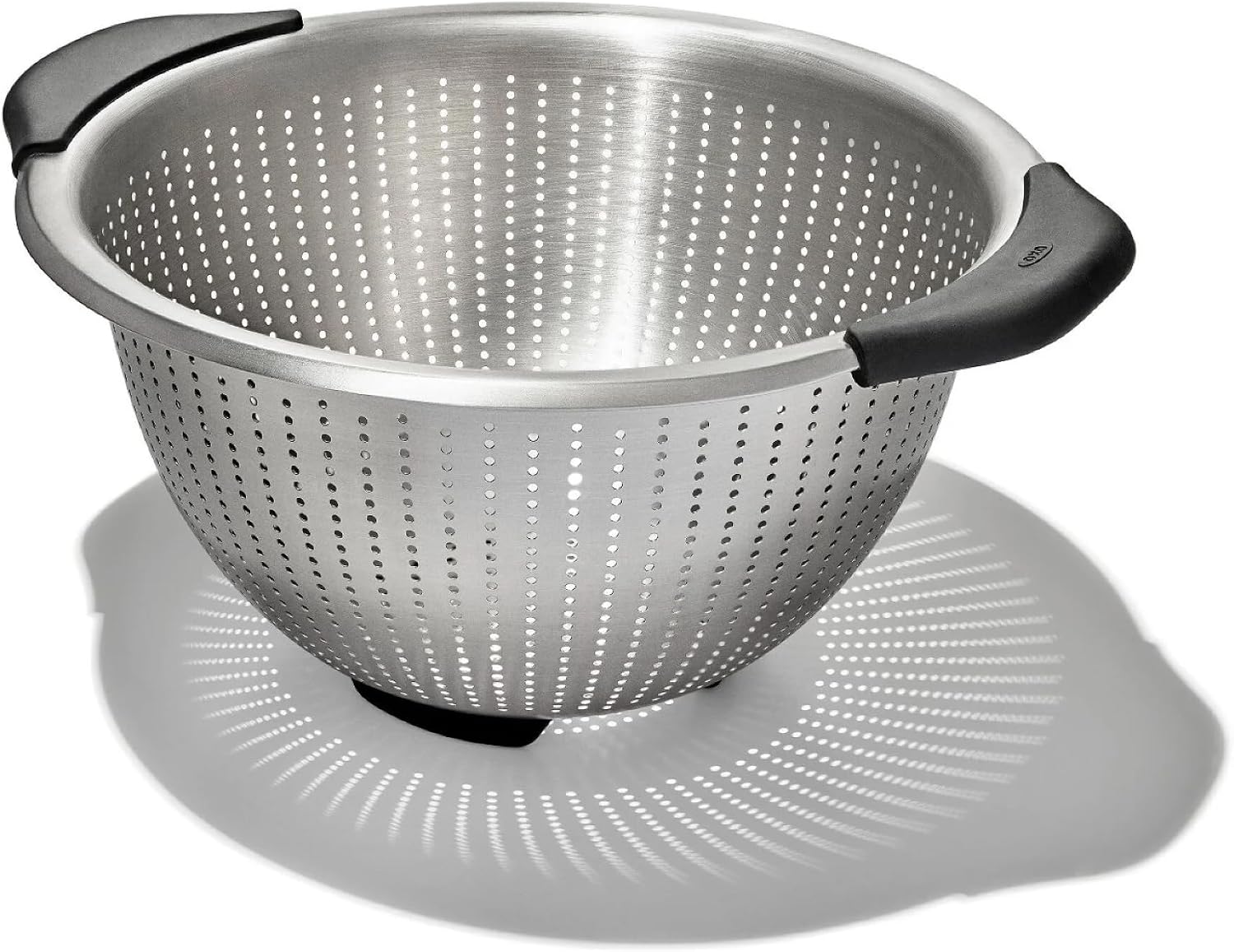
#1 Best overall: OXO Good Grips Stainless Steel Colander, 5 qt
Verdict: The right size, the right base and the right handles. If you buy one colander, buy this one.
Five quarts is the sweet spot for a household of three to five. A pound of dry spaghetti plus its cooking water is roughly 4.5 quarts of volume at the moment you pour, and this bowl swallows it without a wave over the rim. The perforations run the full wall, not just the base, so water clears in about three seconds instead of pooling while you shake.
The base is a raised ring roughly 1 inch tall, which lifts the food above standing sink water — the single most important hygiene feature on a colander. And the handles are non-slip and elevated above the rim line, so a wet grip still works and the handles do not conduct heat straight into your palms. It is 12.6 inches across with a 16-ounce weight; it nests inside a 12-quart stockpot for storage. Dishwasher safe, top rack.
Pros: footed base, full-wall perforation, genuinely grippy wet handles, nests for storage.
Cons: the 12.6-inch footprint will not fit a narrow bar sink; ~3 mm holes still pass orzo.
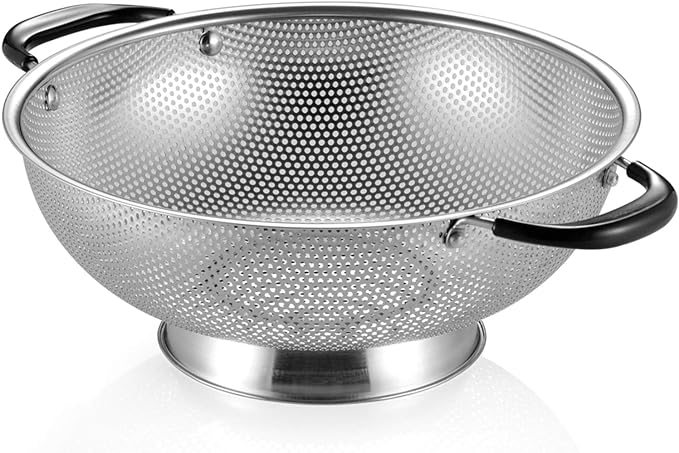
#2 Best value: Tiawudi 18/8 Stainless Steel Micro-Perforated Colander, 5 qt
Verdict: 90% of the OXO for 60% of the price, and the smaller holes are arguably better.
This is the pick if you cook a lot of small pasta shapes. "Micro-perforated" here means roughly 2 mm holes rather than the 3–4 mm you get on a standard colander, which is the difference between keeping your orzo and watching it go down the drain. Rinse water still clears fast because there are thousands of holes — the total open area is comparable.
18/8 is the same 304-grade stainless used in mid-range cookware (the numbers are the chromium and nickel percentages — see the stainless steel grade reference), so it will not rust or stain from tomato sauce. The handles are riveted rather than spot-welded, which matters: spot welds are the number-one failure point on cheap colanders, and rivets do not shear when you lift 5 pounds of wet pasta. Heat-resistant handle sleeves stay cool through a full pot pour.
Pros: ~2 mm holes keep small grains, riveted handles, 18/8 stainless, half the price of the premium pick.
Cons: the base ring is lower than the OXO's; hand-washing the micro-perforations takes a brush.
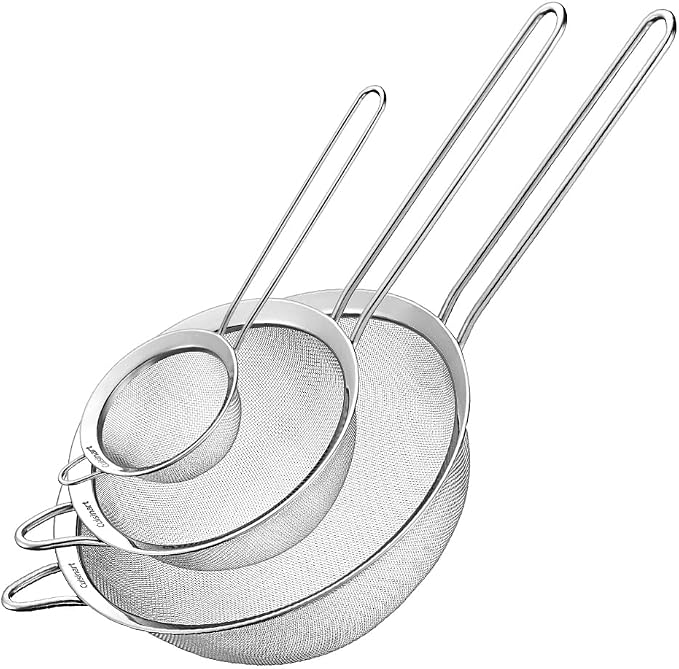
#3 Best for beginners: Cuisinart Mesh Strainers, 3 Count
Verdict: The set that teaches you what fine mesh is actually for.
If you own exactly one drainer and it is a colander, this three-piece set is the highest-value $16 in your kitchen. You get small, medium and large fine-mesh baskets with roughly 0.5 mm openings — fine enough to catch quinoa, amaranth, chia, raspberry seeds, tea leaves and the solids out of a stock. The small one doubles as a powdered-sugar duster and a lemon-seed catcher over a cocktail shaker.
They are stainless with long handles and hook rims that rest across a bowl or pot, which frees both hands. Start with the medium for rinsing a cup of quinoa for Mediterranean Quinoa Salad and you will immediately understand why a colander cannot do this job.
Pros: three sizes cover every fine-strain task, hook rims, huge and consistent review base.
Cons: not a pasta tool — a pound of spaghetti backs up in the mesh and floods.
#4 Best premium: OVENTE Premium Stainless Steel Colander Set of 3 (1.5, 3, 5 qt)
Verdict: Buy this if you cook for a crowd or hate having the wrong size. Overkill for one or two people.
Three nesting stainless colanders at 1.5, 3 and 5 quarts, with large comfortable handles on each. The nested stack is 11 × 11 × 8 inches — about the footprint of a stockpot — so the storage cost is lower than it sounds. The 1.5-quart handles a can of chickpeas or a half-pint of blueberries without you hauling out a bowl-sized tool; the 5-quart takes the full pasta pour; the 3-quart is what you will actually reach for four nights a week.
The reason to spend $73 instead of $19 is if you regularly run two drains in one meal — pasta and blanched broccoli, or rinsed beans and washed greens — and you are tired of washing one colander mid-cook. That is a real workflow for anyone doing baked pasta casseroles or Sunday batch cooking.
Pros: three sizes, all stainless, nests tightly, large handles work with oven mitts.
Cons: $73 is four times the value pick; two of the three will sit unused in a small kitchen.
#5 Budget pick: OXO Good Grips 3 QT Plastic Colander
Verdict: The right answer for a two-person household, a dorm, or a second colander you can throw in the dishwasher without thinking.
Three quarts is enough for a half-pound of pasta, a head of broccoli, or a bag of salad greens. It is 11 × 9 × 5.35 inches and weighs 9.3 ounces, so it stores flat in a drawer and one hand lifts it fully loaded. The OXO soft handles are the same ones on the stainless model, and the base has a stabilizing ring.
The compromise is heat: rigid BPA-free plastic handles boiling water fine but will scuff and eventually stain from turmeric, tomato and beet. Expect five to eight years, not thirty. At $12 that is fine.
Pros: $12, light, dishwasher safe, real OXO handles, drawer-friendly footprint.
Cons: plastic stains, 3 qt is too small for a full pound of pasta, holes are large.
Also worth knowing
| Tool | Price | What it is actually for |
|---|---|---|
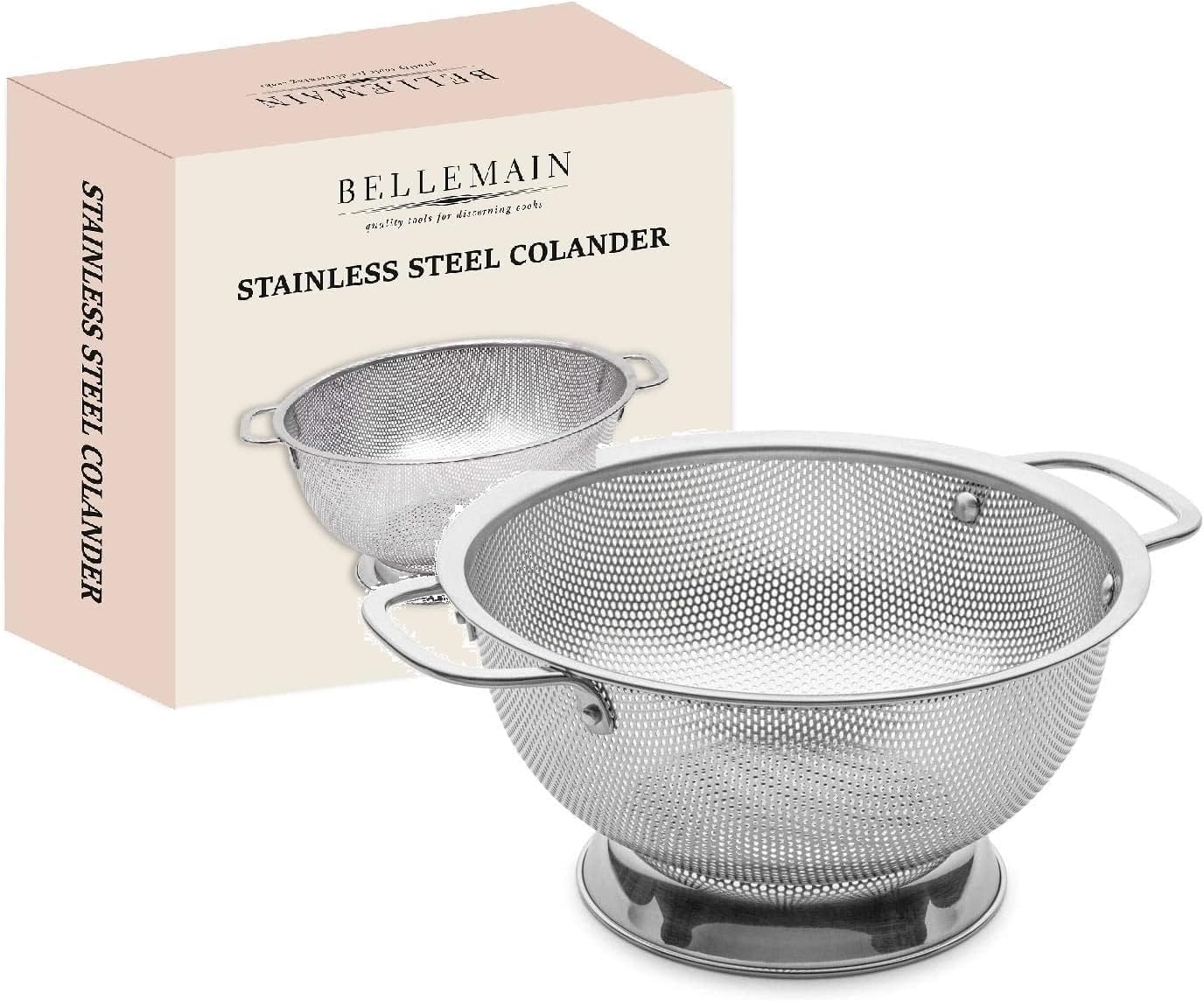
| Bellemain 3 Qt Metal Colander | Check price | Stainless at the 3 qt size — the plastic budget pick's better-built sibling |
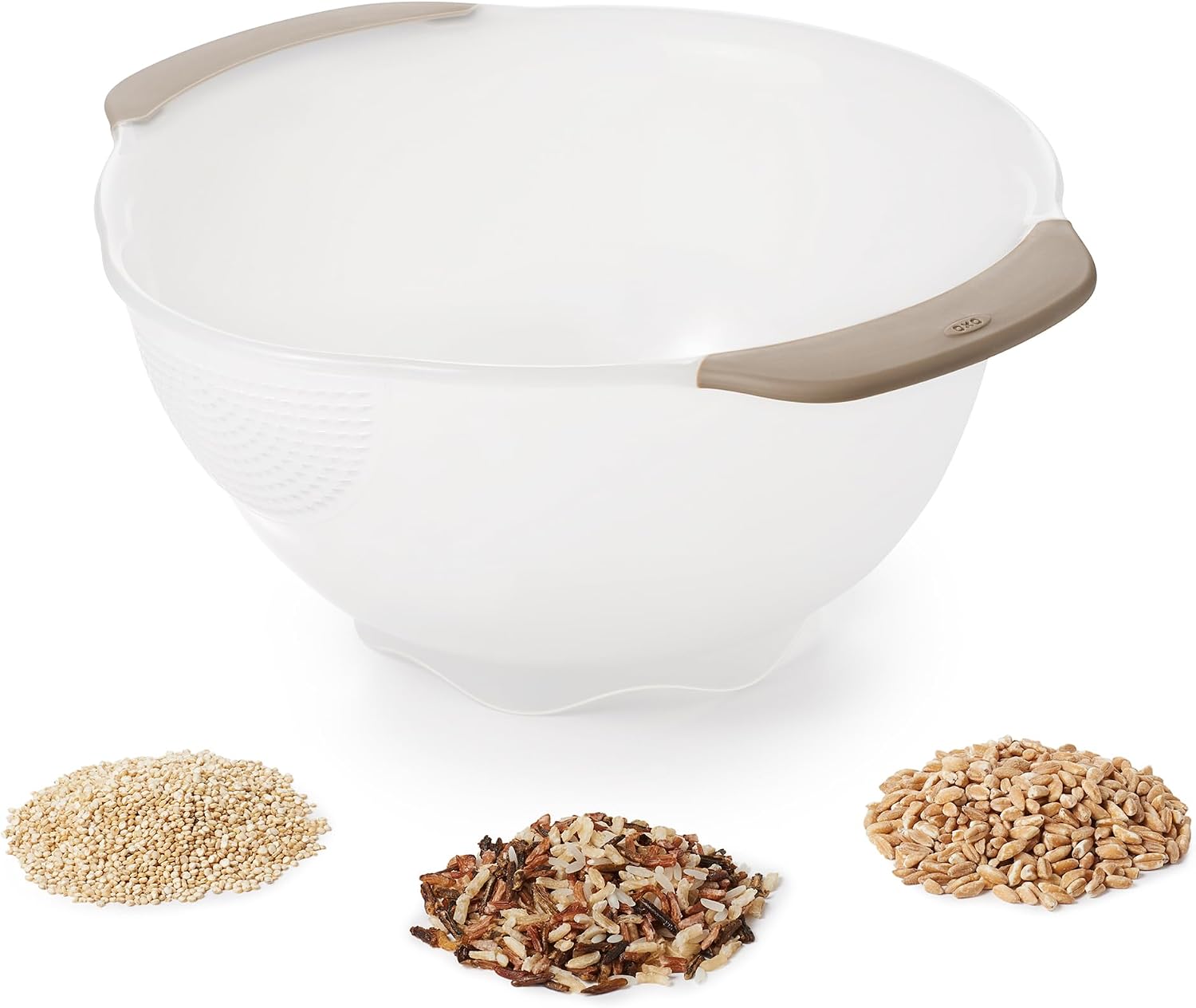
| OXO Rice & Small Grains Washing Colander | Check price | Rinsing rice, quinoa and lentils without a mesh basket clogging |
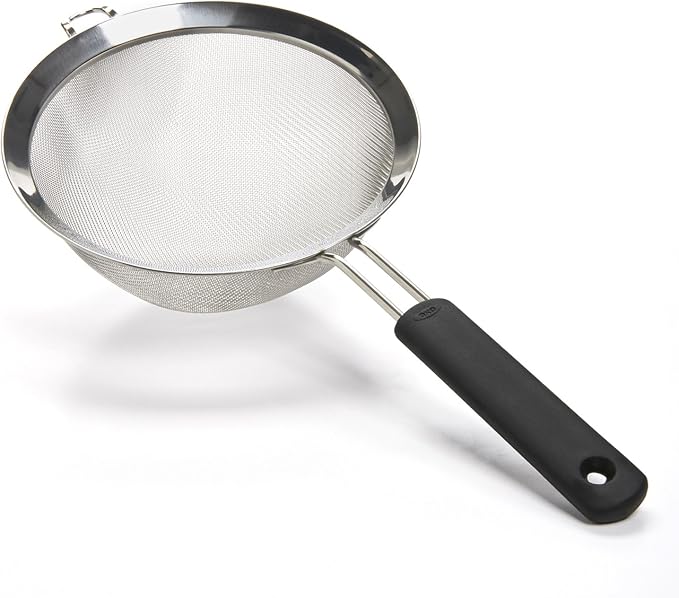
| OXO 8-Inch Double Rod Strainer | Check price | Rests on the pot rim; single-handed straining of a saucepan |
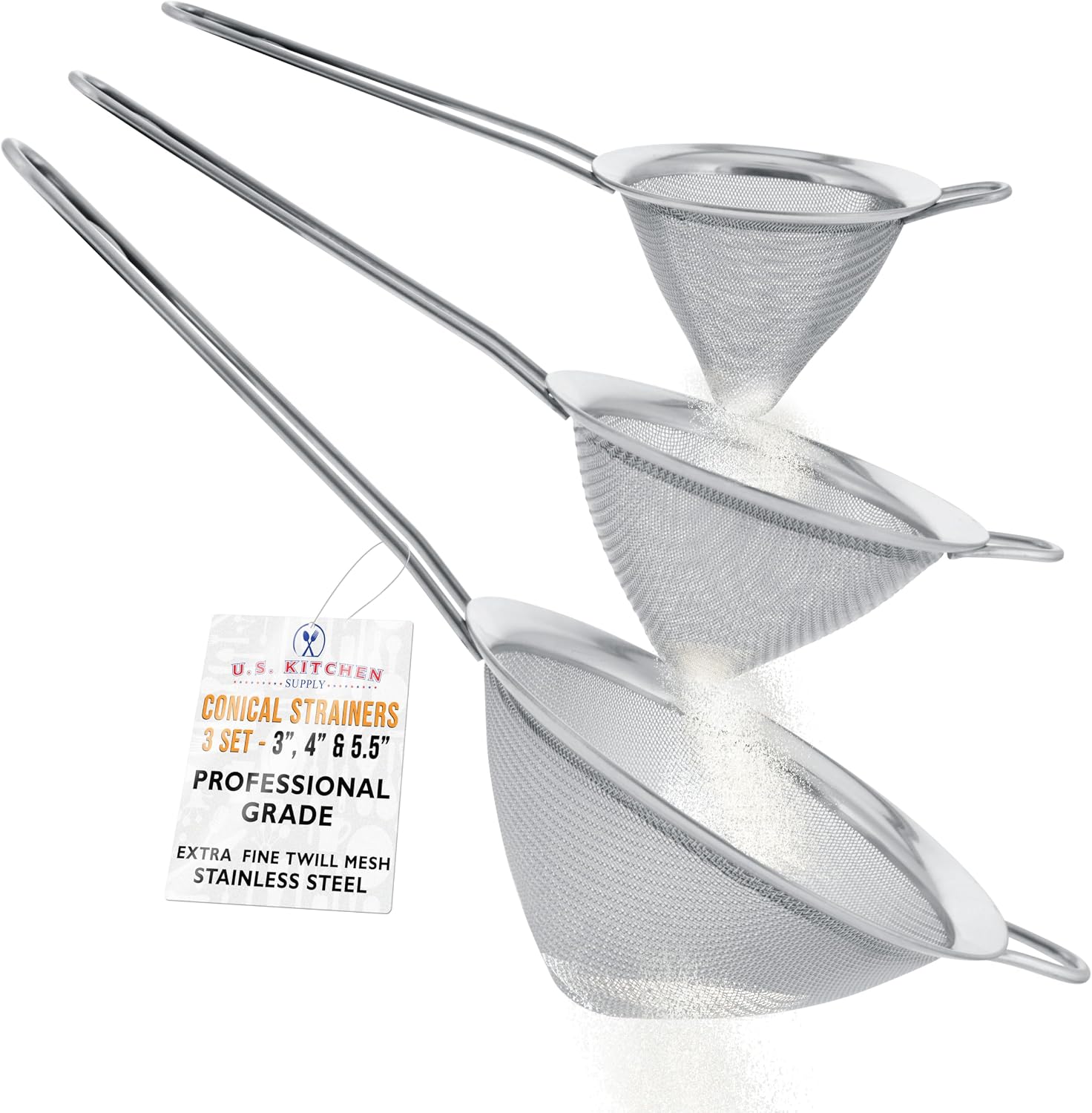
| U.S. Kitchen Supply Conical Strainers, set of 3 | Check price | Chinois-style twill mesh for stocks and custards, at a tenth of chinois money |
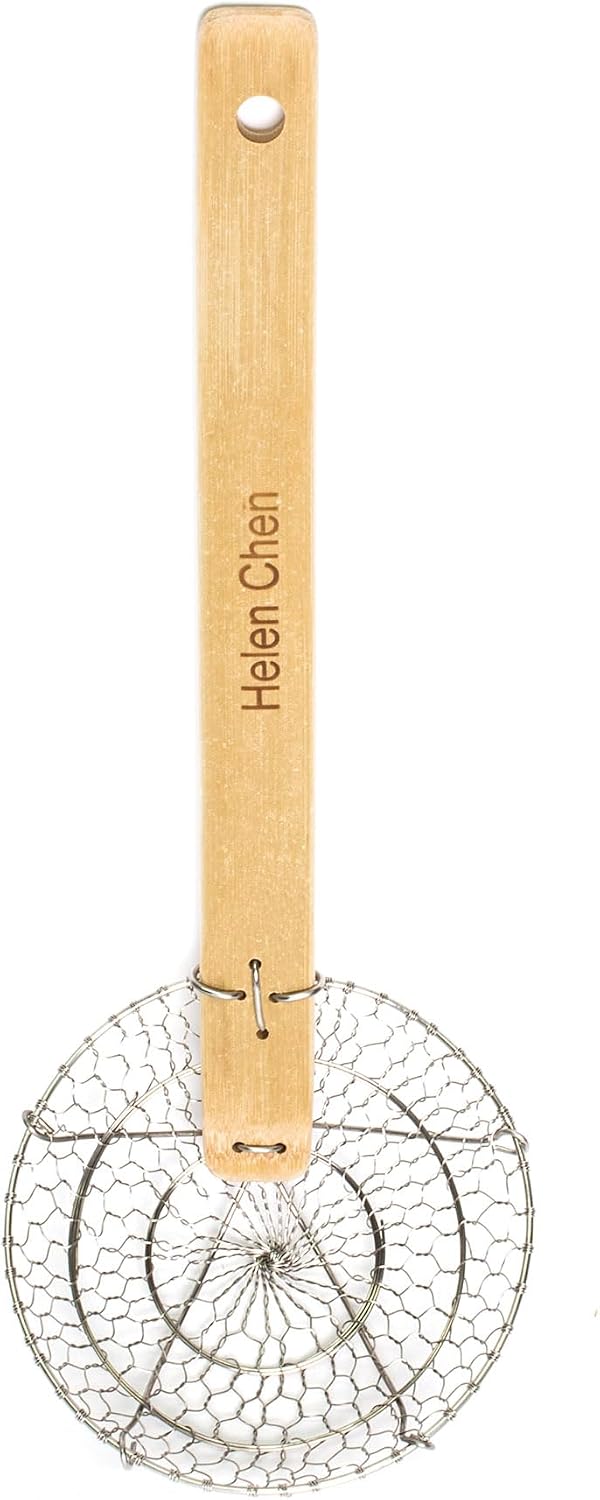
| Helen's Asian Kitchen Spider Strainer, 5 in | Check price | Lifting dumplings, ravioli and blanched greens out of water you want to keep |
| Qimh Over-the-Sink Collapsible Colander, 6 qt | Check price | Washing produce with extendable arms that bridge the sink — not for boiling water |
| Ellie's Best Nut Milk Bag XL | Check price | Nut milk, cold brew, straining yogurt — finer than any metal mesh |
| OXO Good Grips 3-Piece Strainer Set | Check price | The step up from the Cuisinart set, with better handle comfort |
Where to buy the picks in this guide
Prices are shown only when checked in the last 24 hours; otherwise check the current price on Amazon.
Browse the full utensils and tools and cookware shelves if you are filling out a kitchen from scratch.
What to look for
Hole size — the spec nobody prints
This is the spec that decides whether the tool works, and almost no manufacturer lists it. Use this as your mental map:
| Opening | Tool type | Passes through | Catches |
|---|---|---|---|
| 4–6 mm | Standard colander | Orzo, quinoa, couscous, small berries | Spaghetti, penne, potatoes, broccoli |
| 2–3 mm | Micro-perforated colander | Chia, poppy seeds, fine flour | Orzo, rice, most grains, blueberries |
| 0.5–1 mm | Fine-mesh strainer | Liquid, flour, powdered sugar | Quinoa, amaranth, tea leaves, raspberry seeds |
| <0.2 mm | Nut milk bag / chinois | Liquid only | Almond pulp, yogurt whey, stock solids |
Most kitchens need one tool from row 1 or 2 and one from row 3. Everything else is a specialist. The mesh-count numbers manufacturers do occasionally print follow the standard mesh scale — higher mesh number means finer openings.
Base type: footed, flat or handled
A footed base (a raised ring or three feet) is the correct default. It lifts drained food 0.75–1 inch above the sink floor, which matters because your sink is not clean — it holds raw-meat rinse water and whatever was on the last plate. The FDA's guidance on selecting and serving produce safely is explicit about keeping washed produce away from surfaces that contacted raw protein, and your sink basin is exactly that surface.
A flat base is the cheap-colander default and the reason to skip a colander. A handled strainer (rod or hoop across a pot rim) is a different category — it stays in your hand and never touches the sink at all, which is why the OXO double-rod strainer is so useful for a saucepan of blanched green beans.
Material
Stainless (304 / 18-8) is the answer for anything that meets boiling water. It does not stain from tomato or turmeric, does not warp, and survives thirty years of dishwasher cycles. Rigid BPA-free plastic is fine at the $12 tier and for produce rinsing. Silicone collapsibles are the trap — see the pitfalls section below.
Capacity
| Household | Everyday size | Why |
|---|---|---|
| 1–2 people | 3 qt | Half-pound pasta, one head of broccoli, a bag of greens |
| 3–5 people | 5 qt | Full pound of pasta plus its water, no rim crest |
| 6+ / batch cooking | 8 qt or a nesting set | Double batches, bulk grain rinses, big produce hauls |
Storage footprint
A 5-quart stainless colander is 12–13 inches across and will not fit in most drawers. Check that it nests inside your largest stockpot before you buy — the OXO and OVENTE both do. If cabinet space is genuinely the constraint, buy the 3-quart and cook pasta in two drains rather than buying a collapsible.
Dishwasher safety
All-stainless goes on the top rack forever. Plastic goes on the top rack only, and skip the heated-dry and sanitize cycles — the sanitize temperature is what loosens rivets on models with plastic handle inserts.
Colander vs strainer vs sieve: which task needs which
Think of it as three jobs, not three tools.
Job 1 — dump a large volume fast. A pound of spaghetti for Classic Spaghetti alla Carbonara with Guanciale, a pot of boiled potatoes, a colander of washed romaine. You need maximum open area and a bowl that sits down so both hands are free. That is a colander.
Job 2 — keep something small, or keep the liquid. Rinsing a cup of quinoa for Quinoa and Chickpea Pasta Salad, straining seeds out of lemon juice, dusting powdered sugar, catching the solids when you reduce a pan sauce. You need fine mesh and a handle. That is a fine-mesh strainer (a sieve is the same tool — the word just skews British and toward baking).
Job 3 — lift solids out of liquid you are keeping. Pulling ravioli out of salted water you still want for the sauce, fishing blanched green beans out of a boil, lifting dumplings. You need a spider.
The reason this matters more for pasta than anything else: Cacio e Pepe and Penne alla Vodka both depend on starchy pasta water to emulsify the sauce. If you dump the pot into a colander, you have thrown the emulsifier down the drain. The move is to ladle out a cup of water first, or use a spider and skip the colander entirely. For The Best Shrimp Scampi with Linguine the same rule applies — the reserved water is what turns butter and lemon into a sauce that clings.
One-pot dishes dodge the problem entirely. One-Pot Lemon Garlic Orzo with Spinach never gets drained, which is also the only way to cook orzo if your colander has 4 mm holes.
Common pitfalls
Buying a silicone collapsible as your only colander. They are marketed on storage and they fail on heat. Boiling water above 200°F softens the silicone rim within a handful of uses, the metal frame flexes under a full pound of wet pasta, and starch clings to silicone in a way it does not to steel. Keep one as a produce-rinsing second colander if you like — the Qimh over-sink model is genuinely good at that — but do not pour a stockpot into one.
Spot-welded handles. Turn the colander over in the store or zoom the product photo. If the handle attaches with two small welded dots rather than rivets, it will shear at the weld somewhere between year two and year five, usually while loaded.
Pouring at the wrong target. A 12-inch stockpot pouring into an 8-inch colander is how people burn their forearms. Match the colander diameter to your largest pot, or pour in two passes.
Letting starch dry. Pasta starch turns to glue in the perforations. Rinse the colander within a minute of using it, while it is still hot and wet, and you will never need a brush. Let it dry overnight and you will.
Trusting the fine-mesh strainer with pasta. A 0.5 mm mesh basket will back up and flood with a half-pound of spaghetti. That is not a defect; it is the wrong tool.
Ignoring the sink. Even a footed colander sits in a basin. Run hot water over the sink floor before you drain, or set the colander in a bowl on the counter instead.
Care and cleaning
Stainless colanders want three things. Rinse immediately after use so starch and pesto do not set. Wash with a soft brush rather than a sponge — a sponge rides over the perforations and never touches the hole walls, which is why a "clean" colander can still smell. And dry it before it goes in the cabinet, because the one thing that does mark 18/8 stainless is standing water leaving mineral spots.
For the dull grey film that builds up over a year of pasta: a paste of baking soda and a few drops of water, worked with a brush, takes it off in about ninety seconds. For hard-water spots, white vinegar for five minutes then rinse. Never use steel wool — it embeds carbon-steel particles in the surface that then rust and look like the colander itself is rusting.
Fine-mesh strainers need a different routine. Backflush them — run water from the outside in, so debris is pushed out of the mesh rather than deeper into it. For a mesh basket with set-in turmeric or tomato, soak in hot water with a tablespoon of baking soda for twenty minutes, then backflush.
Nut milk bags and nylon mesh: rinse immediately, wash in hot soapy water, then hang to dry completely before storing. Stored damp, they mildew in days.
When not to buy a colander at all
If you cook for one, make pasta twice a month, and your kitchen has one drawer, skip the colander and buy the Cuisinart mesh strainer set plus a spider. The large mesh basket handles a half-pound of pasta if you pour slowly, and you gain every fine-strain job a colander cannot do.
If you mainly wash greens rather than drain pasta, a salad spinner is the better $30 — it drains and dries, and wet greens are the reason dressing slides off. We covered the models that actually work in Best Salad Spinners for 2026.
And if the real problem is that your pasta pot is too small to drain safely, fix the pot first: see Best Stock Pots for 2026.
FAQ
What is the difference between a colander and a strainer?
A colander is a bowl-shaped drainer with large holes (roughly 3–6 mm) that sits in the sink and handles high-volume, large-item jobs like pasta, potatoes and washed produce. A strainer is a handled mesh tool with much finer holes (0.3–1 mm) that catches small grains, seeds, tea leaves and stock solids. Most kitchens need one of each — a colander cannot handle quinoa, and a fine-mesh strainer cannot drain a pound of pasta without backing up.
What size colander do I need?
For a household of 2–3 that occasionally cooks pasta or blanches vegetables, a 3-quart colander is enough. For a family of 4 or anyone who batches pasta or drains a full head of broccoli at once, choose 5 quarts as the everyday size. Restaurant-style 8-quart colanders are only worth the storage footprint if you meal prep grains in bulk or wash large amounts of produce weekly, since bigger colanders take up drawer or cabinet space that most kitchens cannot spare.
Are silicone collapsible colanders any good?
They save cabinet space but fail on hot liquids. Boiling pasta water above 200°F warps the silicone rim within a few uses, the metal frame flexes when loaded with a full pound of pasta, and food particles cling to the silicone in ways stainless does not. They are fine as a second colander for rinsing berries or salad greens, but a rigid stainless model with a footed base should be your primary — this is one of the most common colander regrets we hear.
Can you put a colander in the dishwasher?
All-stainless models are dishwasher safe on the top rack, though hand washing with a soft brush actually cleans starch and pesto residue faster because dishwasher jets skip the interior wall. Plastic and silicone models are technically dishwasher safe but warp over time near the heating element, so run them on the top rack only and skip the heated dry cycle. Avoid the sanitize setting for any colander with a plastic handle since the higher temperature loosens the rivets.
Do I need a chinois or is a regular fine-mesh strainer enough?
A chinois — the tall conical mesh strainer — is a professional tool for straining stocks, sauces and custards to a glass-clear finish, and a real one costs $40–$120. Home cooks can get 90% of the benefit from a $15 fine-mesh strainer plus a piece of cheesecloth for the last pass. Buy a chinois only if you make stock or clarified sauces monthly. A conical twill-mesh set handles everything from dusting powdered sugar to straining ginger out of a simple syrup, and it stores nested.
Sources
- America's Test Kitchen / Cook's Illustrated — colander equipment review
- FDA — Selecting and Serving Produce Safely
- Mesh scale — how mesh counts map to opening sizes
- SAE steel grades — what 18/8 and 304 stainless actually mean
Prices and ratings noted as of September 2026 and move with Amazon's listings; check the linked page for the live number.
Frequently asked questions
What is the difference between a colander and a strainer?
What size colander do I need?
Are silicone collapsible colanders any good?
Can you put a colander in the dishwasher?
Do I need a chinois or is a regular fine-mesh strainer enough?
How we picked
This guide is researched, not bench-tested. We shortlisted products from the AislePrompt kitchen catalog and compared them on published manufacturer specifications (materials, size, capacity, warranty), on what owners report in published reviews, and on any third-party sources linked in this guide. The guide was drafted with AI assistance. We did not run lab or hands-on tests of these products, so any measurement quoted here comes from the manufacturer or a cited source. Prices change often: use the “Check price on Amazon” buttons for today’s price.
Sources
Recipes to try with these tools
Put your gear to work — save any recipe to My Recipes (no account needed) and send its ingredients to Instacart in one tap.

Shop kitchen gadgets on AislePrompt →Browse the full kitchen shop →
Plan a week of meals in two minutes.
Tell our AI what you have and what you like — it builds your plan, shopping list, and Instacart cart. No account needed.
Plan my week →