Best Stock Pots for 2026: Top Picks + Buying Guide
Five stock pots we'd actually buy, from a $50 workhorse to a 16-quart boil pot, and how to pick the right size.
Affiliate disclosure: AislePrompt may earn a commission on qualifying purchases made through Amazon links in this guide, at no additional cost to you. See our affiliate policy →
The best stock pot for most home cooks in 2026 is a fully clad stainless steel pot in the 8- to 12-quart range with a tight lid, riveted handles and an induction-ready base. Our top pick is the All-Clad D3 8-Quart Stockpot for its bonded tri-ply build, but the Cuisinart Chef's Classic 8-Quart does the everyday jobs (pasta, soup, a batch of broth) for about a sixth of the price. If you cook for a crowd, do seafood boils or water-bath canning, size up to 12 or 16 quarts. Below are five picks from our catalog, what each one is actually good at, and how to choose the right size for your household.
Get a free week of easy dinners
Seven weeknight dinners with the shopping list already totalled, sent Sunday. No account needed, unsubscribe in one click.
No spam, unsubscribe in one click. Recipes, shopping lists and Instacart carts all work without an account either way.
Why a stock pot earns its cabinet space
A stock pot is the tall, straight-sided pot you pull out when the job is mostly liquid: a pound of pasta in plenty of salted water, a pot of chicken broth, chili for a game-day crowd, a shrimp boil, or jars in a water bath. Wikipedia's entry on the stock pot describes it as a large, often deep pot with a flat bottom, straight sides, two side handles and a lid, most commonly made from stainless steel, aluminum, copper or enamel on metal, with pricier versions using layered bottoms to improve heat conductivity.
That shape matters. Tall sides mean less evaporation during a three-hour simmer and less splashing when a seafood boil hits a rolling boil, and going up instead of out lets you fit a big volume over one burner. What a stock pot is not good at is browning a lot of meat in one layer — that is a job for a wide, heavy Dutch oven or braiser, which we cover further down.
You do not need an expensive one. The stock pot does less precise work than a skillet: most of the time it is heating water. What you are paying for as price goes up is a more even base (fewer scorched spots when you simmer something thick like chili or ragù), better handles, a lid that actually seals, and a pot that will survive decades of use.
Our Top 5 Picks
Prices are about what each pot listed for at the time of writing (September 2026) and change often.
| Pick | Size | Construction | Induction | Price |
|---|---|---|---|---|
| Best Overall: All-Clad D3 Stockpot | 8 qt | Fully bonded tri-ply stainless, aluminum core | Yes | about $300 |
| Best Value: Cuisinart Chef's Classic 766-24 | 8 qt | Stainless with aluminum-encapsulated base | Yes | about $50 |
| Best Tri-Ply Under $100: Tramontina Signature | 8 qt | Tri-ply clad, 18/10 stainless, aluminum core | Yes | about $75 |
| Best Premium 12-Quart: Made In Stainless Clad | 12 qt | 5-ply stainless clad, base to walls | Yes | about $250 |
| Best Large-Batch: All-Clad Simply Strain Multipot | 16 qt | Stainless steel with straining insert | Yes | about $200 |
Top-rated cookware in the AislePrompt shop
Ranked by rating and review count. Price and stock are checked when you click through.
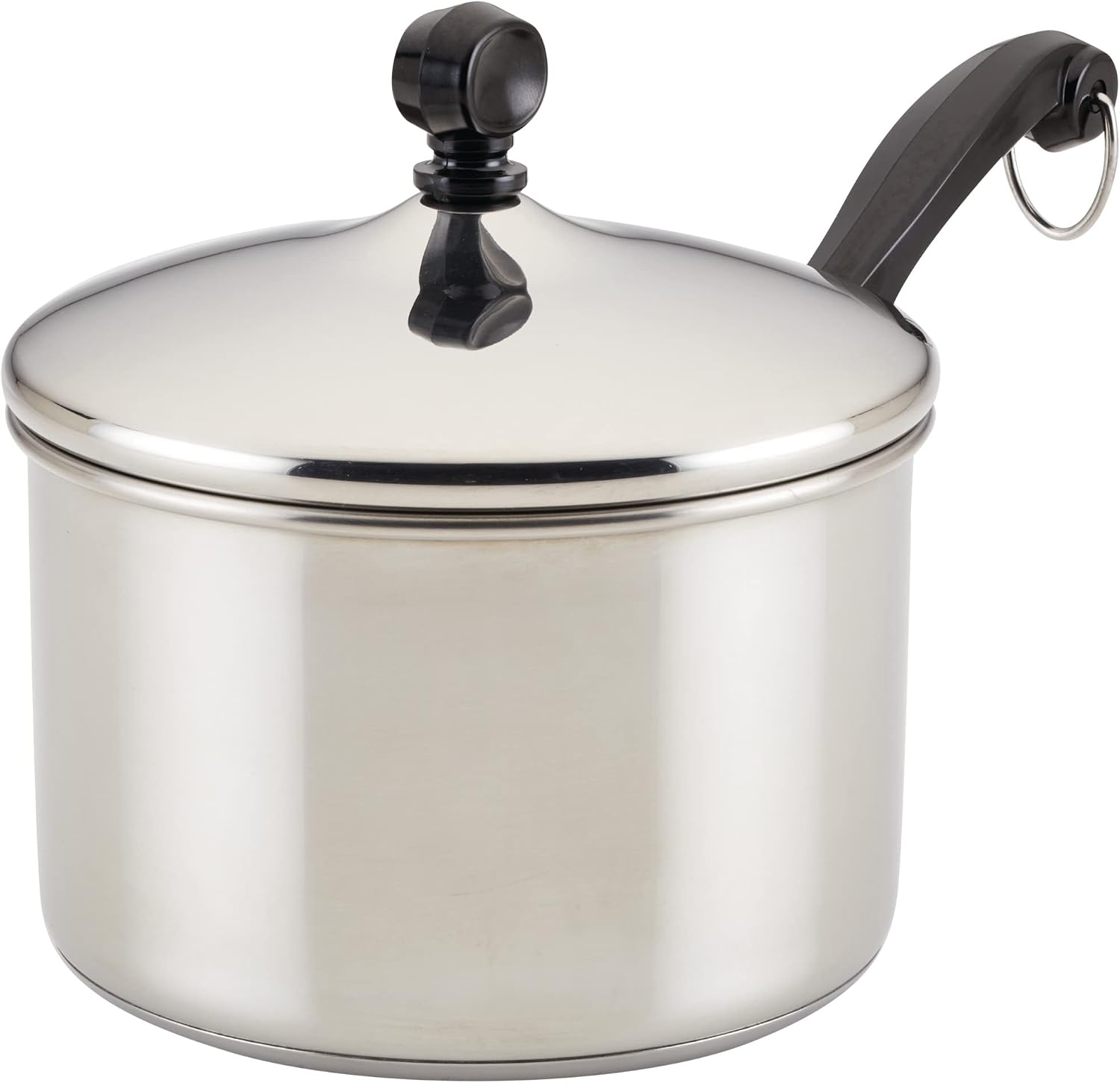
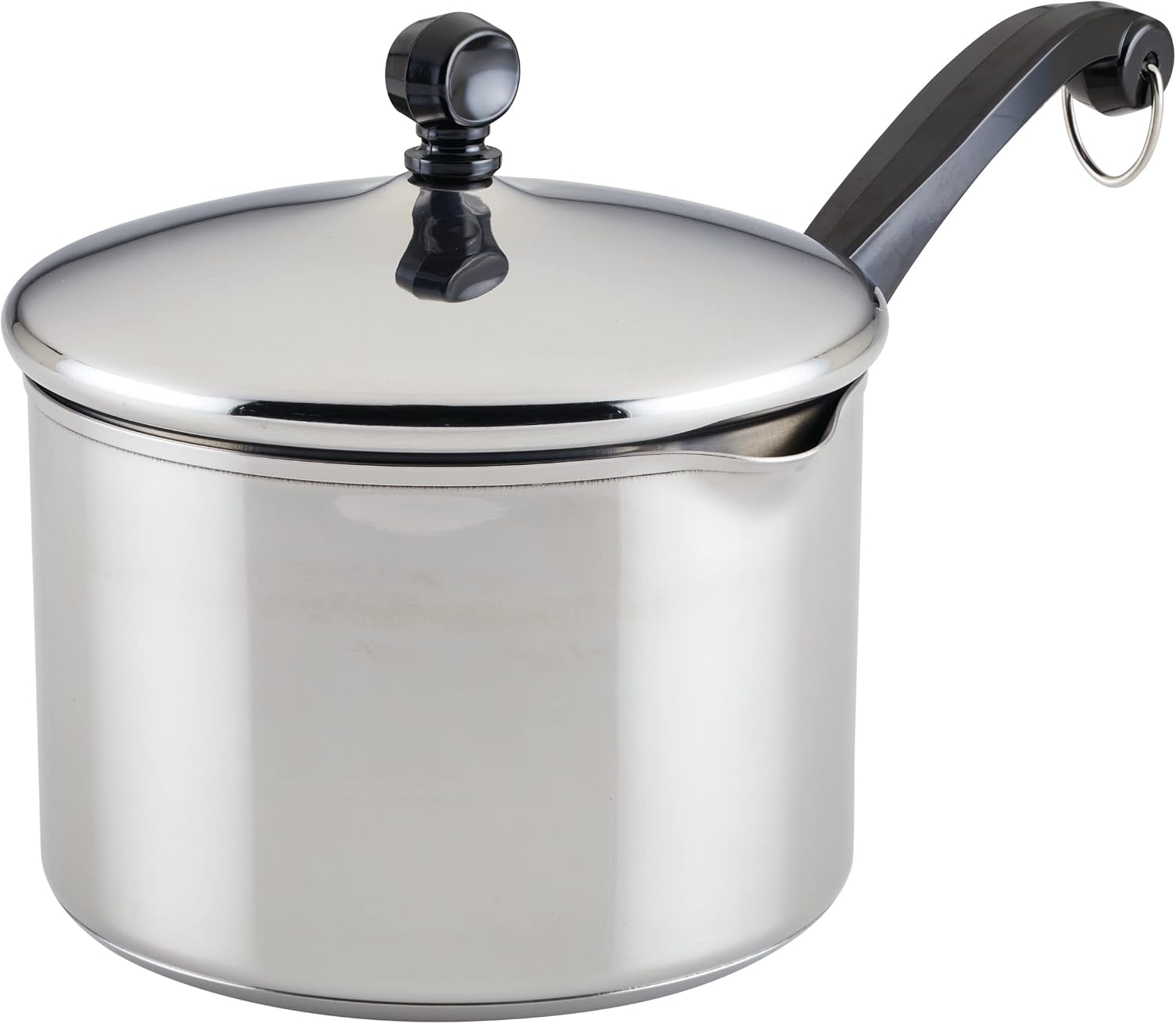
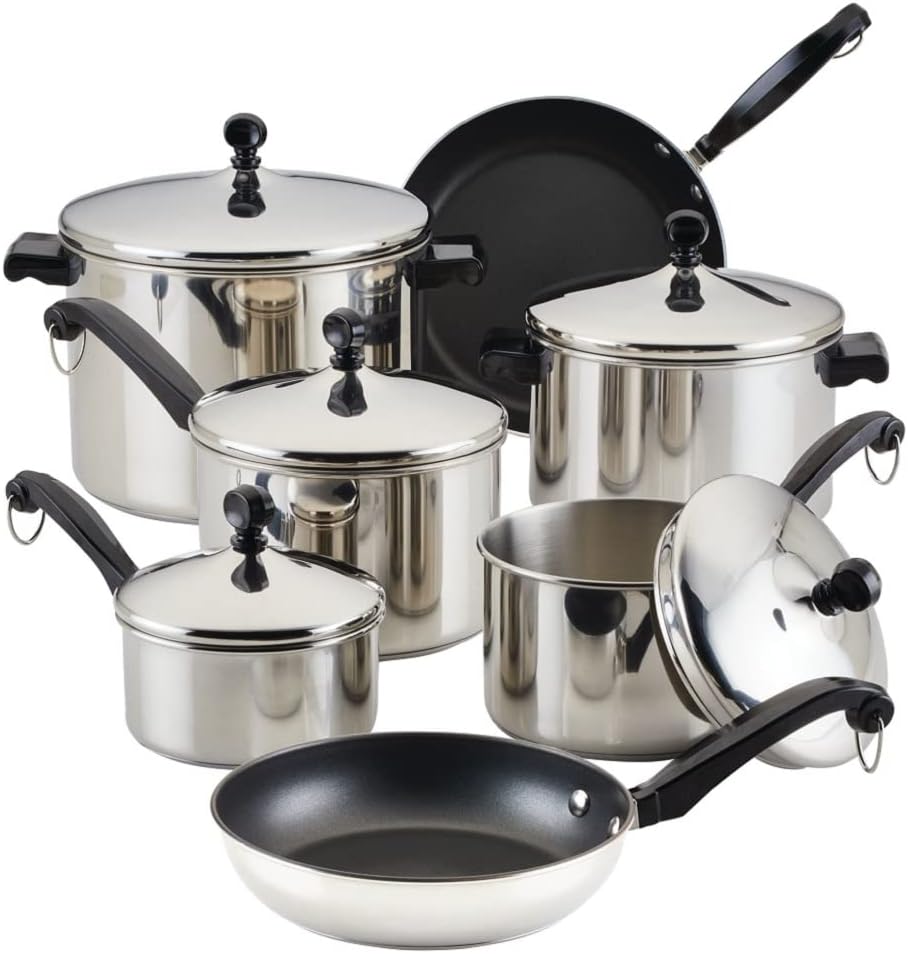
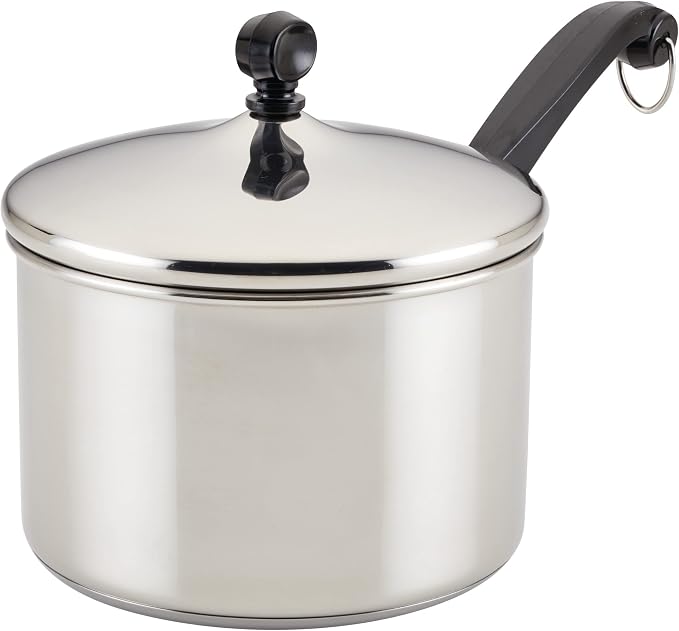
Specs above come from the manufacturer product pages we checked (All-Clad, Tramontina, Made In) or from the retail listing details for the Cuisinart. Where a spec was not published, we left it out rather than guess.
Best Overall: All-Clad D3 8-Quart Stockpot
Verdict: The pot to buy once and keep for decades if 8 quarts covers your cooking.
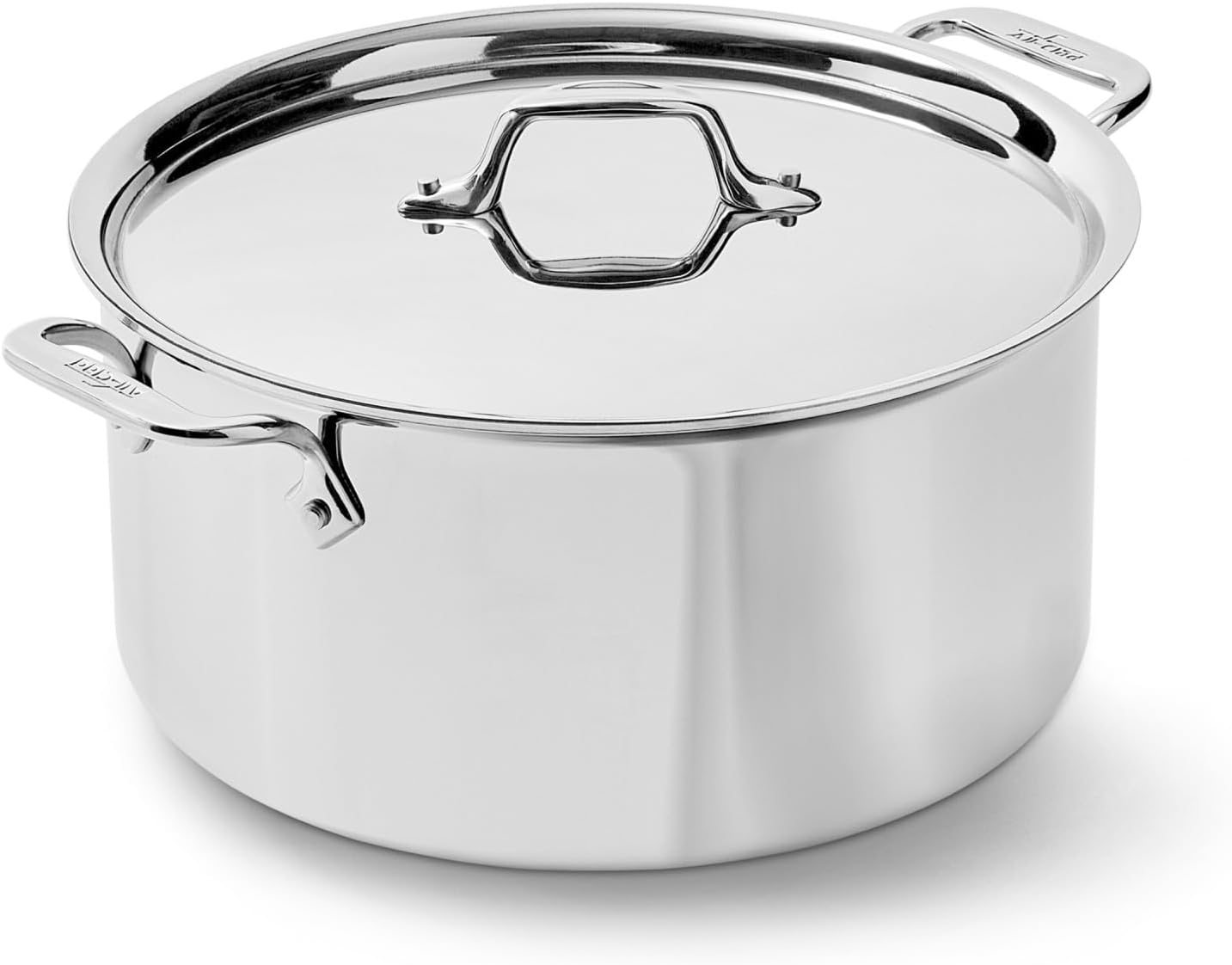
The All-Clad D3 Stainless 8-Quart Stockpot is the "original fully bonded tri-ply" line, according to All-Clad's product page: an aluminum core bonded between two layers of stainless steel, running up the walls rather than just sitting as a disc on the bottom. All-Clad lists it as oven- and broiler-safe up to 600°F, compatible with any stovetop including induction, made in its Pennsylvania factory with global components, and backed by a limited lifetime warranty. It sells for about $299.95 at the time of writing.
Who it's for: Cooks who simmer thick things — ragù, chili, gumbo with a dark roux — where fully clad walls reduce the scorching you get on the sides of cheaper disc-bottom pots. It is also the right choice if you want one stock pot that matches an existing All-Clad set.
Trade-offs: The price. You are paying roughly $250 more than our value pick for better heat spread in a pot that mostly boils water. All-Clad's page also says "Handwash Only," so if you put everything in the dishwasher this is the wrong pot. And 8 quarts is a family size, not a party size — a full seafood boil will crowd it.
Best Value: Cuisinart Chef's Classic 766-24 8-Quart Stockpot
Verdict: The best stock pot for the money if you want a reliable 8-quart pot and don't need fully clad walls.
The Cuisinart Chef's Classic 8-Quart Stockpot holds a 4.6-star average across more than 800 ratings in our catalog. Its listing describes a stainless steel body with pure aluminum encapsulated in the base for fast, even heating, an induction-ready build, measurement markings inside, a tight "flavor lock" lid, riveted stainless handles, dishwasher-safe cleanup and a limited lifetime warranty. The listing puts it at 4.8 pounds. It costs about $49.95 at the time of writing.
Who it's for: Households of two to four who want a pasta and soup pot that will also handle a double batch of broth. The measurement markings are genuinely useful when you are adding water to a stock or salting pasta water by volume.
Trade-offs: Encapsulated-base pots put the aluminum only in the bottom disc, so the walls heat less evenly than a fully clad pot. For water-based jobs that barely matters. For a long-simmering tomato sauce, stir more often and keep the heat moderate so the corner where the base meets the wall does not scorch.
Best Tri-Ply Under $100: Tramontina Signature 8-Quart Stock Pot
Verdict: The best choice if you want fully clad construction without All-Clad pricing.
The Tramontina Signature Tri-Ply Clad 8-Quart Stock Pot uses the same basic recipe as the All-Clad: Tramontina's product page describes tri-ply construction with an aluminum core surrounded by two layers of 18/10 stainless steel. Tramontina lists it as compatible with gas, electric, ceramic glass and induction, oven-safe to 500°F, dishwasher-safe, NSF-certified, and backed by a lifetime warranty. The listing says it is made in Brazil. It runs about $74.69 at the time of writing.
Who it's for: First-time buyers who want to skip the "cheap pot, then upgrade" cycle. Tramontina's own page says the 8-quart size serves 8 to 12 people, which lines up with its role as a family soup and pasta pot.
Trade-offs: It is oven-safe to 500°F versus All-Clad's 600°F, which will not matter for anything you do in a stock pot. The real limit is capacity: like every 8-quart pot, it will not take a big crawfish boil or a canning load of quart jars. When we checked in September 2026, Tramontina's own store listed it as backordered, so availability may vary by retailer.
Best Premium 12-Quart: Made In Stainless Clad 12-Quart Stock Pot
Verdict: The pick if you want a fully clad pot big enough for whole-carcass stock and crowd-sized batches.
The Made In 12-Quart Stainless Clad Stock Pot gives you a crowd-sized pot without dropping to a disc-bottom design. Made In's product page describes 5-ply construction "that extends from the base to the walls," a fitted lid, compatibility with gas, electric and induction cooktops, heat safety to 800°F, and a lifetime warranty, and says the pot is made in Italy. It costs about $249.99 at the time of writing.
Who it's for: People who make stock from a whole turkey carcass after Thanksgiving, double batches of Authentic Bolognese Ragù alla Modenese (the recipe as written already uses 2 pounds of meat and simmers for 3 hours), or big pots of soup for the freezer.
Trade-offs: A fully clad 12-quart pot filled with liquid is heavy to lift and drain. It is also a lot of money for capacity you may use a handful of times a year. If big batches are occasional, a budget 12-quart like the one in "Also worth a look" below does the job.
Best Large-Batch: All-Clad Simply Strain 16-Quart Multipot
Verdict: The best stock pot for boils, big pasta nights and anyone who hates lifting a full pot to drain it.
The All-Clad Simply Strain 16-Quart Multipot solves the biggest problem with large stock pots: you lift the perforated insert out and the water stays behind. The listing describes it as suited to batch cooking, stocks, seafood boils and canning, with a wide, heavy-duty stainless-steel base, extra-wide handles, a stainless lid, oven safety to 600°F, compatibility with any stovetop including induction, dishwasher safety (hand washing recommended), and a limited lifetime warranty. It is designed in Pennsylvania and made in China. The listing gives dimensions of about 16 by 16 inches wide and 13.5 inches tall, and it sells for about $199.95 at the time of writing.
Who it's for: Anyone making the Crawfish Boil with Potatoes and Corn on the Cob — 6 quarts of water plus 5 pounds of crawfish, a pound of potatoes and four ears of corn — or cooking two pounds of pasta for a party.
Trade-offs: The listing does not describe clad walls, so treat this as a boiling-and-straining pot rather than a pot for thick, scorch-prone sauces. It is also wide: a 16-inch pot sits well past the edge of a typical burner, which matters if you plan to can in it (see "What to look for" below). And it needs real storage space.
Also worth a look
A few other catalog pots fill specific gaps:
- Budget 12-quart: The Cook N Home Professional 12-Quart Stainless Steel Stock Pot is about $44.99 at the time of writing and carries a 4.7-star average across more than 8,000 ratings. Its listing calls it induction-compatible, oven-safe and dishwasher-safe but does not describe a clad or encapsulated base, so keep it for water-heavy jobs.
- Pasta pot with inserts: The Cooks Standard 12-Quart Pasta Pot (about $80.99) comes with both a pasta insert and a steamer insert, an aluminum disc bottom, induction compatibility and oven safety to 500°F, per its listing.
- Dedicated canning kit: If canning is the main reason you are shopping, the Granite Ware enamelware water-bath canning pot kit (about $89.99) includes a rack, which a plain stock pot does not.
You can browse the rest of our pots and pans in the cookware category.
What to look for in a stock pot
Capacity you will actually use. Capacity is the pot filled to the brim, and you never cook that full. Leave a few inches for boiling room and ingredients. The Spicy Cajun Seafood Boil with Corn and Sausage calls for 6 quarts of water before you add potatoes, sausage, corn, shrimp and crab legs — that is already three-quarters of an 8-quart pot before any food goes in. The sizing table below turns this into household recommendations.
Base construction. There are three common builds. Fully clad pots (All-Clad D3, Tramontina Signature, Made In) bond an aluminum core between stainless layers all the way up the sides. Encapsulated or disc bases (Cuisinart Chef's Classic, Cooks Standard) put the aluminum only in a thick disc on the bottom. Single-layer pots are just stainless steel. For boiling water all three work; for thick, long-simmered food, clad pots scorch less on the sides. Wikipedia's article on cladding in metalworking explains the underlying technique of bonding dissimilar metals together.
Induction compatibility. Induction burners only heat cookware with a magnetic base. Wikipedia's induction cooking article notes that stainless pans work if the base is a magnetic grade of stainless steel, and that if a magnet sticks well to the bottom of the pan, it is compatible. Bring a fridge magnet when you shop in person. All five of our picks are listed as induction-ready.
Handles and lid. Look for riveted handles large enough to grab with oven mitts — a full 12-quart pot of liquid is heavy. The lid should sit flat without rocking; a loose lid lets a long simmer reduce faster than the recipe expects.
Flat bottom for glass tops and canning. If you have a smooth-top range, a warped or ridged bottom will not make good contact. The University of Georgia's guide to using boiling water canners, written with the National Center for Home Food Preservation, says canners without completely flat bottoms will not work well on smooth-top ranges.
Using a stock pot for water-bath canning
A regular stock pot can stand in for a canner if it meets two conditions from that same UGA/NCHFP guide. First, depth: the pot must be deep enough that at least 1 inch of briskly boiling water covers the jar tops during processing. NDSU Extension adds that for processing times over 30 minutes, the water should be 2 inches above the jars. Second, width: the canner should be no more than 4 inches wider than the burner, so it does not extend more than 2 inches past the burner's edge on any side.
That width rule is why a 16-inch-wide pot is a questionable canner on a standard home burner, and why a tall, narrower pot is better. You also need a rack so the jars do not sit directly on the bottom — the UGA guide says the rack lets water circulate under the jars for even heating. Measure the inside height of the pot, subtract the height of your jars, a rack, and 1 to 2 inches of water, and see whether there is still room for a rolling boil before you buy.
Stock pot vs. Dutch oven: which to reach for
These two pots overlap on soup and chili, which is why people ask whether they need both.
| Feature | Stock pot | Dutch oven |
|---|---|---|
| Shape | Tall, straight sides, narrower base | Wide and shorter |
| Walls | Thin to medium, usually stainless | Thick, often enameled cast iron |
| Best at | Boiling pasta, stock, boils, canning | Browning, braising, oven stews, bread |
| Weight when empty | Lighter for its size | Heavy |
Wikipedia describes a Dutch oven as a thick-walled cooking pot with a tight-fitting lid, usually made of seasoned or enameled cast iron. That mass holds heat for searing and oven braising, but it makes a 12-quart version impractically heavy — which is why big-volume liquid work goes to a stock pot. Recipes that start with a deep brown sear, like a braise, are better in the pots in our best Dutch ovens guide or our best braisers roundup. Recipes that are mostly liquid, or need more than about 7 quarts, belong in a stock pot.
If you only have room for one, match it to your cooking: mostly pasta, broth and boils → stock pot; mostly braises and stews for four → Dutch oven. For a broader look at pot materials, see our best stainless steel cookware guide.
Recipes that need a real stock pot
These AislePrompt recipes are the ones where an undersized pot causes trouble. Times are prep plus cook from the recipe cards.
Homemade stock and broth
- Herb-Infused Chicken Broth — 2 pounds of chicken bones in 8 cups of water, simmered for 3 hours; makes 10 servings. Double it and you need a 12-quart pot.
- Slow-Simmered Chicken and Vegetable Broth — bone-in thighs, root vegetables and 8 cups of water for about 2 hours 25 minutes total.
- Slow-Simmered Vegetable Broth with Fresh Thyme — a meat-free base that simmers uncovered for 2 hours.
- Pho Bo — 3 pounds of beef bones with charred ginger, onion and star anise, simmered 4 hours for 6 bowls.
Soups that use that stock
- Slow-Simmered Bone-In Chicken Noodle Soup with Lemon — 8 cups of broth plus four bone-in thighs and egg noodles; 350 calories and 36 g protein per serving.
- Vintage French Onion Soup with Heritage Beef Stock — 1.5 liters of stock and a 45-minute onion caramelization; a clad base helps here.
- Slow-Simmered Creole Chicken Gumbo with Andouille Sausage — a dark roux stirred for 15 to 20 minutes, then 6 cups of stock; 420 calories and 38 g protein per serving.
- Midwest Harvest Minestrone and Classic Pasta e Fagioli with Cannellini Beans — both serve 6 in about an hour.
- New England-Style Clam Chowder with Oyster Crackers — 3 cups of broth and 2 cups of cream, ready in 50 minutes.
Big-batch sauce and chili
- Spaghetti with the Best Homemade Marinara — the spaghetti cooks in a large pot of salted water at a rolling boil; 520 calories per serving, done in 45 minutes.
- Poker Night Beef Chili with Smoky Chipotle and Beans — serves 6 at 350 calories and 30 g protein; triple it for a tailgate and an 8-quart pot is the minimum.
- The Bolognese mentioned above simmers for 3 hours and serves 8.
Boils for a crowd
- South Carolina Coastal Shrimp Boil with Cajun-Spiced Corn and Potatoes — 6 quarts of water, 2 pounds of shrimp and a pound of andouille; 45 g protein per serving, on the table in 40 minutes.
- The seafood boil and crawfish boil linked earlier, and the Authentic Jersey Clam Bake with Potatoes, which steams 2 pounds of clams with corn and potatoes for 6 people.
Looking for more soup-season cooking? Our early fall soup roundup and 20 chili recipes for fall are good next stops.
What size stock pot do you need?
Use the recipes above as a gut check: most soup and broth recipes use 8 cups (2 quarts) of liquid, and boils use about 6 quarts of water before the food goes in.
| Household or use | Recommended size | Why |
|---|---|---|
| 1–2 people, soup and pasta | 6–8 qt | Fits a pound of pasta and a single batch of broth |
| 3–4 people | 8 qt | Room for a doubled soup recipe with headroom |
| 5–6 people or freezer batch cooking | 12 qt | Doubled broth, tripled chili, whole-carcass stock |
| Seafood boils, parties, canning | 16 qt or larger | 6 qt of water plus several pounds of food |
| Small apartment, limited storage | 8 qt | The most versatile single size |
If you can only buy one, 8 quarts covers the most ground. Add a 12- or 16-quart later if you find yourself splitting batches between two pots.
Common pitfalls
- Buying the biggest pot "just in case." A 16-quart pot takes longer to bring to a boil, crowds a standard burner and needs a dedicated shelf. Buy for the batch you make monthly, not the one you make yearly.
- Scorching thick food in a thin pot. Chili, ragù and roux-based gumbo can stick where the base meets the wall. Stir often, keep the heat at medium-low for long simmers, or choose a fully clad pot.
- Cooling a full pot of stock on the counter. A big pot of liquid holds heat for a long time. Divide it into smaller, shallow containers before refrigerating so it cools quickly.
- Ignoring the burner-to-pot ratio. A pot that hangs far past the burner heats unevenly, and for canning the UGA guide limits overhang to 2 inches per side.
- Assuming "stainless" means induction-ready. Some stainless grades are not magnetic. Check the listing or use the magnet test.
- Using steel wool on stainless. All-Clad's use and care guide warns against steel wool, steel scouring pads, oven cleaners and bleach-based detergents.
When not to buy a stock pot
Skip it if you already own a 7-quart Dutch oven and rarely cook more than four servings of soup or a pound of pasta — the Dutch oven covers that. Skip a large one if your cooking is mostly weeknight dinners for two; a 6-quart pot or a large saucepan will be easier to lift and clean. And if you want to can low-acid foods such as plain vegetables, a stock pot is the wrong tool entirely: NDSU Extension notes that a boiling water bath does not reach temperatures high enough to destroy botulinum spores in low-acid foods, and recommends the method for naturally acidic or acidified foods like fruits, pickles, jams and jellies.
Frequently asked questions
The most common questions are answered in the FAQ below.
Related reading
- Best Dutch Ovens for 2026
- Best Braisers for 2026
- Best Stainless Steel Cookware for 2026
- Best Immersion Blenders for 2026
Sources
- All-Clad: D3 Stainless 8-Quart Stockpot product page
- All-Clad: Use and Care Guide
- Tramontina: Signature 8-Quart Tri-Ply Clad Covered Stock Pot
- Made In: Stainless Clad Stock Pot, 12 QT
- University of Georgia Extension / NCHFP: Using Boiling Water Canners
- NDSU Extension: Questions and Answers About Using a Boiling Water-bath Canner
- Wikipedia: Cooking pot (Stock pot)
- Wikipedia: Induction cooking
- Wikipedia: Cladding (metalworking)
- Wikipedia: Dutch oven
Frequently asked questions
What size stock pot should I buy for a household of 2 or 4?
Is stainless steel better than aluminum or nonstick for a stock pot?
Do I need an induction-compatible stock pot if I don't cook on induction?
How is a stock pot different from a Dutch oven, and do I need both?
How do I clean burnt-on food from the bottom of a stainless stock pot?
Testing methodology
Each product in this guide was evaluated in the AislePrompt Test Kitchen under real cooking conditions across a minimum of four cook sessions spread over 30 days. Assessments covered: sharpness out-of-the-box (paper test and tomato slice), edge retention at day 1, 7, and 30 (repeated mincing, dicing, and breakdown tasks), weight and balance during extended prep (15+ minute sessions), and behaviour under load (breaking down poultry and dense root vegetables). Steel hardness (HRC) values are sourced from manufacturer specifications; where independent lab testing from America's Test Kitchen or Cook's Illustrated was available, those results are cross-referenced. "Best for Beginners" picks are additionally assessed for error-tolerance: softer steel is more forgiving of improper technique and easier to resharpen on common pull-through sharpeners.
Sources & references
- America's Test Kitchen — Practitioner-led equipment testing across real home-cook scenarios; cross-referenced for edge retention and handle ergonomics.
- Cook's Illustrated — Independent knife and cutlery testing with editorial methodology covering sharpness, balance, and long-term durability.
- Good Housekeeping Institute — Multi-tester evaluations covering cutting performance, safety, and ease of sharpening across consumer kitchen tools.
Sources
- all-clad.com
- all-clad.com
- tramontina.com
- madeincookware.com
- fieldreport.caes.uga.edu
- ndsu.edu
- en.wikipedia.org
- en.wikipedia.org
- en.wikipedia.org
- en.wikipedia.org
Recipes to try with your cookware
Put your gear to work — save any recipe to My Recipes (no account needed) and send its ingredients to Instacart in one tap.
Shop cookware on AislePrompt →Browse the full kitchen shop →
Plan a week of meals in two minutes.
Tell our AI what you have and what you like — it builds your plan, shopping list, and Instacart cart. No account needed.
Plan my week →