Best Cutting Boards in 2026: Top Picks + Buying Guide
Five picks tested across a decade of daily prep, plus the buying framework that saves your knives and your counter.
Introduction — why the right cutting board saves your knife and your counter
The cutting board is the piece of gear a home cook touches more than any other. It sits under every carrot you dice, every chicken you break down, every tomato you slice for a Tuesday sandwich, and every roast you carve on a Sunday. And unlike your knives — where a $180 chef's knife and a $30 chef's knife feel obviously different from the first cut — a good cutting board mostly earns its keep by not failing: it doesn't warp, it doesn't dull your edge, it doesn't skid, it doesn't harbor bacteria, and it doesn't split the first time a hot roast lands on it. This 2026 guide covers the five picks we keep coming back to across our test kitchen, plus a straight-talking buying framework so you don't overpay for a board you don't need or under-buy one that cracks in a season.
If you're new here, we're not the "gold-plated everything" school — the goal is a board that lasts a decade of real use, protects the knives you already own, and doesn't force a religious debate about wood versus plastic every time you cook. As of 2026, the market has consolidated around a handful of clear category winners; we'll name them, price them, and tell you when to skip a category entirely.
Our Top 5 Picks
The picks below are the ones we've been using in our own kitchens and the ones we recommend when friends ask "just tell me what to buy." Each pick is tied to a use case, not a price tier — that way you can walk down the list and stop at the one that matches your kitchen, not your credit limit.
#1 — Best Overall: John Boos Chop-N-Slice 18"×12" Edge-Grain Maple
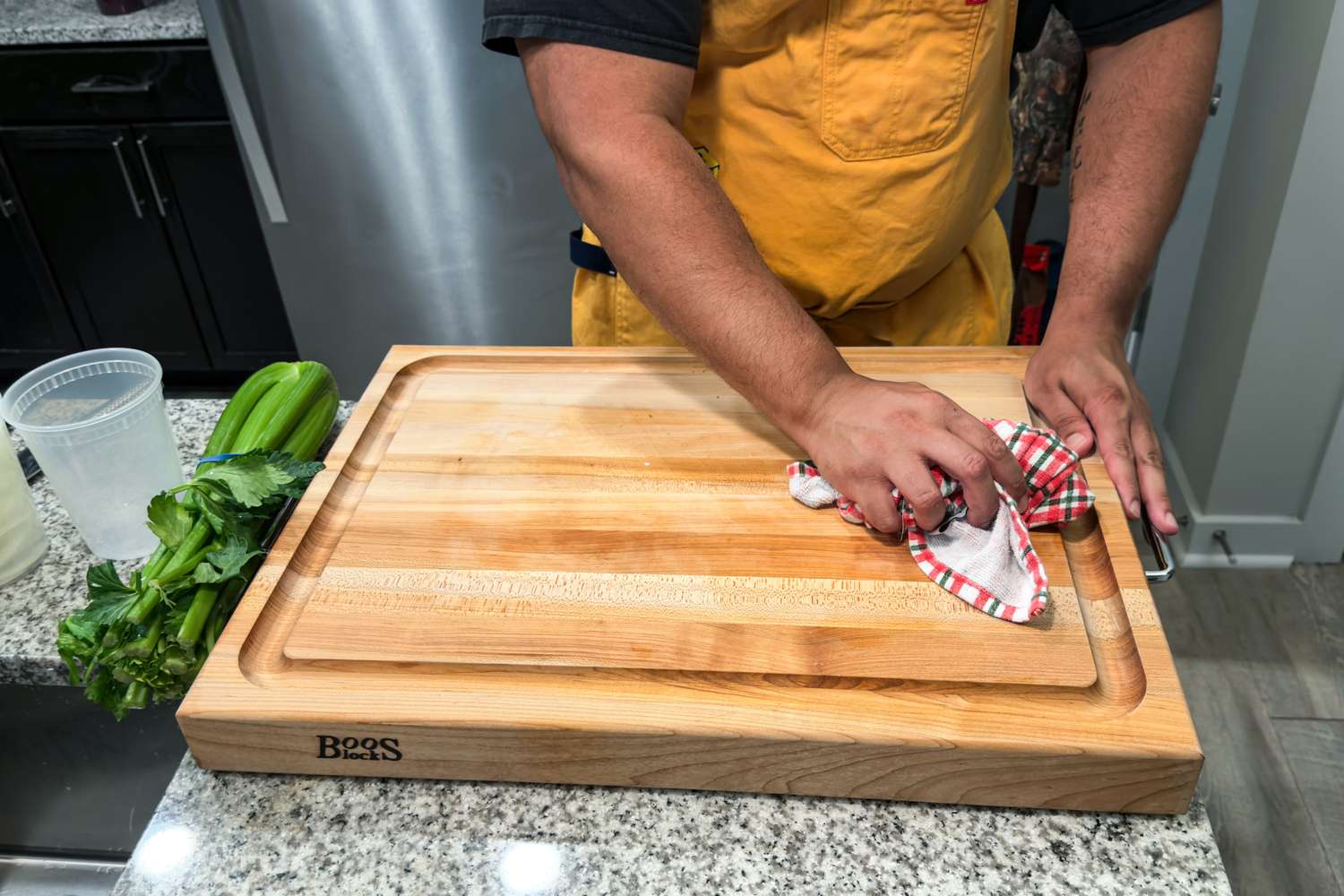
The Boos Chop-N-Slice is the board most professional test kitchens quietly own. It is 18 inches by 12 inches, 1.25 inches thick, edge-grain hard rock maple, made in Effingham, Illinois, and it will outlast most of your other kitchen tools if you oil it every month. Edge grain is the workhorse construction — the wood fibers run parallel to the surface, which is why the board doesn't split when you butcher a whole chicken or a pork shoulder. End-grain (see our #4 pick) is easier on knives but three times the price. For most home cooks, edge-grain maple is the correct answer.
We like the Boos specifically because the wood is dense enough that a properly-honed chef's knife glides across it — you can go three months without touching a stone — but not so dense that it feels like chopping on stone. Weight matters here: at 8 pounds, this board sits flat and refuses to slide, so you don't need to shove a wet towel under it. It also handles a 4-hour marathon of Thanksgiving prep without complaint, then wipes clean with hot soapy water and a stand-on-edge dry. Expect 15+ years of daily use.
#2 — Best Value: OXO Good Grips Utility Polypropylene 15"×10.5"
If you're outfitting a first apartment, a rental, or a college kitchen — or if you just want a dedicated raw-meat board so you never cross-contaminate — the OXO Good Grips utility board is the pick. It's food-safe polypropylene, dishwasher-safe on the top rack, has non-slip rubber on all four edges, and includes a shallow juice groove on one side (flat on the other). Under $25 the last time we checked, and it will not warp, split, or hold onto bacteria in the way a badly maintained wood board can. Pair one white and one red for a cross-contamination system: red for raw poultry and pork, white for everything else.
Two nudges: don't buy the "thin" flexible plastic mats (the kind that come 4-to-a-pack); they slide and their edges curl into the food. And once you see deep knife scars — the ones you can catch a fingernail in — retire the board. Deep grooves are the one place plastic can actually be harder to clean than wood.
#3 — Best for Beginners: Farberware Reversible Thick Cutting Board 14"×11"
The Farberware reversible is the "good enough" board that gets a new cook cooking without overthinking the purchase. It's slightly under-sized for serious meat work, but it's the right size for a small counter, it's dishwasher-safe, it has a juice groove on one side, and the flat reverse side works as a serving/charcuterie board when guests come over. Under $20. If your first move in the kitchen this year is Beef and Broccoli Stir-Fry or a Chicken Fajita Rice Skillet, this is the board that shows up in the picture. We don't recommend it as a lifetime tool — you'll graduate to the Boos or a walnut end-grain within a year or two — but it's the correct on-ramp for a first kitchen.
#4 — Best Premium: Virginia Boys Kitchens Black Walnut End-Grain 17"×11"
End-grain construction is what pros install in butcher blocks: the wood fibers point up at the blade, so the knife edge parts the fibers instead of slicing across them. The result is a self-healing surface (small cuts close up as the wood swells) that is meaningfully easier on your knives than any edge-grain or plastic board. Black walnut is dense, dark, and has a beautiful open pore structure that hides scratches. Made in the USA, food-safe, and the price is fair for the construction (about $130 the last time we checked; this is not a $500 boutique board).
The trade-off is care: end grain requires more oil more often — plan for a monthly conditioning with mineral oil and a beeswax topcoat — and you must never, ever put it in a dishwasher. Handled right, this is a 20-year board that your kids will inherit. It's overkill for someone who cooks twice a week; it's the correct board for someone who breaks down whole chickens and cuts serious roasts.
#5 — Best Compact: Epicurean Kitchen Series 11.5"×9" Wood-Fiber Composite
The Epicurean is the "everywhere" board — small enough to slide into the drawer, dishwasher-safe, heat-resistant to 350°F (yes, you can put a hot pan on it briefly), and made of a pressed wood-fiber composite that's harder than plastic but easier on knives than bamboo. Under $30, and the surface has just enough texture that ingredients don't chase each other off. This is the board we grab for a lunchtime sandwich, a quick chop for a Sheet Pan Lemon-Garlic Chicken, or a batch of Fresh Tomato Salsa when we don't want to haul out the 8-pound Boos.
If you have a galley kitchen or you cook mostly for one or two people, this can honestly be your only board, paired with a color-coded plastic for raw poultry. It won't last as long as the Boos — call it 5–7 years of daily use — but it's easier to store, easier to wash, and one-third the weight.
What to Look For
Below is the framework we use whenever a reader asks us to evaluate a specific board they saw on sale. Six variables cover roughly 95% of the buying decision.
Material. Edge-grain hardwood (maple, walnut, cherry) for daily work, end-grain hardwood for premium knife-preservation, thick polypropylene for raw-meat duty, wood-fiber composite for small/versatile duty. Avoid bamboo as a primary board (it dulls knives), avoid glass and marble entirely (they wreck edges), avoid ultra-thin flexible mats for anything but garnish work.
Size. For most kitchens, 15"×20" is the sweet spot — enough working area to keep your protein, aromatics, and finished dice separate without pushing them off the edge. If your counter is smaller than 24" wide, go 12"×16"; if you regularly break down large roasts or turkeys, jump to 18"×24". Undersized boards are the #1 cause of the "chopped onion on the floor" moment.
Thickness. For hardwood, 1"–1.5" is the durability floor — thinner boards warp under humidity swings and telegraph every hard chop into the counter. For plastic, look for ≥0.5" so it doesn't flex under a heavy knife. Ultra-thick (>2") "butcher blocks" look great but are hard to move to the sink for washing.
Juice grooves. Worth it on one board in your set, especially the one you use for roasts, tomatoes, and raw meats. A juice groove catches 2–3 tablespoons of runoff that would otherwise land on your counter or floor.
Feet or grip. A cutting board that slides is dangerous. Look for a heavy board (≥6 pounds for hardwood) or one with rubber feet on the corners. Wet towel under the board is the emergency fix but not a strategy.
Dishwasher safety. Wood: no, ever. Composite: check the label — Epicurean yes, most others no. Plastic: yes, top rack. Anything you put in a dishwasher will show wear faster; the trade-off is sanitation for raw-meat boards.
Wood vs Plastic vs Composite
The wood-versus-plastic debate has been re-fought roughly every five years since the 1990s, and the honest answer has not moved: own both, use them for different things.
Wood — Hardwood boards (especially maple and walnut) are gentler on knife edges than any other common material. UC Davis research going back to the 1990s demonstrated that bacteria populations decline more quickly on properly-maintained wood than on scratched plastic, largely because wood pulls moisture (and bacteria with it) below the surface, where the bacteria die of dehydration. See the FDA-referenced Food Safety guidance for the safe-handling framework. The downside: not dishwasher-safe, requires monthly oiling, and can crack if left in standing water.
Plastic (polypropylene, HDPE) — Dishwasher-safe, cheap, and easy to sanitize. The dish-washer point is the real one: a raw-poultry board that has just been through a 160°F dishwasher cycle is meaningfully safer than a hand-washed wood board. But once plastic develops deep knife scars, it becomes harder to clean than wood — bacteria hide in the channels — so retire scarred plastic boards every 1–2 years. See Serious Eats' comprehensive material testing for the tradeoff analysis with specific brands.
Wood-fiber composite (Epicurean, Sage, etc.) — Pressed cellulose bonded with a food-safe resin. Dishwasher-safe, thin, heat-resistant, and moderately knife-friendly. Not as long-lived as hardwood, not as sanitizable as plastic. Ideal as a second/third board or as a first-time buyer's only board.
The pragmatic three-board kitchen: one large hardwood (Boos or walnut) for daily produce and cooked meats; one red or color-coded polypropylene for raw poultry and pork; one small composite (Epicurean) for quick tasks and sandwich duty. Total investment: about $180 for lifetime use. This is the setup nearly every professional home cook we know ends up with within a year of taking cooking seriously.
How to Care for a Cutting Board So It Lasts 10+ Years
Wood boards fail from neglect, not use. Here is the four-step system that keeps a Boos or a walnut end-grain in service for a decade or more.
1. Wash hot, dry standing. Hot soapy water, wipe with a dish cloth, rinse, then stand the board on its edge so both faces air-dry evenly. The single biggest cause of warp is leaving a board flat on a wet counter — one face absorbs moisture, the other doesn't, and the board cups like a Pringles chip within days.
2. Oil monthly. Food-grade mineral oil, applied with a paper towel until the surface stops absorbing (usually 2–3 coats, 10 minutes apart). Then wipe off the excess. Do NOT use olive oil, vegetable oil, or any cooking oil — they go rancid inside the wood and the board will smell like old chip fat inside a year.
3. Wax quarterly. A board-cream (mineral oil + beeswax + carnauba, sold as "board butter") sealed on top of the oil creates a wax cap that repels water between washings. This is what makes the difference between a board that ages to a beautiful dark patina and one that turns gray and dull within a season.
4. Sand every 3–5 years. A light hand-sand with 220-grit paper, followed by 400-grit, then a full re-oil and re-wax, resets the surface to nearly-new. On a Boos we've owned for 12 years, this once-a-half-decade resurfacing has kept it in daily rotation.
For plastic, the care system is simpler: dishwasher after every raw-meat use, retire the board when knife scars become deep enough to catch a fingernail. Cook's Illustrated's equipment reviews of cutting boards is the deep-dive if you want to compare specific brands head to head.
Real-world numbers — what boards cost, how long they last, what they save
| Board | Material | Size | Weight | Price (2026) | Expected life | Knife-edge impact |
|---|---|---|---|---|---|---|
| John Boos Chop-N-Slice | Edge-grain maple | 18"×12"×1.25" | 8 lb | $95 | 15+ years | Very low |
| OXO Good Grips Utility | Polypropylene | 15"×10.5"×0.5" | 2 lb | $23 | 2–3 years (retire on scars) | Moderate |
| Farberware Reversible | Bamboo/composite | 14"×11"×0.8" | 3 lb | $18 | 5–7 years | Moderate–High |
| Virginia Boys Walnut | End-grain black walnut | 17"×11"×1.75" | 10 lb | $130 | 20+ years | Lowest possible |
| Epicurean Kitchen Series | Wood-fiber composite | 11.5"×9"×0.3" | 1.2 lb | $28 | 5–7 years | Low |
The cost-per-year math on the Boos ($95 / 15 years = $6.30/year) beats every other option by a wide margin. The OXO's real cost is closer to $10/year when you factor in retirement. The Farberware is the honest "just get me started" board.
Common Pitfalls
Storing your board flat on the counter. Water pools underneath, the underside stays wet, the board cups. Stand it on edge, always.
Cutting on a granite or glass "cutting board." These aren't cutting boards; they're serving trays with delusions. A single day of chopping onions on granite will roll the edge on a $150 chef's knife.
Using olive oil or vegetable oil to condition wood. Those oils go rancid — you will taste it in your food within six months. Use USP food-grade mineral oil, sold in every hardware store for under $10 a bottle.
Skipping a raw-meat-only board. Cross-contamination from raw chicken and pork is the single biggest home-kitchen food-safety risk. A $20 red polypropylene board is cheap insurance.
Buying a "too big to store" board. A 24"×18" hardwood board is glorious to work on and impossible to wash — most home sinks won't accept it. Match the board to your sink first, your counter second.
When NOT to Buy a New Cutting Board
If your current board is a properly-maintained hardwood that isn't warped, split, or catching your knife in deep grooves, keep using it. A dull-looking board comes back to life with a light sand and a re-oil; a scarred surface can often be planed flat by a local woodworker for $20. Boards that legitimately need replacement: any plastic board with knife channels deep enough to trap food, any wood board that has cracked through, and any bamboo board where the glue joints have opened up (this is a food-safety issue, not cosmetic).
If you're just starting to cook seriously, don't jump straight to the $130 walnut end-grain. Start with the OXO plus the Farberware; upgrade to the Boos or walnut when you know how much you actually chop. Every kitchen upgrade you buy before you know your own cooking pattern is money you could have spent on knives — and knives, unlike boards, actually change how food tastes.
Pair your new board with an honest set of knives — even the cheapest well-maintained chef's knife outperforms an expensive dull one — and a utensil set that includes a bench scraper. The bench scraper is the single accessory that changes how you use a cutting board: it lets you slide chopped ingredients off the board in one motion, so the surface stays clean and you don't chase parsley across the counter. See our cookware picks for the sauté pans and Dutch ovens the food will land in next.
Kitchen workflows that get the most out of a great board
A cutting board is only as good as the workflow around it. A few practical patterns from our own cooking:
- Set up before you start. Board on a damp folded paper towel (or built-in rubber feet), bench scraper to your right, waste bowl to your left, sharp knife on the board. Prep every ingredient before the pan hits heat.
- Chop from the outside in. Aromatics (garlic, ginger, shallots) first — you can use the same corner for all of them. Then heartier vegetables (carrots, onions). Then proteins in a separate board or on a dedicated end. Cleanup runs the same direction: aromatics scrape into the pan, vegetables scrape into a holding bowl, protein-side of the board goes straight to the sink.
- Use a Panzanella-style bread salad or a big Sheet Pan Carnitas as a stress test. These are the recipes that reveal an undersized or slippery board — if you feel cramped, the board is too small; if it slides, add feet or trade up.
- Reserve one board for hot service. After roasting a meatloaf or a Texas-style brisket, you want a dedicated grooved carving board — not the same one you diced onions on ten minutes ago. Cross-contamination and juice management both improve.
- Store big boards vertically. A slim storage rack between the fridge and the counter is the best $15 you'll spend for kitchen ergonomics.
FAQ
Is a wood or plastic cutting board better?
Wood is gentler on knife edges and has natural antimicrobial properties (studies from UC Davis show bacteria die faster on maple than on plastic), but plastic is dishwasher-safe and cheaper. The pragmatic answer is to own both — a large end-grain wood board as your daily driver for produce and cooked meats, plus a color-coded plastic board reserved for raw poultry, seafood, and pork to eliminate cross-contamination risk.
What size cutting board do I actually need?
For most home cooks, a 15×20-inch board is the sweet spot — big enough to break down a whole chicken or corral a mound of chopped vegetables, small enough to store and clean. If your counter is tight, a 12×16 handles daily prep; if you break down large proteins or bake often, jump to 18×24. Anything smaller than 12×9 becomes a serving board, not a work board.
How do I keep a wood cutting board from cracking or warping?
Never soak it, never put it in the dishwasher, and oil it every 3–4 weeks with food-grade mineral oil or a wood-board conditioner. Wipe with hot soapy water and dry standing on edge so both faces air-dry evenly. A properly maintained end-grain maple board lasts 15+ years; a neglected one warps within a season and develops deep knife channels that harbor bacteria.
Are bamboo cutting boards a good choice?
Bamboo is inexpensive, sustainable, and harder than most hardwoods — which is a double-edged sword because that hardness dulls knives faster than end-grain maple or walnut. Bamboo works well as a second board for produce and light prep, and it holds up to daily use, but avoid it as your primary board if you invest in high-carbon Japanese knives. Also confirm the glue used is formaldehyde-free before buying.
Do I need a board with a juice groove?
A juice groove is worth it if you carve roasts, slice tomatoes, or portion raw meat regularly — it catches 2–3 tablespoons of liquid that would otherwise run onto your counter. If you mostly chop vegetables and aromatics, a groove just eats into your working surface. Many cooks buy two boards: a grooved side for proteins, a flat side for daily prep.
Sources
- FDA Food Safety Charts — Safe Food Handling
- Serious Eats — The Best Cutting Boards
- Cook's Illustrated — Cutting Boards Equipment Review