18 Easy Seafood Recipes for Beginners (Under 30 Minutes)
Foolproof salmon, 8-minute shrimp, and mussels for the price of chicken — a full beginner rotation.
Affiliate disclosure: AislePrompt may earn a commission on qualifying purchases made through Amazon and Instacart links in this article, at no additional cost to you. See our affiliate policy →
If you've been avoiding seafood at home because you think it's fussy, expensive, or hard to time right, this list will change your mind. The 18 recipes below cook in 30 minutes or less, use frozen or budget fillets, and lean on ingredients you probably already own. Every one links to a full recipe on AislePrompt with the shopping list one tap away, so you can go from "I don't cook fish" to "I cook fish twice a week" without touching a specialty store.
Introduction — why seafood beats chicken on a weeknight
Chicken breast owns weeknight dinners for one reason: it forgives sloppy cooking. Seafood doesn't have that same margin, and that's exactly why it wins once you learn a few basics. A 6-ounce salmon fillet is done in 8 minutes. Shrimp needs 3 to 4 minutes total, tops. Cod poaches in a covered skillet in 6 minutes flat. Compared with a chicken breast that takes 18 to 22 minutes to reach 165°F without drying out, seafood is the faster protein — you just have to trust the timer.
The nutrition case is stronger, too. A 6-ounce portion of Atlantic salmon delivers about 40 grams of protein and 4,000 mg of long-chain omega-3 fatty acids (EPA + DHA combined), which the American Heart Association ties to lower triglycerides and blood pressure at intakes above 1,000 mg/day. Chicken breast delivers similar protein but negligible omega-3s. Shrimp brings 24 grams of protein per 4-ounce serving at 84 calories, making it one of the leanest animal proteins on the shelf.
Cost per gram of protein is where most home cooks get stuck. Fresh wild sockeye at $18/lb feels like a splurge until you compare it with the frozen counter: same fish at $9.99/lb at Costco, Aldi frozen salmon fillets at $6.99/lb, tilapia at $3.99/lb, and 41-50 count frozen shrimp at $7.99/lb. All four beat organic chicken breast on protein-per-dollar as of 2026. The trick is buying frozen and thawing overnight — that's it.
Here's a quick head-to-head so the "seafood is expensive" myth stays dead:
| Protein | Calories (6 oz) | Protein (g) | Omega-3 EPA+DHA (mg) | Approx cost / lb (2026) |
|---|---|---|---|---|
| Atlantic salmon (frozen) | 411 | 40 | 4,000 | $6.99–$9.99 |
| Sockeye salmon (frozen) | 337 | 46 | 2,600 | $9.99 |
| Shrimp (41–50 ct, frozen) | 168 | 34 | 500 | $7.99 |
| Cod (frozen) | 156 | 34 | 300 | $8.99 |
| Tilapia (frozen) | 220 | 45 | 200 | $3.99 |
| Chicken breast (fresh) | 279 | 53 | 60 | $5.99 |
Numbers rounded to the nearest dollar; USDA FoodData Central for macronutrients, retail averages from Costco / Aldi / Walmart / Whole Foods online 2026.
How to pick fish at the counter (frozen is fine)
Skip the "fresh" case at any store more than 200 miles from open ocean. What's labeled "fresh" at inland supermarkets was almost certainly frozen at sea, thawed at the distribution center, and now sits under a warm display light losing quality by the hour. Real fresh fish belongs at a dedicated fishmonger or a coastal market — and even there, you should ask when it came in.
Frozen fish gives you three practical wins. First, it's flash-frozen within hours of catch, which locks in flavor and texture better than the multi-day "fresh" logistics chain. Second, it costs 30–50% less than the fresh case. Third, it's forgiving on scheduling — pull a portion from the freezer the night before, and it's ready when you are. The FDA's seafood selection guide walks through the sight, smell, and touch cues to check on every purchase.
What to look for on the frozen bag:
- Individually vacuum-sealed portions. Loose block-frozen fillets tear each other up in the freezer.
- No ice crystals inside the packaging. Crystals mean the bag thawed and refroze somewhere in the supply chain — expect mushy texture.
- A country of origin you recognize. Wild Alaskan, Norwegian farmed, and Faroe Island salmon are all solid. Vietnamese and Chinese basa/pangasius are cheap for a reason.
- A "harvested" or "packed" date within 12 months. Frozen fish is safe indefinitely but quality degrades after a year.
Thaw slowly overnight in the refrigerator, or in 20 minutes under cold running water in a sealed bag. Never thaw at room temperature — the outer layer sits in the "danger zone" (40–140°F) for too long. If you're in a hurry, cook straight from frozen: add 3 to 5 minutes to the recipe time, skip the initial sear, and finish covered.
1–6: Foolproof salmon dinners
Salmon is the easiest fish to start with. It's fatty enough that a minute of overcooking still tastes fine, cheap in frozen form, and the skin acts as a heat shield so the flesh underneath stays moist even on a hot pan.
1. Baked Lemon-Garlic Salmon with Herb Butter — 20 minutes total. This is the recipe I hand every "I've never cooked fish" friend. Compound butter goes on top, oven does the work, and the internal temp hits 130°F at exactly the moment the butter finishes browning. The full ingredient list is on the recipe page along with an Instacart cart link.
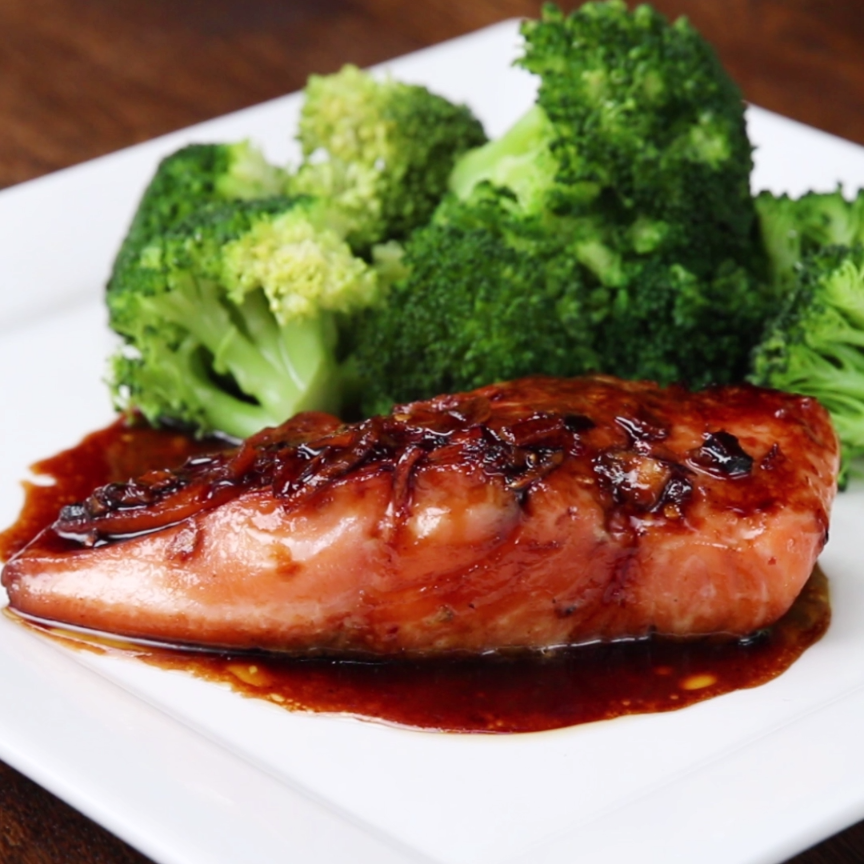
2. Honey-Soy Glazed Salmon with Sesame Seeds — 25 minutes. Sweet, salty, sticky glaze that caramelizes under a broiler. Serve over rice with steamed broccoli for a complete meal. Use tamari instead of soy sauce if you're keeping the whole plate gluten-free.
3. Japanese-Style Teriyaki Salmon Bowls — 30 minutes including rice. Homemade teriyaki (soy sauce + mirin + sugar + sake, simmered) blows away any bottled version, and the whole thing plates into a rice bowl with pickled ginger, cucumber, and sesame. Doubles beautifully for meal prep.
4. Cardio-Enhancing Salmon & Quinoa Bowl — 25 minutes. Pan-seared salmon over lemon-dressed quinoa with avocado, edamame, and pickled red onion. High-omega-3, high-fiber, roughly 620 calories with 45 g of protein.
5. Sheet-pan salmon with roasted vegetables — 30 minutes. Everything on one tray at 425°F: salmon center, broccoli and sweet potato around the edges. Toss the vegetables in olive oil and salt first, then add the salmon halfway through so they finish at the same moment.
6. Miso-glazed salmon — 20 minutes. White miso, mirin, brown sugar, and rice vinegar whisked into a paste; brush on, broil 8 minutes. Deep umami finish that pairs with plain jasmine rice and sesame-dressed spinach.
The internal temperature target for salmon is 125–130°F for medium (still translucent in the center). Pull it at 125°F and the residual heat carries it to 130°F on the plate. Anything above 140°F is chalky and dry.
7–12: Shrimp — the 8-minute protein
Shrimp cook so fast that timing is the only real skill. Peeled, deveined, thawed 41–50 count shrimp take 90 seconds per side in a hot pan. That's it. The moment they curl into a tight C and turn opaque pink, they're done. If they curl into a tight O, you overcooked them.
7. Golden Garlic Butter Shrimp Scampi — 15 minutes. Butter, garlic, white wine, lemon, parsley. Serve over gluten-free pasta, angel hair, or crusty bread. This one dish sold me on cooking shrimp weekly.
8. Cilantro-Lime Shrimp and Vegetable Sheet Pan Fajitas — 25 minutes total. Peppers and onions roast for 15 minutes, shrimp goes in for the last 6. Wrap in warm corn tortillas with avocado and a squeeze of lime.
9. Thai-Style Coconut Curry Noodles with Shrimp and Bok Choy — 25 minutes. Red curry paste + coconut milk + fish sauce + brown sugar = 90% of Thai-restaurant flavor at home. Add shrimp at the end so they don't overcook while the noodles absorb the sauce.
10. Honey-Lime Tequila Shrimp Tacos with Cilantro Slaw — 25 minutes. Marinate shrimp for 10 minutes while you shred the slaw, then sear 90 seconds per side and pile onto warm corn tortillas. Weeknight-friendly Baja-taco energy.
11. Quick Sautéed Cajun Shrimp with Garlic Butter and Lemon — 12 minutes. One skillet, five ingredients, done. Serve over grits, rice, or just a hunk of bread. Great when you're staring into an empty pantry at 7 pm.
12. Honey-Lime Grilled Shrimp Skewers with Chili and Garlic — 20 minutes. Grill pan or outdoor grill. Two-minute char on each side, and the skewers rest while you plate.
The shrimp secret: cook them in a single layer. Two layers of shrimp in a 10-inch pan means the bottom ones steam instead of sear, and by the time the top layer catches up, the bottom is rubber. Use a wider pan or work in batches.
13–18: Cod, tilapia, tuna, mussels
The final six push into slightly less-familiar territory — but each one still cooks in under 30 minutes and uses ingredients from any decent supermarket. This is where you find the recipes that turn "I cook salmon twice a week" into "I actually enjoy cooking fish."
13. Baked Cod with Tomato-Olive Relish and Garlic Herb Quinoa — 30 minutes. Cod bakes at 400°F while the quinoa simmers and the relish comes together on the counter. Mediterranean plate that reads restaurant, cooks like weeknight.
14. Heian-Inspired Miso-Glazed Black Cod Donburi — 25 minutes (plus optional 30-minute miso marinade). Deep umami finish over a rice bowl with pickled ginger. Substitute regular cod if black cod is unavailable — the marinade carries the dish.
15. Pan-Seared Tuna Steaks with Soy-Ginger Glaze — 15 minutes for the sear, 5 for the sauce. Rare center, seared crust, sesame seeds pressed into the outside. Sushi-grade or ahi-quality tuna only — cheap tuna steaks aren't meant for rare service.
16. Jazz-Inspired Cajun-Spiced Blackened Catfish — 20 minutes. Swap catfish for tilapia if that's what's in the freezer — both take the same blackening treatment. Cast-iron skillet, high heat, 3 minutes per side, smoke alarm optional.
17. Pan-Seared Halibut with Lemon-Dill Sauce — 20 minutes. Higher-end pick when you want to make Wednesday feel like an occasion. Sear skin-side down until crispy, flip once, finish with butter and dill.
18. Smoked Mussels in White Wine Herb Broth — 20 minutes. Mussels are the cheapest seafood most home cooks overlook — $4 to $6 per pound live. Toss them in a Dutch oven with wine, shallot, garlic, and parsley, cover, and 6 minutes later they've opened themselves. Serve with grilled sourdough.
What you'll need (nonstick skillet, fish spatula, thermometer)
You do not need a full kitchen re-tool to cook seafood well. A quality nonstick or a well-seasoned cast-iron skillet handles 80% of the recipes above. Add three specific items and you're set:
- A thin, flexible fish spatula. Fillet slides right under the skin without tearing the flesh. Regular metal spatulas are too rigid and shred the fish. Browse tested picks under $30 on AislePrompt kitchen — utensils.
- An instant-read digital thermometer. Fish overcooks in 60 seconds; a thermometer takes 10. See our current recommendations on AislePrompt kitchen — cookware alongside the pan list.
- A 10 or 12-inch nonstick or cast-iron skillet. One pan does 90% of the work. Cast iron sears crispier, nonstick releases delicate fillets more reliably. Both live at AislePrompt kitchen — cookware.
Optional but useful: a half-sheet pan for sheet-pan shrimp dinners, a Microplane for zesting lemons and grating garlic, and a fine-mesh strainer for rinsing quinoa or draining pasta water. See our full tested list on AislePrompt kitchen — knives for a chef's knife that handles vegetable prep for all of the above.
How to tell when fish is done (temp + fork test)
Two methods, both take under 10 seconds.
Method 1: Instant-read thermometer. Insert into the thickest part of the fillet, pull when it hits the target below. Every serious kitchen uses this method — it takes the guesswork out completely.
| Fish | Doneness target | Notes |
|---|---|---|
| Salmon | 125°F medium / 130°F medium-well | Pull 5°F early; carryover finishes it |
| Tuna | 115°F rare / 125°F medium-rare | Only for sushi-grade; skip for cheap steaks |
| Cod, tilapia, halibut, sea bass | 140–145°F | USDA-safe minimum is 145°F |
| Shrimp | Visual only — opaque + C-curled | Too small to reliably temp |
| Scallops | 130–135°F | Center still translucent |
Method 2: The fork test. Nudge the thickest part with a fork tine. Done fish flakes into distinct segments; underdone fish resists and stays translucent; overdone fish crumbles into dust. This method works fine for salmon, cod, and tilapia — less so for tuna where a rare center is the goal.
The single biggest mistake home cooks make with fish is walking away from it. Salmon goes from perfectly done to chalky in 45 seconds. Set a timer for 60% of the expected cook time and check every 90 seconds after that. It's not the same rhythm as roasting a chicken.
Build a shopping list around one fillet + pantry
The key to weekly seafood without dread is committing to a single protein per shopping trip. Buy a 1 to 2-pound bag of frozen salmon (or shrimp, or cod) and build the whole week's dinner rotation around it. Here's a five-day plan built from one bag of frozen salmon fillets:
- Monday: Baked Lemon-Garlic Salmon with Herb Butter with a green salad
- Tuesday: Leftover salmon flaked over greens with lemon tahini dressing
- Wednesday: Japanese-Style Teriyaki Salmon Bowls with sushi rice and pickled cucumber
- Thursday: Salmon patties (leftover salmon + panko or GF crumbs + egg + scallion) on brioche buns
- Friday: Cardio-Enhancing Salmon & Quinoa Bowl with avocado and edamame
Total shopping cost with one 2-pound bag of Costco salmon at $9.99/lb: about $20 for the protein across five dinners, plus pantry staples and produce. That's under $4 per plated dinner for four people, all wired to the AislePrompt shopping list so Instacart delivers the produce and pantry gaps in one order.
The larger point: seafood becomes routine when you stop treating each fish dinner as a separate event and start batching. Buy one big bag, thaw two portions the night before, and let the rotation carry you. Both the Serious Eats seafood collection and EatingWell's quick seafood dinners are solid supplemental libraries once you've cleared this list.
Common pitfalls and gotchas
Four failure modes come up over and over in beginner seafood cooking. Watch for them:
1. Cold pan, cold fish. Both cold = steamed, sad fillet with pale skin. Preheat the pan for 90 seconds over medium-high heat first, and pat the fish dry with paper towels right before it hits the oil.
2. Overcrowding. Two fillets in an 8-inch pan produces steam, not sear. Use a bigger pan or work in batches.
3. Flipping too early. A properly seared fillet releases from the pan on its own. If it sticks, it's not ready. Wait 30 more seconds.
4. Reheating in the microwave. Fish sitting in a microwave for 2 minutes turns rubbery and smells the office out. Reheat gently — 90 seconds at 50% power, covered, or 5 minutes at 275°F in the oven.
Bonus pitfall: overspending on "fresh" fish. Unless you live within 100 miles of a working port and know your fishmonger by name, buy the frozen bag. Every quality retailer freezes their fish at sea for exactly this reason.
When NOT to cook seafood at home
Occasionally the answer is "just go out." Skip a home cook attempt when:
- You need sushi-grade tuna and you don't have a trusted source. Parasite-safe raw fish requires specific freezing protocols; supermarket tuna doesn't cut it.
- You're serving picky eaters who genuinely don't like fish. Cook them chicken and enjoy your salmon separately — nobody wins forcing a taste conversion at 6 pm on a Tuesday.
- You're hosting a big group and haven't practiced. A pan of overdone salmon for 12 is a memorable disaster. Practice on your family first.
- The fish smells like fish. Fresh, high-quality fish smells like clean seawater. If your fillet has that sharp, ammonia-forward "fishy" smell, it's already past its window — return it or throw it out.
For everything else — Tuesday dinner, quick weeknight, meal prep, date-night at home — seafood belongs in the rotation. Twenty minutes and $6 a plate for something that reads as effortlessly upscale is an unbeatable weeknight equation.
Related reads
- /k/cookware — nonstick and cast-iron skillets tested for weeknight fish
- /k/knives — chef's and paring knife picks under $50
- /k/utensils — fish spatulas, tongs, and instant-read thermometers
- FDA — selecting and serving fresh and frozen seafood safely
- Serious Eats — seafood recipe library
- EatingWell — quick seafood dinners