20 Best Tequila Cocktails Beyond the Margarita for 2026
From the classic margarita to the Oaxaca Old Fashioned — 20 tequila and mezcal builds that go beyond the frozen-with-triple-sec default.
Affiliate disclosure: AislePrompt may earn a commission on qualifying purchases made through Amazon and Instacart links in this article, at no additional cost to you. See our affiliate policy →
Tequila is the fastest-moving spirit in the American bar as of 2026, and margaritas are only the first six inches of the shelf. The 20 tequila cocktails below cover the full ladder — five margarita variations that go beyond the frozen-with-triple-sec default, five palomas and sparkling long drinks for hot afternoons, five stirred and boozy builds that put reposado and añejo to real work, and five tropical and frozen crushers for a party. All of them are night-and-day better than a bad chain-restaurant margarita, and none of them takes more than four minutes to build.
What you'll use with it
A quarter-ounce error in a 2-ounce drink is a 12% change. The bar tools guide picks the Boston shaker, jigger and Hawthorne strainer these recipes call for, and explains why the three-piece cobbler seizes when cold. Read the bar tools guide →
Bar tools guide’s top pick: A Bar Above Professional Boston Shakers $26.00 at Amazon, Check price on Amazon →Bar tools guide’s Best Value Set pick: HomeCurated 24-Piece Bartender Kit $25.97 at Amazon, Check price on Amazon →Bar tools guide’s Best Jigger pick: Barfly Japanese Style Jigger, 1 oz × 2 oz $11.55 at Amazon, Check price on Amazon →
Blanco vs reposado vs añejo — matching tequila to cocktail style
Tequila is agave distillate, and how long the distillate sits in oak before it goes into the bottle is what defines the three main styles. Match the style to the drink and every cocktail will taste like it was built by someone who cared.
Blanco (also called plata or silver) is unaged, or aged less than two months in neutral stainless. It's clear, sharp, and reads as pure roasted agave with citrus and pepper on top. Blanco is the workhorse — it belongs in any margarita or paloma where the drink's job is to showcase agave against citrus. If a cocktail recipe just says "tequila," it means blanco. Espolòn Blanco, El Jimador, and Milagro Silver are the go-to $22–28 bottles.
Reposado ("rested") sits in oak barrels for 2–12 months. The result is pale gold, softer, and rounded with vanilla, honey, and gentle caramel notes that come out of the wood. Reposado is what you reach for in stirred cocktails — Oaxaca Old Fashioneds, tequila Manhattans, any drink that used to be a whiskey build. It's also good in a margarita on a cold night when you want the drink to read warmer.
Añejo ("aged") sits in oak for 1–3 years. It's mahogany, complex, and often has enough vanilla-cinnamon-oak character that most bartenders sip it neat or use it exactly like a bourbon. Don't put añejo in a shaken drink with lime — the barrel character just gets buried under the acid. Save it for stirred boozy builds or for the glass in your hand.
There's also extra añejo (3+ years) and cristalino (aged then filtered clear to look like blanco but taste like reposado). Cristalinos are a marketing category, priced at $60+, and none of them are worth it for cocktails. Extra añejos are sipping-only bottles.
The whole ladder as of 2026, with real everyday numbers:
| Style | Ageing | Everyday bottle ($22–35) | Upgrade ($40–60) | Best cocktail use |
|---|---|---|---|---|
| Blanco | 0–2 months | Espolòn Blanco, El Jimador | Fortaleza Blanco, Ocho Plata | Margaritas, palomas, ranch water |
| Reposado | 2–12 months | Espolòn Reposado, Cazadores | Fortaleza Reposado, Siete Leguas | Oaxaca Old Fashioned, stirred drinks |
| Añejo | 1–3 years | Herradura Añejo | Don Julio Añejo, Fortaleza Añejo | Sipping neat, tequila Manhattans |
| Mezcal | Varies | Del Maguey Vida | Del Maguey Chichicapa | Mezcal Negroni, split-base drinks, smoke floats |
For the exact building steps behind any of the drinks below, our Classic Margarita with optional salted rim is the reference blanco recipe, and Oaxaca-Style Mezcal Old Fashioned is the reference reposado-plus-mezcal build.
Mezcal, the smoky cousin, and when to reach for it
Mezcal is agave spirit made anywhere in Mexico that isn't tequila's protected Jalisco-plus-a-few-states region, and it's traditionally distilled from agave hearts that have been slow-roasted in earthen pits — the pit-roasting is where the campfire smoke comes from. In cocktails, mezcal does two very specific things: replaces tequila entirely when you want the whole drink smoky (Mezcal Negroni, Naked & Famous, mezcal palomas), or floats on top of a tequila-based drink as a 1/4-ounce smoke-and-aroma layer.
Start with Del Maguey Vida (~$36 as of 2026). It's the industry-standard entry-level bottle — smoky but restrained, tasty in cocktails, and cheap enough to actually use. Ilegal Joven ($40) is the other benchmark. Once you know you like mezcal, spend $65 on a Del Maguey single-village bottle (Chichicapa, Santo Domingo Albarradas, or San Luis del Río) and taste the difference; each village has a distinct terroir. Punch's best tequila cocktails feature has good background on how mezcal moved from "obscure spirit" to bar staple in the 2015–2025 stretch.
Split-base cocktails are how most people learn to like mezcal. Instead of 2 oz mezcal, pour 1 oz mezcal + 1 oz blanco tequila. The smoke is present but supporting, the drink is easier to drink, and you get to see what mezcal does before committing a whole cocktail to it. The Fiery Blood Orange Mezcal Margarita and the Smoked Orange Mezcal Negroni are the two split-friendly recipes we ship most often.
Never use mezcal in a frozen drink or a heavy sugar bomb. The smoke is a top-note aroma and it gets destroyed by cold and sugar. Room-temperature stirred, or up-in-a-coupe shaken, is where mezcal belongs.
5 Margarita variations worth learning
If you can make one great margarita, you can make ten. The rest is fruit, spice, and swapping the sweetener. Learn the ratios cold, then everything else is a variation.
1. Classic Margarita. 2 oz blanco tequila, 1 oz fresh lime juice, 1 oz Cointreau (or 3/4 oz triple sec plus 1/4 oz agave). Shake hard with ice for 12 seconds, strain over fresh ice in a rocks glass, salt half the rim so drinkers can choose sip-by-sip. Fresh lime is non-negotiable. Bottled lime juice tastes like green Skittles.
2. Tequila Pineapple Jalapeño Margarita. 2 oz blanco, 3/4 oz lime, 3/4 oz pineapple juice, 1/2 oz agave, one thin jalapeño slice muddled in the shaker (or two if you like heat). This is the cocktail that converts most margarita-skeptics — pineapple's sweetness balances the pepper's burn, and both play against agave beautifully. Serious Eats' Serious Eats tequila cocktail canon has similar spicy pineapple ratios if you want to compare.
3. Frozen Watermelon Jalapeño Margarita Slush. 2 oz blanco, 1 cup cubed frozen watermelon, 3/4 oz lime, 1/2 oz agave, one thin jalapeño slice. Blend on high for 30 seconds. Watermelon is 90% water; freezing it before blending gives you the slushy texture without watering down the drink the way ice cubes would.
4. Cucumber-Mint Margarita with Jalapeño-Infused Agave. 2 oz blanco, 3/4 oz lime, 3/4 oz jalapeño-infused agave, three cucumber wheels, five mint leaves, muddled and shaken. The infused agave is the trick — make a batch (1 cup agave nectar, 3 sliced jalapeños, steep 30 minutes, strain) and use it in three drinks before it loses potency.
5. Tropical Coconut Margarita on the Rocks. 2 oz blanco, 1 oz cream of coconut (not coconut milk — cream of coconut is sweetened), 3/4 oz lime, toasted coconut flake rim. This drink cannot survive a bad rim; toast the coconut flakes in a dry skillet until they smell like the beach, cool, then adhere with lime juice on the outer edge of the glass. Bon Appétit's tequila cocktail gallery has a similar coconut version worth cross-checking.
5 Paloma and sparkling tequila cocktails
Palomas are the drink Mexican bartenders actually make for themselves — the margarita is what tourists order. Grapefruit soda plus tequila plus a squeeze of lime is the base, but the ceiling on this build is high once you start using fresh grapefruit and better soda.
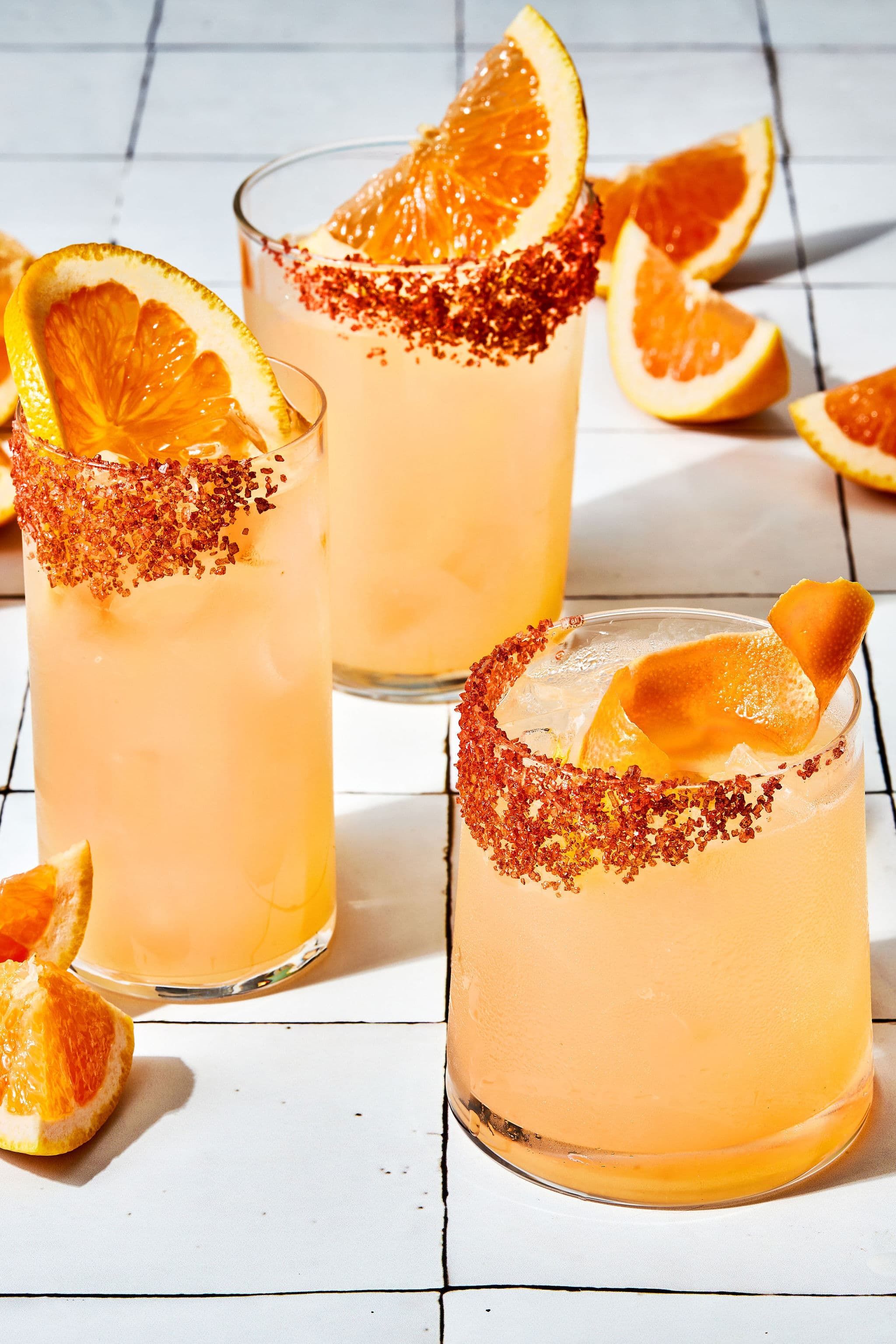
6. Citrus-Spiced Tequila Paloma with Grapefruit and Chili Salt. 2 oz blanco, 4 oz Squirt or Jarritos Toronja, 1/2 oz fresh lime, big ice cube, chili-lime salt rim (Tajín is fine). This is the working-class Paloma — light, refreshing, and impossible to mess up.
7. Rimmed Tequila Grapefruit Paloma. 2 oz blanco, 2 oz fresh grapefruit juice, 1 oz fresh lime, 1/2 oz agave, 2 oz soda water. This is the fresh-juice version — no soda-brand baggage, just tequila and citrus at their brightest. Squeeze pink grapefruit for a softer sweetness; ruby red for more color.
8. Ranch Water. 1 1/2 oz blanco, 1/2 oz fresh lime, 6 oz cold Topo Chico or another good mineral water, lime wedge. West Texas invented this drink and it is the best hot-afternoon long drink in the world. The mineral character of Topo Chico is doing real work here — plain seltzer will taste flat by comparison.
9. Smoky Mesquite Paloma. 1 1/2 oz reposado, 1/2 oz mezcal, 2 oz grapefruit juice, 1/2 oz lime, 2 oz soda, smoked salt rim. The split-base tequila + mezcal build works because grapefruit and smoke are natural friends — the same reason peated Scotch and grapefruit peel work as a highball garnish.
10. Tart Hibiscus Tequila Cooler. 2 oz blanco, 1 1/2 oz hibiscus tea (dried hibiscus flowers steeped 5 minutes in hot water, cooled), 1/2 oz lime, 1/2 oz agave, 2 oz soda. Hibiscus is the sleeper ingredient behind a whole shelf of Mexican and Central American drinks; the deep magenta color and the cranberry-adjacent tartness carry blanco beautifully.
5 Stirred tequila cocktails (yes, they exist)
Every home bartender ever asks the same question after their fifth margarita: "Can you make a tequila drink that isn't sour?" You can. Stirred tequila cocktails are half the reason to own reposado, and they read as more grown-up than any margarita.
11. Oaxaca-Style Mezcal Old Fashioned. 1 1/2 oz reposado, 1/2 oz mezcal, 1 teaspoon agave, 3 dashes Angostura, orange peel expressed. Stir 30 seconds over one large cube, garnish. Phil Ward invented this at Death & Co in New York in 2007 and it's the drink that put mezcal on the American bar menu. Ratio purists use 1 1/2 oz reposado + 3/4 oz mezcal for more smoke; start where I have it.
12. Smoked Orange Mezcal Negroni. 1 oz mezcal, 1 oz Campari, 1 oz sweet vermouth, smoked-orange peel garnish. Same equal-parts Negroni build as the gin classic, but the mezcal makes the whole thing read as darker and more autumnal. If you already like Negronis, this will become your winter version.
13. Tequila Manhattan. 2 oz reposado or añejo, 1 oz sweet vermouth, 2 dashes Angostura, brandied cherry. Stir 30 seconds, strain into a chilled coupe. This is exactly a Manhattan with tequila instead of rye. It shouldn't work as well as it does. Cinzano Rosso or Carpano Antica are the vermouth picks; keep whatever bottle you buy refrigerated after opening or it goes flat in six weeks — a good airtight cap from our Storage & Containers picks buys you an extra month.
14. Tequila Ginger El Diablo. 1 1/2 oz blanco, 1/2 oz crème de cassis, 3/4 oz fresh lime, 3 oz ginger beer, lime wheel. This one is technically shaken then long — I'm counting it because the flavor architecture is stirred-adjacent: cassis and ginger both read as savory-sweet, and the drink lingers instead of finishing bright the way a margarita does.
15. Cucumber Basil Mexican Mule. 2 oz blanco, 3/4 oz lime, 4 oz ginger beer, three cucumber wheels, five basil leaves, muddled and served in the copper mug over crushed ice. Copper mugs are not decoration — the metal reads cold to the lip and sharpens ginger's bite. If you don't have copper, use a highball glass.
5 Tropical and frozen tequila drinks
Frozen tequila drinks got a bad reputation in the 1990s because chains were serving them from sugar-syrup guns. Made properly with fresh fruit and real tequila, they are as legitimate as any stirred cocktail — just more work.
16. Frozen Spicy Mango Margarita with Jalapeño. 2 oz blanco, 1 cup frozen mango chunks, 3/4 oz lime, 1/2 oz agave, one thin jalapeño slice. Blend 30 seconds. Use frozen ripe mango — Ataulfo/honey mangoes are best, but frozen supermarket mango works fine. Do not add ice; the frozen fruit provides all the dilution you need.
17. Citrus-Spiced Tequila Sunrise. 2 oz blanco, 4 oz fresh orange juice, 1/2 oz grenadine (real pomegranate — not the corn-syrup version), orange wheel. Build in a highball over ice, then slowly pour the grenadine down the back of a bar spoon so it settles on the bottom. The gradient is the point. Punch made and unmade this drink over 20 years; it deserves its second wind.
18. Piña Batida. 2 oz blanco, 2 oz fresh pineapple juice, 3/4 oz lime, 1/2 oz agave, dash of coconut cream, shaken hard with crushed ice. Similar to a coconut margarita but lighter, and the coconut is a supporting note instead of the lead. Great for anyone who likes piña coladas but wants less sweetness.
19. Watermelon-Basil Tequila Fresca. 2 oz blanco, 2 oz fresh watermelon juice (blend, strain), 3/4 oz lime, 3 basil leaves, 3 oz soda, tall glass over ice. Watermelon and basil are secret best friends. This is the drink for the hottest day of the summer, and it scales beautifully as a pitcher.
20. Frozen Prickly Pear Margarita. 2 oz blanco, 1/2 oz prickly pear syrup (or 1 oz muddled prickly pear if you can find fresh), 3/4 oz lime, blended with ice. Prickly pears grow all over the Southwest and Mexico; the syrup is available bottled at any decent grocery. The color alone earns its place at a party.
How to build a tequila bar under $100
You can build a full working tequila bar for under $100 as of 2026, and you'll be pouring better drinks than 90% of chain restaurants. Here's the buy list, in priority order.
| Slot | Product | Price | Why |
|---|---|---|---|
| Blanco (workhorse) | Espolòn Blanco 750ml | $22 | Cheap, 100% agave, tastes right in every margarita |
| Reposado (upgrade) | Cazadores Reposado 750ml | $28 | Reposado range without breaking the bank |
| Mezcal (starter) | Del Maguey Vida 750ml | $36 | Restrained smoke; usable in every mezcal build |
| Triple sec / orange | Cointreau 375ml | $18 | Cointreau is the reference; skip the plastic-bottle triple sec |
| Fresh limes | 8 limes | $4 | Buy them the day you're building drinks; they lose fragrance in 3 days |
That is $108 out of the gate. If you can only spend $50, skip the mezcal and the reposado; blanco + Cointreau + limes will make you 15 of the 20 cocktails in this article.
Then buy tools once and use them forever. A basic set is a Boston shaker ($20), a Hawthorne strainer ($10), a jigger with 3/4-oz and 1-oz sides ($8), a citrus press ($15), and a small wood muddler ($8). All of those live in our Bar & Coffee picks. For the citrus prep, a paring knife from our Knives & Cutting range plus a solid wood cutting board is all you need — none of this requires a pro kitchen.
For garnishes and mise en place, buy sea salt flakes, Tajín chili-lime salt, kosher salt, and a small container of grenadine. Keep bar syrups (agave nectar, honey syrup, jalapeño agave) in squeeze bottles in the fridge; our Utensils & Tools picks include a set of squeeze bottles that make faster pours possible.
Batch and party scaling
Every tequila cocktail here scales. The trick is doing the math up-front and pre-batching everything except the ice and the sparkling top.
For a batch margarita for 12 (a normal-sized party): multiply per-drink ratios by 12 with one small tweak (the same adjustment our pitcher cocktails guide applies to every drink). Where a single margarita has 1 oz lime, 1 oz Cointreau, and 2 oz blanco (4 oz total), a batch of 12 uses 12 oz lime + 12 oz Cointreau + 24 oz blanco + 8 oz water (roughly 20% of total volume — the water represents the dilution you'd get from shaking each drink individually). Chill it in a 2-quart pitcher for 2 hours before the party and it's ready to pour.
Do not batch anything with a fresh herb, citrus zest, or freshly-carbonated water — those degrade in the fridge and you'll taste it. Muddle mint and basil to order, express citrus peels to order, and top with soda to order. Everything else can sit in the pitcher.
For palomas, batch the tequila-lime-syrup base and top each glass with fresh Squirt or Topo Chico. For sparkling drinks like tequila-and-tonic (yes, it's real, and it's great), the batch is just the tequila + a squeeze of lime; the tonic is always poured over ice a la minute.
Ice matters more at a party than it does for one drink. Two bags of 5-pound cubed ice for 12 guests, plus one bag of crushed ice if you're serving mules. Prep glasses in the freezer 30 minutes before the party. Real ice in real glasses is what separates a party bar from a chain-restaurant one.
Sources & Last Verified
Cross-referenced against three of the working tequila-cocktail canon references as of 2026: the Serious Eats tequila cocktail guide, Bon Appétit's best tequila cocktail recipes gallery, and Punch's tequila cocktail feature. Ratios above are from our own bar-book house style; where the canon differs (Tommy's Margarita agave-to-lime ratios, Oaxaca Old Fashioned split-base proportions), we've noted both.
Last verified: July 2026.