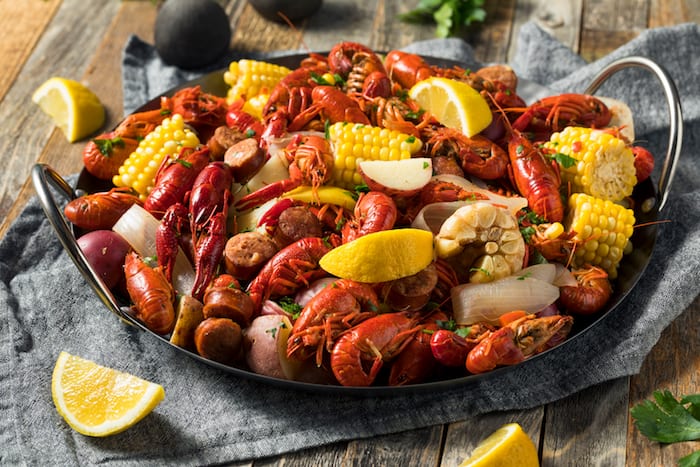
20 Cajun & Creole Recipes: Gumbo, Jambalaya, Etouffee & Louisiana Weeknight Dinners
The roux is the whole cuisine — pick your color, never walk away, and gumbo, jambalaya and etouffee all fall out of the same 20 minutes of work.
Easy Cajun and Creole recipes at home run on two things: the Holy Trinity of onion, celery, and bell pepper, and a roux you're willing to stand over. Get those right and gumbo, jambalaya, étouffée, and red beans all fall out of the same technique — one pot, 45 to 90 minutes, feeds six for under $15.
Get a free week of easy dinners
Seven weeknight dinners with the shopping list already totalled, sent Sunday. No account needed, unsubscribe in one click.
No spam, unsubscribe in one click. Recipes, shopping lists and Instacart carts all work without an account either way.
Introduction: Cajun vs Creole, two related but distinct traditions
The shorthand you'll hear in New Orleans is that Creole is city food and Cajun is country food, and that's roughly right. Creole cooking came out of New Orleans households with access to a port — European technique, African and Caribbean ingredients, tomatoes, butter, cream, and a broader spice cabinet. Cajun cooking came out of Acadian exiles in the rural southwest parishes — one pot, whatever's in the yard or the bayou, darker roux, more pepper, no tomatoes.
The practical test is the tomato. Creole jambalaya is red; Cajun jambalaya is brown. Creole gumbo often starts with a lighter roux and finishes with okra or filé; Cajun gumbo goes for a chocolate roux and skips the tomato entirely. Neither is more authentic — they're two cuisines that grew up 130 miles apart.
What both share is that the flavor is built in the first 20 minutes and then left alone. That makes Louisiana cooking unusually good for the way most people actually cook on weeknights: you do concentrated work up front, then the pot does the rest while you do something else. As of 2026 a pound of andouille runs $7–9, a pound of dried red beans is $2, and a whole chicken is $8 — a gumbo that feeds six lands under $15.
The Holy Trinity: onion, celery, bell pepper
Mirepoix is onion, carrot, celery in a 2:1:1 ratio. The Holy Trinity swaps the carrot for green bell pepper and moves to roughly 2:1:1 onion:celery:bell pepper. That one substitution is the single largest reason Louisiana food tastes like Louisiana food and not like French country cooking — the bell pepper brings a vegetal, slightly grassy bitterness that carrots (sweet) don't.
Cut them all to the same size, about ¼-inch dice for gumbo and étouffée, ½-inch for jambalaya where you want to see them. Do not brown the Trinity the way you'd brown mirepoix. In most Louisiana dishes it goes into hot roux or hot fat and cooks until soft and translucent — 6 to 8 minutes — because you want it to melt into the sauce, not add caramelized sweetness.
The "pope" is garlic, added after. The Trinity goes in first because onion and celery need the time; garlic burns in 60 seconds in a hot roux.
How to build a roux without burning it
A roux is equal parts by weight of fat and flour, cooked until it reaches the color you want. In Louisiana cooking the color is the recipe:
| Roux color | Time (medium heat) | Thickening power | Use |
|---|---|---|---|
| Blonde / white | 3–5 min | Highest | Étouffée, béchamel, cream sauces |
| Peanut butter | 15–20 min | High | Chicken and sausage gumbo, gravy |
| Milk chocolate | 25–35 min | Medium | Seafood gumbo, dark Cajun gumbo |
| Dark chocolate | 40–50 min | Lowest | Traditional Cajun gumbo only |
The tradeoff nobody mentions up front: as roux darkens, it loses thickening power. A dark chocolate roux thickens about half as well as a blonde one, which is why traditional dark gumbos are soupier and lean on okra or filé powder for body.
Three rules that prevent every roux disaster:
1. Use a heavy pot. Cast iron or a thick-bottomed enameled Dutch oven. Thin aluminum has hot spots and hot spots burn roux.
2. Never stop stirring, and never walk away. A roux goes from perfect to burnt in about 45 seconds. If you see black specks, throw it out and start over — a burnt roux makes the whole pot bitter and there is no rescue.
3. Have the Trinity chopped and next to the stove before you start. Adding cold vegetables is how you stop the cooking at the color you want. If you have to go chop an onion, the roux will pass your target while you do it.
The oven method is legitimate and much more forgiving: equal parts flour and oil in a cast-iron skillet, 350°F, stir every 20 minutes, 90 minutes to a chocolate roux. It requires attention four times instead of continuously. For a first gumbo, do it this way.
Gumbo three ways
Chicken and andouille is the weeknight gumbo — peanut-butter roux, Trinity, chicken thigh, sliced andouille, stock, and 45 minutes of simmering. Start with Spiced Vegetable Gumbo with Okra and Andouille if you want okra doing the thickening, which cuts the roux time substantially.
Seafood gumbo wants a darker roux and a much shorter cook once the seafood goes in — shrimp need 3 minutes, crab and oyster less. Build and simmer the base for 40 minutes, then add seafood at the end. Slow-Simmered Seafood Gumbo with Okra and Andouille is the reference.
Gumbo z'herbes is the Lenten green gumbo — seven kinds of greens, no meat (traditionally), thickened with roux and the greens' own body. It's the one gumbo most people have never had and it's excellent.
Okra vs filé: okra goes in early and cooks down, releasing mucilage that thickens the pot. Filé (ground sassafras leaf) goes in off the heat, at the table, stirred into the bowl — boiled filé turns stringy and unpleasant. You use one or the other, rarely both.
Rice goes in the bowl first, gumbo ladled over. Not stirred in, not cooked in the pot. That's jambalaya's job.
Jambalaya vs dirty rice vs red beans and rice
These three get conflated constantly and they're built differently.
Jambalaya cooks the rice in the pot with the meat and stock, paella-style. The rice absorbs everything and comes out separate-grained if you get the ratio right (roughly 1 cup rice to 1.5 cups liquid for long-grain) and don't stir it after the liquid goes in. Stirring releases starch and you get risotto. One-Pot Spiced Chicken and Sausage Jambalaya is the Cajun brown version.
Dirty rice is cooked rice tossed with a sauté of finely minced chicken liver and gizzard (that's the "dirt"), ground pork, Trinity, and seasoning. It's a side dish, and the organ meat is what makes it taste like itself — leaving it out gets you seasoned rice. Pan-Seared Catfish with Cajun-Spiced Dirty Rice pairs it as a plate.
Red beans and rice is Monday food — traditionally wash day, when a pot could sit unattended. Dried red kidney beans soaked overnight, simmered 2–3 hours with ham hock and andouille until the beans start breaking down and self-thicken into a gravy. Served over rice, not stirred in. Creole-Spiced Red Beans and Rice with Andouille and Smoked Ham Hock is the full-weekend version, and it costs about $9 to feed six.
Étouffée, court bouillon, and fricassée
Étouffée means "smothered." It's a blonde-to-peanut roux, Trinity, stock, and shellfish, cooked to a thick gravy and served over rice. It's faster than gumbo — 30 minutes — and richer, because the roux stays light and keeps its thickening power. Crawfish is traditional; shrimp works year-round. See Cajun-Spiced Crawfish Étouffée with Steamed Rice.
Fricassée is a Creole-French braise: brown the protein, build a roux in the same pot, add stock, simmer. Chicken Fricassee with Mushrooms and Creamy White Wine Sauce shows the technique in its more French register.
For a fast Creole tomato dish, Charred Cajun-Spiced Shrimp with Creole Tomato Sauce lands in 25 minutes, and Half-Hour Cajun Shrimp and Rice Skillet is the genuine 30-minute weeknight option.
Blackening: the technique and the seasoning
Blackening is not burning and it is not a spice rub alone. Paul Prudhomme's method, popularized in the early 1980s: coat the protein in melted butter, press it into a heavy seasoning blend, and drop it into a cast-iron skillet preheated until it's smoking — genuinely 500°F+. The butter solids and the spices toast into a dark crust in 2–3 minutes per side.
Two things follow from that. First, it must be done in cast iron; nothing else holds that heat when cold protein hits it. Second, do it outside or under a serious exhaust fan. A properly blackened piece of fish will set off every smoke alarm in the house. A side burner on a gas grill is the right tool.
A workable blackening blend, by volume: 2 parts sweet paprika, 1 part garlic powder, 1 part onion powder, 1 part dried thyme, 1 part dried oregano, 1 part black pepper, ½ part cayenne, ½ part white pepper, plus salt to taste. Make a jar; it keeps six months.
Try Cajun-Spiced Blackened Catfish with Lemon-Dill Sauce and Blackened Chicken Po’Boy with Remoulade Sauce and Pickled Cucumbers.
20 Louisiana recipes from the AislePrompt catalog
Gumbo, jambalaya, and beans
1. Spiced Vegetable Gumbo with Okra and Andouille
2. Slow-Simmered Seafood Gumbo with Okra and Andouille
3. One-Pot Spiced Chicken and Sausage Jambalaya
4. Creole-Spiced Red Beans and Rice with Andouille and Smoked Ham Hock
5. Cajun-Spiced Crawfish Étouffée with Steamed Rice
6. Chicken Fricassee with Mushrooms and Creamy White Wine Sauce
Blackened and seared
7. Cajun-Spiced Blackened Catfish with Lemon-Dill Sauce
8. Pan-Seared Catfish with Cajun-Spiced Dirty Rice
9. Pan-Seared Southern-Style Catfish with Spicy Corn Maque Choux
10. Pan-Seared Catfish with Spicy Boudin Mashed Potatoes
11. Charred Cajun-Spiced Shrimp with Creole Tomato Sauce
Sandwiches and one-pans
12. Blackened Chicken Po’Boy with Remoulade Sauce and Pickled Cucumbers
13. Blackened Catfish Po’Boy with Remoulade Aioli
14. Spiced Crawfish Po’Boy with Remoulade Sauce
15. Slow-Simmered Creole Shrimp Po' Boy with Remoulade Sauce
16. Creole-Spiced Muffuletta Sandwich with Olive Relish
17. Half-Hour Cajun Shrimp and Rice Skillet
18. Cajun-Style Shrimp and Andouille Sausage Pasta
Boils, brunch, and sweets
19. Spicy Low Country Shrimp Boil with Cajun Butter
20. Cheesy Southern-Style Shrimp and Grits
Plus Southern-Style Fried Chicken with Hush Puppies, Buttermilk Beignets with Powdered Sugar Dusting, and Peach Bourbon Bread Pudding with Vanilla Glaze to finish a Louisiana table.
Pantry checklist: a Cajun spice cabinet
| Item | Cost | Notes |
|---|---|---|
| Sweet paprika, 8 oz | $6 | The base of every blend — buy the big jar |
| Cayenne, 2 oz | $3 | Heat; add in quarter-teaspoons |
| White pepper, 2 oz | $5 | Different heat from black; both belong |
| Dried thyme + oregano | $6 | The herb backbone |
| Filé powder, 1.25 oz | $6 | Off-heat only, at the table |
| Andouille, 1 lb | $7–9 | Real andouille is coarse-ground and heavily smoked |
| Long-grain white rice, 5 lb | $6 | Not jasmine, not basmati |
| Dried red kidney beans, 1 lb | $2 | Feeds six with a ham hock |
| Creole mustard | $4 | For remoulade |
| Neutral oil, 48 oz | $6 | Roux fat — high smoke point |
Under $50 stocks the whole cuisine, and the spices last through a year of cooking. Skip the pre-mixed "Cajun seasoning" jars — most are 60% salt, which means you can't season the dish independently of the spice level.
Kitchen equipment
A heavy Dutch oven, 5–7 quarts. This is the requirement. Roux needs even heat, gumbo needs volume, red beans need something that holds a low simmer for three hours without scorching. Enameled cast iron or bare cast iron both work; thin stainless does not. Browse cookware — a 6-quart enameled Dutch oven in the $60–110 range covers everything here.
A cast-iron skillet, 10 or 12 inch. For blackening specifically, nothing else gets hot enough and stays hot. Also the right pan for the oven-roux method. Cookware again; a 12-inch runs $30–45 and lasts forever.
A flat wooden or silicone roux spoon. A round-bowl spoon leaves flour in the pot's corners, which burns. A flat-edged wooden spatula scrapes the whole bottom. Three dollars from utensils, and it prevents the single most common roux failure.
A long-handled ladle and a fine strainer. For skimming gumbo and for straining stock. Utensils covers both.
Common pitfalls
- Walking away from the roux. Forty-five seconds is the entire margin between chocolate and burnt. Black specks mean start over — a scorched roux poisons the whole pot with bitterness.
- Adding the Trinity cold-pot. The vegetables go into the hot roux to stop its cooking at the color you want. Chop before you start.
- Boiling filé powder. Filé goes in the bowl at the table, off heat. Boiled, it turns into stringy ropes.
- Stirring jambalaya after the liquid goes in. Every stir releases starch. Lid on, low heat, 20 minutes, don't touch it.
- Buying pre-mixed Cajun seasoning as your only spice. Most are majority salt, so you can't dial heat and salt independently. Build the blend yourself from the recipe above.
- Blackening indoors without ventilation. A 500°F cast-iron skillet with butter and paprika produces genuinely dangerous smoke volume. Outside, or under a real hood.
- Using andouille substitutes silently. Kielbasa and smoked sausage work but they're milder and finer-ground. If you swap, add ½ teaspoon smoked paprika and a pinch of cayenne per pound to compensate.
When NOT to cook Cajun
Gumbo and red beans are bad choices for a weeknight if you're starting after 6 p.m. — a real gumbo is 90 minutes minimum with the roux, and red beans want three hours. Both are Sunday dishes that pay you back all week; both freeze exceptionally well in 2-cup portions. Slot them into a meal plan as batch-cook anchors rather than as Tuesday dinners.
If you need a fast Louisiana dinner, the honest list is short: blackened fish (15 minutes), shrimp étouffée (30), a shrimp and rice skillet (30), or shrimp and grits (25). Everything else in this cuisine wants time.
FAQ
What is the actual difference between Cajun and Creole cooking?
Creole is New Orleans city cooking — European technique with port-city access to tomatoes, butter, cream, and a wider spice trade, often with a lighter roux. Cajun is rural southwest Louisiana cooking from Acadian exiles — one-pot, darker roux, more black and cayenne pepper, and traditionally no tomatoes. The fastest test is jambalaya color: Creole jambalaya is red from tomato, Cajun jambalaya is brown from the roux and browned meat. Both are authentic Louisiana traditions that developed about 130 miles apart.
How dark should my roux be, and how do I keep it from burning?
Match the color to the dish: blonde (3–5 minutes) for étouffée, peanut butter (15–20 minutes) for chicken and sausage gumbo, milk chocolate (25–35 minutes) for seafood gumbo, dark chocolate (40–50 minutes) for traditional Cajun gumbo. Use a heavy cast-iron or enameled pot, stir constantly with a flat-edged spoon, and have your chopped Trinity sitting next to the stove to stop the cooking. If you see black specks, start over — burnt roux makes the entire pot bitter and cannot be rescued.
Do I need okra or filé powder to make gumbo, or is roux enough?
A dark roux thickens much less than a light one, so most traditional dark gumbos use okra or filé for body. Okra goes in early and cooks down for 20–30 minutes; filé powder (ground sassafras) goes in off the heat at the table, stirred into individual bowls. You typically use one or the other, not both. A peanut-butter roux gumbo has enough thickening power to skip both, which is why chicken-and-andouille is the easiest first gumbo.
What can I substitute for andouille sausage?
Real andouille is coarse-ground pork, heavily smoked, and aggressively seasoned with garlic and pepper. Polish kielbasa is the closest widely available substitute but it's finer-ground and much milder — add half a teaspoon of smoked paprika and a pinch of cayenne per pound to compensate. Spanish chorizo is too paprika-forward and Mexican chorizo is raw and crumbly; neither works well. If your grocery carries Aidells or Silva andouille, both are legitimate.
Can I make gumbo and red beans ahead, and how well do they freeze?
Both are genuinely better on day two, because the roux flavor keeps rounding out and the beans continue absorbing the pot liquor. Gumbo freezes well for three months in 2-cup portions, though if you've added shrimp or oysters, freeze the base without them and add fresh seafood on reheat. Red beans freeze indefinitely and reheat with a splash of water to loosen the gravy. Cook rice fresh; frozen-then-reheated rice goes chalky.
Sources
- Serious Eats — Cajun and Creole Recipes on roux stages and thickening tradeoffs.
- Garden & Gun — Food and Drink on regional Louisiana traditions and ingredient sourcing.
- Saveur — Cajun and Creole Recipes on jambalaya rice ratios and the blackening technique.
Related reading: 20 chili recipes for fall, 18 Jamaican recipes, Labor Day BBQ recipes, and 18 Cuban recipes.
Frequently asked questions
What is the actual difference between Cajun and Creole cooking?
How dark should my roux be, and how do I keep it from burning?
Do I need okra or filé powder to make gumbo, or is roux enough?
What can I substitute for andouille sausage?
Can I make gumbo and red beans ahead, and how well do they freeze?
Sources
Plan a week of meals in two minutes.
Tell our AI what you have and what you like — it builds your plan, shopping list, and Instacart cart. No account needed.
Try free →