20 Cast Iron Skillet Dinners: Seared Steaks, Frittatas & One-Pan Chicken
Eight pounds of iron holds its heat when cold meat hits it — that single fact drives every dish here.
A cast iron skillet makes better weeknight dinners than a nonstick pan for one measurable reason: it holds heat. Drop a cold steak into 400°F cast iron and the surface temperature falls maybe 60°F and recovers in seconds. Drop the same steak into thin nonstick and the pan crashes to 250°F, the meat steams, and you get grey instead of crust. Every dish below exploits that thermal mass.
Get a free week of one-pan dinners
Seven one-pan and sheet-pan dinners, one shopping list, one Instacart cart. Sent Sunday, no account needed.
No spam, unsubscribe in one click. Recipes, shopping lists and Instacart carts all work without an account either way.
Why cast iron dinners deserve their reputation
Cast iron cookware is thick, cheap, and thermally stubborn. A 12-inch Lodge skillet weighs about 8 pounds and costs roughly $30 as of 2026 — less than a mid-tier nonstick pan that will need replacing in three years. Cast iron does not get replaced. It gets inherited.
The physics that matter:
| Property | Cast iron | Stainless clad | Nonstick aluminum |
|---|---|---|---|
| Mass, 12 in | ~8 lb | ~3.5 lb | ~2 lb |
| Temp drop, 1 lb cold steak | ~60°F | ~120°F | ~180°F |
| Recovery time | 10-20 s | 40-60 s | 90+ s |
| Max safe temp | ~700°F | ~600°F | ~500°F (coating limit) |
| Oven-safe | Yes, unlimited | Usually | Rarely above 400°F |
| Cost, 12 in | $30-45 | $80-160 | $25-60, replaced often |
That temperature-drop row is the whole story. Searing and the Maillard reaction that produces the brown crust run meaningfully only above about 300°F at the meat surface. A pan that crashes below that browns nothing until the surface moisture has boiled off, by which point the interior is overcooked.
The second advantage is that cast iron goes from burner to oven without a thought, which is what makes the skillet-to-oven roasts and the skillet bakes in this article possible in one pan.
Seasoning and everyday care in five minutes
Seasoning) is polymerized oil — a hard, plastic-like layer bonded to the iron, not a coating of grease. It builds every time you cook fat in the pan, and it is far more durable than internet folklore suggests.
The actual routine, after every use:
1. Scrape while warm. A stiff nylon brush or chainmail scrubber under hot water. Thirty seconds.
2. Use soap if you want. Modern dish soap is a detergent, not lye; it removes food residue, not polymerized seasoning. The no-soap rule dates from an era of soap that genuinely stripped it.
3. Dry immediately on the burner. Two minutes over medium heat. This is the step that actually matters — water sitting on bare iron is what rusts it.
4. Wipe a thin film of neutral oil while warm. Emphasis on thin. A visible pool bakes into sticky varnish, not seasoning.
To season from scratch or repair a patchy pan: oil thinly, wipe it off as though you made a mistake, then bake upside down at 450-500°F for one hour and let it cool in the oven. Repeat three times for a new bare pan. Serious Eats' cast iron guide covers the chemistry in detail if you want the long version.
What actually damages seasoning: prolonged simmering of acidic sauces (tomato, wine, citrus) for over 30 minutes, running it through a dishwasher, and storing it wet. Everything else on the internet's forbidden list — soap, metal utensils, occasional acid, high heat — is fine.
The perfect sear: steaks, pork chops, chicken thighs
The method is identical across proteins, and it is four rules.
Dry the surface. Pat with paper towels, or leave uncovered in the fridge for an hour. Surface water must boil off before browning starts, and boiling water holds the surface at 212°F — below browning temperature.
Preheat properly. Medium-high for 5-7 minutes, empty. Cast iron heats slowly and unevenly at first; the mass needs time to equalize. A drop of water should skitter, not sizzle in place.
Do not move it. Contact time builds crust. Flip once, at roughly 60% of total cook time.
Rest. Five minutes for chops and chicken, 8-10 for a thick steak.
Worked examples with real numbers:
| Protein | Thickness | Heat | Time per side | Pull temp | Rest |
|---|---|---|---|---|---|
| Ribeye | 1.5 in | High | 4 min, then 3 | 125°F (med-rare) | 10 min |
| Tomahawk | 2 in | Sear + 375°F oven | 3 min, then 18 min oven | 128°F | 12 min |
| Pork chop, bone-in | 1.25 in | Med-high | 4 min, then 4 | 140°F | 6 min |
| Chicken thigh, skin-on | — | Med-high, skin down | 8 min, then 4 | 175°F | 5 min |
| Salmon fillet, skin-on | 1 in | Med-high, skin down | 4 min, then 2 | 125°F | 3 min |
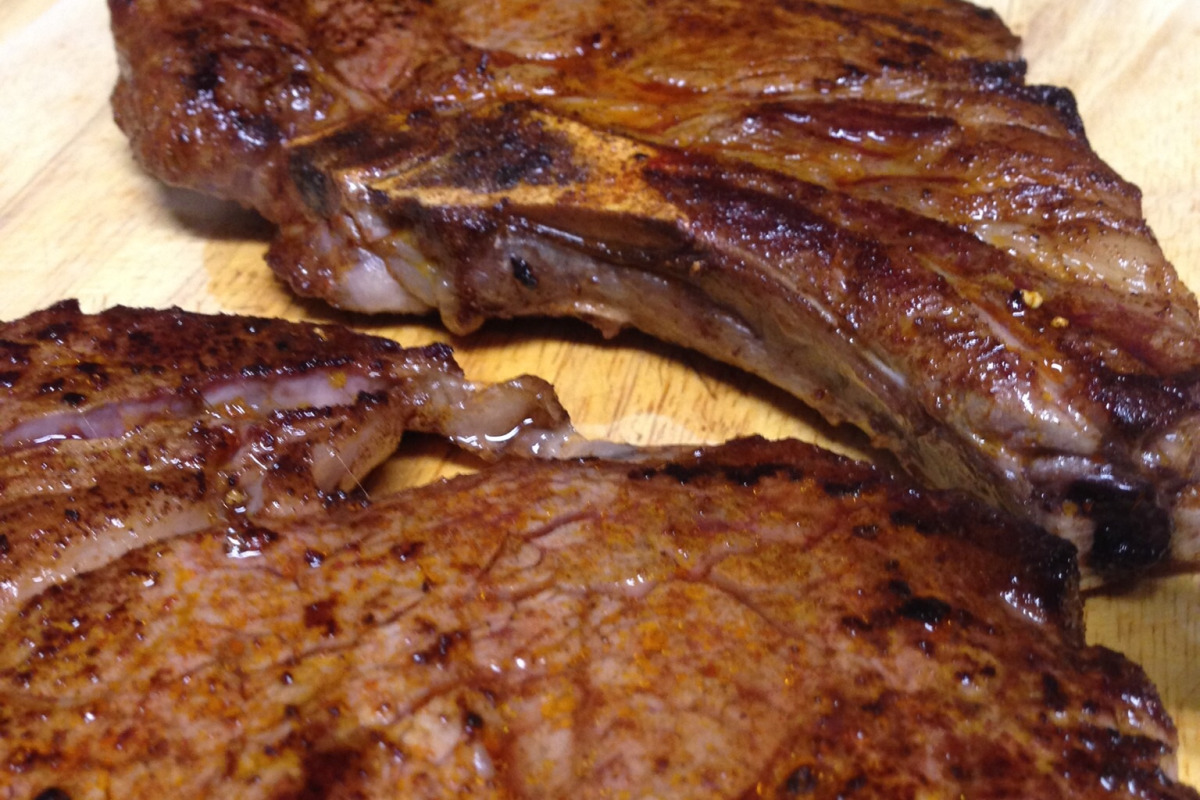
Cast-Iron Seared Ribeye with Smoked Pepper Rub is the reference steak; Grilled Cast Iron Ribeye with Garlic Butter and Herb Salad adds the butter-basting finish, and Cast Iron Tomahawk Steak with Rosemary and Garlic covers the thick-cut, sear-then-oven route. For pork, Cast Iron Pan-Seared Regional Pork Chops with Caramelized Onions. For chicken thighs — the single best value cut for a cast iron weeknight — Cast Iron Pan-Seared Lemon Garlic Chicken Thighs or Honey-Garlic Glazed Chicken Thighs on Cast Iron.
Vegetarians get the same technique: Cast-Iron Grilled Portobello Mushroom Steaks with Garlic-Parsley Butter sears exactly like a steak and takes about the same time.
Skillet-to-oven roasts: whole chicken, pork tenderloin, salmon
The move that justifies owning cast iron: sear on the burner, slide the whole pan into the oven, finish there. One pan, no transfer, and the rendered fat becomes the pan sauce.
Chicken thighs. Skillet-Roasted Chicken Thighs with Garlic and Roasted Brussels Sprouts is the complete-dinner version — skin down for 8 minutes, add sprouts to the rendered fat, 425°F oven for 20. Vintage Cast-Iron Skillet Chicken is the plainer template.
Whole birds work in a 12-inch skillet up to about 4 lb, spatchcocked so they lie flat. 450°F, 40-45 minutes, breast to 155°F.
Salmon. Cast Iron Seared Salmon with Lemon-Dill Sauce — skin down, four minutes, then 400°F oven for four more. Pull at 125°F for medium; salmon carries over about 5°F.
Fruit-and-pork combinations exploit the fond well: Cast Iron Pan-Seared Chicken with Apple Compote deglazes the browned bits with apple and cider.
Oven timings for the sear-then-roast method, 12-inch skillet:
| Dish | Sear | Oven temp | Oven time | Total |
|---|---|---|---|---|
| Bone-in thighs (6) | 8 min skin down | 425°F | 20 min | 30 min |
| Spatchcocked chicken, 4 lb | 6 min skin down | 450°F | 42 min | 50 min |
| Pork tenderloin, 1.25 lb | 6 min, all sides | 400°F | 14 min | 22 min |
| Salmon, 4 fillets | 4 min skin down | 400°F | 4 min | 10 min |
Skillet bakes: cornbread, dutch babies, frittatas, deep dish pizza
Cast iron is a baking vessel, and a good one — the preheated pan gives an instant bottom crust that a cold pan cannot.
Cornbread is the classic. The technique is non-negotiable: preheat the greased skillet in the oven until the fat shimmers, then pour cold batter into a hot pan. The edge sets on contact and fries in the fat, which is the entire point of skillet cornbread. Texas Cornbread with Honey Butter and Johnson's Honey-Sweet Cornbread both take this route. 425°F, 20-25 minutes.
Dutch babies are a hot-pan popover — 425°F, batter into a screaming buttered skillet, and the thing climbs the walls in fifteen minutes. Dutch Pancakes with Speck and Apple Slices is the savory take.
Frittatas start on the burner and finish under the broiler, all in the same pan. Sausage and Pepper Frittata is the dinner-scale version; Layered Vegetable Frittata is the vegetarian one, and Mini Vegetable Frittatas with Spinach and Cherry Tomatoes portions into a muffin pan for lunches.
Pan pizza in cast iron is genuinely better than pizza on a home baking steel, because the pan holds enough heat to fry the bottom of the crust in oil. Cast Iron Pan Pizza with Honey-Balsamic Glazed Onions — 500°F, 12-15 minutes.
One-pan skillet suppers: chicken and rice, sausage and peppers
The weeknight core. Everything cooks in sequence in one pan, and there is exactly one thing to wash.
One-Pot Chicken Fajita Rice Skillet is the template: brown the chicken, remove, cook peppers and onions in the fat, add rice and liquid, return the chicken, cover, 18 minutes. About $11 for four servings and 35 minutes start to finish.
Spicy Ohio-Style Sausage and Peppers Skillet is the fastest thing here — sausage renders its own cooking fat, so the pan is essentially self-lubricating, and the whole dish is 20 minutes. Chicago-Style Grilled Italian Sausage with Peppers and Onions is the sandwich-oriented version.
For a change of protein entirely, Cast Iron Venison Steak with Juniper Berry Pan Sauce shows the pan-sauce technique on very lean meat, where the fond is doing all the work.
Cost and time for the one-pan suppers, four servings:
| Dish | Active time | Total | Cost |
|---|---|---|---|
| Chicken fajita rice skillet | 15 min | 35 min | $11 |
| Sausage and peppers | 10 min | 20 min | $9 |
| Skillet chicken thighs + sprouts | 12 min | 30 min | $10 |
| Pan pizza | 20 min | 35 min | $6 |
| Frittata (6 eggs + veg) | 12 min | 22 min | $5 |
What NOT to cook in cast iron
A short, real list — much shorter than the internet's version.
- Long-simmered tomato sauce. Thirty minutes is fine and always was. Two hours of acidic simmering will strip seasoning and leach a metallic taste. Use enameled cast iron or stainless for the Sunday gravy.
- Delicate white fish, in a poorly seasoned pan. Sole and flounder need a genuinely slick surface. A well-seasoned pan handles them; a new or patchy one will shred the fillet.
- Wine reductions held for a long time. Same acid problem as tomato.
- Anything that needs a fast temperature change. Cast iron's thermal mass is a liability when a recipe says "reduce heat immediately." The pan does not care what the burner is doing for another two minutes.
- Boiling water for pasta. It works and it is pointless — you are heating 8 pounds of iron to boil 4 quarts of water.
Note what is not on this list: eggs (fine in a seasoned pan), acidic marinades (brief contact is fine), metal utensils (fine and arguably helpful), dish soap (fine).
Rescuing rust and restoring seasoning
Rust is cosmetic and completely reversible. Nobody throws out a cast iron pan.
Light surface rust — orange speckling from a wet night in the sink:
1. Scrub with steel wool or a chainmail scrubber under hot water until bare grey iron shows.
2. Dry on the burner, thoroughly.
3. Oil thin, bake upside down at 450°F for one hour, cool in the oven.
4. One round is usually enough.
Heavy rust or a flaking, sticky surface — a flea-market pan or one stored badly for years:
1. Strip completely. Options: a self-cleaning oven cycle, a lye bath (oven cleaner in a sealed bag for 24-48 hours), or an electrolysis tank. Wear gloves and eye protection for the lye route.
2. Wash, dry immediately on heat, and inspect for cracks or warping — those are the only genuinely fatal defects.
3. Season from bare metal: three to four thin oil-and-bake cycles at 450-500°F.
Expect a stripped pan to look mottled and grey-brown after seasoning, not glossy black. Black comes from cooking in it for six months. Cook bacon, fry potatoes, and sear steaks in the meantime — the fastest way to build seasoning is use, not more oven cycles.
Buying and equipment notes
You need one pan and two accessories. A 12-inch skillet handles four servings of anything in this article; a 10-inch is better for two people and for cornbread. Both together run under $60. See the cookware category for current picks, and our best cast iron skillet buying guide for the head-to-head comparison.
Accessories worth owning: a chainmail scrubber (about $12, outperforms every brush), a silicone handle sleeve (the handle reaches 400°F+ and cast iron handles have burned more cooks than any other pan), and an instant-read thermometer, since every sear time above is really a temperature target. Browse kitchen utensils for tongs and fish spatulas, and kitchen gadgets for thermometers.
Skip: cast iron "care kits," specialty conditioning waxes, and lid-and-press combos. Neutral cooking oil you already own does the same job for pennies.
Common pitfalls
- Under-preheating. Five to seven minutes on medium-high, empty. Most sear failures are impatience, not technique.
- Cooking on high the entire time. Cast iron keeps accumulating heat. High to preheat, then back off to medium-high, or the fat smokes and the exterior burns before the interior is done.
- Too much seasoning oil. A visible film bakes into sticky varnish. Wipe until the pan looks dry.
- Leaving it wet. The one genuine sin. Dry on the burner, every time.
- Simmering acid for hours. Thirty minutes fine, two hours not.
- Skipping the rest. A steak cut immediately loses noticeably more juice to the board than one rested ten minutes.
- Using it on a glass cooktop carelessly. Cast iron is heavy and has a rough base — slide it and you can scratch the glass. Lift, do not drag.
When to reach for a different pan
Use stainless or enameled cast iron for long acidic braises and wine reductions. Use nonstick for a single fried egg on a weekday when you do not want to think about it, and for crepes. Use a light aluminum sauté pan when the recipe depends on rapid heat changes — a delicate cream sauce, or anything where "immediately reduce heat" appears. And use a sheet pan, not a skillet, when the job is roasting a large volume of vegetables: skillet sides trap steam, and 3 pounds of broccoli in a 12-inch pan will braise rather than roast.
FAQ
Can I really use soap on cast iron?
Yes. Modern dish soap is a mild detergent designed to remove food residue and free grease; seasoning is polymerized oil chemically bonded to the iron and is not affected by it. The no-soap rule is a genuine holdover from when household soap contained lye, which did strip seasoning. What you should still avoid is the dishwasher, prolonged soaking, and abrasive oven cleaner unless you are deliberately stripping the pan.
How do I know when the skillet is hot enough to sear?
Flick a few drops of water in. If they sizzle and evaporate in place the pan is warm but not ready; if they skitter across the surface as beads, the pan has passed the point where steam forms an insulating layer and you are ready to sear. In practice that is five to seven minutes over medium-high heat for a twelve-inch pan, and an infrared or instant-read thermometer reading around 400F confirms it.
Why does food stick to my seasoned pan?
Three usual causes, in order of frequency: the pan was not hot enough, so the protein bonded to the iron before a crust formed; there was not enough fat; or you tried to flip too early. Meat releases itself when the crust sets, which for a steak is roughly three to four minutes. If food sticks even when all three are right, the seasoning is patchy and the pan needs one or two more oil-and-bake cycles.
Is an expensive smooth-milled skillet worth it over a Lodge?
For cooking results, no. Machined-smooth pans from boutique makers are lighter, prettier and slightly easier to season initially, but the thermal behavior that produces the sear is a function of mass and iron, which both pans share. The pebbled surface on an inexpensive pan smooths out with use as seasoning fills it in. Spend the difference on a thermometer and a second smaller skillet.
Can cast iron go in the oven, on the grill, or over a fire?
Yes to all three, with no upper temperature limit that matters for cooking. Cast iron has no coating to degrade and no handle material to melt, which is precisely why the sear-then-roast recipes in this article work in a single pan. The only cautions are that the handle will be dangerously hot and that thermal shock, such as plunging a screaming-hot pan into cold water, can crack it.
How long does it take to build good seasoning on a new pan?
A factory-preseasoned pan is usable immediately but will not be genuinely slick for four to eight weeks of regular cooking. Three oven-seasoning cycles get it started; after that, cooking bacon, frying potatoes, and searing steak build the layer far faster than more oven cycles do. Avoid long acidic simmers during that first month while the layer is still thin.
Where to go next
For the same one-pan logic with less weight, 25 sheet pan dinners covers the oven-only route. For braises where cast iron's acid limitation matters, 22 Dutch oven dinners moves the same technique into enameled cookware. And 22 one-pot pasta dinners covers the starch side of one-pan weeknights.
Frequently asked questions
Can I really use soap on cast iron?
How do I know when the skillet is hot enough to sear?
Why does food stick to my seasoned pan?
Is an expensive smooth-milled skillet worth it over a Lodge?
Can cast iron go in the oven, on the grill, or over a fire?
How long does it take to build good seasoning on a new pan?
Sources
One pan, one shopping list, one tap.
Ask our AI for one-pan weeknight dinners — it totals the ingredients and sends the cart to Instacart.
Get one-pan dinners →