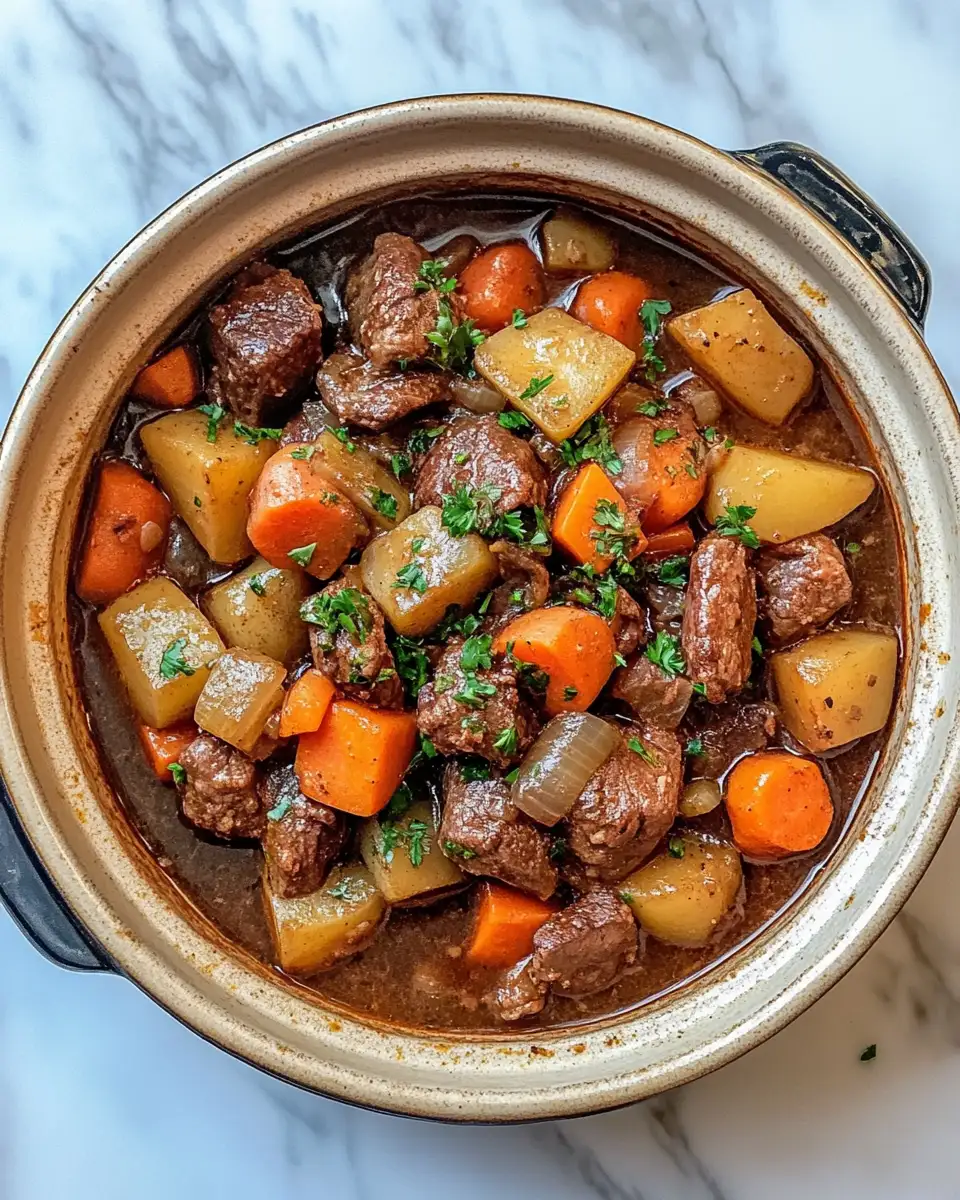
22 Dutch Oven Dinners: Braises, Stews & One-Pot Meals for Cool Weather
Sear on the burner, braise in the oven, and one heavy pot handles everything from short ribs to Sunday bread.
Affiliate disclosure: AislePrompt may earn a commission on qualifying purchases made through Amazon links in this article, at no additional cost to you. See our affiliate policy →
The best Dutch oven dinners are the ones that use both of the pot's superpowers in a single recipe: a hard sear on the stovetop, then a long, low, covered braise in the oven. Pot roast, short ribs, coq au vin, carnitas, and beef bourguignon all follow that exact shape. Below are 22 recipes organized by technique, plus the care and sizing rules that decide whether the pot lasts five years or fifty.
A Dutch oven is a thick-walled pot with a heavy, tight lid — usually cast iron, either bare or coated in enamel. That mass is the entire point: it holds a steady 200–210°F simmer without scorching, moves from a 450°F burner to a 325°F oven without flinching, and traps enough steam to keep a three-hour braise from drying out. As cool weather sets in, it becomes the most-used pot in the kitchen, and it's worth understanding why before you cook out of it.
Why a Dutch oven earns its counter space
Three physical properties do all the work.
Thermal mass. A 6-quart enameled Dutch oven weighs 12–14 lbs empty. That mass means adding two pounds of cold beef barely drops the pan temperature, so you get an actual sear instead of gray steamed meat. A thin stainless pot loses 100°F+ the moment the meat lands.
A heavy, self-basting lid. Steam condenses on the underside and drips back onto the food. Over three hours that recirculation is the difference between fork-tender and dry.
Oven-safe from top to bottom. Enameled cast iron is typically rated to 500°F; the limit is usually the phenolic knob, not the pot. Swap in a stainless knob (most makers sell one for $10) and you can broil in it. Le Creuset's use-and-care guide publishes the exact ratings for their line, and other brands sit in the same range.
The technique the pot exists for is braising: sear, deglaze, add liquid to roughly halfway up the food, cover, and cook low until collagen turns to gelatin — usually 195–205°F internal, held for an hour or more. Wikipedia — Braising covers the underlying chemistry if you want the theory behind the timing.
Sizing, honestly
| Size | Feeds | Best for | Weight (enameled) |
|---|---|---|---|
| 3.5 qt | 2 | Side dishes, small braises, rice | ~9 lbs |
| 5.5 qt | 3–4 | Weeknight braises, bread, most one-pots | ~11 lbs |
| 6 qt | 4–5 | The do-everything size | ~13 lbs |
| 7.25 qt | 5–6 | Whole chicken, big-batch chili, double recipes | ~15 lbs |
| 9 qt+ | 8+ | Stockpot duty, party batches | ~19 lbs |
If you buy one, buy 6 quarts round. It holds a 4-lb chuck roast or a 4-lb chicken, fits a standard 26 cm bread boule, and is still liftable with one hand when empty. Oval pots look elegant and heat unevenly over round burners — skip them unless you're braising lamb shanks weekly. Full comparisons live in Cookware.
Enameled vs bare cast iron: how to care for each
These are two different maintenance regimes and people ruin pots by mixing them up.
Enameled (Le Creuset, Staub, Lodge Enameled, Made In): the enamel is fused glass, so it's non-reactive — tomatoes, wine, and vinegar are fine for hours. Never preheat empty on high (thermal shock crazes the enamel), never use metal utensils on the cooking surface, and never scour with steel wool. For stains, simmer a tablespoon of baking soda in an inch of water for 10 minutes. Interior discoloration to a tea-brown is normal and permanent; it doesn't affect performance.
Bare cast iron (Lodge, Field, Smithey): cheaper, lighter for the volume, and the pick for campfires and bread. It needs a polymerized oil layer — season by wiping a very thin coat of neutral oil over the whole pot and baking upside down at 450–500°F for an hour. Wash with hot water and a stiff brush, dry on the burner, wipe with oil. Long acidic braises will strip seasoning and pick up a metallic taste, so keep the tomato-and-wine work in the enameled pot. Wikipedia — Cast-iron cookware has a good summary of the seasoning chemistry, and Wikipedia — Dutch oven covers the camp-oven variant with the flanged lid for coals.
Silicone-handled tools and a stiff nylon brush cover both regimes — see Utensils & Tools.
What to look for when you buy one
Prices in this category span 10x for pots that look nearly identical, so it's worth knowing what the money buys.
| Tier | Price (2026) | Examples | What you get |
|---|---|---|---|
| Budget enameled | $50–90 | Lodge Enameled, Amazon Basics | Full performance, thicker/rougher enamel, heavier for the volume |
| Mid enameled | $120–200 | Cuisinart, Tramontina, Milo | Smoother interior, better lid fit, lighter castings |
| Premium enameled | $280–450 | Le Creuset, Staub | Sand-cast precision, lifetime warranty, best lid seal and interior finish |
| Bare cast iron | $40–120 | Lodge, Field, Smithey | Cheapest per quart, bread and campfire duty, needs seasoning |
Honest assessment: the $60 Lodge enameled cooks a braise indistinguishably from the $400 Le Creuset. What you pay up for is the lid seal, a lighter pot at the same capacity, a smoother interior that stains less, and a warranty that actually gets honored decades later. If you cook two braises a month, buy budget. If you cook weekly and expect to hand the pot down, the premium tier is not a scam.
Four things to check before buying:
1. Lid fit. Set the lid on and rock it. Any rattle means steam escape, which means a dry braise. This is the most common failure of very cheap pots.
2. Interior color. Light sand or cream interiors let you see fond and judge sauce color; matte black interiors (Staub) hide both but resist staining. Pick your tradeoff deliberately.
3. Handle size. You will be lifting 15 lbs with oven mitts on. Loop handles that fit a mitted hand matter more than they sound like they do.
4. Knob rating. Phenolic knobs are typically 375–400°F; stainless is unlimited. If you plan to bake bread at 450°F, budget $10 for the metal replacement knob.
The braising formula (works for any protein)
Once you internalize this, you stop needing recipes for braises entirely:
1. Dry and salt the meat at least 40 minutes ahead — overnight is better. Salt needs time to move past the surface.
2. Sear in batches over medium-high in 2 tablespoons of neutral oil, 3–4 minutes per side, until genuinely brown. Remove.
3. Sweat aromatics in the fat — onion, carrot, celery, 8 minutes — and scrape the fond loose as they release moisture.
4. Add tomato paste, 1–2 tablespoons, and cook it 90 seconds until it darkens. This is a free 20% of the finished flavor and almost everyone skips it.
5. Deglaze with a cup of wine, beer, or stock and reduce by half.
6. Return the meat, add liquid to halfway up, bring to a bare simmer on the stovetop.
7. Cover and move to a 300–325°F oven. Beef and lamb: 3–4 hours. Pork shoulder: 2.5–3. Chicken thighs: 45–75 minutes.
8. Rest, skim, reduce. Pull the meat, skim the fat, reduce the liquid on the stovetop until it coats a spoon.
The only variables are the aromatic set and the liquid. Swap wine for dark beer and you have carbonnade; swap it for orange juice and chipotle and you have carnitas.
Troubleshooting
| Symptom | Cause | Fix |
|---|---|---|
| Meat tough after 3 hours | Oven too hot, or wrong cut | Drop to 300°F, add 45 min; use chuck/shoulder/shank |
| Sauce thin and watery | Too much liquid | Reduce uncovered on the stovetop 15–20 min |
| Braise tastes flat | Under-seared, no tomato paste | Sear harder next time; finish with vinegar or lemon |
| Bottom scorched | Burner hot spot, lid gap | Move to the oven; check lid fit |
| Enamel stained brown | Normal | Simmer baking soda solution 10 min |
| Bread crust pale | Pot not preheated enough | 30 full minutes at 450°F before the dough goes in |
Braised meats that fall apart (6)
The core Dutch oven repertoire. All six: sear hard, build a liquid, cover, 300–325°F, 2.5–4 hours.
1. Pot roast — Smith Family Pot Roast with Root Vegetables. Chuck, not round. A 3–4 lb chuck roast at 300°F for 3.5 hours hits the collagen-to-gelatin window; round is too lean and turns stringy no matter how long you go. Bargain Brisket Pot Roast is the cheaper-cut variant.
2. Short ribs — Whiskey-Braised Beef Short Ribs or the herb-forward Velvet Braised Short Ribs with Rosemary. English-cut, bone-in, 3 hours at 325°F. Chill overnight and lift the fat cap off before reheating — it's a cleaner sauce and a better next-day meal.
3. Coq au vin — Coq au Vin with Mushrooms and Pearl Onions and the traditional True French Coq au Vin. Use thighs only; breasts overcook 40 minutes before the braise is done.
4. Osso buco — Osso Buco with Risotto. Tie each shank around the equator with butcher's twine or the meat unspools off the bone.
5. Carnitas — Authentic Mexican Carnitas Tacos. Pork shoulder, low and covered for 2.5 hours, then lid off and heat up to crisp the edges in the rendered fat. That last uncovered 20 minutes is the whole dish.
6. Lamb shanks — Old World Braised Lamb Shanks. Four shanks fit a 6-quart pot exactly; five don't.
Stews and chilis (5)
Stews differ from braises in one way that matters: the meat is cut small, so it's fully submerged and the whole thing lives on the stovetop or in a lower oven.
1. Authentic French Beef Bourguignon — the reference stew. Brown the beef in three batches; crowding the pot is the single most common reason a home version tastes flat.
2. Carbonnade Flamande (Beef in Beer Sauce) — bourguignon's Belgian cousin, built on dark ale and a spoon of mustard-smeared bread instead of wine. Cheaper and faster.
3. Chicken Cacciatore with Olives — 75 minutes start to finish, the fastest real braise on this list.
4. Spiced Chicken & White Bean Chili — the weeknight chili. Dried beans cooked in the pot from the start beat canned by a wide margin here.
5. Authentic Tuscan White Bean and Sausage Stew — and for the classic root-vegetable version, Dutch Oven Beef Stew with Root Vegetables.
One-pot pasta, risotto, and bakes (4)
The Dutch oven's second act: dishes that start on the burner and finish under the broiler in the same vessel, so there's one pan to wash.
1. Best Baked Ziti — build the sauce, stir in undercooked pasta, top with cheese, bake covered 25 minutes then uncovered 15.
2. Cheesy Bacon Mac and Cheese with Baked Breadcrumbs — béchamel in the pot, pasta in, breadcrumbs on, broiler.
3. One-Pot Lemon Herb Chicken & Orzo — 35 minutes, genuinely weeknight-viable.
4. The Best Creamy Mushroom Risotto — the even heat is a real advantage here; you stir less than in a thin saucepan.
Braised chicken dinners (4)
Chicken braises fast — 45 to 75 minutes — which makes this the section to raid on a Tuesday.
1. Dutch Oven Chicken and Potato Stew
2. Chicken Paprikash with Sour Cream — temper the sour cream with hot liquid before it goes in or it breaks.
3. Ultimate Comfort Chicken and Dumplings — dumplings steam on top of the stew with the lid on; don't lift it for 15 minutes.
4. Chicken and Apricot Tagine — a Dutch oven is a perfectly good tagine substitute. And for cooking over coals, Campfire Dutch Oven Chicken and Vegetable Stew.
Bread and no-knead classics (3)
This is the use that converts skeptics. A preheated covered Dutch oven traps the dough's own steam for the first 20 minutes, which is exactly what a steam-injected commercial deck oven does — you get a blistered, crackling crust no home oven produces on an open sheet.
1. No-Knead Artisan Crusty White Bread — the canonical version. Preheat the empty pot at 450°F for 30 minutes, drop the dough in on parchment, lid on 25 minutes, lid off 15–20.
2. No-Knead Artisan Crusty Yeast Bread — a shorter same-day rise.
3. Sun-Dried Tomato and Rosemary Focaccia — baked in the pot uncovered, or in a sheet pan from Bakeware.
One warning: preheating a pot empty at 450°F is hard on enamel over years. If you bake weekly, use bare cast iron or a dedicated combo cooker for bread and keep the enameled pot for braises.
Real-world numbers
Approximate figures for a 6-quart enameled pot, useful for planning a cook:
| Dish | Oven temp | Total time | Hands-on | Serves | Reheats well |
|---|---|---|---|---|---|
| Pot roast (3.5 lb chuck) | 300°F | 3 hr 45 min | 25 min | 6 | Yes, 4 days |
| Short ribs (4 lb) | 325°F | 3 hr 15 min | 30 min | 4 | Yes, better day 2 |
| Beef bourguignon | 325°F | 3 hr | 45 min | 6 | Yes, 4 days |
| Coq au vin | 325°F | 1 hr 45 min | 30 min | 4 | Yes, 3 days |
| Carnitas (4 lb shoulder) | 300°F | 3 hr | 20 min | 8 | Yes, freezes 3 mo |
| Chicken and dumplings | Stovetop | 1 hr 15 min | 25 min | 5 | Dumplings soften |
| No-knead bread | 450°F | 45 min bake | 10 min | 1 loaf | Day-of only |
| Baked ziti | 375°F | 50 min | 20 min | 6 | Yes, freezes 2 mo |
Energy note: a 3-hour braise at 300°F in a modern electric oven costs roughly 2.5–3.5 kWh, or about 40 cents at the 2026 US average residential rate. Batch two dishes in the oven at once and it's half that per meal.
How to build a make-ahead Dutch oven meal plan
The braise-once-eat-four-times pattern, which is where this pot actually pays for itself:
- Sunday, 4 hours mostly unattended. Braise a 4-lb chuck roast or 5 lbs of short ribs. Cool and refrigerate in the pot's liquid.
- Monday. Serve as-is with mashed potatoes or polenta.
- Tuesday. Shred the leftovers into the sauce, reduce 10 minutes, spoon over pasta.
- Wednesday. Same meat into tacos or a grain bowl with pickled onion.
- Thursday. Remaining sauce plus stock plus a can of beans becomes soup.
Store the cooled braise in glass rather than in the pot itself — acidic liquid sitting on enamel for days is the fastest way to stain it. See Storage & Containers. If you want the shopping list generated for you, our AI meal planner will build a week around a single Sunday braise.
Common pitfalls
1. Crowding the sear. Three batches, not one. Meat that touches steams, and you lose the fond that becomes the sauce.
2. Too much liquid. Braising liquid comes halfway up the food, not over it. Fully submerged meat boils and the sauce ends up thin.
3. The oven is too hot. Above 350°F the liquid boils rather than simmers and the muscle fibers tighten before the collagen dissolves — that's the "cooked three hours and it's still tough" outcome. Stay at 300–325°F.
4. Preheating enamel empty on high. Thermal shock crazes the coating. Always add fat first, and always start on medium.
5. Metal utensils and dishwashers. Both are enamel killers over time; the dishwasher's detergent dulls the exterior finish permanently.
6. Lifting the lid. Every peek costs 25–50°F of recovery. Trust the timer.
When a Dutch oven is the wrong tool
For anything that needs a dry, crisp surface — a stir-fry, a quick fish fillet, roasted vegetables in a single layer — the Dutch oven's high walls trap steam and work against you. Use a skillet or a sheet pan instead. It's also poor at fast weeknight cooking generally: the pot itself takes 6–8 minutes to come to temperature. And if you cook mostly for one, a 6-quart pot is oversized and heavy enough to be genuinely annoying; a 3.5-quart or a 12-inch braiser does the same job.
Keep going
For the fast end of cool-weather cooking, see 20 Instant Pot Dinners and 25 Sheet Pan Dinners. For more of the same comfort register, 22 Weeknight Casserole Recipes and 25 Roasted Vegetable Dinner Recipes. Knives and prep gear are in Knives & Cutting.