20 French Bistro Dinners: Coq au Vin, Ratatouille & 30-Minute Weeknight Classics
From weeknight steak frites to weekend beef bourguignon — the French dinners worth learning to cook at home.
French bistro cooking works on a weeknight because most of it is one-pan, wine-forward, and forgiving — sear something in butter, deglaze with wine, finish with an herb. This roundup collects 20 classic French dinners, grouped by how long they actually take: 30-minute weeknight plates like Steak Frites and pan-sauce chicken, one-hour classics like Ratatouille and French Onion Soup, and true weekend braises like Coq au Vin and Beef Bourguignon.
Get a free week of easy dinners
Seven weeknight dinners with the shopping list already totalled, sent Sunday. No account needed, unsubscribe in one click.
No spam, unsubscribe in one click. Recipes, shopping lists and Instacart carts all work without an account either way.
Introduction — Why French bistro cooking works on a weeknight
American home cooks tend to file French food next to the French Laundry: labor-intensive, technique-obsessed, out of reach on a Tuesday. That's haute cuisine — the tasting-menu tradition. Bistro cooking is the opposite. It is what French people actually eat when they get home from work: a seared piece of chicken with a pan sauce, a mound of blanched green beans with butter and shallots, a wedge of quiche pulled from the fridge, a bowl of ratatouille that has been sitting on the stove getting better while you graded homework.
The bistro tradition rewards three habits that a busy weeknight cook already has: buying good ingredients and treating them simply, cooking with fat and salt like you mean it, and letting one pan do most of the work. A bone-in chicken thigh, a splash of white wine, a spoon of Dijon, and a handful of tarragon is a French dinner. So is a slice of quiche, a green salad with a real vinaigrette, and a piece of good bread. This is not aspirational — it is achievable within the same 40-minute window most people already spend on dinner.
What separates the recipes on this list from generic "chicken and rice" weeknight fare is the technique layer underneath. Once you have made a proper pan sauce twice, you can make one over any protein for the rest of your life. Once you have braised a chicken thigh in wine, you can braise anything in wine. The French repertoire is small, deep, and disproportionately portable. Learn ten dishes here and you have essentially learned how to feed yourself well forever. As Serious Eats' recipe archivists put it in their French primer, the difference between a home cook and a bistro cook is not equipment or budget — it is comfort with a handful of foundational moves.
The 3 techniques that make French food taste "restaurant"
1. The pan sauce. Sear a protein in a stainless-steel skillet (not nonstick — you need the fond, the caramelized brown bits stuck to the pan). Remove the protein, pour off excess fat, add shallots, deglaze with wine or stock, reduce by half, whisk in cold butter off the heat. This is the entire technique behind Dijon and Lemon Pan-Sauce Chicken and it is the difference between "weeknight chicken breast" and "chicken breast that a person paid for." Cost: about six minutes.
2. The low-and-slow braise. Brown the meat hard, sweat aromatics, add wine and stock, cover, cook low for two to three hours. Time does the work. This is coq au vin, beef bourguignon, cassoulet, and every good Sunday chicken you've ever eaten. The nice thing about a braise on a weeknight is that "attention" and "labor" are not the same thing — twenty active minutes on Sunday afternoon buys you three re-heatable dinners the rest of the week. Bon Appétit's family-meal collection makes the same point: for the working cook, the braise is the highest-leverage dish in French cooking.
3. The vinaigrette. Three parts good olive oil (or a mix of olive and a neutral like grapeseed), one part acid (red wine vinegar, sherry vinegar, lemon), a heaping quarter teaspoon of Dijon to emulsify, salt, a shallot minced fine, cracked black pepper. Shake in a jar. This is what dresses the pile of butter lettuce next to every bistro entrée in Paris. Homemade vinaigrette is a two-minute skill; it costs pennies and improves everything from Tuna Niçoise to a plate of roasted vegetables.
Every recipe below leans on one, two, or all three of these. Learn them once — you'll cook better forever.
What you'll need: pantry + equipment checklist
You do not need copper pots and a Vitamix. You do need a handful of hardworking pieces, most of which you probably already own.
Equipment. A heavy 10- to 12-inch stainless-steel or cast-iron skillet, a 5- to 7-quart enameled Dutch oven (for braises), a sharp 8-inch chef's knife, a rimmed sheet pan, and a plastic or wood cutting board big enough to hold a whole chicken. That's the whole kit. If you're building the setup from scratch, our Cookware guide covers what actually earns counter space, and our Knives & Cutting rundown walks through the two knives (chef's + paring) worth spending real money on. Skip the block sets — they are almost entirely filler.
Pantry. Unsalted butter (a lot of it), extra-virgin olive oil, a neutral oil for high-heat searing (grapeseed or refined avocado), kosher salt (Diamond Crystal is the bistro standard because it's forgiving), whole black peppercorns and a mill, Dijon mustard (Maille or Edmond Fallot), red wine vinegar and sherry vinegar, dried herbes de Provence, bay leaves, whole nutmeg, a wedge of good Gruyère, a wedge of Parmesan, anchovies packed in oil (yes — trust us), capers, cornichons, canned crushed San Marzano tomatoes, chicken stock (homemade or good boxed), and — the non-negotiable one — a bottle of drinkable red wine and a bottle of drinkable white wine. Not "cooking wine." If you wouldn't drink it, you shouldn't cook with it.
The 20 Bistro Recipes (grouped: 30-min | 1-hour | Weekend project)
30-minute weeknight (7 recipes)
These are the ones that live in the "I got home at 6:45 and everyone is hungry" slot.
1. Steak Frites — Hanger or flat-iron steak seared in a screaming skillet, sliced against the grain, served over oven fries with a garlic-parsley butter melting on top. The oven fries can par-cook while you sear. Weeknight-perfect.
2. Dijon & Lemon Pan-Sauce Chicken — The archetype pan sauce, over a boneless chicken breast. If you cook one thing off this list, cook this one first — the technique repays you for years.
3. Pan-Roasted Chicken with Garlic Thyme Sauce — Bone-in thighs, twenty roasted cloves of garlic mashed into the sauce, thyme picked from the stem at the last minute. This is what people think a French grandmother makes.
4. Croque Monsieur — The best hot ham-and-cheese sandwich on earth. Griddled sourdough, béchamel, Gruyère, thin-sliced ham; broiled until bubbling. Ten minutes flat if you have leftover bread and a jar of béchamel in the fridge (you should).
5. Salade Lyonnaise — Frisée, warm bacon lardons, croutons cooked in the bacon fat, a soft-poached egg on top, sherry-vinegar dressing. Dinner in a bowl for twenty minutes of work.
6. Provençal Herb-Roasted Chicken — Bone-in thighs, herbes de Provence, garlic, lemon, olive oil; forty minutes in a hot oven and you're done. Impossible to mess up.
7. Sea Bass with Beurre Blanc — A restaurant-plate dinner in under thirty minutes. Crispy-skinned fish, a lemon-forward butter sauce, wilted spinach on the side. Feels expensive; costs about twelve dollars a person.
1-hour classics (8 recipes)
The middle tier — a little more time, real depth of flavor.
8. French Onion Soup — The whole trick is caramelizing the onions properly (35+ minutes, low heat, don't cheat), a splash of brandy or dry sherry, a good beef stock, a crown of Gruyère broiled until it hangs off the crock. Iconic and worth the patience.
9. Ratatouille — Slow-cooked eggplant, zucchini, tomato, bell pepper, garlic, and herbes de Provence. Better on day two, freezes for a month, works as a side, main, or breakfast base.
10. Chicken à la Moutarde — Bone-in chicken pieces braised in Dijon and cream with tarragon and shallots. Under an hour from raw to plate; tastes like ninety-minute cooking.
11. French Onion Tart — All the flavor of French onion soup, in a savory tart shell. Dinner-party bait; also excellent room-temperature the next day.
12. Quiche Lorraine — Blind-baked crust, custard of eggs, cream, bacon, and Gruyère. Sturdy, portable, endlessly variable (swap the bacon for leeks, mushrooms, or spinach). One quiche + a salad = dinner for four.
13. Salmon en Papillote — Fillets sealed in parchment with butter, white wine, herbs, and thin-sliced vegetables; roasted at 400°F for 15 minutes. Zero cleanup, showpiece plating. Any thick white fish works if salmon isn't at the counter that day.
14. Tuna Niçoise — Composed salad of seared or good jarred tuna, blanched haricots verts, jammy eggs, olives, tomatoes, boiled potatoes, anchovies, and a sharp Dijon vinaigrette. A whole meal on one plate.
15. Sautéed Duck Breast with Red Wine Reduction — Score the fat, render it slowly, finish in a hot oven, rest, slice pink. The pan sauce is a two-minute reduction of the drippings and red wine. Restaurant-caliber for the price of a duck breast.
Weekend project (5 recipes)
The braises and the showstoppers. Do them Sunday; eat them Monday, Tuesday, Wednesday.
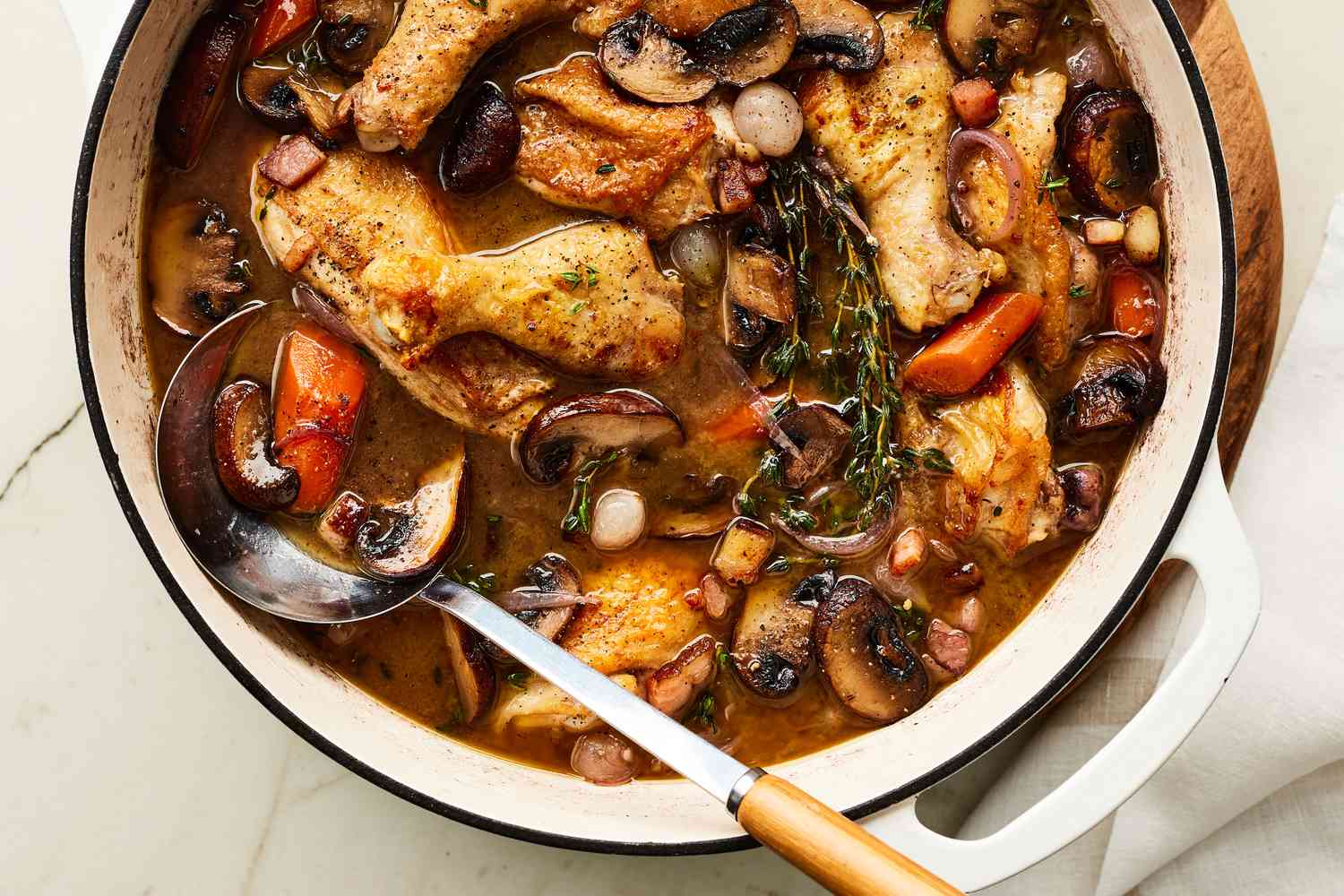
16. Coq au Vin — Chicken braised in red Burgundy with lardons, pearl onions, and cremini mushrooms. Two hours of active-adjacent time, three days of leftovers.
17. Beef Bourguignon — Chuck cubes seared hard, braised in red wine and stock with root vegetables and thyme. The dish The New York Times' cooking archive calls "the reason to own a Dutch oven."
18. Slow-Cooked Red Wine Beef — Bourguignon's rougher cousin. Beef shoulder, red wine, cremini mushrooms; low oven for three hours. Serve over egg noodles or mashed potatoes.
19. Cassoulet (weeknight version) — Duck confit legs (buy them; do not make them from scratch), garlic sausage, cannellini beans, tomato, breadcrumb crust. A weekend project, a week of leftovers.
20. Bouillabaisse — The Marseille fish stew. Saffron, fennel, garlic, tomato, and whatever fresh fish and shellfish the counter is selling that day. Serve with rouille-slathered toasts. Worth doing once a year.
Building a 3-course bistro dinner at home
For a dinner party, do not try to cook three restaurant courses. Do one thing that impresses and let bread, salad, and dessert carry the rest of the meal.
The pattern:
- Starter: a plate of good charcuterie and cheese, a bowl of olives, a wedge of pâté from the deli counter, a warm baguette. No cooking. If you want to cook, a small French Onion Tart cut into wedges is a five-minute assembly if the tart shell is store-bought.
- Main: one project dish. Coq au Vin, Beef Bourguignon, or a Provençal Herb-Roasted Chicken. Made ahead, reheated slowly. Side of buttered noodles or crusty bread.
- Salad course (after the main, French-style): butter lettuce with vinaigrette. That is it. Don't gild it.
- Dessert: a wedge of Comté, a bowl of walnuts, a small pot of honey. Or a Half-Orange Chocolate Tart or Crème Brûlée made the day before. Nothing hot from the oven.
The math of a real French dinner party is one project + three purchases. If you're spending three hours in the kitchen on party day, you set it up wrong.
Timing chart — a Sunday roast pattern
Here's how a beef bourguignon dinner for six actually paces on a Sunday, from grocery bag to plate:
| Time | What you do | Where the dish is |
|---|---|---|
| 3:00 pm | Trim + cube 3 lb chuck, salt heavily | Meat resting; oven off |
| 3:20 pm | Render 6 oz bacon lardons in Dutch oven | Fat rendered; bacon reserved |
| 3:30 pm | Sear beef in bacon fat, 3 batches | Deep brown crust on all sides |
| 4:00 pm | Sweat onions + carrots, add tomato paste + flour | Aromatics soft, paste toasted |
| 4:15 pm | Deglaze with 1 bottle red wine, add stock + thyme | Braise assembled |
| 4:30 pm | Cover, into 325°F oven | Hands-off for 2.5 hours |
| 7:00 pm | Sauté cremini + pearl onions separately | Garnish ready |
| 7:15 pm | Uncover, reduce sauce 10 min on stove, stir in garnish | Ready to serve |
| 7:30 pm | Plate over buttered egg noodles, parsley on top | Dinner |
Four hours elapsed, roughly one hour of hands-on time. Guests arrive at 7:00 pm and eat at 7:30 pm having watched you look calm the whole evening. That's the trick.
Shopping list: French pantry staples worth buying once
A stocked French pantry pays back in weeknight speed. These are one-time purchases that outlast a New Year's resolution.
Dairy + fats. European-style butter (Kerrygold, Plugrà, or Vermont Creamery — the extra butterfat matters), a small pot of crème fraîche, extra-virgin olive oil for finishing, a neutral oil for high heat.
Umami + salt. Dijon mustard (Maille), Roland or Ortiz anchovies in oil, Kalamata olives, capers in salt (rinse before using), a jar of cornichons, kosher salt (Diamond Crystal), Maldon flake salt for finishing.
Wine + vinegar. A bottle each of drinkable red (Côtes du Rhône or Beaujolais under $15) and drinkable white (Muscadet or dry Chenin Blanc under $15), red wine vinegar, sherry vinegar, a splash of dry vermouth (Noilly Prat) for pan sauces.
Aromatics + herbs. Herbes de Provence, whole bay leaves (dried is fine), whole black peppercorns, a small nutmeg + microplane, whole heads of garlic, shallots by the mesh bag.
Cheese + bread. A wedge of Gruyère (or Comté), a wedge of Parmesan, a good baguette from a real bakery (freeze one, use one).
Cost. Under $80 total from a well-stocked grocery store; nearly all of it lasts three to six months in a normal fridge. The vinegars and dry goods keep for a year. This is the cheapest kitchen upgrade you'll ever make. Our Cookware picks and knife recommendations cover the equipment side of the same upgrade — get the vinaigrette jar, the microplane, the mortar and pestle, and the fish spatula while you're at it.
FAQ
Do I need special equipment to cook French bistro food at home?
No — a heavy 12-inch skillet or Dutch oven, an 8-inch chef's knife, and a wooden spoon cover 90% of the recipes on this list. A few pieces earn their spot (a Dutch oven for coq au vin and beef bourguignon, a whisk for pan sauces), but nothing here needs a copper saucier or a fish poacher to work at home. Start with what you have.
Which French dinner is easiest for a beginner cook?
Chicken Provençal is the gentlest entry point: sear bone-in thighs, add garlic, tomatoes, olives, and herbes de Provence, then let the oven do the rest in about 45 minutes. Ratatouille is close behind — it's forgiving on knife cuts and mostly hands-off once the vegetables hit the pan. Both taste like you tried harder than you did.
Can I make coq au vin without wine?
Yes — swap the wine for equal parts low-sodium chicken stock plus 2 tablespoons of red wine vinegar and 1 tablespoon of tomato paste to keep the acidic backbone. The dish will taste more rustic and less silky, but the braise still works. Non-alcoholic red wine (Ariel, Töst) is the closer match if you can find it at the store.
How far ahead can I prep a bistro dinner?
Braises actually improve overnight — beef bourguignon and coq au vin taste better on day two once the sauce has re-thickened in the fridge. Salads (Niçoise), pan sauces, and quiche can be prepped the morning of and reheated gently. Skip make-ahead on anything fried (steak frites) or delicate (mussels) — those need to be finished à la minute.
What's the difference between French bistro cooking and "fine dining" French?
Bistro food is what French home cooks and neighborhood restaurants actually eat: hearty, wine-friendly, made from a short list of quality ingredients cooked slowly. Fine dining (haute cuisine) adds precision knife work, mother sauces, and stacked plating. Everything in this roundup is the bistro tradition — big-flavor, low-fuss dinners you can put on a weeknight table.
Related reading
If this roundup lands, you'll like the rest of the weeknight-cuisine cluster:
- 25 Mediterranean Weeknight Dinners: 30-Minute Bowls, Sheet Pans & Skillets — the neighbor cuisine, same one-pan spirit.
- 25 Best Italian Recipes for Any Weeknight (2026 Edition) — Italian weeknight pasta and beyond.
- 22 Spanish Tapas Dinner Recipes: Patatas Bravas, Gambas & Sheet-Pan Paella — small-plate Spain, same wine-forward energy.
Cook one thing from this list this week. Try Provençal chicken thighs on Wednesday, steak frites on Friday. Save the coq au vin for a Sunday when you have three hours and a bottle of Burgundy. Within a month, French dinner will stop feeling like an event and start feeling like a category you own.
Frequently asked questions
Do I need special equipment to cook French bistro food at home?
Which French dinner is easiest for a beginner cook?
Can I make coq au vin without wine?
How far ahead can I prep a bistro dinner?
What's the difference between French bistro cooking and 'fine dining' French?
Sources
Recipes to start your week with
Save any of these to My Recipes — no account needed — and send the ingredients to Instacart in one tap.

Cook French at home this week.
Ask our AI for a week of French dinners — it writes the recipes, builds the shopping list, and sends the cart to Instacart. No account needed.
Plan my French week →