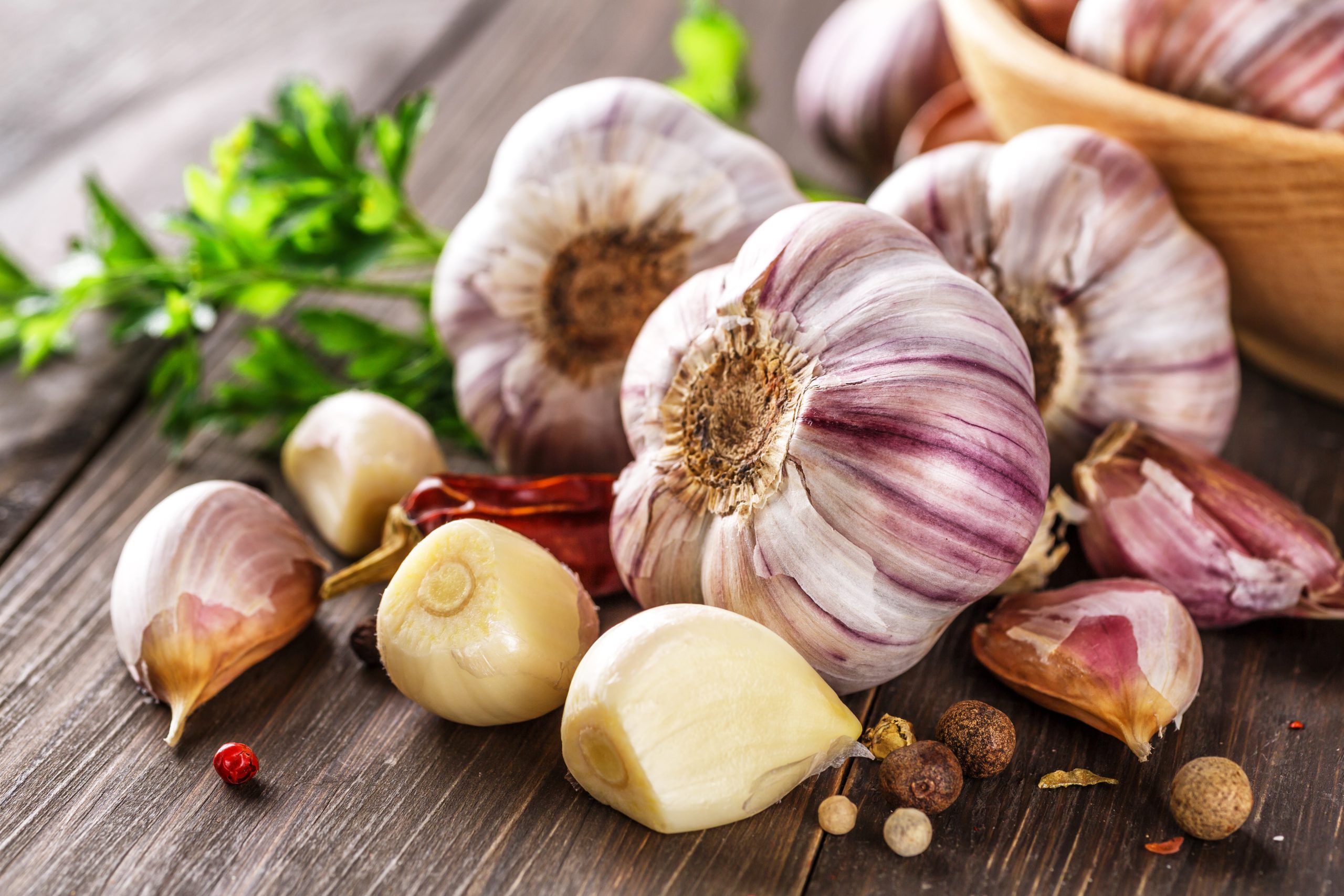
20 Garlic Lover Dinners: Roasted, Confit & Caramelized Ways to Use a Whole Head
Stop mincing. Roasting, confiting and caramelizing turn a whole head of garlic into something sweet enough to eat by the spoonful.
The best way to use a whole head of garlic is to stop mincing it. Roast it whole at 400°F for 40 minutes, confit the cloves in oil at 190°F for an hour, or caramelize sliced cloves slowly in butter — all three turn garlic's harsh raw bite into something sweet, spreadable and mellow. A single head yields enough for a pan sauce, a pasta and a slice of toast.
Get a free week of easy dinners
Seven weeknight dinners with the shopping list already totalled, sent Sunday. No account needed, unsubscribe in one click.
No spam, unsubscribe in one click. Recipes, shopping lists and Instacart carts all work without an account either way.
This is a roundup of 20 garlic-forward dinners from our catalog, organized by the three techniques that transform garlic rather than just seasoning with it. If you want the fundamentals — peeling, storing, raw vs. cooked chemistry — start with our complete guide to cooking with garlic and come back here for the dinners.
Why cooking method changes garlic completely
Raw garlic is aggressive for a specific chemical reason. Intact cloves contain alliin, a stable and nearly odorless compound, plus an enzyme called alliinase kept separate from it. Crush or chop the clove and the two meet, producing allicin — the pungent, slightly burning compound responsible for raw garlic's heat and most of its smell.
Two things destroy allicin: heat and time. That is the whole story of garlic cookery. The finer you cut, the more allicin you make; the longer and gentler you cook, the more of it breaks down into milder sulfur compounds that read as sweet and nutty. A whole roasted head barely ruptures any cells at all, which is why it tastes almost like a different vegetable.
This also explains the most common garlic failure. Minced garlic in a hot pan burns in about 45 seconds — the small pieces have enormous surface area and almost no water left to protect them. Burnt garlic is genuinely bitter, not just "strong," and there is no rescuing a sauce once it happens. Add minced garlic late, off the direct heat, or use larger pieces.
Garlic itself is a species in the onion genus that has been cultivated for well over 5,000 years, and the varieties split into hardneck (fewer, larger cloves, more assertive) and softneck (more cloves, stores longer, what supermarkets mostly sell).
Technique 1: Roasted garlic
Cut the top quarter off a whole head, exposing the cloves. Drizzle with olive oil, wrap in foil, roast at 400°F for 40–45 minutes until the cloves are golden and slumping. Squeeze them out like paste. They keep a week in the fridge under a film of oil.
Herb-Roasted Garlic Parmesan Pasta is the purest demonstration — roasted garlic paste emulsifies straight into the pasta water and cheese, giving a sauce with body and no raw bite. Classic Homemade Pesto Pasta with Roasted Garlic and Parmesan does the same trick in a pesto, where roasted garlic solves the classic problem of raw garlic overpowering the basil by day two.
Herb-Roasted Garlic Mashed Potatoes and Herb-Roasted Chicken with Garlic Mashed Potatoes show the side-dish application. Roasted garlic in mash is forgiving in a way raw garlic is not — you can use an entire head for four servings without anyone flinching.
Pan-Seared Chicken with Roasted Garlic and Tomato Confit combines roasted garlic with slow-cooked tomatoes, which is roughly the same technique applied to two ingredients at once.
Two details separate good roasted garlic from mediocre roasted garlic. First, cut deep enough that you expose the top of every clove — a shallow cut leaves the back row raw and crunchy. Second, do not rush the temperature upward. At 425°F or above the exposed clove tops brown before the interiors soften, and browned garlic on the outside of an under-cooked clove is the worst of both textures. Forty-five minutes at 400°F is genuinely the sweet spot, and the head is done when a clove offers no resistance to a paring knife.
Roast three or four heads at once. The marginal effort is zero and roasted garlic paste is the single most useful thing you can have in the fridge on a Wednesday.
Technique 2: Garlic confit
Confit means cooking submerged in fat at low temperature. For garlic: peeled cloves, covered in olive oil, held at 190–210°F for 45–60 minutes until they are soft enough to crush with a spoon. You get two products — the cloves, and an intensely garlicky oil that is arguably the more useful half.
Pan-Fried Lamb Chops with Rosemary and Garlic Confit is the showcase dish. Duck Confit and Pork Cassoulet with Garlic-Infused Beans uses the same principle across a long-cooked bean dish, where the garlic dissolves into the broth entirely.
The temperature matters more than the time. Above about 250°F the cloves fry rather than confit — they take on color, go slightly crisp at the edges, and lose the silky texture that makes confit worth doing. If your smallest burner still runs too hot, do it in a 200°F oven in a small covered dish instead, which is far easier to hold steady than a stovetop.
The oil is the underrated half of the yield. Strain it and you have a garlic-infused finishing oil for roasted vegetables, toast, soup, or the base of a vinaigrette. It costs you nothing extra and it is the reason to make confit rather than simply roasting a head.
One safety rule, and it is not optional. Garlic is a low-acid vegetable that grows in soil, which means it can carry Clostridium botulinum spores. Submerging raw garlic in oil creates exactly the oxygen-free, low-acid, room-temperature environment those spores need to produce toxin. Garlic confit must be refrigerated immediately after cooling and used within about four days, or frozen. Never store garlic-in-oil on the counter, and never buy into a recipe that tells you to. Commercial garlic-in-oil products are acidified specifically to prevent this; homemade ones are not.
Technique 3: Caramelized and garlic butter
Sliced garlic cooked slowly in butter or oil over medium-low heat for 8–10 minutes goes golden and sweet without burning. Slices have far less surface area than mince, which buys you the time.
This is the largest group here because garlic butter is the most useful thing in the technique. The Best Garlic Butter Pasta is the minimal version — five ingredients, and it lives or dies on not browning the garlic past golden.
One-Pan Garlic Butter Chicken and Veggies and Herb-Roasted Chicken with Garlic Butter apply it to poultry, where the butter carries the garlic into the meat as it bastes. Herb-Roasted Chicken and Spinach Pasta with Garlic Butter bridges both.
Seafood and garlic butter is a near-universal pairing: Golden Garlic Butter Shrimp Scampi, Garlic Butter Shrimp, Lemon-Garlic Shrimp Pasta with Cherry Tomatoes, and Lemon-Herb Shrimp Pasta with Garlic Bread Crumbs. In every one of these, sear the shrimp first, remove them, then build the garlic butter — shrimp need 90 seconds a side at high heat and garlic burns in 45.
Rounding out the group: Creamy Spinach and Garlic Pasta with Parmesan, Honey Garlic Chicken Thighs, Honey-Glazed Chicken Thighs with Garlic and Thyme, Classic Macaroni and Cheese with Garlic Bread, and One-Pan Tomato Basil Shrimp with Garlic Bread.
Real-world numbers: how much garlic, and how long
One medium head is about 10–12 cloves, roughly 1.5 oz peeled. A large clove yields about a teaspoon minced.
| Method | Temperature | Time | Yield per head | Keeps |
|---|---|---|---|---|
| Whole roasted head | 400°F oven | 40–45 min | ~3 tbsp paste | 1 week refrigerated |
| Garlic confit | 190–210°F oil | 45–60 min | 10–12 cloves + oil | 4 days refrigerated |
| Caramelized slices | Medium-low pan | 8–10 min | ~2 tbsp | 3 days refrigerated |
| Sautéed mince | Medium pan | 30–45 sec | ~3 tbsp | use immediately |
| Raw, crushed | — | rest 10 min | ~3 tbsp | use immediately |
That 10-minute rest after crushing raw garlic is worth knowing: it lets the alliinase finish converting alliin to allicin before heat deactivates the enzyme, which actually gives you more garlic flavor in the finished dish, not less.
What you'll need
Garlic is a cheap ingredient that rewards three inexpensive tools.
A heavy, thick-based pan. Caramelizing slices without scorching them depends on even heat — a thin pan gives you a hot ring where the burner sits and pale garlic everywhere else. Cast iron, carbon steel or tri-ply stainless all work; browse cookware for options. A small saucepan is the right vessel for confit, because you want the cloves fully submerged in as little oil as possible.
A knife you actually keep sharp. The difference between crushed and cleanly sliced garlic is a real flavor difference, not a cosmetic one — a dull blade bruises the clove and ruptures far more cells than a clean cut, releasing more allicin than you asked for. A basic 8-inch chef's knife from knives covers everything here.
A garlic press, or deliberately not one. Presses rupture nearly every cell in the clove, which produces the maximum possible allicin — great for a Caesar dressing, wrong for anything mellow. If you mostly cook the recipes in this article, skip it. If you want one, along with a silicone peeling tube and a small oil strainer for confit, look under gadgets.
A pair of tongs and a fine strainer from utensils make decanting hot confit oil far less alarming.
Matching the technique to the dish
A quick decision table, because the most common question is not "how do I roast garlic" but "which of these three should I use tonight?"
| You want | Use | Why |
|---|---|---|
| A creamy pasta sauce with body | Roasted head | Paste emulsifies; no raw bite at any quantity |
| A finishing oil for vegetables or bread | Confit | The oil is the product; keeps 4 days |
| Garlic butter for shrimp or chicken | Caramelized slices | Sweet, golden, and slices resist burning |
| Punch in a dressing or aioli | Raw, crushed, rested 10 min | Maximum allicin is the whole point |
| Background depth in a long braise | Whole peeled cloves | They dissolve over an hour into the liquid |
The pattern: the more you want garlic to disappear into the dish, the longer and gentler you cook it. The more you want it to announce itself, the less you cook it.
Common mistakes
Burning the mince. Covered above, and it is the number one issue. If your garlic goes past pale gold, start over — the bitterness will not cook out.
Using pre-minced jarred garlic in a dish where garlic is the point. Jarred garlic is packed in acid, which halts the allicin chemistry and leaves a flat, slightly sour note. It is fine buried in a long-simmered sauce; it is noticeably wrong in garlic butter pasta.
Storing garlic in the fridge. Cold, humid storage encourages sprouting and softening. Whole heads want a dry, ventilated spot at room temperature, where they hold for weeks.
Assuming green sprouts are dangerous. They are not — just bitter. Halve the clove and flick the germ out.
Scaling garlic linearly. Doubling a recipe rarely means doubling the garlic, because garlic flavor does not scale linearly with quantity in a fixed volume of fat. Add 1.5x and adjust.
When not to reach for the whole head
Whole-head techniques are wrong when you want garlic's sharpness rather than its sweetness. A Caesar dressing, an aioli, a Thai green curry paste, a gremolata over osso buco, a raw salsa — these all depend on allicin, and roasted garlic will make them taste muddy and sweet. Use raw or barely-cooked garlic there. Similarly, a 40-minute roasted head is a poor plan for a 20-minute weeknight dinner unless you roasted it on Sunday; the confit oil is the better weeknight shortcut because it is already made.
As of 2026 the interesting shift in home garlic cooking is the wider availability of black garlic — heads held at around 140°F and high humidity for several weeks until the Maillard-like reactions turn them soft, sticky and molasses-dark. It is a different ingredient rather than a substitute.
FAQ
The questions below cover storage, jarred vs. fresh, botulism risk with garlic in oil, fixing over-garlicked dishes, and how much a head actually yields.
Sources
- Garlic — Wikipedia
- Allicin — Wikipedia
- NIH National Center for Complementary and Integrative Health — Garlic
- Clostridium botulinum — Wikipedia
Frequently asked questions
How do I store a head of garlic so it lasts?
Is homemade garlic confit safe to keep on the counter?
Why does my garlic turn bitter when I cook it?
Is jarred pre-minced garlic an acceptable substitute?
How many cloves are in a head, and how much does that yield?
Sources
Plan a week of meals in two minutes.
Tell our AI what you have and what you like — it builds your plan, shopping list, and Instacart cart. No account needed.
Plan my week →