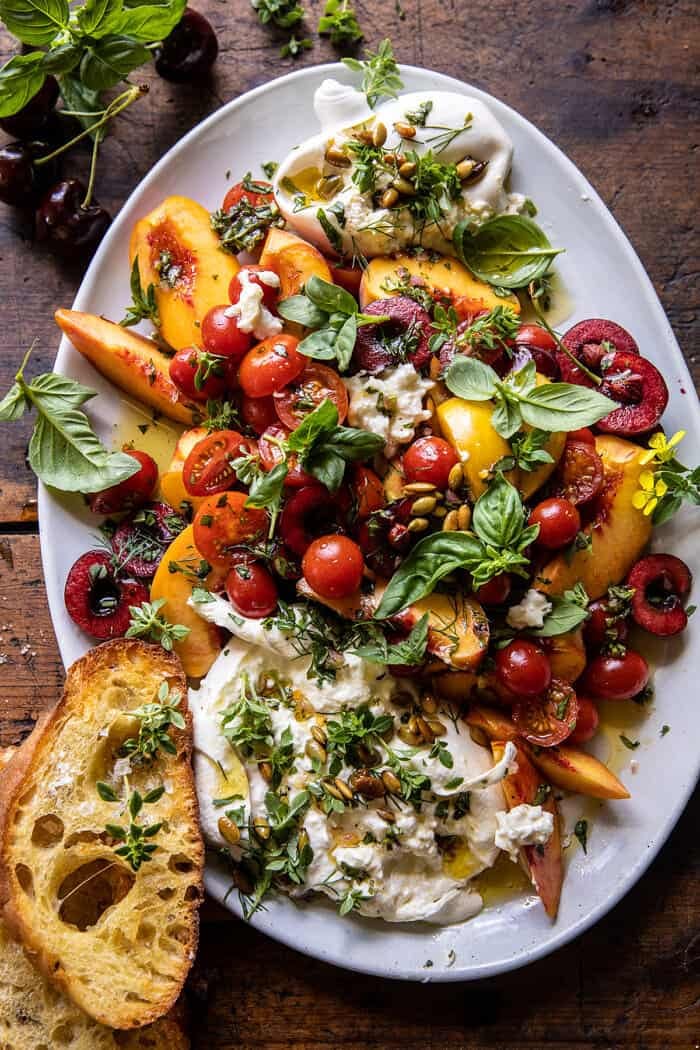
20 Late-Summer Tomato Dinner Recipes (When You Have Too Many to Use)
The decision framework, 20 catalog-tested recipes, and the five preservation moves that stretch peak season into November.
Introduction — the annual August tomato avalanche
Get a free week of easy dinners
Seven weeknight dinners with the shopping list already totalled, sent Sunday. No account needed, unsubscribe in one click.
No spam, unsubscribe in one click. Recipes, shopping lists and Instacart carts all work without an account either way.
Late July through Labor Day is the six weeks when a garden of four tomato plants becomes a moral obligation. If you grew any tomatoes at all — even the two "Better Boy" plants you meant to keep small — you now have twenty pounds a week and a running mental math of "who else can I foist a bag on?" And if you didn't grow them, the farmers market has heirlooms at $4/lb and utility Romas at $2/lb and both are so much better than anything from January that you find yourself buying more than you can reasonably eat.
This guide is the "what do I do with 30 pounds of tomatoes" article, sequenced for how a real week of tomato eating actually goes. We start with the decision framework (eat fresh, cook down, or preserve), walk through 20 catalog-tested recipes across fresh/roasted/stewed/grilled, cover the five preservation moves that stretch your window into November, and finish with a five-night menu plan that eats through 10 pounds of tomatoes without ever repeating a flavor profile.
The seasonal window matters. Publish or plan this the first week of August through Labor Day — after that, tomato season winds down in the northern US and the recipes lose their punch. Late-summer tomatoes have a sweetness, a low-acid balance, and a tomato flavor that the January hothouse variety does not. Cook accordingly.
How to decide — eat fresh, cook down, or preserve
Not every tomato deserves the same treatment. Sort your haul first, then plan.
Eat fresh (highest-quality tomatoes, this week): Vine-ripe heirlooms, in-season farmers-market slicers, garden Sungolds and cherries picked warm. Anything you'd eat raw with just salt and olive oil belongs in this pile. Uses: Panzanella, Caprese Flatbread, Genuine Italian Bruschetta, Heirloom Tomato Salad, plate with fresh mozzarella and torn basil.
Cook down (utility tomatoes, imperfect skins, over-ripe): Romas and on-the-vine, tomatoes with cracked skin, over-ripe fruit that's soft on one side. Uses: roasted tomato pasta, sauce, Tomato Risotto, Sun-Dried Tomato & White Bean Pasta, Shakshuka, Roasted Tomato Soup.
Preserve (the overflow): Whatever's left after this week's meals. Freeze whole (see below), oven-dry for concentrated pantry gold, or make a big pot of tomato sauce and freeze in cup portions.
The trap most home cooks fall into: they let the fresh ones sit too long "for a special dinner," they end up cooking them down, and the really good tomatoes never make it to the table raw. Reverse the priority. Eat the best ones this week; cook the rest.
20 Late-Summer Tomato Dinner Recipes
Below are 20 recipes from the catalog that put late-summer tomatoes at the center of the plate. Grouped by cooking method so you can match the recipe to the tomatoes you have.
Fresh + raw (5 recipes)
1. Rustic Italian Panzanella Bread Salad — the highest-yield use of imperfect heirlooms
2. Heirloom Tomato & Herb Salad — plate, salt, olive oil, done
3. Genuine Italian Bruschetta — Roma is fine here
4. Smoky Spanish Paprika Gazpacho — hot-night rescue for overripe tomatoes
5. Half-Baked Tomato & Mozzarella Caprese Flatbread — a caprese you can eat off the counter
Roasted (5 recipes)
6. Slow-Roasted Tomato & Garlic Soup — pantry-stretcher, freezer-friendly
7. Roasted Garlic Tomato Sauce Spaghetti — sauces 4 pasta dinners
8. Provencal Tomato Tart with Herbs — company-worthy, weekend project
9. Sun-Dried Tomato & White Bean Pasta — pantry-forward, weeknight-easy
10. Slow-roasted tomatoes on toast — 250°F, 3 hours, olive oil, thyme, sea salt
Stewed + saucy (4 recipes)
11. Pasta alla Caprese with Basil and Burrata — burrata on top elevates
12. Saffron-Infused Tomato Risotto — cook down 3 lb of Roma; hold half for tomorrow's dinner
13. Soulful Shakshuka with Feta — breakfast-for-dinner, one pan
14. Marinara with meatballs — 8-hour flavor from a 40-minute simmer if the tomatoes are peak-ripe
Grilled + charred (3 recipes)
15. Grilled Chicken Caprese Sandwich — grilled tomatoes double the flavor
16. Grilled tomatoes as a side — halve, brush with olive oil, char cut-side down 4 min, top with pesto
17. Grilled panzanella variation — grill the bread AND the tomatoes; toss with feta and cucumber
Sandwiches + weeknight (3 recipes)
18. Classic BLT Sandwich — the seasonal duty
19. One-Pot Pasta with Sun-Dried Tomatoes — for the week's leftover fresh tomatoes
20. Fresh tomato and ricotta toast — a five-minute breakfast for a dinner-flip weeknight
Every recipe scales cleanly for 2–8 servings via the built-in serving stepper. Bookmark the ones you'll want on Wednesday when a bag of tomatoes lands on the counter.
The 5 preservation moves
1. Freeze whole (10 minutes active). Wash, dry, freeze on a sheet tray, then bag. Skins slip off under warm running water. Uses: any cooked application (sauce, soup, stew, chili).
2. Oven-dry (5 hours passive). Halve Roma or paste tomatoes, salt lightly, olive oil, 200°F for 4–5 hours until leathery but pliable. Pack in olive oil in a jar; refrigerate 3 weeks. Uses: pasta, salads, sandwiches, on cheese boards.
3. Fresh tomato sauce (45 minutes). Score an X on the bottom of 5 lbs of tomatoes, blanch 30 seconds, ice bath, slip skins. Halve, squeeze seeds. Roast 400°F 35 min with olive oil, garlic, salt. Blend. Freezes in 1-cup portions for 6 months.
4. Quick-pickle cherry tomatoes (10 minutes). 1 cup white vinegar + 1 cup water + 2 tbsp sugar + 1 tbsp salt, bring to a boil, pour over 1 pint halved cherry tomatoes in a jar. Cool, refrigerate. Ready in 24 hours, holds 3 weeks.
5. Slow-roasted tomato confit (2 hours). Halve cherry tomatoes, cover with olive oil in an oven-safe dish, add 4 crushed garlic cloves and thyme sprigs. 275°F for 1.5–2 hours. The oil becomes a tomato-infused finishing oil; the tomatoes go into pasta, sandwiches, or on ricotta toast. Refrigerated 2 weeks.
For deeper storage detail see Serious Eats' tomato-storage guide, which walks through the surprisingly-strong case for room-temperature ripening.
Menu plan — 5 nights of tomato-forward dinners with one shopping trip
Assumes you've got 10 lb of assorted late-summer tomatoes on the counter Monday morning.
Monday: Panzanella with grilled chicken. Uses ~2 lb heirlooms.
Tuesday: Fresh Tomato & Basil Pasta with a green salad. Uses ~1.5 lb utility.
Wednesday: Shakshuka with bread and a side of yogurt. Uses ~1 lb utility + 1 can crushed tomato for volume.
Thursday: Tomato Risotto with a green salad. Uses ~1.5 lb utility.
Friday: Provencal Tomato Tart with a big salad. Uses ~2 lb slicers.
Weekend: Whatever's left gets turned into 4 cups of frozen sauce (Method 3 above) or a jar of confit. Total used: ~10 lb, no repeat flavor profiles.
Shopping list beyond tomatoes: 1 loaf good sourdough, 1 lb pasta, 1 lb Arborio rice, 6 eggs, 8 oz fresh mozzarella + 8 oz burrata, 1 bunch basil, 1 lb chicken breast, 2 heads garlic, 1 quart heavy cream (for the tart), 1 bottle olive oil (you'll finish it this week), sherry vinegar. The USDA MyPlate guidance counts every tomato-forward meal above as both a vegetable and a shared plant-forward center — the week hits protein + produce + whole grain balance without effort.
Kitchen gear that speeds up tomato prep
- A sharp serrated tomato knife. Peels the skin without crushing the flesh. Under $15. See our knives picks for the pick that lives in our drawer.
- A wide cutting board with a juice groove. Slicing 2 lb of tomatoes on a flat board dumps a cup of juice on the counter; a grooved board catches every drop. See our best cutting boards guide for the boards we use.
- A food mill or fine-mesh strainer. For sauce work — separates skin and seeds from puree in one motion. Under $30 for a hand-crank OXO.
- Airtight storage containers and freezer bags. Preservation only works if the containers do. Glass jars for oven-dried; freezer bags for whole frozen; small round containers for cup portions of sauce.
- A big sheet pan. Roasting 3 lb of tomatoes at once beats doing it in two batches. See our bakeware picks.
Common Pitfalls
Refrigerating ripe tomatoes. The cold kills the flavor compounds and makes the flesh grainy within a day. Only refrigerate if you're going to use them within 48 hours and you accept the texture loss.
Using paste tomatoes for salad. Romas are dry and dense; they read as "bland cucumber" in a salad. Save them for cooked work.
Cooking tomatoes at too high a heat when they're wet. A splash of tomato water in a hot pan means splatter; the pan cools; the tomatoes stew instead of concentrating. Reduce liquid at medium-high, not blazing hot.
Under-seasoning fresh tomato dishes. Ripe late-summer tomatoes take more salt than you think — flaky sea salt on a plated slice, not table salt, and use twice what feels comfortable. Then a drizzle of olive oil and a splash of vinegar or lemon.
Freezing whole tomatoes with the stems on. The stem end bruises other fruit in the bag and the small woody bit doesn't cook out. Twist off stems before freezing.
When NOT to cook tomato-forward
If your only tomatoes are supermarket January hot-house — pale pink, no smell, refrigerated — most of the recipes above will underperform. Save this guide for August–September when the ingredient is at peak. Off-season, use good-quality canned San Marzano tomatoes (worth the $4/can premium; see Bon Appétit's canned-tomato taste tests) or the confit you made in August, and stick to cooked applications. Raw dishes with off-season tomatoes taste sad.
FAQ
What's the best way to store fresh tomatoes so they last?
Ripe tomatoes go on the counter, stem-side down, out of direct sunlight — the fridge kills their flavor and texture in under 24 hours. Once fully ripe, they hold 3–4 days on the counter or up to a week if you refrigerate them (accept the texture loss). Under-ripe tomatoes ripen on the counter in 2–4 days; the paper bag trick with a banana speeds this up.
Can I freeze whole tomatoes without blanching?
Yes — wash, dry, and freeze whole on a sheet tray, then transfer to freezer bags. The skins slip off under warm running water when you're ready to use them, and the flesh breaks down straight into sauce, soup, or stew. Frozen tomatoes are not good for salad or salsa (mushy) but they're a perfect drop-in for any cooked recipe and beat canned in flavor by a mile.
How do I make quick fresh tomato sauce from 5 lbs of tomatoes?
Score an X on the bottom of each tomato, boil 30 seconds, ice bath, slip off skins. Halve, squeeze out seeds, and roast on a sheet tray at 400°F with olive oil, garlic, and salt for 35 minutes. Blend or pass through a food mill. Yields about 4 cups of concentrated sauce that freezes in 1-cup portions — enough to sauce 4 pasta dinners. Total active time: 25 minutes.
Are heirloom tomatoes worth the price?
For raw dishes — panzanella, caprese, sliced-tomato-on-toast, gazpacho — heirlooms deliver a flavor jump that justifies the $4–$7/lb premium at farmers markets. For cooked dishes where the tomato breaks down (sauce, soup, stew, roasted), Roma or on-the-vine tomatoes deliver 90% of the flavor at 30% of the cost. Reserve heirlooms for the plate; use utility tomatoes in the pot.
What's the difference between a paste tomato and a slicer?
Paste tomatoes (Roma, San Marzano, Amish Paste) are drier, meatier, and have less seed cavity — they're bred for sauce and preservation because they concentrate faster without watery output. Slicing tomatoes (Beefsteak, Big Boy, most heirlooms) are juicy and sliceable with a higher water content that shines raw. Cherry and grape tomatoes are their own category: use them raw or roasted whole for burst-tomato dishes.
Related seasonal guides
- Easy Dinner Ideas for a Crowd — a bunch of tomato-forward mains scale beautifully
- Best Cutting Boards in 2026 — the juice-groove board that survives tomato slicing
- How to Cook Chickpeas — chickpea + tomato is one of the great late-summer flavor combos
Sources
Frequently asked questions
What's the best way to store fresh tomatoes so they last?
Can I freeze whole tomatoes without blanching?
How do I make quick fresh tomato sauce from 5 lbs of tomatoes?
Are heirloom tomatoes worth the price?
What's the difference between a paste tomato and a slicer?
Sources
Plan a week of meals in two minutes.
Tell our AI what you have and what you like — it builds your plan, shopping list, and Instacart cart. No account needed.
Plan my week →