22 Best Thai Dinner Recipes: Curries, Stir-Fries + Noodle Bowls for Weeknights
Curries, wok-fired stir-fries, and noodle bowls that come together in 25 minutes on a weeknight — with a pantry roadmap, substitution guide, and the wok-vs-skillet answer nobody gives you straight.
Thai cooking is arguably the best weeknight cuisine on Earth. Most dishes hit the table in 15 to 25 minutes, the flavor profile — sour, salty, sweet, spicy, umami — is instantly identifiable from the first bite, and the pantry that unlocks all of it fits on one refrigerator shelf and one cabinet shelf. The barrier isn't skill; it's knowing which ten shelf-stable ingredients to buy.
Get a free week of easy dinners
Seven weeknight dinners with the shopping list already totalled, sent Sunday. No account needed, unsubscribe in one click.
No spam, unsubscribe in one click. Recipes, shopping lists and Instacart carts all work without an account either way.
Below are 22 Thai dinner recipes we cook on rotation, organized so you can build a two-week menu with almost no ingredient duplication. Everything scales up cleanly for meal prep and down cleanly for two-person dinners. We've called out substitutions where the traditional ingredient is hard to find, and flagged which dishes hold well as leftovers and which don't.
Introduction: The five Thai flavor pillars
Great Thai food is a balance of five flavor axes. Miss one and the dish tastes flat; overshoot one and it tastes cloying. Home cooks get this right by ratio, not by taste-testing every step. The five pillars are:
- Sour — fresh lime juice, tamarind paste, occasionally rice vinegar.
- Salty — fish sauce (nam pla), soy sauce, salt.
- Sweet — palm sugar (turbinado or dark brown as substitute).
- Spicy — Thai bird chilies, sambal oelek, or red pepper flakes as substitute.
- Umami — shrimp paste, fermented soybean sauce, oyster sauce, dried shrimp.
You'll notice most Thai recipes tune all five in the finishing 60 seconds — the last splash of fish sauce, the last squeeze of lime, the last pinch of sugar. The base cooking is often nearly bland; the last minute is where the dish lands. This is the opposite of European sauces (which develop over hours) and is why Thai food is so weeknight-friendly.
The Thai Pantry: 10 Ingredients That Unlock Every Recipe
Buy these ten items on one trip. Total cost around $35 at a well-stocked supermarket, $25 at an Asian grocer. Every recipe below draws from this list plus fresh produce.
| Ingredient | Why it's non-negotiable | Substitute (if you must) |
|---|---|---|
| Fish sauce (Squid, Red Boat) | Salt + umami base of most stir-fries and soups | Vegan fish sauce; soy + miso + lime |
| Thai soy sauce (Golden Mountain) | Deeper caramel notes than Japanese soy | Any light soy; add pinch of sugar |
| Oyster sauce (Lee Kum Kee) | Umami glaze for stir-fries | Vegetarian oyster (mushroom-based) |
| Palm sugar | Rounds out spice and salt | Dark brown sugar |
| Full-fat coconut milk (Aroy-D, Chaokoh) | Base of every curry | Coconut cream + water |
| Red and green curry paste (Mae Ploy) | 30-minute homemade in one jar | None — buy this |
| Dried rice noodles (banh pho, sen lek) | Pad Thai, pad see ew, drunken noodles | Fresh rice noodles |
| Jasmine rice | Fluffier and more aromatic than long-grain | Long-grain white rice |
| Thai bird chilies (fresh or dried) | Real heat with fruit notes | Serrano; red pepper flakes |
| Fresh limes | Every dish gets one | Bottled lime juice (last resort) |
Add these three fresh items on grocery day: Thai basil (holy or sweet — different than Italian basil), fresh cilantro, and fresh ginger or galangal. Everything else is drawn from the pantry list above.
Our cookware and small-appliances picks include the specific wok, skillet, and rice cooker we use for the recipes below. If you're setting up a Thai-cooking kitchen from scratch, that's the two-shelf shopping guide.
6 Thai Curries (green, red, yellow, massaman, panang, jungle)
Thai curries are the friendliest introduction to home Thai cooking. Base ratio is always: bloom the paste in coconut cream, add remaining coconut milk, add protein and vegetables, finish with fish sauce, sugar, and lime. Total time 25 minutes; scales to any protein.
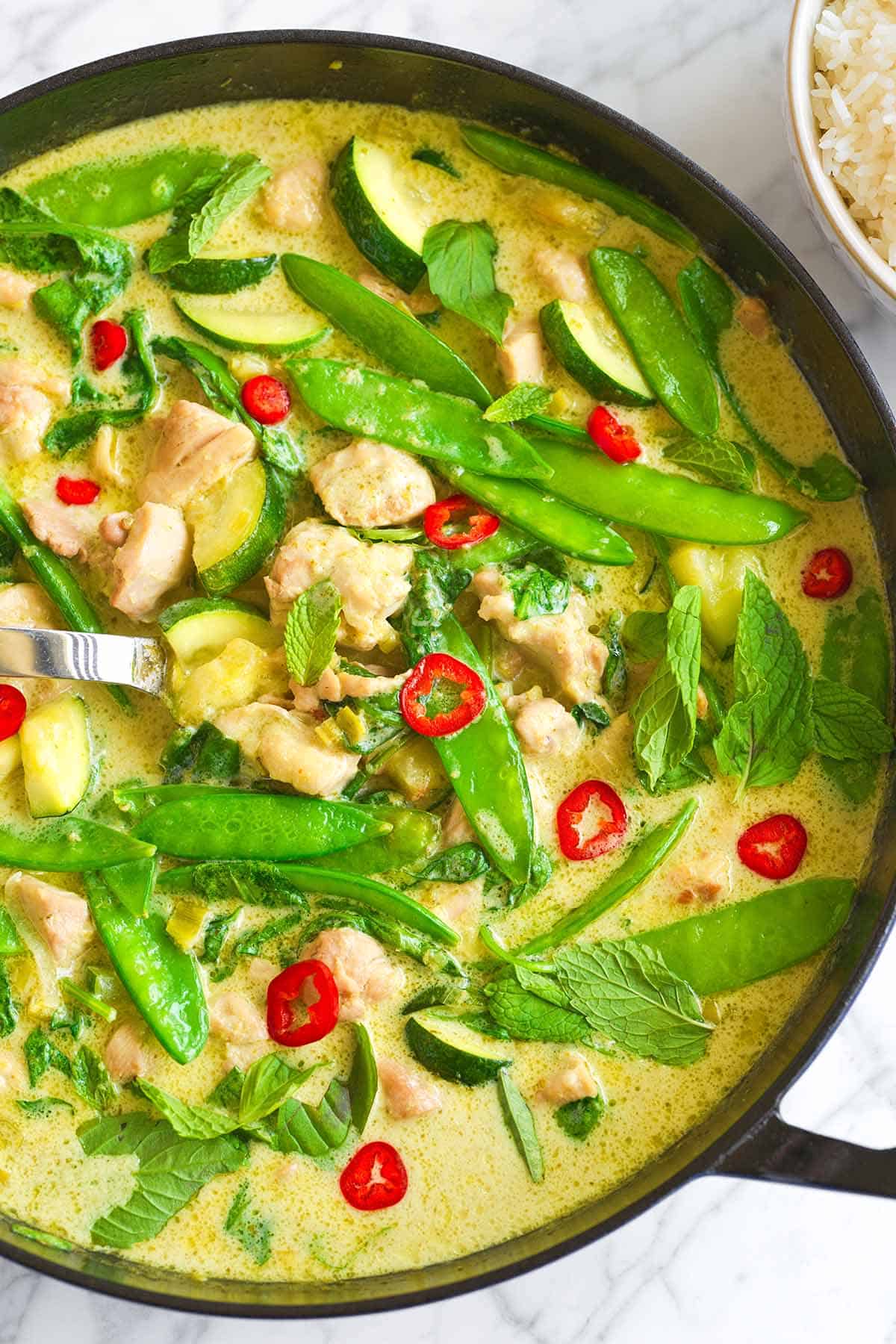
1. Green curry with chicken. The bright, herbaceous, medium-heat gateway curry. Green paste (Thai basil, green chilies, cilantro root), chicken thigh, Thai eggplant or zucchini, bamboo shoots, fresh basil to finish. Full method: Best-Selling Thai Green Curry with Coconut Rice. If you cook one Thai curry, cook this one first.
2. Red curry with chicken and bamboo shoots. Warmer, deeper, slightly sweeter than green. Red paste is heavier on dried red chilies and lemongrass. Excellent with chicken thigh or duck. Recipe: Coconut Braised Thai Red Curry with Chicken and Bamboo Shoots.
3. Yellow curry with potato and beef. Turmeric-forward, mild, kid-friendly. Similar to a mild Indian curry in profile — great entry point for spice-averse eaters. Chunks of potato, carrot, and beef chuck simmered in yellow curry paste and coconut milk. Serve over jasmine rice.
4. Massaman curry with beef and peanuts. The mild, cinnamon-forward, peanut-topped curry. Southern Thai origin with Indian and Malay influences (cardamom, cinnamon, cloves). Beef chuck simmered 90 minutes until tender, potato chunks, roasted peanuts, tamarind for acid. The one curry worth cooking on a weekend for weeknight leftovers.
5. Panang curry with chicken. Thicker, richer, less soupy than red. Panang paste is heavier on peanuts and kaffir lime leaf. Excellent with sliced chicken breast, snap peas, and a chiffonade of kaffir lime leaf on top.
6. Jungle curry with pork and squash. Broth-based (no coconut milk), fiery, herbaceous, low-calorie. Uses whatever vegetables are in season plus pork shoulder or firm tofu. The curry Thai cooks make on hot days when coconut feels too heavy.
Curry ratio cheat sheet (per 4 servings)
| Paste | Amount | Coconut milk (13.5 oz) | Protein | Fish sauce | Sugar |
|---|---|---|---|---|---|
| Green | 3 tbsp | 1.5 cans | 1 lb | 2 tbsp | 1 tbsp palm |
| Red | 3 tbsp | 1.5 cans | 1 lb | 2 tbsp | 1 tbsp palm |
| Yellow | 4 tbsp | 1.5 cans | 1 lb | 2 tbsp | 1.5 tbsp palm |
| Massaman | 4 tbsp | 2 cans | 1.5 lb | 2 tbsp | 2 tbsp palm |
| Panang | 4 tbsp | 1 can (thick) | 1 lb | 1.5 tbsp | 1 tbsp palm |
| Jungle | 2 tbsp | 0 (use broth) | 1 lb | 3 tbsp | 1/2 tbsp palm |
6 Stir-Fries Under 30 Minutes
Stir-fries are the answer to "I need dinner in 20 minutes and I have no plan." Prep everything before the pan gets hot; cook fast over high heat; finish with the aromatic + acid layer.
1. Thai basil chicken (pad krapow gai). Ground chicken, garlic, Thai chilies, oyster sauce, fish sauce, sugar, holy basil (or sweet basil), topped with a runny fried egg. The most-ordered dish in Bangkok street stalls for good reason. Recipe: Stir-Fried Thai Basil Chicken with Bell Peppers and Jasmine Rice.
2. Pad see ew. Wide rice noodles, dark soy, gai lan or broccolini, egg, chicken or beef. Smoky, savory, addictive. The dark soy is what gives the noodles that mahogany color; do not skip it.
3. Drunken noodles (pad kee mao). Wide rice noodles again but with holy basil, chilies, fresh peppercorns, and more heat. Named for its reputation as a hangover cure. Recipe: Stir-Fried Pad Kee Mao with Shrimp and Thai Basil.
4. Beef with oyster sauce and Chinese broccoli. Sliced flank steak, gai lan or broccolini, garlic, oyster sauce, soy, a splash of Shaoxing or dry sherry. The simplest stir-fry in the guide and the best test of your fish-sauce-to-oyster ratio.
5. Pad prik king with pork. Green beans, pork shoulder, red curry paste (dry-fried, no coconut milk), kaffir lime leaf. Punchy and low-calorie. Great over cauliflower rice for a low-carb dinner.
6. Shrimp with cashews and dried chilies. Nut-forward, mildly sweet, low-effort. Shrimp, whole cashews, dried Thai chilies, oyster sauce, soy. Excellent showcase dish for a dinner party.
Stir-fry technique that separates good from great
Three details home cooks miss on Thai stir-fry:
1. Heat. The pan must smoke before the first ingredient hits it. A 12-inch cast-iron skillet on a home range's highest setting for 3 minutes gets you close; a carbon-steel wok on a jet-engine outdoor burner is the restaurant version.
2. Don't crowd the pan. Cook proteins in two batches if you have more than 1 pound. Overcrowded, they steam instead of sear.
3. Sauce goes in a slick, not a puddle. Pour the mixed sauce down the side of the hot pan so it caramelizes as it hits the metal, then toss.
A sharp Chinese cleaver or 8-inch chef's knife is the only piece of Thai-specific cutlery you need. See our knives picks for the best value.
5 Noodle & Rice Bowls
1. Pad Thai with shrimp or chicken. The iconic tamarind-forward noodle dish. Rice noodles, tamarind paste, fish sauce, palm sugar, egg, bean sprouts, peanuts, lime. Full method: Stir-Fried Pad Thai Noodles with Tamarind-Peanut Sauce.
2. Khao pad (Thai fried rice). Day-old jasmine rice, garlic, shrimp or chicken, fish sauce, egg, cucumber and lime on the side. Weeknight fried-rice done right — most home cooks over-sauce it; less is more here.
3. Khao soi (Chiang Mai coconut curry noodles). Northern Thai crispy-egg-noodle-in-coconut-curry-soup. Restaurant-menu darling, achievable at home with pre-made egg noodles and Mae Ploy yellow paste + coconut milk. Sunday-project dish; scales beautifully to a crowd.
4. Rad na (gravy noodles). Wide rice noodles under a thick soy-oyster gravy with beef or pork and gai lan. The Thai equivalent of comfort-food carb bowl.
5. Coconut rice as a side or bowl base. Jasmine rice cooked 1:1 with coconut milk instead of water, plus a pinch of salt. Serves as the base for any curry, or as a standalone bowl topped with grilled shrimp and pineapple. Featured in our Best-Selling Thai Green Curry with Coconut Rice recipe.
5 Thai-Inspired Salads and Lighter Meals
Thai salads are unlike any Western salad — heat, fish sauce, lime, and fresh herbs make them feel like a full meal rather than a side. All five below are complete dinners in under 500 calories.
1. Larb (spicy chopped-meat salad). Ground chicken, pork, or beef; toasted rice powder (khao khua); mint; cilantro; scallion; fish sauce; lime; chili flakes. Served with sticky rice or lettuce cups. A great vegetarian version: Mushroom Larb with Fresh Herb Dressing.
2. Som tum (green papaya salad). Julienned unripe papaya, fish sauce, lime, palm sugar, Thai chilies, dried shrimp, peanuts. Recipe: Authentic Isaan Som Tum (Papaya Salad) with Sticky Rice. Substitute matchstick carrot and green apple if you can't find green papaya.
3. Yum woon sen (glass noodle salad). Cellophane noodles, shrimp, ground pork, celery, red onion, peanuts, cilantro, chili-lime dressing. Refreshing and light — perfect August dinner.
4. Thai grilled chicken (gai yang) with dipping sauce. Marinated chicken thighs (lemongrass, garlic, coriander root, fish sauce), grilled, served with jaew (roasted chili dipping sauce) and sticky rice.
5. Thai beef salad (yam nua). Grilled flank steak sliced thin, tossed with cucumber, shallot, mint, cilantro, and chili-lime dressing. Excellent leftover-steak reboot.
Weeknight-Ready Substitutions When Your Store Doesn't Carry Galangal
Not every supermarket stocks the traditional Thai ingredients. Below are the substitutions we test and recommend. All are workable; a few are close to indistinguishable.
| Traditional | Substitute (weeknight) | Impact |
|---|---|---|
| Galangal | Fresh ginger + 1 tsp lemongrass | Very close |
| Kaffir lime leaf | Zest of 1 lime + bay leaf | 70% there |
| Thai bird chili | Serrano; red pepper flakes | Same heat, less fruit |
| Holy basil | Sweet basil + a mint leaf | Softer, still works |
| Palm sugar | Dark brown sugar | Nearly identical |
| Tamarind paste | Lime + a splash of Worcestershire | 60% there |
| Coconut cream | Full-fat coconut milk, refrigerated | Skim off the top layer |
| Rice noodles | Fettuccine (Pad Thai only) | Different but decent |
| Fresh Thai basil | Substitute at the end, not cooked | Best you can do |
The one substitution to avoid: light coconut milk. It's mostly water and destroys any curry it touches. Buy the full-fat version and use less if you're worried about calories; the sauce clings to the food better and reduces cleanly.
What to Cook It In: Wok + Rice Cooker Recommendations
If you cook Thai food more than twice a month, three tools pay for themselves inside a year:
- A 14-inch flat-bottom carbon-steel wok — for gas ranges only; on electric or induction, a 12-inch cast-iron skillet works better. Seasons like cast iron; heats up in 90 seconds; retains the char that defines wok hei.
- A 6-cup rice cooker — the difference between wet-mushy rice and perfect jasmine rice is a $50 cooker. Buy the model with a keep-warm function; leftover rice for fried rice next day is a bonus.
- A granite mortar and pestle — for toasting rice powder, pounding fresh herbs into curry paste, or making som tum. Not required, but it makes many recipes feel like they should.
Beyond the wok and rice cooker, our utensils picks include the long-handled steel spatula and pair of stainless tongs we use for wok cooking.
Rice-cooker cheat sheet
| Rice type | Rice-to-water | Cook time | Notes |
|---|---|---|---|
| Jasmine (white) | 1 : 1.25 | 15 min | Rinse until water runs clear |
| Sticky (glutinous) | Soak 4h; steam 25 min | Requires bamboo basket, not cooker | |
| Brown jasmine | 1 : 1.5 | 40 min | Longer soak improves texture |
| Coconut jasmine | 1 : 1 rice-to-coconut-milk, +1/4 c water | Standard | Salt to taste |
Common pitfalls we see with home Thai cooking
- Over-adding fish sauce early. Fish sauce is the salt of Thai cooking — you can always add more at the end. Start with half of what the recipe calls for; taste; adjust.
- Under-heating the pan. If your stir-fry looks pale and watery, the pan was not hot enough. Preheat 3 minutes on max before the first splash of oil.
- Substituting Italian basil for Thai basil. Italian basil goes limp instantly in a hot wok and turns bitter. Add fresh Thai basil off the heat, at the last second.
- Using light coconut milk. Ruins curries. See above.
- Not tempering curry paste in the oil. Frying the paste in a tablespoon of oil (or the thick coconut cream from the top of the can) for 60 seconds before adding liquid is what develops the flavor. Skip it and the curry tastes flat no matter how much you fish-sauce it.
Real-world time table (weeknight benchmarks)
| Dish | Active time | Total time | Serves | Leftover-friendly |
|---|---|---|---|---|
| Green curry chicken | 20 min | 30 min | 4 | Yes |
| Pad krapow | 12 min | 15 min | 2 | No |
| Pad Thai | 15 min | 25 min | 2 | Yes (cold) |
| Massaman beef | 30 min | 2 hr | 6 | Yes |
| Larb | 15 min | 20 min | 3 | Yes |
| Som tum | 10 min | 10 min | 2 | No |
| Coconut rice | 5 min | 20 min | 4 | Yes |
| Fried rice | 12 min | 15 min | 3 | Yes |
When NOT to make Thai food
- When you don't have a hot pan. An electric coil range on medium will not sear a stir-fry — you'll end up with something closer to a fricassee. Wait for a gas burner or a smoking-hot cast iron.
- When your fish sauce is more than a year old past the printed date. It goes flat over time; the flavor drops from savory to just salty.
- When you're feeding spice-averse guests without a heads-up. Make the milder curries (massaman, yellow) or the milder stir-fries (beef and broccoli) instead of anything with pad krapow's chili count.
Where to go deeper on Thai cooking technique
For technique deep-dives beyond this guide, three writers we recommend: Serious Eats' Thai food guide breaks down the science of stir-fry and curry paste, the New York Times' Thai food section is strong on newer weeknight-friendly recipes, and Hot Thai Kitchen's pantry guide is the most thorough shelf-by-shelf reference we've found for stocking a Thai kitchen at home.
Want AislePrompt to build you a full Thai week (five dinners, jasmine rice, one dessert) and a de-duplicated shopping list? Open our chat assistant and ask for a "Thai week for four" — we'll return the menu, the ingredient list, and a link to the meal plan you can save and revisit. Cook one dish tonight; by the end of the month, you'll be riffing on curries without a recipe.
Frequently asked questions
What are the essential Thai pantry ingredients I should stock?
Is it hard to make Thai food at home if I've never done it before?
Can I make Thai curry paste at home or should I buy it?
What can I substitute for fish sauce if I'm vegetarian?
Do I need a wok, or will a regular skillet work?
Sources
Plan a week of meals in two minutes.
Tell our AI what you have and what you like — it builds your plan, shopping list, and Instacart cart. No account needed.
Try free →