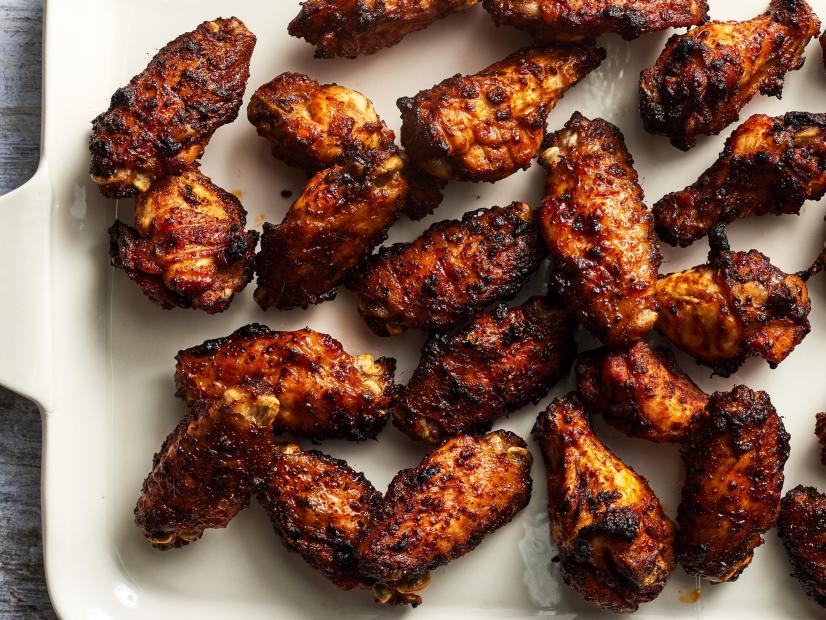
22 Smoked Chicken Recipes: Wings, Thighs & Whole-Bird Low-and-Slow Cookouts
Run the pit at 275°F, not 225°F — that one change fixes rubbery skin. Twenty-two cooks across wings, thighs, whole birds, and the second-day sandwiches.
Smoke chicken at 275°F, not 225°F, and pull it at 165°F in the breast / 175°F in the thigh. That single change fixes the number-one complaint about smoked chicken — rubbery, unrenderable skin — because poultry skin needs heat above roughly 250°F to render and crisp. Below is a full weekend's worth of cookouts: wings, thighs, whole birds, and what to do with the leftovers.
Get a free cookout plan for a crowd
Mains, sides and quantities scaled to your headcount, with one Instacart cart instead of a spreadsheet.
No spam, unsubscribe in one click. Recipes, shopping lists and Instacart carts all work without an account either way.
Introduction: why chicken is the forgiving intro to any smoker
Brisket punishes you for every mistake and takes 14 hours to tell you about it. Chicken takes 90 minutes to 3 hours, costs about $1.50 a pound, and gives you five or six attempts per month without wrecking the grocery budget. That's why it's the right first cook on a new smoker.
It's also the protein where the smoker's actual advantages show up fastest. A whole chicken roasted in an oven is good. A whole chicken cooked at 275°F over apple wood is a different food — the smoke penetrates the top 1/4 inch of meat, the fat renders slowly, and the skin takes on a mahogany color you cannot get from an oven at any temperature.
Chicken is also forgiving on timing. It has enough fat to survive a 15-minute overshoot, unlike a pork tenderloin, and it doesn't have brisket's stall to argue with. If you're building out a broader smoker repertoire, the beginner smoker recipes roundup covers brisket, ribs, and pulled pork with the same low-and-slow logic.
Temperature and time — the two numbers you actually need
Two numbers. Pit temperature and internal temperature. Everything else is preference.
| Cut | Pit temp | Internal target | Approx. time |
|---|---|---|---|
| Wings | 275–300°F | 175–180°F | 60–90 min |
| Thighs / legs | 275°F | 175–180°F | 75–105 min |
| Whole bird (4–5 lb) | 275°F | 165°F breast / 175°F thigh | 2.5–3.5 hr |
| Spatchcocked bird | 300°F | 165°F breast | 75–105 min |
| Breast (bone-in) | 250–275°F | 160°F, rest to 165°F | 60–90 min |
The 165°F figure is the USDA instantaneous-kill number for breast meat. Dark meat is better at 175–180°F, where the connective tissue has broken down — a thigh pulled at 165°F is safe but chewy. Wikipedia's entry on doneness records the same safe-temperature distinction, and it's the single most useful thing to internalize about poultry.
The 225°F trap. Almost every smoker recipe on the internet says 225°F, because that's the correct number for brisket and pork butt — collagen-heavy cuts that need hours in the 160–180°F internal range. Chicken has almost no collagen to break down and a lot of skin to render. At 225°F the fat under the skin never fully liquefies, and you get the rubbery, translucent result that makes people say they don't like smoked chicken. Run 275°F. If your smoker won't hold it, finish the last 15 minutes over direct heat or in a 425°F oven.
Wood-pairing chart: apple for sweet, hickory for classic, cherry for color, mesquite for bold
| Wood | Intensity | Best with | Notes |
|---|---|---|---|
| Apple | Mild | Everything; the default | Sweet, forgiving, hard to oversmoke |
| Cherry | Mild | Whole birds | Best color — deep mahogany skin |
| Pecan | Medium | Thighs, glazed cooks | Apple's richer cousin |
| Hickory | Medium-strong | Wings, BBQ-sauced cooks | Classic American BBQ note |
| Oak | Medium | Anything, as a base | Neutral backbone; mix with fruit wood |
| Mesquite | Strong | Short cooks only | Turns acrid past 90 minutes |
Chicken absorbs smoke faster than beef or pork because the meat is lean and the surface area is high relative to mass. That means mesquite — which is fine on a 12-hour brisket where it mellows — will make a 3-hour chicken taste like an ashtray. Use it for wings, if at all.
Pecan is the underrated pick. The Grilled Pecan-Smoked Chicken with Honey Mustard Glaze at 320 calories is a good demonstration of what it does with a sweet glaze.
5 Smoked Wings: buffalo, dry-rub, honey-hot, Alabama white, Korean gochujang
Wings are the fastest way to prove a new smoker works. 60–90 minutes, and unlike a whole bird there's no carving pressure.
1. Buffalo-Spiced Smoked Chicken Wings with Blue Cheese Dip — 380 cal. Smoke first, sauce at the end. Buffalo sauce is mostly butter and vinegar; both burn.
2. Smoked Barbecue Chicken Wings with Spicy Dry Rub — 280 cal. The leanest wing on this list because there's no sauce carrying sugar.
3. Smoky Southern BBQ Chicken Wings with Honey Glaze — 410 cal. Honey goes on in the last 10 minutes or it scorches.
4. Buffalo-Style Smoked Chicken Wings with Spicy Butter Glaze — 380 cal. A butter-forward variation that clings better than a thin hot sauce.
5. Crispy Korean-Style Chicken Wings with Gochujang Garlic Glaze — 560 cal. The heaviest and the best. Gochujang's fermented depth and smoke are made for each other.
The crispy-skin trick. Toss the raw wings in 1 teaspoon of baking powder (not baking soda) per pound along with the salt, then rest them uncovered in the fridge for 4–24 hours. The baking powder raises the skin's pH so it browns faster, and the dry rest pulls moisture out. Then smoke at 300°F. This gets you a genuinely crisp wing without deep-frying.
Also worth cooking: the Slow-Smoked Southern BBQ Chicken Wings at 380 calories and the Slow-Smoked Southern BBQ Chicken Wings with Spicy Dry Rub at 280.
5 Smoked Thighs & Legs: Nashville hot, jerk, mustard-glazed, char siu, lemon-pepper
Thighs are the most forgiving cut on the bird. Enough fat that a 20-minute overshoot doesn't matter, and dark meat's ideal 175–180°F window is wide.
1. Smoked Jerk Chicken Thighs — allspice and Scotch bonnet against pimento-wood-style smoke; the most flavorful thigh on the list.
2. Hickory-Smoked Chicken Thighs with Garlic and Rosemary — 320 cal. The lean, herb-forward option.
3. Slow-Smoked Chicken Thighs with Peach Glaze — 420 cal. Stone fruit and smoke is a late-summer classic.
4. Mesquite-Smoked Chicken Thighs with Chipotle Marinade — 350 cal. The one cook where mesquite's aggression is correct, because thighs finish in about 90 minutes.
5. Maple-Bacon Glazed Smoked Chicken Thighs — 450 cal. Indulgent, and the highest-calorie thigh here for a reason.
5 Whole Smoked Birds: spatchcocked, beer-can, herb-butter, Cornell-style, brined-and-smoked
1. Smoked Cajun-Spiced Whole Chicken — the benchmark whole-bird cook. Cajun rub, 275°F, cherry wood.
2. Build-Your-Own Six Pack IPA Beer Can Chicken — 450 cal. Beer-can chicken is mostly theater — the liquid barely evaporates into the cavity — but the vertical position renders the skin evenly, which is the real benefit.
3. Grilled Sweet Tea Brined Chicken with Charred Lemon — 350 cal. The tea's tannins firm the surface protein and the sugar helps browning.
4. Brined Grilled Chicken with Appalachian Hot Pepper Glaze — 320 cal. Cornell-style in spirit: vinegar-forward, brined, cooked hot.
5. Merapi Volcanic Smoked Chicken with Coconut Lemongrass — 420 cal. The one that proves smoked chicken doesn't have to taste American.
Spatchcocking, briefly. Cut out the backbone with kitchen shears and press the bird flat. It cooks in roughly 40% less time and — more importantly — the breast and thigh finish within about 10°F of each other instead of 25°F, so you stop overcooking the breast to save the thigh. If you want thighs only, the Spatchcocked Garlic Herb Chicken Thighs at 450 calories uses the same flattening logic on a smaller cut.
5 Smoked Chicken Sandwiches & Bowls: pulled BBQ, chicken tacos, chopped salad, cobb, ramen
The second dinner is where smoked chicken pays for itself. A 5-pound bird feeds four at the cookout and four again the next night.
1. Pulled Smoked Chicken Sliders with Spicy Coleslaw — 320 cal.
2. Carolina-Style Pulled Chicken with Vinegar BBQ Sauce — 350 cal. Vinegar sauce is the correct partner for smoky dark meat; sweet tomato sauce fights it.
3. Kentucky-Style Pulled Chicken with Mustard BBQ Sauce — 350 cal.
4. Southern-Style Braised Chicken with Alabama White Sauce — mayo-and-vinegar white sauce, the north-Alabama tradition, and the best thing that happens to smoked chicken skin.
5. Sheet Pan BBQ Chicken Sliders with Tangy Coleslaw — 320 cal. The weeknight version when the smoker isn't coming out.
2 Bonus recipes for the pitmaster
- Smoked Chicken Family Pack with Classic Cornbread — 550 cal. A full plate, cornbread included, for the cook who wants the whole menu in one recipe.
- Fenway Park-Inspired BBQ Pulled Chicken Sliders — 350 cal. The tailgate build; pairs with the rest of the game-day roundup.
Brining: wet, dry, or neither
A wet brine (6% salt by weight of water, 4–8 hours) adds moisture and seasons the interior. A dry brine (1% salt by weight of the bird, 12–24 hours uncovered in the fridge) seasons just as deeply and — critically for smoked chicken — dries the skin surface so it crisps.
For smoking specifically, dry brine wins. A wet-brined bird carries surface water into the smoker, and every gram of that water has to evaporate before the skin can brown. That's 20–30 minutes of the cook spent steaming instead of rendering.
The exception is a lean whole bird you plan to run hot and fast, where a short wet brine buys you insurance. The Grilled Sweet Tea Brined Chicken with Charred Lemon is a good example — sweet tea brine, hot cook, and the sugar in the brine accelerates browning enough to offset the added surface moisture.
Dry-brine ratio worth memorizing: 1 teaspoon of kosher salt per pound of bird, applied all over including under the skin, then rest uncovered on a rack in the fridge overnight.
Real-world numbers: yield, cost, and timing
| Cook | Raw weight | Cooked yield | Feeds | Approx. cost | Active time |
|---|---|---|---|---|---|
| Wings | 5 lb | ~3.5 lb | 6–8 as app | $16 | 20 min |
| Thighs (bone-in) | 4 lb | ~2.8 lb | 5–6 | $9 | 15 min |
| Whole bird | 4.5 lb | ~2.9 lb meat | 4 + leftovers | $8 | 25 min |
| Two whole birds | 9 lb | ~5.8 lb meat | 8 + leftovers | $16 | 30 min |
Chicken loses roughly 25–35% of its raw weight in a smoke — more than an oven roast, because the longer cook drives off more water. Plan 3/4 lb of raw bone-in chicken per adult for a main course, or 3/4 lb of wings per person as an appetizer.
Fuel math for a pellet cooker: about 1.5 lb of pellets per hour at 275°F in mild weather, so a 3-hour whole-bird cook uses roughly 4.5 lb — under $4 of pellets. A charcoal kettle running the snake method needs about 40 briquettes for the same cook.
Leftover handling. Pull the meat off the bones while it's still warm; it comes off cleanly and takes 5 minutes instead of 15. Refrigerate the meat in a sealed container up to 4 days, or freeze in 1-cup portions for up to 3 months. Save the carcass — a smoked chicken carcass makes the best stock you will ever put in a soup, and it needs nothing but water, an onion, and 3 hours.
What you'll need: smoker, wireless probe thermometer, apple wood, spray bottle
The thermometer matters more than the smoker. A $400 pellet grill with a bad thermometer produces worse chicken than a $60 kettle with a good one.
- Instant-read thermometer. The Alpha Grillers digital instant-read is $13.97 with 4.8 stars across 87,712 ratings — a 2–3 second read that ends the guessing. Buy this before anything else.
- Leave-in probe. The TempPro TP17 dual-probe at $26.99 (4.6 stars, 26,130 ratings) tracks pit temp and meat temp simultaneously, which is the pair of numbers you actually need.
- Wireless, if you're leaving the yard. The MEATER Plus at $79.99 has no trailing wire and reads to your phone. Convenience, not accuracy — the $14 probe is just as precise.
- Long tongs. OXO Good Grips 16-inch locking tongs at $20.95 (4.8 stars). Sixteen inches keeps your forearm out of the firebox.
- Browse the full Kitchen Gadgets and Utensils & Tools categories for the rest of the kit.
Skip: wood chips soaked in water (the water just delays combustion and produces steam, not smoke), mop sauces on chicken (they cool the skin and prevent crisping), and any "smoke tube" if your smoker already produces clean thin blue smoke.
The one mistake that turns smoked chicken rubbery
It's the pit temperature. Chicken skin is roughly 40% fat by weight, held in a collagen matrix. That fat needs to reach about 250°F to render out and leave behind a thin crisp shell. At a 225°F pit temperature the skin's surface sits below that threshold for the entire cook — the fat softens but never leaves, and you get skin with the texture of a wet paper bag.
The other four common failures, in order of how often they happen:
- Sauce applied too early. Every BBQ sauce is 30–50% sugar. Sugar burns at 320°F. Sauce in the last 10–15 minutes only, and never over direct flame.
- Opening the lid every 10 minutes. Each peek costs 5–10 minutes of recovery time on a charcoal cooker. Use a leave-in probe and stay out.
- Brining a pre-brined bird. Most supermarket chicken is already injected with a salt solution — check the label for "contains up to X% solution." Brining that again produces ham.
- No rest. Ten minutes tented loosely with foil. Tight foil steams the skin you spent three hours crisping.
AmazingRibs' tested chicken recipes go deeper on the physics of skin rendering, and Wikipedia's overview of smoking as a cooking method covers the hot-smoking temperature bands that put 275°F on the right side of the rendering threshold.
When NOT to smoke chicken
Skip the smoker for boneless skinless breasts. There's no skin to render, no fat to protect the meat, and the 40 minutes it takes at 275°F is enough to dry it out while contributing almost no smoke flavor. Grill those hot and fast instead, or use them in a sheet-pan dinner.
Also skip it if you're cooking for more than about 12 people on a single kettle. A 22-inch kettle holds two whole birds comfortably, three if you're stacking. Beyond that you're running two cooks back to back and eating at 9 p.m. Do wings for a crowd instead — they cook in 90 minutes and you can fit five pounds in a single layer.
Building the cookout menu
Pick your main from this page plus two or three sides, add them all to your AislePrompt shopping list, and the list consolidates the rub spices, wood, and produce into one aisle-sorted run. The serving slider scales each recipe to your headcount so you're not doing wing math at the butcher counter.
FAQ
See the frequently asked questions below on pit temperature, brining, wood selection, doneness testing, and side dishes.
Sources
Frequently asked questions
What temperature should I smoke chicken at — 225°F, 275°F, or higher?
Do I need to brine chicken before smoking?
Which wood is best for smoking chicken?
How do I know when smoked chicken is done without cutting into it?
What sides go with smoked chicken and can AislePrompt build the whole cookout menu?
Sources
Plan the whole cookout in one go.
Ask our AI for mains, sides and quantities for your headcount — one Instacart cart, no spreadsheet.
Plan my cookout →