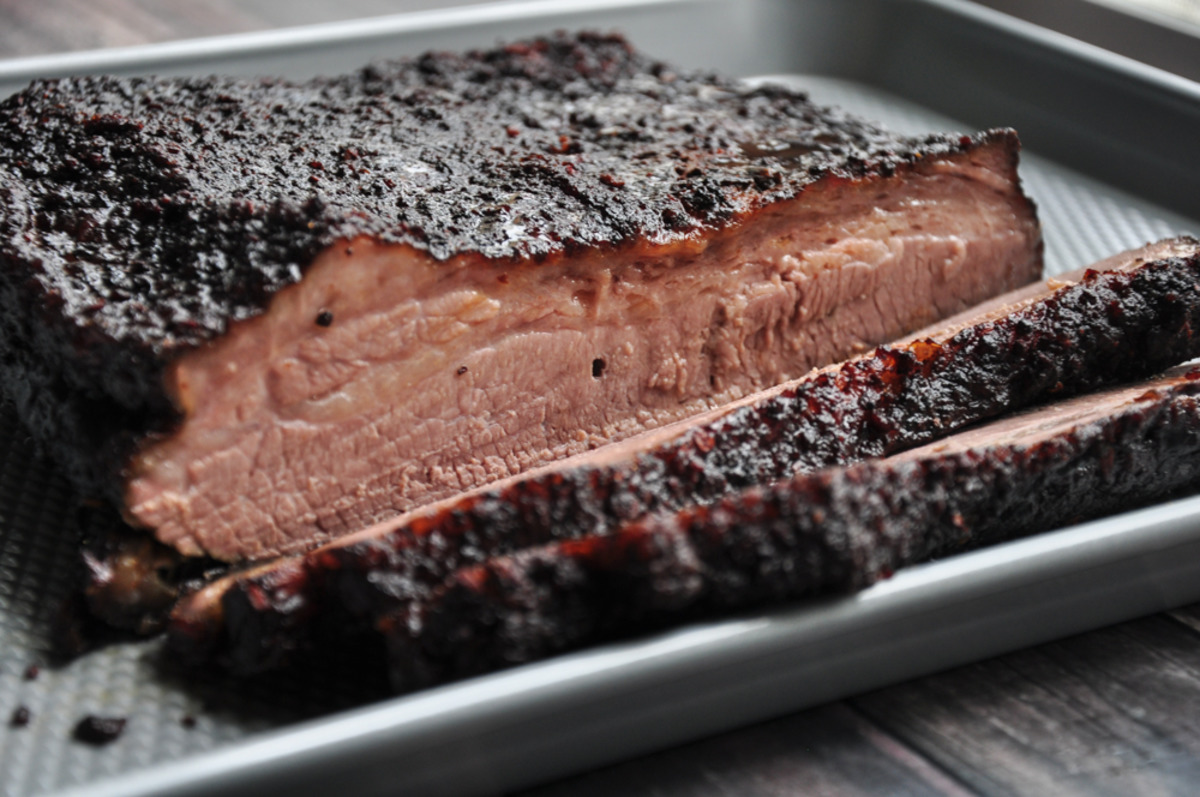
18 Smoker Recipes for Beginners: Brisket, Ribs & Pulled Pork Low-and-Slow at Home
Start with ribs, not brisket. Eighteen recipes ordered by how likely you are to succeed, plus the fuel, wood and temperature calls that matter more than any recipe.
Affiliate disclosure: AislePrompt may earn a commission on qualifying purchases made through Amazon and Instacart links in this article, at no additional cost to you. See our affiliate policy →
Easy smoker recipes for beginners at home start with three cuts — pork ribs, pork shoulder, and chicken — not brisket. Ribs are forgiving, shoulder is nearly impossible to ruin, and chicken finishes in under three hours so you get feedback the same afternoon. Brisket is the hardest cut in barbecue and the worst thing to attempt first. Here are 18 recipes ordered roughly by how likely you are to succeed, plus the fuel, wood, and temperature decisions that matter more than any recipe.
Everything below assumes a smoker holding 107-135°C (225-275°F). That's the entire technique: hold a low temperature for a long time, in the presence of smoke, until collagen turns to gelatin.
Introduction: why low-and-slow beats direct grilling for the biggest cuts
Grilling cooks at 230-290°C over direct heat. That works for anything under about 3 cm thick and under about 20 minutes of cooking. It fails completely on a 5 kg pork shoulder, because the outside carbonizes long before the inside reaches the temperature where anything interesting happens.
The interesting temperature is 71-96°C internal, held for hours. In that band:
- Collagen hydrolyzes into gelatin. This is the whole point. Tough connective tissue becomes the silky, lip-sticking texture that separates barbecue from a roast. It starts around 71°C and accelerates sharply above 82°C.
- Fat renders. Intramuscular fat liquefies and bastes the meat from inside.
- Smoke compounds deposit. Guaiacol and syringol from burning wood bond to the meat surface in the first 2-3 hours, while it's still cool and damp.
The catch is time. A pork shoulder needs 1.5-2 hours per pound at 107°C. A 4 kg shoulder is a 12-14 hour cook. Plan the day around it, not the other way around.
Pick your fuel: pellet, offset, kamado, or electric
| Type | Price range | Temp stability | Smoke flavor | Best for |
|---|---|---|---|---|
| Pellet | $400-1,500 | Excellent (thermostat) | Mild | Beginners; set-and-forget overnight cooks |
| Offset (stick burner) | $300-3,000+ | Poor without practice | Strongest | People who want the craft |
| Kamado (ceramic) | $600-1,600 | Very good | Moderate | Small spaces; doubles as a grill |
| Electric / pellet tube | $200-500 | Good | Mild | Apartments, cold climates |
| Kettle grill + snake method | $60-200 | Fair | Good | Trying it before you commit |
Honest recommendation for a first smoker: a pellet grill or a kettle grill with the snake method. The pellet holds temperature while you sleep, which removes the single hardest part of a long cook. The kettle costs almost nothing and teaches you fire management. An offset smoker is a wonderful object and a terrible first purchase — it demands a fire tended every 45 minutes for 14 hours.
Whatever you buy, buy two thermometers: one for the grate (the smoker's built-in lid gauge is typically off by 15-20°C) and one leave-in probe for the meat. Together they're about $40 in gadgets and they matter more than a $400 upgrade in smoker.
The 5 wood pairings that never miss
| Wood | Intensity | Pairs with | Avoid on |
|---|---|---|---|
| Hickory | Strong, bacon-like | Pork shoulder, ribs | Delicate fish |
| Oak (post oak) | Medium, clean | Beef, brisket, everything | Nothing — it's the safe default |
| Apple | Mild, sweet | Poultry, pork | Beef, gets lost |
| Cherry | Mild, adds red color | Everything, especially poultry | Nothing |
| Mesquite | Very strong, sharp | Beef, game, short cooks | Anything over 4 hours |
Two rules beginners get wrong. First, more smoke is not better — thin blue smoke is the target, and thick white smoke deposits creosote that tastes acrid. If you can't see through it, your fire is starved of air. Second, the meat stops absorbing smoke after about 3 hours, once the surface dries and the bark sets. Adding wood at hour eight does nothing but cost you fuel.
Beginner ribs (start here)
Ribs are the right first cook: 5-6 hours, cheap enough that a failure doesn't hurt, and the doneness test is visual.
- Slow-Smoked Baby Back Ribs with Spiced Dry Rub — the plain-rub baseline. Make this first.
- Kansas City-Style Smoked Baby Back Ribs — sweet, sauced, tomato-based. The crowd-pleaser.
- Memphis Dry Rub Baby Back Ribs — no sauce at all, just rub. If you think you don't like ribs, it's probably the sauce, and this is the fix.
- Chargrilled Hickory-Smoked St. Louis Ribs with Tangy BBQ Sauce — St. Louis cut is a trimmed spare rib: meatier, flatter, cooks more evenly than baby backs.
- Slow-Smoked St. Louis Ribs with Sweet and Spicy Glaze — glaze goes on in the last 20 minutes only; sugar burns.
- Maple-Chipotle Smoked Ribs with Apple BBQ Glaze — the sweet-heat version.
- Slow-Smoked St. Louis Ribs with Maple Chipotle Glaze — same idea, more maple.
- Slow Cooker Hickory-Smoked Ribs with Dry Spice Rub — no smoker at all. Slow cooker, then 10 minutes under the broiler. Not real barbecue; genuinely good food.
The 3-2-1 method, and when to ignore it. Three hours naked on the smoke, two hours wrapped in foil with liquid, one hour unwrapped with sauce. It works reliably on spare ribs. On baby backs it overcooks them into mush — use 2-2-1 instead. The real doneness test isn't the clock: pick the rack up with tongs a third of the way down. If it bends to about 90 degrees and the surface cracks, it's ready.
Pulled pork
Pork shoulder (butt) is the most forgiving cut in barbecue. It has so much fat and collagen that an extra hour barely hurts it.
- Slow-Smoked Memphis-Style Pulled Pork Sandwiches — vinegar-and-slaw style. The classic sandwich.
- Best BBQ Pulled Pork — the straightforward sweet-sauce version.
- Texas-Style Slow-Cooked Pulled Pork — salt-and-pepper forward, no sugar.
- Tangy Apple Cider Pulled Pork — cider in the wrap keeps it moist and adds a fall note.
The stall is normal. Somewhere around 71-77°C internal, the temperature stops rising — sometimes for four hours. That's evaporative cooling, not a broken smoker. Either wait it out or wrap in foil or butcher paper to push through. Do not raise the pit temperature in a panic; you'll dry out the bark. Pull the shoulder at 96°C internal, when a probe slides in with no resistance, and rest it an hour before shredding.
Beginner brisket
Brisket is the graduate exam. A 6 kg packer costs $70-110, takes 12-16 hours, and is genuinely easy to ruin. Attempt it after two successful shoulders.
- Texas-Style Smoked Brisket with Chipotle Rub — the salt-and-pepper Central Texas approach with a little heat.
- Central Time Smoked Brisket — the purist version: coarse salt, coarse pepper, post oak, patience.
- Applewood-Smoked Brisket with Horseradish Glaze — milder smoke, sharper finish.
- Alvarado-Style Smoked Brisket with Chipotle Rub — a heavier rub if you like bark.
- Smoked Brisket Sliders with Pickled Onions — what to do with the flat, which is always drier than the point.
Brisket numbers worth memorizing: trim the fat cap to 6 mm, cook fat-side up at 121°C, wrap in butcher paper (not foil — foil steams the bark soft) at around 74°C, pull at 96-99°C by probe feel rather than by number, and rest for a minimum of two hours in a cooler. The rest is not optional; slicing a brisket straight off the smoker loses a third of its juice to the board.
Smoked poultry
Poultry is the fastest smoke and the best weeknight-adjacent option — 2.5-3 hours total.
- Texas Smoked Chicken & Honey Glaze — whole bird, spatchcocked, 2.5 hours.
- Hickory-Smoked Chicken Thighs with Peach-Honey Glaze — thighs are the most forgiving poultry cut; they tolerate 82°C internal without drying.
- Bourbon-Infused Smoked Chicken with Peach Salsa — the version to serve guests.
- Baked Smoked Turkey with Sweet Potato and Collard Greens — the Thanksgiving play, and it frees the oven for everything else.
Chicken skin is the problem. At 107°C, smoked chicken skin comes out rubbery, not crisp. Two fixes: run the last 20 minutes at 175°C or higher, or dry-brine the bird uncovered in the fridge overnight so the skin dehydrates before it ever sees the smoker. Do both and you get skin worth eating.
Beyond the classics
- Smoky Texas-Style Brisket Burnt Ends with Sweet BBQ Glaze — the point end, cubed, sauced, and returned to the smoker. Barbecue's best byproduct.
- Kansas City Burnt Ends with Smoked Paprika Rub — the sweeter KC take.
- Burnt Ends Beef Ribs with Brown Sugar Glaze — beef short ribs, which many pitmasters consider a better cut than brisket and a much shorter cook.
- Alexandria Applewood Smoked Salmon — hot-smoked, 2 hours at 82°C, done at 57°C internal. The one smoke you can finish before lunch.
- Smoked Chicken and Apple Quesadillas — what Monday does with Sunday's chicken.
Real-world numbers: time, temp, and yield
| Cut | Weight | Pit temp | Total time | Pull temp | Yield after cooking |
|---|---|---|---|---|---|
| Baby back ribs | 1.1 kg rack | 121°C | 5 hr | Bend test | ~65% |
| St. Louis ribs | 1.4 kg rack | 121°C | 6 hr | Bend test | ~62% |
| Pork shoulder | 4 kg | 107°C | 12-14 hr | 96°C | ~55% |
| Brisket (packer) | 6 kg | 121°C | 12-16 hr | 96-99°C | ~50% |
| Whole chicken | 1.8 kg | 135°C | 2.5 hr | 74°C breast | ~72% |
| Beef short ribs | 2.3 kg | 135°C | 7-8 hr | 96°C | ~58% |
That yield column is the number nobody mentions. A 6 kg brisket feeds about 12 people, not 20 — half its weight leaves as rendered fat, moisture, and trim. Budget 200 g of finished meat per adult and buy accordingly.
Beginner mistakes to avoid
- Opening the lid. Every peek costs 10-15 minutes of recovery. "If you're lookin', you ain't cookin'" is annoying and correct. Use a leave-in probe.
- Wrapping too early. Wrap before the bark sets — before roughly hour four on a shoulder — and you get a pot roast with a soft, wet exterior.
- Trusting the lid thermometer. It reads the dome, not the grate, and it's typically 15-20°C optimistic. Put a probe at grate level next to the meat.
- Resting too short. Ribs need 10 minutes, chicken 15, shoulder an hour, brisket two. Wrap in towels in a dry cooler; it holds above 60°C for four hours.
- Sugar-heavy rub too early. Sugar burns above 150°C. On a 107°C cook it's fine; if you're finishing hot for skin, add sweet rub at the end.
- Sauce on the smoker for hours. Sauce is a glaze, applied in the last 15-30 minutes. Any earlier and it scorches.
- Cooking to a time instead of a feel. Every one of these cuts is done when a probe slides in like it's going into room-temperature butter. The clock is an estimate; the probe is the truth.
A worked first weekend
Friday evening. Buy a 1.4 kg rack of St. Louis ribs and a 4 kg bone-in pork shoulder. Pull the membrane off the back of the ribs — slide a butter knife under it at one end, grab it with a paper towel, and peel. Rub both cuts (our homemade BBQ rubs guide has a sweet-heat blend written for pork shoulder), wrap, and refrigerate overnight. A dry brine that sits 12 hours seasons the meat all the way through instead of just the surface.
Saturday, 8am. Fire the smoker to 121°C and put the ribs on. Six hours later you have dinner and, more importantly, you have learned where your smoker runs hot, how fast it recovers after you open it, and how much fuel it burns per hour. Write those three numbers down.
Sunday, 6am. Shoulder on at 107°C using the numbers you learned Saturday. Wrap around hour six when the bark is set and dark. Pull at 96°C — probably somewhere between hour 11 and hour 14 — rest an hour, shred, and you have twelve sandwiches for roughly $3.50 each including the buns and slaw.
That's the whole progression. Two cooks, one weekend, and you can now run any recipe on this page.
When NOT to fire up the smoker
If you have less than five hours, don't. There is no fast version of this, and a rushed shoulder at 163°C is just a dry roast. Cook something on the grill instead and save the smoke for a day you're home anyway. Similarly, don't smoke for a crowd the first time you use a new smoker — every unit has its own hot spots and airflow quirks, and you want to learn them on a $12 rack of ribs, not on Thanksgiving dinner. And if it's below -7°C or steadily windy, expect fuel use to roughly double and add 25% to every time estimate above.
The gear list is short: a smoker, two thermometers, butcher paper, a pair of long tongs and heat-resistant gloves from utensils, a half-sheet pan for carrying meat in and out from cookware, and a cooler you already own. Everything else is optional.
Sources
Temperatures, timings, and the stall physics cross-checked against Serious Eats — Barbecue and Smoking Guides, Wikipedia — Barbecue for regional-style definitions, and the USDA safe minimum internal temperature chart for the poultry and pork doneness figures.
Ready to shop the rub and the meat in one go? Open any recipe above and send its ingredients to your local store, or plan the whole weekend with the meal plan tool.