22 Whole30 Dinner Recipes for Beginners (2026 Guide)
A method-by-method Whole30 dinner playbook — 22 compliant sheet-pan, skillet, slow-cooker, and bowl recipes with a shopping list and Sunday meal-prep flow.
Affiliate disclosure: AislePrompt may earn a commission on qualifying purchases made through Amazon and Instacart links in this article, at no additional cost to you. See our affiliate policy →
Whole30 is a 30-day elimination diet: no dairy, no grains, no legumes, no added sugar, no alcohol — just meat, seafood, eggs, vegetables, fruit, nuts, and healthy fats. This roundup gives you 22 compliant dinners organized by cooking method, plus a shopping list and meal-prep notes so week one doesn't turn into a fridge full of half-thawed chicken and regret. Every recipe below is Whole30-compliant as written and links straight to the AislePrompt cook page.
What Whole30 is (and what a compliant dinner actually looks like)
The official Whole30 program is a 30-day reset built around a hard elimination — no dairy, no grains, no legumes, no added sweetener of any kind (including honey, maple syrup, agave, and stevia), no alcohol, and no baked goods "recreated" with compliant ingredients like paleo pancakes or Whole30 pizza crust. That last rule is called the "no SWYPO" clause — Sex With Your Pants On — and it exists because the program is designed to break food habits, not swap them.
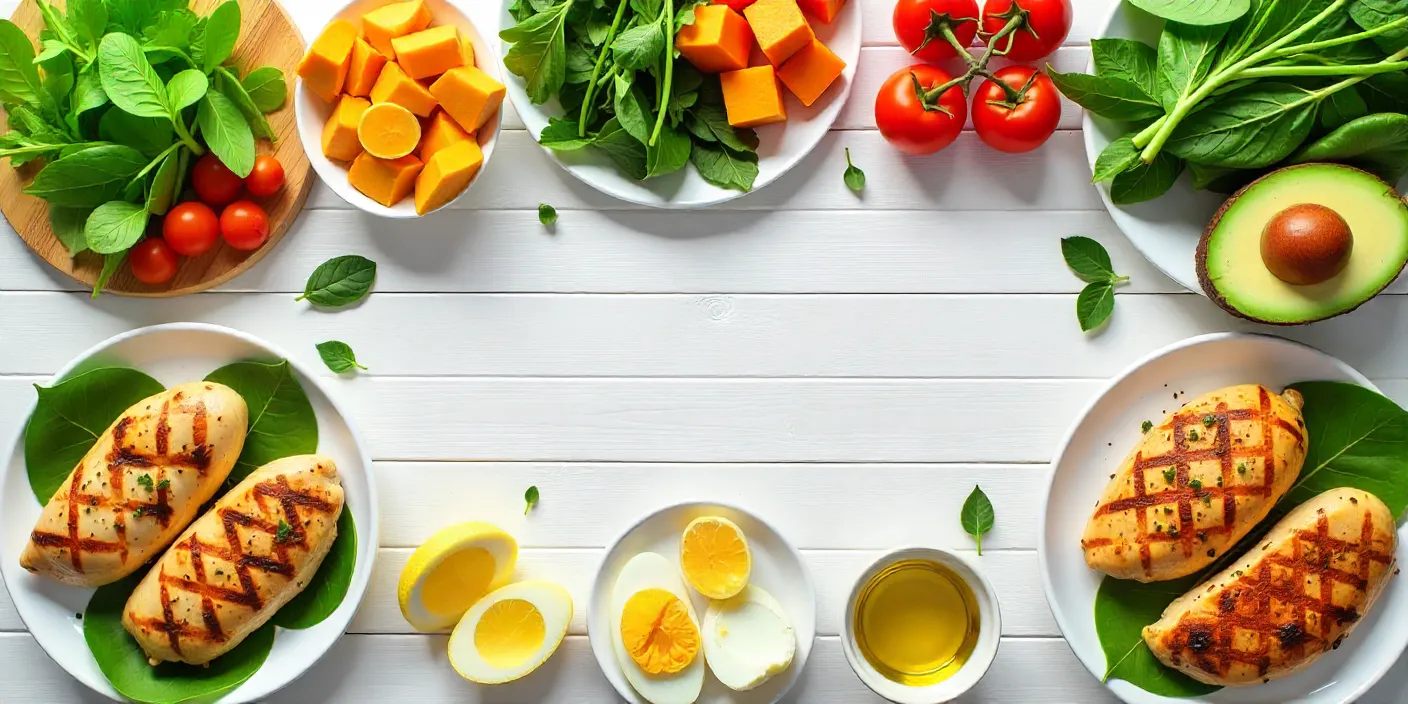
A compliant dinner, in practice, looks like a plate of grilled or seared animal protein, a large pile of roasted or sautéed vegetables, and a fat source that isn't dairy: olive oil, avocado, ghee (yes, ghee is compliant — the milk solids are removed), coconut oil, or nuts. A sheet pan of chicken thighs, sweet potatoes, and broccoli tossed in olive oil and salt is a textbook Whole30 dinner. A stir-fry of ground beef, cauliflower rice, and coconut aminos is another. If you can build one plate around each of those two templates, you can build 30 days of dinners.
The recipes below are drawn from AislePrompt's Whole30 catalog and grouped by cooking method — sheet-pan, skillet, slow-cooker, salad+bowl — because in real life your bandwidth for cooking on a Tuesday isn't the same as your bandwidth on a Sunday, and the whole point of a compliant dinner is that you actually cook it.
The Whole30 Rules Recap: no dairy, grains, legumes, sugar, alcohol
Here's the elimination list at a glance. Pin it to the fridge for week one — it will save you at least three ingredient-label meltdowns.
| Category | Off-limits | Allowed |
|---|---|---|
| Dairy | Milk, cheese, yogurt, butter, cream, ice cream | Ghee, coconut milk, coconut yogurt (no added sugar) |
| Grains | Wheat, rice, corn, oats, quinoa, barley, rye | None — grain-free for 30 days |
| Legumes | Beans, peanuts, soy (soybeans, soy sauce, tofu, edamame), lentils, chickpeas | Green beans and snow peas (fresh pods only) |
| Sweeteners | Sugar (real + artificial), honey, maple syrup, agave, stevia, monk fruit | Whole fruit only |
| Alcohol | Beer, wine, spirits, cooking wine, vanilla extract | Sparkling water, kombucha (unsweetened) |
| Additives | Carrageenan, MSG, sulfites | Read labels; almost all packaged foods fail |
Whole30 is stricter than paleo — and the Harvard T.H. Chan School of Public Health paleo review explains why: paleo permits honey and maple syrup while Whole30 does not. It's also stricter on labels; a "Whole30-approved" almond flour pancake isn't Whole30 for the 30 days, because the program is trying to break the habit, not swap it. And it's not low-carb — sweet potatoes, plantains, and fruit are all compliant and you'll be eating a lot of them.
The trickiest ingredients to catch are the additives hiding in packaged staples: soybean oil in mayonnaise (buy Primal Kitchen or make your own), sugar in bacon (look for Applegate No Sugar), and sulfites in bagged pre-cut vegetables. Read every label, every time, for the first week. By week two you'll have a five-brand shortlist and shopping gets fast again.
5 Sheet-Pan Whole30 Dinners
Sheet-pan dinners are the workhorse of a compliant weeknight — one pan, one oven cycle, one cutting board. Preheat to 425°F for anything with a starchy vegetable (sweet potato, butternut squash) or 400°F for a chicken-and-veg mix.
Chicken thighs + sweet potatoes. The Whole30 Reset Sheet-Pan Chicken & Veggies is the recipe most people cook three times in the first week — bone-in thighs (skin on) go 35 minutes at 425°F with cubed sweet potato, red onion, and Brussels sprouts. Toss the vegetables with olive oil, garlic powder, smoked paprika, salt, and pepper. Nothing else. Time to plate: 45 minutes total, 10 of which are active.
Sausage + peppers. Chicken apple sausage (compliant brands: Applegate, Aidells "Whole30" line, Trader Joe's Sweet Italian if the label is clean) with bell peppers, red onion, and cherry tomatoes at 400°F for 22 minutes. The cherry tomatoes burst and become a pan sauce. Serve over cauliflower rice and this is a 25-minute complete meal.
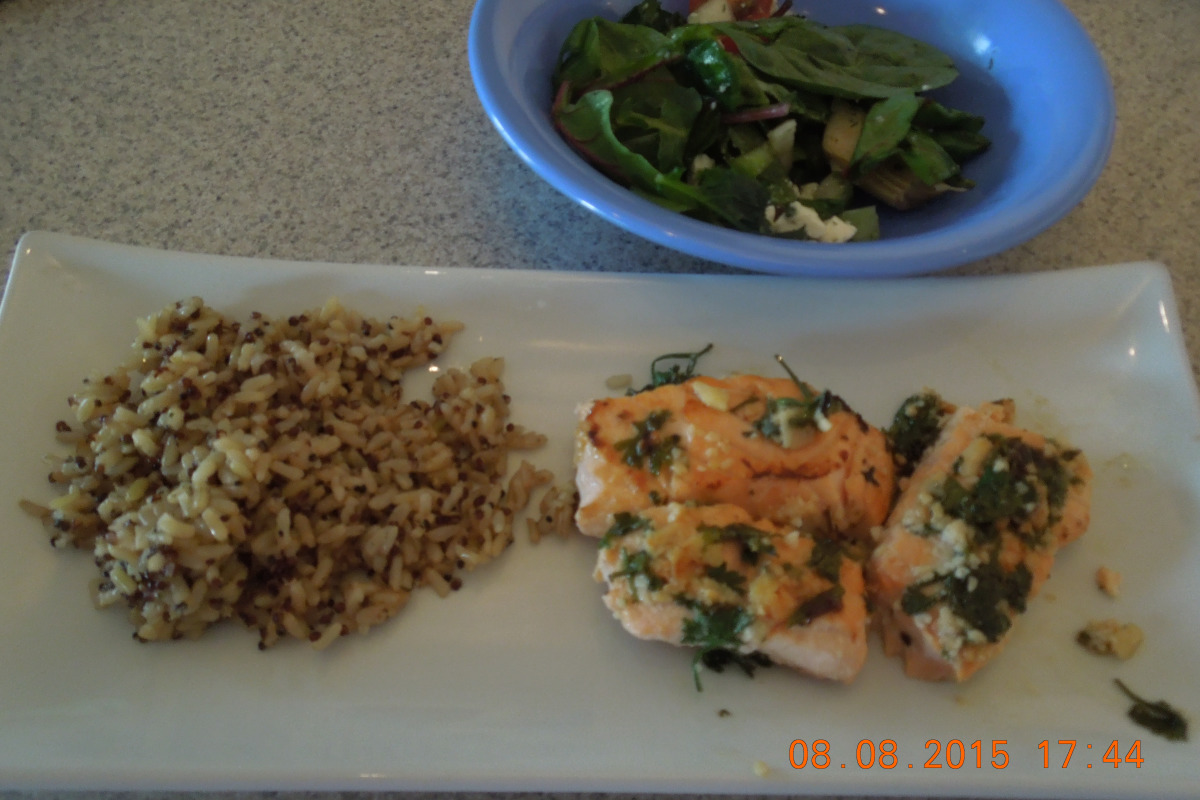
Salmon + asparagus. A hero cut of salmon fillets tossed in olive oil, lemon juice, and dill, plated over asparagus at 400°F for 12 minutes exact. Whole30 doesn't allow miso, soy, or honey glazes, so lemon-dill or garlic-herb is your default — both are excellent when the salmon quality is right. Buy sockeye if you can find it, farmed Atlantic if you can't.
Pork chops + squash. Thick-cut bone-in pork chops seared 4 minutes per side in a cast-iron pan, then transferred to a sheet with roasted butternut cubes and Brussels sprouts to finish 15 minutes at 400°F. The chef's knife matters here — a dull knife on butternut is where most home cooks give up on the dinner and order pad thai.
Meatballs + roasted veg. Ground beef meatballs (beef, egg, almond flour binder, garlic, oregano, salt) baked at 400°F for 18 minutes on a sheet with cauliflower florets and red onion wedges tossed in olive oil. Skip breadcrumb binders — the almond flour is what makes these Whole30-compliant. Batch two pounds on Sunday and you have three lunches.
5 Skillet Whole30 Dinners
Skillet dinners are 15-to-25-minute meals. A 12-inch cast iron or stainless-steel skillet is the only piece of cookware you truly need to succeed on Whole30 — nonstick coatings are fine but the sear you get on stainless is what makes chicken thighs taste like restaurant chicken thighs.
Beef and vegetable stir-fry. The Quick Whole30 Beef and Vegetable Stir-Fry with Coconut Aminos is the recipe that convinces skeptics that Whole30 dinners can taste like takeout. Coconut aminos (the compliant soy sauce swap) plus ginger, garlic, sesame-free toasted seeds, and a splash of orange juice for umami. Total time from cold pan to plate: 18 minutes.
Taco skillet. Ground beef with cumin, chili powder, garlic, and Rao's compliant marinara over cauliflower rice, topped with avocado and a squeeze of lime. Skip the cheese, skip the sour cream — the avocado is your creamy element. If you miss the tortilla, plate it inside butter lettuce leaves.
Breakfast-for-dinner hash. The Whole30 Breakfast Hash with Sausage and Veggies — sweet potato, bell pepper, and chicken sausage crisped in a cast-iron skillet, topped with two runny fried eggs — is a Sunday night classic. Compliant hot sauce (Cholula original is fine; check the label). Twenty minutes flat.
Whole30 stir-fried shrimp with zucchini noodles. Frozen wild shrimp (buy Costco's Kirkland bag), spiralized zucchini, garlic, ginger, coconut aminos, red pepper flakes. The whole thing cooks in one pan in eleven minutes and it's a genuinely elegant Wednesday dinner.
Ground turkey and spaghetti squash. Roast the squash first (halved, 400°F for 40 minutes), then brown ground turkey with garlic and Italian herbs, stir in Rao's marinara (the plain version is compliant), and serve over shredded squash strands. The Whole30-Style Beef & Vegetable Stir-Fry with Ginger is a solid rotation for the beef version of this same template.
5 Slow-Cooker Whole30 Dinners
The slow cooker (or an Instant Pot on Slow Cook mode — see the small appliances category for both) is what carries Whole30 through weeks two and three, when active-cook fatigue is real. Put ingredients in at 8 a.m., come home to dinner at 6 p.m.
Pulled pork. The Cinnamon-Ginger Whole30 Pulled Pork with Pineapple is what most people cook first. A 4-lb pork shoulder gets 8 hours on low with pineapple juice (100% juice, no added sugar), cinnamon, ginger, garlic, and a splash of apple cider vinegar. Shred, serve over roasted sweet potato with a compliant slaw. Or run the Hawaiian-Inspired Whole30 Pulled Pork variant for a pineapple-forward version — same 8-hour cook.
Beef stew. The Classic Whole30 Beef Stew with Root Vegetables — chuck cubes, carrots, parsnips, celery, sweet potato, beef bone broth (Kettle & Fire is the compliant brand), tomato paste, thyme — cooks 8 hours on low. No flour thickener; the sweet potato collapses and thickens naturally.
Chicken chili. Boneless skinless thighs, fire-roasted tomatoes, diced green chilis, onion, garlic, cumin, chipotle powder, chicken bone broth. Six hours on low. Shred the chicken in the pot with two forks and stir in fresh cilantro before serving. Top with avocado. No beans, but you won't miss them.
Pot roast. A 3-lb chuck roast seared first (this step matters — never skip the sear), then slow-cooked 8 hours on low with carrots, red onion, garlic, thyme, and beef broth. Serve with cauliflower mash. The Whole30 gravy trick is to pull the roast, whisk 2 tbsp arrowroot into the drippings, and simmer 2 minutes on the stovetop.
Buffalo chicken lettuce wraps. Two lbs boneless chicken breast, one bottle of Tessemae's Buffalo sauce (compliant), 6 hours on low. Shred, pile into butter lettuce cups, top with diced celery, red onion, and compliant ranch (Primal Kitchen or homemade). Not a "dinner-dinner," but the leftover-lunch play of the entire program.
5 Salad + Bowl Whole30 Dinners
Bowls are how you eat Whole30 on the road, on the couch, and out of the fridge at 8 p.m. when you didn't cook. Every one of these travels.
Cobb salad. A grilled or rotisserie chicken breast (compliant brand: Costco's Kirkland rotisserie — the plain one), sliced hard-boiled egg, diced avocado, cherry tomato, cucumber, and crispy bacon (Applegate No Sugar) over romaine, dressed with a homemade balsamic vinaigrette (olive oil, balsamic, Dijon, garlic, salt).
Buddha bowls. The Quick Whole30 Reset Bowl is the base template — cauliflower rice, roasted sweet potato, sautéed kale, grilled chicken, avocado, tahini dressing. From there, riff: sub roasted delicata squash for sweet potato, sub salmon for chicken, sub the Whole30 Reset Sweet Potato & Sausage Bowl template for a heartier fall version.
Taco salad bowl. Ground beef browned with taco spices, layered over romaine with pico de gallo, guacamole, sliced radish, and a lime-cilantro vinaigrette. Skip the cheese and sour cream; the guacamole covers both.
Rainbow vegetable bowl. The Whole30 Reset Rainbow Vegetable Bowl is 90% prepped-vegetable — shredded red cabbage, grated carrot, roasted beet, cucumber, sprouts, and a soft-boiled egg over greens with a lemon-tahini drizzle. This is the Whole30 bowl you eat when you're deeply sick of meat.
Sesame chicken bowl. Grilled chicken thighs, cauliflower rice, sesame-free coconut aminos glaze, shredded carrot, sliced cucumber, scallions, and toasted sesame-free seeds. (Sesame is compliant; the specific "sesame-oil, soy-glazed" restaurant version is not.)
2 Whole30-Compliant Sides You'll Reuse All Month
Two side recipes carry a Whole30 for the full 30 days. Cook these on Sunday, portion into glass storage containers (see the storage category for compliant BPA-free options), reheat all week.
Roasted sweet potato cubes. Two large sweet potatoes, cubed 1-inch, tossed in olive oil, salt, garlic powder, smoked paprika. 425°F for 25 minutes, flipping once. Yields 4-5 side portions. Reheats in a hot cast-iron skillet in 4 minutes — it will crisp again if you don't microwave it.
Cauliflower rice. Two heads of cauliflower, riced (buy pre-riced Kirkland frozen if this is your first Whole30 — no shame). Sauté in olive oil with garlic and salt for 6 minutes, finish with lemon zest and parsley. Yields 6 servings. Freezes.
Shopping List + Meal Prep Notes
Here's a one-week shopping list built from the 22 recipes above. It looks like a lot, but week two overlaps 60% with week one — you're only doing a full shop once.
| Category | Items | Approx. cost |
|---|---|---|
| Proteins | 2 lbs chicken thighs, 1 lb ground beef, 1 lb salmon, 1 pork shoulder (4 lb), 1 lb bacon, 6 chicken breasts, 1 lb chicken sausage | $85 |
| Vegetables | 3 sweet potatoes, 2 cauliflower heads, 3 bell peppers, 2 onions, 3 heads romaine, spinach, kale, Brussels sprouts, asparagus, cherry tomatoes | $55 |
| Pantry (compliant) | Coconut aminos, Primal Kitchen mayo, Tessemae's Buffalo, Rao's marinara, Kettle & Fire bone broth, olive oil, coconut oil, ghee | $70 (one-time) |
| Fresh + other | 12 eggs, 4 avocados, 2 lemons, 1 lime, garlic, ginger, fresh herbs, pineapple juice (100%), coconut milk (full-fat) | $30 |
Total: roughly $240 for week one, dropping to $130-$150/week from week two once your pantry staples are stocked. That's less than most people spend on restaurant meals during a non-Whole30 week — cost is often cited as a barrier but rarely holds up when you actually run the numbers.
Meal-prep flow, Sunday afternoon (about 2 hours active):
1. Preheat oven to 425°F. Cube sweet potatoes; toss with olive oil, salt, paprika. Onto sheet pan 1.
2. Sear pork shoulder in cast iron. Move to slow cooker with pulled-pork aromatics; set for 8 hours on low.
3. Rice cauliflower (or dump the pre-riced bag). Sauté; set aside.
4. Boil 6 eggs for the week's salads. Ice bath.
5. While the sheet-pan sweet potatoes finish, prep taco spice mix and Cobb vinaigrette in jars.
6. Portion everything into glass containers. You're set for lunches through Thursday, dinners for at least Monday-Wednesday.
Frequently asked questions
What can I actually eat on Whole30?
How long does Whole30 take and what happens after?
Is Whole30 the same as paleo or keto?
Can I do Whole30 as a vegetarian?
Will I feel terrible in the first week of Whole30?
Sources
Whole30 recipes from the catalog
Save any of these to My Recipes — no account needed — and send the ingredients to Instacart in one tap.