25 Indian Weeknight Curries: 30-Minute Tikka Masala, Dal & Biryani Bowls
A weeknight-Indian playbook: 25 dinners you can put on the table in under 40 minutes with a 7-spice pantry and a single pan.
Indian food does not have to be a weekend project. If you keep seven pantry spices, one tin of ghee, and one 3-quart skillet ready, you can put a proper curry — one that tastes like the neighborhood restaurant, not a jar of tikka sauce — on the table in under 30 minutes on a Tuesday. This roundup pulls 25 recipes from the AislePrompt catalog that hit that bar: chicken, lamb, and vegetarian dinners you can cook after work with a glass of wine in your hand.
Get a free week of easy dinners
Seven weeknight dinners with the shopping list already totalled, sent Sunday. No account needed, unsubscribe in one click.
No spam, unsubscribe in one click. Recipes, shopping lists and Instacart carts all work without an account either way.
Your Indian starter spice shelf (7 spices that unlock 25 dinners)
Before you cook a single curry, stock these seven. They cost about $25 total and they carry every recipe in this roundup:
| Spice | What it does | Where you use it |
|---|---|---|
| Cumin seeds | Deep, earthy base note; blooms in hot ghee | Tadka for dal, base for korma, biryani rice |
| Ground turmeric | Color, subtle bitterness, gut anti-inflammatory | Every dal, most curries, marinades |
| Ground coriander | Warm, citrus-bright, thickens gravies | Butter chicken, chana masala, korma |
| Garam masala | Finishing warmth (cinnamon, cardamom, clove) | Added last 30 seconds — not at the start |
| Red chili powder | Heat + red color | 1 tsp per 4 servings = mild-medium |
| Kasuri methi (dried fenugreek) | The "restaurant" note in butter chicken | Crushed between palms, added at the end |
| Whole cardamom pods | Floral, cooling — the biryani spice | Rice pot, korma, chai |
Buy them from a busy Indian grocery whenever possible; spice turnover matters more than brand. Store them in dark glass jars, and toss anything older than a year — old cumin tastes like sawdust and will drag every recipe down. If you want a single "cheat" ingredient that makes almost every curry taste more authentic, buy a jar of ginger-garlic paste. Two teaspoons of it plus a diced onion is the base of 80% of what we cook.
10 quick chicken and lamb curries under 40 minutes
Chicken is the shortcut protein of Indian weeknight cooking. Boneless thighs cook in 12 minutes in a skillet, they don't dry out like breasts do, and they hold sauce beautifully. Every recipe below uses the same base — onion, ginger-garlic paste, tomato, spices — and diverges only in the finish. Once you learn the base you can freestyle.
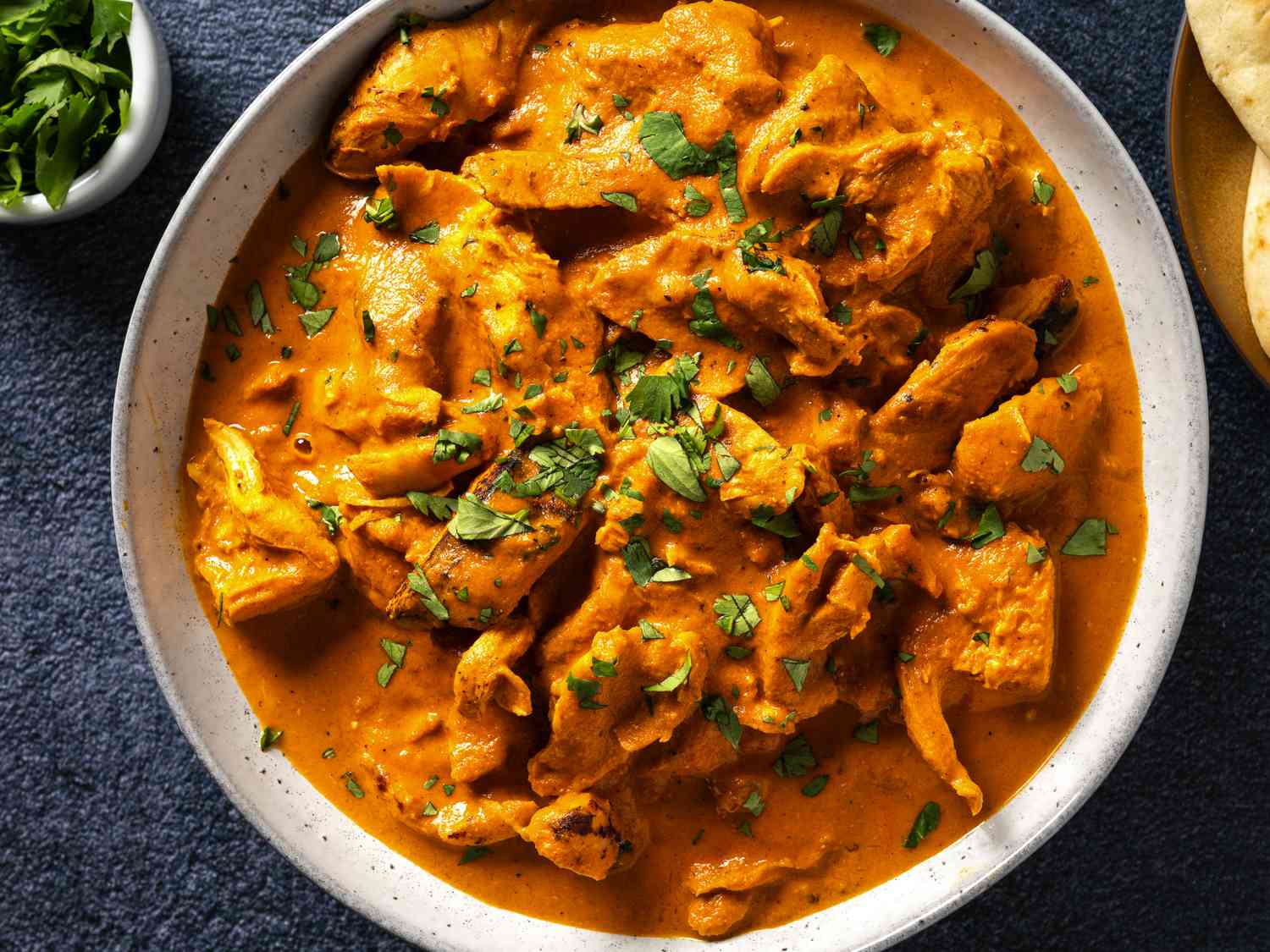
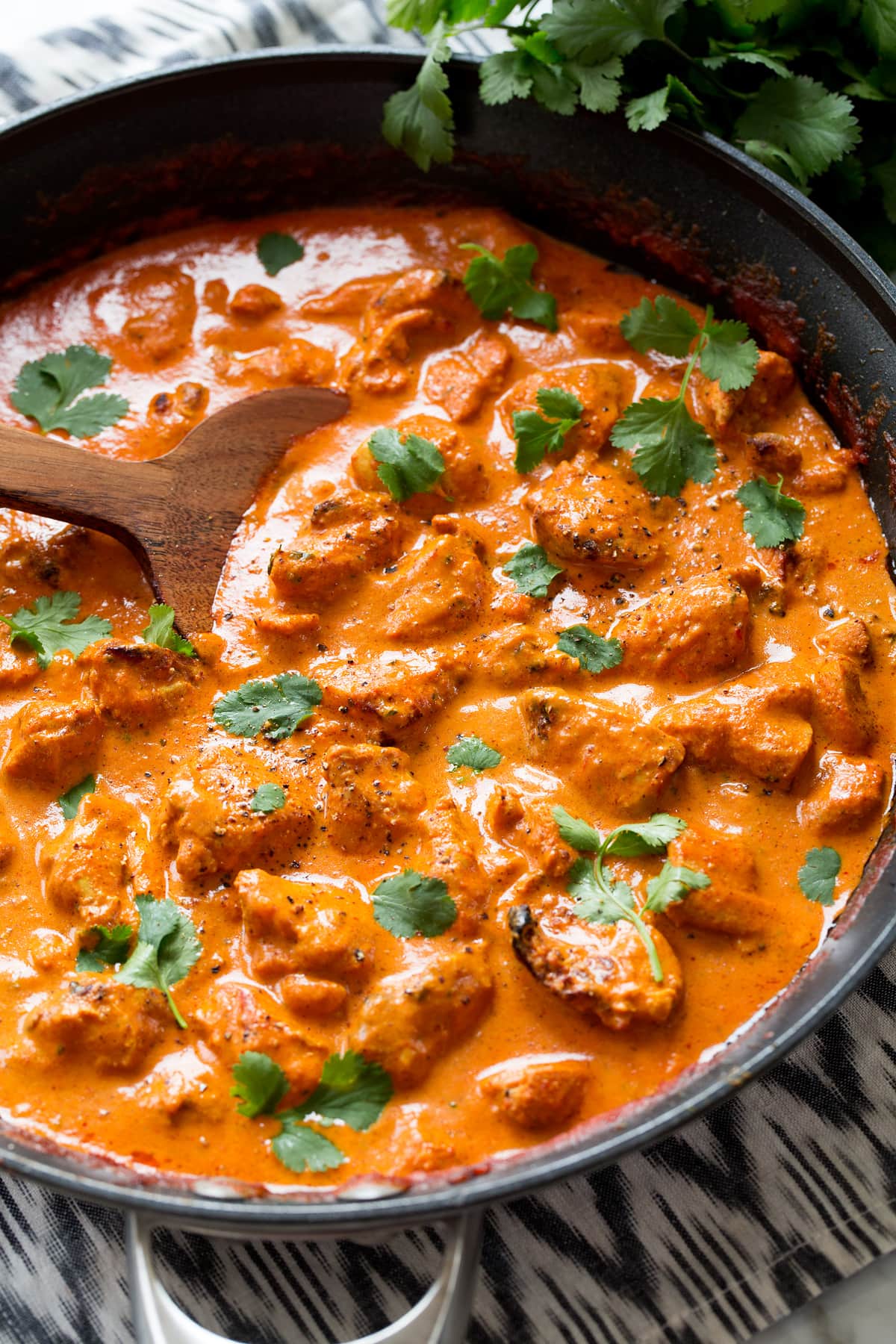
The undisputed opener is Chicken Tikka Masala. Skip the traditional 4-hour marinade — a 15-minute yogurt-and-spice rub is 90% of the flavor. Sear the chicken hard, pull it out, build a tomato-butter sauce in the same pan, return the chicken, and finish with cream. Total time: 32 minutes. For the richer restaurant version, The Best Ever Indian Butter Chicken trades the yogurt marinade for a longer tomato-onion simmer and adds honey plus kasuri methi at the end — that's the trick that gives commercial butter chicken its haunting flavor.
If you want green over red, Simple Nepali Chicken Saag with Garlic and Spinach is your Thursday-night curry. Blend a bag of baby spinach with a serrano chili, cook the chicken in ginger-garlic and cumin, then fold the green puree in and finish with a splash of cream. It reads virtuous on paper (a full pound of spinach per serving) but eats like comfort food.
For a rice-cooker night, Saffron-Infused Chicken Biryani with Cucumber Raita delivers layered rice-and-chicken with the same 30-minute discipline — parboil basmati while the chicken sears, layer, cover, and let 12 minutes of steam do the rest.
Chicken thigh curries all follow the same tempo: sear, build gravy, return, finish. If yours are taking 90 minutes, you're doing something wrong — most likely simmering onions to a jam-like consistency when 8 minutes to translucent-and-gold is plenty. Use a Le Creuset enameled Dutch oven if you have one; the heavy base browns the onion evenly and lets you go from stovetop to oven for the final 5 minutes covered.
Lamb is the "if I have 45 minutes" upgrade. It benefits from pressure cooking more than any other protein in Indian home cooking — 20 minutes at high pressure gets you the same tenderness as a 2-hour braise. If you skip the pressure cooker, choose lamb shoulder pieces cut small (¾ inch cubes) and give them 40 minutes total, adding a splash of water whenever the gravy tightens.
6 vegetarian dal and chickpea dinners (weeknight protein anchors)
Dals are the true weeknight-Indian workhorse — 20 grams of protein per bowl, on the table in 25 minutes, cheap enough to feed four for under $4. If you cook one recipe from this article tonight, cook a dal.
Start with Classic Indian Dal Tadka with Slow-Simmered Lentils. Split red lentils (masoor dal) don't need soaking and cook in 15 minutes. The whole "recipe" is: simmer lentils with turmeric and salt, make a tadka of ghee, cumin, garlic, and chili in a small pan, pour it over. Serve with rice or hot naan. Done.
Once you own dal, level up to chana. Authentic Punjabi Chana Masala with Fresh Ginger uses canned chickpeas (never dried on a weeknight), a tomato-onion base, and a heavy hand of amchur (dried mango powder) or lemon juice for that sharp punch. This is the recipe that converts curry skeptics — bright, tangy, no cream in sight. If you want the kidney-bean cousin, Rajma in Spiced Tomato Gravy uses the same base and swaps chickpeas for red kidney beans, served over cumin rice.
For a paneer night, Spiced Palak Paneer with Roasted Spinach and Indian Cheese is the classic. Store-bought paneer is fine — pan-sear it in a splash of oil before folding in for the crust. The green sauce comes from wilting spinach with a green chili, cooling, and pureeing.
Vegetables get their own night with Spiced Aloo Gobi (Indian Cauliflower Curry) — waxy potatoes and cauliflower florets cooked dry-style in mustard oil with turmeric, cumin, and green chili. Roast the vegetables in a hot oven while the tempering fries in a small pan; combine at the end. And when you want something creamy, Indian Vegetable Korma with Cashews blends soaked cashews with coconut milk for a paneer-free, dairy-free richness.
The batch move: cook the tadka base and the tomato-onion masala base on a Sunday, refrigerate two pints of each, and you've unlocked five weeknight dals and curries with nothing more than opening a can of beans and lentils.
5 rice-based bowls (biryani, jeera rice, khichdi)
The rice half of a curry dinner is where most Western cooks lose 15 minutes to soggy or crunchy basmati. Use a 10-cup Cosori rice cooker or a 6-quart Instant Pot Duo with rice mode — either delivers perfect long-grain rice in 12 minutes flat while you work on the curry. Rinse the rice three times until the water runs clear; that's the one non-negotiable.
For a jeera pilaf, add 1 teaspoon of cumin seeds and 4 crushed cardamom pods to the ghee in your rice pot before adding water. For a biryani, layer the parboiled rice over a cooked meat gravy, sprinkle saffron milk and fried onions on top, cover, and let the steam do the rest — real biryani is a rice-first dish, not a rice-with-curry.
Khichdi — the humblest and most healing Indian dinner — is one part yellow moong dal to one part rice, pressure-cooked with turmeric and salt for 8 minutes, finished with a tadka of ghee, cumin, and hing. It's what every Indian grandmother makes when someone is sick, and it's a perfectly complete Tuesday dinner for adults who spent all day sprinting between meetings.
Two more rice moves worth memorizing: coconut rice (basmati simmered in coconut milk instead of water) pairs beautifully with any south-Indian curry or Thai-adjacent dinner; and lemon rice (cooked rice tempered with mustard seeds, curry leaves, peanuts, and turmeric) is the 5-minute leftover-rice rescue that turns yesterday's dinner into today's lunch. Both cost about 90 seconds of extra effort and lift a plain weeknight bowl into "restaurant order" territory.
4 skillet breads and 5-minute chutneys
Naan is a weekend project. On weeknights, buy garlic naan from Trader Joe's, brush it with melted ghee, and warm it in a 400°F oven for 4 minutes — 90% of the flavor of a made-from-scratch bread for none of the work. If you want fresh, roti (whole wheat flatbread) is 8 minutes end to end: mix atta flour, water, and salt into a ball; roll thin; slap onto a smoking-hot carbon-steel pan or dry cast-iron skillet; flip once when bubbles form; brush with ghee.
Chutneys are the true weeknight cheat. Blend a cup of cilantro with a green chili, a squeeze of lemon, salt, and a spoonful of yogurt — 90 seconds, restaurant-caliber green chutney. Tamarind chutney is dates soaked in hot water, blended with tamarind paste, cumin, and salt. Onion-tomato chachumbar is diced onion and tomato with lemon, salt, and cilantro. Serve one, two, or all three; even a simple dal feels festive with three chutneys on the plate.
Batch tip: cook one masala base, three dinners
Here is the single time-saver that changes weeknight Indian cooking forever. On Sunday, cook a single "wet masala" base — 3 large onions, 1 cup tomato puree, 4 tbsp ginger-garlic paste, 2 tbsp cumin, 2 tsp turmeric, 2 tsp coriander, salt to taste — in a large skillet over medium heat until it turns dark amber-red and the oil separates. That's your base for a week.
On Monday, fold half a cup of the base into simmered lentils for dal. On Tuesday, add a cup to canned chickpeas plus a splash of water for chana masala. On Wednesday, sear chicken thighs, add a cup and half a cup of cream, and you have restaurant tikka masala. All three dinners hit the table in under 20 minutes because the base — which is the actual work — is already done.
Store the base in two mason jars in the fridge (good for 5 days) or freeze in an ice cube tray, then bag the cubes for up to 3 months. This is how Indian home cooks feed their families in 20 minutes on a Tuesday without ever "meal-prepping" in the American sense.
A single Sunday session — 45 minutes, two skillets running in parallel — nets you the wet masala base plus a batch of tempered dal, ready to finish into three or four midweek dinners. If you also parboil rice on the same night and refrigerate it in a wide-mouth container, a Wednesday-night curry-and-rice dinner is 12 minutes of active work: reheat rice with a splash of water, warm the masala, fold in cooked chicken or canned chickpeas, finish with cream or lemon. That's the whole trick to feeding a family Indian food on a weeknight.
Real-world numbers: how long these really take
If you're staring down the barrel of a 6:30 PM commute-and-cook window, here's what actually shows up on the table:
| Recipe | Prep | Cook | Total | Serves |
|---|---|---|---|---|
| Dal tadka | 5 min | 20 min | 25 min | 4 |
| Chana masala (canned base) | 8 min | 15 min | 23 min | 4 |
| Chicken tikka masala | 12 min | 20 min | 32 min | 4 |
| Butter chicken | 10 min | 25 min | 35 min | 4 |
| Aloo gobi (oven) | 10 min | 25 min | 35 min | 4 |
| Palak paneer | 8 min | 18 min | 26 min | 4 |
| Rajma (canned) | 6 min | 22 min | 28 min | 4 |
| Chicken biryani (rice cooker) | 15 min | 25 min | 40 min | 5 |
The tempo assumes rinsed rice going into the cooker before you touch the curry, and having your onions and ginger-garlic paste ready. If everything happens in series it will feel slower.
Common pitfalls (and how to skip them)
- Underspicing. American home cooks reflexively cut chili and salt. Indian food is built for both — 1 tsp red chili powder per 4 servings is mild. If it tastes flat, it's almost always underseasoned, not "wrong spice."
- Overcooking the tomato. Tomato base needs about 6 minutes to break down and darken. Longer than 10 and it turns pasty; shorter than 4 and it tastes raw and sour.
- Adding garam masala too early. Garam masala is a finishing spice. Added at the start, its aromatics burn off. Sprinkle it in during the last 30 seconds off the heat.
- Cream too hot. Bring the curry off high heat before you add heavy cream or coconut milk — a rolling boil makes cream split into a broken, curdled mess.
- Not blooming cumin seeds. Whole cumin needs 15 seconds in hot ghee to release its oils. Add it after the onion is already cooking and you get raw-cumin crunch instead of that deep restaurant note.
When NOT to cook Indian on a weeknight
Some Indian dishes really are weekend projects. Skip these on a Tuesday: goat curry with bone-in shoulder (needs 90 min minimum), lamb rogan josh done properly (long braise), homemade naan or bhatura (yeast-and-rest bread), any dried-bean recipe without a pressure cooker (chickpeas from scratch = 4 hours), or anything called "dum" (steam-cooked, sealed for an hour). Save those for Sunday, when the payoff justifies the time.
FAQ
Do I really need to grind my own spices for Indian cooking?
No. Buy whole cumin, coriander, and cardamom for the strongest flavor, but pre-ground turmeric, garam masala, and chili powder are perfectly fine for weeknight cooking. The single biggest quality lift is buying spices from a busy Indian grocery (turnover matters more than brand) and replacing them every 8-10 months. Freshly toasted-and-ground cumin is a nice weekend upgrade, not a weeknight requirement.
What's the fastest weeknight Indian dinner I can make from scratch?
Dal tadka, ready in about 25 minutes if you use split red lentils (masoor dal), which cook in 15 minutes without soaking. Simmer with turmeric and salt, then top with a tadka of ghee, cumin seeds, garlic, and chili. Serve with jarred naan or basmati rice. It's high-protein, one-pot, and pantry-stable — a real answer to "what should I cook tonight."
Can I make these recipes without heavy cream?
Yes. Coconut milk (full-fat) is the closest 1:1 swap for butter chicken and korma; cashew cream (soaked cashews blended with water) works for tikka masala and gives a slightly sweeter, more traditional flavor. For dal and chana masala, cream isn't essential at all — a spoon of ghee or coconut oil at the end delivers the richness. Every recipe in the roundup notes the dairy-free substitute.
Is a pressure cooker or Instant Pot required?
Not required, but it's the single biggest weeknight-Indian upgrade. It cuts chicken curries from 45 minutes to 20 and lets you cook dried chickpeas and kidney beans on a Tuesday. If you don't have one, our roundup includes 10 recipes that use a normal skillet or Dutch oven and stay under 40 minutes. The Instant Pot recipes are called out with a badge so you can filter.
How spicy are these recipes and can I adjust the heat?
Most recipes default to mild-medium (about 1 tsp red chili powder per 4 servings). Green chilies and red chili powder are the two levers — cut them by 50% for kid-friendly, or add 2 slit green chilies during tempering for extra heat. Yogurt, coconut milk, and rice all cool a dish; adding lemon at the end brightens it without adding heat. The AI chat at /chat will rebuild any recipe for a specific heat tolerance.
Related roundups
Once you're comfortable with the weeknight Indian playbook, level up with our Meal Plan builder — set "Indian, 3 nights this week" and it drops these recipes right into your Monday-Friday slots, generates the shopping list, and groups it by store aisle. For adjacent-cuisine ideas, browse the AislePrompt library or ask AislePrompt AI chat to build a week that mixes Indian, Thai, and Mediterranean weeknight dinners.
Cook one of these tonight. Come back tomorrow with a bookmark to the two you'll cook next week — that's the whole point of a 25-recipe roundup that respects a 30-minute clock.
Sources: Serious Eats — Indian recipes, Bon Appétit — Best Indian recipes, NYT Cooking — Indian recipes.
Frequently asked questions
Do I really need to grind my own spices for Indian cooking?
What's the fastest weeknight Indian dinner I can make from scratch?
Can I make these recipes without heavy cream?
Is a pressure cooker or Instant Pot required?
How spicy are these recipes and can I adjust the heat?
Sources
Recipes to start your week with
Save any of these to My Recipes — no account needed — and send the ingredients to Instacart in one tap.


Cook Indian at home this week.
Ask our AI for a week of Indian dinners — it writes the recipes, builds the shopping list, and sends the cart to Instacart. No account needed.
Plan my Indian week →