Back-to-School Lunchbox Meal Plan: 4 Weeks of Easy Lunches Kids Will Eat
Four compartments, four weeks of menus, the Sunday-prep routine that survives the school year — plus nut-free swaps and a per-day cost breakdown.
Affiliate disclosure: AislePrompt may earn a commission on qualifying purchases made through Amazon and Instacart links in this article, at no additional cost to you. See our affiliate policy →
Back-to-school lunch ideas come down to a system: a make-ahead Sunday session, a four-compartment bento layout, and a 4-week rotation that keeps kids interested without forcing you to reinvent lunch every morning. This guide gives you the exact rotation we use — 20 specific recipes, 4 weeks of menus, allergen-safe swaps, and the gear that survives 180 school days. As of 2026, the homemade-vs-purchased savings work out to roughly $150–250 per kid per school year, and the time cost is one focused 20-minute Sunday prep.
What kids actually eat at school (and what comes home in the trash)
Pack 100 lunches for elementary-age kids and a pattern emerges fast: the items that come home untouched are almost always the same. Whole apples come back with one bite gone. Sandwiches with visible vegetables get the vegetables picked out. Yogurt tubes survive only if frozen. Anything that requires two hands to open returns sealed. Anything that needs a fork at all (no spoon backup) gets eaten with fingers if it's eaten at all.
What actually gets eaten: pre-cut fruit (apple slices with a squeeze of lemon to prevent browning hold for 4 hours), small portions of multiple items rather than one big item, anything dippable (hummus, ranch, honey mustard, yogurt-based fruit dips), warm food in a properly preheated thermos, crunchy snacks (kids associate crunch with "fun food"), and protein in shapes that feel handheld — pinwheels, roll-ups, mini sandwiches, meatballs on a pick.
The bento approach codifies this. Four compartments, four categories, repeated weekly with the specific items rotated. The categories: protein, produce, complex carb, treat. Once you have that scaffolding, the entire 4-week plan below writes itself.
The bento-box approach: 4 compartments, 4 categories
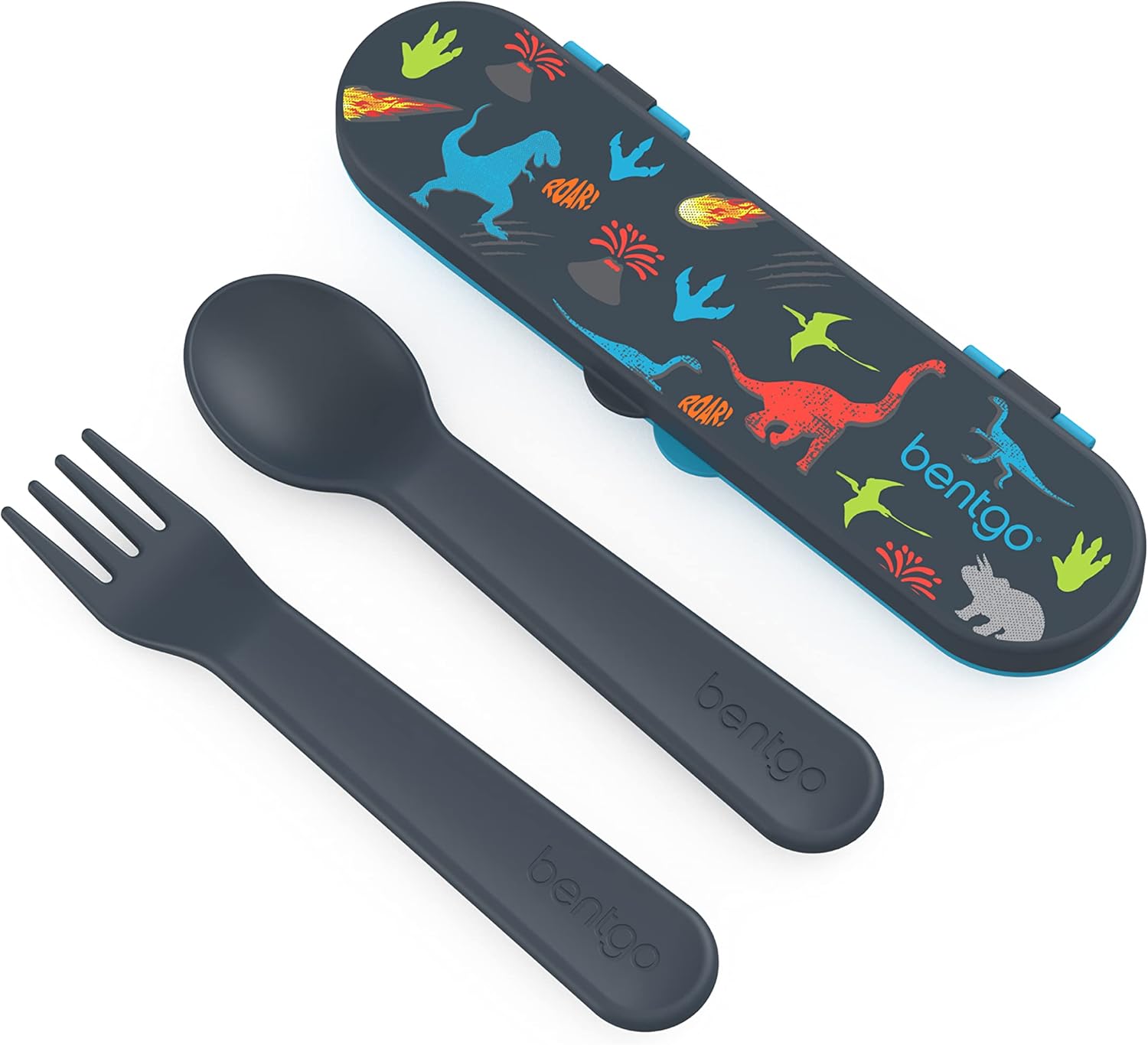
The compartmented lunch container — a Bentgo-style kids set or any of the dozen knockoffs — is the single best investment in school-lunch sanity. Four sealed compartments physically separate wet from dry (apple slices won't bleed into crackers), let the kid see all their options at once (less overwhelming than unwrapping one giant sandwich), and force you to compose a balanced meal at pack time rather than at 7am.
| Compartment | Category | Examples |
|---|---|---|
| 1 (largest) | Protein | Turkey roll-ups, chicken nuggets, hummus & veg, meatballs, hard-boiled eggs |
| 2 (medium) | Complex carb | Whole-grain crackers, pasta salad, rice bowl, mini bagel, brown-rice triangles |
| 3 (medium) | Produce | Apple slices, grapes, cucumber rounds, cherry tomatoes, bell pepper strips |
| 4 (smallest) | Treat / snack | Energy bites, granola square, two squares dark chocolate, dried fruit |
The 4-week rotation below assigns one structural theme to each week — sandwich-and-wrap, thermos, snack-box, leftover-makeover — and fills the compartments inside that theme. The same theme can run multiple weeks in a row if it's working; the rotation exists to fight monotony, not to force variety for its own sake.
Week 1: 5 lunches (sandwich-and-wrap variety)
This is the easiest week to start with — every lunch is hand-held, every protein is shelf-stable in an insulated bag with one cold pack, and prep is mostly assembly.
Monday — Turkey pinwheels. Spread a whole-wheat tortilla with cream cheese (use a thin even layer; too thick and the pinwheel falls apart), layer thinly-sliced turkey and shredded lettuce, roll tight, refrigerate 30 minutes, slice into 6 rounds. Sides: cucumber rounds, grapes, two cheese cubes. Full recipe: Classic Turkey and Cheese Pinwheel Sandwiches.
Tuesday — Hummus & veg wrap. Spread a wrap with 3 tablespoons hummus, fill with shredded carrots, baby spinach, cucumber matchsticks, bell pepper strips. Roll tight, slice in half on the diagonal. The hummus binds the veggies and the wrap holds for ~5 hours unrefrigerated as long as you skip the avocado. See Kid-Friendly Rainbow Veggie Wraps with Hummus for the exact rainbow combo that's gone over best in our trials.
Wednesday — Ham and cheese pinwheels. Same technique as Monday, but with deli ham and a thin layer of yellow mustard. For nut-free schools this is also a safe peanut-butter-and-jelly alternative once your kid wants something other than turkey. Pair with apple slices and a small handful of pretzels.
Thursday — Veggie pinwheels. The vegetarian default — herbed cream cheese, thin-sliced cucumber, shredded carrot, baby greens, optional sun-dried tomato for older palates. Recipe: Colorful Veggie and Cheese Pinwheels.
Friday — Mini bagel sandwiches. Mini bagels split, filled with cream cheese and either cucumber slices (for a "tea sandwich" feel) or turkey and cheese. Stick a toothpick through to keep them closed in transit. End the week with the kid's favorite snack as the Friday treat — this is the day to bend the rules slightly.
Week 2: 5 lunches (thermos hot meals)
A 12-oz wide-mouth food jar is the single piece of gear that unlocks the back half of the lunch plan. Preheat: fill with boiling water for 5 minutes, dump, then fill with food at a rolling boil or just out of the microwave. A properly preheated jar holds 140°F+ for 5 hours, which is well above the food-safety floor.
Monday — Mild turkey meatball soup. A weekend pot of Mild Turkey Meatball and Spinach Soup for Kids covers Monday and Wednesday for two kids. Reheat to a hard boil before filling the thermos. Side: a soft roll on the side and a fruit cup.
Tuesday — Mac & cheese. Box mac and cheese cooked with whole milk and an extra handful of shredded cheddar stirred in for stretch. Pre-warm the jar and pack with steamed peas mixed in (the cheese hides them).
Wednesday — Soup repeat. Same soup as Monday, paired with mini bagel + cream cheese this time so the lunch reads as a different meal.
Thursday — Chicken nuggets and dipping sauce. Bake a tray of homemade nuggets Sunday, freeze in single portions, microwave Thursday morning and pack hot. The dipping sauce in a small leak-proof container makes the lunch. Recipe: Baked Kid-Friendly Chicken Nuggets with Honey Mustard Dip. Sides: apple slices and crackers.
Friday — Rice and bean bowl. Brown rice base, black or pinto beans, shredded cheese, salsa on the side (the kid stirs it in at lunch, which is treated as fun and not work). Top with corn for sweetness. Holds well in a preheated jar.
Week 3: 5 lunches (snack-box style)
The "snack lunch" — finger foods only, no main, no thermos. Once a week is a good cadence: it reads as a treat, costs less time, and uses up the odds and ends from the produce drawer. Composition rule: one protein + one carb + one fruit + one veg + one treat, all small. Around 350–450 calories total for elementary-age, which a real-world kid will actually finish.
Monday — Build-your-own Lunchables. Whole-grain crackers + sliced turkey + cheese cubes + sliced apples + two squares dark chocolate. The kid assembles it; assembly is half the appeal.
Tuesday — Snack board lunch. Crackers, hummus, cucumber rounds, baby carrots, grapes, salami coins, two energy bites. Pack the hummus in the deepest compartment with a folded sandwich tile of crackers leaning over it to act as a splash guard.
Wednesday — Cheese board lunch. Cubed cheese (cheddar + mozzarella, or 1/4-inch slices of brie if you have an adventurous eater), whole-grain crackers, grape clusters, cucumber rounds, Apple "Ants on a Log" with Peanut Butter (or sunflower butter for nut-free).
Thursday — Bento with energy bites. Half a turkey wrap, cubed cheese, baby carrots, sliced strawberries, three No-Bake Oat and Almond Butter Energy Bites. These bites also handle the protein corner if you're going meat-free.
Friday — Fruit-and-cheese big-snack. Two big chunks of cheese, apple slices, grapes, a square of dark chocolate, a mini muffin baked Sunday. Skip the cracker and lean into the simplicity — this often comes home emptier than the more elaborate days.
Week 4: 5 lunches (leftover-makeover)
Week 4 leans on dinner leftovers reformulated as lunch. Done right, the marginal cost of school lunches drops to almost nothing because you're cooking the food anyway. Done wrong, the kid recognizes Tuesday's stir-fry in the lunchbox and refuses to eat it. The trick is transformation, not packaging — change the shape and the carrier so the food reads as new.
Monday — Pasta salad from Sunday's roast chicken. Toss leftover diced chicken with cooked pasta, cherry tomato halves, cucumber, olive oil and lemon. Rainbow Pasta Salad with Zesty Lemon Vinaigrette is the base; adapt by swapping in whatever leftover protein you have.
Tuesday — Frittata muffins from leftover veg. Sunday-night frittata muffins: 6 eggs whisked with milk, salt, pepper, poured over chopped cooked vegetables and shredded cheese, baked in a muffin tin 18 minutes at 375°F. They hold 5 days in the fridge. Recipe: Cheesy Veggie Frittata Muffins. Pair with crackers and fruit.
Wednesday — Quesadilla from leftover taco filling. Spread cooked beans, shredded cheese, and any leftover taco meat on a tortilla, fold, brown in a dry skillet, cut into wedges, cool, pack. The reheated cheese reseals the wedges so they don't fall apart. Reference: Kid-Friendly Rainbow Veggie Quesadillas.
Thursday — Rice bowl from leftover stir-fry. Same brown rice base as Week 2 Friday, topped with leftover stir-fried vegetables and protein, with soy sauce or teriyaki on the side.
Friday — End-of-week board. Whatever is left in the fridge that's still good — chunk of cheese, two pinwheels you held back, cherry tomatoes, the last apple, two energy bites, one square chocolate. This is the most-eaten lunch of the month for our test kids, every time.
20 lunch ideas curated from the catalog
Beyond the rotation, here are 20 specific, kid-tested recipes from our catalog organized by compartment. Mix and match across the weeks — the point of the rotation is structure, not rigidity.
| # | Compartment | Recipe |
|---|---|---|
| 1 | Protein | Classic Turkey and Cheese Pinwheel Sandwiches |
| 2 | Protein | Kid-Friendly Rainbow Veggie Wraps with Hummus |
| 3 | Protein | Baked Kid-Friendly Chicken Nuggets with Honey Mustard Dip |
| 4 | Protein | Mild Turkey Meatball and Spinach Soup for Kids |
| 5 | Protein | Cheesy Veggie Frittata Muffins |
| 6 | Protein | Colorful Veggie and Cheese Pinwheels |
| 7 | Carb | Rainbow Pasta Salad with Zesty Lemon Vinaigrette |
| 8 | Carb | Kid-Friendly Rainbow Veggie Quesadillas |
| 9 | Snack / treat | No-Bake Oat and Almond Butter Energy Bites |
| 10 | Snack / treat | Apple "Ants on a Log" with Peanut Butter |
| 11 | Produce | Cucumber rounds with salt + dill |
| 12 | Produce | Apple slices brushed with lemon juice |
| 13 | Produce | Bell pepper strips with hummus dip |
| 14 | Produce | Grape and cheese-cube skewers |
| 15 | Produce | Cherry tomatoes (older kids — choke hazard under 4) |
| 16 | Carb | Whole-grain crackers with a wedge of cheese |
| 17 | Carb | Mini bagel + cream cheese + cucumber |
| 18 | Snack | Plain Greek yogurt + honey + granola (separate compartment) |
| 19 | Snack | Two squares dark chocolate (70% cocoa, less sugar than milk) |
| 20 | Snack | Dried mango or apricots (sweet, no added sugar) |
Sunday-night 20-minute prep that handles all 5 days
The whole system breaks down without one focused Sunday session. Here's the actual minute-by-minute breakdown that's worked for us:
Minute 0–4: Pot up. Set water boiling for hard-boiled eggs (12 large, 11 minutes). Preheat oven to 375°F.
Minute 4–10: Veg + fruit. Wash and portion produce into snack containers — grape clusters into Stasher silicone bags (5 zips, 5 portions), apple slices into airtight bags with a squeeze of lemon, cucumber rounds into 5 single-serve cups. Carrots and bell pepper strips into one larger container the kid pulls from each morning.
Minute 10–16: Frittata muffins. While the eggs boil and the oven heats, whisk 6 eggs with 1/4 cup milk, salt, pepper. Pour into a Wilton non-stick muffin pan loaded with chopped spinach, cherry tomato halves, and shredded cheese. Bake 18 minutes; remove and cool while you handle the rest.
Minute 16–20: Storage transfer. Eggs done — ice bath, peel 2 for Monday, store the rest in shell. Frittata muffins into the lunch-kit drawer. Quick pasta salad if Week 4 is on — boil 8 oz pasta while you're peeling eggs, drain, toss with olive oil and refrigerate in a Rubbermaid Brilliance glass container so it stays leak-proof in the lunchbox.
That's it. Total active time: 20 minutes. The whole week's protein backbone (eggs + frittata muffins + optional pasta salad) is done. Each morning is then 5 minutes of assembly: choose protein from the prep, drop in a produce portion, add a carb, add a treat, two cold packs, go.
Allergy-safe swaps for nut-free schools
Most US elementary schools now ask families to pack nut-free. The swaps are clean and the kids don't notice:
| Standard ingredient | Nut-free swap |
|---|---|
| Peanut butter | Sunflower seed butter (SunButter) — closest texture/flavor match |
| Almonds, walnuts, pecans | Pumpkin seeds (pepitas), sunflower seeds, sesame seeds |
| Almond flour granola bars | Oat-and-seed granola bars (read labels — "may contain tree nuts" is common) |
| Nut-based pesto | Pumpkin-seed pesto (same technique, swap nuts 1:1) |
| Trail mix with nuts | Dried fruit + roasted chickpeas + seed mix |
The No-Bake Oat and Almond Butter Energy Bites recipe also works perfectly with sunflower seed butter — same 1:1 swap, slightly less sweet, no other adjustments. Per the USDA's safe food handling guidance, the more important food-safety variable for a school lunch isn't allergens, it's temperature — keep an insulated bag with two well-frozen cold packs to hold the lunch under 40°F until lunchtime.
For schools that are also egg-free or dairy-free (less common but increasing), the frittata muffins swap to chickpea-flour "frittatas" (1 cup chickpea flour + 1.25 cups water + salt + chopped veg, baked the same way) and the cheese cubes swap to seasoned tofu cubes or a small portion of bean dip with crackers.
Real-world numbers: cost-per-day breakdown
The cost-savings argument for homemade school lunch only works if you actually batch-cook. Here's the per-day breakdown for a representative week of our plan, US prices as of mid-2026, one elementary-age kid:
| Item | Portion cost |
|---|---|
| Whole-wheat tortilla (1) | $0.24 |
| Sliced turkey (2 oz) | $0.78 |
| Cheese cubes (1 oz) | $0.41 |
| Cucumber rounds (1/4 cucumber) | $0.18 |
| Apple slices (1/2 apple) | $0.32 |
| Whole-grain crackers (small handful) | $0.21 |
| Frittata muffin (1) | $0.34 |
| Hummus (2 tbsp) | $0.19 |
| Daily total | $2.67 |
Compare to a typical school-purchased lunch at $3.50–4.50 in most US districts, plus à la carte add-ons. Net savings: ~$1 per day, ~$180 per kid per school year. The savings scale linearly with kids — two-kid households save ~$360, three-kid households ~$540. The variable cost falls further if you batch-cook protein on weekends (a $12 whole chicken becomes 6 lunch portions plus 2 dinners — protein per portion drops below $0.50).
The savings shrink dramatically with individually-wrapped snacks. A box of 24 granola bars at $5.99 is $0.25 per bar, fine. A 6-pack of pre-packaged "lunchable" kits at $7.99 is $1.33 per pack — at that point you're past the break-even vs school lunch. The rule: bulk ingredients yes, single-serve packaged anything no.
Common pitfalls and how to fix them
After 5 weeks of school lunches the same problems recur:
1. Lunch comes home half-eaten every Monday. Monday is the hardest pack day because the weekend disrupted the routine. Fix: pre-pack Sunday night, refrigerate the whole bento, kid grabs it Monday morning.
2. Wet items leak into dry items. A sealed bento helps, but the surer fix is to put any wet item (yogurt, hummus, salsa) in its own small leak-proof container nested into a compartment. Do not trust silicone cupcake liners alone — they tip over.
3. Sandwich bread is soggy by lunch. Use a sturdier bread (sourdough, focaccia, bagel) and toast it lightly. Or skip bread for the day — wraps and pinwheels with low-moisture fillings hold dramatically better.
4. Cold packs aren't cold enough. Two cold packs, not one. Freeze them flat. If your lunch bag is large, the second pack on top creates the cold cushion the food actually needs to hold under 40°F per the USDA rule.
5. Kid only eats the treat compartment. Tighten the rule at home, not at school — discuss the compartments as four equal parts of the meal at family dinners, not as a debate at the lunch table. After 2–3 weeks the habit sets.
6. Sandwich comes home untouched on the day with PE. Active days need more carbs and more density — add a second piece of fruit or a small portion of pasta salad on PE/sports days, and skip the lighter snack lunch on those days.
Sources
- USDA Food Safety and Inspection Service — Keep Food Safe basics — the 40°F / 140°F temperature rules used throughout this guide, including the 4-hour cold-pack window.
- Academy of Nutrition and Dietetics — Healthy School Lunches — the registered-dietitian-reviewed framework for balanced school lunches that informs the four-compartment composition.
- NYT Wirecutter — The Best Lunch Boxes for Kids — independent product testing that aligns with the bento-style picks recommended above.
Frequently asked questions
How do I keep school lunches safe without a fridge?
What if my child's school is nut-free?
How much can I prep on Sunday?
Will my picky eater actually eat these lunches?
How much does a homemade lunch cost vs school lunch?
Kid-friendly recipes from the catalog
Save any of these to My Recipes — no account needed — and send the ingredients to Instacart in one tap.