Best Chef's Knives for 2026: Top Picks + Buying Guide
Our top five chef's knives for 2026, plus a complete buying guide covering steel, edge angle, balance, and handle materials for home cooks.
Our top pick is an 8-inch German-style stainless chef's knife — a forged, full-tang high-carbon blade hardened to 56-58 HRC, heavy enough to drop through a butternut squash and forgiving enough to survive the occasional glass cutting board. Below are our five tested picks for 2026, from a sub-$50 budget blade to a premium Japanese gyuto.
Get a free week of prep-forward dinners
Seven weeknight dinners that earn the knife work, with the shopping list built. Sent Sunday.
No spam, unsubscribe in one click. Recipes, shopping lists and Instacart carts all work without an account either way.
If you only buy one piece of kitchen gear this year, make it the best chef's knife you can comfortably afford. A good chef's knife is the single tool that touches almost every meal you cook, from breaking down a whole chicken to dicing onions for soup, and the difference between a dull, awkward blade and a sharp, well-balanced one is the difference between dreading prep work and actually enjoying it. We tested, researched, and pulled together this chef knife buying guide to help you pick the right blade for your hand, your budget, and the way you actually cook at home in 2026.
This guide covers our top five picks, what to look for in steel and handle construction, and how each knife pairs with the recipes you are most likely to cook this year. Whether you are upgrading from a tired starter set or buying your first serious blade, the picks below cover every price point from budget workhorse to premium Japanese gyuto.
| Pick | Best for | Price tier | Blade & steel |
|---|---|---|---|
| Best Overall — 8-inch German stainless | The one knife that handles almost every job | Mid-to-premium | Forged full-tang high-carbon stainless, 56-58 HRC, triple-riveted synthetic handle |
| Best Value — mid-range full-tang workhorse | About 80% of the top pick for roughly half the price | Mid-range | Forged full-tang, same general steel grade, plainer fit and finish |
| Best for Beginners — easy-maintenance stainless | A first real knife, or kids and teens learning to cook | Entry | Stamped stainless, softer steel that dulls faster but sharpens easily |
| Best Premium — Japanese gyuto | Cooks who already enjoy prep work and want the upgrade | Three figures | VG-10 / AUS-10 / SG2 at 60-63 HRC, ground 12-15 degrees per side |
| Budget Pick — entry-level full-tang | A first apartment, a vacation rental, or a backup blade | Under $50 | Forged full-tang stainless, utilitarian handle, easy to sharpen |
Introduction: Why a Good Chef's Knife Is the Most Important Tool in Your Kitchen
A great chef's knife replaces about 80 percent of the gadgets in a typical kitchen drawer. With one well-chosen 8-inch blade, you can mince garlic, slice tomatoes paper-thin, butcher a chicken, chop hardy winter squash, and shave chocolate for dessert. The best chef's knife is not the most expensive one or the prettiest one on the shelf; it is the one that feels like an extension of your hand and holds an edge long enough that sharpening becomes a quarterly chore, not a daily one.
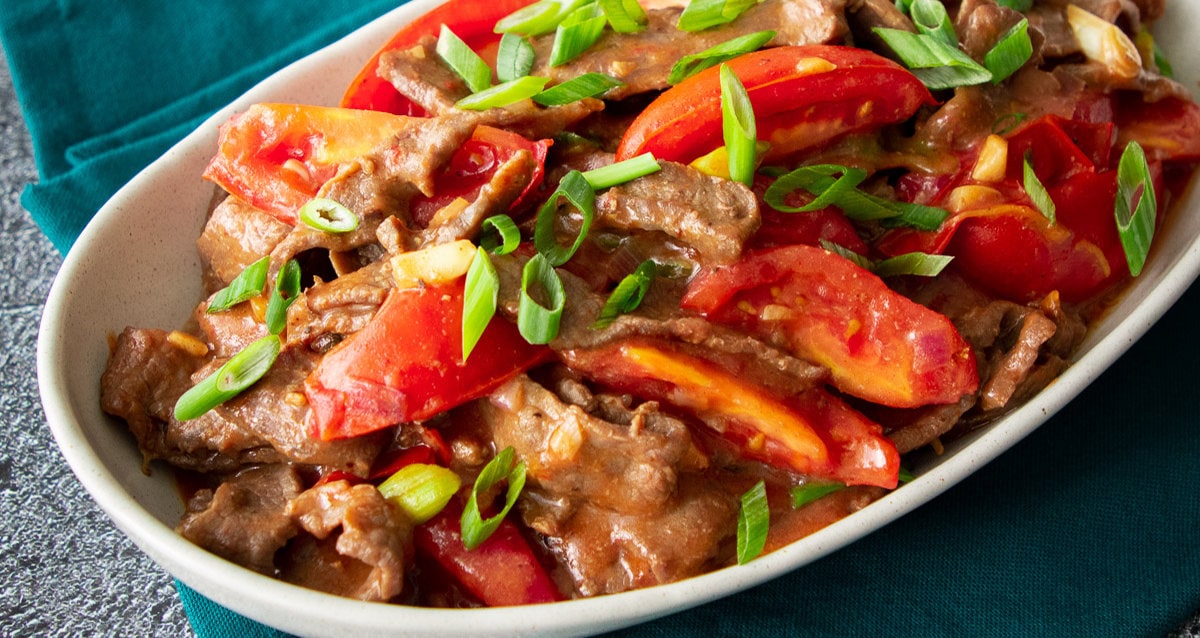
Home cooks often underestimate how much a good knife changes their cooking. When prep is fast and pleasant, you start cooking more from scratch. You pull out vegetables you would normally avoid because peeling and dicing felt like a punishment. You make recipes like a classic beef stir fry on a Tuesday because slicing flank steak and a pile of vegetables now takes ten minutes instead of thirty. The right knife pays for itself within a few months in saved takeout orders alone.
There are two big traditions in chef's knife design worth knowing about. German-style knives (think Wusthof, Henckels, Mercer) tend to be heavier, with a curved belly that rocks naturally on the cutting board and a more durable, softer steel that resists chipping. Japanese-style knives (Shun, Tojiro, Miyabi, MAC) are typically lighter, thinner, sharper out of the box, and made from harder steel that holds an edge longer but can chip if you abuse it. Neither is objectively better. They suit different cooks and different cutting styles, and our top five picks span both camps so you can find your fit.
Our Top 5 Chef's Knife Picks for 2026
Here is the short version of our 2026 list, so you can skim before diving into the detailed reviews below. Every knife on this list has been chosen with home cooks in mind, not professional line cooks who put their blade through ten hours of abuse a day. We weighted comfort, edge retention, ease of sharpening, and value heavily, and we deliberately avoided gimmick knives with unusual blade shapes or marketing-driven steels that sound impressive but underperform.
1. Best Overall: 8-Inch German Stainless Chef's Knife. The do-everything pick for almost every home cook.
2. Best Value: Mid-Range Full-Tang Workhorse. Roughly half the price of premium picks, with 80 percent of the performance.
3. Best for Beginners: Easy-Maintenance Stainless Pick. Forgiving, lightweight, and dishwasher-survivable (though we still suggest hand washing).
4. Best Premium: Japanese Gyuto-Style Chef's Knife. The blade you upgrade to once you know you love cooking.
5. Budget Pick: Entry-Level Full-Tang Option. Under $50 and genuinely good, perfect for a first apartment or a backup blade.
If you are skimming for a single recommendation, the Best Overall pick is the right knife for the largest number of readers. Keep reading for the details, the trade-offs, and how to decide between Japanese and German styles based on how you actually cut.
Best Overall: 8-Inch German Stainless Chef's Knife
Our top pick for the best chef knife 2026 is a classic 8-inch German-style chef's knife with a full-tang, forged high-carbon stainless steel blade and a triple-riveted synthetic handle. This is the knife we recommend to friends, family, and anyone who texts us asking what to buy. It nails the fundamentals: the blade is heavy enough to drop through a butternut squash without you forcing it, the bolster transitions cleanly into the heel for safe pinch grip, and the curved belly rocks beautifully when you mince herbs or garlic.
Edge retention on this style of knife is excellent for the price. Hardened to roughly 56-58 HRC, the steel is soft enough to forgive the occasional encounter with a bone or a glass cutting board, but hard enough that a quick swipe on a honing rod between sharpenings keeps it slicing tomato skin without crushing them. Plan on a full sharpening every six to twelve months for a typical home cook, and the blade should outlast most of your cookware.
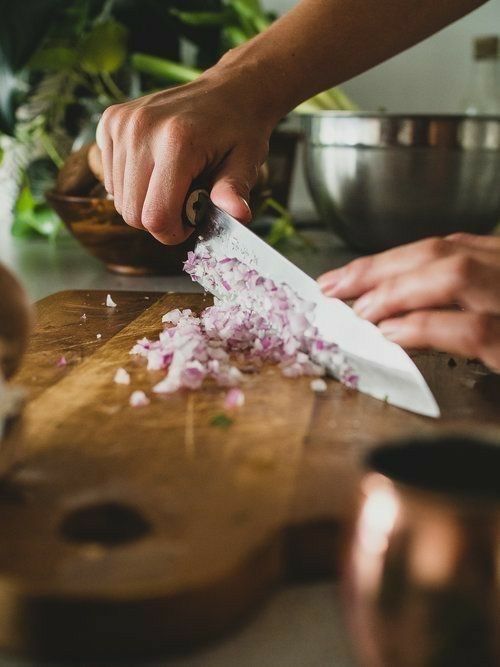
This is the knife we reach for when making something like french onion soup, where you slice through a mountain of onions in a single session. The weight does the work; you guide the blade and let gravity push it down. For a herb roasted chicken, the same blade handles spatchcocking, mincing rosemary, and slicing the cooked bird without flinching. If you want one knife that does everything well and lasts a decade with reasonable care, this is it.
Best Value: Mid-Range Full-Tang Workhorse
The Best Value pick is for cooks who want something a clear step above starter knives but are not ready to spend premium money on a knife block. This category is dominated by full-tang, forged blades from solid mid-tier brands, often sold open-stock so you can build a set one piece at a time instead of buying a fifteen-piece block half full of steak knives you will never use.
Performance-wise, the Best Value pick is genuinely close to the Best Overall. You give up a little fit and finish, the spine may not be polished as smoothly, the handle scales may not be quite as comfortable on long prep sessions, and the factory edge may need a quick touch-up out of the box. But the steel is the same general grade, the geometry is sound, and the knife will hold up for years if you keep it off the dishwasher and away from glass and stone cutting boards.
This pick shines for cooks who do a lot of vegetable-heavy meals, things like homemade guacamole where you are dicing onions, tomatoes, and jalapenos in quick succession. The blade is light enough to maneuver through small ingredients without feeling clumsy, but rigid enough to handle hard squash and root vegetables. It is also a great choice for a second knife in a household where two people cook together, since you can buy two for the price of one premium blade.
Best for Beginners: Easy-Maintenance Stainless Pick
If you have never owned a real chef's knife, or if you are buying for someone who treats kitchen gear with cheerful indifference, the Best for Beginners pick is the right place to start. This is a stamped (rather than forged) stainless blade with a comfortable, slightly rubberized handle and a forgiving edge geometry. It is lighter than the German pick, easier to control if you are still developing knife skills, and inexpensive enough that you will not panic the first time it gets left in a sink full of water.
The trade-off for beginner-friendliness is edge retention. Stamped stainless blades dull faster than forged blades, and the softer steel means you will be honing more often. The flip side is that this same softness makes the knife extremely easy to sharpen, even with a cheap pull-through sharpener. For a cook who is still figuring out what they like, fast feedback is more valuable than premium edge retention.
This is also our recommendation for households with kids or teens learning to cook. The blade is sharp enough to cut cleanly, which is actually the safer condition (dull knives slip and cause more injuries), but the lighter weight reduces fatigue and the rounded handle is comfortable for smaller hands. It is one of the best kitchen knives for home cooks who want a low-stress entry into real cooking.
Best Premium: Japanese Gyuto-Style Chef's Knife
Once you know you love cooking and you want to feel the difference a truly excellent blade makes, the Best Premium pick is a Japanese gyuto-style chef's knife. Gyuto translates roughly to "beef sword," and it is the Japanese answer to the Western chef's knife: similar shape, but thinner, lighter, harder, and ground to a more acute edge angle (typically 12-15 degrees per side compared to 20 degrees on a German blade).
Picking up a gyuto for the first time is a small revelation. The blade glides through tomato skin without pressure. Onions fall apart into perfect dice. Slicing fish for a rice bowl feels almost effortless. The harder steel (often VG-10, AUS-10, or SG2, hardened to 60-63 HRC) holds its edge two to three times longer than a typical German blade, so you spend more time cutting and less time maintaining.
The trade-offs are real, though. Harder steel is more brittle, so you cannot use a gyuto on bones, frozen food, or aggressive twisting cuts without risking chips. You should never put it in the dishwasher and ideally never put it down wet. Sharpening requires either a dedicated whetstone setup or a service that handles harder steels properly. If you are willing to invest the care, a gyuto pays you back every time you cook. This is the best japanese chef knife profile for a home cook who already enjoys prep work and wants the next-level upgrade.
Budget Pick: Entry-Level Full-Tang Option
Not everyone needs to spend three figures on a chef's knife, and our Budget Pick proves it. The under-$50 category used to be a wasteland of poorly heat-treated stainless and rivet-loose handles, but in 2026 there are several genuinely good options from established brands looking to compete with direct-to-consumer challengers. The Budget Pick is a full-tang, forged stainless blade with a simple but solid handle, a respectable factory edge, and a heat treatment that makes it easy to sharpen and maintain.
This is the knife to buy for a college kid moving into their first apartment, a vacation rental kitchen, or as a backup blade for the household. It will not feel as refined as the Best Overall, the balance is a touch off and the handle finish is utilitarian rather than handsome. But it cuts cleanly, holds a usable edge for months at a time, and survives the kind of casual use that would slowly destroy a premium knife.
A budget knife is also a smart way to learn whether you actually care about knives. Cook with it for six months. If you find yourself wanting more, you have a clear sense of what to upgrade to and why. If it disappears into your kitchen routine and you never think about it, congratulations, you saved a few hundred dollars and you eat just as well.
What to Look For: Steel Type, Edge Angle, Balance, Handle Material
A useful chef knife buying guide has to go beyond brand names, because the same brand can sell a great knife and a mediocre knife in the same year. These are the four specifications that actually predict how a knife will perform.
Steel type. For most home cooks, a high-carbon stainless steel in the 56-60 HRC range is the sweet spot. Softer steels (under 56) dull too fast. Harder steels (above 62) are amazing performers but demand careful handling. Look for named steels like X50CrMoV15 (German), VG-10 (Japanese), or AUS-10 (Japanese). Avoid vague labels like "high-quality stainless" with no specification, which usually means an unremarkable budget steel.
Edge angle. German knives are typically ground at 20 degrees per side, which is durable and forgiving. Japanese knives are ground at 12-15 degrees, sharper but more delicate. There is no wrong answer; pick the style that matches how you cook. If you are hard on knives, go German. If you treat your gear well and want maximum sharpness, go Japanese. The best german chef knife options shine for cooks who push hard through dense ingredients.
Balance and weight. Pick the knife up. The balance point should sit right at the bolster, where the blade meets the handle. A blade-heavy knife fatigues your wrist on long prep sessions; a handle-heavy knife feels imprecise. Weight is personal: heavier blades let gravity do the work, lighter blades are more agile.
Handle material. Synthetic handles (POM, Micarta, G10) are durable, dishwasher-tolerant, and grippy when wet. Wood handles are gorgeous and warm in the hand but require oiling and hand washing. Pakkawood splits the difference: stabilized wood that looks natural but tolerates kitchen abuse. Avoid hollow-feeling plastic handles with visible mold seams.
FAQ
What size chef's knife is best for most home cooks? An 8-inch chef's knife is the sweet spot for home cooks: long enough to break down a whole chicken or slice a large watermelon in a single stroke, short enough to maneuver precisely around garlic cloves and shallots. Cooks with smaller hands or limited counter space often prefer a 6-inch, which is more agile but requires more strokes on long cuts. Professional cooks frequently use 10-inch blades for high-volume work, but in a home kitchen that extra length adds fatigue without meaningful payoff. All five picks in this guide are available in an 8-inch version; the Best for Beginners pick also comes in a 6-inch option.
How often should I sharpen my chef's knife? Hone before every cooking session with a steel or ceramic rod (a few light passes per side realigns the edge). Fully sharpen on stones or with a quality pull-through sharpener every 6-12 months for a typical home cook. If you find yourself pressing harder to cut a tomato or onion, the knife is overdue.
Are Japanese or German knives better? Neither, and both. German knives are heavier, more durable, and more forgiving of mistakes. Japanese knives are lighter, sharper, and more demanding to maintain. Pick the one that matches your cutting style and how you treat your tools.
Can I put my chef's knife in the dishwasher? Don't. Even dishwasher-safe knives suffer faster handle degradation and more edge damage from banging against other items. A quick hand wash and dry takes ten seconds and adds years to the blade.
Do I really need a separate paring knife or a santoku? Eventually, yes, but not at first. An 8-inch chef's knife handles 90 percent of home cooking. Add a paring knife when you start doing detailed work; add a santoku or bread knife if you find specific gaps in your routine.
Sources
- America's Test Kitchen, equipment reviews on chef's knives, 2024-2025 editions.
- Wirecutter (The New York Times), "The Best Chef's Knife" guide, ongoing updates.
- Cook's Illustrated, comparative knife reviews and steel hardness testing.
- Serious Eats, knife skills and gear primers by J. Kenji Lopez-Alt and Daniel Gritzer.
- Manufacturer specifications and steel datasheets from Wusthof, Zwilling J.A. Henckels, Shun, Tojiro, Mercer Culinary, and Victorinox.
Frequently asked questions
Can I use one of these knives if I'm left-handed?
Is an 8-inch chef's knife too big for a small kitchen or smaller hands?
How often should these knives actually be sharpened versus honed?
Are these knives dishwasher-safe?
When should I skip a chef's knife and reach for something else?
Sources
Recipes to try with sharp knives
Put your gear to work — save any recipe to My Recipes (no account needed) and send its ingredients to Instacart in one tap.

Shop knives & cutting on AislePrompt →Browse the full kitchen shop →
A sharp knife wants something to cut.
Ask our AI for prep-forward weeknight dinners — shopping list built, cart ready for Instacart.
Get knife-work recipes →