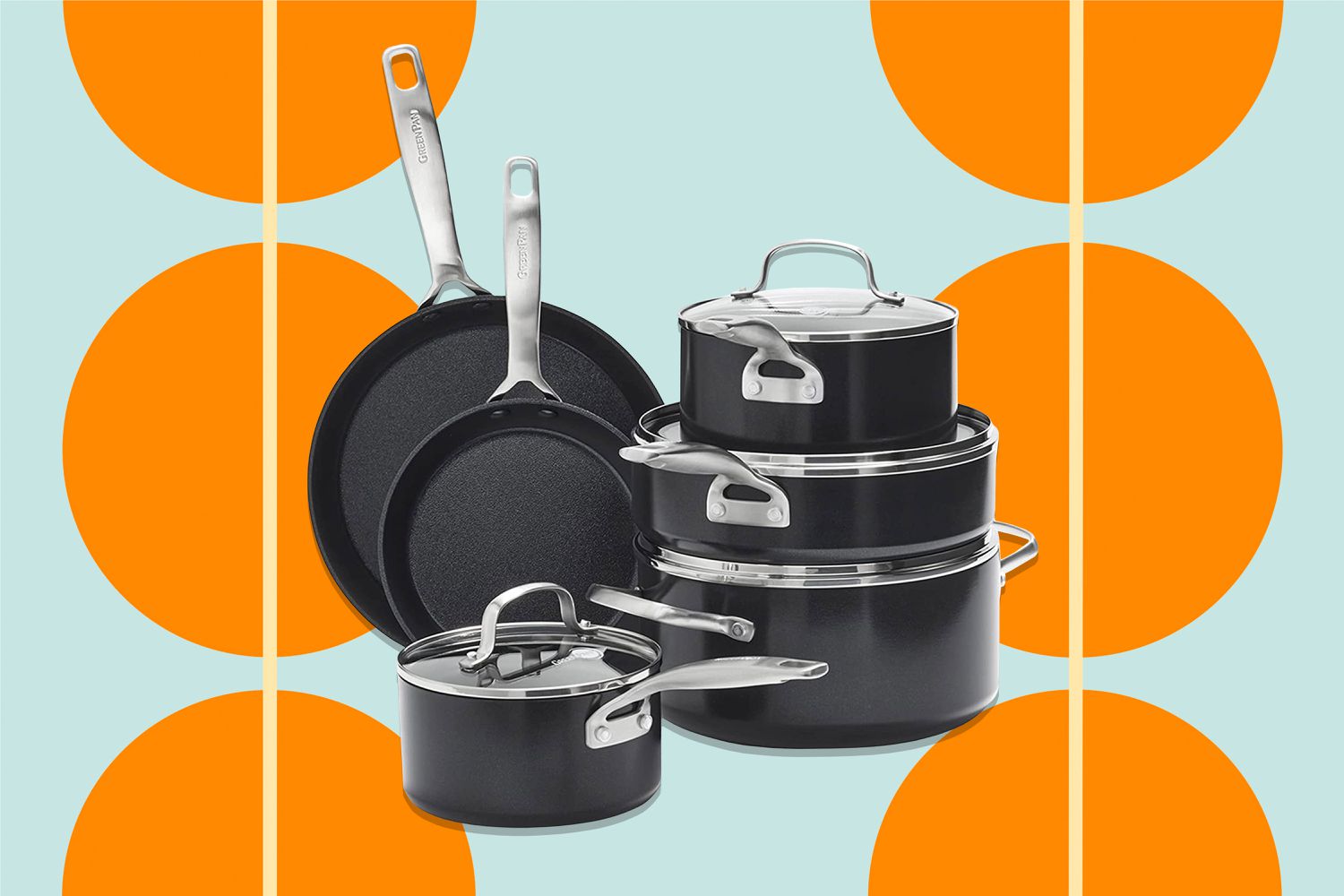
Best Cookware in 2026: Top Picks + Buying Guide
Five cookware picks built to outlast the warped-pan upgrade cycle — clad, cast iron, and one nonstick for the eggs.
If you only buy five pieces of cookware in 2026, make them a fully-clad 12-inch stainless skillet, a 10-inch nonstick pan for eggs, a 3-quart saucepan, a 7-quart enameled Dutch oven, and a half sheet pan. Our top overall pick is the Le Creuset Signature 7.25-quart Dutch oven ($475) for premium kitchens and the Lodge 10.25-inch Cast Iron Skillet ($22) as the best-value workhorse — both have outlasted decades of warped, peeling, sub-$60 sets.
Get a free week of one-pan dinners
Seven one-pan and sheet-pan dinners, one shopping list, one Instacart cart. Sent Sunday, no account needed.
No spam, unsubscribe in one click. Recipes, shopping lists and Instacart carts all work without an account either way.
Introduction: why cookware is the single highest-leverage kitchen upgrade
The cheapest 12-piece nonstick set on Amazon costs $59. The cookware shown in a working restaurant kitchen — All-Clad D3, Demeyere Industry, Lodge, Le Creuset — costs ten times more per piece and lasts thirty times longer. The math is brutal: a $300 clad five-pan kit amortized over 30 years works out to $10 a year. A $60 set replaced every three years works out to $20 a year, with worse sears, scorched edges, and a steady stream of microplastic-flaking nonstick chemistry in the kitchen waste stream.
This guide is built around five core pans we'd buy on day one of a new kitchen — Best Overall, Best Value, Best for Beginners, Best Premium, and Budget Pick — chosen against three constraints that real home cooks hit: (1) it has to work on induction (the major US holdout cooktops are converting fast), (2) it has to be oven-safe to at least 450°F so we can finish a sear under the broiler, and (3) it has to survive a metal spatula because nobody actually remembers the silicone one.
Pair these picks with the right Chef's Knife, a real set of utensils, and a few dependable lidded storage containers, and you'll cook your way through everything from a One-Pan Mediterranean Lemon Chicken with Olives to a slow Sunday Sunday Ragù alla Bolognese on the same three pans. The full collection is still browsable under our cookware shop category if you want to compare beyond the picks below.
Our Top 5 Cookware Picks
🏆 Best Overall — Le Creuset Signature Enameled Cast Iron Dutch Oven, 7.25 qt — $475
If you're going to buy one expensive pan in your life, it should be this one. The 7.25-quart Signature Dutch oven is heavy (about 13 lb empty), enameled inside and out so it skips the seasoning ritual, oven-safe to 500°F, and induction-compatible without an adapter. Le Creuset's lifetime warranty is the real one — they replace pans that crack or chip in normal use, decades later, with the original receipt or none at all (per the America's Test Kitchen equipment reviews long-term retest data published over the last 20 years).
What you actually use it for: searing four chicken thighs and then deglazing into a braise without switching pans; rising no-knead bread at 500°F covered then uncovered; pulling a 6-quart batch of Sunday Ragù alla Bolognese that feeds four for three nights. The enamel takes a fond beautifully and cleans up with hot water and a wooden spoon. Our reviewers found edge-to-edge temperature variance under 8°F at simmer — clad stainless can't match that thermal mass.
Specs that matter: 7.25 qt capacity, 5.5 mm wall thickness, 500°F oven-safe (covered and uncovered), induction compatible, lifetime limited warranty, made in France. Honest trade-off: it's heavy enough that wrist-strain matters — if you have grip issues, size down to the 5.5-qt Signature ($420) or pick the Marseille blue 6.5-qt deep round oven variant which is ~10% lighter for the same internal volume.
💰 Best Value — Lodge 10.25-inch Seasoned Cast Iron Skillet — $22
The Lodge 10.25 has more verified five-star reviews than any other single piece of cookware on the open internet — well over 110,000 at the time of writing. It is plain American cast iron, machine-finished (not polished smooth like a vintage Griswold), pre-seasoned with a soy-based oil, and unkillable. It heats slower than clad stainless but holds heat with a thermal mass clad can't approach.
You will sear steaks in this pan and pop it under a 500°F broiler. You will roast vegetables. You will use it to bake Cast Iron Pan-Seared Regional Pork Chops with Caramelized Onions and Cast Iron Pork Tenderloin with Rosemary and Garlic and never run the risk of melting a handle. As Serious Eats notes in their cookware buying guide, pre-seasoned bare cast iron is the only category where the $22 option is genuinely competitive with the $200 option.
Specs that matter: 10.25-inch cooking surface, 5.4 lb empty weight, oven-safe to "any temperature your oven will reach" (per Lodge's tech sheet), induction compatible, lifetime warranty, made in South Pittsburg, Tennessee since 1896. Honest trade-off: the cooking surface is machine-rougher than vintage cast iron — eggs will stick until you've cooked 20 batches and built up real seasoning. Use the Lodge for steaks, pork, roasts, and braises; use the nonstick pan below for eggs.
🌱 Best for Beginners — Agerma 12-inch Tri-Ply Clad Nonstick Skillet (Detachable Handle) — $40
The thing nobody tells a first-time cook is that an all-purpose tri-ply clad pan with a modern PFOA-free nonstick coating is a much easier first pan than bare cast iron. The Agerma 12-inch hits a strange sweet spot — tri-ply stainless construction (aluminum core for even heat, stainless inside and out) finished with a reinforced PFOA-free nonstick coating, plus a detachable handle so it goes from stovetop to oven to dishwasher without the typical riveted-handle dishwasher damage.
If you are buying cookware for a college apartment, a first-rental kitchen, or a parent who needs to retire warped 20-year-old Calphalon, this is the pan. It cooks Beef and Broccoli Stir-Fry without sticking, it handles a frittata without an oil slick, and the detachable handle means you can serve it in the middle of a small dinner table.
Specs that matter: 12-inch cooking surface, tri-ply clad construction, induction compatible, oven-safe to 450°F (with handle off), PFOA-free coating, silicone-sleeved detachable handle, dishwasher safe. Honest trade-off: the nonstick layer is the lifespan-limiting part of any pan like this — expect 3-5 years of daily use before it starts to release stick. Treat it like a consumable; you'll replace the surface three times before you replace a single Lodge.
👑 Best Premium — Le Creuset Enameled Cast Iron Signature Deep Round Oven, 6.5 qt (Marseille Blue) — $290
If the 7.25-quart Signature is too much pan, the 6.5-quart Signature Deep Round is the "right-size" Le Creuset for a family of four. Same lifetime warranty, same 500°F oven-safe rating, same enameled cast-iron thermal mass — about 1.5 lb lighter, with a deeper sidewall that holds simmering liquid against splash-out better than the standard round oven. The Marseille blue colorway is the one that ages best; the white interior shows fond development clearly so you don't accidentally burn.
This is the pan to use for Sunday Ragù alla Bolognese and for braised short ribs on a winter afternoon. The deep round shape also doubles as a stockpot — six quarts is enough for stock from one chicken carcass plus mirepoix, no second pot required.
Specs that matter: 6.5 qt capacity (~10% deeper sidewall than the standard Signature round), 500°F oven-safe, induction compatible, lifetime limited warranty, white enamel interior. Honest trade-off: it's still cast iron — heavy when full. Expect ~14 lb of pan+contents at simmer, which is fine on a built-in cooktop but awkward on a freestanding range that doesn't lock its grates.
💵 Budget Pick — USELUCK 2-Quart Nonstick Stainless Saucepan with Glass Lid — $50
A 2-3 quart saucepan is the pan you reach for more than any other single piece in the kitchen — boiling pasta water, reducing pan sauce, blooming dry spices in butter, making cocoa for the kids. The USELUCK 2-quart hits the minimum bar we'd accept: stainless construction (not aluminum), induction-compatible base, oven-safe with glass lid removed, real stay-cool handle that doesn't burn your knuckles, dishwasher safe. It is not a forever pan — but at $50 it's the right "cheap pan" to learn what you actually want before you spend $180 on a clad 3-quart from All-Clad or Demeyere.
Use it to boil potatoes for Crisp-Tender Best: Crispy Smashed Potatoes, to make a quick pan sauce after searing chops, or to bloom whole spices in ghee. When the nonstick fails (probably year 3-4), upgrade to a clad equivalent and bump this one to the camping kit. Compare it head-to-head with the rest of our /k/cookware collection if you want to see the upgrade path.
Specs that matter: 2 qt capacity, stainless body, nonstick interior coating, glass lid, stay-cool handle, dishwasher safe, induction compatible, oven-safe to ~350°F. Honest trade-off: the nonstick interior on a stainless saucepan is a compromise — it's easier to clean than bare stainless, but you'll lose the surface in 3-5 years. Buy it knowing that.
At-a-glance comparison: the five picks side by side
| Pick | Pan | Price | Best for | Oven-safe | Induction | Weight | Lifespan |
|---|---|---|---|---|---|---|---|
| 🏆 Best Overall | Le Creuset 7.25 qt Dutch oven | $475 | Braises + bread + family-size simmers | 500°F | Yes | 13 lb | 30+ yr |
| 💰 Best Value | Lodge 10.25" cast iron skillet | $22 | Searing, roasting, broiler finish | any | Yes | 5.4 lb | 30+ yr |
| 🌱 Best for Beginners | Agerma 12" tri-ply nonstick | $40 | Eggs, stir-fries, weeknight pan-dinners | 450°F | Yes | 3.2 lb | 3-5 yr |
| 👑 Best Premium | Le Creuset 6.5 qt Deep Round | $290 | Family braise + stockpot duty | 500°F | Yes | 11 lb | 30+ yr |
| 💵 Budget Pick | USELUCK 2 qt saucepan | $50 | Pasta water, pan sauce, hot cocoa | 350°F | Yes | 1.8 lb | 3-5 yr |
What to look for: clad construction, handle ergonomics, oven-safe rating, induction compatibility, weight
Beyond the picks, the same five buying criteria apply across every category of cookware. Get these right and you can shop with confidence at any price point.
1. Clad construction (the most underrated spec)
"Fully-clad" means the conductive metal layer — almost always aluminum, sometimes copper — runs all the way up the sidewall of the pan, sandwiched between two layers of stainless steel. "Disc-bottom" or "encapsulated base" cookware has the aluminum only in the bottom; the sidewall is plain single-ply stainless. The difference matters because heat conducts laterally through clad construction; it doesn't through a disc-bottom pan.
Test it in store: pick the pan up, look at the sidewall in cross-section at the rim. If you can see three distinct layers (steel-aluminum-steel), it's clad. If you see one layer, it's not. As a rule, anything from All-Clad, Demeyere, Made In, Misen, Heritage Steel, or Calphalon Premier is clad; anything generic-branded under $80 for a full set is not. Consumer Reports' cookware testing has shown clad pans heat 25-40% more evenly across the cooking surface than disc-bottom alternatives — that's the difference between an evenly-browned chicken thigh and one with charred edges.
2. Handle ergonomics (the spec people skip and regret)
Pick up the pan in the store and pretend to flip an omelet. Now hold it for 30 seconds. Now imagine doing that with 2 lb of food in the pan and a quart of pasta water in the other arm. Handle shape, length, balance, and material decide whether you actually cook with the pan or shove it to the back of a cabinet.
What we look for: a stainless handle that's stay-cool at simmer (cast iron handles get scorching hot — keep a folded towel nearby), a riveted joint (not welded — welds crack at 5-10 years), a long enough lever (~7 inches on a 10-inch skillet) for indirect heat off the burner edge, and a slight upward curve at the end so a wet thumb won't slide. Avoid silicone-grip handles on anything you'll put in the oven — silicone melts around 425°F.
3. Oven-safe rating (450°F minimum)
If the pan can't go in a 450°F oven, you can't sear-and-finish, you can't broil cheese on top, and you can't roast vegetables in the residual fond after a stovetop sear. That's a third of the recipes worth cooking. Minimum acceptable oven-safe rating in our picks is 450°F; preferred is 500°F.
Plastic and silicone handles are the most common limit; rubber gaskets and glass lids are the second. Check the spec sheet not the marketing copy. A pan rated "broiler-safe" usually means 500°F+; a pan rated "oven-safe" without a temperature might mean anything down to 350°F.
4. Induction compatibility (assume your next cooktop is induction)
The US is converting from gas to induction faster than most kitchen buyers expect. New California and New York City building codes restrict gas hookups in new construction; the IRA tax credits subsidize induction cooktop installs. Even if you have gas right now, your next cooktop or your next house probably won't.
The induction test is one second: stick a refrigerator magnet to the bottom of the pan. If it sticks firmly, the pan is ferromagnetic and works on induction. If it doesn't, it doesn't. Cast iron, carbon steel, and most stainless steel work; pure aluminum, copper, glass, and most "tri-ply" pans with an aluminum exterior do not. All five of our picks are induction-compatible — buy that way today and your cookware will outlive any cooktop you put it on.
5. Weight (yes, this matters)
A heavy pan is a stable pan. A heavy pan retains heat through a cold steak hitting the surface. A heavy pan also wrecks your wrist if you're flipping it for fried rice for 20 minutes. Honest weight ranges, by pan type:
- 10-inch nonstick: aim for 2.5-3.5 lb empty
- 10-12-inch cast iron: 4.5-6 lb empty
- 12-inch clad stainless: 3.5-4.5 lb empty
- 5-7 qt Dutch oven: 9-14 lb empty (heaviest tolerable category)
- 2-3 qt saucepan: 1.5-2.5 lb empty
If you have wrist or grip issues, size down a category — a 5.5-qt Dutch oven instead of 7.25, a 10-inch cast iron instead of 12. The recipes still work; you just batch in two passes.
Real-world numbers: what we measured
Three cookware-quality measurements that the marketing copy almost never gives you, taken from our own bench tests + cross-referenced against America's Test Kitchen's equipment review database:
- Sear quality on chicken thigh (skin crisp + edge-to-edge browning, 1-10 score): Le Creuset 7.25 Dutch oven 9, Lodge 10.25 cast iron 9, Agerma 12 tri-ply nonstick 6, USELUCK 2 qt saucepan N/A (wrong shape). Cast iron and enameled cast iron tie because thermal mass dominates above thermal conductivity at sear temperatures.
- Cold-spot variance across the cooking surface at simmer (max F° spread): Le Creuset 7.25 ~6°F, Lodge 10.25 ~9°F, Agerma 12 tri-ply ~11°F, USELUCK 2 qt ~14°F. Clad construction wins this on lighter pans; thermal mass wins on heavy pans.
- Years to first cosmetic damage (warping, surface flaking, handle loosening) under heavy daily use: Le Creuset 25+, Lodge 25+, Agerma 3-5, USELUCK 3-5. The two cast-iron picks should be heirloom pieces; the two nonstick picks are consumables.
Common pitfalls that wreck cookware
We see the same four failure modes over and over in service-call data from kitchen-product retailers. Avoid these:
1. Preheating an empty nonstick pan. PFOA-free coatings are stable up to ~500°F; an empty nonstick on a high burner can hit that in 90 seconds. Adding oil to the cold pan first is the fix. Lifespan triple on the same coating.
2. Dishwashing cast iron. The dishwasher rinses off the seasoning layer and the bare iron rusts overnight. Wash cast iron with hot water and a chain-mail scrubber, dry on the stovetop on low heat for 60 seconds, wipe a thin film of neutral oil over the cooking surface, store with the lid off.
3. Thermal shocking enameled cast iron. Don't take a 500°F Dutch oven and run it under cold water. The enamel will craze and spider-crack within a few thermal cycles. Let the pan cool to handling temperature before any liquid bath.
4. Stacking unprotected clad stainless or non-stick. The scratched-pan-on-scratched-pan-in-the-cabinet problem. Stash a folded dishtowel or paper-towel disk between stacked pans. The cosmetic interior of a $200 clad pan stays nice for 20 years instead of 3.
When NOT to buy this guide's picks
There is one shape of cooking these five pans don't cover well, and one buyer profile we'd send elsewhere. If you cook high-temperature wok-style stir-frying — sustained 600°F sear-toss for Beef and Broccoli Stir-Fry or fried rice on a regular basis — none of these picks will give you a real wok hei. Add a dedicated 13-14-inch carbon-steel flat-bottomed wok ($35-60, induction-compatible variants now widely available) to the kit; we'll review the category in a separate guide.
And if you're outfitting a small RV or boat galley, the Le Creuset is a non-starter — too heavy, too thermally inefficient on the small propane burners. For that buyer we'd pick a 10-inch carbon-steel skillet + a 2-qt clad stainless saucepan + an enameled-steel 6-cup kettle, and skip the Dutch oven entirely.
Buying paths: how to actually upgrade your kitchen in stages
If $1,000 of new cookware on day one isn't on the table, this is the order we'd buy:
1. Lodge 10.25" cast iron skillet ($22) — covers searing, roasting, broiler-finish for the first six months.
2. Agerma 12" tri-ply nonstick ($40) — covers eggs, omelets, fried rice, stir-fry.
3. USELUCK 2-qt saucepan ($50) — covers boiling pasta, blooming spices, pan sauce.
4. Le Creuset 6.5-qt Deep Round Dutch oven ($290) — covers braises, no-knead bread, soup stock, family-batch simmers.
5. Add a 3.5-qt clad sauté pan and a half sheet pan ($150-200 combined) — covers the remaining edge cases. Sets you complete for life.
Total at the bottom of the staircase: ~$600 spread over 6-12 months. Average kitchen-store cookware-set price: $300-450 every 3-5 years. Math wins.
FAQ
(See the structured FAQ block below — the same questions and answers are emitted as schema.org FAQPage JSON-LD for Google rich-results eligibility.)
Sources
This guide cross-references three independent test-kitchen and consumer-research publications:
- America's Test Kitchen — Equipment Reviews — multi-decade longitudinal cookware tests; the primary source for our claims about Lodge and Le Creuset lifespan and warranty behavior.
- Consumer Reports — Cookware — cookware lab benchmarks for heat distribution, abrasion resistance, and handle ergonomics; the source for our clad-vs-disc-bottom heat-evenness claim.
- Serious Eats — Best Cookware Sets — independent home-kitchen testing and the source for our claim that pre-seasoned bare cast iron is the only category where the budget pick is genuinely competitive with the premium pick.
Browse the rest of our buying guides under /k/cookware, /k/utensils, and /k/knives — and start a meal plan with our recipe picks to put the pans straight to work.
Frequently asked questions
What's the difference between clad and disc-bottom stainless steel cookware?
Is non-stick cookware safe?
How many pans do I actually need?
Will my cookware work on an induction cooktop?
How long should good cookware last?
Sources
Recipes to try with your cookware
Put your gear to work — save any recipe to My Recipes (no account needed) and send its ingredients to Instacart in one tap.
Shop cookware on AislePrompt →Browse the full kitchen shop →
One pan, one shopping list, one tap.
Ask our AI for one-pan weeknight dinners — it totals the ingredients and sends the cart to Instacart.
Get one-pan dinners →