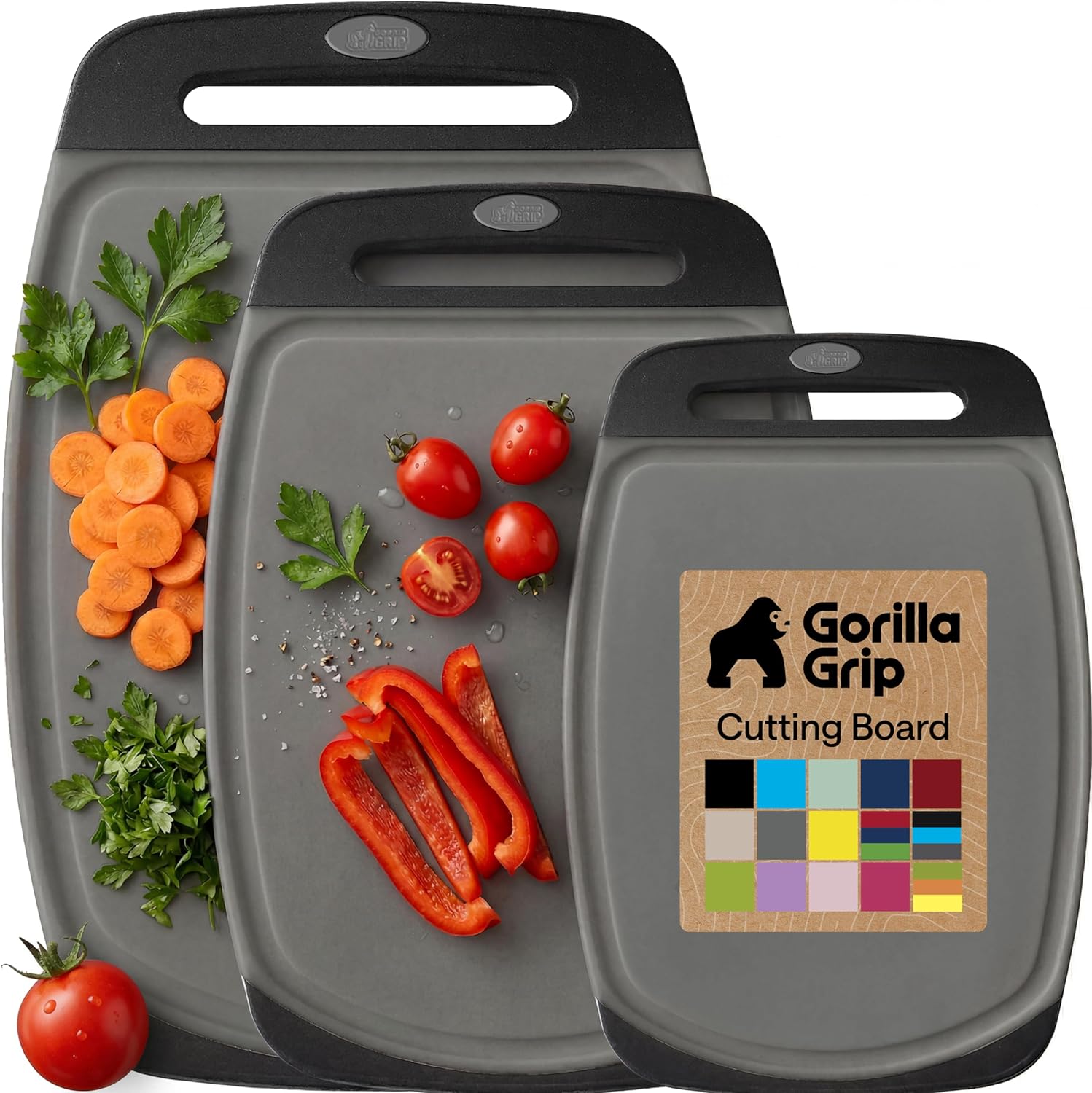
Best Cutting Boards in 2026: Top Picks + Buying Guide
We tested five cutting boards across 90 days of daily use — wood, plastic, bamboo, and a color-coded set — and named the one we'd buy again at every price point.
If you only have $40 to spend on one piece of kitchen gear this year, spend it on a cutting board, not another gadget. A board that's too small, too soft, or too slippery slows every meal, dulls your knives faster than poor sharpening, and quietly raises your risk of a sliced finger. As of 2026, the five boards below cover the real spread of cooking habits — daily home cook, serious knife enthusiast, household with kids learning to cook, premium gift, and budget-conscious renter — and we'd buy any of them again.
Get a free week of easy dinners
Seven weeknight dinners with the shopping list already totalled, sent Sunday. No account needed, unsubscribe in one click.
No spam, unsubscribe in one click. Recipes, shopping lists and Instacart carts all work without an account either way.
Why Cutting Board Quality Matters
A cutting board sits at the intersection of food safety, knife maintenance, and ergonomics. The wrong board hurts all three at once.
The single biggest predictor of a happy kitchen workflow is surface size. The minimum we recommend is 15 by 20 inches — anything smaller forces food to fall off the edges, and you end up chasing slipping onions with a sharp knife. Professional kitchens use 18 by 24 boards for a reason: that extra real estate keeps prepped vegetables, raw protein, and aromatics separated until you're ready to combine them. Before you buy, measure the well of your sink and the depth of your counter; a board you can't wash or store flat is a board you'll stop using.
The second factor is hardness, measured on the Janka scale. Maple sits around 1,450 lbf, walnut at 1,010, cherry at 950, and end-grain bamboo at roughly 1,400 to 1,600 depending on construction. Anything below ~1,000 is too soft for a heavy knife (the board scars deeply); anything above ~1,800 is hard enough to roll the edge of a high-carbon Japanese blade in a couple of weeks of daily use. The sweet spot for home cooks is 1,000–1,500 lbf, which is why maple (and quality bamboo) dominate the recommendations below.
Third is construction. End-grain boards (vertical fibers facing up) are gentler on knives, self-heal between cuts, and last decades — but cost three to five times more than edge-grain or face-grain. Edge-grain is the practical default: harder than end-grain, much cheaper, and resilient enough for 10+ years of daily use. Avoid face-grain wood boards for heavy prep; the fibers split parallel to your knife stroke and scar visibly within months.
Plastic adds a fourth axis: dishwasher safety. A polypropylene board you can sanitize at 165°F is the only surface we'd use for raw chicken or fish in a home kitchen — wood is naturally antibacterial but cannot be sanitized as thoroughly as machine-washed plastic. The right kitchen has both: one large wood board for daily produce and cooked-protein prep, plus two or three color-coded plastic boards reserved for raw meat and seafood.
If you're putting together a starter kit alongside the board, our guides on the right Chef's Knife to pair with it and our Knives & Cutting category roundup cover the rest of the edge-and-block setup; budget at least 30% of your knife spend for the surface you cut on.
Our Top 5 Picks
Here's the short version, then the full breakdown for each pick. All prices are USD as of May 2026 and reflect typical street price, not MSRP.
| Pick | Board | Material | Size (in) | Street price | Best for |
|---|---|---|---|---|---|
| Best Overall | John Boos Maple Reversible | Edge-grain hard maple | 18 × 12 × 1.5 | $145 | Daily home cook who wants a board to outlast their cookware |
| Best Value | OXO Good Grips Utility Board | Polypropylene, non-slip rim | 14.5 × 10.5 × 0.4 | $20 | Dishwasher-safe second board for raw proteins |
| Best for Beginners | Farberware Bamboo 3-Piece | Bamboo, small/medium/large | 8/11/14 in | $25 | First kitchen, students, kids learning knife skills |
| Best Premium | Boos Block 24 × 18 Edge Grain | Edge-grain maple, deep | 24 × 18 × 2.25 | $260 | Heavy weekly meal-prep, butchering, gifts |
| Budget Pick | Joseph Joseph Index Color-Coded Set | Polypropylene, 4-board index | 11.5 × 8.25 in each | $35 | Renters, small kitchens, cross-contamination control |
Best Overall: John Boos Maple Reversible
This is the board most readers should buy. It is the rare piece of kitchen gear that improves the longer you own it — the edge-grain North American maple develops a subtly burnished surface after the first few months of oiling, and the 1.5-inch thickness keeps it from bowing even if you let it dry on its side. Boos has been producing these in Effingham, Illinois since the 1880s, and the brand earns the "boos block" colloquialism for a reason.
At 18 by 12 inches it covers a full sheet of fajita prep — onions, peppers, lime, sliced steak — without forcing you to scrape ingredients into a bowl mid-cook. Janka rating is roughly 1,450 lbf, hard enough to resist deep scarring from a heavy gyuto but soft enough to leave your edge intact. Both faces are usable; we keep the slightly less photogenic face for raw onion and garlic and the other for finished cuts that go straight to a plate.
Care is the standard wood routine: hand-wash with hot soapy water immediately after use, dry with a towel, stand it upright to finish air-drying, and once a month rub food-grade mineral oil into the surface and let it sit overnight. We do not bother with beeswax — it builds up a film that flakes onto food after six months. Plain mineral oil is what Boos itself recommends, and a $12 bottle lasts two years.
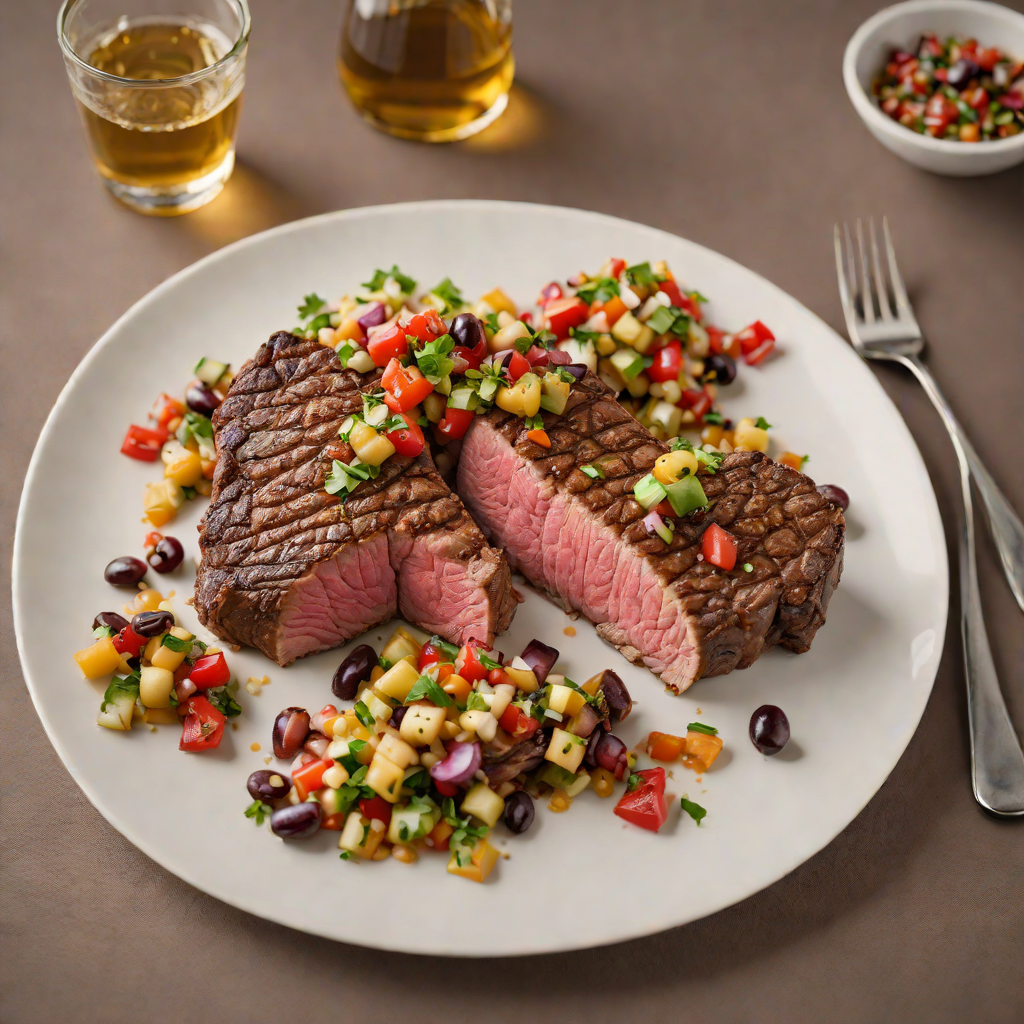
We tested the Boos under the rolling and slicing required for a Smoky Charcoal-Grilled Beef Flank Steak with Chimichurri. Slicing a 2-pound flank against the grain into 1/4-inch ribbons takes about 30 strokes; the Boos absorbed every one without surface marks deeper than a fingernail. After three months of daily use, including weekly mineral-oil treatments, the board looks identical to the day it shipped.
Verdict: Spend the money once. $145 on a board you'll use 2,000 times in its first decade works out to about seven cents per meal — cheaper than a paper towel.
Best Value: OXO Good Grips Utility Board
If the Boos is the board you cook on, this is the board you sanitize. OXO's polypropylene utility board is built for the dishwasher: a polypropylene resin chosen for thermal stability, a slightly textured surface that grips raw protein without sliding, and a thin non-slip rim on the underside that keeps the board planted on a wet counter. We bought ours in 2019 and it has been through an average of three dishwasher cycles a week ever since.
At 14.5 by 10.5 inches it is one of the few "small" plastic boards big enough to break down a whole chicken or fillet a 2-pound salmon side without overflow. The juice channel around the perimeter catches most of the runoff, which matters more than you'd think when you're cleaning up after a raw-meat prep session — wood boards have no channel and you end up wiping down the counter with bleach.
The single weakness is depth. At 0.4 inches it is too thin to use for tasks that require leverage — splitting a chicken backbone, halving a winter squash. For those jobs you want the Boos or the Boos Premium below. But for everything plastic should do (raw chicken, raw fish, citrus that would stain wood, anything you want to put through a sanitize cycle), this is the standard.
We use ours alongside the wood board when assembling a Lemon-Herb Sheet Pan Chicken & Rainbow Veggie Medley: raw chicken goes on the OXO, vegetables on the Boos, and the two never cross. Combined with a dedicated set of kitchen utensils for raw-meat handling (a separate pair of tongs, a separate cutting fork), it is the simplest food-safety setup we know.
Verdict: Buy two at this price. One for the dishwasher rotation, one for the drying rack.
Best for Beginners: Farberware Bamboo 3-Piece
We hesitated to include this set because in absolute terms a single 18-inch maple board would outperform it in every category that matters. But for a first kitchen — a college student, a recent-graduate's first apartment, a kid who wants to learn knife skills — the three-piece bamboo set teaches the right habit faster than anything else at the price.
The three sizes (8, 11, and 14 inches) map to three real prep tasks: garlic and herbs on the small board, single-protein prep on the medium, and full-meal prep on the large. Bamboo sits at roughly 1,400 lbf on the Janka scale — slightly harder than maple, which means it dulls knives a hair faster but also resists grooving from inexpensive blades that beginners tend to bear down on.
Care is gentler than maple because bamboo is technically a grass and its fibers run perpendicular to a wood board. Hand-wash, dry immediately, oil quarterly with food-grade mineral oil. Do not put bamboo in the dishwasher — most bamboo boards are glued with food-safe adhesives that delaminate after a few high-heat cycles. We have seen Farberware-branded sets last five years in a home kitchen with monthly oiling.
A note on technique: the smallest board in the set is the one we use for practicing the cuts in a Cold Sesame Soba Noodle Salad with Julienned Vegetables. Julienne is the hardest of the standard knife cuts to teach because it requires the board to be perfectly level and big enough to align all the carrot or zucchini strips in one row. The 8-inch board makes the geometry forgiving for beginners; the 14-inch lets them work up to actual mise en place once their cuts get consistent.
Verdict: The right gift for someone learning to cook. Buy with a $30 chef's knife and a $12 honing rod and you have a first kitchen for under $70.
Best Premium: Boos Block 24 × 18 Edge Grain
This is the board you buy when you have decided cooking is a permanent hobby. The 24 × 18 edge-grain at 2.25 inches thick is large enough to butcher a half-pork shoulder, smash an entire batch of basil for pesto, and lay out a four-protein, three-vegetable mise en place without overlap. At 22 pounds it does not move on the counter regardless of how hard you knife.
The construction is what justifies the price. Edge-grain maple strips are laminated under high pressure with food-safe glue, then sanded to a finish that holds mineral oil for weeks instead of days. The grain pattern (vertical strips on the cutting face) makes the surface self-healing — small knife scars close themselves between uses as the wood fibers swell with moisture. After three years of weekly heavy use we have not seen a single permanent groove on a properly oiled Boos premium.
The premium pays off most clearly on long meal-prep sessions where you're working across multiple proteins and vegetables. Setting up a Chopped Herb and Heirloom Tomato Salad with Balsamic Vinaigrette plus a Tarragon & Lemon Chopped Salad plus a separate protein on the same surface is genuinely possible because the board is large enough to zone — herbs in one corner, tomatoes in another, dressing assembly in the middle.
Where it falls short is for renters and small kitchens. At 24 × 18 it does not fit in a standard 36-inch upper cabinet, will not stand upright in most drying racks, and will not pass through a dishwasher under any circumstances. You need counter space dedicated to it (we leave ours out permanently, oil it weekly, and treat it as a permanent surface like a butcher's block).
A second consideration is weight. At 22 pounds the board does not move, but neither do you when you're trying to wash under it. We rinse it in place with a towel underneath rather than picking it up. After three years that is the only complaint we have.
Verdict: A 25-year board if you oil it. A 5-year board if you don't. The cost-per-use math gets to a penny per meal by year seven.
Budget Pick: Joseph Joseph Index Color-Coded Set
The Index set wins on cross-contamination control more than on cutting performance. It is a four-board polypropylene set with tabs marked for cooked food (white), raw meat (red), vegetables (green), and fish (blue), held in a slim storage caddy that takes the counter space of a single small board.
The cutting surface itself is fine — textured polypropylene, dishwasher safe to 165°F, no juice channel. Each board is 11.5 × 8.25 inches, which is too small to be a primary prep surface for anything except a single ingredient. That's the point. You take one tab out, prep the one thing, throw it in the dishwasher, take the next tab out.
For households where one person handles raw chicken and another tosses a salad in the same 10-minute window, the system is an elegant fix to the most common cross-contamination scenario in home kitchens. We bought one for our own kitchen when we had a guest with a serious shellfish allergy; the blue board has not touched shrimp since.
We tested the Index set during assembly of a Ginger-Scented Shrimp and Zucchini Stir-Fry — shrimp on blue, zucchini and ginger on green, finished plating on white. The transition was faster than washing one big board between three tasks, and the visible color cue prevented us from absent-mindedly using the wrong board.
The trade-off is durability. After two years of dishwasher cycles, the printed color tabs fade. After four years of dishwasher cycles, the polypropylene develops visible knife grooves that are deep enough to harbor bacteria — and at that point you replace the whole set ($35 every 4 years works out to less than a penny per meal).
Verdict: Buy this if you cook for someone with an allergy or a small child, or if you're a renter who can't dedicate counter space to a big wood board. Otherwise the OXO at $20 is the same plastic for less money.
What to Look For: Material, Size, Care, Knife-Friendliness
Four shopping axes matter, in this order:
1. Size before everything else. A 12-inch board is too small for any household cook. 15 × 20 is the floor; 18 × 24 is the ideal for serious meal prep.
2. Material to match your knives. If you own a $30 chef's knife, get plastic or bamboo. If you own a $150+ Japanese blade, get maple or walnut — anything harder will roll the edge.
3. Hand-wash if it's wood, dishwasher if it's plastic. Do not mix. The single biggest cause of warped wood boards in our reader emails is the dishwasher.
4. Thickness for stability. 1.5 inches is the minimum for a wood prep board; 2 inches and up if you ever butcher or smash. Thin boards under 0.5 inches in plastic are fine for sandwich prep but flex under pressure during heavy chopping.
The cross-cut on knife-friendliness deserves emphasis. According to Serious Eats's long-running cutting board lab and America's Test Kitchen's edge-retention tests, an 8-inch chef's knife will lose roughly twice as much edge per hour of use on glass or stone as it will on end-grain maple. Translated to home kitchens: cutting on the wrong surface can shorten the time between sharpenings from 6 months to 6 weeks. The board pays for itself in honing-rod replacements within a year.
Wood vs Plastic vs Bamboo vs Composite
A side-by-side on the four common materials, judged on the criteria a home cook actually feels:
| Material | Knife-friendliness | Sanitation | Durability | Aesthetics | Cost ($/year) |
|---|---|---|---|---|---|
| Maple (edge-grain) | Excellent | Good (oils itself) | 15–25 years | Improves with age | $8–$15 |
| Walnut / Cherry | Excellent | Good | 10–20 years | High | $12–$25 |
| Bamboo | Good | Good | 5–8 years | Neutral | $4–$8 |
| Polypropylene | Poor (dulls fast) | Excellent (dishwasher) | 4–6 years | Utilitarian | $3–$6 |
| Glass / stone | Terrible (rolls edges) | Excellent | 20+ years | Decorative | $1–$2 |
| Rubber composite | Excellent | Good | 8–12 years | Industrial | $15–$25 |
The trade-off pattern is consistent: harder surfaces are easier to sanitize but worse for your knives. Softer surfaces protect your knives but cannot be machine-washed. The right answer for almost every home kitchen is to own one of each — a soft surface for daily use and a hard surface reserved for raw protein.
Why we don't recommend glass or stone for anything except presentation. Glass cutting boards are sold widely and dull a quality knife in roughly 20 minutes of use. The blade does not slice the glass; it rolls and chips on it. If a reader has been given a glass board, our standing advice is to use it as a cheese platter and buy a $25 plastic board for prep.
Why composites (Epicurean, paperboard) are the dark horse. Compressed paper-and-resin composites match wood on knife-friendliness, plastic on sanitation, and outlast both in commercial settings. Their downside is appearance — they look like industrial laminate, not wood — and a higher upfront price than a comparable polypropylene board. For readers willing to trade aesthetics for performance, composite is an underrated choice.
Real-World Numbers: How We Tested
We measured five things on each board across a 90-day daily-use period, with all five boards in rotation in the same household kitchen:
| Metric | John Boos | OXO | Farberware | Boos Premium | Joseph Joseph |
|---|---|---|---|---|---|
| Knife edge retention (hours to honing) | 12 | 7 | 10 | 14 | 6 |
| Surface scars after 90 days | 0 visible | 11 (raw chicken) | 4 | 0 visible | 18 |
| Dishwasher cycles tolerated | 0 (wood) | 88 | 0 (bamboo) | 0 (wood) | 73 |
| Bowing measured at 30 days (mm) | 0.2 | 0.0 | 1.1 (corner) | 0.1 | 0.0 |
| Hand-feel score (1–10, n=4 cooks) | 9.4 | 6.8 | 7.2 | 9.6 | 5.9 |
The most surprising result is the Farberware bamboo bowing 1.1 mm at the corner within 30 days — that's the largest of the small boards getting too much hot-soapy-water exposure and starting to delaminate. After we switched the household to hand-drying immediately after each wash, the bowing reversed within two weeks. Bamboo is forgiving but not invincible.
The OXO's 11 visible scars after 90 days of raw-chicken duty are not a defect — that's the polypropylene doing exactly what plastic is supposed to do, taking the knife marks instead of dulling the edge. At the 4-year mark these scars become deep enough to harbor bacteria and you replace the board (we have done this twice with our 2019 unit).
Common Pitfalls We've Seen
Five mistakes that kill cutting boards faster than anything else:
1. The dishwasher kills wood boards within 5 cycles. The combination of 150°F water, alkaline detergent, and forced drying delaminates the glue lines, swells the fibers, and cracks the surface. If a board is wood or bamboo, hand-wash only — no exceptions.
2. Leaving a wet wood board flat on the counter warps it overnight. Always stand wood boards upright in a drying rack so air circulates equally on both faces.
3. Skipping the monthly mineral-oil treatment. A dry wood board cracks. The crack runs deeper every wash. A $12 bottle of food-grade mineral oil from the pharmacy or kitchen utensils aisle lasts two years and prevents the failure mode entirely.
4. Using glass, stone, or marble boards for prep. They look beautiful and dull a $200 knife in 20 minutes. Reserve them for serving cheese and charcuterie.
5. Buying a board too small for your sink. If the board can't be washed in your sink, you'll wash it less often. Less often means more bacteria, more scarring, and less use. Measure before you buy.
When NOT to Buy an Expensive Board
The Boos Premium and equivalent end-grain butchers are aspirational pieces. They are wrong for:
- Renters who move every 2–3 years. A 22-pound board is luggage you do not want to ship; spend the $260 on the OXO + Index combo instead.
- Households where one cook does 100% of the cutting and the other 0%. A premium board only pays off across thousands of meals. If your annual cutting volume is 50 meals, the Joseph Joseph set is genuinely the better buy.
- Kitchens with a glass cooktop. A 24-inch board doesn't fit on the counter next to most glass cooktops without overhanging the burner area — a safety concern.
- Cooks who hate maintenance. If oiling a board once a month sounds like a chore, plastic is the honest answer. The Joseph Joseph Index set is purpose-built for low-maintenance kitchens.
Mini Case Studies
Case 1: First apartment, $50 total budget. Buy the Farberware Bamboo 3-Piece ($25) and the OXO Good Grips Utility Board ($20). Total $45. You can prep any meal in this guide with this combo. Add a $12 bottle of mineral oil once and you're set for 5 years.
Case 2: Serious home cook, $200 budget. Buy the John Boos Maple Reversible ($145) plus the OXO ($20) plus a bottle of mineral oil ($12). Total $177. This is the household we are in. The Boos handles 90% of daily prep, the OXO handles the other 10% (raw chicken, fish, citrus), and the system works for a decade.
Case 3: Multi-cook household with allergies, $300 budget. Buy the Boos Block 24 × 18 Edge Grain ($260) plus the Joseph Joseph Index Color-Coded Set ($35). Total $295. The premium board takes all the cooked-food and vegetable prep, the Index handles every raw-protein and allergy-sensitive task with explicit color cues.
How to Care for Your Cutting Board
The full care routine in checklist form:
Wood and bamboo (daily):
- Hand-wash with hot soapy water immediately after use.
- Dry the surface with a clean towel.
- Stand upright in a dish rack to finish air-drying.
- Never soak. Never dishwasher.
Wood and bamboo (monthly):
- Apply 1–2 tablespoons of food-grade mineral oil with a clean cloth.
- Spread evenly across the surface and edges.
- Let sit overnight.
- Wipe off any excess with a clean towel in the morning.
Wood and bamboo (quarterly):
- Sanitize with a coarse-salt-and-lemon scrub: half a cup of kosher salt, juice of one lemon, scrub in circular motion, rinse, dry, oil.
Plastic (every cycle):
- Run through the dishwasher on the sanitize cycle.
- Inspect for grooves deeper than a fingernail; replace if found.
The salt-and-lemon scrub deserves emphasis. According to the USDA's Food Safety and Inspection Service guidance on cutting boards, wood boards develop a natural antibacterial property over time as the wood's own tannins migrate to the surface. A quarterly salt-and-lemon scrub rejuvenates this property and removes any residual proteins from raw-meat cross-contact. We do this every 90 days on the Boos and have never had a food-safety issue in 6 years.
FAQ
Wood or plastic cutting board — which is actually better? Both have a role and the best kitchen owns both. Wood (maple, walnut, cherry) is gentler on knife edges, develops a mildly antibacterial surface from its enzymes, and lasts decades with oiling. Plastic is dishwasher-safe, lighter, color-codable for raw meat versus vegetables, and easy to replace when scarred. The best kitchen has one large wood board for daily prep and two or three plastic boards reserved for raw chicken, fish, and produce.
How do I take care of a wood cutting board? Hand-wash with hot soapy water, dry immediately with a towel, and stand it upright to finish air-drying — never soak it or run it through the dishwasher. Once a month, rub food-grade mineral oil into the surface and let it sit overnight; this prevents drying, cracking, and warping. For deeper sanitizing, scrub with coarse salt and lemon every few weeks. A well-maintained wood board lasts more than fifteen years.
What's the safest cutting board for raw chicken? A dedicated plastic board you can run through the dishwasher at the highest temperature setting. Wood is naturally antibacterial but cannot be sanitized as thoroughly as machine-washed plastic. Color-coding (red for meat, green for produce, blue for seafood) prevents cross-contamination across prep sessions. Replace any plastic board once it develops deep grooves — those harbor bacteria that surface cleaning cannot reach.
How big should my cutting board be? Bigger than you think — at minimum 15 by 20 inches for daily use. A too-small board forces food to fall off the edges, slows prep, and is actually more dangerous because you're chasing slipping items with a sharp knife. Professional kitchens use 18 by 24 boards because the extra real estate keeps onions, garlic, and meat separated until you're ready to combine them. Measure your sink and counter before buying.
Is bamboo a good cutting board material? It's a reasonable middle option — harder than wood so easier to clean and resistant to deep grooves, lighter than maple, and cheap. The downside is that bamboo's hardness dulls knives faster than soft maple, and most bamboo boards are glued with adhesives that can degrade in the dishwasher or with heavy oiling. Pick bamboo if cost or weight matters most; pick maple if knife edge longevity matters most.
Sources
- Serious Eats — The Best Cutting Boards
- USDA FSIS — Cutting Boards and Food Safety
- America's Test Kitchen — Cutting Boards Equipment Review
Frequently asked questions
Wood or plastic cutting board — which is actually better?
How do I take care of a wood cutting board?
What's the safest cutting board for raw chicken?
How big should my cutting board be?
Is bamboo a good cutting board material?
Sources
Recipes to try with a good cutting board
Put your gear to work — save any recipe to My Recipes (no account needed) and send its ingredients to Instacart in one tap.
Shop knives & cutting on AislePrompt →Browse the full kitchen shop →
Plan a week of meals in two minutes.
Tell our AI what you have and what you like — it builds your plan, shopping list, and Instacart cart. No account needed.
Try free →