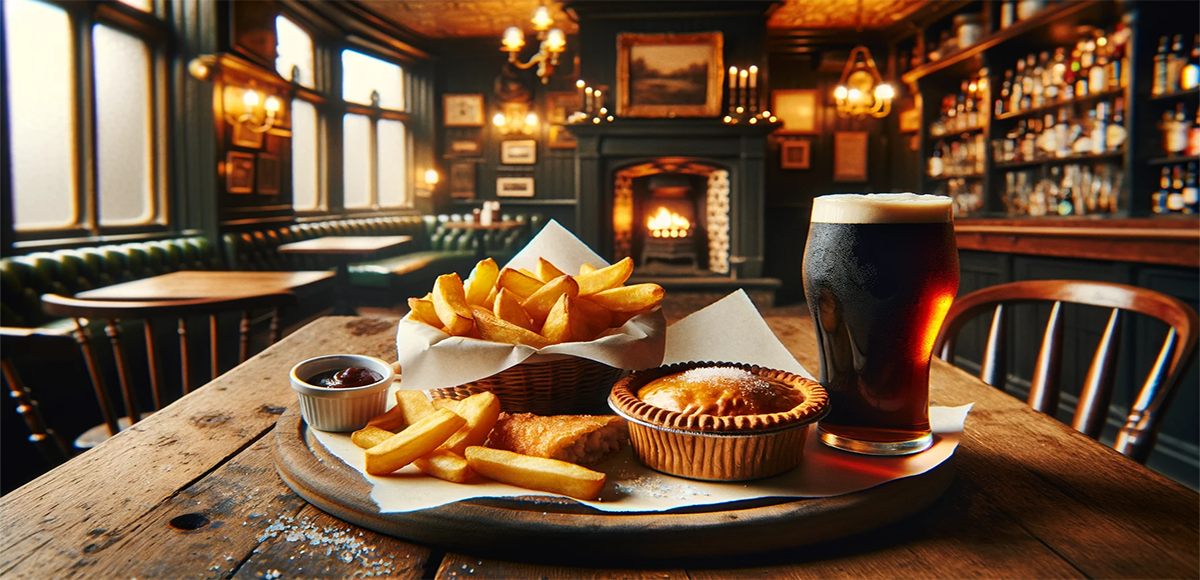
20 British Pub Classics at Home: Fish & Chips, Shepherd's Pie & Sunday Roast Dinners
Five families of dish, three techniques that make all of them work, and the US supermarket swaps for the handful of British staples worth tracking down.
Affiliate disclosure: AislePrompt may earn a commission on qualifying purchases made through Amazon and Instacart links in this article, at no additional cost to you. See our affiliate policy →
British pub food at home comes down to five families: a Sunday roast with Yorkshire puddings, a pastry-topped pie, a battered fish, a mashed-potato casserole, and a curry. Master a hot-fat Yorkshire, a 375°F fry, and one master gravy roux, and every dish below is a weeknight-or-weekend project you can actually finish.
British food is having a moment — here's what to actually cook
For thirty years "British food" was a punchline in American kitchens. That stopped being true somewhere around the point that half of the internet's most-watched home cooking came out of the UK. The food itself never deserved the reputation: a properly roasted joint of beef with real gravy, a steak and ale pie with flaky pastry, and a fish and chips fried at the right temperature are all straightforwardly great, and none of them require an ingredient you can't buy at a US supermarket.
What they do require is technique that Americans mostly weren't taught. Hot fat before batter. A resting roast. Gravy built from the pan, not a packet. Get those three right and the whole cuisine opens up.
This is twenty dishes across five categories, with the US supermarket swaps for the handful of British staples that are genuinely hard to find. If you want the neighbouring cuisine, 20 French Bistro Dinners covers the same comfort territory from across the Channel.
The pub kitchen pantry
Eight items do most of the work. Six are in any US supermarket; two you'll want to order.
| Item | What it does | US swap |
|---|---|---|
| Beef stock (good, low-sodium) | Base of every gravy | Better than Bouillon roasted beef |
| English mustard | Sharper and hotter than Dijon | Colman's, most stores carry it |
| HP / brown sauce | Tangy-sweet, for bangers and bacon | A1 plus a spoon of date syrup |
| Marmite | Umami depth in stews and gravies | Order it; nothing substitutes |
| Malt vinegar | Non-negotiable on chips | Widely stocked |
| Suet | Traditional pastry and puddings | Frozen grated butter or lard |
| Bisto or dark gravy browning | Colour and body | 1 tsp soy plus a dark roux |
| Digestive biscuits | Base for puddings and cheesecakes | Graham crackers, not identical |
The one splurge worth making is stock. Nearly every dish on this list ends with a gravy or a braising liquid, and thin stock is the single biggest reason home versions taste flat next to a pub's.
Sunday roast dinners: beef, lamb, chicken, and Yorkshire puddings
The Sunday roast is a format, not a recipe — a joint of meat, roast potatoes, two or three vegetables, Yorkshire puddings, and gravy, all landing on the table at once. That timing is the actual skill. The Sunday roast tradition dates to a pre-refrigeration habit of cooking the week's joint on the day everyone was home, and the structure has barely changed since.
1. Roast beef with Yorkshire puddings. Slow-Roasted Beef with Yorkshire Pudding — 550 calories, 50g protein, 6 servings, 40 minutes prep and 2.5 hours in the oven. This is the canonical version.
2. The horseradish variation. Slow-Roasted British Beef with Horseradish Yorkshire Pudding at 520 calories and 48g protein — horseradish folded into the batter itself, which is a better idea than it sounds.
3. Yorkshire puddings on their own. Traditional Yorkshire Pudding with Onion Gravy, 280 calories, 6 servings. Learn them separately before you try to time them against a roast.
4. Roast leg of lamb. Oven-Roasted Garlic and Rosemary Leg of Lamb — 580 calories, 60g protein, serves 8, about two hours. The Easter and special-occasion joint, and the leftovers make the best shepherd's pie you'll ever eat.
5. Roast chicken. Woodbridge Herb-Roasted Chicken with Herb Butter at 420 calories and 35g protein for 6 — the Sunday roast for a household of three, at a third of the cost and a quarter of the oven time.
The Yorkshire pudding is where most American attempts fail, and the failure is always the same: the fat wasn't hot enough. Beef dripping or oil goes into the tin and into a 425°F oven for a full 10 minutes until it is visibly shimmering and nearly smoking. Then cold, rested batter goes in — you should hear it sizzle immediately. Don't open the oven for 20 minutes. They will deflate a little as they cool; that's normal, not a failure.
Pies and pastries: steak and ale, Cornish pasties and Beef Wellington
6. Steak and ale pie. Beef and Ale Pie with Flaky Pastry — 510 calories, 6 servings, 25 minutes prep and 55 in the oven. Use a dark ale, not an IPA; hops turn bitter over a long braise.
7. The slow-cooked version. Slow-Cooked Beef and Ale Meat Pie at 550 calories and 35g protein, 7 hours in a slow cooker before the pastry ever appears. Better filling, more planning.
8. Cornish pasty. Cornish Pasty with Beef and Root Vegetables — 480 calories, 35g protein, 6 pasties. The filling goes in raw and cooks inside the pastry; that's the defining feature and the reason the beef has to be diced small.
9. Beef Wellington. Authentic British Beef Wellington at 680 calories and 44g protein for 4. The one genuinely difficult dish on this list. Chill the duxelles-wrapped fillet hard before the pastry goes on, or the pastry base steams and goes grey.
10. Meat pie with mushy peas. Meat Pie with Mushy Peas and Tomato Sauce — 450 calories, 4 servings, 55 minutes. The football-ground version: a pie, a scoop of peas, and a lot of tomato sauce.
Pub mains: fish and chips, bangers and mash, toad-in-the-hole
11. Fish and chips. Half-Pint British Ale-Battered Fish and Chips — 650 calories, 45g protein, 4 servings, 40 minutes. Fish and chips has been Britain's default takeaway since the 1860s and the technique has not improved on itself: cold beer batter, 375°F oil, and a rack rather than paper for draining.
12. The refined version. Craft Beer-Battered Fish and Chips with Lemon-Dill Aioli at 600 calories and 40g protein — same method, better sauce than tartare.
13. Bangers and mash. Bangers and Mash with Caramelized Onions — 600 calories, 20 minutes prep, 30 to cook. Prick nothing. British sausages have a higher rusk content than American ones and they hold together fine; piercing them just drains the fat you want.
14. Toad-in-the-hole. Toad-in-the-Hole with Onion Gravy at 600 calories and 35g protein for 4, 65 minutes. Same batter as Yorkshire pudding, same hot-fat rule, sausages browned first.
15. Cod with mushy peas. Pan-Seared Cod with Mushy Peas and Minted Butter — 350 calories, 40g protein, 25 minutes. The lighter pub plate: everything a fish-and-chips dinner delivers, without the fryer.
Comfort casseroles: shepherd's pie, cottage pie and lamb stew
16. Shepherd's pie. Classic British Shepherd's Pie with Ground Lamb and Mashed Potato — 520 calories, 38g protein, 6 servings, 70 minutes. Lamb. Shepherd's pie is made with lamb because shepherds tend sheep; the naming is that literal.
17. Cottage pie. Beef and Vegetable Cottage Pie with Crispy Potato Topping at 350 calories and 20g protein for 4 — the beef version, and genuinely a different dish, not a substitution.
18. The root-vegetable shepherd's pie. Oven-Baked Shepherd's Pie with Savory Beef and Root Vegetables, 480 calories, 32g protein. Parsnip and swede in the base, which stretches the meat and adds sweetness.
19. Lamb stew with pea mash. Stewed British Lamb with Mint and Pea Mash — 530 calories, 45g protein, 6 servings, nearly 2.5 hours. The hotpot-adjacent dish for a cold Sunday.
Both mashed-potato-topped pies live or die on the topping. Dry the boiled potatoes in the hot empty pan for a minute before mashing so they take butter instead of water, and fork-rough the surface before baking — the ridges are what brown.
Curries, because British curry is its own cuisine
20. Chicken tikka masala. Best Chicken Tikka Masala — 520 calories, 35g protein, 4 servings, 70 minutes. Chicken tikka masala was invented in a British restaurant kitchen, not in India, and it is by a wide margin the country's most-ordered dish. It is British food.
The faster version. Maharaj Indian Grill-Style Chicken Tikka Masala at 420 calories and 40g protein in 40 minutes total.
The korma. Chicken Korma with Spinach — 420 calories, 30g protein, 50 minutes. The mild end of the curry-house menu, cream and almond forward.
The hot end. Northern Indian-Spiced Lamb Curry with Tomato and Yogurt at 480 calories and 40g protein for 6 — the madras slot on a British takeaway menu.
Puddings
Sticky toffee pudding. Instant Pot Sticky Toffee Pudding — 450 calories, 6 servings, 50 minutes. The date-and-toffee sponge that is Britain's best dessert export and is barely known in the US.
The oven version. Maple Walnut Sticky Toffee Pudding at 450 calories for 6.
Apple crumble. Grandma's Apple Crumble — 220 calories, 6 servings, 62 minutes. The everyday pudding: no pastry skill required and it works with whatever fruit is cheap.
Trifle. Individual Berry Trifle with Mascarpone Cream at 280 calories, no baking, 15 minutes. Traditionally built in one enormous glass bowl; individual servings travel better.
The gravy playbook: one master roux, five variations
Every gravy on this list is the same three steps. Pour off all but 2 tablespoons of fat from the roasting pan or skillet. Whisk in 2 tablespoons of flour and cook it 2 full minutes over medium heat until it smells like toast — this is the step people skip, and skipping it is why home gravy tastes of raw flour. Then add 2 cups of hot stock a splash at a time, whisking, and simmer 5 minutes.
| Variation | Add to the base | Serve with |
|---|---|---|
| Beef gravy | 1 tsp Marmite, splash of red wine | Roast beef, Yorkshires |
| Onion gravy | 2 sliced onions caramelized 25 min first | Bangers, toad-in-the-hole |
| Ale gravy | 1/2 cup dark ale, reduced by half | Steak pie, sausages |
| Mint gravy | 1 tbsp mint sauce off the heat | Roast lamb |
| Chicken gravy | Pan drippings, thyme, squeeze of lemon | Roast chicken |
Two rules make the difference. Use hot stock, not cold — cold stock into a hot roux is how you get lumps. And season at the very end, because reducing a stock that was already salty gives you an inedible gravy and no way back.
Shopping list: US supermarket swaps
Butcher counter — beef top round or sirloin roast (3–4 lb), leg of lamb (5 lb), stewing beef (2 lb), ground lamb (1.5 lb), ground beef (1.5 lb), beef tenderloin (2 lb, for the Wellington), pork sausages (2 lb — buy bratwurst if there's no British banger), cod or haddock fillets (2 lb), whole chicken (4 lb).
Produce — 10 lb russet or Yukon gold potatoes, 4 yellow onions, 6 carrots, 1 swede/rutabaga, 2 parsnips, 1 lb frozen peas, 2 lb apples, fresh thyme, rosemary, mint, parsley, 1 lb mushrooms, 2 heads garlic, 1 lemon.
Dairy — 1 lb butter, 1 quart whole milk, heavy cream, 1 dozen eggs, mascarpone, plain yogurt.
Center aisles — all-purpose flour, frozen puff pastry, dark ale (4 bottles), beef and chicken stock, English mustard, HP or A1 sauce, Marmite, malt vinegar, Worcestershire, tomato paste, canned tomatoes, dates, dark brown sugar, golden syrup (or honey plus molasses), digestive biscuits or graham crackers, basmati rice, garam masala, ground coriander, turmeric, cumin, cayenne, ground almonds, neutral frying oil (2 quarts).
Push the whole list to your store from the shopping list tool, or use AislePrompt's chat to swap any dish for a version that fits a dietary restriction.
Common pitfalls
Cold fat under the Yorkshires. The number one cause of flat puddings. The fat must be shimmering-hot before batter touches it.
Frying at 350°F instead of 375°F. Below about 360°F, batter absorbs oil instead of setting. Fry fish and chips in separate batches so the oil temperature never crashes, and use a thermometer rather than guessing.
Draining fried food on paper towels. The steam has nowhere to go and it turns your crust soggy from underneath. A wire rack over a sheet pan, every time.
Using an IPA in the pie. Hop bitterness concentrates over a long braise into something genuinely unpleasant. Dark, malty, and low-hop.
Wet mashed potato on the pies. Watery mash slides off the filling and won't brown. Dry the potatoes in the pan first, and use butter and a small amount of hot milk, not cold cream.
Not resting the roast. Twenty minutes minimum under loose foil. Carving straight out of the oven puts the juice on the board rather than in the meat, and you also lose the window to make the gravy.
When not to cook British
If you're after a fast weeknight dinner, this isn't the cuisine — most of these dishes are 60 to 150 minutes, and the good ones are longer. The genuine weeknight British options are bangers and mash at 50 minutes, cod with mushy peas at 25, and the faster tikka masala at 40. Everything else belongs to a Sunday. Deep-frying is also a hard no if you don't have a thermometer and a heavy pot; the failure mode is greasy fish, and there's no rescuing it after the fact.
Sources
- Wikipedia — Sunday roast — the format and its history
- Wikipedia — Yorkshire pudding — batter ratios and the hot-fat method
- Wikipedia — Shepherd's pie — lamb versus beef and the cottage-pie split
- Wikipedia — Fish and chips — the 1860s origin and regional batter styles
- Wikipedia — Chicken tikka masala — the British-invention question
- BBC Good Food — Sunday lunch recipes — UK reference collection
Calorie, protein and timing figures come from the linked AislePrompt recipe pages, as of 2026.
Related guides
For the neighbouring comfort traditions, see 20 French Bistro Dinners, 18 Australian Recipes: Meat Pies, Pavlova and BBQ Classics, and 24 Southern Comfort Food Recipes. The leftover roast is handled in 20 Leftover Makeover Recipes: Sunday Roast to Wednesday Dinner, and the braising equipment is in 20 Dutch Oven Dinners.
Gear picks for all of the above: Cookware for the roasting pan and Dutch oven, Bakeware for the pudding tins and pie dishes, and Knives & Cutting for a carving knife that will outlast the oven.