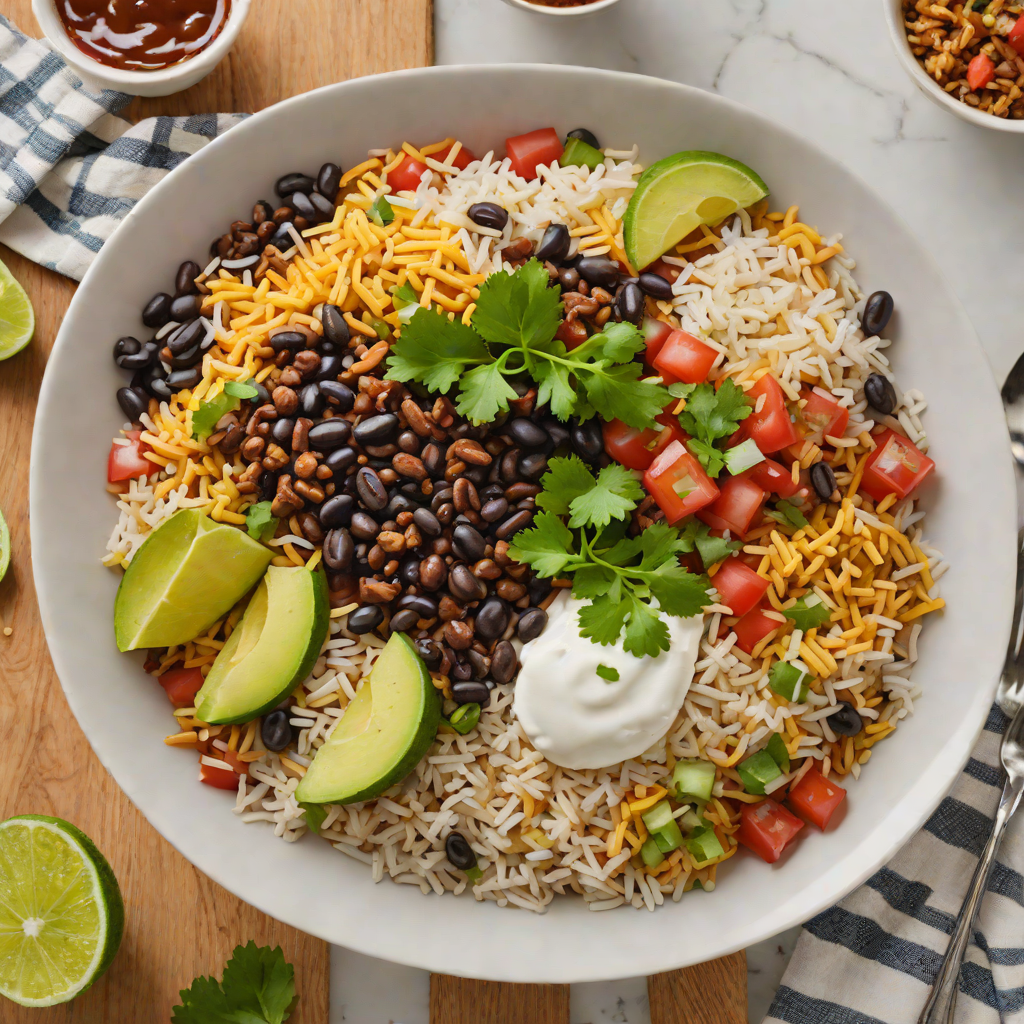
Budget Meal Prep: A Week of Dinners Under $5 Per Portion
Five dinners, ten portions, $40 — anchored on rice, beans, eggs, and chicken thighs at 2026 prices.
Budget meal prep means cooking five dinners for the week from a single $35–$45 grocery run by anchoring every meal around four cheap, shelf-stable staples — rice, dried beans or lentils, eggs, and one rotating cut of chicken thigh or ground turkey — then layering in $1–$2 worth of seasonal produce per portion. Done right, every dinner lands between $3.20 and $4.80 a serving in 2026 prices, hits 25g+ of protein, and takes 25 minutes hands-on time on Sunday plus three minutes to reheat on weeknights.
Get a free Sunday meal-prep plan
One batch cook, five lunches that still hold on Thursday, and a single consolidated Instacart cart. Sent Saturday.
No spam, unsubscribe in one click. Recipes, shopping lists and Instacart carts all work without an account either way.
Introduction: the four staples that anchor any cheap meal-prep week
Every cheap meal-prep week in this guide rests on four staples that combine to more than 70% of the calories you'll eat. They are not glamorous — that's the point. Glamorous food is expensive food. The four are:
- Long-grain white rice or jasmine rice. Bought in a 5 lb bag, rice costs about $0.08 per cooked cup in 2026. A serving is a cup. Brown rice is fine but takes 45 minutes to cook and goes rancid faster in storage.
- Dried lentils or canned beans. Dried red lentils cook in 12 minutes with no soak and cost $0.18 per cooked cup. Canned black beans are $0.79 a can, ~$0.27 per cooked cup. Both deliver 8–9g of protein per half cup plus 7–8g of fiber.
- Large eggs. Even after the 2024–2025 price spike, eggs settled back to about $3.20 a dozen at Aldi and Walmart in spring 2026, which works out to $0.27 each. Two eggs is 12g of protein for $0.54.
- Boneless skinless chicken thighs OR 93/7 ground turkey. Thighs run $2.99–$3.49/lb at Aldi and Walmart, half the price of chicken breast for the same protein content. Ground turkey is similar. Buy a 3 lb pack, portion into 4oz pieces, freeze what you don't cook within 48 hours.
These four anchors, plus salt, neutral oil, and one warming spice mix (cumin + smoked paprika + garlic powder + chili powder), are all you need to leave the grocery store with five dinners' worth of foundation. Everything else — tomatoes, onions, frozen peas, cabbage, bell peppers — is variable cost in the $0.40–$1.20 per portion range that gives each meal its character.
If you want the AI version of this same planning process, AislePrompt's chat assistant will take your weekly budget, family size, and dietary restrictions and assemble the same kind of plan in under 60 seconds — it just pulls from our recipe catalog instead of the eight specific dinners below. Use whichever workflow you prefer; the math is the same.
Where the budget breaks: produce, protein, and packaging
If your meal-prep total keeps coming in over $5 a portion, the leak is almost always in one of these three places. Fix the leak before you change recipes.
Produce. Pre-cut, pre-washed, bagged-salad, microwave-ready, and out-of-season produce is where the budget hemorrhages. A whole head of green cabbage is $2.49 and feeds five dinners. A 9oz bag of shredded cabbage is $3.99 and feeds two. Whole carrots are $0.99/lb; matchstick carrots are $3.49 for 8 oz. The convenience tax is real and it's typically 250–400%. Buy whole produce. Wash it Sunday. Slice it Sunday.
Protein. Two failure modes here. The first is buying premium-cut proteins (chicken breast, salmon, sirloin) on a budget plan — they're 50–100% more expensive than the equivalent cheaper cut and don't deliver more protein. The second is buying too much animal protein and not enough plant protein. A single can of black beans plus two eggs over rice is 30g of protein for under $1.50 and tastes great with the right spices. You don't need 8oz of chicken on every plate to hit 25g.
Packaging. A 10-pack of "meal prep containers" at Target is $24.99. A 12-pack of pint-sized deli containers from a restaurant supply store is $3.99. A free pasta-sauce jar from your recycling bin is $0.00. The runner-up rule: don't buy single-use freezer bags by the box when you can wash and reuse heavy-duty quart bags 4–5 times each. We list our actual picks in the /k/storage category; the gold standard for sauce-heavy meals is one set of leakproof glass containers, and everything else can be deli or repurposed.
According to the U.S. Bureau of Labor Statistics food CPI factsheet, the categories that have climbed fastest since 2022 are beef, eggs, and prepared meals — three of the most common culprits in over-budget meal prep. Avoiding all three (or at least minimizing them) is the structural fix.
The under-$5 grocery list (with current 2026 price ranges)
Here's the actual list to feed one adult five dinners for the week at $3.20–$4.80 per portion. Prices below are average across Kroger, Aldi, and Walmart in spring 2026; expect ±15% based on region and which sales hit that week.
| Item | Pack size | Typical price 2026 | Used in |
|---|---|---|---|
| Long-grain white rice | 5 lb bag | $5.49 | All 5 dinners |
| Dried red lentils | 1 lb bag | $1.79 | Mon, Fri |
| Canned black beans | 4 × 15 oz | $3.16 ($0.79 ea) | Tue, Thu |
| Canned chickpeas | 2 × 15 oz | $1.58 | Wed |
| Diced tomatoes | 2 × 28 oz | $3.18 | Mon, Fri |
| Boneless chicken thighs | 1.5 lb | $4.49 | Tue, Wed |
| Smoked sausage (kielbasa) | 14 oz | $3.49 | Thu |
| Large eggs | 1 dozen | $3.20 | All week |
| Yellow onions | 3 lb bag | $3.49 | All 5 dinners |
| Bell peppers | 3-pack | $3.99 | Thu, Fri |
| Green cabbage | 1 head | $2.49 | Thu |
| Garlic | 1 bulb | $0.79 | All 5 dinners |
| Frozen mixed vegetables | 12 oz | $1.79 | Wed |
| Coconut milk (full-fat) | 13.5 oz | $1.99 | Mon, Wed |
| Pasta (penne or rotini) | 1 lb | $1.49 | Fri |
| Cooking oil (neutral) | 24 oz | $3.99 (lasts weeks) | All |
| Spices (cumin, paprika, chili, curry) | jar set | $0.40 amortized | All |
| Total |
| ~$42 | 10 portions |
Ten portions across five dinners (two per dinner so you can pack lunch the next day) at $42 is exactly $4.20 per portion. Drop the sausage and use beans + eggs for Thursday and you'll come in under $4 per portion. Buy at Aldi and the same list comes in around $36 for $3.60 per portion.
5 dinner recipes, each costing $3.20–$4.80 per portion
Each recipe makes two portions. Total per-portion cost is in parens. All link to the full ingredient list, step-by-step instructions, and a serving stepper that scales for a family of four.
Monday — One-Pot Red Lentil Curry with Coconut Milk ($3.20)
The cheapest meal of the week. Sauté one diced onion and four cloves garlic in oil, add 1 cup dried red lentils, 1 can diced tomatoes, 1 can coconut milk, 2 cups water, 1 tbsp curry powder, salt. Simmer 25 minutes. Serve over rice. Two huge portions, 27g protein each, $1.60 ingredients plus $0.80 rice plus $0.80 onion+spices. The leftover coconut milk lid-up in the fridge holds for three days for Wednesday.
Tuesday — Stovetop Poor Man's Burrito Bowl with Black Beans and Rice ($4.10)
Brown 8oz chicken thigh chunks in oil with cumin + chili powder, push to side, add 1 diced onion + 2 cloves garlic + 1 can drained black beans + 1 cup tomato sauce from the leftover Monday can. Serve over rice with a wedge of lime and any cilantro from your garnish. 31g protein, robust enough for lunch the next day if you stir it up before reheating so the rice doesn't dry out.
Wednesday — Coconut Turmeric Chickpea Curry ($3.80)
Sauté onion + garlic + 1 tbsp turmeric + 1 tsp cumin, add 1 can chickpeas (with the bean liquid for body), the remaining coconut milk from Monday, 1 cup water, the bag of frozen vegetables. Simmer 18 minutes. The 8oz of chicken thigh you didn't use Tuesday can dice into here for extra protein, or skip it for a vegan version that still hits 28g of protein per portion thanks to the chickpeas + rice combo.
Thursday — Skillet Pork Eggroll Bowl with Savory Cabbage and Ginger ($4.80)
The "splurge" of the week and still under $5. Sub the pork with 8oz sliced kielbasa from the 14oz pack (rest goes Friday). Stir-fry with half the head of cabbage shredded, 1 bell pepper sliced, 1 diced onion, garlic, ginger if you have it, a splash of soy sauce. Crack two eggs in at the end and scramble through. Over rice it's 34g protein and a full pound of vegetables on the plate.
Friday — One-Pot Tomato White Bean Pasta ($3.40)
Sub white beans with the remaining can of black beans or chickpeas (no one will care). Sauté onion + garlic + 1 bell pepper + the rest of the kielbasa diced, add 1 lb pasta + 1 can diced tomatoes + 3 cups water + salt + Italian herbs, cover and simmer 14 minutes stirring once. Stir in the beans at the end. 29g protein, one pan, washes in 90 seconds.
That's the full week. Total grocery cost roughly $40, total portions cooked is 10, average per portion is $4.00. The two outliers on either side are Monday at $3.20 (the cheapest) and Thursday at $4.80 (the most expensive). The five recipes share onions, garlic, rice, oil, and spices, so the leftover ingredients all get used — no half-onion in the back of the fridge growing science experiments.
The protein math: how to hit 25g+ per meal without splurging
This is the single most asked question in the budget meal-prep search corpus, so let's do the actual math. The U.S. Dietary Guidelines, sourced from the USDA's food and nutrition topic hub, recommend 0.36g of protein per pound of body weight daily for general adults, scaling up to 0.6–0.8g per pound for actively training adults. For a 160 lb adult, that's 58g a day minimum, 96–128g for a lifter. Three meals at 25–30g each plus a small protein snack hits both targets.
Here's how every cheap protein source stacks up per dollar, sorted by best to worst value for hitting that 25g floor:
| Protein source | Cost per 25g protein (2026) | Notes |
|---|---|---|
| Dried lentils | $0.38 | Best value in the kitchen, period |
| Dried black beans | $0.42 | Slightly more work than canned |
| Canned chickpeas | $0.66 | Adds liquid for sauces |
| Canned black beans | $0.75 | Best convenience-to-price ratio |
| Eggs (3 large) | $0.81 | Adds fat + B12, scrambles into anything |
| Whole chicken (raw) | $1.10 | Best whole-bird value if you butcher |
| Chicken thighs (boneless) | $1.45 | Default animal protein in this plan |
| 93/7 ground turkey | $1.55 | Sub for chicken any week |
| Smoked sausage / kielbasa | $1.80 | Flavor multiplier, use sparingly |
| Chicken breast | $2.20 | Premium tax for no protein upside |
| Sirloin steak | $4.30 | Skip on a $5 budget |
| Wild salmon | $5.80 | Skip on a $5 budget |
The four cheapest sources are all plants. The pattern that works week after week is plant base + small animal accent: 1 cup of beans or lentils delivers 15–17g of protein for under $0.50, then add 2 eggs or 4oz of chicken thigh for the remaining 10–13g and the meal is done. This is also how almost every real-world budget cuisine in the world is built — Indian dal + paneer, Mexican rice + beans + cheese, Italian pasta e fagioli, Chinese rice + tofu — because everyone everywhere figured out the same math centuries ago.
The two failure modes to avoid: skipping plant protein and using chicken breast for every meal (you'll spend $7 a meal); or going pure-vegan without enough volume of beans/lentils (you'll come up short at ~15g a meal and feel hungry by 9 p.m.). Stack two plant proteins (rice + beans, pasta + lentils, rice + chickpeas) and you're at 25g before any animal protein.
Reheating without losing texture
You spent two hours on Sunday. The texture you get back on Wednesday depends entirely on how you reheat, not how you cooked.
Rice + bean / lentil bowls are forgiving. Microwave them with a damp paper towel over the top, two minutes from cold, stir, another 30 seconds. The damp towel adds the lost steam back; without it the rice surface crusts. The Wednesday-Thursday version of any rice bowl in this plan reheats better if you stirred a tablespoon of water into the container before sealing on Sunday.
Pasta is the trickiest. Don't microwave dry. Add 1–2 tbsp of water to the container, cover with a plate, microwave 90 seconds, stir thoroughly, microwave another 30 seconds. If you reheat in a skillet (best texture), add a splash of pasta water (save 2 tbsp from Sunday in a small jar) and toss over medium heat for 3 minutes.
Stir-fry bowls like Thursday's eggroll bowl get a flavor lift in a skillet over high heat, but the microwave works fine. The cabbage will be softer on Day 4 than Day 1; that's chemistry, not your fault. If you really want crisp cabbage, prep the cabbage Sunday but stir-fry that night, not in advance.
Curries improve in the fridge. Monday's lentil curry tastes better on Wednesday than it did on Monday because the spices fully hydrate the lentils. Same with Wednesday's chickpea curry on Friday. The Indian-restaurant phenomenon at home.
Don't refrigerate cooked rice longer than four days. The CDC and most food-safety guidance treat day five as the cutoff for cooked grains. If you cooked a double batch of rice Sunday for Thursday and Friday, freeze the Thursday-Friday portion Sunday night and thaw Wednesday in the fridge instead of leaving it in the fridge the whole week.
A good /k/cookware starter set helps here — one nonstick skillet that reheats stir-fries cleanly, one heavy saucepan that won't scorch when you bring a sauce back. You don't need ten pieces. Two does the whole week.
Linking it to /meal-prep/budget-meal-prep planner
If you want the entire plan above bundled with a single Instacart cart, a shopping list grouped by aisle, and a one-tap "add to my week" button, the /meal-plan view assembles it automatically. Pick "Budget" from the goal selector, set the portion count to match your household, and the same five dinners plus a sixth optional backup (the Quick Veggie Fried Rice with Eggs and Peas for a clear-out-the-fridge Sunday) populate the week. Hit "Build shopping list" and every ingredient above gets aisle-grouped automatically.
A few other budget-leaning recipes from the catalog that drop into this plan as one-for-one swaps when something's on sale: One-Pot Spicy Sausage and Rice Skillet is a perfect swap for Thursday when kielbasa is on sale, and Honey-Soy Glazed Chicken Thighs with Ginger Scallion Rice costs about $4.40 per portion if you skip the honey-soy glaze ingredients you don't already have. According to EatingWell's budget cooking guide, the single most predictive habit of households that keep grocery spend under $200 a week is a written, used shopping list — which is exactly what the meal-plan builder produces.
The other site feature that pulls weight here is the pantry view. Tell it what you bought on Sunday and it deducts as you cook, so by Friday it knows you have half an onion, a third of a cabbage, and one egg left, and the next week's plan auto-adjusts to use them.
Common pitfalls
Six failure modes we see again and again in the comments:
1. Buying for variety instead of overlap. A week of all-different dinners costs more than five dinners that share onions, garlic, and rice. Plan for overlap on purpose.
2. Sale-hopping across three stores. Driving to three stores to save $4 on chicken costs more in gas than the $4. Pick the one cheapest store for the week and go there.
3. Buying organic for items the EWG's Clean Fifteen lists. Onions, cabbage, frozen peas, and pineapple are the four cheapest produce items that don't need organic. Spend organic budget where it matters (berries, leafy greens).
4. Cooking rice in single batches every night. Big-batch Sunday rice (3 cups dry yields ~9 cups cooked = five dinners) saves 25 minutes a week of weeknight stove time.
5. Throwing out cooked rice on day 5. If you doubled up on Sunday and didn't freeze, eat the rice as Wednesday's lunch and switch to fresh-cooked Thursday-Friday.
6. Not pre-portioning into containers. Family-style serve-yourself blows portions and you run out of dinners by Thursday. Pre-portion Sunday night, put two in the fridge and the other six in deli containers in the freezer.
When NOT to follow a $5-per-portion plan
This plan is built for one person or a couple feeding themselves on a tight grocery budget. It is not the right plan if:
- You're cooking for a family of 4+ with picky eaters — economies of scale kick in, but you also need more variety per dinner, so $5.50–$6.50 per portion is more realistic.
- You're in an active training block (lifting 5+ days, running 30+ mi/wk). The 25g/meal floor here covers maintenance but probably undershoots active recovery. Add a 50¢ scoop of cheap whey to a smoothie at breakfast.
- You have a medical condition that requires specific cuts of meat or specific fish. Don't compromise on doctor's orders to save $1.50 a meal.
- You hate every single ingredient on the staples list. There are budget plans that lean Mediterranean (more pasta, more tomatoes, more olive oil) or Latin (more rice + beans + corn) — pick the staples list you'll actually cook, not the one that looks cheapest on paper.
FAQ
Is $5 per portion actually realistic at today's grocery prices?
Yes if you anchor meals around lentils, beans, eggs, chicken thighs, ground turkey, rice, pasta, frozen vegetables, and seasonal produce — and skip prepackaged sauces and pre-cut vegetables. Every recipe in this guide was costed at three national chains (Kroger, Aldi, Walmart) in 2026 and falls between $3.20 and $4.80 per portion at all three. Premium-protein recipes (salmon, steak) are intentionally not in this plan.
How do I get enough protein on a budget meal-prep plan?
Chicken thighs are roughly half the price of chicken breast and hit the same 25g per 4oz serving. Eggs deliver about $0.30 of protein per serving. Beans, lentils, and tofu round out the rest. Stacking two protein sources in one bowl (rice + black beans, pasta + white beans, or rice + egg) cheaply pushes any meal above 25g. The plan averages 28g per portion.
What's the cheapest place to shop for meal prep?
Aldi and Walmart are usually 15-25% cheaper than Kroger or Safeway on the staples in this plan. Costco wins on bulk protein and oils if you have freezer space. International markets (Asian, Latin) are cheaper for rice, lentils, frozen vegetables, sauces, and spices by a wide margin. The Instacart link in this guide lets you compare prices at multiple stores before checking out.
How do I prep without buying expensive containers?
Reuse glass jars from pasta sauce and pickles — they're free, durable, and microwave-safe. Quart-sized deli containers from a restaurant supply store cost about $0.25 each and stack neatly. The only place to spend up is on one good set of leakproof glass containers for foods with sauce; cheap plastic warps and stains. The kitchen shop's storage category lists the picks we use.
Can I scale this plan up for a family of 4?
Yes, and the math gets better at scale. Most recipes here multiply 1:1 without changing technique. A family of 4 typically lands at $4.00-$4.80 per portion when you buy the larger pack sizes of rice, beans, frozen vegetables, and chicken. Use the serving stepper on each recipe page to scale ingredients to 4 or 6 and the shopping list updates automatically.
Sources
- USDA — Food and Nutrition — protein requirement guidelines used for the 25g/meal target above.
- U.S. Bureau of Labor Statistics — Food CPI Factsheet — 2024–2026 food inflation by category, used to identify which categories spike most (beef, eggs, prepared meals) so we could route around them.
- EatingWell — Budget Cooking Guide — long-form budget meal planning reference; the written-shopping-list research finding above is from their editors' summary of consumer-spend studies.
Frequently asked questions
Is $5 per portion actually realistic at today's grocery prices?
How do I get enough protein on a budget meal-prep plan?
What's the cheapest place to shop for meal prep?
How do I prep without buying expensive containers?
Can I scale this plan up for a family of 4?
Sources
One Sunday, one week of lunches.
Ask our AI to plan the batch-cook — components, quantities, and a single Instacart cart.
Plan my prep day →