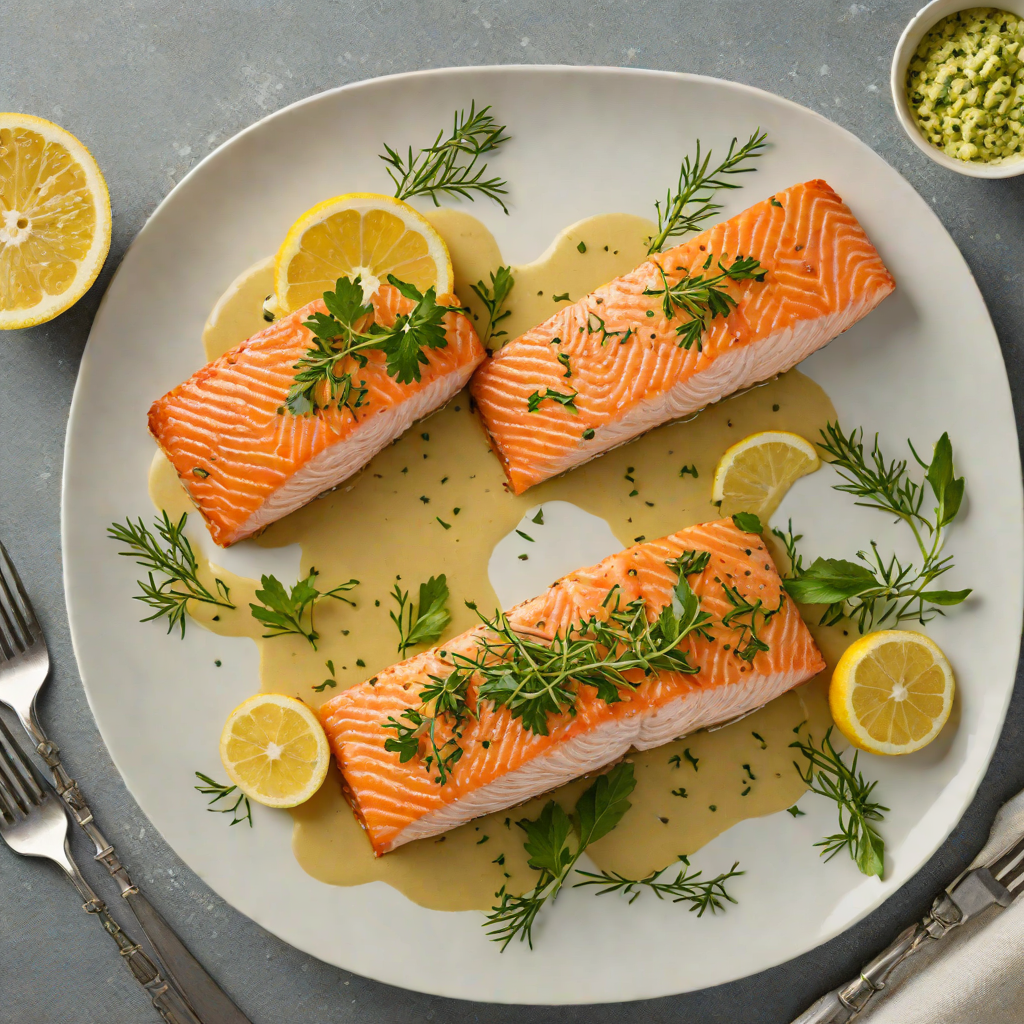
How to Cook Salmon: 20 Recipes + Complete Buying, Prep, and Cooking Guide
The chef-standard for salmon is 125°F, not 145°F — and once you nail temp, the rest is choosing wild vs farmed, fillet vs portion, and a pan hot enough that the skin releases on its own.
To cook salmon perfectly, pull it from the heat at an internal temp of 125°F in the thickest spot and let it rest for 3–5 minutes to carry to 130°F. That's the chef-standard — buttery, translucent in the middle, no chalky white albumin bleeding out of the flesh. The USDA guideline of 145°F is safe, but it produces dry salmon most home cooks describe as "fine." The 20°F difference is why restaurant salmon tastes like a different fish than the one you cook at home.
Get a free week of easy dinners
Seven weeknight dinners with the shopping list already totalled, sent Sunday. No account needed, unsubscribe in one click.
No spam, unsubscribe in one click. Recipes, shopping lists and Instacart carts all work without an account either way.
Salmon is the highest-ROI protein for weeknight dinner: 8 minutes in a hot pan for a 6 oz portion, one pan to clean, and a fat profile that carries almost any sauce you throw at it. This guide covers everything from the fish counter to the plate — how to buy it, how to store it, the four core cooking methods with times and temps, the internal-temp debate, and 20 recipes from the catalog you can rotate through the year.
Why salmon is the highest-ROI weeknight protein
Chicken breast wins on price. Beef wins on flavor per bite. Salmon wins on the ratio you actually care about on a Tuesday at 6:47 PM: calories to satiety to time in the pan. A 6 oz portion runs 300–400 calories, delivers 34g of complete protein, 1.5–2.5g of omega-3s, and cooks in the time it takes to boil rice. Chicken breast can't touch the omega-3 numbers; beef takes twice as long to sear properly.
The nutrition case is direct — here's a 100g raw comparison of the three weeknight staples.
| Protein | Calories | Protein (g) | Omega-3 (mg) | Iron (mg) |
|---|---|---|---|---|
| Atlantic salmon | 206 | 20 | 2,200 | 0.3 |
| Sockeye salmon | 168 | 22 | 1,300 | 0.5 |
| Chicken breast | 165 | 31 | 30 | 0.4 |
| 85% lean ground beef | 215 | 18 | 40 | 2.1 |
Salmon wins on omega-3s by a factor of 30–50x, and it's a leaner, more digestible protein source than red meat. It also holds shape on a sheet pan, a grill, a broiler, or a skillet — no other protein is that versatile across cooking methods. Start with something simple like Pan-Seared Salmon with Lemon Butter and Herb Sauce if you want the classic Tuesday-night version.
Wild vs farmed vs Atlantic vs sockeye vs king (buying guide)
Almost all "salmon" in a US grocery store falls into four buckets. Each has a use case; none is objectively better.
| Type | Fat | Color | Flavor | Price/lb (2026) | Best for |
|---|---|---|---|---|---|
| Atlantic (farmed) | 10–15% | Pale pink | Mild, buttery | $10–$14 | Pan sear, roast, sauce-forward dishes |
| Sockeye (wild) | 2–5% | Deep red-orange | Bold, "fishy" in a good way | $22–$30 | Grill, blacken, cedar plank |
| King/Chinook (wild) | 15–20% | Orange to white | Rich, silky | $30–$45 | Special occasion sear, sashimi-grade |
| Coho (wild) | 5–8% | Medium orange | Balanced, clean | $18–$25 | All-purpose, especially oven roasting |
Rule of thumb: if you're cooking with butter, cream, or a citrus sauce that needs a fat carrier, buy the fattier farmed Atlantic. If you're grilling, blackening, or cedar-planking where char and boldness matter, buy sockeye. Save king for the once-a-year salmon dinner where the fish is the whole point.
Environmental impact varies more by farm certification than by species, per Seafood Watch's salmon recommendations. Look for ASC (Aquaculture Stewardship Council) or BAP (Best Aquaculture Practices) labels on farmed Atlantic; look for MSC (Marine Stewardship Council) on wild sockeye and coho. Uncertified farmed salmon from Chile has the worst impact profile; Norwegian and Scottish ASC-certified farms are middle-of-pack; Alaskan wild is best.
How to buy fresh salmon (look, smell, ask questions)
Freshness at the counter matters more than species — a 3-day-old sockeye is worse than a same-day farmed Atlantic. Four things to check before you buy.
1. Smell. Fresh salmon smells like clean ocean or nothing. If you smell "fishy," it's turning. Real fresh fish is odor-neutral.
2. Look at the flesh. Translucent, glistening, no white or brown discoloration between the muscle segments. Dry, matte, or grayish edges mean it's been out of ice too long.
3. Press it. A gentle press should spring back. If your finger leaves a dent, the protein has broken down and the texture will be mushy after cooking.
4. Ask when it came in. Fishmongers who know their stock will tell you the delivery day. If they can't answer, buy something else. A good chef's knife is only useful on fresh fish.
If your grocery only stocks frozen, that's fine — modern flash-frozen salmon is often fresher than "fresh" counter salmon that's been sitting on ice for three days. The freezing happens on the boat within hours of catch, at temperatures your home freezer can't reach. Thaw in the fridge overnight.
Fillet, portion, or whole side — which to buy when
Fresh salmon is sold in three formats. Match the format to the meal.
- Portions (5–8 oz individual pieces): best for weeknight dinners for 2–4 people. Even thickness = even cooking = no more overcooked tail ends. Pay a $2–$4/lb premium for the labor.
- Fillet (half-side, 1.5–2.5 lb): best for a family dinner or when you want to portion your own. Cheaper per pound, but you need a long slicer knife or a heavy chef's knife to make clean cuts through the pin-bone area.
- Whole side (2.5–4 lb): best for a party, a make-ahead lunch stash, or a slow-roasted centerpiece. Buy skin-on; skin protects the flesh during long-hold cooking and pulls off in one sheet after.
Pin bones: run your fingers along the flesh in the direction of the tail. You'll feel bones sticking up in a line down the thickest part. Pull them out with tweezers or needle-nose pliers. Most fillets are sold pin-boned, but always check — biting one is unforgettable.
How to store salmon (fridge 2 days, freezer 3 months)
Salmon holds quality for 2 days in the fridge and 3 months in the freezer, vacuum-sealed at 0°F. Both windows are conservative — you can go a day longer, but flavor and texture start to slide.
Fridge storage: wrap the portions in butcher paper, then in a zip-top bag, then set on ice in a bowl on the bottom shelf. The ice keeps the salmon at 32–34°F instead of the 38°F your fridge actually runs. This 4–6°F difference doubles storage life.
Freezer storage: vacuum-seal if you have one. If not, wrap in plastic film → foil → freezer bag (triple-wrap) to fight freezer burn. Label with the date; salmon doesn't announce itself when it's turned. Thaw in the fridge overnight, never on the counter — the outside hits room temp before the middle thaws. Airtight storage containers work as a backup for portioned pieces.
The 4 core cooking methods: sear, bake, broil, poach
Every salmon recipe is one of these four techniques. Times below are for a 6 oz, ~1-inch-thick portion at room temp (out of the fridge for 15 minutes before cooking).
| Method | Pan/vessel | Temp | Skin-side | Flesh-side | Total |
|---|---|---|---|---|---|
| Sear | Stainless or carbon steel | Medium-high | 4 min | 2 min | 6 min |
| Bake | Sheet pan | 400°F | — | — | 10–12 min |
| Broil | Sheet pan, top rack | Broiler high | — | 6–8 min | 6–8 min |
| Poach | Wide sauté pan | 160°F liquid | — | 8–10 min submerged | 8–10 min |
Sear is the default. Ripping-hot stainless or carbon steel pan, salmon skin patted bone-dry, 1 tbsp neutral oil, salmon skin-down for 4 minutes without moving it. Flip only when the skin releases on its own — if it sticks at 4 minutes, wait another 30 seconds. Baste with butter and thyme for the last minute. Try it with Cedar-Plank Salmon with Maple Mustard Glaze when you want the grill version.
Bake for hands-off dinners. 400°F oven, sheet pan, salmon on parchment, done in 10–12 minutes. Ideal for one-pan meals with vegetables underneath. See Half-Sheet Pan Honey Garlic Salmon with Roasted Vegetables.
Broil for weeknight speed and char. Rack 4–6 inches from the top element, broiler on high, 6–8 minutes total, no flip. The top gets caramelized while the middle stays medium-rare. A Cajun-blackened salmon taco is a broiler-first build.
Poach when you want silky-soft, mild-flavored salmon for salads or grain bowls. 160°F court bouillon (water + white wine + lemon + herbs + salt), fully submerged, 8–10 minutes. The Serious Eats team has a full poaching walkthrough that goes deep on the technique.
The internal temp debate (125°F vs 130°F vs 145°F)
This is where salmon lives or dies. Three temperatures matter.
- 125°F pulled → 130°F rested: chef-standard. Buttery, translucent center, no albumin bleed. What restaurants serve.
- 130°F pulled → 135°F rested: "medium." Flakes cleanly, no translucence, still moist. Safe for anyone.
- 145°F: USDA guideline. Dry, fully opaque, flakes into powder. Follow this for immunocompromised guests, kids under 5, or pregnant women per USDA food safety recommendations.
An instant-read thermometer is the single tool that upgrades your salmon forever. Under $25, faster than a probe thermometer, more accurate than the "flakes when pressed" test. Stick it in the thickest spot; pull at 125°F. That's it. You will never overcook salmon again.
Why the USDA number is high: the 145°F guideline is set to kill every parasite and bacterial threat in every possible fish scenario, including gas-station sushi. Farm-raised Atlantic salmon has ~1/1000th the parasite risk of wild salmon, and any salmon that's been frozen to -4°F for 7 days has zero live parasites. The safety math for a healthy adult eating quality salmon at 125°F is fine.
20 curated salmon recipes from the catalog
Pick one that matches your night. Every recipe here is catalog-tested with real user ratings.
Weeknight sears (10–15 minutes):
- Pan-Seared Salmon with Lemon Butter and Herb Sauce — the classic. If you learn one salmon recipe, learn this one.
- Pan-Roasted Salmon with Miso-Ginger Glaze — 5-ingredient glaze that tastes like a $28 restaurant plate.
- Tuscan Garlic Salmon with Spinach and White Beans — one-pan, cream-based, done in 20 minutes.
Sheet-pan dinners (20–30 minutes):
- Half-Sheet Pan Honey Garlic Salmon with Roasted Vegetables — one pan, whole dinner, veg cooks in the salmon fat.
- Oven-Roasted Mediterranean Salmon with Lemon and Capers — bright, briny, dinner-party worthy without effort.
Bowls and tacos:
- Japanese-Style Teriyaki Salmon Bowls — rice, salmon, quick pickled cucumber, done.
- Sushi-Style Salmon Poke Bowl with Avocado and Pickled Ginger — raw sushi-grade salmon only. See the safety note in the FAQ.
- Salmon Tacos with Mango-Avocado Salsa and Cilantro-Lime Crema — broiler-fast, kid-friendly with the fruity salsa.
Weekend / dinner-party builds:
- Cedar-Plank Salmon with Maple Mustard Glaze — 45 minutes on the grill, aromatic smoke does the heavy lifting.
- Creamy Spinach and Salmon Piccata Skillet — capers, lemon, butter, salmon. Serve over pasta.
Rotate 4–5 of these through a month and you'll never get bored. Salmon is one of the few proteins that pairs equally well with butter, miso, cream, citrus, chile, soy, and maple — the sauce carries the change.
Quick salmon dinners under 25 minutes
The fastest salmon dinner is a portion, salt, pepper, olive oil, hot pan, 6 minutes, done. When you need a real 25-minute meal (protein + starch + veg), these three formats work every time.
1. Sheet pan. 400°F oven. Salmon on one half, cut vegetables on the other. 12 minutes. Season the veg first because the salmon fat drips into them.
2. Bowl. Rice cooker on before you touch the salmon; you get 20 minutes of hands-free rice. Sear the salmon in 6 minutes. Top with slaw, kimchi, or a quick pickled cucumber.
3. Pasta or grain skillet. Cream sauce in the pan, spinach wilted in, cooked pasta or farro added, seared salmon flaked over the top. 22 minutes flat with dry pasta boiling in parallel.
For the exhausted-Tuesday version: skip the rice/pasta, roast a bag of frozen green beans at 425°F, pan-sear the salmon, done in 15 minutes total. Nobody's writing a food blog about it, but it's the meal you'll make 40 times a year.
Kitchen equipment that makes salmon better
You don't need much. Four items cover 100% of the techniques above.
| Tool | Category | Why it matters |
|---|---|---|
| 12" stainless or carbon steel skillet | Cookware | Only surface hot enough to release salmon skin cleanly |
| Half-sheet pan with parchment | Bakeware | The single-vessel weeknight dinner platform |
| Instant-read thermometer | Utensils | 125°F vs 145°F is a $25 upgrade you can't get any other way |
| 8" chef's knife or Japanese gyuto | Knives | Clean cuts through pin-bone area, no shredded flesh |
Skip: fish spatulas (a regular thin metal spatula works), salmon-specific pans (a good stainless does everything), and any "grill mat" that claims to keep salmon from sticking (properly heated pan solves this).
The one splurge that's worth it: a cast-iron or carbon steel skillet if you don't already own one. Once seasoned, salmon skin releases from carbon steel as easily as from nonstick — with sear color a nonstick pan physically can't produce.
FAQ
The five questions we get most often from readers cooking salmon at home.
Wild or farmed salmon — which should I buy?
Both are fine; the choice depends on what you're cooking. Wild sockeye is deeper red, leaner (2–5% fat), and stands up to grilling and blackening — but costs 2–3x more and has a shorter fresh season (May–September). Farmed Atlantic is milder, fattier (10–15% fat), and cheaper — better for citrus/butter preparations where you want the fat to carry the sauce. Environmental impact varies more by farm certification than by species; check for ASC or BAP labels.
What internal temperature should salmon hit?
125°F pulled from the heat, resting to 130°F — that's the current chef-standard for buttery, translucent-in-the-middle salmon. The USDA guideline of 145°F is safe but overcooked by modern standards, producing dry flaky salmon most home cooks describe as 'fine.' If you're feeding immunocompromised guests, kids under 5, or pregnant women, follow USDA. Otherwise, an instant-read thermometer to 125°F in the thickest spot is the single upgrade that changes your salmon forever.
Why does my salmon skin stick to the pan?
Because the pan isn't hot enough or the skin isn't dry enough. The fix: pat the skin bone-dry with a paper towel, salt it 10 minutes ahead, heat a stainless or carbon steel pan over medium-high until a droplet of water skitters, add 1 tbsp oil, and lay the salmon skin-down away from you. Don't move it for 4 minutes. The skin releases itself when it's ready. If it sticks at 4 minutes, wait another 30 seconds — it will let go.
Is it safe to eat salmon raw?
Only if it's labeled 'sushi grade' or 'previously frozen at -4°F for 7 days' (the parasite-kill threshold). Standard grocery-store salmon has not been frozen to that spec and can carry parasites; freezing your own home freezer isn't cold enough. If you want to make poke, sashimi, or crudo at home, buy from a fishmonger who explicitly says the fish has been flash-frozen to spec. Farmed salmon is lower-risk than wild but 'lower' is not zero.
How long does salmon last in the freezer?
Vacuum-sealed and frozen at 0°F, salmon holds quality for 3 months. After that, it's still safe but the texture degrades — freezer burn and oxidized fats start to affect flavor. Wrap in plastic then foil then a freezer bag if you don't have a vacuum sealer; this triple-wrap gets you 2 months of protection. Thaw in the fridge overnight, never on the counter — the outside hits room temp before the middle thaws.
Sources
- Seafood Watch — salmon sustainability recommendations
- Serious Eats — how to cook salmon perfectly every time
- USDA food and nutrition — safe cooking temperatures and storage
Frequently asked questions
Wild or farmed salmon — which should I buy?
What internal temperature should salmon hit?
Why does my salmon skin stick to the pan?
Is it safe to eat salmon raw?
How long does salmon last in the freezer?
Sources
Plan a week of meals in two minutes.
Tell our AI what you have and what you like — it builds your plan, shopping list, and Instacart cart. No account needed.
Try free →