Intermittent Fasting Meal Plan: 16:8 Schedule + 30 Recipes for 2026
A practical 5-day 16:8 schedule with protein-forward break-fast recipes, a Sunday prep system, and the rules that actually keep you fasting past week three.
Affiliate disclosure: AislePrompt may earn a commission on qualifying purchases made through Amazon and Instacart links in this article, at no additional cost to you. See our affiliate policy →
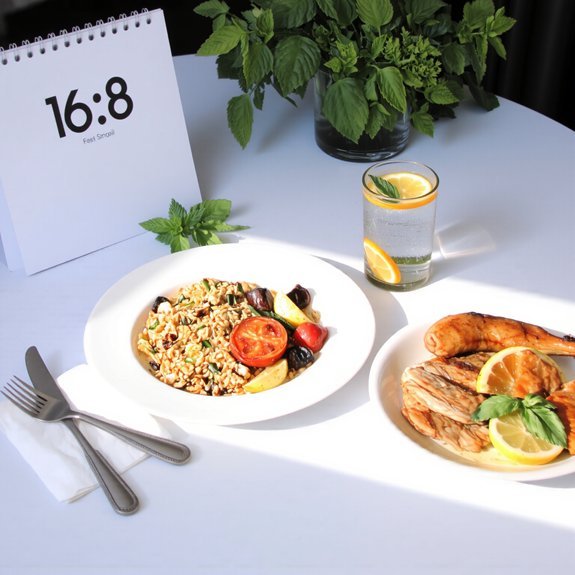
An intermittent fasting meal plan is an eating schedule that compresses all your daily food into a defined window — most commonly 8 hours (the 16:8 protocol). Eat between noon and 8pm, fast the other 16 hours, and stack each meal with protein, fiber, and healthy fats so you stay full through the next fast. Done right, 16:8 trims body fat without counting calories, steadies blood sugar, and turns Sunday meal prep into a 3-hour weekly habit instead of a daily grind.
This guide is the 2026 version of the plan we recommend to readers starting from zero: protocol comparison, what actually breaks a fast, a 5-day sample menu, ten "break-your-fast" recipes pulled from our catalog, a printable shopping list, and the mistakes that send most beginners back to three-meals-and-snacks within a month.
Introduction: what is intermittent fasting and why it works
Intermittent fasting (IF) is not a diet — it's a timing protocol. You eat the same foods you'd eat on any healthy plan; you just bunch them into a shorter window. During the fasting window, insulin drops, the body shifts toward burning stored fat, and cellular cleanup processes (autophagy) ramp up. Harvard Health summarizes the current research: short-term fasts (12–48 hours) consistently improve insulin sensitivity, lower fasting glucose, and modestly reduce body fat in adults without metabolic disease.
Why it works in practice (not just on paper):
- Calorie compression without counting. Most people naturally eat 200–500 fewer calories per day when their eating window shrinks to 8 hours. You stop grazing.
- Metabolic flexibility. Your body relearns how to burn fat between meals instead of demanding carbs every two hours.
- Behavioral simplicity. Skip one decision (breakfast) and you skip 20–25% of your daily food planning. Decision fatigue is the silent killer of every diet.
- Mealtime upgrade. When you only get two real meals, you cook them better. Sheet pans, grain bowls, and proper salads beat a sad desk lunch every time.
A 2019 NIH-backed study identified the metabolic switch — the body flipping from glucose to ketones around hour 12–16 of a fast — as the moment where most of IF's benefits begin. Hit 16 hours four to six days a week and you spend roughly half your fasts in that beneficial zone.
The most popular IF protocols: 16:8, 18:6, 5:2, OMAD
Pick a protocol based on how much social-meal flexibility you need, not on how "extreme" you want to look.
| Protocol | Fast window | Eat window | Best for | Difficulty (1–5) |
|---|---|---|---|---|
| 12:12 | 12 h | 12 h | Total beginners, families | 1 |
| 14:10 | 14 h | 10 h | First-month onboard | 2 |
| 16:8 | 16 h | 8 h | Default — 80% of readers | 3 |
| 18:6 | 18 h | 6 h | Plateau-busters, fat loss | 4 |
| 20:4 (Warrior) | 20 h | 4 h | Experienced fasters | 4 |
| 5:2 | 500 kcal × 2 days | Normal × 5 days | Schedule-heavy lives | 3 |
| OMAD | 23 h | 1 h | Maintenance, advanced | 5 |
| 24-hour | 24 h × 1–2 days | Normal | Occasional reset | 4 |
16:8 is the default for a reason. It maps onto a normal social schedule (noon–8pm) without forcing you to skip dinner with family or refuse a work lunch. Most people are already fasting 10–11 hours overnight; 16:8 just pushes breakfast back two hours.
5:2 is the workhorse for people who hate skipping breakfast. Two non-consecutive days a week you cap calories at ~500 (a single meal of salmon and vegetables); the other five days you eat normally. The total weekly deficit is similar to 16:8.
OMAD (one meal a day) is not where beginners should start. It works as a maintenance protocol or for people who genuinely don't want to think about food during the workday, but cramming a full day's protein and micronutrients into one sitting takes practice — and a 60g-protein dinner that doesn't leave you sluggish takes real cooking.
What you can eat (and drink) during the fasting window
The fast window is fast, not just low-calorie. Anything that raises insulin breaks the fast. Anything with calories slows or halts autophagy.
Allowed (won't break your fast):
- Water (still, sparkling, or with a squeeze of lemon)
- Black coffee, plain tea (green, black, oolong, herbal)
- Electrolytes with zero calories (a pinch of salt in water, magnesium glycinate)
- Apple cider vinegar in water (1 tsp — actually helps fasting glucose)
Forbidden (will break your fast):
- Milk, cream, half-and-half, oat/almond/soy milk in coffee
- Any sugar or sweetener (yes, even stevia and erythritol — they spike insulin in roughly 30% of people)
- Bone broth (small amount of protein triggers mTOR; ends autophagy)
- Diet soda (mixed evidence — assume it does for a strict fast)
- Gum and breath mints with sugar alcohols
Debated (pick a side and stick to it):
- MCT oil and butter ("bulletproof coffee") — breaks autophagy but maintains ketosis. Fine if your goal is ketosis; not fine if your goal is metabolic cleanup.
- Plain electrolyte powder with 0 cal — usually fine, but check for hidden sweeteners.
When you open the window at noon, do not sprint to a stack of pancakes. Start with something protein-forward and slow — a High-Protein Greek Yogurt Chicken Salad with Dill or a small bowl of oats with nuts — to keep the blood sugar curve flat for the rest of the day. A 90-gram-carb meal right out of the gate after 16 hours fasting is the fastest way to get the 2pm crash that ends most IF attempts.
How to structure your eating window
The structure of the 8-hour window matters more than the foods themselves. Pick a schedule and lock it in for 30 days.
The "noon and 7pm" schedule is the cleanest for most office workers:
- 12:00 — Meal 1 (big). ~40% of daily calories. Protein + slow carbs + half-plate vegetables. Example: salmon and quinoa bowl, or chicken stir-fry with brown rice.
- 3:30 — Snack (small). ~10–15% of calories. Greek yogurt with berries, hard-boiled eggs, a handful of almonds, or a protein smoothie.
- 7:00 — Meal 2 (medium). ~40–45% of calories. Protein + leafy vegetables + a small starch. Example: baked cod with roasted vegetables, or a turkey lettuce wrap with avocado.
- 8:00 — fast window closes. No more food, no more sweetened drinks. Water and herbal tea only until noon the next day.
The "1pm and 6pm" schedule works better for early sleepers (in bed by 9:30pm). Eat earlier in the window and your body has more time to digest before sleep, which is one of the single biggest predictors of IF success.
Three rules for every eating window:
1. Protein every meal, every snack. Target 0.7–1.0g per pound of body weight daily. A 160-lb adult needs 110–160g of protein in 8 hours. That means 35–50g of protein at each meal — non-negotiable.
2. Fiber every meal. 8–12g per meal. Beans, lentils, intact whole grains, half-plate non-starchy vegetables. Fiber is what keeps you full to the next meal.
3. Don't binge the first meal. Spread the calories. Two meals + one snack is more sustainable than two enormous meals.
5-day sample 16:8 meal plan
This is the menu we'd hand a beginner on day one. Every recipe is in our catalog with a real shopping list and prep instructions.
Monday
- 12:00: Almond-Free Whole30 Chicken and Vegetable Stir Fry — high protein, mixed vegetables, almost no cleanup
- 3:30 snack: Greek yogurt + blueberries + 1 tbsp almond butter
- 7:00: Baked Cod with Lemon-Dill Crust and Roasted Root Vegetables — sheet pan, ~25 min total
Tuesday
- 12:00: Greek yogurt + berries + walnuts (carryover of yesterday's prep — IF means leaning on leftovers)
- 3:30 snack: Two hard-boiled eggs + an apple
- 7:00: Miso-Glazed Salmon and Quinoa Bowl with Steamed Broccoli — omega-3 fats keep you full
Wednesday
- 12:00: Baked Lemon-Herb Cod with Mediterranean Chickpea Salad — leftover cod from Monday paired with prepped salad
- 3:30 snack: Cottage cheese + cucumber + everything-bagel seasoning
- 7:00: Moroccan-Spiced Lentil and Vegetable Soup with a small green salad — high fiber, low effort
Thursday
- 12:00: Lettuce-Wrapped Turkey and Avocado with Cucumber Slices — low carb, ready in 10 min
- 3:30 snack: Edamame + a piece of dark chocolate
- 7:00: Skillet Potato and Spinach Egg Hash — "breakfast for dinner" is allowed (and great for IF)
Friday
- 12:00: One-Pan Chicken & Veggie Sheet Pan Fajitas — corn tortillas or lettuce wraps
- 3:30 snack: Protein shake (30g whey + frozen berries + a tablespoon of chia)
- 7:00: Lemon-Tahini Salmon with Roasted Sweet Potatoes — Friday-night-feast energy without breaking the plan
Saturday and Sunday: same structure with leftovers and one new recipe. Most people drop into a 14:10 on weekends for social meals — that's fine, the weekly average still works.
Top 10 recipes for breaking your fast
These are the ten recipes we recommend specifically for the first meal of the day on a 16:8 schedule. Each one is protein-forward, fiber-rich, and easy on the gut after 16 hours of nothing.
1. High-Protein Greek Yogurt Chicken Salad with Dill — 38g protein, takes 12 minutes
2. Skillet Potato and Spinach Egg Hash — eggs are the perfect first meal; gentle on the stomach
3. Almond-Free Whole30 Chicken and Vegetable Stir Fry — make a double batch on Sunday
4. Miso-Glazed Salmon and Quinoa Bowl with Steamed Broccoli — fats slow gastric emptying, keeps you full until 7pm
5. Baked Lemon-Herb Cod with Mediterranean Chickpea Salad — Mediterranean staples pair perfectly with IF
6. Moroccan-Spiced Lentil and Vegetable Soup — soups warm and rehydrate the gut after a long fast
7. Baked Cod with Lemon-Dill Crust and Roasted Root Vegetables — low effort, big payoff
8. Lettuce-Wrapped Turkey and Avocado with Cucumber Slices — for days you don't want to cook
9. One-Pan Chicken & Veggie Sheet Pan Fajitas — Friday social meal that still hits macros
10. Lemon-Tahini Salmon with Roasted Sweet Potatoes — anti-inflammatory, omega-3-loaded, restaurant-quality at home
A note on portion sizing: when you only eat twice a day, each plate gets bigger than the standard "balanced plate" image. Half the plate is non-starchy vegetables, a quarter is protein (35–50g), a quarter is a slow carb (quinoa, sweet potato, brown rice, lentils). Add a tablespoon of olive oil or half an avocado for fats.
Shopping list and Sunday prep strategy
Three hours on Sunday afternoon turns five chaotic weekday lunches into "open the fridge, microwave, eat." This is the single biggest difference between people who quit IF after three weeks and people who run it for years.
Master shopping list for the 5-day plan above (adjust for household size):
| Category | Items | Quantity |
|---|---|---|
| Protein | Chicken breast, salmon, cod, ground turkey, eggs | 2 lb / 1 lb / 1 lb / 1 lb / 1 dozen |
| Dairy | Greek yogurt (32 oz), cottage cheese (16 oz), feta (8 oz) | as listed |
| Carbs | Quinoa, brown rice, sweet potatoes, corn tortillas, oats | 1 lb / 1 lb / 4 / 1 pack / 1 lb |
| Legumes | Chickpeas (canned), lentils (dry), edamame (frozen) | 2 cans / 1 lb / 1 bag |
| Vegetables | Broccoli, spinach, romaine, cucumber, bell peppers, onions, carrots, parsnips | 1 head / 1 lb / 2 heads / 3 / 4 / 3 / 1 lb / 1 lb |
| Fruit | Berries, lemons, apples, avocados | 2 pints / 4 / 4 / 4 |
| Fats / nuts | Olive oil, tahini, almond butter, walnuts | as needed |
| Pantry | Miso paste, soy sauce, harissa, dill, cumin | as needed |
Sunday prep (3 hours, in this order):
1. 00:00–00:15 — Preheat oven to 425°F. Wash and chop all vegetables. Move chicken and salmon to the fridge to thaw.
2. 00:15–01:00 — Roast two sheet pans simultaneously: (a) chicken with peppers/onions for fajitas, (b) cod with root vegetables. Set timers.
3. 01:00–01:45 — While sheet pans cook: cook 2 cups of quinoa, cook 1 cup of brown rice, hard-boil 6 eggs, simmer lentil soup on the stove.
4. 01:45–02:30 — Portion everything into glass containers. Label with the day + meal number. Quality containers matter — see our Storage & Containers picks for the lids that actually seal. A heavy-bottom skillet and a half-sheet pan are non-negotiable; the right Cookware means everything browns properly the first time and reheats without a soggy texture.
5. 02:30–03:00 — Make the dressings and sauces: tahini-lemon, Greek yogurt dill, miso glaze. Each goes in a small jar.
By 3pm Sunday, the entire week is staged. Weekday cooking drops to 5–10 minutes per meal: reheat, plate, add a fresh side of greens.
Common IF mistakes and how to avoid them
These are the five mistakes we see most often in reader questions.
1. Going too aggressive on day one. Jumping straight to 18:6 or OMAD from a three-meals-and-snacks baseline is how 70% of people fail in week one. Start at 14:10, hold for two weeks, then push to 16:8. Your body adapts on a curve; respect the curve.
2. Under-eating during the window. Your total daily calories should still hit somewhere near maintenance (or maintenance minus 200–300 for fat loss). Compressing the window is not permission to slash to 1,200 calories — that's where the metabolic slowdown stories come from. Johns Hopkins Medicine is clear on this: IF works through timing, not severe restriction.
3. Coffee with cream "doesn't count." It does. Even a splash of milk has enough calories and protein to trigger insulin and end the fasting state. If you can't drink coffee black, drink tea, or wait 30 minutes after the window opens.
4. Forgetting electrolytes. A 16-hour fast pulls sodium and magnesium out of your system. The shakiness, headaches, and 3pm crash most beginners blame on "low blood sugar" are usually low electrolytes. A pinch of sea salt in your morning water solves 80% of those complaints.
5. Skipping resistance training. IF without lifting weights leads to muscle loss along with fat loss. Two to three short strength sessions per week — even 20-minute kettlebell circuits — preserve lean mass and improve insulin sensitivity in tandem with the fasting protocol.
6. (Bonus) Treating it like a religion. Miss a day, eat at 11am, have a piece of birthday cake. IF that becomes joyless is IF that gets quit. Aim for 5–6 compliant days per week, not 7-for-7 perfection.
Who should NOT try intermittent fasting
IF is well-tolerated by most healthy adults, but it's not universal. Skip it or check with a doctor first if:
- You are pregnant, breastfeeding, or actively trying to conceive
- You have a history of disordered eating (anorexia, bulimia, BED, orthorexia)
- You take medication that must be paired with food (some diabetes meds, lithium, certain blood-pressure drugs)
- You have type 1 diabetes or insulin-dependent type 2 (hypoglycemia risk)
- You are under 18 or over 75 without medical supervision
- You compete athletically at a level where every gram of muscle matters
- You have a history of gallstones or pancreatitis
- You are recovering from surgery or fighting an active infection
Women with sensitive cycles, thyroid conditions, or adrenal issues should start with the gentlest possible window (12:12, then 14:10) and watch how their body responds over a full cycle before pushing harder.
Related reading
Pair this plan with one of our other full meal-prep guides depending on your specific goal:
- The Complete Keto Meal Plan: 50+ Recipes + Shopping List for 2026 — pairs cleanly with 16:8 for accelerated fat loss
- High-Protein Meal Prep: 5-Day Plan + Shopping List (100g+ Per Day) — the protein backbone that makes IF sustainable
- How to Meal Prep on Sunday: 20 Make-Ahead Recipes + Weekly Plan — the prep system that makes the schedule above run on autopilot
- The Complete Low-Carb Meal Plan: 40+ Recipes + Shopping List for 2026 — an alternative if IF feels too restrictive on the schedule side
Start tomorrow with a 14:10 window. Push to 16:8 in week three. Prep on Sunday, lean on your meal-prep Storage and core Cookware — and let the schedule (not willpower) do the work.
Frequently asked questions
What's the best intermittent fasting schedule for beginners?
Can I drink coffee while fasting?
Will intermittent fasting slow my metabolism?
What should I eat to break my fast?
Is intermittent fasting safe for women?
Sources
Recipes to start your week with
Save any of these to My Recipes — no account needed — and send the ingredients to Instacart in one tap.