Mediterranean Diet for Beginners: 21-Day Starter Plan + 30 Recipes for 2026
Three progressive weeks, ten catalog recipes, and a $60/week grocery list to get you eating like a longevity-blue-zone local.
The Mediterranean diet is not a fad. U.S. News & World Report ranked it the #1 diet overall for eight straight years through 2026, ahead of DASH, flexitarian, and MIND, based on scores across weight loss, heart health, diabetes prevention, and long-term adherence. It answers the beginner's core question — what do I eat every day? — with a specific, cookable pattern of vegetables, whole grains, legumes, seafood, and extra-virgin olive oil, not a list of banned foods.
This guide is a 21-day starter plan. Week one adds three things to meals you already cook. Week two swaps in one seafood dinner. Week three replaces one red-meat night with fish. By day 22 you'll have a rotation of ten recipes, a $60/week shopping list, and the four kitchen tools that make Mediterranean cooking fast on a weeknight.
What Mediterranean actually means: the food pyramid and daily/weekly/monthly frequencies
The Mediterranean pyramid — codified by the Oldways Preservation Trust in 1993 and refined by Harvard's T.H. Chan School of Public Health — is a frequency chart, not a calorie chart. You eat from the base of the pyramid every day, from the middle a few times a week, and from the top a few times a month.
Every day (base of pyramid):
- Vegetables — 4 to 6 servings. A serving is 1 cup raw leafy greens or ½ cup cooked.
- Fruit — 2 to 3 servings. Whole fruit; not juice.
- Whole grains — 3 to 4 servings. Whole-wheat bread, farro, barley, bulgur, brown rice, whole-grain pasta.
- Legumes — plan a serving into 3+ dinners each week. Chickpeas, lentils, white beans, favas.
- Extra-virgin olive oil — 2 to 4 tablespoons daily. Primary fat for everything.
- Nuts, seeds, herbs, spices, garlic, onions — daily, in small amounts.
Weekly (middle of pyramid):
- Fish and seafood — 2 to 3 servings. Salmon, sardines, mackerel, anchovies, branzino, shrimp, mussels.
- Poultry — 2 servings.
- Eggs — 2 to 4.
- Cheese and yogurt — daily is fine, but modest portions. Feta, ricotta, Greek yogurt, Parmigiano-Reggiano.
Monthly (top of pyramid):
- Red meat — a few servings, treated as a condiment rather than a plate center.
- Sweets — a few servings. Fruit is the daily dessert.
The Mayo Clinic's Mediterranean diet primer reinforces the same pyramid, and adds that wine, if you drink, is capped at one 5-oz glass per day for women and two for men, with meals. This is the entire diet. There is no list of banned foods, no macro tracking, no phase-in phase-out.
The 21-day starter plan (three progressive weeks)
The mistake most beginners make is to blow up their whole grocery list on day one and quit by day nine. Ramp it in. Every week keeps the previous week's habits and adds two more.
Week 1 — Add olive oil, salad, and legumes to meals you already cook
Do not throw out food. Cook whatever your family already eats and add three things:
1. Cook with extra-virgin olive oil instead of butter, canola, or vegetable oil. Everywhere. Roasting, sautéing, dressing.
2. Serve a green salad — even a small one — before or with dinner every night. Follow the ratios in Lemon-Dill Greek Salad with Feta and Kalamata Olives and cut the cheese in half if that's too rich to start.
3. Cook one legume dinner. Hidden-Spice Chickpea and Spinach Stew is the gateway drug — it's 40 minutes on the stove, one pot, canned chickpeas, and it tastes like something you'd order at a restaurant.
Week 1 grocery adds: 1 liter extra-virgin olive oil, 2 heads romaine, 1 bag baby spinach, 2 lemons, 1 block feta, 1 jar kalamata olives, 3 cans chickpeas, 1 can crushed tomatoes.
Expected outcome: no weight change, but you'll notice the salad-first habit fills you up enough that entrée portions shrink on their own. Continue everything from week 1 into week 2.
Week 2 — Add one seafood dinner and one bean-based lunch
Keep the salad, the olive oil, the legume dinner. Add:
4. One seafood dinner. Pan-Seared Salmon with Roasted Asparagus and Lemon-Garlic Sauce is a 25-minute sheet-pan meal that intimidates people until they cook it once. Salmon cooks in 12 minutes at 400°F. Use a fillet with the skin on so the flesh stays moist; the skin crisps under the broiler for the last 90 seconds.
5. One bean-based lunch or dinner. Olive Oil Braised Gigantes Beans with Fresh Dill makes six servings and refrigerates for four days — it's Sunday-cook-once, Tuesday-and-Thursday-lunch material.
Week 2 grocery adds: 1 lb salmon fillets (skin on), 1 lb asparagus, 1 head garlic, 1 lb dried gigantes (or two 15-oz cans butter beans), 1 bunch dill.
Expected outcome: 1–2 lb weight loss for the average American baseline; a big drop in that mid-afternoon carb crash from lunch. Salmon three-times-a-month covers your entire weekly omega-3 requirement.
Week 3 — Replace one red-meat night with fish and add one grain-bowl dinner
Keep everything. Replace:
6. One red-meat night with a seafood or plant-forward dinner. Options: Whole Grilled Branzino with Lemon and Herb Butter for a weekend, Sautéed Spinach and Cilantro Shakshuka with Feta Crumbles for a fast weeknight, or Grilled Lemon-Oregano Chicken Skewers with Tzatziki Sauce if you're still ramping into fish and want a poultry landing spot.
7. One grain-bowl dinner or meal-prep lunch. True Mediterranean Quinoa Power Bowl preps into four Mason jars in 25 minutes and holds four days in the fridge.
Week 3 grocery adds: 2 whole branzino (or 1 lb white fish fillets), 1 lb chicken thighs, 1 cup quinoa, 1 cucumber, 1 red bell pepper, 1 pint cherry tomatoes, 1 container Greek yogurt.
By day 22 the shopping cart looks Mediterranean without a printed diet card in your hand. You have seven repeatable dinner templates, five recipes you actually like, and a lunch you don't dread.
Top 10 Mediterranean recipes from the AislePrompt catalog
The catalog holds over 5,600 Mediterranean-cuisine recipes; these ten are the ones a beginner can cook first-try, first-week, with grocery items every U.S. supermarket carries.
1. Lemon-Dill Greek Salad with Feta and Kalamata Olives — 12 minutes, no cooking. The template salad. Learn to eyeball the 3:1 olive-oil-to-lemon ratio and everything else follows.
2. Hidden-Spice Chickpea and Spinach Stew — 40 minutes, one pot. Two cans chickpeas, a bag of spinach, cumin, paprika. Serves four for under $9.
3. Pan-Seared Salmon with Roasted Asparagus and Lemon-Garlic Sauce — 25 minutes, one sheet pan. The best entry-level seafood dinner in the catalog.
4. Greek Lemon Avgolemono Soup with Chicken and Orzo — 45 minutes. A rotisserie chicken shortcut cuts this to 20. Egg-lemon thickening is the technique to learn once and use forever.
5. True Mediterranean Quinoa Power Bowl — 25 minutes, meal-preps into four Mason jars. Cucumber, cherry tomato, chickpea, feta, olive oil vinaigrette.
6. Sautéed Spinach and Cilantro Shakshuka with Feta Crumbles — 30 minutes. Weeknight brinner. Poached eggs in spiced tomato-and-pepper sauce.
7. Half-Baked Mediterranean Stuffed Peppers — 55 minutes total, 15 hands-on. Bell peppers stuffed with quinoa, feta, and herbs. Batch-friendly.
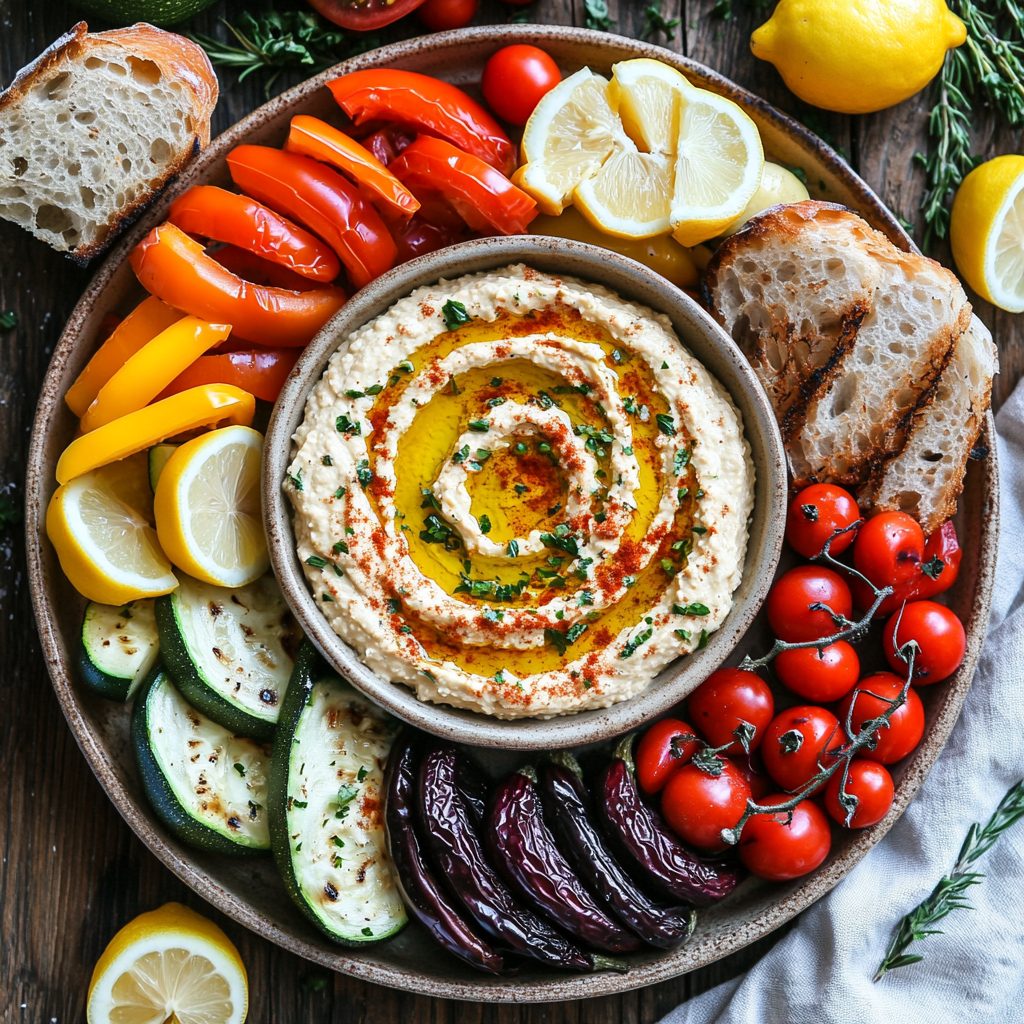
8. Hummus and Grilled Veggie Platter — 30 minutes. The party appetizer that doubles as a full dinner if you serve it with warm pita.
9. Whole Grilled Branzino with Lemon and Herb Butter — 22 minutes on a hot grill. Whole fish is intimidating exactly once. After that you'll wonder why you ever bought fillets.
10. Olive Oil Braised Gigantes Beans with Fresh Dill — 90 minutes mostly hands-off. Sunday cook. Feeds a family of four for two dinners.
Two bonus recipes worth cooking in month two: Crispy Air Fryer Falafel with Tahini Lemon Sauce for a chickpea protein swap that's fast enough for a Tuesday, and Aleppo Pepper and Mint Tabbouleh Salad once you're comfortable buying and rinsing bulgur.
Mediterranean shopping list: pantry essentials and fresh weekly buys
Stock the pantry once, then a weekly $30 fresh run is all you need.
One-time pantry stock (~$85, lasts 6–8 weeks)
- Extra-virgin olive oil — 1 liter minimum. Real EVOO, cold-pressed, first-press. Kirkland Signature Organic, California Olive Ranch, or Bertolli Extra Virgin Olive Oil all clear third-party quality tests at $10–15/liter.
- Whole-grain pantry: 2 lb brown rice, 2 lb farro or bulgur, 1 lb whole-wheat pasta, 1 lb quinoa.
- Legumes: 6 cans (chickpeas, cannellini, kidney), 2 lb dried lentils.
- Vinegars: red wine, white wine, balsamic.
- Herbs/spices: oregano, cumin, coriander, sweet paprika, Aleppo pepper (or crushed red pepper), za'atar, sea salt, black pepper.
- Canned: 6 cans crushed tomatoes, 4 cans tuna in olive oil (Genova or Wild Planet), 2 jars kalamata olives, 1 jar capers, 1 jar tahini.
- Nuts/seeds: 1 lb almonds, 1 lb walnuts, 1 jar sunflower seeds.
Weekly fresh buys (~$45)
- 4 heads leafy greens (romaine, spinach, arugula, chard — rotate).
- 6–8 pieces fresh fruit (whatever's in season and on sale).
- 2 lb weekly seafood target: 1 lb salmon or white fish + 1 can sardines or 1 can anchovies.
- 1 lb chicken thighs or 1 lb chicken breast.
- 1 dozen eggs.
- 1 container Greek yogurt (32 oz).
- 1 block feta cheese.
- 4 lemons, 2 heads garlic, 1 bunch parsley, 1 bunch dill, 2 red onions, 1 bunch scallions.
- Weekly vegetable rotation: 1 lb tomatoes or 1 pint cherry tomatoes, 2 zucchini, 2 bell peppers, 1 head cauliflower or broccoli, 1 lb carrots.
That's the whole list. Print it once, tape it to the fridge, and let it drive the cart.
Kitchen equipment for Mediterranean cooking (four tools do 95% of the work)
You do not need a $2,000 kitchen. Four tools cover every recipe in this guide.
| Tool | Why it matters | Budget pick |
|---|---|---|
| 8-inch chef's knife | 80% of Mediterranean cooking is prep — dicing vegetables, mincing garlic, breaking down whole fish. A sharp 8-inch is faster and safer than any gadget. | PAUDIN 8-Inch Chef Knife at ~$35 beats most $150 knives out of the box. |
| Enameled Dutch oven (5–7 qt) | One pot does chickpea stew, avgolemono soup, olive-oil-braised beans, and every big-batch cook. Even heat distribution is the whole game. | Le Creuset Signature Enameled Dutch Oven, 7.25 Qt is the lifetime buy; Lodge or Tramontina versions at 1/3 the price work identically for the first five years. |
| Half-sheet pan (rimmed) | Every roasted-vegetable-plus-fish dinner in the plan. Aluminum, uncoated, 18×13 inches. | Nordic Ware Naturals half-sheet is the workhorse; buy two and use them daily. |
| Granite mortar and pestle | Fresh-crushed garlic, cumin, coriander, and homemade pesto transform every dish. Pre-ground spices lose 50% of their aroma in three months. | Sweeler Granite Mortar and Pestle at ~$25 is heavy enough not to skid on the counter. |
Nice-to-have, not required: a fish spatula for salmon skin work, a Microplane grater for lemon zest and Parmigiano, a citrus juicer that traps the seeds.
Skip: garlic presses (the mortar does it better), non-stick everything (Mediterranean cooking is olive-oil-forward and wants a hot surface), single-purpose gadgets (avocado slicer, egg-yolk separator, banana slicer).
How to eat Mediterranean on a US grocery budget
The single most persistent myth about the Mediterranean diet is that it's expensive. Harvard's nutrition-source review actually documents the opposite: at parity portion sizes, a Mediterranean week runs cheaper than a standard American diet, because you're swapping the most expensive part of the plate — meat — for the cheapest — legumes, whole grains, and seasonal produce.
Real numbers, one adult, Kroger/Aldi/Trader Joe's basket, 2026 prices:
| Category | Weekly cost | Notes |
|---|---|---|
| Legumes (canned + dried) | $6 | Six cans + 1 lb dried lentils covers 3 dinners + 2 lunches |
| Whole grains | $5 | Brown rice, quinoa, whole-wheat pasta — split from a monthly stock |
| Seafood (1–2 servings) | $12 | 1 lb frozen salmon at Aldi = $8; can of sardines = $2 |
| Chicken (1 dinner) | $5 | 1 lb thighs |
| Eggs (dozen) | $4 | Also breakfast + shakshuka |
| Vegetables (5–7 lbs) | $14 | Seasonal + frozen mix |
| Fruit (5–7 pieces) | $6 | Whatever's on sale |
| Dairy (yogurt + feta) | $6 | 32 oz Greek yogurt + 8 oz feta |
| Olive oil (weekly slice of 1L bottle) | $3 | $12 bottle lasts 4 weeks |
| Pantry replenishment | $2 | Vinegar, spices, canned tomatoes rotation |
| Total | ~$63 | One adult, full week |
Two-adult households: multiply by 1.7, not 2.0 — cooking to portion for two is 15% cheaper than two solo meals. Family of four: expect $180–$210/week, still under the USDA thrifty food plan target.
Where the money goes if you're not careful: imported bottled EVOO from a boutique brand at $30/liter, pre-cooked frozen shrimp instead of raw, individual snack packages instead of bulk nuts, and takeout hummus at $6/tub when a can of chickpeas and a spoonful of tahini makes twice as much for $2.
Common pitfalls
Five things beginners get wrong. All fixable.
- Using "light" or "pure" olive oil. Both are refined and stripped of the polyphenols that carry the health effect. Buy dark-bottle extra-virgin only. Store cool and dark; oxidized oil loses benefits within weeks of opening.
- Treating cheese and wine as unlimited. Both are on the pyramid, but modest portions matter. A serving of cheese is 1 ounce, not the whole cheese board.
- Skipping the legumes because they're unfamiliar. They are the caloric backbone of the diet and the reason it stays cheap. Canned chickpeas rinsed under cold water for 30 seconds are indistinguishable from freshly cooked for stews and salads.
- Buying fresh fish only. Frozen wild salmon and canned sardines cover the same omega-3 targets at 1/3 the price. Fresh is a Sunday luxury, not a Tuesday necessity.
- Overloading week one. The three-week ramp exists because willpower is a limited resource. Add too many changes and adherence collapses at day nine. Every long-term-successful Mediterranean-diet convert I've cooked with started with three additions, not thirty.
When NOT to start
The Mediterranean diet is genuinely the wrong pick for a small handful of situations. If you have advanced-stage chronic kidney disease, the legume load can push potassium above target. If you're on warfarin, the leafy-green vitamin-K spike will interact with your INR and you need to coordinate with your prescriber before ramping. If you have a diagnosed shellfish or fish allergy, the plant-forward Mediterranean pattern still works — just replace the seafood with more legumes and poultry.
For everyone else — the vast majority — the barrier is habit, not physiology.
FAQ
What foods do I actually eat every day on the Mediterranean diet?
Daily: extra-virgin olive oil (2–4 tbsp), vegetables (4–6 servings), fruit (2–3 servings), whole grains (3–4 servings), nuts or seeds (1 handful), legumes (weekly minimum 3x). Fish and seafood 2–3 times per week; poultry, eggs, and dairy in moderation; red meat and sweets only a few times per month. AislePrompt's /recipes Mediterranean filter respects this hierarchy.
Is the Mediterranean diet expensive to follow in the US?
A well-planned Mediterranean week averages $6–8 per person per day at Kroger, Aldi, or Trader Joe's — cheaper than a standard American diet because you swap ~$15/lb ground beef for ~$1.50/lb dried lentils and canned chickpeas. Extra-virgin olive oil is the one splurge (~$0.30–0.50 per meal); everything else is pantry staples and seasonal produce. The starter plan in this guide runs under $60/week for one person.
Can I lose weight on the Mediterranean diet?
Yes, though slower than crash diets — Mediterranean produces steady 0.5–1 lb/week loss when calories are moderately controlled, per the PREDIMED and Lyon Heart Study data. What sets it apart is retention: 5-year adherence is 60–70% versus 10–25% for keto or low-fat prescriptions, so the weight actually stays off. It's also the only diet with a Level 1 evidence base for cardiovascular disease prevention.
Do I have to buy expensive olive oil for it to work?
You need real extra-virgin olive oil (cold-pressed, first-press), not "light" or "pure" olive oil which is refined and has stripped-out polyphenols. But real EVOO doesn't have to be $25/bottle — Kirkland Signature Organic EVOO, California Olive Ranch, and Bertolli Rich Taste all pass third-party quality tests at $10–15/liter. Store it dark and cool; oxidized oil loses the health benefits before you finish the bottle.
What if my family won't eat fish and vegetables?
Ramp in over three weeks — this guide is structured so week one adds only olive oil, salad, and legumes to meals your family already eats. Week two introduces one seafood dinner. Week three replaces one red-meat night with fish. Kids adapt to olive oil, feta, and chickpeas fastest; sardines and anchovies are the last frontier. Use AislePrompt's /chat to reshape any recipe around allergies or picky-eater profiles.
Sources
- Harvard Health Publishing — The Mediterranean diet — the plain-English clinical review, updated 2024, that anchors the pyramid frequencies used throughout this guide.
- Harvard T.H. Chan Nutrition Source — Mediterranean Diet Review — the deep evidence review covering PREDIMED, Lyon Heart Study, and the cost analysis that underpins the $60/week budget claim.
- Mayo Clinic — Mediterranean diet: A heart-healthy eating plan — clinical guidelines including wine limits, cardiovascular endpoints, and the drug-interaction notes for warfarin/leafy greens above.
As of 2026, this guide reflects current AislePrompt catalog picks and Kroger/Aldi/Trader Joe's basket prices; recipe URLs are canonical and stable across future price shifts.