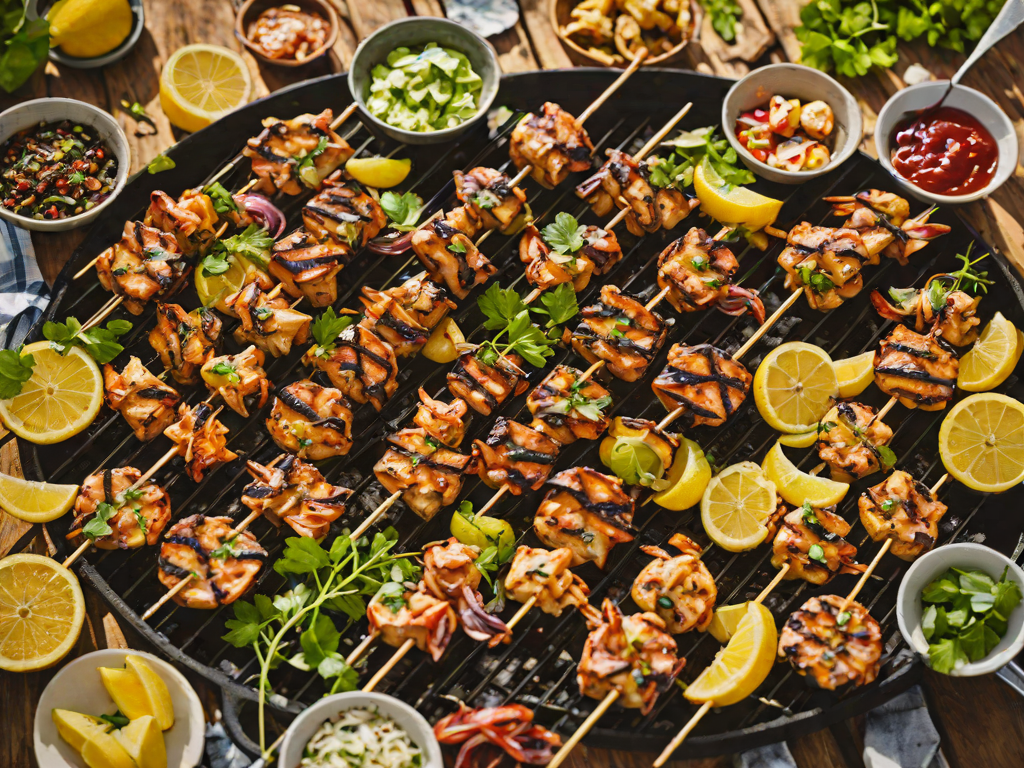
Summer Grilling Marinades: 15 Recipes for Chicken, Steak, Shrimp & Vegetables
Acid, fat, salt, and 15 tested marinades — chicken, steak, shrimp, and vegetables — with sweet-spot times and grill-by-grill notes for summer 2026.
The best marinades for grilling balance four ingredients: an acid (vinegar, citrus, yogurt, or wine) to tenderize and brighten, a fat (olive oil, sesame oil) to carry flavor and prevent sticking, salt to season deep into the protein, and aromatics (garlic, herbs, spices, chiles) for character. Get those four right and a grocery-store chicken breast or skirt steak hits restaurant quality at home. This guide walks through 15 tested marinades for chicken, steak, shrimp, and vegetables — with exact times, food-safety rules, and grill-by-grill technique notes for summer 2026.
Get a free cookout plan for a crowd
Mains, sides and quantities scaled to your headcount, with one Instacart cart instead of a spreadsheet.
No spam, unsubscribe in one click. Recipes, shopping lists and Instacart carts all work without an account either way.
Marinade science: acid, fat, salt, and how long to marinate each protein
A marinade is a chemistry experiment that runs on your kitchen counter. The four components do specific jobs.
Acid is the most misunderstood ingredient. Citrus juice, vinegar, wine, and yogurt all denature surface proteins, which the marketing crowd calls "tenderizing." What's actually happening is the acid loosens muscle-fiber bonds on the outer 1-2 millimeters of the meat — and only those millimeters. Acid never penetrates deeply enough to tenderize the interior of a thick steak. Worse, leave a protein in strong acid too long and it turns mushy on the surface and dry in the middle. Yogurt is the gentlest acid because its lactic acid is milder than vinegar or lime, and the milk proteins coat the meat — that's why Indian and Middle Eastern cooks marinate chicken in yogurt for 24 hours without damage.
Fat carries flavor. Most aromatic compounds — capsaicin from chiles, allicin from garlic, the volatile oils in herbs — are fat-soluble, not water-soluble. Without oil in the marinade, those flavors stay locked in the herb and never transfer to the meat. Fat also forms a slick on the protein surface that helps it release cleanly from the grill grate and conducts heat for better browning. Use a neutral-flavored oil (canola, grapeseed, or light olive oil) for grilling — extra-virgin olive oil's complex flavors smoke off above 400°F.
Salt is the only ingredient that genuinely penetrates deep into muscle, drawing in flavor via osmosis. A salted marinade works like a brine: salt opens the protein structure so water (and dissolved flavors) move inward, then the protein re-tightens around them as it cooks. This is why a brined chicken breast stays juicier — even after the grill cooks it past medium. Aim for roughly 1 teaspoon of kosher salt per pound of protein in the marinade, or use a salty liquid (soy sauce, fish sauce, miso) as part of the base.
Aromatics — garlic, ginger, herbs, chiles, citrus zest — are the personality. They're also where most marinade recipes go wrong, because their flavors don't transfer to the meat unless extracted into the fat phase first. Crush garlic before adding it. Bruise herbs between your fingers. Toast whole spices for 30 seconds in a dry pan before grinding. Five minutes of prep here is the difference between "tasted the chicken, couldn't tell it was marinated" and "everyone asks for the recipe."
A trustworthy reference for the food-safety side of marinating is the USDA FSIS grilling food-safety guide, which sets the rules every backyard cook should follow.
Marinade times by protein: the safe and the sweet spot
Marinade time is the single number every cook over-shoots. Sweet spots and ceilings vary by protein density, fat content, and the acid strength of the marinade.
| Protein | Sweet spot | Ceiling | Notes |
|---|---|---|---|
| Chicken breast (boneless) | 2–8 hours | 24h (yogurt only) | Acid-heavy marinades start mushing surface after 8h |
| Chicken thighs (boneless) | 4–24 hours | 36h | Higher fat = more forgiving |
| Chicken wings | 4–12 hours | 24h | Pat dry before grilling for crispy skin |
| Pork chops, pork tenderloin | 4–12 hours | 24h | Sugar in marinade burns fast — watch heat |
| Flank, skirt, hanger steak | 4–8 hours | 12h | Score against the grain for deeper penetration |
| Sirloin, NY strip, ribeye | 1–4 hours | 8h | Acid not needed — these cuts are already tender |
| Shrimp | 15–30 minutes | 45 min | Past 45m, acid "cooks" shrimp into rubber |
| Firm white fish (cod, halibut) | 30 min | 2h | Flesh too delicate for longer |
| Salmon, tuna steaks | 30 min – 2h | 4h | Oily fish takes flavor without falling apart |
| Tofu (extra-firm, pressed) | 1–24 hours | 48h | Soaks up like a sponge — go heavy on salt |
| Hard vegetables (potatoes, carrots) | 1–4 hours | 8h | Par-boil first, then marinate |
| Soft vegetables (zucchini, peppers, mushrooms) | 30 min – 2h | 4h | Salt draws water — don't over-marinate |
The classic mistake is leaving steak in a citrus marinade overnight. By morning, the surface is gray and pasty, and grilling can't fix it. If you need to prep ahead, use a salt-and-oil rub for the bulk of the time and add the acid in the last 1–2 hours.
5 chicken marinades (yogurt, citrus, soy, jerk, chimichurri)
1. Yogurt-and-spice marinade (chicken thighs or breasts)
The undisputed champion for chicken. Whole-milk Greek yogurt's lactic acid is mild enough that 12-hour marinades produce no surface damage, the milk proteins protect the meat from the grill's direct heat, and the natural sugars promote next-level browning. Mix 1 cup yogurt with 2 tablespoons olive oil, 2 teaspoons kosher salt, 4 cloves crushed garlic, 1 tablespoon paprika, 1 teaspoon each of cumin and coriander, and a squeeze of lemon. Marinate 6–24 hours.
Worked recipe: Grilled Citrus-Marinated Chicken Skewers with Herb Yogurt Dip — pairs the marinade with a herby finishing dip that doubles down on the yogurt theme.
2. Citrus marinade (chicken with vegetables)
Mojo, the Cuban classic, is the template: equal parts orange juice and lime juice, olive oil, a head of crushed garlic, a teaspoon of cumin, oregano, salt, pepper, and a slice of sour orange (or a splash of grapefruit) for depth. Marinate boneless chicken 4–8 hours, bone-in pieces up to 24 hours. Strain out the garlic before grilling — surface bits burn black before the chicken finishes.
Worked recipe: Grilled Citrus-Marinated Chicken with Roasted Vegetables — the cookout-in-one-pan version, with the same citrus marinade tossed onto bell peppers, zucchini, and red onion before grilling.
3. Soy-and-sesame marinade (chicken skewers)
The everyday Korean-Japanese workhorse. Combine 1/2 cup low-sodium soy sauce, 3 tablespoons rice vinegar, 2 tablespoons toasted sesame oil, 2 tablespoons brown sugar, 4 grated garlic cloves, a 2-inch piece of grated ginger, and 2 sliced scallions. Crucial: use low-sodium soy sauce — regular plus brown sugar plus a hot grill produces an acrid burnt-crust on the chicken's exterior.
Worked recipe: Soy-Marinated Grilled Chicken Skewers with Sesame and Scallions — the canonical version, tested with chicken thighs cut into 1-inch cubes.
4. Jamaican jerk marinade (whole chicken or thighs)
The wet jerk paste is the cookbook standard: 4 scotch-bonnet chiles (start with one if you're heat-cautious), 1 bunch of scallions, 6 garlic cloves, a 3-inch piece of ginger, 2 tablespoons of fresh thyme, 1 tablespoon of allspice berries, the juice of 2 limes, 1/4 cup of soy sauce, 2 tablespoons of brown sugar, and 1/4 cup of vegetable oil — blitzed in a blender to a coarse paste. Marinate bone-in thighs or a spatchcocked whole chicken for 8–24 hours.
Worked recipe: Jamaican Jerk Chicken with Mango Salsa — the cooling mango salsa is non-negotiable; jerk on its own can land hot.
5. Chimichurri-style marinade (chicken or steak)
Argentine chimichurri is a sauce, but reduce the vinegar by a third and bump the oil and you have a marinade that works on both chicken thighs and skirt steak. Finely chop 1 cup parsley and 1/4 cup oregano. Stir in 6 minced garlic cloves, 1 minced red chile, 1 teaspoon dried oregano, 1 teaspoon kosher salt, 1/3 cup red-wine vinegar, and 3/4 cup olive oil. Reserve half as a finishing sauce; use the other half as the marinade.
Worked recipe: Grilled Citrus-Marinated Chicken with Herb Chimichurri — pairs a quick citrus marinate with the bright herb-and-vinegar finish.
4 steak marinades (Korean galbi, citrus flank, ginger-soy, chimichurri skirt)
Steak marinades reward picking the right cut. Skirt, flank, hanger, and short-rib pieces are full of flavor but tough — those benefit most from acid and time. Premium cuts (sirloin, ribeye, NY strip) don't need a marinade for tenderness, only for surface seasoning. A dry brine 1 hour ahead does more for a ribeye than four hours in citrus.
6. Korean galbi marinade (short ribs)
The single best example of why salt and sugar belong together in a marinade. Combine 1/2 cup soy sauce, 1/4 cup rice wine (mirin), 1/4 cup brown sugar, 2 tablespoons sesame oil, 1 grated Asian pear (or half a sweet apple), 6 grated garlic cloves, a 2-inch piece of grated ginger, and 2 sliced scallions. The pear's enzymes break down tough connective tissue in short ribs; the sugar caramelizes on the grill into the signature galbi crust.
Worked recipe: Spicy Korean-Style Grilled Beef Short Ribs (Galbi) — marinate 6–24 hours, grill flat over high heat 2–3 minutes per side.
7. Citrus marinade (flank steak)
The Cuban mojo treatment from earlier scales to flank or skirt steak. Whisk the juice of 3 oranges and 2 limes with 1/2 cup olive oil, 8 cloves of crushed garlic, 2 teaspoons of cumin, 1 teaspoon of dried oregano, 1 tablespoon of salt, and a teaspoon of cracked black pepper. Marinate 4–8 hours, pat dry, then grill hot and fast.
Worked recipe: Grilled Citrus-Marinated Flank Steak with Avocado Salsa — slice against the grain at a 45-degree angle for maximum tenderness.
8. Ginger-soy marinade (flank or sirloin)
When you want soy depth but a different aromatic profile from galbi, this is the move. Combine 1/2 cup soy sauce, 2 tablespoons rice vinegar, 2 tablespoons brown sugar, 2 tablespoons toasted sesame oil, a 3-inch piece of grated ginger, 4 grated garlic cloves, 1 tablespoon honey, and 1 tablespoon Sriracha. Marinate flank steak 4–8 hours.
Worked recipe: Ginger-Soy Marinated Grilled Flank Steak — finish with a sprinkle of toasted sesame seeds and sliced scallions.
9. Chimichurri marinade (skirt steak)
Skirt is the loudest, beefiest cut on the cow. The aggressive acid-herb-garlic profile of chimichurri matches it. Use the chimichurri formula from the chicken section above. Marinate 4 hours (no longer — vinegar starts to gray the surface), then grill hot and fast. Skirt cooks in 2–3 minutes per side over direct high heat.
Worked recipe: Grilled Chimichurri Marinated Skirt Steak — let it rest 5 full minutes before slicing to keep the juices in.
For deeper technique on marinades and rubs, Serious Eats' marinades-and-rubs archive is the standing reference — well-researched, lab-tested, and updated as understanding evolves.
3 shrimp marinades (lemon-garlic, Cajun, tequila-lime)
Shrimp marinades operate on a different clock than meat. Shrimp is mostly water, with delicate proteins that "cook" in acid in minutes — the same chemistry that makes ceviche work. Stay under 45 minutes and watch the color: if the outside has turned opaque white before you grill, it's already overdone.
10. Lemon-garlic-herb marinade (shrimp skewers)
A 15-minute marinade is enough. Whisk the juice and zest of 2 lemons, 1/2 cup olive oil, 6 crushed garlic cloves, 1/4 cup chopped parsley, 1 teaspoon red-pepper flakes, 1 teaspoon kosher salt, and a grind of black pepper. Toss shrimp in, thread onto pre-soaked skewers (or doubled metal skewers for even rotation), and grill 90 seconds per side over high heat.
Worked recipe: Lemon-Garlic Grilled Shrimp Skewers with Zucchini Ribbons — the zucchini ribbons cook in the same window as the shrimp.
11. Cajun marinade (shrimp skewers)
Cajun seasoning is dry; turn it wet for marinating. Combine 3 tablespoons Cajun seasoning (Tony Chachere's or your own blend of paprika, garlic powder, onion powder, oregano, thyme, cayenne, and black pepper), 1/2 cup olive oil, juice of 2 lemons, 4 crushed garlic cloves, and 2 tablespoons Worcestershire sauce. Marinate 20–30 minutes.
Worked recipe: Grilled Cajun-Spiced Shrimp Skewers with Lemon Aioli — the lemon aioli for dipping is the cooling counterweight to the Cajun heat.
12. Tequila-lime marinade (shrimp tacos)
Built for tacos. Combine 1/4 cup silver tequila, juice of 4 limes, 1/3 cup olive oil, 4 crushed garlic cloves, 2 teaspoons of ground cumin, 1 teaspoon of chili powder, 1 teaspoon of kosher salt, and 2 tablespoons of chopped cilantro. The tequila isn't there for booze; the alcohol thins the marinade and helps fat-soluble flavors penetrate.
Worked recipe: Tequila-Lime Shrimp Tacos with Cabbage Slaw — the crunchy slaw is the textural contrast warm shrimp tacos beg for.
3 vegetable marinades (soy-ginger, balsamic-portobello, herb-garlic skewers)
Vegetables marinate fast because they're soft and porous. Salt does most of the work; oil makes them release from the grates; herbs ride along for character. Don't marinate cut vegetables more than 2 hours — salt pulls water out, and what hits the grill is limp and watery instead of caramelized.
13. Soy-ginger marinade (mixed vegetables)
Toss 1.5 pounds of mixed vegetables (zucchini, bell peppers, red onion, broccoli florets, mushrooms) with 1/4 cup low-sodium soy sauce, 3 tablespoons toasted sesame oil, 2 tablespoons rice vinegar, 2 tablespoons honey, a 2-inch grated piece of ginger, and 4 grated garlic cloves. Marinate 30 minutes only.
Worked recipe: Stir-Fried Regional Vegetables with Ginger and Soy Glaze — adapts directly to a grill basket or skewers.
14. Balsamic marinade (portobello mushrooms)
The vegetarian's steak. Portobellos are spongey enough to soak up serious marinade volume in 30 minutes. Whisk 1/3 cup balsamic vinegar, 1/2 cup olive oil, 4 crushed garlic cloves, 2 tablespoons of soy sauce, 1 tablespoon of Dijon mustard, 1 tablespoon of chopped rosemary, 1 teaspoon of kosher salt, and a grind of black pepper. Pour over mushroom caps gill-side-up so the gills act as bowls.
Worked recipe: Charcoal-Grilled Portobello Mushrooms with Balsamic Glaze and Garlic — finish with a reduced balsamic drizzle for a sweet-acid pop.
15. Herb-garlic marinade (vegetable skewers)
The Mediterranean default. Combine 1/2 cup olive oil, juice of 1 lemon, 6 crushed garlic cloves, 2 tablespoons chopped oregano, 2 tablespoons chopped parsley, 1 tablespoon of za'atar, 1 teaspoon of kosher salt, and a grind of black pepper. Toss with zucchini coins, red onion wedges, cherry tomatoes, and bell-pepper chunks; thread onto pre-soaked wooden skewers (or metal skewers).
Worked recipe: Wood-Fired Mediterranean Vegetable Skewers with Za'atar Yogurt Dip — the za'atar yogurt on the side ties the skewers to the same flavor base.
Food-safety rules: never re-use raw marinade
Marinade that has touched raw protein is contaminated with surface bacteria from that protein — Salmonella from chicken, E. coli from beef, Vibrio from shrimp. Brushing it back onto cooked meat as a "glaze" is the most common backyard-grilling food-poisoning vector. Two safe playbooks:
Playbook A — reserve before contact. Mix the marinade, set aside one-third in a clean bowl in the fridge as the finishing sauce, and pour the remaining two-thirds over the raw protein. The reserved third never touched raw meat and is safe to drizzle on at the end.
Playbook B — boil to deactivate. If you forgot Playbook A, you can rescue the used marinade by pouring it through a fine strainer into a saucepan, bringing it to a rolling boil for at least 1 minute, then simmering 3–4 minutes to reduce. Boiling kills bacteria; the reduction concentrates flavor into a glaze. (Don't skip the strainer — chunks of garlic or herb fall out of a clean reduction.)
Other rules that come up:
- Always marinate in the fridge, never on the counter. Bacteria double every 20 minutes in the danger zone (40–140°F). A marinade at room temperature isn't infusing flavor — it's growing colonies.
- Don't re-use the marinating bag or container without washing it in hot soapy water. The bag carries the same contamination as the marinade.
- Cross-contamination of tongs and platters is silent and common. The platter that carried raw chicken to the grill should not be the one you serve from — grab a clean platter for cooked food.
- Cook temperatures still apply: chicken to 165°F internal, ground beef to 160°F, whole-cut beef and pork to 145°F with a 3-minute rest, shrimp until just opaque (about 120°F). A marinade doesn't change minimum-safe temperatures.
The single best investment for confident grilling is an instant-read thermometer. Probe-style thermometers cost about $20 and remove the guesswork from "is the chicken done." Browse the Utensils & Tools collection on AislePrompt for the marinating brushes, tongs, and probes we tested for this guide, and check the Knives & Cutting page for a sharp chef's knife and shears — slicing skirt steak against the grain is the difference between juicy and rubbery.
Grill-by-grill technique notes (gas, charcoal, kamado)
Each grill type asks for different handling of marinated proteins. The same marinated chicken thigh that nails it on a kamado can flare-up burn on a gas grill if you don't manage the cook zones.
Gas grills
Gas heats fast, holds steady, and is more forgiving for the high-water-content marinades (yogurt, citrus) that drip onto the burners. Set up two zones: leave half the burners on high (direct-cook zone) and turn the other half off entirely (indirect-cook zone). Place marinated meat over the direct zone for the initial sear (90 seconds per side), then slide it to the indirect side to finish cooking through. This is essential for sugar-heavy marinades (galbi, jerk, balsamic) — the sugars burn black on direct heat past the sear stage.
Flare-up management: if your grill flares while a chicken thigh is over direct heat, move the food, don't spray water. Water on a hot grate flash-steams and warps the grates over time. Lift the food to the indirect zone, let the flare die in 10 seconds, then continue.
Charcoal kettles
The classic Weber-style charcoal kettle is the most versatile grill for marinated proteins because you control the heat zone with charcoal placement. Bank the lit coals on one side (a "2-zone fire") and leave the other side empty. Searing happens over the hot side, finishing on the cool side with the lid down — the trapped heat behaves like a convection oven.
For acid-marinated foods, lump charcoal beats briquettes — briquettes have binders and additives that contribute slight off-flavors, while lump is just charred wood. Hardwood lump (oak, mesquite, hickory) adds a backing layer of smoke that compliments citrus and chimichurri marinades especially well.
Kamado grills (Big Green Egg, Kamado Joe)
Kamado grills run at any temperature you want, from 225°F for low-and-slow to 750°F for searing. For marinated proteins, the kamado's tight seal locks moisture in — that lemon-garlic shrimp doesn't dry out the way it does on an open gas grill. Pre-heat with the lid down for 15 minutes minimum; the ceramic stores heat that gives skin-on chicken thighs their crispy texture.
The trap with a kamado is the sugar-heavy marinade. Because the kamado holds heat so well, dropping the temperature mid-cook is slow — and a sugar-glazed chicken thigh can burn while you're still throttling the vents. Wait until the kamado is steady at your target temp before putting the meat on, and use indirect cooking (with a heat deflector) for anything marinated with brown sugar, honey, balsamic, or maple syrup.
Common pitfalls across all grills
Five mistakes that ruin marinated grilling, in order of frequency:
1. Flipping too early. Marinated meat sticks to the grates until a crust forms (about 3 minutes for chicken, 2 for steak, 90 seconds for shrimp). Resist the temptation. When it's ready to flip, the meat releases itself.
2. Cold meat on a hot grill. Take protein out of the fridge 20 minutes before grilling. Cold meat over direct heat steams instead of browns.
3. Skipping the grate prep. Oil the grates (not the meat) with a folded paper towel dipped in neutral oil, gripped with tongs, while the grates are hot. Repeat between batches.
4. Cooking by time, not temperature. Internal temperature is the only honest signal. A 6-ounce chicken breast and a 4-ounce one cook for different times even at the same heat — but they both hit 165°F when done.
5. No rest after grilling. Marinated proteins still need to rest. Five minutes for chicken thighs and shrimp, ten minutes for skirt and flank steak, fifteen for short ribs and bigger steaks. Juices redistribute during the rest; cutting too early dumps them onto the cutting board.
For meal-prep grilling, see the companion guide Best Grilling Marinades for Summer 2026, the broader 20 Best Grilling Recipes for Summer 2026, and the holiday-specific Memorial Day Cookout Meal Plan 2026. Food magazine roundups like Bon Appétit's best-marinade recipes are a useful sanity check on ratios when you want to riff on the formulas above.
FAQ
How long should I marinate chicken, steak, and shrimp?
Different proteins have very different sweet spots. Chicken breast: 2-8 hours (yogurt-based marinades can go 24 hours). Chicken thighs: 4-24 hours. Steak (skirt, flank, hanger): 4-8 hours; acidic marinades start breaking down the surface beyond that. Shrimp: 15-30 minutes maximum — any longer and acid 'cooks' the shrimp (turning it opaque and rubbery). Vegetables: 30 minutes to 2 hours is plenty.
Can I re-use marinade as a sauce?
Only if you boil it first. Marinade that has touched raw meat is contaminated with bacteria from the meat surface; using it raw as a sauce is a food-poisoning risk. To safely re-use, bring the strained marinade to a rolling boil for at least 1 minute, then simmer 3-4 more minutes to reduce. Better practice: set aside a portion of the marinade BEFORE adding the raw protein, and use that reserved portion as the finishing sauce.
What's the best container for marinating?
A heavy-duty zip-top bag wins for most marinating: less marinade needed to fully coat, less fridge space, easier to flip mid-marinate. A glass or food-safe plastic container works for large cuts or anything sharp that could pierce a bag. Never marinate in aluminum, copper, or reactive metals — the acid reacts with the metal, giving the meat a metallic taste and discoloring the surface. Stainless steel is fine but uses more marinade than a bag.
How do I keep marinated chicken from sticking to the grill?
Three habits. First, oil the grates (not the chicken) — fold a paper towel, dip in neutral oil, and wipe the hot grates with tongs right before placing the chicken. Second, get the grates fully preheated; chicken sticks to lukewarm grates. Third, leave the chicken alone for 3-4 minutes after placing — it releases itself once a crust forms. Flipping too early is the #1 cause of chicken-stuck-to-grill disasters.
Can I freeze meat in marinade ahead of time?
Yes — this is actually the meal-prep grilling secret. Add raw chicken (or steak, shrimp, tofu) to a zip-top bag with marinade and freeze flat. The marinade penetrates as the meat thaws in the fridge overnight, meaning it's both thawed AND fully marinated by dinner time. Freeze multiple bags with different marinades for instant variety. Holds 3 months for chicken/beef, 2 months for shrimp, 6 months for tofu.
Stock your grilling station with the right tools first — explore AislePrompt's Storage & Containers collection for the leak-proof marinating containers and freezer-flat bags we recommend in this guide.
Frequently asked questions
How long should I marinate chicken, steak, and shrimp?
Can I re-use marinade as a sauce?
What's the best container for marinating?
How do I keep marinated chicken from sticking to the grill?
Can I freeze meat in marinade ahead of time?
Sources
Plan the whole cookout in one go.
Ask our AI for mains, sides and quantities for your headcount — one Instacart cart, no spreadsheet.
Plan my cookout →