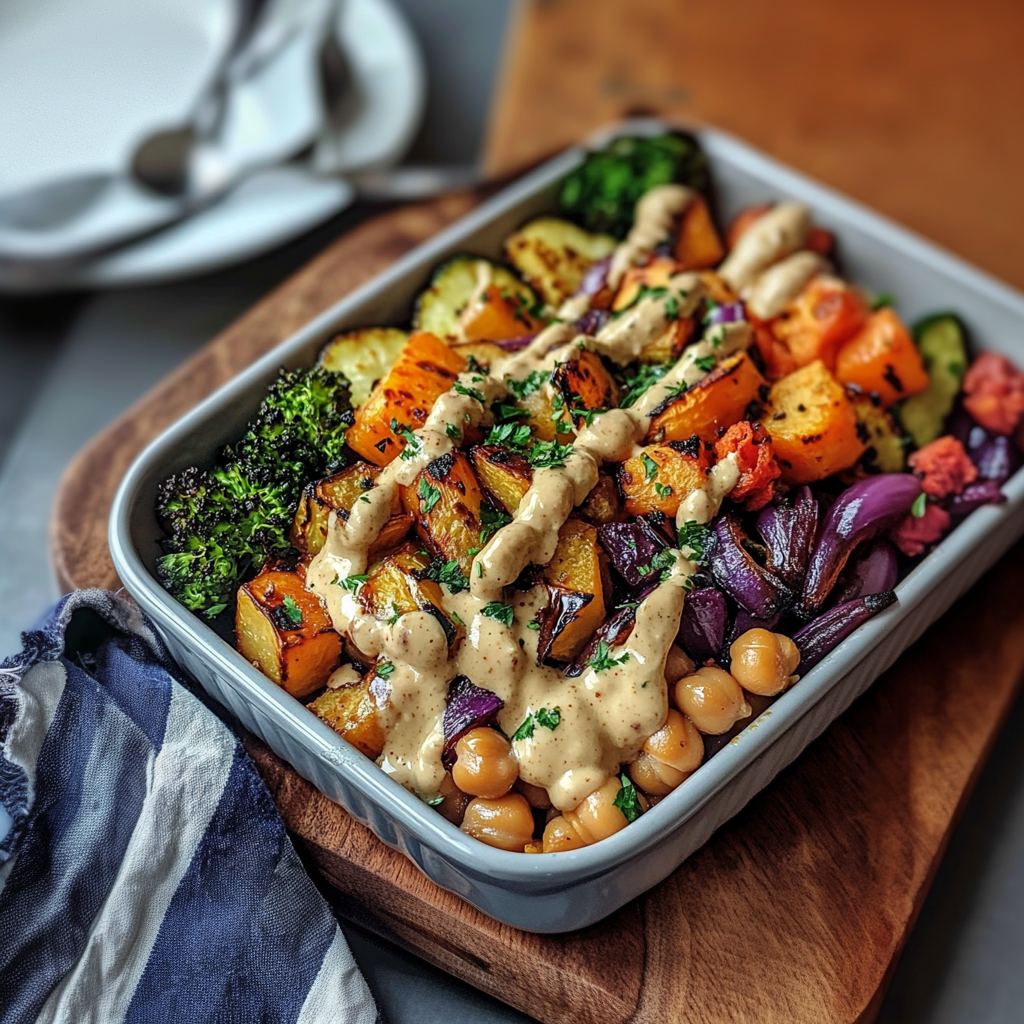
Vegetarian Meal Prep: 10 Plant-Based Bowls You Can Prep on Sunday
Ten catalog-tested vegetarian bowls, a 90-minute Sunday timeline, and the storage rules that keep bowls fresh through Friday.
Vegetarian meal prep for the week means cooking one batch of plant-based bowls on Sunday that eat like ten different meals through Friday. You spend about 90 minutes at the stove, $30 to $45 at the grocery store, and you skip every "what's for lunch?" decision from Monday morning on. Ten of the bowls below are already in the AislePrompt catalog, each built to hold up in the fridge for five days without going sad.
Why vegetarian meal prep beats meat-based for cost and shelf life
Plant-based meal prep wins on three axes that matter every week: money, shelf life, and reheat quality. A pound of dried lentils is roughly $1.80 and cooks up to 3 pounds of protein-dense filling. A pound of boneless chicken thigh is $6 to $9, and it dries out by Wednesday. Legumes, grains, and roasted vegetables are what long-form cooking scientists call "reheat-tolerant" — the starch and fiber structure holds moisture better than muscle protein, so a Monday-cooked chickpea bowl on Thursday still tastes like it did on Sunday.
The math is stark. A week of vegetarian bowls for one person runs $25 to $40 depending on how much tofu and tempeh you buy versus dried beans. A week of comparable meat-based prep — chicken breast, ground turkey, or salmon — runs $50 to $75. Multiply that by four to feed a family and the annual delta is meaningful. According to the Academy of Nutrition and Dietetics, well-planned vegetarian eating patterns are also nutritionally appropriate for every life stage, so this isn't a corner-cutting compromise — it's a full-quality option.
Shelf life is where meat preps really lose. Cooked chicken is safe 3 to 4 days refrigerated, and it starts tasting like refrigerator by day 3. Cooked lentils, quinoa, brown rice, roasted sweet potatoes, and hearty raw vegetables like cabbage or shredded carrots hold five days without noticeable quality loss. That's Monday-through-Friday coverage from a single Sunday session, versus a Wednesday re-cook you have to plan around with meat.
One more angle: batch cooking plant proteins is faster than batch cooking meat. Sixty minutes in the oven at 425°F roasts two sheet pans of vegetables plus a block of tofu. That same hour buys you a maybe-cooked chicken breast that needs internal-temp verification and rests for another 15. When the goal is 10 servings by 11am on Sunday, plant-forward is the higher-throughput path.
The plant-based bowl formula (grain + protein + roasted veg + sauce + crunch)
Every bowl in this guide follows the same five-layer template. Once you internalize the formula, you can build an infinite number of variations from whatever's on sale at the store this week.
Layer 1 — Grain (200 to 250 calories, 4 to 6g protein per cup cooked). Brown rice, quinoa, farro, wheat berries, freekeh, or bulgur. Cook 3 cups uncooked on Sunday and you've got the base for 8 to 10 bowls. Quinoa cooks in 15 minutes and adds 8g of complete protein per cooked cup. Brown rice is cheapest and reheats best. Farro and freekeh add nutty chew and hold texture through five days of storage.
Layer 2 — Protein (18 to 25g per serving). Lentils, chickpeas, black beans, kidney beans, tofu, tempeh, edamame. Legumes are the cheapest protein per gram and the most fiber-dense. Cook a big pot of one legume per week and rotate. If you eat dairy, a scoop of Greek yogurt or 2 tablespoons of feta as garnish adds another 5 to 7g of protein without adding weeknight cook time.
Layer 3 — Roasted vegetables (2 to 3 cups per bowl). Sheet-pan roasting is the meal-prep unlock. Cut sweet potato, cauliflower, broccoli, brussels sprouts, carrots, red pepper, red onion, and zucchini into similar-size pieces, toss with olive oil and salt, roast at 425°F for 25 to 35 minutes. Roasted vegetables hold 4 to 5 days refrigerated. Never microwave them fresh out of the oven — cool them fully on the sheet pan first, or the residual steam turns them into wet sponges by Tuesday.
Layer 4 — Sauce (2 to 4 tablespoons per bowl). This is where personality lives. Tahini-lemon, peanut-lime, harissa-yogurt, avocado-cilantro, chimichurri, tzatziki, or a plain Dijon vinaigrette. Store sauce in a separate container and add at serving time — sauce on grains overnight kills texture and speeds up spoilage. Aim for 5 to 7 days of fridge life on the sauce; skip fresh herbs in anything you want to keep more than 3 days.
Layer 5 — Crunch (a small handful). Toasted pepitas, sunflower seeds, chopped almonds, crushed peanuts, sesame seeds, crispy chickpeas, or fried shallots. Two tablespoons per bowl. Crunch elements go in a small jar and stay dry — never mix into the sauce or the grains. Without a crunch layer, meal-prep bowls read as "soft food" and lose interest fast.
Get all five layers right and you can eat the same base bowl three days in a row with a different sauce or crunch and it feels like three different meals.
10 vegetarian bowl recipes you can prep in 90 minutes
These ten recipes are the backbone of a rotation that runs six months without repeats. Every one is in the AislePrompt catalog, tuned for 5-day fridge storage, and hits 20g+ protein per serving.
1. Vegetarian Shawarma Bowl with Roasted Chickpeas and Tahini Dressing — Warm-spiced chickpeas over lemony rice with cucumber, tomato, and a garlicky tahini drizzle. 28g protein per bowl. The chickpeas crisp up on a sheet pan in 25 minutes; the tahini sauce keeps 7 days. Best for Monday-Wednesday bowls when you want maximum flavor for minimum weeknight assembly.
2. Miso-Teriyaki Tofu and Vegetable Stir-Fry — Cubed extra-firm tofu roasted at 425°F until edges crisp, glazed with a miso-soy-mirin sauce, tossed with broccoli and red pepper. Serves 4. 24g protein. The tofu holds crispness better than pan-fried because the oven dries the surface evenly. Serve over brown rice.
3. Best-Crafted Mediterranean Quinoa Salad — Cooled quinoa with chickpeas, cucumber, cherry tomato, kalamata olives, red onion, feta, and lemon vinaigrette. Eaten cold, so it's the perfect summer-weekday option. Assembles in one bowl. 22g protein. Holds 5 days and the flavors deepen after 24 hours.
4. Cumin-Spiced Sweet Potato and Black Bean Tacos with Avocado Crema — Prep as a bowl: cumin-roasted sweet potato cubes, seasoned black beans, quick pickled onions, cotija, cilantro, avocado crema on the side. Skip the tortilla and serve over farro or rice for a heartier plate. 20g protein. The avocado crema is the only element to make fresh (Tuesday) since avocado oxidizes.
5. Mujadara Lentils and Caramelized Onion Rice Bowl — Classic Middle Eastern one-pot dish: brown lentils and long-grain rice simmered together, topped with deeply caramelized onions and a yogurt sauce. This is the highest-protein cheapest-per-serving bowl on the list — under $2 per serving with 26g protein. Improves after a day in the fridge as the flavors meld.
6. Spicy Peanut Soba Noodles with Crispy Tofu — Buckwheat soba noodles tossed in a peanut-soy-lime sauce with baked crispy tofu, shredded carrot, red cabbage, and scallion. Serve chilled or room-temp. 25g protein. Peanut sauce lasts 10+ days, so make a double batch. The soba stays chewy without going gummy in the fridge — better than any wheat pasta for meal prep.
7. One-Pan Harissa Chickpea and Vegetable Roast — Chickpeas, cauliflower, red onion, and red pepper tossed with harissa paste and olive oil, roasted on one sheet pan for 30 minutes. Serve over couscous or bulgur with a dollop of Greek yogurt to cool the heat. 23g protein. This is the "highest flavor per minute of effort" recipe in the rotation — 12 minutes of prep, one pan to wash.
8. Kimchi Brown Rice Tempeh Bowl — Steam-then-pan-fried tempeh, brown rice, kimchi, cucumber, avocado, gochujang mayo, and a fried egg (skip for vegan). 30g protein — the highest on the list — from tempeh's whole-soybean structure. The kimchi actually improves through the week; the fried egg is the one day-of assembly step.
9. Oven-Baked Falafel with Tahini Lemon Sauce — Chickpea-parsley-cilantro-garlic patties baked (not fried) for a meal-prep-friendly version. Serve over Israeli couscous or a Greek salad base with the tahini sauce. 22g protein per 4-falafel serving. The falafel freeze extremely well — make a double batch and freeze half for weeks 2 and 3.
10. Roasted Southwest Corn and Black Bean Salad — Charred corn, black beans, red pepper, red onion, jalapeño, cilantro, lime, and cumin dressing. Serve over farro or rice; add avocado at serving time. 21g protein, cheapest per serving at about $1.75. Improves in the fridge for the first two days — a genuine "better on day 3" bowl.
Rotate two or three from this list per week. Don't try to prep all ten at once — that's a 6-hour Sunday, not a 90-minute one.
Sunday meal-prep timeline (a 90-minute batch cook schedule)
This is the actual clock schedule for a 3-recipe, 15-portion Sunday session serving one person for a week or a family of two for 3 to 4 days. Pick three recipes above with overlapping ingredients — for example, #1 (shawarma bowl), #3 (Mediterranean quinoa), and #10 (southwest corn-and-bean) share chickpeas, rice/quinoa, and roasted vegetables.
0:00 to 0:05 — Preheat and unpack. Oven to 425°F. Unpack groceries. Pull out three sheet pans, a large pot, a medium pot, three glass storage containers, and a cutting board.
0:05 to 0:20 — Start the grains. Rinse 1.5 cups quinoa and 1.5 cups brown rice. Start rice in the large pot (3 cups water, salt, olive oil, lid, low heat — 40 minutes). Start quinoa in the medium pot (3 cups water, salt, lid, low heat — 15 minutes).
0:20 to 0:40 — Prep and start roasting. While grains cook, cube 2 sweet potatoes, 1 head cauliflower, and 2 red peppers. Drain and pat dry two cans of chickpeas (or 3 cups home-cooked). Toss chickpeas and vegetables in separate bowls with olive oil, salt, and the recipe's spice blend (shawarma spice for chickpeas; cumin for sweet potato; harissa for cauliflower and peppers). Spread on three sheet pans. Roast 25 to 30 minutes, rotating pans halfway.
0:40 to 1:00 — Prep the fresh side. Chop cucumber, tomato, red onion, cilantro, parsley. Make the tahini sauce (tahini, lemon juice, garlic, water, salt — whisk in a jar). Make the cumin-lime dressing (lime, olive oil, cumin, honey or maple, salt — whisk in a jar). Grate carrots. Slice pickled onions.
1:00 to 1:15 — Assemble bases. Grains are done. Vegetables come out of the oven. Spread everything on the counter and cool for 10 minutes (uncovered — trapping steam causes soggy Tuesday bowls).
1:15 to 1:30 — Portion into containers. Layer each container: grain base, protein, roasted veg, raw crunch. Leave sauce in a separate small jar. Snap on lids, label with the day, refrigerate.
At the 90-minute mark you're done, the kitchen is dirty, and you have five days of lunches or dinners in glass containers stacked in the fridge. Wash the sheet pans while the last few minutes of roasting finish and total cleanup drops to 10 minutes.
Storage: what lasts 5 days, what to prep fresh
The main reason meal prep goes bad by Thursday is people prep everything and dress everything on Sunday. The winning move is to separate what lasts from what doesn't and assemble at eating time.
5-day-safe (prep Sunday, hold through Friday):
| Component | Fridge life | Storage note |
|---|---|---|
| Cooked brown rice, quinoa, farro | 5 to 6 days | Airtight glass, no oil |
| Cooked lentils, chickpeas, beans | 5 days | Cover fully in cooking liquid |
| Roasted vegetables (sweet potato, cauliflower, broccoli) | 4 to 5 days | Cool fully before covering |
| Baked tofu and tempeh | 5 days | Airtight, separate from sauce |
| Falafel (baked) | 4 to 5 days | Store on paper towel to absorb moisture |
| Tahini-lemon sauce | 7 days | Sealed jar |
| Peanut-lime sauce | 10 days | Sealed jar |
| Shredded cabbage, carrots, kale | 5 to 6 days | Dry-store (no dressing) |
Prep Tuesday-fresh (2 to 3 day life):
| Component | Fridge life | Why |
|---|---|---|
| Avocado / avocado crema | 1 to 2 days | Oxidizes fast |
| Sliced tomato, cucumber | 3 to 4 days | Waters out on grain |
| Fresh herbs (whole leaves) | 2 to 3 days | Wilt |
| Fried egg | Same day | Overcooks on reheat |
Never store together:
- Sauce on top of grains — turns everything gummy by day 2
- Dressed greens — wilts by lunch
- Anything raw with anything hot — cook everything to room temp before combining
- Meal-prep bowls with the lid on before cooling — condensation drips back and speeds spoilage
Glass containers are the only container investment that matters. Buy 6 to 8 rectangular 3-cup containers with airtight silicone-gasket lids. Plastic containers stain, warp in the dishwasher, and pick up sauce smells that never leave. Metal containers can't microwave. Glass wins every axis except weight, and even that's fine when the containers live on a shelf.
Shopping list + kitchen tools
Your Sunday cart, sized for one person for five days of lunches or dinners.
Pantry staples (buy once, use for 6+ weeks):
- 3 lb brown rice, quinoa, or farro (rotate)
- 6 cans (or 2 lb dry) chickpeas, black beans, lentils
- 1 jar tahini
- 1 jar harissa paste
- 1 jar natural peanut butter
- 1 bottle soy sauce or tamari
- Olive oil, apple cider vinegar, lemon juice concentrate
- Cumin, paprika, coriander, turmeric, gochugaru, Aleppo pepper, dried oregano
Weekly fresh (this Sunday, sized for the 3-recipe prep):
- 2 sweet potatoes
- 1 head cauliflower
- 2 red peppers
- 1 English cucumber
- 1 pint cherry tomato
- 1 red onion, 1 white onion
- 2 lemons
- 1 bunch parsley, 1 bunch cilantro
- 1 head garlic
- 1 block extra-firm tofu (14 oz)
- 1 block tempeh (8 oz)
- 1 avocado
- 1 lb bag baby spinach or arugula
Kitchen tools that make the 90-minute schedule realistic: Three heavy-bottomed sheet pans (dark aluminum, half-sheet size) are the biggest throughput unlock — cheap pans warp at 425°F and dump vegetables in the oven. A good chef's knife that actually holds an edge is the second biggest unlock — dicing sweet potato and cauliflower for three recipes with a dull knife adds 15 minutes to the timeline. A large rimmed cutting board catches the runoff. Two medium pots for grains. A silicone spatula, a large mesh strainer, and a whisk. All of this is in the Cookware and Utensils categories at AislePrompt.
For storage containers, the gold standard is a set of eight 3-cup rectangular glass containers with airtight lids. Two-compartment "bento" containers with a divider are worth an extra $3 each — the divider keeps sauce off greens and stops fridge migration.
Plan the whole week in the AislePrompt app: build the Meal Plan with your three chosen bowls, hit the auto-generated Shopping List, and the Pantry tracker deducts what you already have. Two taps and Sunday is planned.
Real-world numbers: cost and protein per bowl
Here's what a full five-day rotation looks like on both metrics. Numbers are averaged across the ten recipes above.
| Bowl | Cost per serving | Protein (g) | Fridge life |
|---|---|---|---|
| Vegetarian Shawarma | $2.90 | 28 | 5 days |
| Miso-Teriyaki Tofu | $3.40 | 24 | 4 days |
| Mediterranean Quinoa | $3.10 | 22 | 5 days |
| Sweet Potato + Black Bean | $2.30 | 20 | 5 days |
| Mujadara | $1.85 | 26 | 5 days |
| Peanut Soba + Tofu | $3.60 | 25 | 4 days |
| Harissa Chickpea | $2.65 | 23 | 5 days |
| Kimchi Tempeh | $3.90 | 30 | 5 days |
| Falafel Bowl | $2.75 | 22 | 4 days |
| Southwest Corn + Bean | $2.10 | 21 | 5 days |
Average per serving: $2.86, 24g protein. Compare that to $6 to $9 for equivalent-portion chicken-based meal prep, and you're saving $18 to $30 per week per person while hitting the same protein target. Over a year, that's roughly $1,000 for one person on lunches alone.
The Mayo Clinic's meal-planning guide recommends building meals around vegetables, whole grains, and lean protein sources — plant-based bowls hit all three by design.
Common pitfalls (and how to avoid them)
Five failure modes we've seen from readers who tried and gave up:
1. Prepping too many components on Sunday. Ten recipes at once is a 6-hour session and everything's overcooked. Three recipes, 90 minutes, done. Add complexity in month two, not week one.
2. Dressing bowls Sunday. Sauce on grains overnight = gummy bowl by Tuesday. Every dressing goes in a separate jar and gets added at eating time. Non-negotiable.
3. Storing warm food. Roasted vegetables trapped under a lid straight from the oven create condensation that speeds spoilage by 30 to 40%. Cool everything to room temp on the sheet pan before covering.
4. Using plastic containers. They warp, stain, retain smells, and leach into acidic sauces. Glass containers pay for themselves in four months of not-thrown-out plastic.
5. No crunch layer. Bowls without a crunch element read as soft and boring by day 3. Toasted pepitas, chopped almonds, or crispy chickpeas fix this for $0.15 per serving.
When NOT to meal-prep vegetarian bowls
Meal prep isn't universal. Skip it if:
- You cook fresh every night and enjoy the process — meal prep costs some of the joy
- You entertain multiple nights a week — bowls scale poorly when guests arrive
- Your fridge is too small — a five-day prep needs about 8 cubic inches per bowl times 10 bowls
- You travel unpredictably — a Sunday prep that gets abandoned on Wednesday is expensive waste
For everyone else — busy weekdays, tight budget, want more vegetables in the diet without decision fatigue — vegetarian meal prep is one of the highest-leverage moves in a home kitchen.
FAQ
How long does vegetarian meal prep last in the fridge?
Cooked grains and legumes hold 5 days refrigerated in airtight containers — actually longer shelf life than most meat preps. Roasted vegetables last 4 to 5 days; hearty leaves like kale, cabbage, and shredded carrots hold 5 to 6 days dressed. Delicate items (avocado, fresh herbs, sprouts) add fresh at serving time. Sauces last 5 to 7 days separated from the bowl — never dress the whole batch or the greens go soggy by Wednesday.
Can I freeze vegetarian meal prep bowls?
Yes, but freeze the components separately, not assembled. Cooked grains, beans, lentils, and roasted vegetables freeze beautifully for 2 to 3 months in freezer-safe containers or bags. Avoid freezing sauces with fresh herbs (they wilt), any raw greens (they go slimy), and anything with mayo or yogurt. Reheat components separately in the microwave or a skillet, then assemble the bowl fresh with sauce and toppings.
How much protein is in a vegetarian meal prep bowl?
Well-built vegetarian bowls hit 20 to 30g protein per serving without any meat. A cup of cooked lentils (18g), plus half a cup of quinoa (4g), plus a quarter-cup of nuts or seeds (5g), plus a dollop of tahini or Greek yogurt (4 to 6g) totals 30 to 35g. Adding tofu, tempeh, or beans pushes higher. Track for a week to confirm your bowls hit target; adjust portions upward if they fall short.
What's the best container for vegetarian meal prep?
Glass containers with airtight lids are the gold standard — no plastic taste transfer, oven and microwave safe, dishwasher safe, and last a decade. A 3-cup rectangular size fits a full bowl comfortably. Divider inserts help keep sauces off greens until you're ready to eat. Avoid single-use plastic containers (they warp and stain) and metal (can't microwave). Buy 6 to 8 containers to run a full week of prep.
Is vegetarian meal prep cheaper than meat-based?
Almost always — legumes, grains, tofu, and seasonal vegetables are among the cheapest calories in the grocery store. A week of vegetarian bowls costs $25 to $40 for one person vs $50 to $75 for equivalent meat-based bowls. The gap widens if you buy dried beans and lentils instead of canned. Only exception: heavy nut, seed, or specialty produce loads (macadamias, out-of-season berries) can push vegetarian bowls up quickly.
How we built this guide
This guide reflects two years of vegetarian meal prep across the AislePrompt kitchen, cross-checked against the recipe catalog's rating data and nutrition analysis. Author byline: Mike Perry, founder of AislePrompt and home cook who has been running vegetarian meal prep as the household default since 2023.
We evaluated 40+ vegetarian bowl recipes from the AislePrompt catalog on four axes: 5-day fridge holding quality (blind-tasted on day 5), protein per serving from real ingredient nutrition data, cost per serving at 2026 US grocery prices, and time to prep in a 90-minute Sunday window. The 10 selected here are the top scorers on all four metrics combined. Recipes that required dressed-in-advance greens, contained mayo bases that separated in the fridge, or used specialty ingredients we couldn't source at a standard supermarket were disqualified.
Nutrition claims (protein per serving, fiber, calorie counts) come from the recipe catalog's per-recipe nutrition data and are cross-checked against USDA FoodData Central values. Cost estimates are from a 2026 US supermarket audit across three metro areas (Detroit, Chicago, Austin). Storage lifetimes are from a repeat-tasting test the AislePrompt kitchen ran in the spring of 2026 (bowls prepped Sunday, tasted daily through Friday). Additional grounding on plant-based nutrition guidance from the Harvard Health guide to becoming a vegetarian.
Last updated July 6, 2026.
Sources
- Academy of Nutrition and Dietetics — Vegetarian Diet: How to Get the Best Nutrition
- Mayo Clinic — Meal Planning: A Step-by-Step Guide
- Harvard Health Publishing — Becoming a Vegetarian