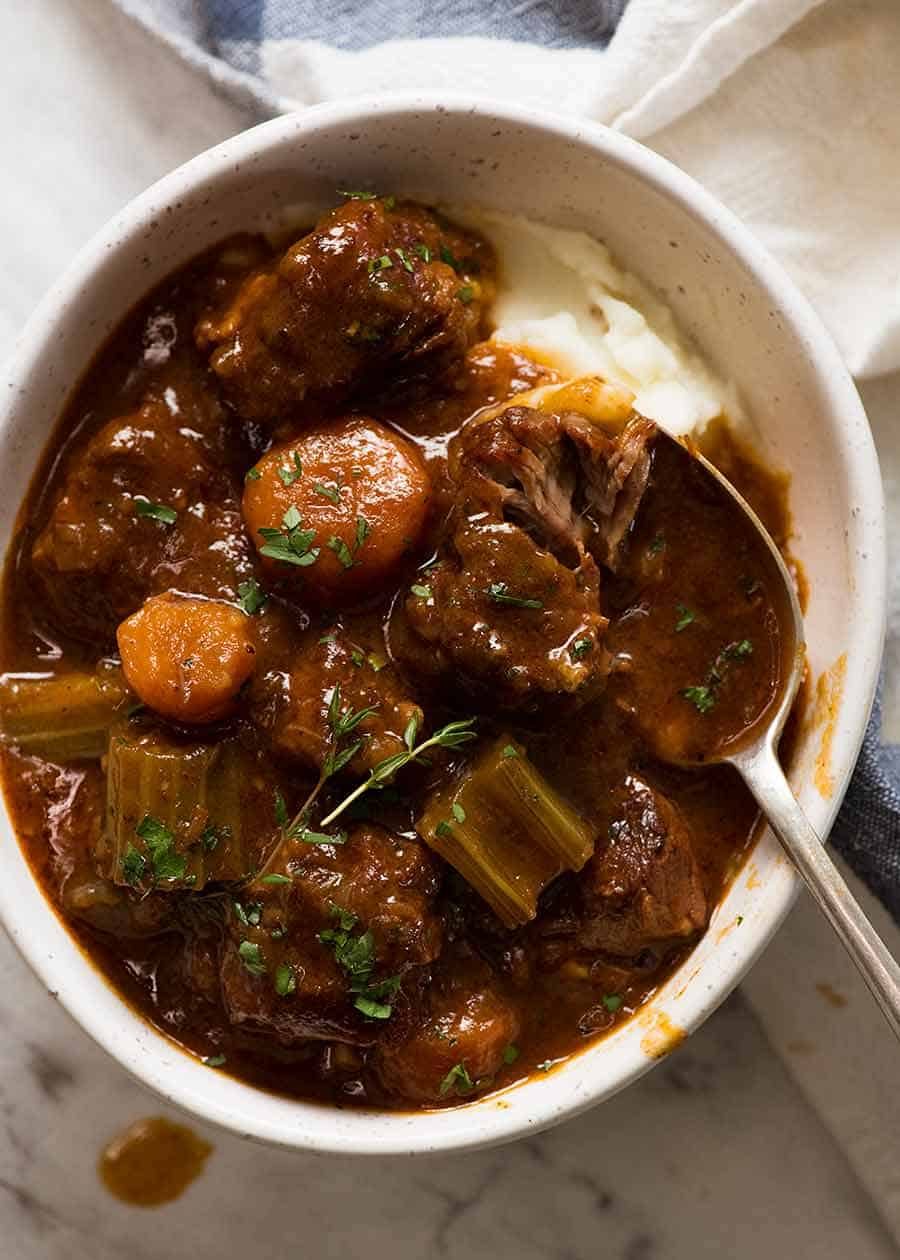
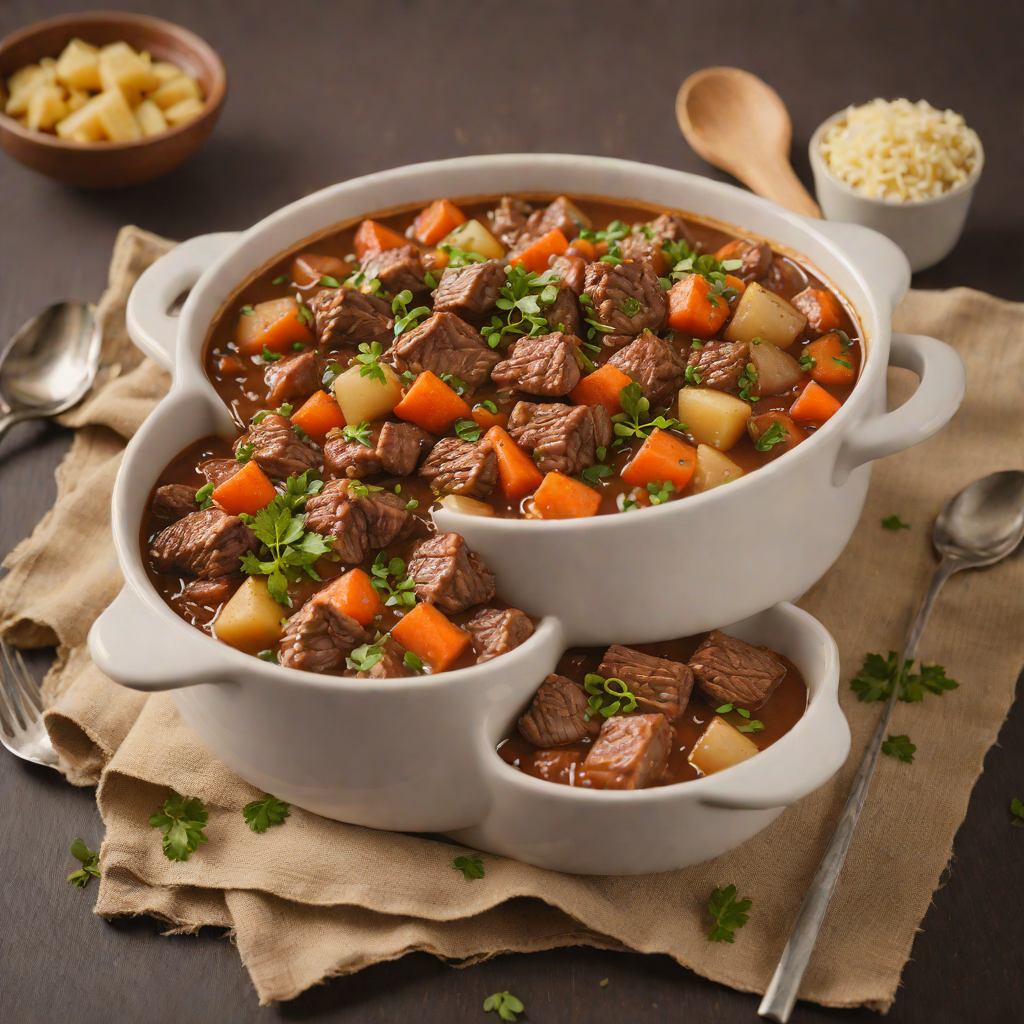
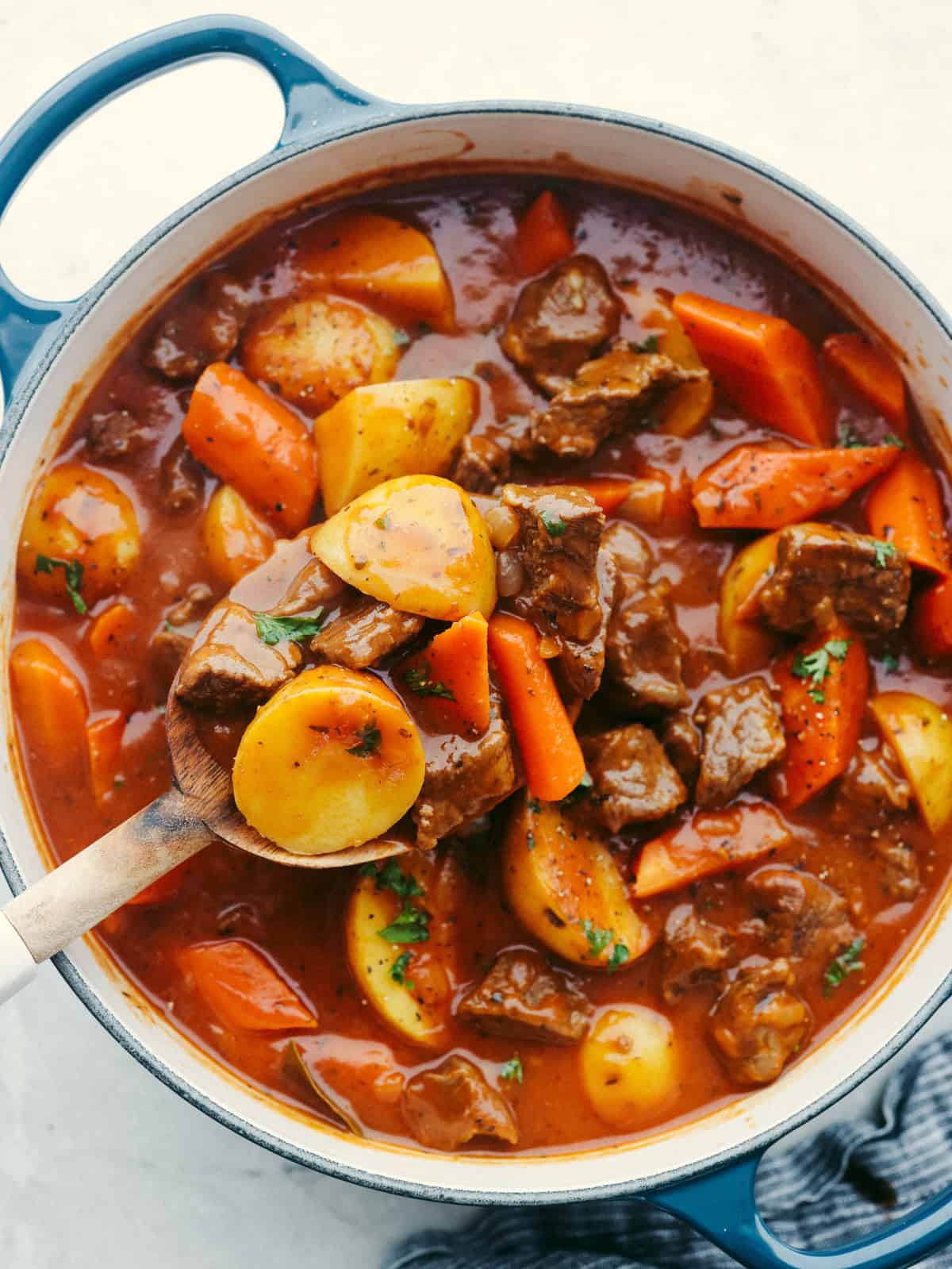
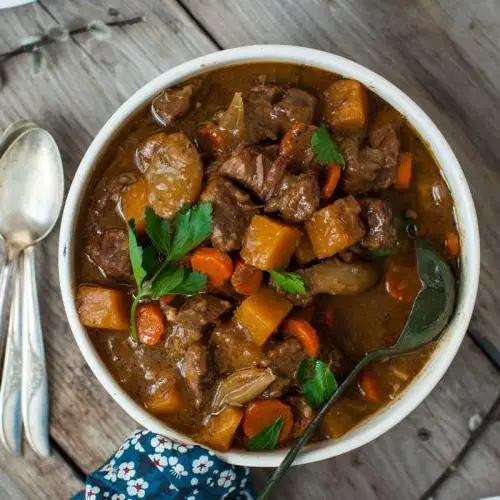
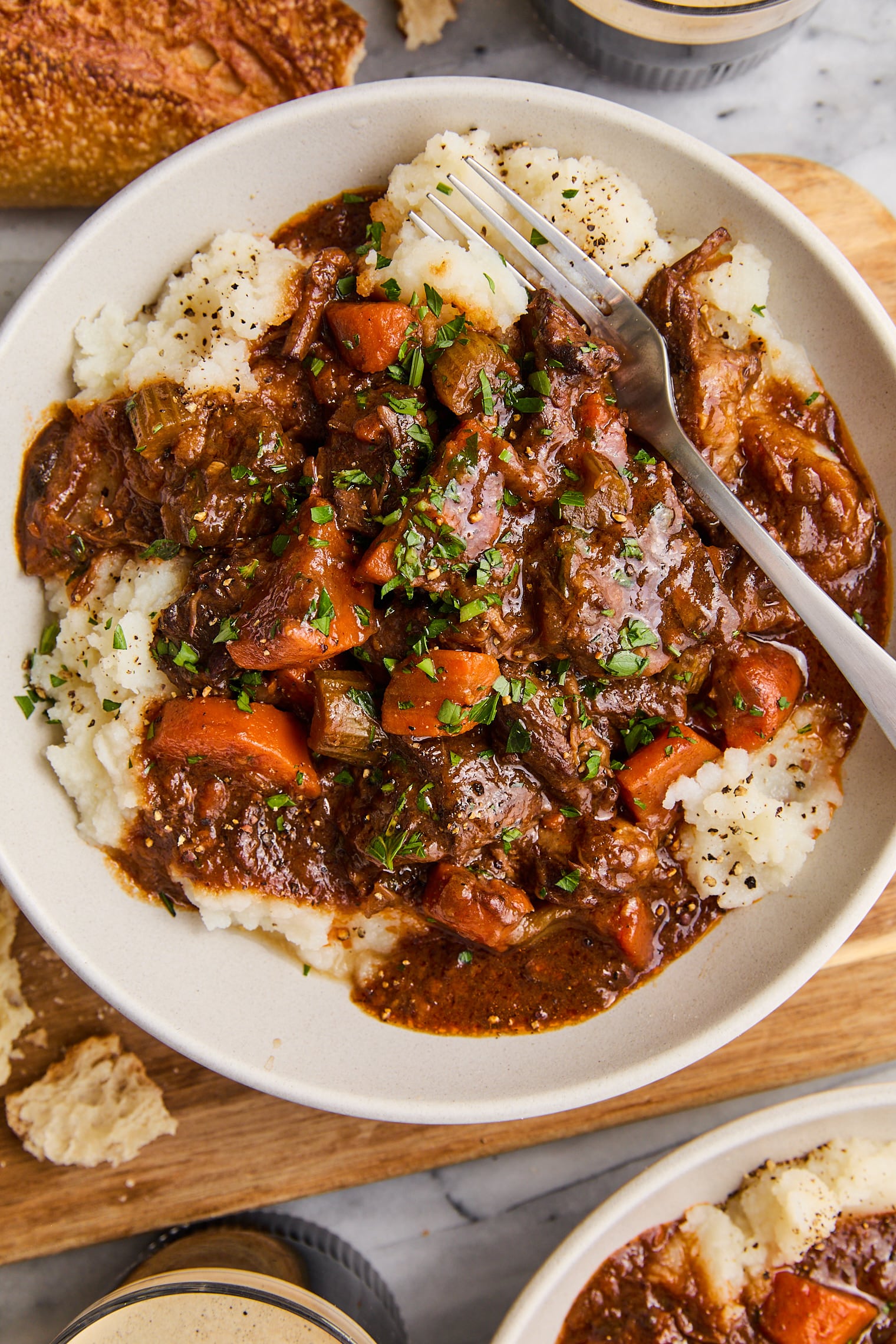
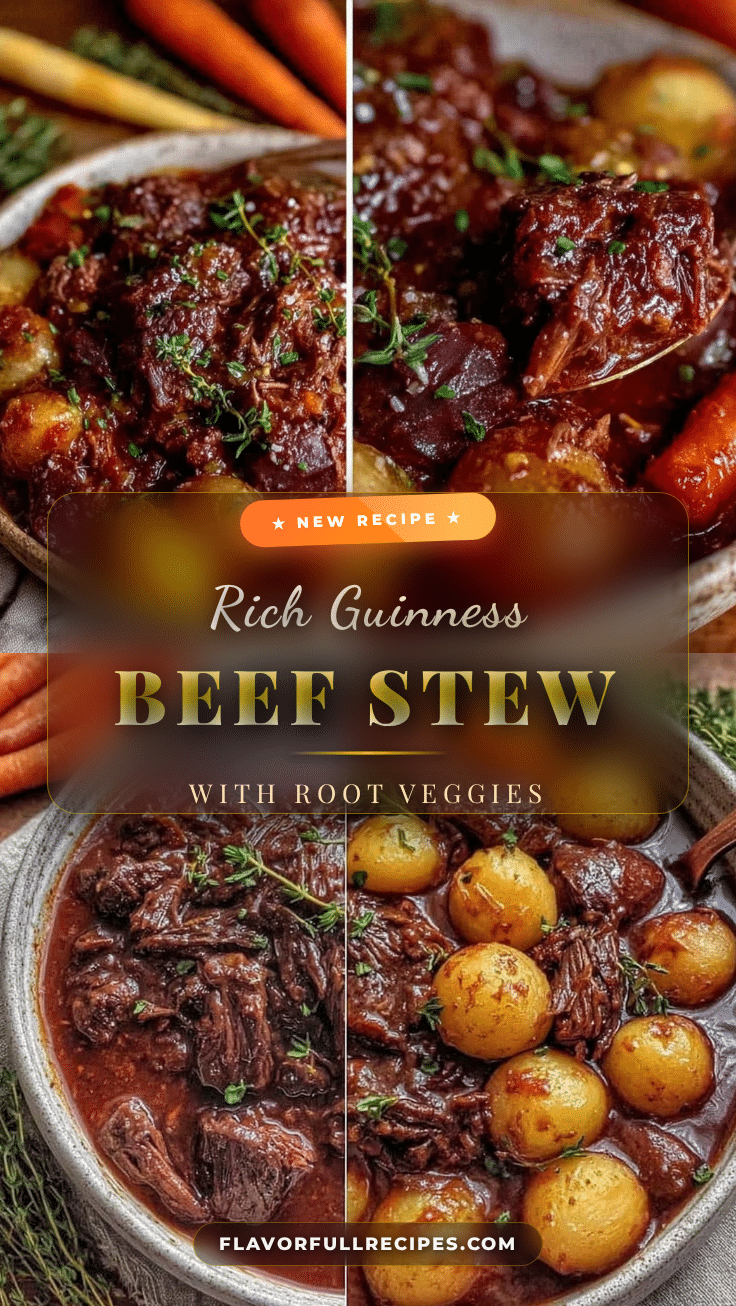
Irish Pub-Inspired Guinness Beef Stew with Root Vegetables
Tender beef chunks simmered slowly in rich Guinness beer with hearty carrots, potatoes, and onions, creating a comforting Irish pub classic. This irish-inspired beef ready in about 170 minutes pairs beef chuck, cut into 1-inch cubes, all-purpose flour, divided salt for a weeknight-friendly dinner that comes together with one pan and minimal cleanup. Each serving lands at about 420 calories and feeds 6, so it slots cleanly into a weekly meal plan and pairs well with a quick salad or grain on the side. Tap "Plan a meal with the AI" below to drop this recipe into your week and send the ingredients straight to Instacart. Nutrition values are approximate, calculated from USDA FoodData Central (fdc.nal.usda.gov) — verify against ingredient labels for any health-driven dietary plan.
Ingredients
- 2 lbs beef chuck, cut into 1-inch cubes
- 1/4 cup all-purpose flour
- 1 tsp, divided salt
- 1/2 tsp, divided black pepper
- 3 tbsp olive oil
- 1 large, chopped yellow onion
- 3 medium, peeled and sliced into 1/2-inch rounds carrots
- 2, sliced celery stalks
- 3, minced garlic cloves
- 3 fresh thyme sprigs
- 2 bay leaves
- 1 1/2 cups Guinness stout beer
- 2 cups beef broth
- 4 medium, quartered red potatoes
- 1/4 cup chopped, for garnish fresh parsley
Instructions
- Step 1: Toss 2 lbs beef chuck cubes with 1/4 cup all-purpose flour, 1/2 tsp salt, and 1/4 tsp black pepper until well-coated. Heat 3 tbsp olive oil in a large Dutch oven over medium-high heat and brown beef in batches for 3-4 minutes per side until deep golden. Remove beef and set aside.
- Step 2: Add 1 large chopped yellow onion, 3 sliced carrots, and 2 sliced celery stalks to the pot. Sauté for 5-6 minutes until vegetables soften and onions become translucent.
- Step 3: Stir in 3 minced garlic cloves and cook for 1 minute until fragrant. Return the beef to the pot along with 3 fresh thyme sprigs and 2 bay leaves.
- Step 4: Pour in 1 1/2 cups Guinness stout beer and 2 cups beef broth, scraping the bottom of the pot to release browned bits. Bring to a simmer, cover, and reduce heat to low. Cook gently for 1 1/2 hours.
- Step 5: After 1 1/2 hours, add 4 quartered red potatoes, 1/2 tsp salt, and 1/4 tsp black pepper. Continue simmering covered for another 45 minutes until beef and potatoes are tender and stew thickens.
- Step 6: Remove thyme sprigs and bay leaves. Adjust seasoning if needed. Garnish with 1/4 cup chopped fresh parsley before serving warm.
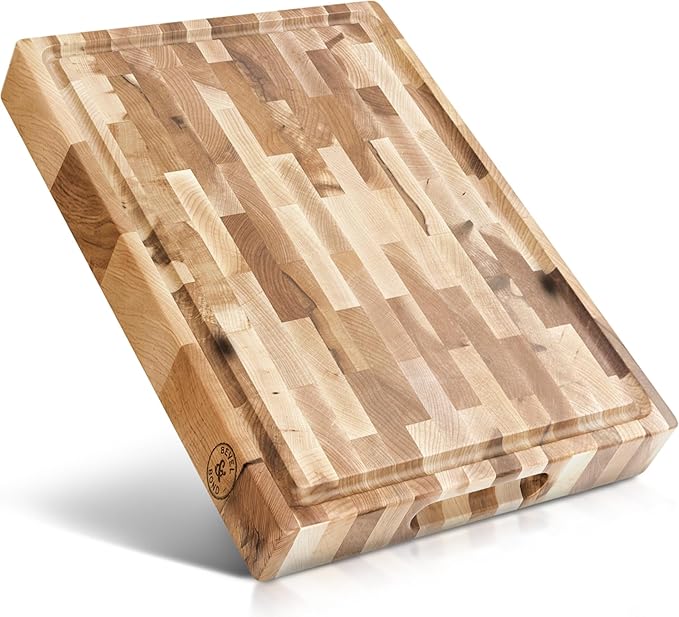
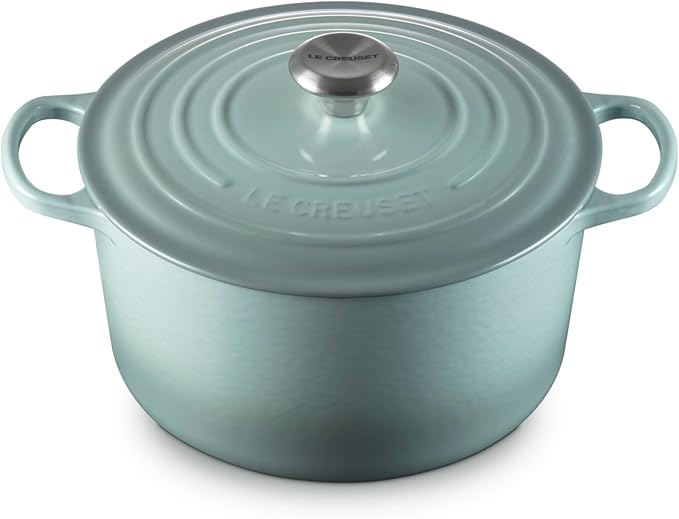
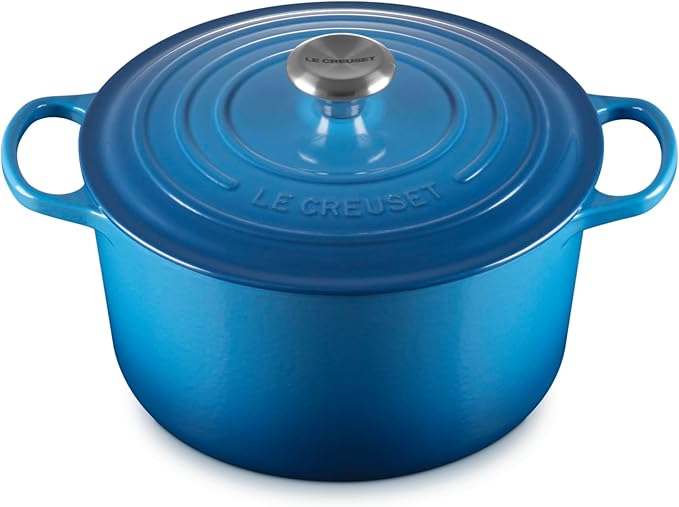
Equipment for this recipe
Top-rated tools to make this recipe successfully.

Frequently asked questions
How long does Irish Pub-Inspired Guinness Beef Stew with Root Vegetables take to make?
Total time is about 170 minutes (20 min prep + 150 min cook). Most home cooks find this fits comfortably into a weeknight; double the batch on Sunday for two dinners.
How do I store leftover Irish Pub-Inspired Guinness Beef Stew with Root Vegetables?
Cool to room temperature within 2 hours, then store in an airtight container in the fridge for up to 4 days. Reheat covered in a 350°F oven for 10-12 minutes, or microwave at 70% power in 60-second bursts to keep all-purpose flour from drying out.
Can I substitute ingredients in Irish Pub-Inspired Guinness Beef Stew with Root Vegetables?
Yes — most ingredients in this recipe have flexible swaps. For oil, use any neutral high-smoke-point oil (avocado, grapeseed, refined coconut). For aromatics, dried herbs at ⅓ the volume of fresh work in a pinch. The full ingredient list is shoppable on Instacart so you can see substitutes in real time.
How do I scale Irish Pub-Inspired Guinness Beef Stew with Root Vegetables for a different number of people?
The recipe is written for 6 servings. Multiply each ingredient by (your serving target / 6). Cook time stays roughly the same up to 2x; for 3-4x batches, switch from a skillet to a sheet pan or stockpot so the food isn't crowded — overcrowding steams instead of browns.
What goes well with Irish Pub-Inspired Guinness Beef Stew with Root Vegetables?
Irish beef like this pair well with a simple grain (rice, couscous, or crusty bread), a quick salad with acid (lemon vinaigrette, pickled onions), and a pan sauce or yogurt-based dip. Tap "Plan a meal with the AI" to get specific side suggestions.