18 Nigerian Recipes: Jollof Rice, Egusi Soup & Suya Weeknight Dinners
One blended pepper base — bell pepper, tomato, scotch bonnet, onion — fried until the oil separates. Get that right and 18 Nigerian dishes follow.
Nigerian cooking runs on a single foundational preparation — a blended pepper base of red bell pepper, tomato, scotch bonnet, and onion, fried in oil until it darkens and the oil separates. Master that one step and 18 dishes follow, from jollof rice to egusi soup to suya off a hot grate.
Get a free week of easy dinners
Seven weeknight dinners with the shopping list already totalled, sent Sunday. No account needed, unsubscribe in one click.
No spam, unsubscribe in one click. Recipes, shopping lists and Instacart carts all work without an account either way.
Introduction: The Powerhouse of West African Home Cooking
Nigeria is the most populous country in Africa and its food is the most widely exported cuisine on the continent — jollof rice alone has spawned a decade-long, entirely serious rivalry between Nigerian and Ghanaian cooks. But it is under-covered in American home-cooking media, which means most people who want to cook it are working from restaurant memory rather than technique.
The technique is simpler than it looks. Nearly every savory Nigerian dish starts from the same place: a blended raw base of red bell pepper (for body and sweetness), plum tomato (for acid), scotch bonnet (for heat), and onion, fried hard in oil until the water cooks off, the color deepens from bright red to brick, and oil pools at the edges. This is obe ata, the pepper base, and it takes 20 to 30 minutes. Everything else is variation.
The second organizing idea is that soups are not starters. A Nigerian "soup" — egusi, ogbono, efo riro, banga — is a thick, oil-rich stew eaten with a starch swallow (fufu, pounded yam, eba) that you pinch, dip, and swallow without chewing. It is the main course, and it is the reason the soups are as thick as they are.
Heat is real here, unlike in Moroccan or Cantonese cooking. Scotch bonnets run 100,000–350,000 Scoville units, roughly 20 to 40 times a jalapeño. But it is controllable: the heat lives in the blended base, so you decide the level before you cook anything.
The Nigerian Pantry: Palm Oil, Egusi, Bouillon, Scotch Bonnet, Locust Bean
Six items, most of them shelf-stable, most available at any African or Caribbean grocer and increasingly at large supermarkets.
Red palm oil is unrefined, deep orange, and tastes faintly of carrot and earth. It is not the refined palm oil in processed food and it is not interchangeable with any other oil — it is a flavor ingredient, not a cooking medium. Bleach it first: heat it alone until it turns from opaque orange to clear, about 60 to 90 seconds, then add your aromatics. Skipping that step leaves a raw, waxy taste.
Egusi are ground melon seeds. They thicken and enrich soups the way ground nuts do, and they carry a mild nutty flavor. Buy ground; grinding whole seeds at home is tedious. Store in the freezer — the oil content means room-temperature egusi goes rancid within a few months.
Bouillon cubes (Maggi or Knorr) are not a shortcut anyone apologizes for here. They are a structural ingredient in Nigerian home cooking, contributing salt, MSG, and a specific savory register. One or two cubes per pot is standard. If you refuse them, compensate with more salt plus a teaspoon of mushroom powder.
Scotch bonnet (ata rodo) — fruity and floral as well as hot. Habanero is the direct substitute and it is close. Freeze them whole; they blend fine from frozen.
Locust bean (iru or dawadawa) is fermented African locust bean, pungent and funky, used the way an Italian kitchen uses anchovy. A tablespoon in efo riro changes the dish entirely. It smells alarming and tastes essential.
Crayfish powder — ground dried shrimp — is the other umami backbone. Two tablespoons per pot.
| Ingredient | Role | Where to buy | Substitute |
|---|---|---|---|
| Red palm oil | Color, earthy richness | African grocer, online | None; use neutral oil and accept a different dish |
| Ground egusi | Thickener, nutty body | African grocer | Ground pumpkin seed |
| Bouillon cubes | Salt + savory depth | Any supermarket | Salt + mushroom powder |
| Scotch bonnet | Fruity heat | Most supermarkets | Habanero |
| Locust bean (iru) | Fermented funk | African grocer | Miso or fish sauce, roughly |
| Crayfish powder | Umami | African grocer | Dried shrimp, ground |
A high-powered blender does most of the prep work in this cuisine — the pepper base, egusi paste, and any soup thickener all go through it. A full-size blender with a food processor bowl covers both jobs.
5 Rice & Grain Mains (Jollof, Coconut Rice, Fried Rice, Ofada, Tuwo Shinkafa)
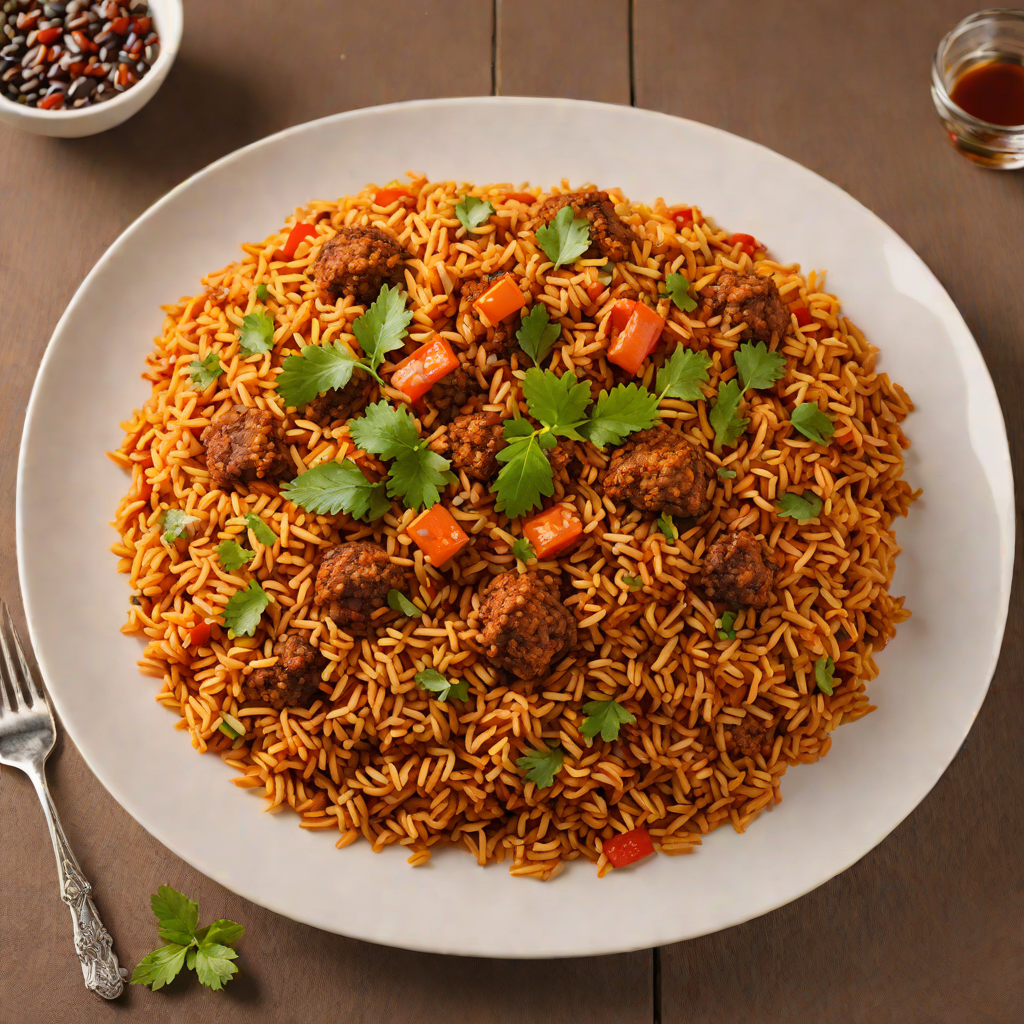
1. Wood-Fired Spiced Nigerian Jollof Rice — the national dish and the one to learn first. Long-grain parboiled rice cooked in the pepper base until it absorbs everything. The smoky note that defines great jollof — party jollof — comes from letting the bottom layer scorch slightly at the end. Do not stir it out; that scorched bottom is the point.
2. Spicy Nigerian Jollof-Inspired Chicken Stew — the same base built as a stew rather than a rice dish, served over plain rice. Easier to get right on the first attempt.
3. Sheet Pan Jollof-Style Spiced Chicken with Vegetables — a weeknight adaptation. Twenty minutes of active work.
4. Nigerian fried rice — distinct from Chinese fried rice: curry powder and thyme turn it yellow-green, and it carries liver, shrimp, green beans, and carrot. It is a party dish, always served alongside jollof rather than instead of it.
5. Coconut rice and ofada rice — coconut rice swaps some stock for coconut milk; ofada is a short, unpolished local rice with a distinctive earthy aroma, served with a green pepper sauce called ayamase. Both are worth seeking out once the jollof is reliable.
The jollof mistake everyone makes: using the wrong rice. Long-grain parboiled rice (Uncle Ben's style) is correct — it absorbs liquid without breaking down. Basmati collapses into mush and jasmine is too soft. This is not a snobbery point; the grain structure genuinely determines whether the dish works.
4 Soups & Stews: Egusi, Ogbono, Efo Riro, Banga
1. Slow-Cooked Nigerian Egusi Soup with Spinach and Beef — the most famous. Ground melon seed cooked in palm oil and pepper base until it forms soft curds, then loaded with beef, stockfish, and greens. The technique detail: add the egusi paste in spoonfuls and do not stir for the first five minutes, so it sets into lumps rather than dissolving.
2. Smoked Fish Efo Riro Stew — the Yoruba vegetable stew, built on spinach or the local efo shoko, with locust bean and smoked fish. This is where iru earns its place.
3. Ogbono soup — thickened with ground wild mango seed, which produces a deliberately slippery, drawing texture that is either the point or a dealbreaker depending on your palate. Plantain and Black-Eyed Pea Stew with Egusi is a gentler entry to the same flavor family.
4. Okra and Stockfish Pepper Soup — pepper soup is the thin, aromatic, intensely spiced broth eaten for colds and hangovers. It uses a distinct spice blend (uda, uziza, calabash nutmeg) rather than the pepper base.
Two more: Spiced Nigerian-Inspired Beef Stew with Aromatic Tomatoes is the everyday red stew that goes over anything, and Spiced Nigerian Peanut Stew with Sweet Potatoes is the groundnut version — vegetarian as written and the cheapest dinner here at about $1.90 a serving.
4 Grilled & Fried Proteins (Suya, Nkwobi, Asun, Peppered Chicken)
1. Grilled Suya-Spiced Beef Skewers with Peanut Sauce — suya is Nigeria's great street food: thin beef coated in yaji, a dry rub of ground roasted peanut, ginger, garlic powder, cayenne, and bouillon, grilled hard over coals and served with raw onion and more yaji. The peanut in the rub is what makes it suya rather than generic kebab.
2. Grilled Suya-Spiced Chicken Skewers with Peanut Sauce — the chicken version, and a genuinely great weeknight grill.
3. Sheet Pan Spiced Nigerian Suya Chicken — oven version for when the grill is not happening. 400°F, 25 minutes, broil the last three.
4. Peppered chicken and asun — chicken or goat, boiled until tender, then fried or grilled and tossed in a fresh pepper-and-onion sauté. Nkwobi is the cow-foot version in a spiced palm-oil emulsion, and it is a bar snack rather than a dinner.
Making yaji at home: blitz 1/2 cup roasted unsalted peanuts to a coarse powder (stop before it turns to butter), then mix with 1 tbsp cayenne, 1 tbsp ginger powder, 2 tsp garlic powder, 1 tsp smoked paprika, 1 crushed bouillon cube, and 1 tsp salt. It keeps two months in a jar and works on anything grilled. Flat metal skewers stop the thin beef from spinning when you flip it.
3 Small Chops & Snacks (Puff Puff, Chin Chin, Meat Pies)
Small chops is the Nigerian party-snack platter — puff puff, chin chin, spring rolls, samosas, peppered gizzard — passed around before the jollof lands.
1. Puff puff — yeasted, deep-fried dough balls, crisp outside and airy inside, dusted with sugar. The batter is much wetter than doughnut dough, closer to a thick pancake batter, and it is scooped rather than rolled. Fry at 350°F; hotter and the outside browns before the inside sets.
2. Chin chin — sweet fried dough cut into small cubes, hard and crunchy, flavored with nutmeg. It keeps three weeks in a sealed tin, which is why every Nigerian household has some.
3. Oven-Baked Meat Pie with Golden Puff Pastry — the Nigerian meat pie is a hand pie filled with minced beef, potato, and carrot in a thick gravy, with a distinctly short, biscuity crust rather than flaky puff. Beef and Wattleseed Meat Pies with Puff Pastry uses the same construction.
2 Sides & Starches (Fufu, Plantain)
1. Spiced Cassava Fufu with Egusi and Spinach Stew — fufu is the swallow: cassava, yam, or plantain flour whisked into boiling water until it forms a smooth, stiff dough. You pinch off a piece, make a dent, scoop soup, and swallow without chewing. Instant fufu flour takes four minutes and is what most Nigerian households use on a weeknight.
2. Crispy Fried Plantains — dodo. Use plantains that are mostly black; yellow-green ones are starchy and will not caramelize. Fry at 350°F until the edges are deep brown. They appear alongside roughly half the dishes on this page. Slow Cooker Caribbean-Spiced Pork Shoulder with Sweet Plantains shows the same fruit in a braise.
Weeknight Meal Plan: 5 Nigerian Dinners for One Shop
One batch of pepper base on Sunday carries four of the five dinners.
| Night | Dish | Active time | Shares with |
|---|---|---|---|
| Sunday | Nigerian Jollof Rice | 30 min | Pepper base, parboiled rice |
| Monday | Nigerian Beef Stew | 20 min | Pepper base, beef |
| Tuesday | Sheet Pan Suya Chicken | 10 min | Yaji rub, onion |
| Wednesday | Nigerian Peanut Stew with Sweet Potatoes | 20 min | Peanut, pepper base |
| Thursday | Egusi Soup with Spinach and Beef | 25 min | Palm oil, beef, greens |
Total grocery cost for four people across five dinners runs about $71 as of August 2026 — roughly $3.55 per person per meal. Beef is the main cost at $20 for three pounds of chuck; the peanut stew night carries no meat at all and pulls the average down.
Batch strategy: blend a triple batch of pepper base on Sunday — 6 red bell peppers, 6 plum tomatoes, 2 scotch bonnets, 2 onions — and fry the whole thing down at once. It takes 35 minutes instead of 25 and covers four dinners. It freezes in one-cup portions for three months.
Serve fried plantains with any of them; ten minutes and it makes every plate look complete.
Common pitfalls
- Not frying the pepper base long enough. Under-fried base tastes raw and sour. Cook until the color darkens from bright red to brick and oil separates — 20 to 30 minutes, no shortcut.
- Using the wrong rice for jollof. Long-grain parboiled only. Basmati and jasmine turn to porridge.
- Skipping the palm oil bleach step. Sixty to ninety seconds alone in a hot pan until it clarifies. Otherwise the finished dish tastes waxy.
- Stirring egusi immediately. Drop it in as spoonfuls and leave it undisturbed for five minutes so it sets into curds.
- Frying plantains that are not ripe enough. Mostly-black skin. Yellow plantains have not converted enough starch to sugar and will not brown properly.
- Seeding the scotch bonnets and expecting mild. Most of the capsaicin is in the placenta, but the flesh is still very hot. Use half a pepper, not a seeded whole one.
When NOT to cook Nigerian
If nobody at your table tolerates real heat, this is a hard cuisine to adapt — you can drop the scotch bonnet to a quarter pepper, but the pepper base is structural and the dishes taste hollow without any at all. The peanut stew and jollof scale down best. Also, if you cannot get to an African or Caribbean grocer and will not order online, four of the six pantry items have no good substitute, and the results will be a generic tomato stew rather than the real thing. Sourcing first, cooking second.
FAQ
What is the pepper base and why does every recipe start with it?
The pepper base — obe ata — is red bell pepper, plum tomato, scotch bonnet, and onion blended raw, then fried in oil over medium-high heat until the water evaporates, the color deepens to brick red, and the oil separates and pools. It takes 20 to 30 minutes and it is the flavor foundation for jollof, every red stew, and most soups. An under-fried base is the single most common reason home Nigerian food tastes thin and sour rather than deep and sweet.
Can I make Nigerian food without palm oil?
You can cook it with neutral oil and it will still taste good, but it will not taste Nigerian. Red palm oil contributes a specific earthy, faintly carrot-like flavor and the deep orange color that defines egusi, banga, and most soups. There is no substitute that reproduces it. If you use it, bleach it first by heating it alone until it turns from opaque orange to clear, about 60 to 90 seconds, or the finished dish tastes raw and waxy.
How spicy is Nigerian food, and can I make it milder?
It is genuinely spicy — scotch bonnets run 100,000 to 350,000 Scoville units, roughly 20 to 40 times a jalapeño. But the heat is fully under your control because it lives in the blended pepper base, which you make before you cook anything. Use a quarter pepper instead of two and you get the same fruity aroma at a fraction of the heat. Do not remove it entirely; the base tastes flat without any.
What is fufu and how do I eat it?
Fufu is the starch swallow served with Nigerian soups — cassava, yam, or plantain flour whisked into boiling water until it forms a smooth, stiff dough. You pinch off a small piece with your right hand, press a dent into it with your thumb, scoop up soup, and swallow it without chewing. Instant fufu flour takes about four minutes and is what most households actually use on weeknights; pounded-from-scratch yam is a weekend or celebration effort.
Where do I buy egusi, locust bean, and crayfish powder?
Any African or Caribbean grocery store carries all three, and several online retailers ship them nationwide in the US. Large supermarkets in cities with significant West African populations increasingly stock egusi and palm oil in the international aisle. Store ground egusi in the freezer — its oil content means it goes rancid within a few months at room temperature. Locust bean and crayfish powder keep six months to a year sealed.
What actually makes party jollof taste different from home jollof?
Two things: scale and scorch. Cooking a very large pot over an open wood fire produces uneven heat that lightly burns the bottom layer, and that smoky note permeates the whole batch. At home you reproduce it by leaving the pot on the heat uncovered for the last five minutes until you can smell the bottom catching, then folding — not scraping — the scorched grains up through the rice. Some cooks add a small piece of foil-wrapped charcoal to the pot for the same effect.
Sources
- Nigerian cuisine — regional overview — the national repertoire and how it splits by region.
- Jollof rice — origins and the Nigerian/Ghanaian/Senegalese variants compared.
- Egusi — the melon seed itself, how it is ground, and its role as a soup thickener.
- Suya — the Hausa spiced-skewer tradition and the composition of yaji spice.
- NYT Cooking — Nigerian recipes — tested American-kitchen adaptations and ingredient sourcing.
More in this cluster: 18 West African recipes is the wider regional companion to this guide, 18 Jamaican recipes shares the scotch bonnet and the plantain, 18 Ethiopian recipes covers the other great African stew tradition, and 25 Southern soul food recipes traces where a lot of this cooking landed in America.
Frequently asked questions
What is the pepper base and why does every recipe start with it?
Can I make Nigerian food without palm oil?
How spicy is Nigerian food, and can I make it milder?
What is fufu and how do I eat it?
Where do I buy egusi, locust bean, and crayfish powder?
What actually makes party jollof taste different from home jollof?
Sources
Plan a week of meals in two minutes.
Tell our AI what you have and what you like — it builds your plan, shopping list, and Instacart cart. No account needed.
Try free →