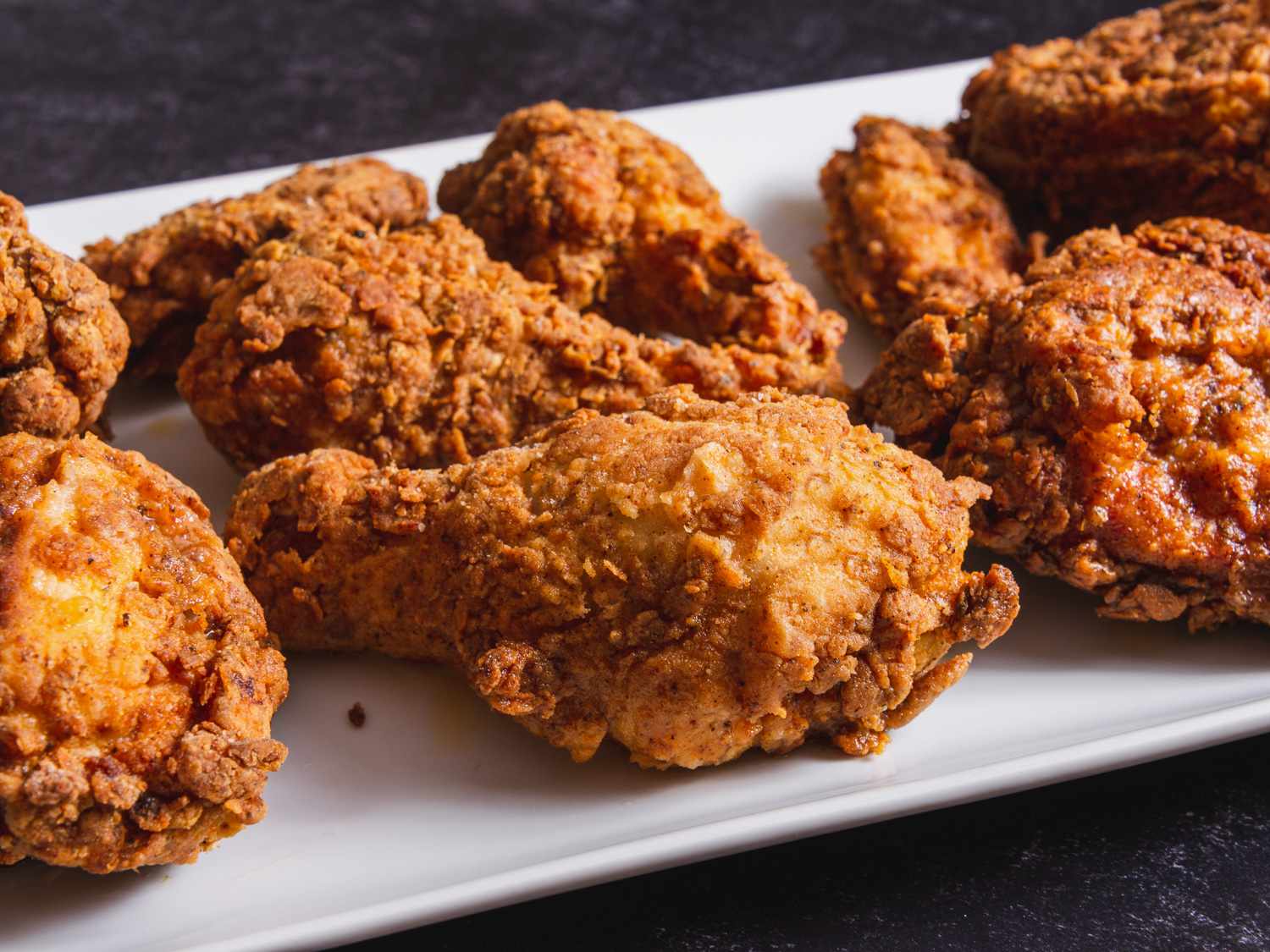
25 Southern Soul Food Recipes: Fried Chicken, Collards, Mac & Cheese
The Sunday-dinner playbook: one fried protein, a long-cooked pot of greens, baked mac, beans, cornbread, and cobbler, sequenced so it all lands hot.
Affiliate disclosure: AislePrompt may earn a commission on qualifying purchases made through Amazon and Instacart links in this article, at no additional cost to you. See our affiliate policy →
Authentic soul food for a Sunday dinner is a menu, not a recipe: one fried or smothered protein, a pot of long-cooked greens, a baked mac and cheese, a starch like red beans or dirty rice, cornbread or biscuits, and one cobbler or pudding. Cook the pots on Saturday, fry on Sunday, and the whole spread lands hot at the same time. This guide covers the technique behind each of those seats at the table and links 25 recipes you can cook from tonight.
Introduction — the Sunday-dinner shape of soul food
Soul food is African American home cooking of the American South, carried north and west during the Great Migration and refined in church basements, family kitchens, and Sunday-after-service dining rooms. The Wikipedia entry on soul food traces the name itself to the 1960s, when "soul" attached to Black music, Black style, and Black cooking at once. The cuisine is older than the name by two centuries.
What matters practically is the shape of the meal. A Sunday soul food plate is built from four or five dishes cooked in parallel, not one dish plus garnish. That structure is the whole reason it feels abundant on a modest grocery budget: a $9 pork shoulder, a $4 bunch of collards, a $3 box of elbows, and a bag of cornmeal feed eight people with leftovers. It is also why soul food defeats cooks who approach it as a single recipe. You are not making fried chicken. You are running a four-burner, one-oven timeline for three hours.
Here is the seat chart most Sunday tables follow:
| Seat | Job on the plate | Typical cook time | Example from our catalog |
|---|---|---|---|
| Fried or smothered protein | The centerpiece; crisp or gravy-slick | 30–60 min active | Buttermilk-brined fried chicken |
| Long-cooked greens | Acid + salt + pot liquor to cut the fat | 60–150 min mostly hands-off | Collards with smoked turkey |
| Baked mac and cheese | The rich, sliceable starch | 60 min | Southern-style macaroni and cheese |
| Beans or rice | The cheap bulk that stretches the table | 135–180 min | Red beans and rice with ham hock |
| Cornbread or biscuits | The sop for the pot liquor and gravy | 15–30 min | Buttermilk biscuits |
| Cobbler or pudding | Warm fruit or cold custard, never both | 20–50 min | Peach cobbler |
Read down that column of cook times and the sequencing writes itself. Greens and beans go on first because they are patient. Mac goes in the oven when the beans are 45 minutes out. Bread and the fried protein happen last, in the final 30 minutes, when everything else is holding warm.
The core seasoning: smoked pork or its plant-based stand-ins
Nearly every savory pot in this cuisine is seasoned by the same move: a smoked, salty, collagen-heavy piece of pork simmered in liquid until it renders. Ham hock, smoked turkey wing or neck, salt pork, streaky bacon, and andouille all do the same three jobs at once — they salt the pot, they smoke the pot, and they add gelatin that gives pot liquor its body. That is why greens cooked in plain salted water taste thin no matter how long you simmer them.
The two workhorses in our catalog are ham hock and smoked turkey. Ham hock is fattier and sweeter; smoked turkey is leaner and more assertively smoky, which is why it dominates modern soul-food kitchens where cooks want the flavor with less rendered fat. Compare Slow Simmered Black-Eyed Peas with Smoked Ham Hock at 280 calories a serving against a plate built on salt pork and you can taste — and count — the difference.
If you cook without pork, the flavor gap is real but closeable. Build it back with four things, in this order of importance:
1. Smoked paprika, 2 teaspoons per pot. This is the single highest-leverage substitution. Use sweet smoked (pimentón dulce), not hot, so you control heat separately.
2. A deeply caramelized onion. Not softened — browned, 12 to 15 minutes, until the edges go mahogany. That is where the missing sweetness comes from.
3. Umami salt. Two tablespoons of soy sauce or one tablespoon of white miso per gallon of pot liquor. It reads as "meaty," not as soy.
4. Fat added at the end. Three tablespoons of neutral oil or a knob of butter stirred in off-heat restores the mouthfeel rendered pork would have provided.
A quarter-teaspoon of liquid smoke helps, but it is easy to overshoot into campfire. Add it at the very end, off heat, and taste between drops. And note the plant-based route changes nothing about timing: collards still need 60 to 90 minutes to go silky. The long cook is the technique. The pork is only the seasoning.
Fried chicken: buttermilk brine, dredge, and the two-oil method
Southern fried chicken is separated from other fried chicken by three decisions, and the general history of fried chicken makes clear that Scottish frying technique meeting West African seasoning practice in the American South is where the modern dish comes from.
Decision one: the buttermilk brine runs overnight. Twelve to twenty-four hours in buttermilk with 1.5 tablespoons of kosher salt per quart. The lactic acid tenderizes gently — far more forgiving than a vinegar or citrus marinade, which will turn the surface chalky past about six hours. Buttermilk-Brined Fried Chicken with Hot Water Cornbread budgets 300 minutes of prep for exactly this reason; the "5-hour prep time" on the card is almost entirely the brine sitting in the fridge doing nothing.
Decision two: season the flour, not just the bird. This is the tell. Southern cooks put 1 tablespoon of kosher salt, 2 teaspoons of black pepper, 2 teaspoons of paprika, 1 teaspoon of garlic powder, and 1 teaspoon of cayenne into every 2 cups of flour. Then they drizzle 3 to 4 tablespoons of the buttermilk brine into the dry dredge and rake it with their fingers until it looks like coarse wet sand. Those shaggy clumps are what fry into the craggy shards people mean when they say "crust."
Decision three: shallow-fry in cast iron, lid on for the first half. Fill a 10- or 12-inch skillet with 1 inch of fat — not 4 inches. Bring it to 350°F, lay the pieces in skin-down, and cover for the first 6 to 8 minutes. The trapped steam cooks the interior while the bottom crust sets. Uncover, flip, and finish 6 to 8 more minutes uncovered so the crust dries and crisps. Pull at 165°F in the breast and 175°F in the thigh.
The "two-oil method" in the section header is the old-school fat blend: about 3 parts neutral high-smoke-point oil (peanut, canola, or refined lard at roughly 440°F, 400°F, and 375°F smoke points) to 1 part bacon drippings or butter added in the last five minutes. The neutral oil holds temperature; the drippings contribute browning compounds and a flavor you cannot get from a single fat. Add the flavored fat late — butter's milk solids will burn if they sit at 350°F for a quarter hour.
Four catalog paths, depending on what you want on the plate beside it: Buttermilk-Brined Fried Chicken with Spiced Cajun Gravy for the gravy-forward version, Buttermilk-Brined Fried Chicken with Spicy Remoulade when you want a cold sauce for contrast, Honey-Glazed Southern Fried Chicken with Buttermilk Biscuits for the sweet-salt finish, and Johnson's Crispy Chicken and Waffles for the brunch treatment — a pairing whose Harlem supper-club origins are worth two minutes of reading.
Not frying tonight? Oven-Baked Southern Smothered Chicken with Creamy Gravy gets you the Sunday-plate feeling in 45 minutes with no oil to filter and no splatter to clean.
Greens: collards, mustards, turnip tops — long cook vs. quick sauté
Three greens rotate through this cuisine and they are not interchangeable.
| Green | Leaf character | Cook time to tender | Best treatment |
|---|---|---|---|
| Collards | Thick, waxy, mild-bitter | 60–120 min | Long simmer in pot liquor |
| Mustard greens | Thin, peppery, sharp | 25–40 min | Shorter braise, more fat |
| Turnip tops | Tender, grassy-bitter | 20–30 min | Quick braise with the diced root |
| Mixed "mess o' greens" | All three, layered | 45–75 min | Add in reverse order of toughness |
Collards are the default because they are the toughest and therefore the most transformed by time. Stack the leaves, roll them into a cigar, and cut into half-inch ribbons — chiffonade, not chop, so the strands stay separate instead of matting. Wash in three changes of water; collards from a farm stand hold a surprising amount of grit in the rib.
The long-cook version is Slow-Simmered Collard Greens with Smoked Turkey and Onion — 20 minutes of prep, 120 minutes of simmer, 180 calories a serving. Simmer the smoked turkey in 6 cups of water or stock for 45 minutes before the greens go in, so the pot liquor is already seasoned when the leaves hit it. Then greens in, lid on, 60 to 90 minutes at a bare bubble.
The quick version is real, not a compromise: Collard Greens Sautéed with Smoked Turkey and Onion runs 35 minutes and 140 calories, and Sautéed Collard Greens with Smoked Turkey and Garlic lands at 120. The difference is texture, not correctness: quick-sautéed greens stay slightly toothsome and green; long-cooked greens go olive-drab and silky. Older cooks are usually after the second. If you want the greens to carry a whole meal, Spiced Black-Eyed Pea and Collard Greens Stew with Smoked Turkey turns the side into a 320-calorie main.
Three finishing rules regardless of method. Acid goes in at the end — 2 tablespoons of apple cider vinegar per pot, stirred in off heat, because vinegar added early dulls to nothing over 90 minutes. A teaspoon of sugar is not cheating; it balances the residual bitterness in the ribs. And do not drain the pot liquor. That is the cornbread's whole reason for existing at the table, and it carries most of the water-soluble vitamins the collard plant gave up during the simmer.
Mac and cheese: béchamel base vs. custard bake
There are two legitimate baked macaroni and cheese constructions and the argument between them is the loudest low-stakes fight in Southern cooking. The macaroni and cheese lineage runs back through Thomas Jefferson's kitchen — and specifically through James Hemings, the enslaved chef Jefferson had trained in French cooking, who brought the technique to Monticello.
Béchamel base. Cook 3 tablespoons butter with 3 tablespoons flour for 90 seconds, whisk in 2.5 cups warm whole milk, simmer to nappe, then kill the heat before adding 12 ounces of grated cheese. Sauce stays smooth and pourable; the bake is really just browning the top. This is the reliable one and the one to teach a beginner. Oven-Baked Macaroni and Cheese with Smoked Cheddar and Crispy Breadcrumbs is this build — 35 minutes, 480 calories a serving.
Custard bake. No roux. Whisk 3 eggs into a 12-ounce can of evaporated milk, layer with cooked elbows and 1 pound of grated sharp cheddar in a buttered dish, dot with butter, and bake at 350°F for 45 to 55 minutes until set. It slices like lasagna and holds a square on the plate. This is the Sunday-dinner version and what most people mean by "Southern mac." Southern-Style Macaroni and Cheese is our catalog's take, at 400 calories a serving.
| Build | Roux? | Eggs? | Texture out of the oven | Failure mode |
|---|---|---|---|---|
| Béchamel | Yes | No | Creamy, spoonable, saucy | Grainy if cheese is added over heat |
| Custard | No | Yes, 3 | Sliceable, set, sturdy | Weeping/curdled if baked past 165°F internal |
| Stovetop | Sometimes | No | Loose, glossy, immediate | Breaks on reheat |
Three rules that apply to both. Grate your own cheese — pre-shredded is dusted with potato starch and cellulose that turns sauce chalky. Undercook the pasta by two full minutes, because it will absorb another 20% of its weight in liquid during the bake. And use a blend: sharp cheddar for flavor, plus a third of the total weight in a good melter like Gruyère, Monterey Jack, or smoked Gouda, because straight aged cheddar breaks under heat. Bake in a proper dish from our bakeware category; a 9x13 glass or ceramic pan gives the corner pieces everyone actually fights over.
Cornbread, hoecakes, hushpuppies
All three are the same batter family — cornmeal, fat, salt, liquid — separated by how much liquid and where the heat comes from. The cornbread split between Northern and Southern styles is worth naming plainly, because it determines whether the bread works with pot liquor.
- Southern cornbread: yellow or white cornmeal, little to no wheat flour, no sugar, buttermilk, baked in a preheated cast-iron skillet slicked with bacon fat. Dry-crumbed and savory by design, because its job is to absorb pot liquor and gravy.
- Northern cornbread: half flour, 2 to 4 tablespoons of sugar, baked in a pan. Cakier and sweeter. Excellent bread, wrong tool for a greens plate.
- Hoecakes: the same batter thinned to pancake consistency and griddled in fat, 3 minutes a side. No oven, no leavening beyond a pinch of baking powder. Fastest bread on this list.
- Hushpuppies: the batter tightened with an egg and grated onion, then dropped by the tablespoon into 350°F oil for 2 to 3 minutes. Traditionally fried in the same oil as the catfish, right after it comes out, which is where the flavor comes from.
- Hot water cornbread: boiling water stirred into cornmeal and salt, shaped into patties, shallow-fried. Two ingredients plus salt. It shows up on Buttermilk-Brined Fried Chicken with Hot Water Cornbread and Pan-Fried Catfish with Creamy Hot Water Cornbread.
The non-negotiable for skillet cornbread: get the pan screaming. Ten inches of cast iron with 2 tablespoons of fat, into a 450°F oven for 10 minutes before the batter goes in. The batter should scream when it hits. That thermal shock is the entire mechanism behind the lacquered brown bottom crust; a cold pan gives you cornbread-flavored cake.
On the biscuit side of the bread basket, SugarJam Southern Kitchen-style Buttermilk Biscuits runs 15 minutes of prep and 15 in the oven at 180 calories each, and Pan-Fried Biscuits with Sausage Gravy and Scrambled Eggs is the Sunday-morning-before-church version. Keep the butter frozen and grate it on a box grater; the steam pockets it throws in the oven are what make the layers.
Catalog note, stated plainly: as of August 2026 our recipe catalog has no standalone hoecake or hushpuppy card, and no plain skillet-cornbread card either — cornbread appears as a component of the catfish and fried-chicken plates linked above. That is a real gap, not an editorial choice, and the numbers in this section are technique guidance rather than links you can click.
Beans, rice & red beans
The bean pot is the cheapest seat at the table and the one that most rewards a slow cook. Two dishes carry the category.
Red beans and rice is a Louisiana Monday tradition built on wash-day logistics: the pot simmers unattended while the laundry gets done, seasoned by the ham bone left from Sunday. The red beans and rice canon calls for small red beans, not kidney beans, though kidneys are the common supermarket substitute. Creole-Spiced Red Beans and Rice with Andouille and Smoked Ham Hock is 15 minutes of prep against 150 of simmer, 480 calories a serving for six. The stripped-down version, Slow-Cooked Red Beans with Andouille Sausage and Aromatics, runs 180 minutes and skips the rice so you can serve it over whatever you have.
Black-eyed peas carry the New Year's Day symbolism — the Hoppin' John tradition pairs them with rice and greens for luck and money — but they are a Tuesday food the rest of the year, and they cook far faster than red beans. Slow Simmered Black-Eyed Peas with Smoked Ham Hock takes 135 minutes total at 280 calories.
Three things that decide whether a bean pot is good:
1. Salt early, not late. The old rule about salt toughening beans is wrong; brined beans cook more evenly and their skins split less. Salt the soaking water at 1 tablespoon per quart.
2. Mash a cup of the cooked beans against the side of the pot and stir it back in. That is the entire technique behind "creamy" red beans — no cream, no roux, just released starch.
3. The trinity is not mirepoix. Onion, celery, and green bell pepper in roughly 2:1:1. Swapping in carrot makes the pot taste sweet and vaguely Italian.
If you want the rice itself to carry seasoning, One-Pot Cajun Chicken and Dirty Rice gets you there in 35 minutes of cooking. And for the pot that sits at the border of soul food and Creole cooking, Spiced Gumbo with Andouille Sausage and Okra is worth the 50 minutes — the gumbo thickener argument (roux vs. okra vs. filé) is its own rabbit hole, and this one takes the okra route. For the deeper Louisiana catalog, we have a full Cajun and Creole roundup.
Peach cobbler, banana pudding, sweet potato pie
Soul food dessert is a three-way split: warm fruit, cold custard, or a pie.
Cobbler is the warm-fruit option and the most forgiving thing on this page. The cobbler form is defined by having no bottom crust — fruit goes in the dish, topping goes on top, done. One-Hour Classic Southern Peach Cobbler with Cinnamon Biscuit Topping is 15 minutes of prep, 35 in the oven, 320 calories, serves eight. Two mechanical notes: toss the peaches with 2 tablespoons of cornstarch or the filling floods, and drop the biscuit topping in irregular spoonfuls rather than sheeting it, so steam can escape and the underside actually bakes.
Banana pudding is the cold-custard option and the one with the most cult attached to it. The banana pudding build is layers of vanilla wafers, sliced bananas, and pastry cream, chilled overnight so the wafers hydrate into a cake-like layer. Southern-Style Banana Pudding with Vanilla Wafer Layers is 20 minutes of prep and zero cook time — the only truly make-ahead dessert here, and the reason it appears on every church potluck table in the South. Use bananas at the speckled stage; underripe bananas taste starchy and hold up worse.
Pie is where sweet potato belongs, and here I have to be straight with you: as of August 2026 our catalog has no sweet potato pie card. What we do have is the same flavor in casserole form — Oven-Baked Sweet Potato Casserole with Pecan Streusel, 350 calories, which is the sweet potato pie filling under a streusel instead of in a shell. For actual pie, the two strongest cards are Southern-Style Classic Pecan Pie with Bourbon at 430 calories and One-Hour Classic Southern Buttermilk Chess Pie at 350 — chess pie being the cornmeal-thickened custard pie that predates both, and the cheapest dessert in the entire tradition to make from a bare pantry.
One structural rule: pick one warm dessert or one cold dessert, not both. Two desserts means one of them is competing for oven space you needed for the mac.
25 soul food recipes to cook this Sunday
Every link below resolves to a live recipe card in our catalog with ingredients, method, and nutrition. Times are prep plus cook as listed on the card.
Fried and smothered mains (1–6)
1. Buttermilk-Brined Fried Chicken with Spiced Cajun Gravy — 15 + 40 min, serves 6, 550 cal. The default centerpiece.
2. Buttermilk-Brined Fried Chicken with Hot Water Cornbread — 300 + 40 min, serves 4, 650 cal. Overnight brine, bread built in.
3. Honey-Glazed Southern Fried Chicken with Buttermilk Biscuits — 30 + 45 min, serves 4, 700 cal.
4. Buttermilk-Brined Fried Chicken with Spicy Remoulade — 15 + 15 min, serves 4, 550 cal. Fastest fried chicken here.
5. Oven-Baked Southern Smothered Chicken with Creamy Gravy — 20 + 45 min, serves 6, 450 cal. No frying.
6. Authentic Southern Smothered Pork Chops — 15 + 32 min, serves 4, 425 cal. Weeknight-viable.
Slow meats and sandwiches (7–10)
7. Slow-Cooked Southern Braised Pork Shoulder with Collard Greens — 20 + 190 min, serves 6, 550 cal. Two dishes in one pot.
8. Classic Chicken-Fried Steak with Creamy White Gravy — 15 + 20 min, serves 4, 650 cal.
9. Slow-Smoked Mississippi BBQ Pulled Pork Sandwiches — 15 + 600 min, serves 8, 550 cal. Start it Saturday morning.
10. Johnson's Crispy Chicken and Waffles — 30 + 25 min, serves 4, 720 cal.
Fish and grits (11–14)
11. Oven-Baked Catfish with Spiced Cornmeal Crust — 15 + 18 min, serves 4, 320 cal. The lightest main on this page.
12. Pan-Fried Catfish with Cajun-Spiced Grits and Sautéed Greens — 15 + 25 min, serves 4, 520 cal.
13. Cheesy Southern-Style Shrimp and Grits — 10 + 30 min, serves 4, 420 cal. The Lowcountry original was a fisherman's breakfast.
14. Pan-Seared Cajun-Spiced Catfish with Creamy Grits — 10 + 30 min, serves 4, 520 cal.
Greens and vegetable sides (15–18)
15. Slow-Simmered Collard Greens with Smoked Turkey and Onion — 20 + 120 min, serves 6, 180 cal.
16. Collard Greens Sautéed with Smoked Turkey and Onion — 15 + 35 min, serves 6, 140 cal. The weeknight collard.
17. Deep-Fried Southern Okra with Buttermilk Ranch Dip — 15 + 15 min, serves 4, 320 cal.
18. Candied Yams with Maple and Toasted Pecans — 15 + 40 min, serves 8, 250 cal.
The starch seats (19–22)
19. Creole-Spiced Red Beans and Rice with Andouille and Smoked Ham Hock — 15 + 150 min, serves 6, 480 cal.
20. Slow Simmered Black-Eyed Peas with Smoked Ham Hock — 15 + 135 min, serves 6, 280 cal.
21. Southern-Style Macaroni and Cheese — 30 + 25 min, serves 6, 400 cal. The custard bake.
22. SugarJam Southern Kitchen-style Buttermilk Biscuits — 15 + 15 min, makes 8, 180 cal each.
Cold plates and desserts (23–25)
23. Classic Southern Deviled Eggs with Smoked Paprika — 15 + 12 min, serves 6, 90 cal. The thing to hand people while the chicken fries.
24. One-Hour Classic Southern Peach Cobbler with Cinnamon Biscuit Topping — 15 + 35 min, serves 8, 320 cal.
25. Southern-Style Banana Pudding with Vanilla Wafer Layers — 20 min, no cook, serves 8, 310 cal.
Three bonus cards that did not fit a numbered seat but belong on a real table: Memorial Day Southern Red Potato Salad with Mustard Vinaigrette at 220 calories, Spiced Black-Eyed Pea and Collard Greens Stew with Smoked Turkey at 320, and Oven-Baked Sweet Potato Casserole with Pecan Streusel at 350. Push any of them onto a meal plan and the ingredients roll straight into a shopping list.
Real-world numbers: what a full Sunday spread actually costs you
Six dishes, eight people, using the catalog cards above. Calories are per serving as listed; grocery figures are US national averages as of August 2026 and will swing 20–30% by region.
| Dish | Card time (prep + cook) | Cal/serving | Rough ingredient cost | Cost per person |
|---|---|---|---|---|
| Fried chicken (Cajun gravy) | 15 + 40 min | 550 | $12–15 | $2.25 |
| Collards with smoked turkey | 20 + 120 min | 180 | $8–10 | $1.35 |
| Southern mac and cheese | 30 + 25 min | 400 | $9–11 | $1.55 |
| Red beans and rice | 15 + 150 min | 480 | $7–9 | $1.20 |
| Buttermilk biscuits (8) | 15 + 15 min | 180 | $3–4 | $0.50 |
| Peach cobbler | 15 + 35 min | 320 | $6–8 | $0.95 |
| Total | ~3 h elapsed | ~2,110 | $45–57 | ~$7.80 |
Two things to read out of that table. First, elapsed time is about three hours but active time is roughly 70 minutes — the beans and greens are simmering unattended for most of it. Second, at under $8 a head this beats almost any restaurant version, and the leftovers cover two more meals because greens, beans, and mac all reheat better than they serve fresh.
What to buy: cast iron, Dutch oven, whisk
Soul food is a cuisine of technique, not gadgets. Four pieces cover roughly 90% of everything on this page, and all four are cheap and last decades.
1. A 10- or 12-inch cast-iron skillet. Non-negotiable, and it does triple duty: cornbread, fried chicken, and smothered chops. The reason it matters is thermal mass — when you lay four cold chicken thighs into a thin aluminum pan at 350°F, the oil crashes to about 300°F and the crust absorbs grease instead of setting. Cast iron drops maybe 20 degrees and recovers in under a minute. A 12-inch skillet runs $25 to $40 in our cookware category.
2. A 6- to 7-quart enameled Dutch oven. This is the greens pot, the bean pot, and the gumbo pot. Six quarts is the floor: two pounds of raw collards is an absurd volume before it wilts, and a 5-quart pot means cooking in two batches. Enameled is worth it over bare cast iron here because you are simmering acidic pot liquor for two hours. Also in cookware; see our Dutch oven buying guide for specific picks.
3. A wire cooling rack over a rimmed sheet pan. The $12 purchase that most improves fried food. Draining fried chicken on paper towels traps steam against the crust and turns the bottom soggy within four minutes. A rack lets air circulate underneath, and the same setup holds finished pieces in a 200°F oven while you fry the next batch. Racks and sheet pans live in bakeware.
4. A balloon whisk and a box grater. The whisk is for béchamel and for the roux in a gravy — a fork will not break up flour lumps fast enough at the 90-second mark. The box grater does the cheese (so you skip anti-caking starch) and the frozen butter for biscuits. Both are in utensils and tools, typically under $15 together.
Two optional additions if you fry more than once a month: a clip-on candy/fry thermometer from kitchen gadgets, because judging 350°F by eye is where most home frying goes wrong, and a fine-mesh spider for lifting pieces out without knocking the crust off. For the pantry side — smoked paprika, cornmeal, andouille, cane syrup — start in grocery and pantry.
Common pitfalls
Five failure modes account for most disappointing soul food, and all five are fixable.
Frying at the wrong temperature. Below 325°F the crust absorbs oil and goes greasy; above 375°F the coating browns before the thigh reaches 175°F. Target 350°F, and expect a 25-degree drop when the chicken goes in — recover it before adding the next piece. Fry in two batches of four rather than one crowded batch of eight.
Salting the greens at the start. The smoked meat has already salted the pot, and 90 minutes of simmering reduces the liquor by a third, concentrating what is there. Season the pot after the greens are tender, not before. The same rule applies to the bean pot once the ham hock is in.
Buying pre-shredded cheese for the mac. Cellulose and potato starch coatings prevent clumping in the bag and prevent smooth melting in the dish. A block of sharp cheddar plus five minutes on the box grater is the single biggest quality difference in baked mac and cheese.
Sugaring the cornbread that goes with greens. Sweet cornbread is a fine bread; it is the wrong bread for sopping pot liquor, because the sugar fights the vinegar-and-salt profile you spent 90 minutes building. Keep the sugar for a standalone cornbread with butter and honey.
Cooking everything on Sunday. This is the real one. Six dishes in one afternoon means at least two of them are rushed. Greens, beans, mac, cobbler, potato salad, and deviled eggs all improve or hold overnight. Fry the chicken Sunday and reheat the rest.
When soul food is not the right call
Two honest cases where you should cook something else.
When you have 30 minutes total. The defining dishes here are 90 minutes to three hours because collagen and collard fiber do not negotiate. Yes, Collard Greens Sautéed with Smoked Turkey and Onion at 35 minutes and Oven-Baked Catfish with Spiced Cornmeal Crust at 33 exist — but a full spread on a Tuesday is a plan that fails. For genuinely fast comfort cooking, our weeknight casserole roundup is the better door.
When you are cooking for one or two. These recipes serve six to eight because the cuisine assumes a table. Halving a bean pot works badly — the liquid-to-surface-area ratio changes and it reduces too fast. Better: cook the full pot and plan the leftovers deliberately, or cook a single-plate dish like shrimp and grits instead.
A worked Sunday: the three-hour timeline
Concrete version of everything above, assuming a 5:00 p.m. dinner for eight.
| Clock | Action | Why now |
|---|---|---|
| Saturday p.m. | Buttermilk-brine the chicken; make banana pudding | Brine needs 12+ h; pudding needs overnight to set |
| 1:45 p.m. | Ham hock into 6 cups water for the beans | Longest cook on the board |
| 2:00 p.m. | Smoked turkey into the greens pot | Pot liquor needs 45 min before greens go in |
| 2:45 p.m. | Collards in, lid on, low | 90 min to silky |
| 3:15 p.m. | Assemble mac; peel/slice cobbler peaches | Both hold cold before baking |
| 3:45 p.m. | Mac into the oven at 350°F | 45–55 min to set |
| 4:15 p.m. | Dredge chicken; heat skillet to 350°F | Dredge should rest 15 min so it hydrates and clings |
| 4:25 p.m. | Cobbler into the oven with the mac | Both finish around the same time |
| 4:30 p.m. | Fry chicken, two batches of four | 14–16 min per batch, rack in a 200°F oven between |
| 4:55 p.m. | Vinegar into greens; salt everything to taste | Acid last, seasoning last |
| 5:00 p.m. | Serve | — |
Notice what is missing from that timeline: any moment where two things need the same burner at the same time. That is what the sequencing is for. If you want to run the same logic across a whole week rather than one afternoon, build it into a meal plan and let the shopping list consolidate the buttermilk and the cornmeal into single line items.
Sources
- Soul food — origin of the term, Great Migration spread, and the regional canon.
- Cuisine of the Southern United States — the broader regional context soul food sits inside.
- Fried chicken — Scottish frying technique and West African seasoning practice converging in the American South.
- Collard (plant) — cultivar background and nutrition, including the water-soluble vitamins that end up in pot liquor.
- Macaroni and cheese — the Jefferson/James Hemings line into American cooking.
- Cornbread — Northern vs. Southern styles and the sugar question.
- Red beans and rice — the Louisiana Monday wash-day tradition and the small-red-bean specification.
- Hoppin' John — black-eyed peas, rice, and the New Year's Day custom.
- Cobbler (food) — why a cobbler has no bottom crust.
- Banana pudding — the wafer-and-custard layering that defines the Southern version.
- Sweet potato pie and chess pie — the two pie traditions referenced above.
- Gumbo, shrimp and grits, and chicken and waffles — dishes that sit on the border between soul food and its Creole and Lowcountry neighbors.
Cooking your way across the wider American South next? Start with the Cajun and Creole classics, then the game-day spread and the cheap-cut cube steak guide, which leans on the same gravy technique as the smothered chops here.