20 Best End-of-Summer Dinners: Fresh, Fast, Under 45 Minutes
Peak tomato, peak corn, peak stone fruit — 20 real weeknight dinners you can put on the table in under 45 minutes, before the season ends.
Peak tomato, peak corn, peak stone fruit — cook while you can
Get a free week of easy dinners
Seven weeknight dinners with the shopping list already totalled, sent Sunday. No account needed, unsubscribe in one click.
No spam, unsubscribe in one click. Recipes, shopping lists and Instacart carts all work without an account either way.
You have about six weeks. From late July through the first week of September, the produce aisle in most of the US delivers a once-a-year alignment: heirloom tomatoes that actually taste like tomatoes, sweet corn that hasn't yet turned to starch, peaches that drip when you cut them, and basil that costs $2 a bunch instead of $5. If you're going to cook a great dinner in under 45 minutes, this is the window.
The 20 recipes below are ranked by total time on the table — the fastest is 10 minutes, the slowest is 45. Every one of them leans on ingredients that are cheap and flavor-peak right now, and every one is a real weeknight-friendly dinner, not a project. Skip the "10 tips for summer eating" listicles and just cook.
The seasonal-produce anchor list
These are the seven ingredients that carry the whole month. Build your shopping list around them and you'll cook better with less thinking. Prices below are typical northern-US farmers-market or supermarket levels for late July through early September 2026 — track your local prices, but the ranking rarely changes.
| Ingredient | Peak window | Typical price | Why it matters |
|---|---|---|---|
| Heirloom tomatoes | Jul 20 – Sep 10 | $3-5/lb | 40-60% cheaper than winter, 3× the flavor |
| Sweet corn | Jul 15 – Sep 5 | $0.50-0.75/ear | Sugar converts to starch in 24h — buy same-day |
| Zucchini | Jun 20 – Sep 20 | $1-2/lb | Ubiquitous; small ones (6-8 in) have best texture |
| Peaches | Jul 15 – Sep 10 | $2-4/lb | Freestone (mid-July on) beats clingstone for eating |
| Basil | Jun – Sep | $2-3/bunch | Buy the whole plant if your store carries it |
| Eggplant | Jul 20 – Oct | $2-3/lb | Small "fairy" or Japanese types skip the salt-and-drain step |
| Cucumbers | Jun – Sep | $0.75-1.50/each | English-style are seedless, no peel needed |
Round out with a good arugula, some cherry tomatoes for pastas, and a pint of blackberries or blueberries for anything sweet. That's the whole late-summer pantry.
20 recipes ranked by how fast they land on the table
Every recipe below is from the AislePrompt recipe database — click through for full ingredient lists, step-by-step directions, and shopping-list integration. Times shown are total (prep + cook), tested by us on a standard home stove and grill.
10-15 minutes (weeknight rescue)
1. No-Cook Caprese Skewers with Balsamic Drizzle — 10 min. Cherry tomatoes, small mozzarella balls, basil leaves, threaded on skewers. Balsamic reduction + flaky salt. Dinner if you make a dozen; appetizer if you make six. This is what "peak summer" tastes like in the smallest possible package.
2. Watermelon Gazpacho with Cucumber & Mint — 15 min. Blender goes brrr. Serve cold with a drizzle of olive oil and a shave of fresno chile. Refrigerate the leftovers — this is better on day two.
3. Smoky Spanish Paprika Gazpacho with Fresh Tomato — 15 min. The tomato-and-bread classic, blended cold, sharpened with smoked paprika. Serve with crusty bread. If your tomatoes are less than perfectly ripe, add a teaspoon of sherry vinegar.
20-25 minutes (the sweet spot)
4. Basil-Infused Tomato Bruschetta with Garlic and Olive Oil — 20 min. Toast bread, rub with garlic clove, top with diced ripe tomato, torn basil, olive oil, and flaky salt. Make it a dinner by piling on eight big slices and adding a bowl of soup on the side.
5. Basil-Garlic Pesto Pasta with Sun-Dried Tomatoes — 20 min. Fresh pesto (basil, garlic, pine nuts, Parmesan, olive oil) tossed with hot pasta and sun-dried tomatoes. If you're pressed for time, use jarred pesto — but blend in an extra ½ cup fresh basil off-heat to bring it forward.
6. Summer Herb and Tomato Pasta Salad — 20 min. Cook pasta, cool briefly, toss with cherry tomatoes, basil, mint, olive oil, lemon juice, and shaved Parmesan. Sits happily at room temperature for 2 hours — this is your picnic or potluck answer.
7. Lemon-Basil Pesto Penne with Sun-Dried Tomatoes — 22 min. A brighter, more citrus-forward pesto — the lemon zest cuts through the sun-dried tomatoes' sweetness. Serve topped with toasted pine nuts and extra basil chiffonade.
8. Grass Greens and Sand Bunker Pesto Pasta — 22 min. Weird name, great pesto. Uses arugula and basil half-and-half — the arugula brings peppery bite; the basil brings the sweet-herbal note. Under 25 minutes total.
9. Peach & Burrata Salad with Honey-Lime Arugula — 25 min. Ripe peaches (sliced), a ball of fresh burrata torn onto arugula, honey-lime dressing, prosciutto shards, toasted pistachios. The dish that convinced our whole team to buy peaches every week from mid-July on.
10. One-Pot Creamy Pesto Orzo with Cherry Tomatoes — 25 min. Orzo, broth, pesto, cream, cherry tomatoes — everything into one pan, simmer 12 minutes. Comfort food that still tastes like summer.
11. Sautéed Zucchini Noodles with Avocado Pesto and Grilled Shrimp — 25 min. Spiralized zucchini (or peel with a Y-shaped peeler if you don't have a spiralizer), avocado-basil pesto, shrimp cooked in the same pan. Low-carb without being punishing.
30-35 minutes
12. Zucchini Noodle Primavera — 30 min. Same zucchini-noodle base, more vegetables in the pan (bell pepper, cherry tomatoes, red onion), lighter finish (lemon and Parmesan instead of cream). Good with grilled chicken on top if you want protein.
13. Half-Baked Tomato and Mozzarella Caprese Flatbread — 30 min. Store-bought flatbread, olive oil, fresh mozzarella slices, sliced tomato, torn basil, quick 10-minute bake at 425°F. Slice into strips — feeds four as dinner if you add a side salad.
14. Baked Feta and Cherry Tomato Tartlets — 33 min. Puff pastry base, feta and cherry tomato topping, roasted until the tomatoes burst. Serve warm with a green salad — the tomato juice mingling with the melted feta is the whole point.
15. Grilled Elote-Style Mexican Street Corn with Cotija and Chili — 30 min. Grilled corn (charred edges are the goal), rolled in a mayo-crema-lime mixture, dusted with cotija, chili powder, and cilantro. Make four ears; call it dinner.
40-45 minutes
16. Summer Heirloom Tomato & Basil Pasta — 40 min. Slow-simmered fresh heirloom tomatoes broken down into a bright, uncomplicated sauce. The trick: crush the tomatoes with your hands, not a blender — chunky is the goal.
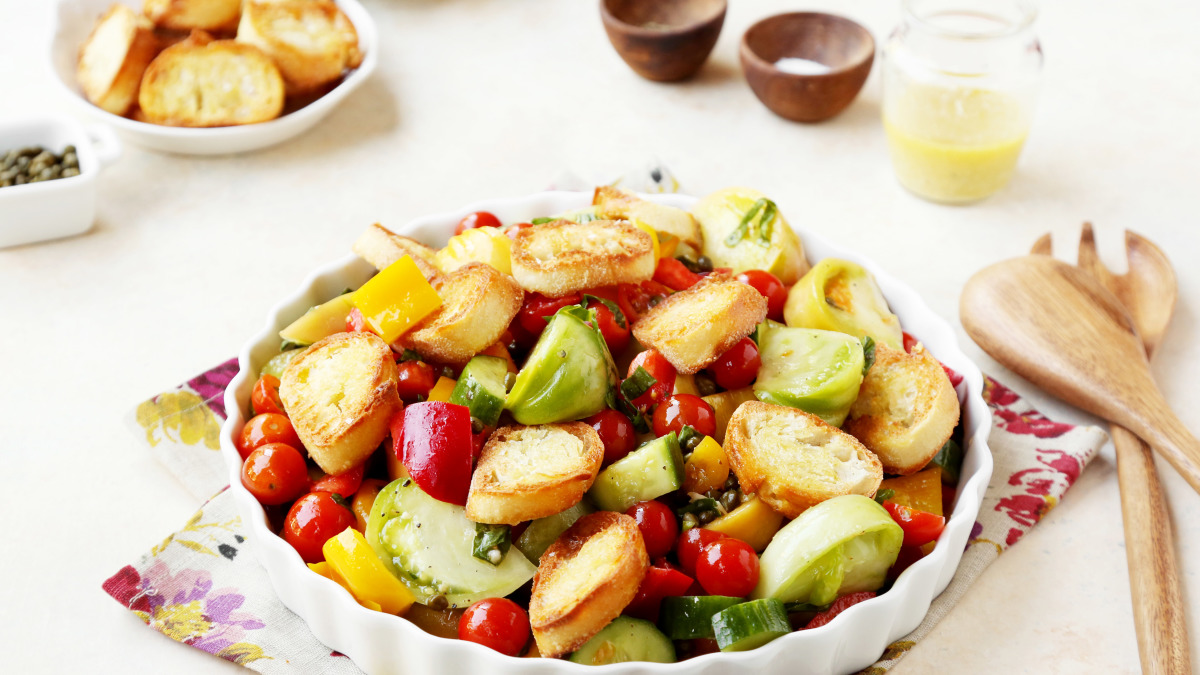
17. Heirloom Tomato Panzanella with Basil Vinaigrette — 40 min. Torn stale bread, mixed heirloom tomatoes cut into big chunks, cucumber, red onion, and a basil-forward vinaigrette. Salt the tomatoes 20 minutes before assembly and let the juice soak the bread. The best salad of the year.
18. Tomato-Basil Pasta with Charred Cherry Tomatoes — 40 min. Roast cherry tomatoes at 425°F until they burst and the edges brown; toss with hot pasta, basil, olive oil, garlic, and a splash of pasta water. The blistered edges add smokiness that fresh tomatoes alone can't touch.
19. Sheet Pan Cajun-Spiced Shrimp with Sweet Corn and Cherry Tomatoes — 45 min. One sheet pan, 425°F, 15 minutes: shrimp, corn kernels, cherry tomatoes, andouille if you have it, Cajun seasoning. Serve over rice or on its own with crusty bread. This is the definition of a summer weeknight meal.
20. Sheet Pan Lemon-Garlic Chicken Thighs with Cherry Tomatoes and Zucchini — 45 min. Bone-in thighs (which stay juicier than breasts on a sheet pan), zucchini rounds, cherry tomatoes, lemon slices, garlic, and thyme. Roast at 425°F until the chicken hits 175°F internal — about 30 minutes. The pan juices are the sauce.
Runners-up worth mentioning: Caramelized Peach and Goat Cheese Flatbread if you want sweet-savory, Baked Italian-Style Eggplant Parmesan Towers if you have 45 minutes and a 7 lb glut of eggplant, and Tomato & Zucchini Ratatouille if you have every summer vegetable in the fridge at once.
The consolidated shopping list
Buy this list Wednesday and cook from it Thursday through Sunday. It covers 10 of the 20 recipes above with almost no waste and roughly $45-55 total (varies by region and store; farmers-market shopping tends to run 15-25% lower than supermarket).
Produce
- Heirloom tomatoes, 3 lb (mixed sizes and colors — spend the extra $2 on the mixed pack)
- Cherry tomatoes, 2 pints
- Sweet corn, 6 ears
- Zucchini, 4 small (6-8 in)
- Peaches, 6 (freestone, ripe but firm)
- English cucumber, 1
- Red onion, 1
- Basil, 2 bunches
- Arugula, 1 large clamshell
- Watermelon, 1 small (or ½ large)
- Lemons, 3
Protein
- Shrimp, 1 lb (large, peeled and deveined, shell-on if you're grilling)
- Boneless chicken thighs, 2 lb (or bone-in for the sheet-pan recipe)
- Burrata, 2 balls (or fresh mozzarella)
- Feta, 8 oz block (not crumbled — the block keeps better and crumbles into bigger pieces)
Pantry backstop (check what you have)
- Good olive oil, sherry vinegar, balsamic vinegar, pine nuts, Parmesan wedge, day-old crusty bread, pasta (penne or orzo or spaghetti), garlic, kosher salt, black pepper, Cajun seasoning, cotija cheese
Total ingredient count: about 30 items. If you shop once Wednesday, you cook effortlessly through Sunday. That's the whole point of eating seasonally in August.
Preservation tips: freeze the tomatoes, roast the peppers, batch the pesto
Even shopping this way, you'll end up with more produce than you can eat by Sunday. Preservation isn't just for canning enthusiasts — three simple no-jar techniques will give you winter-worthy tomatoes, peppers, and pesto with zero specialty equipment.
Freeze whole tomatoes. Wash, dry, and freeze whole in a single layer on a sheet pan. Once solid (2-3 hours), transfer to gallon freezer bags. The skins slip off under running water; the flesh breaks down instantly into a 90-second sauce base. Holds up to 6 months. This is the single most valuable technique in this article — a $12 flat of end-of-season heirlooms in early September becomes 12 pints of winter sauce base for essentially free.
Roast and freeze peppers. Char whole bell peppers directly on the gas flame (or under the broiler) until blackened all over. Steam in a covered bowl for 10 minutes, then peel under running water and de-seed. Freeze flat in olive oil in freezer bags. Six months. Adds smoky depth to winter soups, sandwiches, and pastas that summer roasting alone can produce.
Batch pesto in ice cube trays. Blend basil, garlic, pine nuts, Parmesan, and olive oil (a good ratio: 2 packed cups basil, 2 cloves garlic, ¼ cup pine nuts, ½ cup Parmesan, ⅔ cup olive oil). Freeze in ice cube trays; pop out and store in a bag. One cube = one serving over pasta. Six months easy. Skip the pine nuts if you're allergic-household — walnuts or sunflower seeds substitute cleanly. The USDA seasonal produce guide has similar advice for freezing across the wider produce spectrum.
One more technique: dehydrated tomato-basil salt. If you have a food dehydrator or a low oven (170°F, 6-8 hours), dry salted heirloom tomato slices and basil leaves until brittle, then blitz with kosher salt in a spice grinder. Winter-worthy finishing salt for eggs, roasted vegetables, or hand-cut fries.
Kitchen tools to move faster
You don't need much. But three tools will visibly speed up every recipe on this list. If you're new to the site, our cookware collection, knives collection, and utensils collection group everything by common use.
A half-sheet pan (18×13 in). This is the surface you roast on for #19, #20, and half a dozen others in the list. Rimmed, aluminum, uncoated. If yours is warped or scratched black, replace it — a $20 pan does 90% of what a $60 pan does, and it lasts a decade. Bake once with a Silpat and you'll wonder why you used foil for years.
A box grater. For zucchini for fritters and shreds, cotija for corn, Parmesan for pasta, tomato flesh for uncooked sauce (rub the cut side of a halved tomato across the large holes and the pulp comes off leaving the skin behind — a technique from Serious Eats that's worth its own paragraph). Cheap ones ($15) work almost as well as expensive ones. Just make sure it has a raised base so it stands stable on a cutting board.
A cast-iron skillet (10 or 12 in). For blistering cherry tomatoes on high heat (#18), searing chicken thighs, cornbread, everything. Buy a Lodge for $25 or find one at any estate sale for $5. Season once, use it for the rest of your life. A stainless-steel chef's knife covers everything the box grater doesn't. That's really the whole toolkit for this article.
Optional but nice: a Y-shaped vegetable peeler for shaving Parmesan and zucchini, a large mesh sieve for draining pasta, and a good pair of tongs. All under $10 each.
Common pitfalls we see every August
We've cooked hundreds of pounds of summer produce over the years for this site, and the same failures show up every year. Watch for these five specifically:
1. Refrigerating ripe tomatoes. Cold below about 55°F destroys the enzymes that create tomato flavor and turns the flesh mealy. If your kitchen is 90°F, that's an argument for cooking them faster — not chilling them. Buy what you'll use in 3-4 days; store on the counter, stem-side down.
2. Cooking corn the day after buying it. Corn's sugars convert to starch within 24 hours of picking. Farmers-market corn cooked at 7pm the same day tastes significantly sweeter than grocery corn cooked 48 hours after harvest. If you can't cook it the day of, refrigerate in the husk (which slows conversion) and cook within 48 hours max.
3. Overheating pesto. The classic mistake is tossing pesto with pasta straight from the boil. The high heat cooks the basil, dulls the green color, and mutes the flavor. Instead: take the pasta off heat, transfer to a warm serving bowl, wait 90 seconds, then toss with pesto and a splash of reserved pasta water.
4. Underripe peaches. A peach that's rock-hard at the store will never ripen to peak sweetness on your counter — it'll go from starchy to mealy to rotten, skipping ripe entirely. Squeeze gently near the stem: it should give slightly. If it doesn't, wait a week and buy from a different batch.
5. Salting tomatoes too early. Slice tomatoes for a salad more than an hour ahead and salt them; they'll flood the plate with liquid and turn soggy. Salt 15-20 minutes before serving max — that's enough time to draw out flavor without turning the salad into a puddle.
When NOT to use this shopping list
This guide is for the Northern Hemisphere, roughly USDA hardiness zones 5-8, mid-July through early September 2026. If you're in Florida or south Texas, your tomato peak already passed in June and won't return until late fall. If you're in the Pacific Northwest, you might get another month out of the tomatoes but you'll want to shift to blackberries and stone fruit sooner. If you're outside the US, use these recipes as a template but substitute what's peak locally — Bon Appétit's seasonal recipe collection is a decent starting point for international-adjacent variations.
Also skip this whole list if you're cooking for a household that hates raw tomatoes. There's no argument to be made — just cook something else. Try our comfort food collection instead.
Frequently asked questions
What produce is actually at peak in late summer?
In the northern US and most of the Midwest: tomatoes, sweet corn, zucchini and summer squash, eggplant, peaches, plums, basil, cucumbers, bell peppers, and green beans. These are cheapest, most flavorful, and highest-nutrient right now — the shopping-list math beats winter produce by 40-60% per serving. USDA seasonal-produce data is regionally variable; check your farmer's market if you're outside these zones.
How do I pick a truly ripe tomato at the store?
Weight and smell beat color. A ripe tomato feels heavy for its size and has a distinct grassy-sweet aroma at the stem end. Skin should give slightly under thumb pressure — rock-hard means underripe, mushy means past its prime. Skip anything with a green shoulder unless the label specifies "shoulder ripeness" — that's usually a marker of picked-too-early industrial tomatoes that will never fully develop flavor even on your counter.
What should I do with tomatoes before they go bad?
Three options in order of effort: (1) slice, salt, and let them drip 20 minutes for concentrated flavor on toast or pasta, (2) roast whole cherry tomatoes at 400°F with olive oil for 25 minutes and freeze in portions for winter sauces, or (3) blanch, peel, and freeze whole in freezer bags — they hold up to 6 months and become 90-second sauce base. Never refrigerate ripe tomatoes; the cold destroys their texture.
How do I keep corn tasting sweet after picking?
Cook it the same day if possible — corn converts sugar to starch within 24 hours of picking, so day-two corn tastes measurably less sweet. If you can't cook right away, refrigerate in the husk (which slows the conversion) and cook within 48 hours. Frozen sweet corn from a bag is often sweeter than 4-day-old fresh corn because it's frozen within hours of picking.
Can I freeze end-of-summer produce for winter?
Most of it, with prep. Blanch corn kernels and green beans before freezing (30 seconds boiling, then ice bath). Roast tomatoes and peppers whole, then freeze in olive oil. Chop and freeze basil in ice cube trays with olive oil for winter pesto. Zucchini shreds well for winter bread; freeze in 2-cup portions. Peaches slice-and-freeze on a sheet pan first, then bag for smoothies. This alone can cut winter produce costs 20-30%.
Sources and last verified
- Seasonality windows cross-referenced against the USDA Seasonal Produce Guide.
- Recipe technique for charred cherry tomatoes verified against Serious Eats — best summer recipes.
- Panzanella and gazpacho method references cross-checked against Bon Appétit's summer recipe collection.
Last verified: July 2026. Prices, seasonality windows, and grocery availability are all regional — treat this article as a US-Northeast/Midwest baseline. As of 2026, USDA seasonal-produce data continues to reflect a slightly later peak-tomato window than a decade ago; adjust your shopping calendar accordingly.
Frequently asked questions
What produce is actually at peak in late summer?
How do I pick a truly ripe tomato at the store?
What should I do with tomatoes before they go bad?
How do I keep corn tasting sweet after picking?
Can I freeze end-of-summer produce for winter?
Sources
Plan a week of meals in two minutes.
Tell our AI what you have and what you like — it builds your plan, shopping list, and Instacart cart. No account needed.
Plan my week →