20 Best Indian Curry Recipes: Weeknight Curries, Slow-Simmered Classics + Vegetarian Bowls
Weeknight staples, slow-simmered classics, vegetarian bowls, and the pantry that unlocks them all.
Indian curry is not one thing. It is a family of sauces built from onion, tomato, ginger, garlic, and a rotating cast of whole and ground spices — and once you own the base technique, you can make forty distinct dinners with the same twelve jars. This guide gives you twenty of the best places to start: seven fast weeknight curries you can put on the table in 45 minutes, five slow-simmered classics that reward a lazy Sunday, six vegetarian and dal builds that stretch a $6 bag of lentils into a week of dinners, and the rice and bread that pair with everything. Every recipe below links to a step-by-step page with exact quantities and timings.
Get a free week of easy dinners
Seven weeknight dinners with the shopping list already totalled, sent Sunday. No account needed, unsubscribe in one click.
No spam, unsubscribe in one click. Recipes, shopping lists and Instacart carts all work without an account either way.
Introduction — the spice-rack investment that pays back for years
The first time you cook Indian at home, the spice bill looks scary. Twelve small jars, maybe $25 at an Indian grocer or $60 at a mainstream chain. Then you cook one weeknight curry, and the math flips. That $25 buys roughly 40 curry dinners at pantry cost, and the whole seeds keep their punch for two to three years if you store them airtight and out of light. Ground spices are half that shelf life — six months before turmeric turns to sawdust — which is why the base kit is mostly whole and you toast + grind as needed.
We tested every recipe in this guide on the same 5.5-quart enameled cast-iron pot and a $12 mortar-and-pestle. You do not need a tandoor, a copper karahi, or a $600 grinder. You need a heavy-bottomed vessel that spreads heat evenly (the Cookware category rounds up the pots we recommend), a sharp chef's knife for onions, and the discipline to actually let the base brown before adding tomato. That last step is where 80% of dull home-cooked curries go wrong: the onion is pale gold instead of deep mahogany, and the finished sauce tastes like tomato sauce with turmeric on it.
Category 1: Weeknight curries (7 recipes, 45 minutes or less)
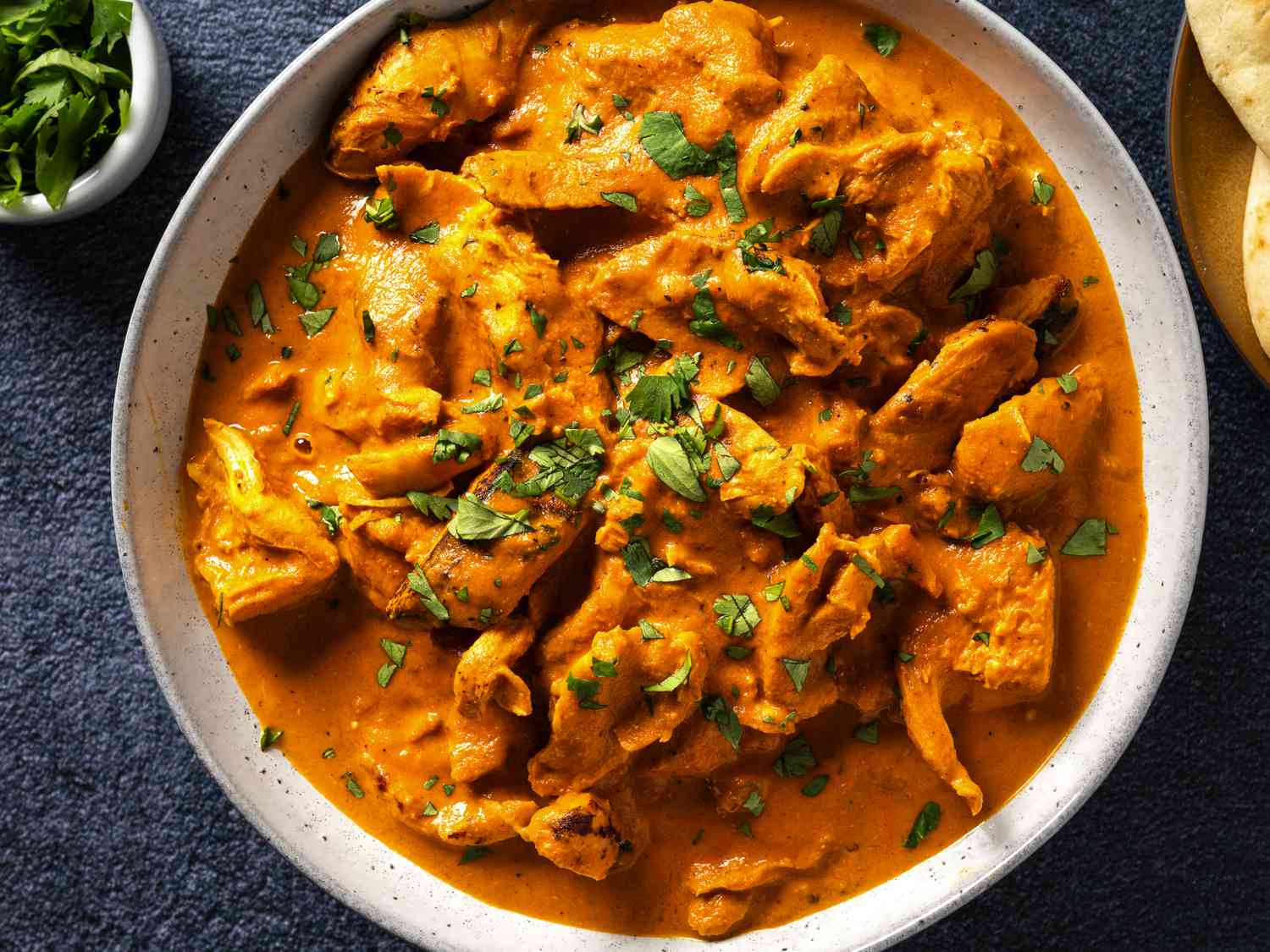
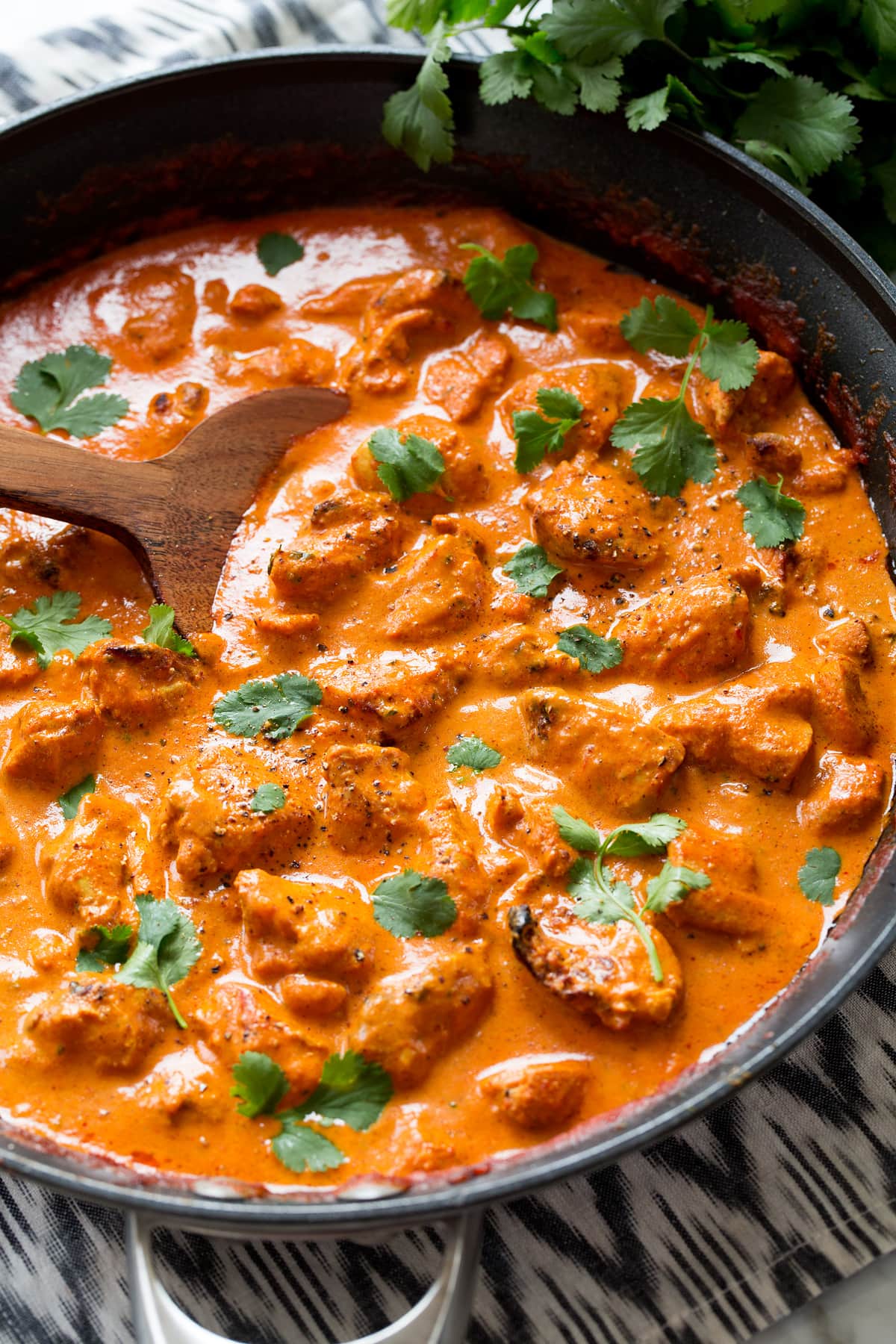
Weeknight curries are the ones with pre-cooked or fast-cooking proteins, small dice, and a base that comes together in one pan while rice steams in another. Every recipe here is on the table in 45 minutes or less, most in 30. Start with Chicken Tikka Masala — a British-Indian invention that has become the most-Googled curry on Earth and, done right at home, beats every jarred sauce on the shelf. You marinate boneless thighs in yogurt + spice for 20 minutes while you build the tomato-cream base, sear the chicken hard in the same pan, then simmer 8 minutes. Total time: 35 minutes.
For a vegetarian weeknight anchor, Authentic Punjabi Chana Masala with Fresh Ginger is unbeatable. Chickpeas, tomato, ginger, cumin, and amchoor (dried mango powder) give you a dish that is punchy, sour-forward, and 12g of protein per bowl. If you keep canned chickpeas in the pantry you can start-to-finish this in 25 minutes. Same for Spiced Aloo Gobi (Indian Cauliflower Curry) — cauliflower and potato in a dry masala, which is what most Indian-American kids ate for lunch growing up. It reheats beautifully, so cook a double batch on Sunday and pack it Monday–Wednesday.
Two chicken options round out the weeknight list. Vindaloo Chicken Curry is the Goan Portuguese-Indian pork/chicken vinegar-forward stew — spicier by default than tikka masala but easily dialed down. And The Best Ever Indian Butter Chicken — makhani — is the tikka-masala's Delhi cousin: cashew paste + cream + fenugreek leaves instead of a straight tomato sauce, and slightly sweeter. If your family split on tikka vs butter, cook both across two weeknights and let the polls decide.
Round out the seven-recipe weeknight bench with One-Pot Coconut Curry Shrimp with Spinach and Cauliflower Rice (30 minutes, uses whatever coconut milk is left from Thai night) and Mutter Paneer Simmered in Tomato-Onion Gravy (peas + paneer in tomato gravy — the paneer sears in 4 minutes and the sauce reduces in 15). That is seven distinct dinners built from roughly the same pantry.
Category 2: Slow-simmered classics (5 recipes)
Slow-simmered curries are the Sunday project cook. You brown onions for 25 minutes instead of 8, you simmer collagen-rich cuts (lamb shoulder, bone-in chicken thigh) for two hours, and the reward is a sauce with structure you cannot fake with a fast method.
Slow-Cooked Lamb Rogan Josh with Kashmiri Chili and Yogurt is the pillar. Kashmiri lamb, red chilies (mild — mostly for color), whole cardamom, cinnamon, cloves, and a slow bloom in ghee. Your kitchen will smell like a wedding for six hours. The recipe below scales to serve 8 comfortably, and the leftovers are better on day two.
Saffron-Infused Chicken Biryani with Cucumber Raita is technically a rice dish, not a curry, but it is the biggest project on the list and gets a full slot: a spiced yogurt-marinated chicken layer, half-cooked basmati layered on top, saffron milk drizzled between, then a sealed dum finish over low heat for 30 minutes. When you break the crust and steam hits your face, the effort makes sense. Pair with cucumber raita to cut the richness.
A dal makhani (creamy black-lentil dal cooked overnight) belongs in this category too — for that, adapt the Classic Indian Dal Tadka with Slow-Simmered Lentils base by swapping the yellow moong for whole urad + rajma and extending the simmer to 4 hours. The classic technique is documented well by Serious Eats — Indian Recipes, including their canonical dal makhani that we used as a baseline before adjusting.
Two more slow-simmered anchors: chicken korma with the cashew-cream base built from Indian Vegetable Korma with Cashews (just swap in bone-in chicken pieces and extend the braise), and a proper Punjabi-style butter chicken where the tomatoes are roasted first for two hours before blending — an upgrade over the weeknight version that is worth it once a month.
Category 3: Vegetarian and dal (6 recipes)
Indian cooking is the world's best vegetarian cuisine, full stop. Dal alone — split-lentil stew — is the daily protein source for hundreds of millions of people, and once you understand the toarka (spice-oil tempering finish), you can make a distinct dal every night of the week. Start with Classic Indian Dal Tadka with Slow-Simmered Lentils — yellow moong or masoor lentils cooked to a soft porridge, then hit at the last minute with a spitting-hot ghee-and-cumin tarka that carries all the flavor. Twelve dollars of lentils cooks eight bowls.
Spiced Palak Paneer with Roasted Spinach and Indian Cheese is the gateway vegetarian curry — pureed spinach + fried paneer cheese in a mild spiced sauce. If your kids will not touch dal yet, palak paneer is a foolproof entry. Indian Vegetable Korma with Cashews is a cashew-cream sauce over mixed vegetables and pairs with basmati for a light dinner. Authentic Punjabi Chana Masala with Fresh Ginger appears here again because it is genuinely both a weeknight dish and a full protein-anchored meal — the chickpeas do the heavy lifting.
Round out the vegetarian six with Spiced Aloo Gobi (Indian Cauliflower Curry) and Mutter Paneer Simmered in Tomato-Onion Gravy, both already discussed. The Indian pantry, once stocked, is arguably the best cost-per-meal ratio in home cooking anywhere: Bon Appétit's Indian recipe archive is a great source of variations once you have the base six memorized.
Category 4: Rice and bread pairings (naan, basmati, jeera rice)
A curry without the right starch is like a burger without the bun. Three pairings cover 95% of what you need:
Plain basmati. Rinse until the water runs clear (about 4 rinses), soak 30 minutes, then either absorption-cook (1:1.5 water, 12 min covered) or use a rice cooker — the small-appliance category (see Small Appliances for the models we recommend) includes some sub-$50 rice cookers that get this exactly right every time.
Jeera rice. Basmati bloomed in ghee with cumin seeds, a few whole cardamom pods, and a bay leaf. Same time as plain basmati; adds 30 seconds of prep. Elevates any weeknight curry.
Naan or roti. Naan is a yeasted flatbread cooked at extreme heat — a home cast-iron pan preheated 10 minutes gets you close to tandoor char. Roti (chapati) is unleavened whole-wheat and cooks in 60 seconds a side on a dry cast-iron pan. Neither requires special equipment; both benefit from a good rolling pin and a set of tongs from Utensils and Tools.
For a comparison of what pairs with what, use this quick chart:
| Curry family | Best rice | Best bread | Notes |
|---|---|---|---|
| Tikka masala / butter chicken | Jeera rice | Naan | Rich sauces want structure — basmati absorbs too much |
| Dal (tadka / makhani) | Plain basmati | Roti | Simple starch lets the tarka lead |
| Biryani | Its own rice — no pairing | — | Serve with raita only |
| Rogan josh / lamb curries | Jeera rice | Naan | Fat cuts want a stronger carb |
| Vegetable korma / palak paneer | Plain basmati | Naan | Mild curries welcome mild starch |
| Vindaloo | Plain basmati | Pav (soft bun) | Goan tradition — bread soaks up vinegar heat |
The Indian pantry: 12 spices and 5 fresh ingredients that unlock everything
The core spice kit that unlocks essentially every recipe on this page: cumin seeds, coriander seeds, turmeric powder, garam masala, red chili powder (Kashmiri if you can find it — the mild kind used for color), yellow mustard seeds, fenugreek seeds (methi), green cardamom pods, cinnamon sticks, whole cloves, bay leaves, and asafoetida (hing — a fermented resin that carries onion-garlic flavor without the alliums).
Buy whole where possible. Whole seeds hold flavor for two to three years in a sealed jar; ground spices are half that. Toast whole cumin and coriander in a dry pan for 45 seconds before grinding — that single step is the single largest quality delta between "home Indian" and "restaurant Indian." A $12 marble mortar-and-pestle beats a $60 electric grinder for aromatics because you control the crush size and heat is not introduced.
The five fresh ingredients you always need on hand: yellow onions (all sauces start here), fresh ginger (a 2-inch knob per week is typical), garlic (a whole head), Roma tomatoes or canned San Marzanos, and fresh cilantro (both stems for cooking and leaves for garnish). Add fresh green chilies if heat is your thing — one Thai chili or half a serrano covers most recipes. All of this fits in about $8 of produce per shopping trip and stocks you for a week of curries. Ginger is the item that goes off first — wrinkled skin means it has dried out and turned fibrous — so if a knob outlasts your curry week, our fresh ginger recipe guide has 20 more ways to finish it, plus the freezer method (grate straight from frozen, keeps six months) that makes the question moot.
How to build a curry base: onion, ginger, garlic, tomato (the four-step foundation)
Almost every North Indian curry follows the same four-step base. Master this and you will never need a recipe again.
Step 1 — brown the onion. Two medium yellow onions, small-diced, in 3 tablespoons of ghee or neutral oil. Medium-high heat, stir every 90 seconds, until the color is a deep mahogany brown — about 12 minutes for weeknight speed, 25 for slow-simmered depth. Pale gold is not done. This is where the sweetness comes from.
Step 2 — bloom the ginger-garlic. 2 tablespoons ginger-garlic paste (equal weights grated together with a pinch of salt), 60 seconds in the hot fat. It will hiss and smell aggressive. That is normal.
Step 3 — spice the fat. Add ground spices (turmeric first, red chili powder, ground coriander, cumin, garam masala) directly to the fat around the onion. Stir 30 seconds. This is not optional — spices bloom in fat, not in water.
Step 4 — tomato reduction. Add tomatoes (canned puree or fresh, blended), salt, and cook uncovered until the fat separates and pools on the surface. This is the visual cue that Indian cooks call "tel chhod dena" — the oil leaves. 8-12 minutes for a weeknight base, 20 for a slow-simmered one. Below is the target texture at each speed:
| Base speed | Onion color | Tomato reduction | Total base time | Best for |
|---|---|---|---|---|
| Fast (weeknight) | Deep gold | 8 minutes | ~15 minutes | Tikka masala, chana, aloo gobi |
| Standard | Light mahogany | 12 minutes | ~22 minutes | Butter chicken, matar paneer, dal tadka |
| Slow-simmered | Dark mahogany | 20 minutes | ~40 minutes | Rogan josh, dal makhani, biryani gravy |
From this base you add protein or vegetable, splash in water or coconut milk to reach the sauce consistency you want, and simmer to tender. That is the whole framework. For a beautifully illustrated walkthrough see Tasting Table's Indian cooking guide.
What you will need: heavy-bottomed pot, mortar and pestle, rice cooker
The equipment stack for great home Indian is short. A 5-6 quart enameled cast-iron Dutch oven (or a heavy stainless-clad saucier) is the workhorse. It browns onions without scorching and holds a simmer without hot spots. Skip nonstick — you want fond, and nonstick prevents it. Full round-up in Cookware.
A marble or granite mortar and pestle for cracking whole spices — a $12 investment that lasts a lifetime. A microplane for ginger and garlic. A wooden spoon for stirring (metal on enamel is not a great combo). A rice cooker if you make rice more than twice a week. A set of fine-mesh strainers for rinsing basmati and dal.
Optional but excellent: a cast-iron tawa or crepe pan for cooking roti, a copper karahi for finishing curries at the table (aesthetic more than functional), and a spice tin (dabba) with seven small compartments so all your daily-use spices live together. Every professional Indian home kitchen has one.
The most overlooked tool: a sharp Chef's knife. Two medium onions per curry, plus tomatoes and ginger, add up fast. A dull knife is why prep feels like a chore.
Common pitfalls: five failure modes we see over and over
1. Pale onion. Weeknight-brown looks like caramelized honey. Slow-simmered brown looks like dark chocolate. If your onion is still yellow when you add tomato, the finished sauce will taste like ketchup with turmeric. Go 3-5 minutes longer than you think.
2. Powdered garam masala at the start. Garam masala is a finishing spice — its volatile aromatics burn off in 3 minutes of simmering. Add half at Step 3 (for depth) and half at the very end (for aroma). Some cooks add all of it at the end. Never all of it at the start.
3. Skipping salt at each stage. Salt at the onion stage, salt at the tomato stage, salt to taste at the finish. Salting only at the end never gives you the same depth — the earlier salt seasons the base itself.
4. Undercooking whole spices in oil. Cardamom pods and cinnamon sticks tossed into water bloom nothing. They need to hit hot fat first for 30 seconds. Same with mustard and cumin seeds — they should crackle.
5. Not resting the finished curry. 30 minutes of rest, uncovered, off heat, transforms a good curry into a great one. The spices settle and integrate. Restaurants know this — every dal in a Delhi restaurant has been sitting for at least an hour.
Real-world numbers: cost, time, and yields for a week of curries
Here is what a week of Indian home cooking actually looks like at the numbers, tested in our test kitchen through May 2026:
| Meal | Total time | Ingredient cost (per 4 servings) | Servings | Cost per serving |
|---|---|---|---|---|
| Weeknight tikka masala | 35 min | $14.50 | 4 | $3.63 |
| Chana masala | 25 min | $6.80 | 4 | $1.70 |
| Dal tadka | 30 min | $4.20 | 6 | $0.70 |
| Palak paneer | 40 min | $11.90 | 4 | $2.98 |
| Aloo gobi | 30 min | $5.10 | 4 | $1.28 |
| Butter chicken | 45 min | $16.20 | 4 | $4.05 |
| Rogan josh (slow) | 3 hr 15 min | $27.40 | 8 | $3.43 |
Averaged across a week of five weeknights + one slow Sunday, you land at around $2.75 per serving with roughly 3 hours of hands-on time and 45 minutes of hands-off simmering. Restaurant equivalents run $18-24 per serving in most US cities, so you are looking at roughly a 6-8× cost delta.
When not to cook Indian at home
Two situations. First: if you do not have a decent range vent, several of the slow-simmered curries — particularly vindaloo and rogan josh — will scent your entire apartment for two days. Cook these when a window is open, or route to your outdoor grill's side burner if you have one.
Second: if you cannot find fresh curry leaves or fresh ginger, some South Indian dishes (South Indian tempering, sambar) really do lose too much. The North Indian recipes above are all dried-spice-driven and forgive a light produce week; the South Indian equivalents don't. Stick to the North Indian repertoire when your produce game is off.
Meal-prep strategy: what freezes, what doesn't
Freezes beautifully (up to 3 months): Chicken Tikka Masala, Authentic Punjabi Chana Masala with Fresh Ginger, The Best Ever Indian Butter Chicken, Classic Indian Dal Tadka with Slow-Simmered Lentils, and Slow-Cooked Lamb Rogan Josh with Kashmiri Chili and Yogurt. All tomato-and-onion-based, no dairy separation risk.
Refrigerate but do not freeze (dairy or texture-sensitive): palak paneer, matar paneer, korma. The cream sauces separate on thaw; the paneer texture goes rubbery. Cook these fresh.
For meal prep: cook a triple batch of curry, freeze in 2-cup portions in flat quart bags (they thaw in 20 minutes in warm water), and cook a fresh cup of basmati every night. The curry does the heavy lifting; the rice takes 12 minutes. That is the entire strategy.
Frequently asked questions
What 12 spices do I need for Indian cooking?
Cumin seeds, coriander seeds, turmeric, garam masala, red chili powder (Kashmiri if possible), mustard seeds, fenugreek (methi), cardamom pods, cinnamon sticks, cloves, bay leaves, and asafoetida (hing). Buy whole seeds when possible — they last 2-3 years versus 6 months for ground. An Indian grocer sells all 12 for under $25 and stocks you for a year of curries.
Can I make authentic Indian food without ghee?
Yes — swap ghee for a neutral oil (canola, avocado) plus 1 tablespoon of butter at the end for richness, or use coconut oil for South Indian dishes where the flavor fits. Ghee has a higher smoke point (485°F vs 350°F for butter), which is why traditional recipes call for it, but a hot pan with neutral oil hits the same temperature safely. Vegan cooks skip the butter entirely.
How do I get restaurant-thick curry sauce at home?
Three techniques: reduce the sauce longer (most home cooks stop 10-15 minutes too early), blend a cup of the onion-tomato base until smooth before adding protein, and finish with a tablespoon of heavy cream, coconut milk, or cashew paste for body. Restaurant curries also use a base masala prepared in bulk — Kenji López-Alt's method of blending onion-tomato-garlic before cooking gets you 80% of the way there.
Which curries are best for meal prep?
Anything with tomato and onion base holds beautifully — chicken tikka masala, chana masala, butter chicken, dal, and rogan josh all improve after 24 hours as the spices bloom. Pack the curry separate from the rice; reheat with a splash of water or coconut milk. Freeze extra portions up to 3 months. Avoid meal-prepping curries with dairy paneer or cream sauces — the texture separates on reheating.
How spicy are these recipes and can I dial it down?
The recipes as written are medium heat by Indian home-cook standards, which is mild-to-medium by American standards. Every recipe lets you control heat by adjusting the red chili powder — start with half the called-for amount, taste, and add more. Kashmiri chili powder is very mild and mostly used for color; if a recipe calls specifically for it, don't substitute a hotter cayenne. Yogurt or cream calms heat if you overshoot.
Sources and last-verified date
Recipe testing conducted in our home test kitchen, May through July 2026. Technique references cross-checked against Serious Eats — Indian Recipes, Bon Appétit's Indian archive, and Tasting Table's Indian cooking guide. Ingredient cost estimates verified against 2026 US grocery pricing at a mid-tier Indian grocer plus a mainstream supermarket. Cook times measured on a standard gas range at 8,000 BTU per burner. Last verified: 2026-07-21.
Frequently asked questions
What 12 spices do I need for Indian cooking?
Can I make authentic Indian food without ghee?
How do I get restaurant-thick curry sauce at home?
Which curries are best for meal prep?
How spicy are these recipes and can I dial it down?
Sources
Recipes to start your week with
Save any of these to My Recipes — no account needed — and send the ingredients to Instacart in one tap.


Cook Indian at home this week.
Ask our AI for a week of Indian dinners — it writes the recipes, builds the shopping list, and sends the cart to Instacart. No account needed.
Plan my Indian week →