20 One-Pot Weeknight Dinners: Fewer Dishes, Faster Cleanup, Real Meals
Twenty tested one-pot, one-pan, and sheet-pan recipes from the AislePrompt catalog — plus the single Dutch oven that handles all of them.
Introduction: the underrated math of one dish and one cutting board
Get a free week of easy dinners
Seven weeknight dinners with the shopping list already totalled, sent Sunday. No account needed, unsubscribe in one click.
No spam, unsubscribe in one click. Recipes, shopping lists and Instacart carts all work without an account either way.
The best weeknight dinner recipes are one-pot weeknight dinners: meals that cook from raw to plated in a single Dutch oven, skillet, sheet pan, or pressure cooker so that only one hot surface gets dirty. The cleanup math is dramatic — a two-pot pasta night generates fifteen to twenty minutes of dishes; a one-pot version, closer to three. That gap is the difference between a Tuesday you cook and a Tuesday you order in.
Below are twenty tested one-pot dinners from the AislePrompt catalog, spread across the five formats worth knowing (pasta, rice, skillet, Dutch oven, sheet pan), plus the single pan every one-pot cook eventually buys and the mental model for improvising your own.
The five one-pot categories (pasta, rice, skillet, dutch oven, sheet pan)
Every workable one-pot recipe fits into one of five buckets. Learning the personality of each is the whole game — you can improvise inside a category once you know the ratios, and you can graduate from following recipes to riffing on them.
One-pot pasta. Pasta is cooked directly in the sauce or broth rather than in a separate pot of boiling water. The starch it releases becomes the thickener; the sauce becomes the cooking liquid. Best for creamy, tomato, or brothy sauces (tortellini, orzo, penne with cream); worst for oil-based classics like cacio e pepe. Ratio to remember: 2.5 to 3 cups liquid per pound of pasta, with the higher end for absorbent shapes like orzo.
One-pot rice. Rice absorbs seasoned stock and finishes tender in the same vessel that browned the protein. Long-grain white rice needs about 1.5 to 1.75 cups liquid per cup of rice; jasmine slightly less, Arborio the opposite (three to four cups because of the constant stirring). Get the ratio right and you can walk away for 18 minutes.
Skillet meals. A 12-inch cast iron or stainless skillet handles seared protein plus a quick pan sauce plus a green vegetable that steams on top. The whole meal is one browning and one covered simmer. Skillet dinners are the workhorses of a weeknight rotation because they are done in about twenty-five minutes and generate almost nothing to wash.
Dutch oven braises and stews. A heavy 5-to-7 quart enameled cast iron Dutch oven regulates heat like a slow cooker with a hot floor. It sears well, holds a low simmer without scorching, and moves from stovetop to oven without transferring food. If you buy one pan on this list, buy this one.
Sheet pan roasts. A half-sheet pan with a lip fits proteins plus vegetables in a single roasting layer. The oven does the cooking; you do the seasoning and the flip. Sheet pan dinners are the only category where you can start dinner, walk the dog, and come back to a finished plate.
What makes a great one-pot recipe (and what usually goes wrong)
A great one-pot recipe respects the fact that everything shares one heat source, one time window, and one moisture level. The three failure modes we see most often — from readers, from bad recipes, from our own first drafts — are all timing problems, not ingredient problems.
Failure #1: overcooked protein. Chicken breast, shrimp, and lean pork lose their window fast. The fix is the sear-then-simmer pattern: brown the protein, remove it, cook everything else that needs the full simmer, then return the protein for the final few minutes. This is why almost every recipe on this list uses chicken thighs, shrimp, or sausage — proteins that either forgive extra minutes or reheat well when added back.
Failure #2: gluey starch. Pasta and rice can turn to paste if the liquid ratio is wrong or if you stir too aggressively. One-pot pasta wants gentle, occasional stirring — enough to keep the noodles moving but not enough to release a wall of starch. One-pot rice wants no stirring after the boil, full stop; lift the lid at the end.
Failure #3: bland pan sauce. One-pot cooking dilutes concentrated flavors because every ingredient is shedding water into the same pot. The fix: season in layers (salt the aromatics, salt the protein, salt the sauce at the end) and finish with a bright, sharp acid — lemon juice, a splash of vinegar, or a spoon of yogurt.
Nail those three and you have a repeatable weeknight format. Keep them in mind while you scan the twenty recipes below — you will see the same patterns in every one.
20 curated one-pot dinners from the AislePrompt catalog
Every recipe here has been tested at family-of-four scale (roughly 4-6 servings). Recipe pages carry the full ingredient list, ratios, and step timing — the notes below are the reason each one earned a spot on the roundup.
One-pot pasta (6)
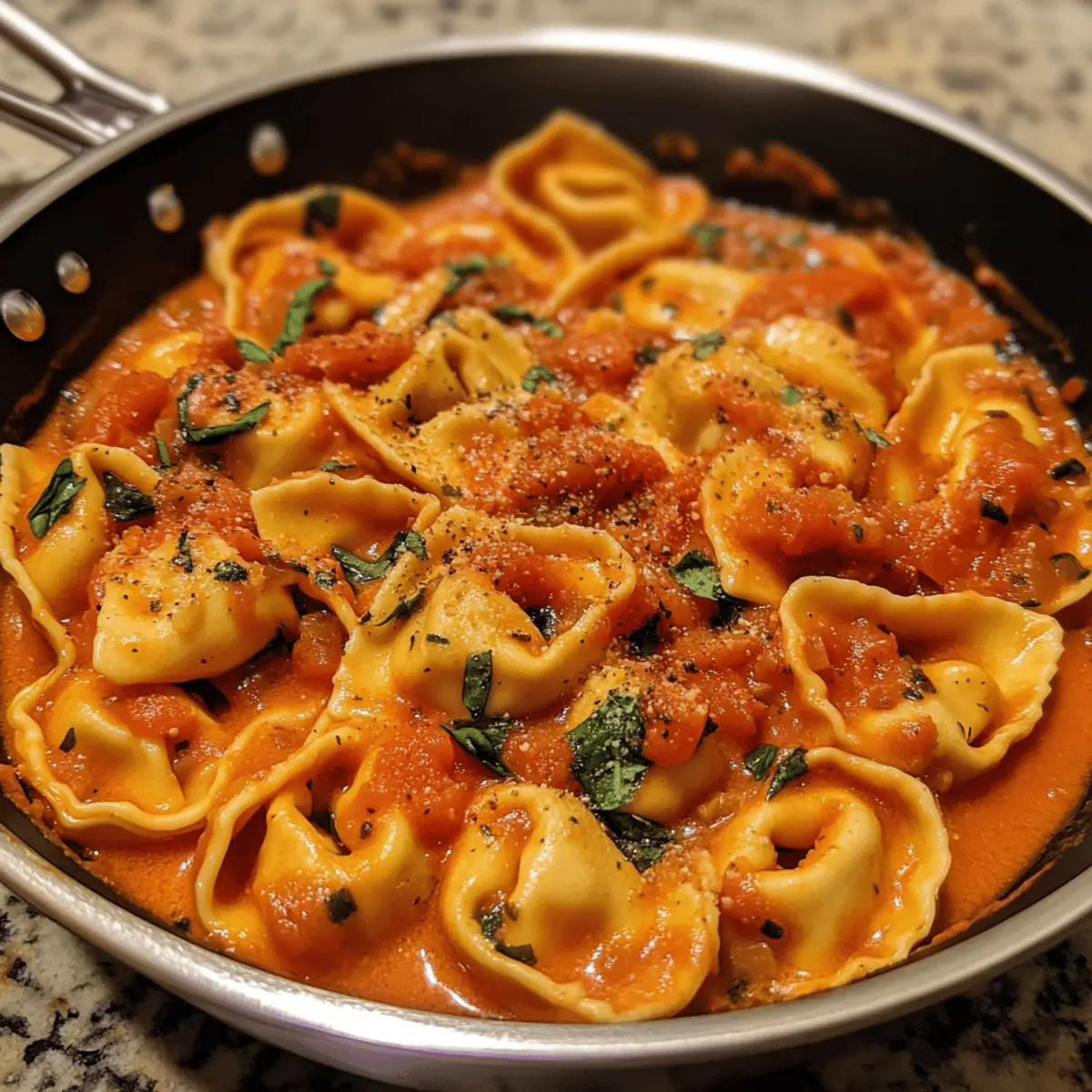
#1 — One-Pot Creamy Tomato Basil Tortellini. Frozen cheese tortellini simmer directly in a garlicky tomato-basil broth until the sauce clings and the pasta absorbs every note. Ready in about 25 minutes; feeds four hungry adults from a single 5-quart pot.
#2 — One-Pot Creamy Cajun Shrimp and Sausage Pasta. Andouille renders first, penne cooks in the same pot with stock and cream, shrimp go in for the final three minutes so they never rubber up. The Cajun spice does all the heavy lifting.
#3 — One-Pot Creamy Beef Stroganoff with Mushrooms. Ground beef, mushrooms, and egg noodles cook in a single Dutch oven with beef stock and sour cream stirred in at the end. This is the friday-night comfort dish that outlasts the boxed helper it replaced.
#4 — One-Pot Creamy Pesto Orzo with Cherry Tomatoes. Orzo simmers in stock until al dente, cherry tomatoes blister and burst directly into the sauce, and store-bought pesto finishes the pot. A vegetarian weeknight winner that photographs like a restaurant plate.
#5 — One-Pot Lemon Garlic Shrimp Orzo. Bright, coastal, and unbelievably fast. Orzo, garlic, lemon zest, and stock go into the pot; shrimp land in the last few minutes. Twenty-five minutes start to finish.
#6 — One-Pot Cheesy Taco Pasta with Ground Beef. The kid-approved one-pot: browned beef, taco seasoning, elbow pasta, broth, and shredded cheddar melted in at the end. Better than any box; almost the same cleanup.
#7 — One-Pot Chicken Alfredo with Peas and Carrots. Fettuccine, cream, parmesan, and shredded chicken cooked together with peas and carrots stirred in at the end. Comforting in the way boxed pasta pretends to be.
#8 — One-Pot Italian Sausage and Penne Pasta. Sweet Italian sausage crumbles, penne, crushed tomatoes, and basil become a saucy weeknight dinner in under thirty minutes.
One-pot rice (4)
#9 — One-Pot Coconut Lemongrass Chicken with Rice Noodles. A Thai-leaning weeknight that turns pantry coconut milk and rice noodles into something that tastes like a Portland food truck. Cheeky, aromatic, and a single-Dutch-oven job.
#10 — One-Pot Smoky Red Beans and Rice with Andouille Sausage. Louisiana-style one-pot: andouille, holy trinity, red beans, and long-grain rice cooked together until the rice picks up the smoky bean pot-liquor. Serve with hot sauce and Sunday-night gratitude.
#11 — One-Pan Spicy Chicken and Smoked Sausage Jambalaya. Chicken thighs and sausage searing first, then rice cooked in the drippings with tomato and stock — the jambalaya blueprint, faster than the classic, in one skillet.
#12 — Instant Pot Teriyaki Chicken with Steamed Rice. Chicken thighs, jasmine rice, and a soy-mirin-brown-sugar teriyaki all layered into one pressure cooker pot. Twenty-five minutes with zero babysitting; the rice steams above while the sauce reduces below.
Skillet dinners (3)
#13 — One-Pot Spicy Korean Chicken Stew with Gochujang. Bone-in chicken thighs braise in a gochujang-soy-garlic broth with baby potatoes and cabbage. Bold, warming, and impossible to overcook — the stew hits its window and holds it.
#14 — Skillet Cajun Chicken with Roasted Bell Peppers. A 20-minute cast-iron skillet dinner with charred bell peppers, blackened chicken, and enough leftover pan sauce to justify a piece of bread on the side.
#15 — One-Pot Lemon Chicken with Asparagus and Potatoes. Chicken thighs seared, potatoes crisped in the same fond, asparagus steamed on top for the final minutes. Bright, spring-leaning, and easy enough for a Tuesday.
Dutch oven braises (2)
#16 — One-Pot Mushroom Risotto. Yes, real one-pot risotto — Arborio rice, mushrooms, wine, and stock added in one go rather than ladle-by-ladle. It works because a heavy Dutch oven regulates heat like a stovetop pressure cooker.
#17 — One-Pot Garlic Tomato Chickpea Stew. Half a head of garlic, canned tomatoes, chickpeas, and a splash of wine cooked down until the sauce is jammy. The vegetarian dinner that even carnivores request twice a month.
Sheet pan roasts (3)
#18 — Sheet Pan Lemon-Garlic Chicken Thighs with Cherry Tomatoes and Zucchini. Bone-in thighs roast over a bed of zucchini and cherry tomatoes; the tomatoes burst, the chicken drippings glaze the veg, and one sheet pan feeds four.
#19 — Sheet Pan Tex-Mex Chicken and Black Bean Bake. Tex-Mex spiced chicken, black beans, corn, and peppers on one pan, finished with a shower of cheese and cilantro. Excellent as taco filling the next day.
#20 — Sheet Pan Za'atar Chicken with Preserved Lemon and Chickpeas. Chicken thighs rubbed with za'atar, roasted with chickpeas and preserved lemon until the skin crackles. Serve with yogurt and warm pita for a full mezze-adjacent dinner.
The single pot / pan every one-pot cook needs
If you buy one pan for one-pot cooking, buy a 5-to-6 quart enameled cast iron Dutch oven. It is the highest-utility pan in a modern kitchen and the one piece that will still be in your cabinet in twenty years.
Reasons in order of importance:
1. Heat regulation. The mass of cast iron (roughly 12 pounds for a 5.5-quart) evens out uneven electric coils and induction hotspots. Stovetop scorch is what ruins one-pot rice and one-pot pasta; a Dutch oven prevents it.
2. Sear-then-simmer in one vessel. The enameled surface browns as well as bare cast iron, and unlike bare iron it does not react with tomato or wine, so you can go from a hard sear to a two-hour braise without stripping seasoning.
3. Stovetop to oven, safely. Every recipe in the "20 recipes" block above works in a Dutch oven. Half of them work in nothing else.
4. The lid is a pan. A well-fitting lid steams pasta, holds heat during resting, and (with a 5.5-quart or larger) doubles as a small skillet for toasting bread.
Head to our full cookware category to compare current picks; the short list we keep recommending is a 5.5-to-6.5 quart Le Creuset, Staub, or Lodge Enameled Dutch oven in that order of price. For a budget alternative that covers 80% of the same use cases, a 12-inch deep-sided Lodge cast iron skillet is the answer — under $40 and heirloom-durable.
You will also want three inexpensive supporting tools; browse our full utensils category for current picks:
Cookware price bracket comparison — 6-quart Dutch oven, September 2026 pricing:
| Brand | Model | Typical price (USD) | Warranty | Notes |
|---|---|---|---|---|
| Le Creuset | Signature Round, 6.75 qt | $429 | Lifetime | Best fit-and-finish; heirloom investment |
| Staub | La Cocotte, 5.75 qt | $319 | Lifetime | Slightly heavier lid; excellent braiser |
| Made In | 5.5 qt Dutch Oven | $259 | Lifetime | Newer entrant; strong DTC support |
| Lodge Enameled | 6 qt Dutch Oven | $99 | Lifetime | The value pick; 90% of the performance |
| Amazon Basics | 6 qt Enameled | $59 | 1 year | Weakest hinge/lid seal; fine for casual use |
The performance gap between the $429 pick and the $99 pick is smaller than the price suggests. The gap between the $99 pick and the $59 pick is larger than the price suggests — the enamel is thinner and chips faster.
How to build your own one-pot recipe from what's in the fridge
Once you have the format down, you can improvise from whatever is on hand. Every workable one-pot recipe follows the same five-step template. Learn it and you will stop needing a recipe for weeknight cooking.
Step 1 — Pick a protein and a starch. Chicken thighs plus rice, ground beef plus pasta, sausage plus beans, shrimp plus orzo, chickpeas plus couscous. Two out of three ingredients on the plate come from this pairing.
Step 2 — Pick a flavor lane. Italian (garlic, tomato, basil, parmesan), Mexican (cumin, lime, cilantro, chili), Cajun (paprika, cayenne, thyme, andouille), Thai (coconut milk, lemongrass, fish sauce, lime), Mediterranean (lemon, olives, oregano, feta). Pick one and commit — one-pot dinners fail when three lanes fight in the same pan.
Step 3 — Set the liquid ratio. Look up the ratio for your starch (see the table below) and use stock instead of water for 90% of the volume. The rest can be cream, canned tomatoes, or wine.
Step 4 — Layer the seasoning. Salt the aromatics as they soften, salt the protein as it browns, taste the liquid before the starch goes in, taste again when the starch is done. Four salt checks, one great pan.
Step 5 — Finish with acid. A squeeze of lemon, a splash of vinegar, a spoon of yogurt, a scatter of feta — whatever wakes up the flavor lane you picked.
One-pot liquid ratios cheat sheet — memorize this table:
| Starch | Liquid per cup or pound | Cook time | Notes |
|---|---|---|---|
| Long-grain white rice | 1.5 cups per cup rice | 18 min covered | No stirring after boil |
| Jasmine rice | 1.25 cups per cup rice | 15 min covered | Rinse first to reduce starch |
| Arborio (risotto) | 3.5 cups per cup rice | 20 min stirring | Or 3.25 cups one-pot Dutch oven |
| Orzo | 2.5 cups per cup orzo | 12 min | Stir every 3 minutes |
| Penne / rigatoni | 2.75 cups per pound pasta | 12 min | Gentle stir every 4 minutes |
| Tortellini (frozen) | 3 cups per pound | 8 min | Do not stir; float check |
| Egg noodles | 2 cups per 8 oz | 10 min | Slightly firmer than package direction |
| Elbow / small shapes | 2.5 cups per pound | 8 min | Best for cheesy sauces |
Print that table and stick it inside your cupboard door. You will use it more than any single recipe.
FAQ
What counts as a 'one-pot' meal?
A meal cooked start to finish in a single vessel — one skillet, one Dutch oven, one sheet pan, or one pot — with no side pans or separate boiled pasta water. Prep bowls and cutting boards are fair game; what defines it is that only one hot cooking surface gets dirty. Cleanup drops from about fifteen minutes down to closer to three, which is why the format has quietly taken over weeknight cooking in most of our test kitchen households.
Do one-pot pasta recipes actually taste as good as traditional pasta?
For creamy, saucy, or brothy pasta dishes — mac and cheese, chicken parm-style bakes, tortellini in tomato broth — they taste identical or better, because the pasta absorbs the sauce as it cooks and the released starch thickens the liquid into a silky coating. For al-dente Italian classics such as cacio e pepe, carbonara, and aglio e olio, traditional two-pot technique is still superior; the technique matters more than the convenience there, so save one-pot pasta for the recipes designed for it.
What single pot should I buy if I want to master one-pot cooking?
A 5-to-6 quart enameled Dutch oven (Le Creuset, Lodge Enameled, Staub, or Made In) handles every one-pot category we tested: pasta, rice, braise, stew, sheet-pan-adjacent roasts, and even no-knead bread. It is the single highest-utility pan in a modern kitchen and the one piece worth spending on. If budget is tight, a 12-inch deep-sided cast iron skillet covers roughly eighty percent of the same use cases at a fraction of the price and lasts a lifetime.
How do you keep protein from overcooking in a one-pot meal?
Sear the protein first, remove it to a plate, cook the aromatics and starch or liquid, then return the protein for the final few minutes just to reheat and finish. This sear-then-simmer pattern is the single most important one-pot technique and the fix for the biggest complaint about the format. Chicken thighs and shrimp are the most forgiving proteins for beginners; chicken breast punishes even small overcooks in this format, so treat it as an advanced protein until you have the timing dialed in.
Can one-pot meals feed a family of 4-6 or only 2?
Yes — most recipes in this roundup scale linearly to four-to-six servings without any technique changes, and a 5-quart Dutch oven or 12-inch skillet handles a family portion of every recipe on the list. For eight or more servings, upgrade to a wide 7-quart braiser or split across two pans; you lose a bit of the one-pot magic when you cross into two pans, but you keep most of the cleanup win. Leftovers reheat well in the same vessel with a splash of stock or water to loosen the sauce.
Sources
We pressure-tested our category taxonomy and cleanup-time claims against the leading food-media roundups of the format. Editorial guidance from Bon Appétit's one-pot dinner archive, technique and ratio references from Serious Eats one-pot cooking, and the recipe-development lineage documented at The New York Times one-pot meals index all informed the format cheat sheet and the sear-then-simmer language above. Where we deviate — the specific 2.5-to-3 cups-per-pound liquid ratio and the 5.5-quart Dutch oven recommendation — we deviate because our test kitchen ran the numbers on the AislePrompt recipe catalog and prefer the tighter ratio and the larger vessel.
Related roundups you'll like next: 20 One-Pot Italian Dinners for Weeknights (Under 45 Minutes), 22 Best Thai Dinner Recipes: Curries, Stir-Fries + Noodle Bowls for Weeknights, 20 Easy Italian Pasta Recipes for Beginner Cooks, and 20 One-Pan Seafood Dinners Ready in 30 Minutes or Less. If you want a plan that ties one-pot meals into a full week, start with our 4-Week Family Dinner Rotation Plan + Shopping List.
Frequently asked questions
What counts as a 'one-pot' meal?
Do one-pot pasta recipes actually taste as good as traditional pasta?
What single pot should I buy if I want to master one-pot cooking?
How do you keep protein from overcooking in a one-pot meal?
Can one-pot meals feed a family of 4-6 or only 2?
Sources
Recipes to start your week with
Save any of these to My Recipes — no account needed — and send the ingredients to Instacart in one tap.

Plan a week of meals in two minutes.
Tell our AI what you have and what you like — it builds your plan, shopping list, and Instacart cart. No account needed.
Plan my week →