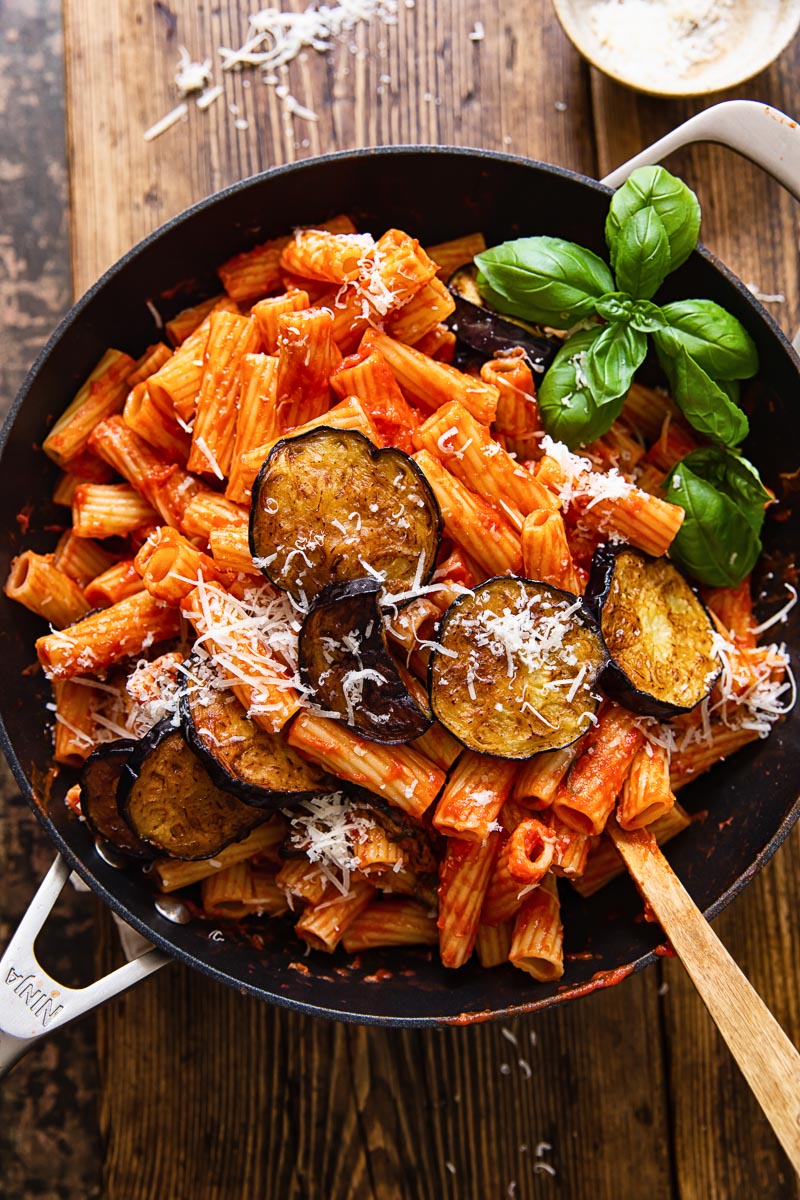
20 Sicilian Recipes: Pasta alla Norma, Arancini & Caponata
Twenty Sicilian dishes built from the island's Greek, Arab and Spanish layers — with the frying temperatures, pantry swaps and make-ahead order that make them work in an American kitchen.
Affiliate disclosure: AislePrompt may earn a commission on qualifying purchases made through Amazon and Instacart links in this article, at no additional cost to you. See our affiliate policy →
20 Sicilian Recipes: Pasta alla Norma, Arancini, Caponata & Southern Italian Dinners
Authentic Sicilian dinner cooking runs on eggplant, capers, anchovies, pistachios and citrus rather than the cream and meat ragùs of the north. Start with pasta alla Norma, caponata, arancini and pasta con le sarde — four dishes that between them teach the whole island's grammar of salt, sweet, sour and fried. Everything below is a weeknight-feasible version of a real Sicilian plate.
Introduction: Sicily's Arab-Norman-Greek layered kitchen
Sicily is not a region of Italy that happens to be an island. It is an island that has been conquered roughly every three hundred years since 735 BC, and each occupier left food behind. The Greeks brought olives, grapes and ricotta. The Arabs, from 831 to 1091, brought rice, sugarcane, citrus, saffron, cinnamon, raisins, almonds and the sweet-sour agrodolce technique that defines caponata. The Normans brought salt cod and the northern European habit of stuffing things. The Spanish, ruling for nearly 400 years after 1282, brought tomatoes, peppers, chocolate and eggplant's final promotion from suspicious nightshade to national vegetable.
The practical consequence for you, in 2026, standing in front of a grocery store produce aisle: a Sicilian dinner tastes noticeably different from a Tuscan or Emilian one, and it does so using ingredients that are cheaper and more available in a US supermarket than the northern equivalents. There is no 24-month Parmigiano requirement, no fresh egg pasta rolling, no veal shank. There is eggplant at $1.79 a pound, a $3 tin of anchovies, a jar of capers, and dried semolina pasta.
Two more things make Sicilian cooking a good fit for the way people actually cook now. First, it is genuinely vegetable-forward — of the twenty recipes below, eleven are vegetarian or trivially made so. Second, most of the canonical dishes are better the second day. Caponata is famously improved by 24 hours in the fridge; pasta alla Norma's sauce reheats without breaking; arancini exist because Sicilians needed a way to eat yesterday's risotto standing up.
Late August is the peak moment to start. Eggplant, tomatoes and basil are all at their seasonal best and cheapest right now, which is exactly the intersection where pasta alla Norma and caponata live. Serious Eats' regional Italian archive makes the same seasonal argument — see Serious Eats — Italian recipes for their eggplant-timing notes.
The Sicilian pantry: sea salt, capers, anchovies, pistachio, ricotta salata
Build this once and you can cook fifteen of the twenty recipes below without another shopping trip. Approximate US grocery prices as of 2026:
| Item | What to buy | Typical price | Why it matters |
|---|---|---|---|
| Salt-packed capers | Pantelleria or Sicilian, 3 oz jar | $6–9 | Rinse and soak 10 min; brined capers are flabby by comparison |
| Anchovies | Oil-packed fillets, 2 oz tin | $3–5 | Dissolves into sauce; supplies glutamate, not fishiness |
| Ricotta salata | Wedge, 6–8 oz | $7–10 | Grated over Norma; nothing substitutes cleanly |
| Bronzano pistachios | Shelled, unsalted, 8 oz | $9–14 | Bronte DOP is $30+; regular unsalted is fine for pesto |
| Golden raisins | 12 oz bag | $3 | The sweet half of agrodolce |
| Pine nuts | 4 oz | $8–12 | Toast dry, 3 min, watch constantly |
| Semolina pasta | Bucatini, rigatoni, spaghetti | $2–4 | Bronze-die if you can; it grips sauce |
| Fennel (bulb + seed) | 1 bulb, 1 jar seed | $4 | Non-negotiable for pasta con le sarde |
| Good olive oil | Sicilian Nocellara or Biancolilla | $18–25/500ml | You will finish dishes with it raw |
Two pantry notes that matter more than they sound. Salt-packed capers must be rinsed, then soaked in cool water for 10 minutes and drained — skip this and every dish you put them in reads as aggressively saline. And ricotta salata is not ricotta. It is pressed, salted, aged sheep's-milk cheese, firm enough to grate on the coarse side of a box grater. Feta is too sour and too wet; Parmigiano is too sweet and too nutty; if you truly cannot find it, use a dry Mexican queso seco, which is the closest common substitute at about half the price.
For the sweet-sour balance that runs through caponata, the working ratio is roughly 2 parts red wine vinegar to 1 part sugar by volume, added at the end and cooked down for 2–3 minutes until the raw vinegar edge burns off. Taste, then push it further than feels comfortable — caponata that tastes correctly balanced hot will taste flat cold, and cold is how you'll eat it.
Pasta the Sicilian way: alla Norma, con le sarde, alla Trapanese
Three sauces, three completely different logics, none of them containing cream.
Alla Norma is the island's signature: fried eggplant, tomato, basil, grated ricotta salata. Named — probably apocryphally — for Bellini's opera Norma, and originating in Catania under Etna. The one technique that separates a great Norma from a soggy one is how you treat the eggplant. Salt cubed eggplant for 30 minutes, press it dry in a clean towel, then fry in a generous 1/2 inch of olive oil at 350°F until deep golden — not pale, not gray. Undercooked eggplant is spongy and oil-logged; properly fried eggplant collapses into the sauce and gives it body. Start with Sicilian Pasta alla Norma, or the slightly eggplant-heavier Sicilian Eggplant Pasta alla Norma if you want the vegetable to lead.
Con le sarde is the Palermo dish, and the one that most obviously fingerprints the Arab occupation: fresh sardines, wild fennel, saffron, raisins and pine nuts, finished with toasted breadcrumbs instead of cheese. You will not find wild fennel in a US supermarket; use a fennel bulb plus a teaspoon of fennel seed and a pinch of fennel pollen if you have it. Toasted breadcrumbs (pangrattato) are mandatory — they are the poor man's cheese, and on this dish they are better than cheese. Cook Sicilian-Style Pasta with Sardines and Fennel Breadcrumbs, or the pollen-forward Sicilian Sardine Pasta with Fennel Pollen if you can source it.
Alla Trapanese is Sicily's answer to Ligurian pesto, from the western port of Trapani where Genoese ships stopped en route to North Africa: raw tomato, almonds instead of pine nuts, garlic, basil, olive oil, pounded rather than blended smooth. It takes eight minutes and it is the best hot-weather pasta in the Italian canon. The closest thing in our catalog is Warm Pistachio and Herb Pasta with Cherry Tomatoes — swap pistachios for blanched almonds and you have Trapanese proper.
Then there is the anchovy family, which is where weeknight Sicilian cooking actually lives. Two anchovy fillets melted in oil with garlic are the entire base of Tomato-Anchovy Pasta with Fresh Basil and the slower, sweeter Anchovy and Caramelized Onion Pasta with Parmesan. Neither tastes like fish. For a 15-minute meatless option, Lemon-Basil Ricotta Pasta with Toasted Pine Nuts covers the same plate in a quarter of the time.
Pasta water discipline applies to all of them. Reserve a full cup, drain pasta at 90 seconds under the box time, and finish it in the pan with the sauce over medium heat for the last two minutes. That final emulsification is the difference between sauce sitting on pasta and sauce clinging to it.
Frying & rice: arancini, panelle, cazzilli
Sicilian street food — cibo di strada — is fried, cheap and portable, and it is the part of the cuisine most Americans have never tried.
Arancini are breaded, deep-fried risotto balls, typically saffron rice around a core of ragù and peas (Catania makes them cone-shaped and calls them arancini; Palermo makes them round and calls them arancine, and people argue about this seriously). The critical rule: the risotto must be made a day ahead and chilled overnight. Warm risotto will not hold a shape, and a ball that loosens in the fryer floods your oil with rice. Shape cold, bread with flour → egg → breadcrumb, and fry at 340–350°F for 3–4 minutes. If you want the payoff without a quart of oil, Oven-Baked Arancini with Mozzarella and Basil gets about 80% there at 425°F. For the risotto base itself, Spring Vegetable Arancini Risotto makes a good day-one dinner that becomes day-two arancini.
Panelle are chickpea-flour fritters — a direct Arab inheritance, the same batter as Ligurian farinata but cut into squares and fried rather than baked. Palermitani eat them in a sesame roll as a pane e panelle sandwich, which is a chickpea-fritter sandwich on bread, and it is delicious in exactly the way that sounds. The technique is: whisk chickpea flour into cold water at a 1:3 ratio, cook while stirring until it pulls from the pan like polenta, spread 1/4-inch thick on a sheet pan, chill, cut, fry. Our closest catalog match is Pan-Fried Spiced Chickpea Fritters with Yogurt Dip — drop the spices and the yogurt, add lemon and black pepper, and you have panelle.
Cazzilli (crocchè on menus) are fried potato croquettes with mint and parsley — the mint is what makes them Sicilian rather than generic. And in the same fried-street-food register sits sfincione, Palermo's thick, spongy focaccia-pizza topped with tomato, onion, anchovy and breadcrumbs, with no mozzarella at all. Try Pan-Fried Catanese Sfincione with Tomato, Onion, and Anchovies for the real thing, or the Americanized Sicilian-Style Thick Crust Pizza with Italian Sausage and Peppers if you're feeding kids.
Frying temperatures, in one place:
| Item | Oil temp | Time | Doneness cue |
|---|---|---|---|
| Eggplant cubes (Norma) | 350°F | 4–6 min | Deep golden, collapses when pressed |
| Arancini | 340–350°F | 3–4 min | Uniform mahogany, no pale seams |
| Panelle | 350–360°F | 2–3 min/side | Blistered, edges curling |
| Cazzilli | 350°F | 4–5 min | Crust holds a tap |
Use a thermometer. Eyeballing fryer oil is the single most common reason home-fried Sicilian food comes out greasy — 25°F low and everything absorbs oil instead of searing shut.
Vegetables and antipasti: caponata, insalata di arance, involtini
Caponata is the dish to make if you only make one. Fried eggplant, celery, onion, tomato, olives, capers, and the agrodolce finish of vinegar and sugar, served at room temperature, always better on day two. There are documented variants across all nine Sicilian provinces — some with raisins and pine nuts, some with almonds, some in Catania with peppers, one in Palermo with octopus. The version with pine nuts and golden raisins is the sweetest and the most obviously Arab-descended; the olive-forward version is the more savory, more common restaurant style. Both keep five days refrigerated and both are better cold on grilled bread than they are warm on a plate.
The one caponata mistake worth naming: do not steam the eggplant. Every shortcut recipe that roasts or microwaves the eggplant produces a wet, gray, structureless stew. Fry it separately, drain it on a rack, and fold it back in at the end so it keeps its edges.
Insalata di arance — orange, fennel, red onion, black olives, olive oil, and often anchovy — is the winter salad and the best possible foil to anything fried. Blood oranges when you can get them (January–March in the US); navels the rest of the year. Try Half-Orange and Fennel Citrus Salad. Slice the fennel paper-thin on a mandoline or the widest slot of a box grater; thick fennel is woody and ruins the dish.
Involtini di melanzane are eggplant slices rolled around ricotta and baked in tomato — the lighter, more Sicilian cousin of eggplant parmigiana. Baked Eggplant Rolls Stuffed with Ricotta and Spinach is the direct version. If you want the full-casserole treatment, Sicilian Oven-Baked Eggplant with Tomato and Ricotta and Baked Italian-Style Eggplant Parmesan with Mozzarella both feed six from one pan.
On the seafood side, swordfish (pesce spada) is Sicily's most iconic fish, landed off Messina and traditionally grilled with salmoriglio — lemon, oregano, olive oil, whisked warm. Pan-Seared Swordfish Steaks with Summer Tomato and Olive Ragout and Mediterranean-Fusion Grilled Swordfish with Lemon-Caper Salsa both work off a 1-inch steak: 3–4 minutes per side to an internal 130°F, then rest. Swordfish past 140°F is sawdust, and it is expensive sawdust.
20 Sicilian recipes to cook this month (linked)
1. Sicilian Pasta alla Norma — the canonical version. Fry the eggplant properly and this is a 40-minute dinner that tastes like a trip.
2. Sicilian Eggplant Pasta alla Norma — heavier on the vegetable, lighter on the tomato. Good for peak-season eggplant.
3. Sicilian-Style Pasta with Sardines and Fennel Breadcrumbs — the Palermo classic, breadcrumbs instead of cheese.
4. Sicilian Sardine Pasta with Fennel Pollen — same dish, sharper anise note.
5. Warm Pistachio and Herb Pasta with Cherry Tomatoes — the Trapanese template. 20 minutes, no cooking beyond the pasta.
6. Tomato-Anchovy Pasta with Fresh Basil — five pantry ingredients, weeknight-proof.
7. Anchovy and Caramelized Onion Pasta with Parmesan — slower, sweeter, deeply savory.
8. Lemon-Basil Ricotta Pasta with Toasted Pine Nuts — the fastest meatless option here, 15 minutes.
9. Oven-Baked Arancini with Mozzarella and Basil — arancini without a fryer.
10. Spring Vegetable Arancini Risotto — the make-ahead risotto base.
11. Pan-Fried Spiced Chickpea Fritters with Yogurt Dip — panelle with training wheels.
12. Pan-Fried Catanese Sfincione with Tomato, Onion, and Anchovies — Palermo street pizza, no mozzarella.
13. Sicilian-Style Thick Crust Pizza with Italian Sausage and Peppers — the Americanized descendant, and a good Friday.
14. Sicilian-Style Eggplant Caponata with Pine Nuts and Golden Raisins — the sweet-sour benchmark.
15. Sicilian-Style Caponata with Eggplant and Olives — savory, restaurant-style.
16. Sicilian Oven-Baked Eggplant with Tomato and Ricotta — one pan, feeds six.
17. Baked Eggplant Rolls Stuffed with Ricotta and Spinach — involtini di melanzane.
18. Half-Orange and Fennel Citrus Salad — the fried-food antidote.
19. Pan-Seared Swordfish Steaks with Summer Tomato and Olive Ragout — pesce spada, 130°F, no further.
20. Sicilian-Inspired Citrus and Olive Oil Cake — dessert that uses the same olive oil as dinner.
Cross-check any of these against NYT Cooking's Sicilian collection if you want a second opinion on ratios before committing to a shopping list.
Cook-along menu: Sicilian Sunday for 6
A workable sequence. Total active time is about 2 hours 15 minutes, spread across two days so nothing overlaps badly.
Saturday (35 min active): Make caponata and refrigerate. Make the risotto base and spread it in a sheet pan to chill overnight.
Sunday, T-90 min: Shape and bread the arancini. Slice fennel and segment oranges for the citrus salad; hold undressed.
T-60 min: Salt and press eggplant for pasta alla Norma. Bake the olive oil cake now — it is better at room temperature.
T-30 min: Heat frying oil to 350°F. Fry arancini, hold on a rack in a 200°F oven. Fry the eggplant in the same oil.
T-15 min: Boil pasta. Build the Norma sauce. Dress the salad.
T-0: Serve caponata and arancini as antipasti with Spiced Sicilian Lemonade Spritz, Norma as the primo, salad alongside. Cake and coffee after.
| Course | Dish | Made ahead? | Serves 6 cost |
|---|---|---|---|
| Antipasto | Caponata | Yes, 1 day | ~$9 |
| Antipasto | Arancini | Base 1 day, fry same-day | ~$11 |
| Primo | Pasta alla Norma | No | ~$14 |
| Contorno | Orange-fennel salad | Prep 3 hr | ~$7 |
| Dolce | Citrus olive oil cake | Yes, same morning | ~$8 |
That is roughly $49 for six people, or about $8.20 a head, for a five-course meal. For dessert alternatives, Honey Almond Semifreddo with Toasted Pistachios is fully make-ahead, and Classic Philadelphia-Style Cannoli with Ricotta Filling is the obvious crowd-pleaser — but fill cannoli within 30 minutes of serving or the shells go soft.
Equipment: wide pasta pot, cast iron, box grater
Sicilian cooking needs five tools and none of them are exotic.
A wide pasta pot with a strainer insert. You want to lift pasta out and land it directly in the sauce pan while wet, not dump it into a colander in the sink and lose your starch. The Cooks Standard 12-Quart Pasta Pot with strainer insert is $80.99; the insert also doubles as the steamer for panelle prep.
Cast iron for frying. Eggplant and arancini both want stable oil temperature, and cast iron's thermal mass is what keeps oil from crashing 40°F the moment you drop food in. The Lodge Cast Iron Combo Cooker is $59.90, and the 3.2-quart deep pot is the right size for a 6-serving batch of arancini without wasting a half-gallon of oil.
A four-sided box grater. Ricotta salata grates on the coarse side; fennel shaves on the wide slicer; breadcrumbs come off stale bread on the medium side. The Spring Chef XL 4-Sided Box Grater is $13.99, and its four faces cover every grating job in this guide.
A spider strainer for lifting fried food out cleanly — the Helen's Asian Kitchen 5-Inch Spider Strainer is $10.99 and drains far better than a slotted spoon.
An instant-read thermometer for oil and for swordfish. The Alpha Grillers Instant Read Thermometer is $13.97 and reads in about 3 seconds. Total for all five: roughly $180, and four of them are things you already wanted.
Common pitfalls
- Under-frying the eggplant. Pale eggplant stays spongy and leaks oil into the sauce. Go to deep gold.
- Skipping the caper soak. Salt-packed capers need a 10-minute rinse-and-soak or the dish reads as brine.
- Warm risotto for arancini. It will not hold. Chill overnight, no exceptions.
- Blending Trapanese smooth. It should be coarse — a food processor pulsed 6–8 times, not run for 30 seconds.
- Overcooking swordfish. 130°F internal, rested. Bon Appétit's technique library covers the same rest-off-heat rule across their fish coverage at Bon Appétit recipes.
When NOT to cook Sicilian
If you need a genuinely fast weeknight dinner and you don't already have fried eggplant in the fridge, skip Norma and caponata — both are 45+ minute commitments driven by the frying step. The honest 20-minute Sicilian options are the anchovy pastas and the Trapanese-style pesto, and that's the whole list. Also skip this cuisine entirely if you're cooking for someone with a tree-nut allergy: almonds and pistachios are load-bearing in Trapanese, caponata variants, and most of the desserts, and there is no clean substitution.
Sources
- Serious Eats — Italian recipes — eggplant-frying technique and regional caponata variants.
- NYT Cooking — Sicilian recipes — canonical ratios for pasta con le sarde and arancini.
- Bon Appétit — recipes — fish cookery temperatures and rest times used for the swordfish guidance above.
More Italian cooking on AislePrompt: 25 Best Italian Recipes for Any Weeknight, 20 Easy Italian Pasta Recipes for Beginner Cooks, and 18 Italian Vegetarian Recipes for Meatless Mondays.