22 Pan-Seared Dinners: Restaurant-Style Crust at Home in 30 Minutes
A dry surface, a heavy pan and a little patience are the whole trick — here are 22 dinners that prove it.
Affiliate disclosure: AislePrompt may earn a commission on qualifying purchases made through Amazon and Instacart links in this article, at no additional cost to you. See our affiliate policy →
A pan-seared dinner is any protein cooked in a preheated, lightly oiled skillet until a brown crust forms — usually 3 to 8 minutes per side over medium-high heat. The crust is the Maillard reaction, and it needs three things: a dry surface, a pan above roughly 300°F, and enough space that steam can escape. Get those right and a $9 chicken thigh eats like a restaurant plate.
Below are 22 pan-seared dinners from our catalog, sorted by protein, plus the technique notes that make the difference between a crust and a gray, weeping mess.
The three rules of a good sear
Everything else is detail. These three are not negotiable.
1. The surface must be dry. Water boils at 212°F. Browning starts around 285–300°F. As long as there is free moisture on the surface of your steak, the surface cannot get above the boiling point — the energy goes into evaporation instead. That is why a wet chicken thigh steams. Pat proteins with paper towels, then leave them uncovered on a rack in the fridge for 30 minutes if you have the time. Salted meat pulls moisture out at first and reabsorbs it after about 40 minutes, so either salt right before cooking or salt at least 45 minutes ahead — the in-between window is the worst of both.
2. The pan must be genuinely hot, and it must stay hot. Preheat 4–5 minutes over medium-high. The test: a drop of water should skitter and vanish in under a second. If it sits and simmers, the pan is not ready. Thermal mass matters as much as temperature — a 3mm-thick carbon steel or cast iron pan drops maybe 30°F when a cold ribeye hits it; a thin stamped aluminum pan can drop 150°F and never recover. That temperature crash is the single most common reason home sears fail.
3. Do not crowd the pan. Leave at least half an inch between pieces. Crowding traps steam, which drives surface temperature back down to 212°F. Two batches with a good crust beat one batch of gray protein every time. In a 12-inch skillet that means two steaks, four chicken thighs, or about 3/4 lb of scallops per round.
The chemistry here is worth understanding rather than memorizing — the Maillard reaction is a set of reactions between amino acids and reducing sugars that generates hundreds of aroma compounds, which is why a seared surface tastes like something categorically different from the same meat poached. Cook's Illustrated's write-up on the science of searing meat is the clearest lay explanation of why the "searing seals in juices" myth is wrong — searing does not seal anything, it just tastes better.
Pan-Seared Steak, Chicken & Pork Dinners
Red meat and poultry are where a sear pays off most, because the fat rendering out of the protein becomes the cooking medium and then the pan sauce.
Start with Best Quick Pan-Seared Steak with Garlic Butter — it is the archetype: hot pan, hard sear, butter and garlic added in the last 90 seconds so the milk solids brown instead of burning. Add the butter too early and it goes black and acrid at around 350°F.
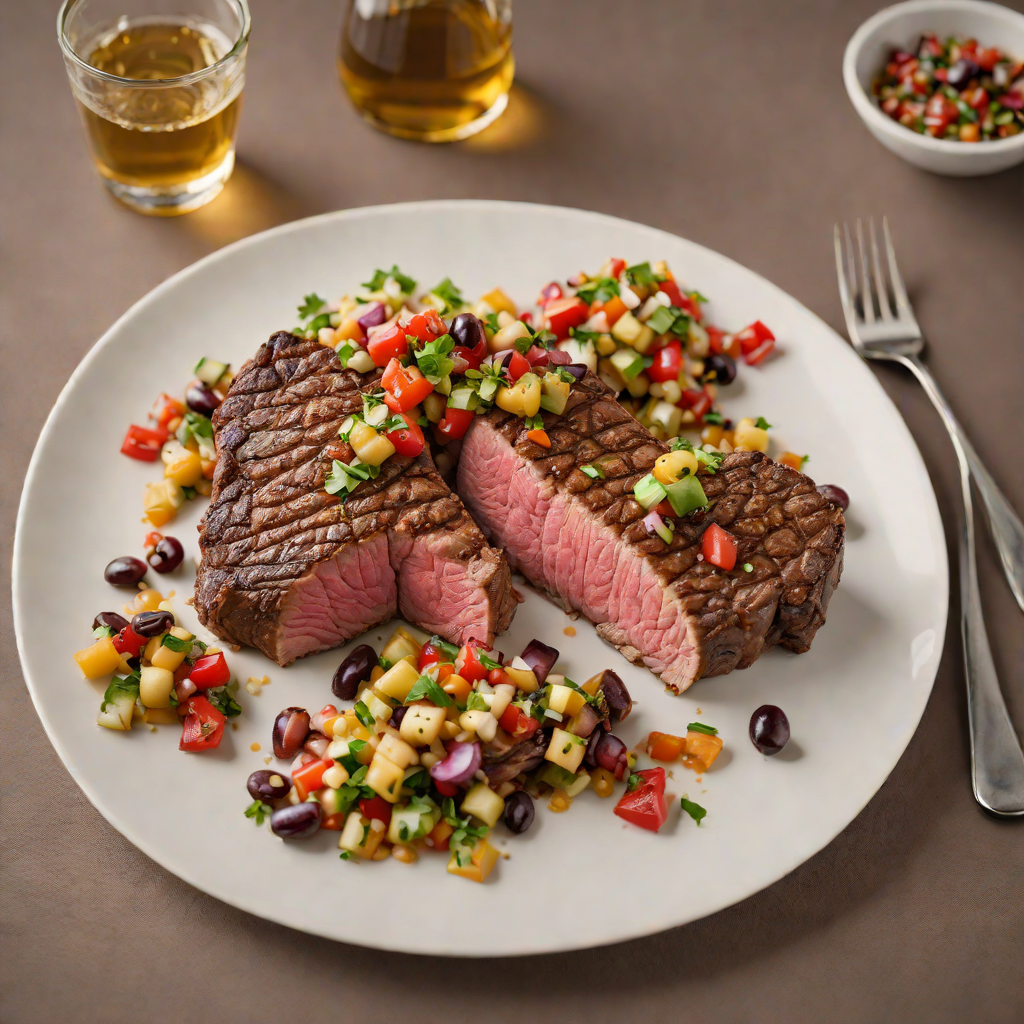
Pan-Seared Ribeye Steak with Tequila Bean Salsa shows what to do with a fattier cut. A ribeye at 1.25 inches wants about 4 minutes per side for medium-rare, then a 5-minute rest. Pull it off the heat at 130°F internal — it will carry over another 5°F while it rests.
Keto Seared Beef Steak with Herb Butter and Crisp-Seared Flank Steak with Keto Stir-Fry cover the leaner end. Flank is thin, so it wants a very hot pan and a very short time — 2 to 3 minutes a side, then slice hard against the grain. Cook flank to medium and it turns to rope.
For chicken, The Best Pan-Seared Chicken Thighs with Mushroom Cream is the one to learn first. Thighs are forgiving — the extra fat and connective tissue mean the window between "done" and "dry" is minutes rather than seconds. Start them skin-side down in a cold-ish pan and let the fat render as it heats; you get a flatter, crispier skin than dropping them into a ripping-hot pan.
Lemon-Herb Pan-Seared Chicken Thighs with Creamy Mushroom Sauce and Pan-Seared Chicken with Mushroom Sauce are variations on the same skeleton: sear, remove, build a sauce in the fond, return the protein. That fond — the browned bits welded to the pan — is the entire point of searing in a pan rather than under a broiler.
Best Ever Quick Chicken Skillet and Chicken Skillet with Cherry Tomatoes and Olives push into one-pan territory, where the vegetables go into the rendered fat after the protein comes out.
Pork chops are the cut most often ruined. Mojo Pork Chops work because the acidic marinade does some of the tenderizing that overcooking otherwise destroys. Pull pork at 145°F, not the 160°F your grandmother used — the USDA lowered the recommendation in 2011 and a 145°F chop is faintly pink and dramatically juicier.
And for a project dinner, Perfectly Pan-Seared Duck Breast with Cherry Port Reduction or Pan-Seared Duck Breast with Cherry Compote. Duck breast is the one protein you start in a cold, dry pan, skin down, over medium-low: you need 8–12 minutes to render the thick fat cap before the skin can crisp. Rush it and you get chewy fat under a burnt surface.
Pan-Seared Seafood: Salmon, Scallops & Shrimp
Seafood is faster, less forgiving, and the place where pan choice matters most because delicate fillets stick.
Pan-Seared Salmon with Dill Sauce and Crispy Pan-Seared Salmon with Lemon-Dill Sauce are the two to start with. Skin-on, skin-side down, and press the fillet flat with a spatula for the first 20 seconds — salmon skin contracts as it heats and will curl the fillet away from the pan if you let it. About 75% of the cooking happens on the skin side.
Pan-Seared Salmon with Lemon-Dill Asparagus turns it into a complete plate in one pan.
Scallops are the hardest sear in this article and the most impressive when it works. North Sea Scallops with Citrus Beurre Blanc and Lemon Herb Scallops with Garlic Shrimp Pasta both depend on buying dry-packed scallops. Wet-packed scallops are treated with sodium tripolyphosphate, which makes them absorb water — they weigh more, cost you for the water, and will not brown because they leach liquid the moment they hit heat. Dry scallops look ivory and slightly tacky; wet scallops look bright white and sit in milky liquid.
Tuna is a 60-second-per-side proposition. Seared Tuna with Ginger-Soy Vinaigrette and Pan-Seared Tuna with Ginger and Sesame both want the pan hotter than anything else here, with the goal of a 1/8-inch cooked band and a raw center.
Shrimp: Golden Garlic Butter Shrimp Scampi and Garlic Butter Shrimp. Shrimp go from translucent to opaque in about 90 seconds a side. The classic error is adding garlic at the same time as the shrimp — garlic burns in roughly 45 seconds at searing temperature. Sear the shrimp, pull them, then build the garlic butter off the direct heat.
Pan-Seared Vegetarian Mains
Vegetarian searing works on the same physics; you are just browning sugars and proteins in plants and cheese instead of meat.
Herbed Halloumi & Roasted Vegetable Skillet is the best entry point. Halloumi has an unusually high melting point, so it browns into a crust while holding its shape — one of very few cheeses that behaves like a protein in a hot pan. Slice it about 1/2 inch thick; thinner and it dries out before it colors.
Roasted Vegetable & Halloumi Skewers with Lemon Herb Drizzle is the same idea in a format that suits a grill pan. Our grill pan buying guide covers which ridged pans sear hardest.
Mushrooms are the vegetarian sear most people get wrong. They are roughly 90% water, and the standard advice to "not crowd the pan" applies triple. Give them a hot, wide, dry pan, do not salt until they have released and reabsorbed their liquid, and expect them to look wrong for the first five minutes before they suddenly brown.
Weeknight Skillet Bowls
Smith Family Spiced Chicken Skillet and Herb-Roasted Chicken and Vegetable Skillet are the "sear, then finish everything in the same pan" format — the lowest-effort version of this technique and the one most likely to become a Tuesday habit.
Real-world numbers: times and pull temperatures
Times assume a preheated 12-inch skillet over medium-high, protein at room temperature for 20 minutes, cooked in two batches.
| Protein | Thickness | Time per side | Pull temp | Rest |
|---|---|---|---|---|
| Ribeye steak | 1.25 in | 4 min | 130°F | 5–8 min |
| Flank steak | 0.75 in | 2–3 min | 130°F | 5 min |
| Chicken thigh (bone-in) | — | 7 min skin / 5 min | 175°F | 5 min |
| Chicken breast | 1 in | 5 min / 4 min | 160°F | 5 min |
| Pork chop | 1 in | 4 min | 145°F | 5 min |
| Duck breast | — | 10 min skin (cold start) / 2 min | 135°F | 8 min |
| Salmon fillet (skin on) | 1 in | 5 min skin / 1 min | 125°F | 3 min |
| Sea scallops | 1 in | 90 sec | opaque edge | none |
| Shrimp (16/20) | — | 90 sec | opaque | none |
| Tuna steak | 1 in | 60 sec | rare center | none |
Thigh meat is the exception to "lower is better" — it has enough collagen that 175°F is more tender than 165°F, because the connective tissue has had time to convert to gelatin.
What you'll need
You do not need much, but two things are worth spending on.
A heavy pan. Cast iron or carbon steel for maximum thermal mass, or tri-ply stainless if you want to build pan sauces and see the fond as it develops. Browse cookware for the options. Nonstick is genuinely the wrong tool here — most nonstick coatings are not rated for the surface temperatures a good sear requires, and the coating actively prevents fond from forming, which means no pan sauce.
An instant-read thermometer. Every pull temperature in the table above is unusable without one, and this is the single cheapest upgrade to your cooking. Look under gadgets.
Beyond that: a pair of spring-loaded tongs and a fish spatula from utensils, and a sharp knife from knives for slicing against the grain — a dull knife tears the fibers you just spent effort keeping tender.
Common mistakes
Adding protein to a pan that only looks hot. Shimmering oil is a weak signal; oil shimmers well below searing temperature. Use the water-drop test or an infrared thermometer.
Moving the food. A crust forms by welding to the pan and then releasing when it is ready. If a steak sticks when you try to flip it, it is not done — wait 30 seconds and it will release on its own. Poking, sliding and repositioning is how you get a mottled half-crust.
Using the wrong oil. Butter alone smokes around 300–350°F, well under searing temperature. Sear in a neutral high-smoke-point oil (grapeseed, avocado, refined canola) and add butter at the end for flavor.
Salting at the wrong time. As covered above: salt immediately before, or 45+ minutes before. Twenty minutes before is the dead zone where the surface is wettest.
Skipping the rest. Cutting a steak straight off the heat dumps juice onto the board. Five minutes of rest lets the muscle fibers relax and reabsorb it.
When not to pan-sear
Pan-searing is the wrong choice for anything thick enough that the exterior burns before the middle warms — a 2-inch-plus roast, a whole chicken, a pork shoulder. Those want a reverse sear (low oven first, hard sear last) or plain roasting. It is also the wrong choice for anything you want to cook through gently: delicate white fish like sole, or eggs. And if you are cooking for six, searing in three batches while everyone waits is worse than a sheet-pan dinner that comes out at once.
As of 2026, the technique itself has not changed in a century — what has changed is that a reliable instant-read thermometer now costs under $20, which removes the last real source of guesswork.
Sources
Frequently asked questions
What pan gives the best sear at home?
Why is my sear steaming instead of browning?
Do I need to finish pan-seared meat in the oven?
Can I pan-sear on an electric or induction cooktop?
What should I do with the browned bits left in the pan?
Recipes to start your week with
Save any of these to My Recipes — no account needed — and send the ingredients to Instacart in one tap.