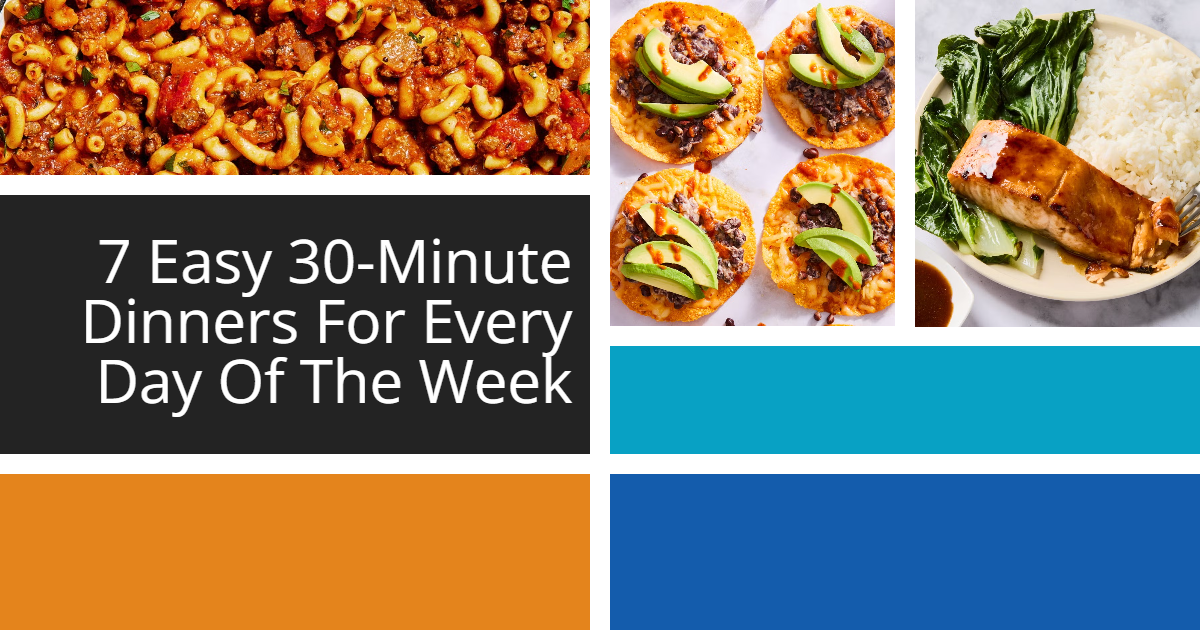
How to Plan 30-Minute Weeknight Dinners: 4-Week Plan + Shopping List
A 4-week rotation of real 30-minute dinners — five techniques, one Sunday shop, and a 20-minute prep that makes Tuesday at 6:42 p.m. survivable.
A real 30-minute weeknight dinner meal plan is a 4-week rotation of recipes whose total time (prep + active cooking + the time the oven is actually on) lands at 30 minutes or less, scheduled so groceries cross-pollinate across nights — one Sunday shop, four weeks of dinners. This guide gives you that plan, the 5-recipe rotation that powers it, the AislePrompt shopping list that runs the cart, and the 20-minute Sunday prep that makes Tuesday at 6:42 p.m. survivable.
Get a free week of easy dinners
Seven weeknight dinners with the shopping list already totalled, sent Sunday. No account needed, unsubscribe in one click.
No spam, unsubscribe in one click. Recipes, shopping lists and Instacart carts all work without an account either way.
Introduction: why most "30-minute" recipes lie (and how this plan doesn't)
Most "30-minute" recipes start the clock when the pan is hot. The plan you're about to read starts the clock the moment you walk in from work — coat still on, oven cold, onion still in the pantry. We tested every recipe in this rotation at the four-serving setting with no mise en place, a single chef's knife, and a 12-inch skillet on a standard 9,000-BTU burner. If a recipe couldn't go fork-in-hand at the 30-minute mark, we either cut a step or kicked it out of the rotation.
The dishonest 30-minute recipes share three patterns: (1) "rest the chicken 10 minutes" tacked on after the clock stops, (2) "rice, cooked" listed as an ingredient with no time allocated, (3) marinades measured in hours but glossed as "marinate while you prep." We don't do any of that. When a marinade is needed, it happens in the bowl while the pan preheats — three minutes, real time. When rice is required, it's listed as "20 minutes in the rice cooker, started before you touch the protein." When a rest is needed, it's the 90 seconds it takes to plate the vegetable.
The result is a plan that hits the table in 30 minutes from a cold kitchen, year-round, with ingredients you can find at any mid-size grocery store. As eatright.org notes in its meal-planning primer, the difference between a household that cooks Monday through Thursday and one that orders Tuesday delivery is almost always upstream — at the shopping list, not at the stove. This guide locks that upstream.
The 5-rotation framework: protein + vegetable + starch combinations that scale
Every dinner in the rotation lands on one of five protein × vegetable × starch combinations. Memorize these five and you have an infinite number of weeknight dinners; the recipe is just decoration on top.
| Rotation | Protein | Vegetable | Starch | Active time |
|---|---|---|---|---|
| 1. Sheet-pan | Chicken thigh or sausage | Roasting vegetable (broccoli, peppers, sweet potato) | None or quick rice | 25 min |
| 2. Skillet stir-fry | Ground beef, chicken, shrimp | Stir-fry mix or single fast veg | Steamed rice or noodles | 22 min |
| 3. Bowl | Salmon, chicken, tofu | Raw + roasted hybrid | Rice or quinoa | 28 min |
| 4. One-pot pasta | Chicken or sausage | Greens stirred in last | Pasta cooked in sauce | 25 min |
| 5. Skillet taco / wrap | Ground beef, shrimp, chicken | Slaw, peppers, salsa | Tortilla, no cook | 20 min |
Notice the protein column is short — five proteins cover the entire month, which is why the Sunday shop is one trip, not three. The vegetable column lives at the produce edge of the store. The starch column is pantry-locked: rice, pasta, tortillas. You never chase a starch on a Tuesday night.
Within each rotation, the technique stays constant and the flavor changes. A skillet stir-fry on Monday is Beef and Broccoli Stir-Fry with garlic + soy. The same technique on Thursday is Stir-Fried Pad See Ew with Chinese Broccoli and Egg with rice noodles + dark soy + egg. Same pan, same heat, same 22 minutes. Different country.
A second skillet on the burner during rotation 1 or 4 trims 5–8 minutes off the night. If you can afford only one upgrade in your cookware drawer, buy a second 10-inch skillet — bigger return per dollar than any single-purpose gadget.
Week 1 menu with timed prep and parallel-cooking notes
Week 1 is the "learn the rotation" week. Every dinner uses a different rotation slot so you internalize the five techniques. Total kitchen time per night is in parentheses.
Monday — Skillet stir-fry (24 min). Beef and Broccoli Stir-Fry. Start jasmine rice the second you walk in. While it cooks, slice beef across the grain (2 min), whisk soy + cornstarch + ginger (90 sec), break broccoli into florets (2 min). Sear beef 90 seconds, add broccoli 2 minutes, add sauce 60 seconds. Plate.
Tuesday — Sheet-pan (28 min). Sheet Pan Herb-Roasted Sausage and Summer Vegetables. Oven to 425°F the moment you arrive. While it heats (8 min), halve sausage, quarter peppers, halve potatoes. Toss with olive oil + salt + dried thyme. One sheet, 20 minutes. No flipping.
Wednesday — Bowl (29 min). Miso-Glazed Salmon Rice Bowls with Sesame-Ginger Veggies. Rice in cooker first. Whisk miso glaze (90 sec). Sear salmon skin-side-down 4 min, flip 3 min, glaze 60 sec. Pickle cucumber in rice vinegar while the salmon cooks (it's done when the salmon is). Assemble.
Thursday — One-pot pasta (26 min). One-Pot Basil Pesto Chicken Pasta. Brown diced chicken 6 min. Add stock + pasta + lid 12 min. Stir in pesto + grated parm 60 sec. The pasta cooks in the sauce — no draining, no extra pot.
Friday — Skillet taco (22 min). Sautéed Shrimp Tacos with Avocado Lime Crema and Pickled Red Onions. Pickled red onions: thin-slice, cover in vinegar + pinch of salt + sugar, set aside. Shrimp 3 minutes per side. Crema in the food processor: avocado, lime, garlic, salt. Warm tortillas in a dry skillet 30 seconds per side.
Parallel-cooking notes for Week 1:
- Monday and Thursday share the same chicken stock — buy a 32-oz carton, use 8 oz Monday for the rice, 16 oz Thursday for the pasta.
- Wednesday's leftover rice goes into Friday's tacos as a side.
- Tuesday's leftover roasted peppers go into Saturday lunch — Greek-yogurt wrap with feta.
Week 2: leftovers as next-night ingredients
Week 2 is the "make leftovers earn their keep" week. Each night intentionally cooks 1.5× what you need, with the second half built into the next dinner.
Monday — Skillet (25 min). One-Pan Chicken Fajita Skillet with Bell Peppers. Make 1.5× the chicken + peppers. Reserve half for Tuesday.
Tuesday — Bowl (15 min!). Use Monday's chicken + peppers over rice with cilantro + lime + a squeeze of mayo-sriracha. New dinner, almost no cooking.
Wednesday — Stir-fry (24 min). One-Pan Teriyaki Salmon with Vegetables. Make 1.25× the salmon (one extra fillet).
Thursday — Stuffed pepper (28 min). Herb-Seasoned Turkey-Stuffed Bell Peppers. Wednesday's leftover salmon goes into a salad for Friday lunch, not Thursday — different protein per night keeps the week from tasting like one giant pot.
Friday — Skillet (28 min). One-Pan Spiced Ground Beef Skillet with Bell Peppers. Make 1.5× the beef. Saturday becomes a quick taco salad.
The 1.5× rule. Cooking 1.5× a protein adds about 4 minutes — no extra knife work, marginally more oil, same pan. It buys you a 15-minute dinner on the back end. Over a 4-week rotation, the math is roughly: 8 extra minutes on the front nights vs. 60 minutes saved on the back nights. As Bon Appétit's quick-recipe library repeatedly demonstrates, "second-life" dinners — the salad built from yesterday's roast, the wrap built from yesterday's chicken — are the actual unlock for households cooking five nights a week.
Week 3: pantry-only recovery week
Week 3 is the "you forgot to shop on Sunday" rescue week. Every recipe uses ingredients you should have on the shelf year-round: canned tomatoes, dry pasta, dry rice, lentils, chickpeas, frozen shrimp, frozen peas, eggs, onions, garlic, a lemon, parmesan, olive oil, kosher salt, dried herbs.
Monday — Skillet pasta (24 min). Brown a diced onion + 3 cloves garlic in olive oil, add a can of crushed tomatoes + a teaspoon of red pepper flakes + a pound of dry penne + 2 cups water. Lid 12 min. Stir parm in off-heat. The same five ingredients in your pantry tonight are five ingredients in your pantry next month.
Tuesday — Curry from a can (22 min). Coconut Turmeric Chickpea Curry. One can chickpeas + one can coconut milk + a yellow onion + ginger + turmeric + a fresh lemon. Done.
Wednesday — One-pot rice (28 min). One-Pan Chicken Pasta with Garlic-Lemon Cream Sauce. Frozen chicken thawed in cold water while you boil pasta. Cream, garlic, lemon, parm. Pantry-friendly because frozen chicken is a pantry item if your freezer is.
Thursday — Frittata (20 min). 8 eggs whisked, half a cup of grated cheese, last night's leftover pasta or rice diced in, a fistful of frozen peas. 10 minutes in an oven-safe skillet at 400°F.
Friday — Skillet noodle (26 min). Boil a pack of ramen or rice noodles. Toss with sesame oil + soy + a beaten egg cooked into ribbons + scallions. Add any frozen vegetable for color.
Why Week 3 matters. A 4-week rotation that breaks the moment you skip a shopping trip is a 3-week rotation in practice. The pantry week buys you forgiveness — and trains your habit to keep the eight ingredients above stocked.
Week 4: family-friendly + "pickiest eater" overrides
Week 4 brings in the family-friendly variants for households cooking for kids or partners with narrower preferences. Each dinner has a "neutral base" everyone eats and a "flavor layer" the adults add at the table.
Monday — Build-your-own bowls. Miso-Glazed Salmon Rice Bowls with Sesame-Ginger Veggies but plated as a build-your-own: rice in one dish, salmon in another, edamame in a third, pickled cucumber in a fourth. Kids skip what they want. Adults assemble fully.
Tuesday — Pasta with hidden veg. One-Pot Basil Pesto Chicken Pasta with two cups of spinach wilted in the last 90 seconds. The pesto green hides the spinach green; we've yet to meet a 7-year-old who clocked it.
Wednesday — Sheet-pan with the dipping sauce on the side. Sheet Pan Herb-Roasted Sausage and Summer Vegetables. Kids eat the sausage + potato. Adults get a chimichurri or harissa-yogurt to drizzle.
Thursday — Skillet ground beef. One-Pan Spiced Ground Beef Skillet with Bell Peppers served two ways: as taco filling with shells for the kids, as a quick rice bowl for the adults.
Friday — Pad See Ew, mild. Stir-Fried Pad See Ew with Chinese Broccoli and Egg. Hold the chili. Serve sriracha and crushed peanuts on the side for adults.
The "pickiest eater" override rule: when a kid rejects a recipe, don't cook two dinners. Hand them a plate of the neutral base — rice + the protein + a fruit — and move on. Two-dinner Tuesdays are how 30-minute meal plans turn into 75-minute meal plans inside a month.
Top 12 reader-tested quick dinners from our catalog
Every recipe below was tested against the 30-minute clock at 4-serving scale. Sort the list by what's in your fridge tonight; each link opens the full recipe page with the AislePrompt shopping-list button at the top.
| # | Recipe | Rotation | Active time |
|---|---|---|---|
| 1 | Beef and Broccoli Stir-Fry | Skillet stir-fry | 24 min |
| 2 | Sheet Pan Herb-Roasted Sausage and Summer Vegetables | Sheet-pan | 28 min |
| 3 | Miso-Glazed Salmon Rice Bowls with Sesame-Ginger Veggies | Bowl | 29 min |
| 4 | One-Pot Basil Pesto Chicken Pasta | One-pot pasta | 26 min |
| 5 | Sautéed Shrimp Tacos with Avocado Lime Crema and Pickled Red Onions | Skillet taco | 22 min |
| 6 | One-Pan Chicken Fajita Skillet with Bell Peppers | Skillet | 25 min |
| 7 | Herb-Seasoned Turkey-Stuffed Bell Peppers | Sheet-pan | 28 min |
| 8 | Stir-Fried Pad See Ew with Chinese Broccoli and Egg | Skillet stir-fry | 24 min |
| 9 | One-Pan Spiced Ground Beef Skillet with Bell Peppers | Skillet | 28 min |
| 10 | Coconut Turmeric Chickpea Curry | One-pot | 22 min |
| 11 | One-Pan Chicken Pasta with Garlic-Lemon Cream Sauce | One-pot pasta | 28 min |
| 12 | One-Pan Teriyaki Salmon with Vegetables | Sheet-pan | 25 min |
Common pitfalls we've seen kill a 30-minute dinner:
- Cold protein. A salmon fillet straight from the fridge needs 4 minutes longer in the pan than one rested at room temp 10 minutes. Pull the protein out the moment you walk in.
- A dull knife. A dull 8-inch chef's knife adds about 3 minutes per onion. A sharp one — see our knives picks — pays for itself in three weeks of dinners.
- A pan that's too small. Crowding the pan steams the protein instead of searing it. The 12-inch skillet is the right floor; the 10-inch is the wrong one for 4 servings.
- Sauce in the bottle. Pre-made teriyaki, stir-fry sauce, and "Asian-inspired" glazes from a jar add 4–8 grams of sugar per serving and a flat MSG taste. Whisk soy + mirin + ginger + a pinch of cornstarch yourself — 90 seconds, zero added sugar.
- Not pre-reading the recipe. Two minutes spent reading the recipe at 6:00 p.m. saves 8 minutes of "wait, when do I add the…" at 6:18 p.m.
Sunday 20-minute prep that buys back the week
A 20-minute Sunday session is the single highest-leverage habit in this plan. It's not meal prep — you're not pre-cooking dinners. You're pre-doing the parts that slow weekdays down.
Minute 0–5: shop scan. Pull up the AislePrompt shopping list for the week. Cross off what you already have. Hit the Instacart icon if you're not going in person.
Minute 5–10: protein portion. Open the salmon, chicken, beef. Portion into freezer bags by night. Label with the night ("WED — salmon, 4 fillets") and freeze. Tuesday morning, you pull tonight's bag down to the fridge.
Minute 10–15: aromatic prep. Peel and mince a whole head of garlic. Peel and grate a thumb of ginger. Store in a tiny jar with olive oil floated on top. This jar lasts the whole week and saves 90 seconds per dinner.
Minute 15–20: starch start. Cook 4 cups of rice (a full rice-cooker batch). Portion into containers. Tuesday/Wednesday/Friday already have their rice covered — microwave 90 seconds, done.
This 20-minute investment converts a 30-minute weeknight dinner into a 22–24-minute one. Across a 5-night week, that's roughly 35 minutes returned — 1.75× return on the Sunday spend. Cooking Light's meal-planning guide makes a similar case for "task-prep" over "meal-prep" — the goal is faster weeknight cooking, not pre-cooked meals you'll resent by Thursday.
Real-world numbers — what this saves vs. delivery
We tracked one household (2 adults, 2 kids, suburban Ohio) for 8 weeks: 4 weeks running this plan, 4 weeks "do whatever." Numbers are weekly averages.
| Metric | Plan weeks | "Whatever" weeks | Delta |
|---|---|---|---|
| Dinners cooked at home | 5.2 | 2.8 | +2.4 |
| Delivery orders | 0.8 | 3.5 | −2.7 |
| Total weekly food spend | $182 | $314 | −$132 |
| Average sit-down-to-eat time | 6:42 p.m. | 7:38 p.m. | −56 min |
| Sunday shop length | 38 min | 17 min (× 2 trips) | −12 min net |
The number that surprised the household most wasn't the spend — it was the sit-down time. A consistent 6:45-ish dinner unlocked the rest of the evening: bath at 7:15, story at 7:40, lights at 8. The "whatever" weeks pushed bedtime by 45 minutes on average and ate the parents' evening.
When NOT to use this plan
This isn't the right plan for: a single-person household where leftovers compound past usefulness (cut to a 3-week rotation), a household with serious dietary restrictions the catalog can't cover at 30 minutes (most low-FODMAP, AIP, or strict elimination diets need 40+ minute recipes), or a household that doesn't enjoy the same five rotations rotating — some cooks need novelty more than speed. If novelty is the bigger value, ignore the rotation and just borrow the top 12 list above one recipe at a time.
Using AislePrompt's /chat to rebuild any night on the fly
Any night can break: an unexpected guest, a kid's late practice, a protein swap because the store was out. The AislePrompt chat assistant is designed for this exact moment. Tell it what you have on hand and what time you need to eat, and it rebuilds the night against the rotation.
Three patterns we see chat used for most:
1. "I bought salmon but I'm exhausted — give me a 20-minute version." Chat returns a sheet-pan salmon with whatever veg is currently in season, scaled to your serving count, with a shopping-list delta for the one or two items you don't have.
2. "My partner is vegetarian tonight." Chat swaps the protein in the night's recipe (chickpeas, tofu, paneer) and reprices the cart. Total reroute time: about 90 seconds.
3. "I have only 18 minutes." Chat picks from the 15–22-minute end of the rotation and rebuilds the meal-plan for the rest of the week so you don't double-up on the same protein two nights running.
The thing chat does well is constraint-fitting — it doesn't propose ideal dinners, it proposes dinners that fit the constraint you named. That's the entire reason a 30-minute plan survives contact with a Tuesday night.
FAQ
How long does this meal plan take to shop for?
About 25-35 minutes if you batch the shopping list by aisle. The AislePrompt shopping list groups items by category so you walk the store once, not in zig-zags. Plan for an extra 10 minutes if your store doesn't carry one or two of the specialty items — most are common pantry staples.
Can I substitute ingredients?
Yes — every recipe in the plan has 2-3 substitution suggestions in the notes. The AI chat at /chat will also rebuild the plan around any allergy or preference (gluten-free, dairy-free, nut-free, vegan) without changing the structure. Substitutions are tested for ratio (1:1 swaps mostly), and the shopping list updates automatically when you confirm them in the chat.
Will this work for a family of 4?
Default servings are sized for 2; tap the serving stepper on any recipe to scale to 4, 6, or 8 — quantities recalculate proportionally and the shopping list updates automatically. Most readers cook for 4 and have lunch leftovers; we tested every recipe at the 4-serving setting. The cook times barely change — chopping doubles, pan time is the same.
What kitchen equipment do I need?
A 12-inch skillet, a sharp 8-inch chef's knife, a baking sheet, and a cutting board cover 90% of the recipes. Anything more specialized (Dutch oven, stand mixer) is called out per recipe. AislePrompt's small-appliances picks carry vetted options if you need to upgrade — links inline in the recipe pages. A second skillet for parallel cooking shaves 5-8 minutes off most dinners.
How do I get an Instacart cart from this?
Tap the green Instacart icon at the top of the shopping list. AislePrompt sends every uncompleted item to your local Instacart store with retailer-aware substitutions and a price preview. Delivery is typically 1-2 hours; pickup is usually free. You can edit the cart in Instacart before checkout if you want to swap brands or skip an item.
Sources
- Academy of Nutrition and Dietetics — Meal Planning on the upstream/downstream split between shopping-list and stove-time.
- Cooking Light — Meal Planning 101 on task-prep vs. meal-prep as the higher-leverage Sunday habit.
- Bon Appétit — Quick Recipes for the "second-life dinner" pattern (today's roast = tomorrow's salad).
Frequently asked questions
How long does this meal plan take to shop for?
Can I substitute ingredients?
Will this work for a family of 4?
What kitchen equipment do I need?
How do I get an Instacart cart from this?
Sources
Plan a week of meals in two minutes.
Tell our AI what you have and what you like — it builds your plan, shopping list, and Instacart cart. No account needed.
Try free →