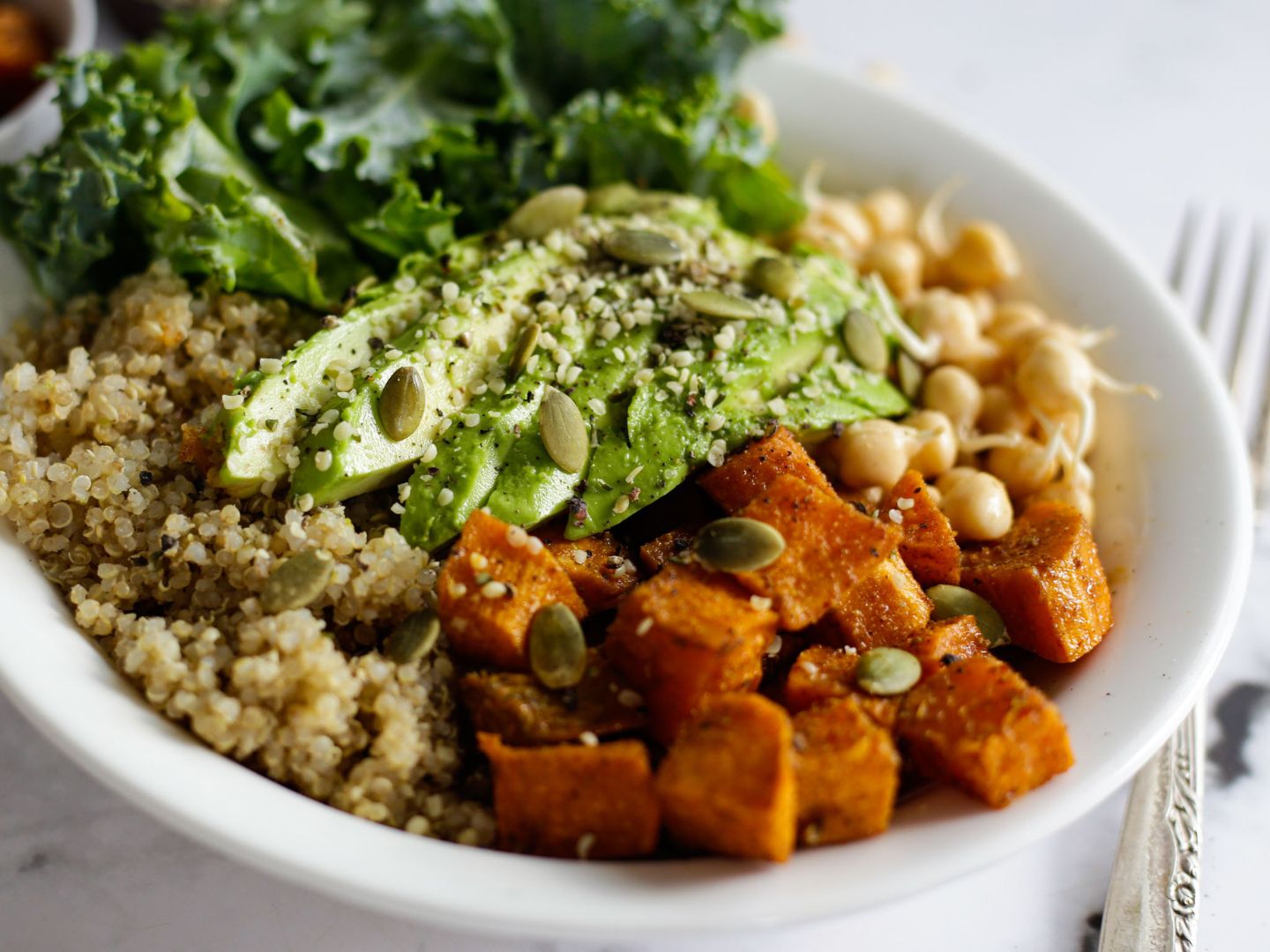
Batch Cooking Basics: 10 Proteins, 10 Sides, Infinite Weeknight Meals
How to spend 2 hours on Sunday and have 5 weeknight dinners ready to assemble in 15 minutes each
Batch cooking — spending 2 hours on Sunday preparing 10 reusable components — is the answer to "how to batch cook for the week." Cook once on Sunday, then mix proteins with sides in different combinations every night. Weeknight dinner goes from 45 minutes of active cooking to 10-15 minutes of reheating and assembling. Most households save 4-6 hours per week once the habit sticks.
Get a free Sunday meal-prep plan
One batch cook, five lunches that still hold on Thursday, and a single consolidated Instacart cart. Sent Saturday.
No spam, unsubscribe in one click. Recipes, shopping lists and Instacart carts all work without an account either way.
Introduction: why mix-and-match beats rigid meal plans
Rigid meal plans fail because they're brittle. Monday is chicken tacos, Tuesday is pasta, Wednesday is stir-fry — fine until Tuesday you're tired, skipped the grocery run, and the pasta sits uncooked. The plan requires you to execute in sequence; miss one step and the rest unravels.
The mix-and-match approach inverts that dependency. Instead of planning meals, you plan components: proteins that work in multiple cuisines, sides that stay good for 5 days, grains that work hot or cold. Sunday's 2-hour cook is the same every week. What changes nightly is the combination — and the sauce.
Food writers from Serious Eats to Bon Appétit have advocated the same principle: prep building blocks, not finished dishes. The result is a flexible system rather than a rigid schedule.
The batch cooking framework: 2 hours, 10 components, 5 dinners
The framework has three phases:
Phase 1 — Prep (30 minutes): Wash and chop all vegetables. Portion proteins. Measure grains. This is the mental overhead phase — once you're in prep mode, do everything at once so you're not reaching for a knife again at 7pm on Tuesday.
Phase 2 — Cook in parallel (90 minutes): Three things cook simultaneously: (a) proteins on the stovetop in batches, (b) sides and grains on two burners, (c) sheet-pan vegetables in the oven at 400°F. A standard session uses 3-4 burners + 1 sheet pan. You're supervising, not actively cooking.
Phase 3 — Cool and store (30 minutes): Portion into labeled containers. Refrigerate. Done.
| Day | Protein | Side 1 | Side 2 | Sauce | Total time |
|---|---|---|---|---|---|
| Monday | Shredded chicken | Cilantro-lime rice | Roasted broccoli | Salsa verde | 12 min |
| Tuesday | Ground beef | Quinoa | Roasted vegetables | Hoisin | 10 min |
| Wednesday | Baked tofu | Rice | Chickpea salad | Peanut sauce | 10 min |
| Thursday | Lentils | Quinoa | Roasted broccoli | Tahini | 8 min |
| Friday | Hard-boiled eggs | Rice | Sheet-pan vegetables | Sriracha mayo | 10 min |
Five distinct meals, one Sunday cook. The variety comes from swapping the sauce column — keep 4-5 sauces in the fridge door and the same proteins taste completely different nightly.
10 proteins to batch cook (shredded chicken, ground beef, baked tofu, lentils, hard-boiled eggs, …)
Batch proteins share three properties: they reheat without drying out, they're flavor-neutral enough to take any sauce, and they scale without special equipment.
1. Shredded chicken (breast or thigh): Poach 2 lbs bone-in chicken thighs in salted water with a bay leaf, 45 minutes on low. Shred with two forks while warm. Yield: ~5 cups. Works in tacos, stir-fry, sandwiches, bowls. Shredded Chicken Stir-Fry is the fastest application — 8 minutes from fridge to plate.
2. Ground beef taco meat: Brown 1.5 lbs 85/15 ground beef with cumin, chili powder, garlic powder, and salt. Drain fat. Ground Beef Taco Meat holds in the fridge 4 days and goes from a taco filling to a rice bowl topping with only a sauce change.
3. Baked tofu: Cube extra-firm tofu into 1-inch pieces, toss with soy sauce and sesame oil, bake at 400°F for 25 minutes, flipping once. Baked Tofu Nuggets come out with a firm, slightly chewy exterior that holds up in stir-fries and salads without turning mushy.
4. Green or brown lentils: Simmer 1.5 cups dry lentils in 3 cups water with a pinch of cumin, 20-25 minutes. No soaking required. Yield: ~4 cups cooked. Lentils absorb sauces aggressively — a tahini drizzle makes them a satisfying main, a vinaigrette makes them a side salad.
5. Hard-boiled eggs (6-12): Cover eggs with cold water, bring to a boil, turn off heat, cover for 11 minutes, ice bath for 5 minutes. Peel immediately or store unpeeled for up to 7 days. High protein (6g/egg), zero prep at dinner time.
6. Canned or cooked chickpeas: Drain and rinse 2 cans chickpeas (or cook 1 cup dry), toss with olive oil, salt, and paprika. Roast at 425°F for 25-30 minutes for crispy texture, or leave as-is for salad use.
7. Salmon (2-3 portions, oven-poached): Place salmon fillets in a baking dish with white wine and lemon slices, cover with foil, bake at 275°F for 25 minutes. Gentle method keeps the fish moist and flake-able for 3 days. Works cold on salads or warm over grains.
8. Turkey meatballs (baked, not fried): Combine 1 lb ground turkey, breadcrumbs, egg, garlic. Roll into 1.5-inch balls. Bake at 400°F for 18-20 minutes. Yield: ~24 meatballs. Freeze half on Sunday night for week 3 or 4.
9. Black beans (from dry, large batch): Soak 1 lb dry black beans overnight, simmer 60-90 minutes with a bay leaf and cumin. Yield: ~5 cups. Freeze in 1-cup portions. Far cheaper than canned and better texture. Works in burritos, rice bowls, salads.
10. Rotisserie chicken (no-cook protein): Buy one Sunday at the grocery store. Shred all of it and portion into containers. This is the legitimate shortcut for weeks when you have 90 minutes of cook time, not 2 hours. You lose some flavor control but gain 25 minutes of your life back.
10 sides that hold up in the fridge for 5 days
The wrong sides turn batch cooking into a disappointment by Thursday — soggy greens, dry grains, oxidized avocado. These 10 hold without losing texture.
1. Cilantro-lime rice: Cook long-grain white or brown rice in your standard way, then stir in lime juice, lime zest, and chopped cilantro while warm. Pan-Seared Chicken with Cilantro-Lime Rice shows the pairing, but the rice works standalone with any protein.
2. Lemon-herb quinoa: Rinse 1.5 cups quinoa, toast in a dry pan for 2 minutes, cook in broth (not water — broth adds body). Stir in lemon zest, parsley, and a drizzle of olive oil. Lemon-Dill Quinoa Bowl with Spring Vegetables is a good template for the approach.
3. Roasted broccoli: Toss 2 heads broccoli florets with olive oil, garlic, salt. Roast at 425°F for 20-22 minutes until charred at the edges. Roasted Broccoli and Cauliflower with Garlic and Parmesan is the reference prep — add cauliflower to extend the batch.
4. Mediterranean chickpea salad: Combine cooked chickpeas, cucumber, tomato, red onion, kalamata olives, and a lemon-oregano vinaigrette. Mediterranean Chickpea Salad holds for 4 days because the chickpeas absorb flavor rather than wilting. Keep the dressing separate if you want 5 days.
5. Sheet-pan roasted vegetables: Quarter 3-4 seasonal vegetables (zucchini, bell pepper, red onion, asparagus), toss with olive oil and salt, roast at 425°F for 22-25 minutes. Sheet Pan Lemon-Garlic Herb Chicken with Roasted Vegetables shows the technique; use just the vegetable method when doing standalone sides.
6. Brown rice: Cook a large pot. Brown rice holds in the fridge for 5 days and reheats in the microwave in 90 seconds with a splash of water. 1 cup dry makes ~2.5 cups cooked — enough for 5 portions.
7. Roasted sweet potatoes: Cube 4 medium sweet potatoes into 1-inch pieces, toss with olive oil, cumin, and smoked paprika, roast at 400°F for 25-30 minutes. High in fiber (4g/serving), naturally sweet, works at room temperature in grain bowls.
8. Coleslaw (undressed): Shred cabbage and carrots, store without dressing. Lasts 7 days undressed, 2 days dressed. Dress portion-by-portion at dinner time. Works as a taco topper, grain bowl crunchy element, or standalone side.
9. Cucumber tomato salad: Slice, salt for 10 minutes to draw out moisture, drain. Lasts 3 days before getting watery. Add red onion, olive oil, and red wine vinegar. Takes 5 minutes to prep.
10. Overnight oats (breakfast component): Combine oats, milk, chia seeds, and a sweetener in 5 mason jars on Sunday. Vanilla Chia Overnight Oats covers the base ratio. This isn't a dinner side but it extends the framework to breakfast — one prep session covers mornings too.
How to mix-and-match: 8 example dinners from the same 4 components
The simplest batch session: shredded chicken, rice, roasted broccoli, and a few sauces. Eight different dinners from four base components:
| Dinner | Protein | Grain | Vegetable | Sauce | Additions |
|---|---|---|---|---|---|
| Teriyaki bowl | Shredded chicken | Rice | Broccoli | Teriyaki | Sesame seeds |
| Burrito bowl | Chicken | Rice | — | Salsa + sour cream | Black beans, corn |
| Stir-fry | Chicken | Rice | Broccoli | Hoisin + chili crisp | Scrambled egg |
| Pesto pasta | Chicken | — | Broccoli | Pesto | Pasta (10 min cook) |
| Mediterranean plate | Chicken | — | — | Tzatziki | Pita, cucumber salad |
| Fried rice | Chicken | Rice | Broccoli | Soy + oyster sauce | Eggs, scallions |
| Chicken soup | Chicken | Rice | Broccoli | Chicken broth | Added fresh onion |
| Chicken wrap | Chicken | Rice | Broccoli | Ranch | Lettuce, tomato |
"Additions" are the only things you need to buy fresh or cook to order. Everything else is refrigerator-ready in under 3 minutes.
The sauce rule: own at least 5 sauces at all times. Recommended rotation: (1) soy sauce + sesame oil, (2) salsa verde, (3) tahini + lemon, (4) peanut sauce, (5) a vinaigrette. These four cover Asian, Mexican, Middle Eastern, and European flavor zones. Any protein + any grain + any of these five sauces makes a coherent dinner.
Storage, reheating, and food-safety guidelines
Safe storage means the framework stays safe to eat through Friday. The USDA FoodKeeper App is the authoritative reference for how long each protein, grain, and produce item keeps in the fridge, freezer, and pantry — bookmark it.
Temperature rule: All cooked food must be refrigerated within 2 hours of cooking (1 hour if your kitchen is above 90°F), per the USDA's 2-hour rule. Spread proteins in a single layer on a sheet pan before packing if your kitchen is warm (above 75°F in summer). Don't stack hot containers in the fridge — hot mass in the middle of a dense stack can sit in the danger zone (40-140°F) for hours.
Container recommendations:
- Glass containers with snap-lock lids: dishwasher-safe, stain-free, microwave-safe. 2-cup single-portion size for proteins and grains; 4-6 cup for vegetables.
- Label everything with the protein name and date. Post-it labels on the lid take 5 seconds and prevent Thursday's "what day did I make this?" problem.
- Keep liquids (soups, stews, sauces) in wide-mouth mason jars — they stack, they seal airtight, and liquid expands less in a wide jar.
| Component | Fridge (40°F or below) | Freezer (0°F) |
|---|---|---|
| Cooked chicken | 4 days | 2-3 months |
| Cooked ground beef | 4 days | 3-4 months |
| Baked tofu | 5 days | 3 months |
| Cooked lentils | 5 days | 3 months |
| Hard-boiled eggs (unpeeled) | 7 days | Not recommended |
| Cooked grains (rice, quinoa) | 5 days | 1 month |
| Roasted vegetables | 5 days | 2 months |
| Overnight oats | 5 days | Not recommended |
Reheating: Microwave is fastest — 90 seconds at 70% power for a 2-cup portion, then 30-second increments until hot. Proteins dry out at full power; reduce to 60-70% and cover with a damp paper towel. Roasted vegetables reheat best in a dry skillet at medium-high heat for 3-4 minutes — they regain crispness the microwave destroys.
Freeze at week start, not week end. If you know Thursday you'll eat out, freeze the Thursday and Friday proteins on Sunday or Monday. Freezing on Friday after 4 days in the fridge is technically safe but texture suffers. Freeze early for best quality.
Tools that cut batch-cooking time in half
You don't need specialty equipment, but the right tools reduce active time by 30-40%.
Instant Pot or pressure cooker: Chickpeas from dry cook in 30 minutes (vs. 90-minute stovetop simmer). Chicken breast poaches in 15 minutes (vs. 45). The time savings matter when you're running three cooking tracks in parallel.
Half-sheet pans (18×13 inch): One sheet holds 3-4 cups of vegetables with room to roast, not steam. If you're cramming vegetables onto a smaller pan, they steam — you want space for the edges to char. Own at least 2 for parallel roasting.
Sharp chef's knife: 10 minutes of chopping with a dull knife → 4 minutes with a sharp one. Run it over a honing steel before every batch session. A whetstone tune-up every 6-12 months keeps a $50 knife performing like a $150 one. Check the /k/knives section for tested picks at every price point.
Food storage containers (8-10 single-serve): The investment that makes the whole system work. Glass is the long-term call — no staining, no odor absorption, microwave-safe, dishwasher-safe. Check /k/storage for our tested glass container recommendations.
Instant-read thermometer: Proteins should hit 165°F internal for poultry, 160°F for ground beef. A thermometer removes the guesswork that causes either undercooked chicken or dry overcooked protein on Tuesday. $15-$25 Thermoworks or OXO models are accurate within 1°F.
Rice cooker (optional): Set it and forget it — 45 minutes for brown rice, 20 for white, with no monitoring. Frees one burner for a protein. A basic 3-cup model is $25 and lasts a decade. Check /k/small-appliances for our current pick.
Use AislePrompt to auto-generate a batch shopping list (/meal-plan + /chat)
Once you have a rotation of components you like, AislePrompt can generate the shopping list automatically. Two tools work together:
/meal-plan: Enter the proteins and sides you plan to batch this week. AislePrompt pulls the ingredient quantities from the recipe catalog and builds a consolidated shopping list — scaled to your household size, with duplicates merged. "2 lbs chicken thighs" appears once, not four times across four recipes.
/chat: Ask "what's a batch cooking list for 2 adults, 5 dinners, focused on Mediterranean flavors?" and AislePrompt generates a component list, estimated Sunday cook time, and a sorted shopping list grouped by grocery section. You can follow up: "swap the salmon for white fish, keep everything else."
The AI shopping feature is particularly useful for the first 3-4 weeks when the framework feels manual. Once you've done the same 5 proteins 4 times, the shopping list is second nature and you stop needing the tool. That's the goal — the app gets you there faster.
FAQ
How long does batch cooking actually take?
The framework in this guide is built around a single 2-hour block on Sunday: 30 minutes of prep, 90 minutes of mostly-passive oven and stovetop time while you do other things. By Sunday night you have 10 components ready, and weeknight dinners take 10-15 minutes (reheat, assemble, plate). Most readers save 4-6 total hours per week compared to cooking from scratch every night.
How long do batch-cooked proteins and sides keep in the fridge?
Cooked proteins (chicken, beef, tofu, lentils, eggs) hold for 4 days in airtight containers at 40°F or below. Cooked grains (rice, quinoa) and roasted vegetables hold for 5 days. Dressed salads should be eaten within 2-3 days; keep dressings separate if you want longer storage. For anything you won't eat by day 4, freeze it on Monday — proteins freeze well for 2-3 months, grains for 1 month.
Can I batch cook for one person without wasting food?
Yes — halve the recipes in this guide to make 5 servings per component instead of 10, or batch the full quantity and freeze half on day one. Single-cook portion freezer bags (one protein + one grain + one vegetable, flattened) reheat in 8-10 minutes from frozen and give you 5 extra dinners on weeks you don't want to cook. The mix-and-match framework actually works better solo because you can vary every meal without forcing a household to agree.
What are the best containers for batch-cooked food?
Glass containers with snap-lock lids are the long-term winner: they don't stain, don't absorb odors, go straight from fridge to microwave to dishwasher, and stack flat for visibility. Plastic containers are lighter and cheaper but warp and stain over time. Single-portion 2-cup glass containers (8-10 of them) plus 2-3 larger 6-cup containers covers a week of mix-and-match for most households. We link to specific picks in the /k/storage section.
How do I avoid getting bored eating the same components all week?
Vary the sauce, not the component. The same shredded chicken becomes a taco filling with salsa, a Mediterranean bowl with tzatziki, a stir-fry with hoisin, and a sandwich with pesto — four completely different meals from one Sunday cook. Keep 4-5 sauces in the fridge door (a vinaigrette, a chili-crisp, a yogurt sauce, a peanut sauce) and the flavor map changes nightly. The mix-and-match table in this guide shows 8 examples to start from.
Frequently asked questions
How long does batch cooking actually take?
How long do batch-cooked proteins and sides keep in the fridge?
Can I batch cook for one person without wasting food?
What's the best containers for batch-cooked food?
How do I avoid getting bored eating the same components all week?
Sources
One Sunday, one week of lunches.
Ask our AI to plan the batch-cook — components, quantities, and a single Instacart cart.
Plan my prep day →