Best Cast Iron Skillet in 2026: Top Picks + Buying Guide
The Lodge 12-inch at $35 is the pan for a lifetime, the Lodge 10.25-inch is the lighter default, and the Le Creuset Signature Enameled is the upgrade — plus how to season, care, and 5 recipes that show off what cast iron does.
The short answer
Get a free week of one-pan dinners
Seven one-pan and sheet-pan dinners, one shopping list, one Instacart cart. Sent Sunday, no account needed.
No spam, unsubscribe in one click. Recipes, shopping lists and Instacart carts all work without an account either way.
If you're buying one cast iron skillet in 2026 and you want the most pan for the money, buy the Lodge Seasoned 12-Inch Cast Iron Skillet for around $35. It's the same American-made pan (Lodge foundry, South Pittsburg, TN) that's been the default in home and restaurant kitchens for a hundred years, it comes triple-seasoned in the box, and it holds heat like nothing else on your stovetop. If a 12-inch is too heavy for your wrist, drop to the Lodge Classic 10.25-Inch with Silicone Handle Holder at around $30 — same pan, 2.5 pounds lighter, same lifetime. If you want beauty-object premium with the enamel that keeps tomato sauce from stripping your seasoning, the Le Creuset Signature Enameled Cast Iron 10.25-Inch Skillet at $184 is the one your kitchen will still be using in 2060.
The rest of this guide breaks down five specific picks, the specs to look for, and how to season and care for the pan so it outlives you.
Why a cast iron skillet deserves counter space
Every serious home cook eventually owns a cast iron skillet — not because it's trendy, but because nothing else in the kitchen does the four things it does at once. It sears meat harder than a stainless pan because it holds and releases heat evenly across a heavy floor (7–8 pounds of iron is a lot of thermal mass). It goes from stovetop to 500°F oven in the same motion, so a chicken thigh gets a crackling sear on the burner and finishes cooking through under the broiler in one pan. It builds a natural non-stick surface — carbonized oil polymerized into the pores of the iron — that improves for decades if you cook on it and hurts a little if you don't. And it costs a fraction of everything else that promises those results: a $30 Lodge outlasts a $150 non-stick that goes to landfill in three years.
Cast iron is also the only cookware category where the used market is genuinely as good as new. Any pre-1960 Griswold or Wagner you find at an estate sale for $40 is, functionally, a better pan than most $200 pans made today — smoother machined cooking surface, no rough sand-cast texture. That's why so many buying guides you find are hedged and ambivalent: the used market complicates every recommendation. This guide covers the modern pans you can order today, but keep an eye on your local estate sales for the vintage upgrade.
One caveat before we get to picks: cast iron is heavy, it needs a habit around drying and oiling, and it's slower to change temperature than stainless. If those tradeoffs sound like a chore rather than a ritual, a decent tri-ply stainless skillet or an enameled cast iron piece (which skips the seasoning step) might fit your life better. This guide assumes you want the ritual — most people who buy one end up with three.
Our top 5 picks at a glance
| Pick | Model | Price | Weight | Seasoning | Made in |
|---|---|---|---|---|---|
| Best Overall | Lodge Seasoned 12" (silicone handle) | $34.90 | 8.0 lb | Pre-seasoned | USA |
| Best Value | Lodge Classic 10.25" (silicone handle) | $29.90 | 5.5 lb | Pre-seasoned | USA |
| Best for Beginners | Victoria 8" Pre-Seasoned | $17.61 | 3.4 lb | Pre-seasoned | Colombia |
| Best Premium (Enameled) | Le Creuset Signature 10.25" | $183.95 | 6.5 lb | Enamel, no seasoning | France |
| Best Made-in-USA Heirloom | Stargazer 12" (machine-polished) | $175.00 | 6.9 lb | Pre-seasoned | USA |
Every pick below is a pan we'd stand behind for a first-time buyer at that price. If money is tight, the two Lodges cover 95% of cast iron cooking situations. If money is not tight, the Le Creuset and the Stargazer are the ones you buy once. There are cast iron pans we'd tell you to skip — mostly the ultra-cheap $12–$15 mystery-brand skillets on Amazon, which have visible casting defects, unbalanced weight, and seasoning that flakes off within a month. When a Lodge 10.25" costs $30, the $15 pan is not a bargain; it's the pan you throw away and replace with a Lodge.
Best Overall: Lodge Seasoned 12-Inch Cast Iron Skillet
Verdict: $34.90 · 8.0 lb · 12-inch cooking surface (10.75-inch flat interior) · pre-seasoned · lifetime warranty. See it on Lodge / Amazon.
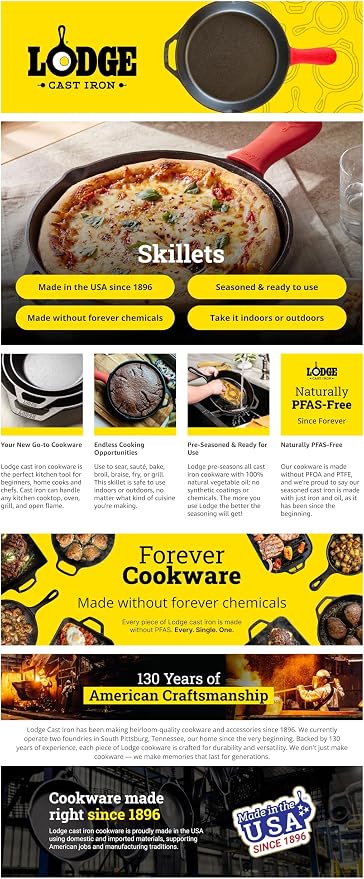
The Lodge Seasoned 12-Inch is the pan we recommend to everyone who has never owned cast iron. It's cast in the same South Pittsburg, Tennessee foundry that Lodge has operated since 1896, it ships with three layers of vegetable-oil seasoning already baked on (Lodge stopped using non-food-safe petroleum seasoning in 2002), and it has enough cooking surface to sear four chicken breasts, a steak, or a full family-size cornbread. The version we recommend includes a silicone hot-handle holder in the box — a small thing, but the difference between "usable straight out of the oven" and "second-degree burn on your palm."
Why 12-inch and not 10.25-inch as the overall pick? The extra 6.5 square inches of cooking surface is the difference between browning meat in one batch and browning in two, which is the difference between a good sear and a steamed grey exterior. If you can lift 8 pounds one-handed, you want the 12-inch. Lodge's teardrop handle is deliberately long to give you leverage on the weight — you're not just gripping, you're using the pan's fulcrum. Skillet plus food, at that size, comes out to 10–12 pounds hot; two-handed carry is fine and normal.
Downsides: the interior cooking surface is sand-cast, so it has a subtle pebbled texture. It will smooth out over the first six months of cooking as the seasoning fills the pores, but it's not the mirror-polished finish of a $175 Stargazer or a $200 Field Company. If you want smooth-from-the-factory, jump to the premium picks. If you want the pan 90% of American kitchens have, and the pan that will outlive you, it's this one. Cook a batch of cast iron pan-seared chicken with rustic herb sauce in it as your first meal and you'll understand why nobody has replaced this design in a century.
Best Value: Lodge Classic 10.25-Inch Cast Iron Skillet
Verdict: $29.90 · 5.5 lb · 10.25-inch cooking surface · pre-seasoned · lifetime warranty · silicone handle holder included. See it on Lodge / Amazon.
If you buy one pan and one pan only, the Lodge 10.25-Inch is probably the smarter choice than the 12-inch — it weighs 2.5 pounds less, it fits every standard burner and every home oven, and $30 makes it the highest-value single pan in American cookware. For decades this was the default gift for a college freshman moving into their first apartment; it still is. The bundled silicone hot-handle holder in the SKU we link is the version to buy — the identical pan without the sleeve is only $2 cheaper and you'll spend $9 on the accessory anyway.
The 10.25-inch measurement is the top-rim diameter; the flat interior cooking surface is closer to 8 inches. You can sear two thick pork chops, a chicken breast plus a side of vegetables, a 4-egg Spanish-style tortilla, or a single 8-inch cornbread. It's not big enough for family-size fajitas or a whole broken-down chicken, which is why we recommend the 12-inch as the "one pan" pick. But at 5.5 pounds it's the pan you actually reach for on a Tuesday night, and that's the pan that gets seasoned.
For a taste of what this pan does best, try savory thyme and lemon chicken skillet — a 30-minute one-pan dinner that finishes in the oven. The 10.25's smaller footprint concentrates the fond, and the pan-sauce reduces in half the time it would in a wider skillet. You can also make a 12-cup cornbread in it (bake at 425°F for 20 minutes; the crust that forms against the hot iron is the whole point) or cast iron peach cobbler with Georgia spices — cast iron holds heat so evenly the fruit sugars caramelize on the bottom without scorching.
Best for Beginners (and Lightest): Victoria 8-Inch Pre-Seasoned Skillet
Verdict: $17.61 · 3.4 lb · 8-inch cooking surface · pre-seasoned with flax oil · made in Colombia · long stay-cool-ish handle. See it on Amazon.
The Victoria 8-Inch is our pick for anyone who's been intimidated by cast iron in the past — nervous about the weight, nervous about seasoning, nervous about "ruining" the pan. At 3.4 pounds it's less than half the weight of the Lodge 12-inch. The Victoria comes pre-seasoned with a flax-oil-based factory finish, which is smoother out of the box than Lodge's sand-cast texture and less prone to sticking on eggs. The long handle stays reasonably cool during quick cooking (still put a mitt on it if it's been on the burner more than 5 minutes).
Victoria has been making cast iron in Colombia since the 1930s and their pans have a machine-polished interior finish that Lodge's economy line skips — a slight upgrade for the same money. The 8-inch is the perfect fried-egg pan, big enough for two eggs plus bacon, small enough that one person can wash it under the tap without wrenching a shoulder. The trade-off vs the 10.25-inch Lodge: you can't do a family cornbread in it, and searing more than a single chicken thigh means batching. For a starter, a nightstand-drawer weeknight egg pan, or a gift for a first-apartment cook, this is the right pan.
We recommended this over the Field Company No. 8 you'll see on other buying guides — Field is a beautiful pan, but at $200 it's a $180 premium over the Victoria for a similar pre-seasoned machine-polished finish. Field is the graduation gift; Victoria is the first pan.
Best Premium (Enameled): Le Creuset Signature Enameled Cast Iron 10.25-Inch
Verdict: $183.95 · 6.5 lb · 10.25-inch cooking surface · enamel-coated (no seasoning required) · made in France · lifetime warranty · dishwasher safe. See it on Le Creuset / Amazon.
Enameled cast iron is the concession category — you get 80% of cast iron's benefits (thermal mass, oven-safe, sear performance) without the seasoning obligation, and you give up 20% (the enamel doesn't build a slick non-stick patina, and you can't crank it as hot as bare iron without risk of thermal-shock cracking). The Le Creuset Signature 10.25-Inch Skillet is the reference product in the category and worth its $184 price if you already know you'll cook a lot of acidic dishes (tomato sauce, wine braises, citrus-marinated meats) that would strip the seasoning off a bare pan.
Le Creuset's Signature line uses the same interior sand-color enamel Le Creuset has used since 1925 — it's slightly porous, so it develops a light patina over years of use, and it shows off browning and fond beautifully. The exterior enamel comes in 20+ colors (we linked "Shallot" — a rusty pink — but every color performs identically). The lifetime warranty is meaningful; Le Creuset honors it, we've seen 30-year-old pans replaced. If you inherit one from a parent, keep it: Le Creuset resale is only slightly below retail on eBay.
Downsides beyond price: the enamel can chip if you drop the pan on a tile floor or bang metal utensils around inside it (use wood or nylon), and the pan is heavy for its size because the enamel adds weight on top of the iron. Also, the enamel changes what the pan is best at — Le Creuset is a braising and sautéing pan, not a searing pan. If you want the perfect steak crust, use bare iron; if you want tomato-butter braised chicken thighs that don't taste like the seasoning of your Lodge, use the Le Creuset. Most households eventually own both.
Best Made-in-USA Heirloom: Stargazer 12-Inch
Verdict: $175.00 · 6.9 lb · 12-inch cooking surface · pre-seasoned · fully machine-polished interior · made in USA (Pittsburgh, PA) · lifetime warranty. See it on Amazon.
The Stargazer 12-Inch is what the modern cast iron category has been slowly evolving toward: machined-smooth interior (no sand-cast texture, so eggs release the day you unbox it), a thoughtfully-angled long handle that's easier on your wrist than Lodge's, and a helper handle across from it that makes two-handed oven transfers safe. At 6.9 pounds vs the Lodge 12-inch's 8 pounds, it's noticeably easier to lift — Stargazer accomplished this with a slightly thinner wall, without giving up meaningful thermal mass. It's still a serious searing pan.
Why not the "Best Overall"? Two reasons: at $175 it's five times the price of the Lodge, and the Lodge will do 95% of the same work with a break-in period. Stargazer is the pan you buy when you've cooked on cast iron for a decade, you know what you love about it, and you're ready to spend for the version that's better in the small ways. If you're a serious home cook, or if this is a housewarming gift for someone who is, the Stargazer is a superior pan. If you're not sure whether you're going to become a cast iron person, buy the Lodge and try. You can always upgrade later.
Downsides: no silicone handle sleeve included (the handle stays hot; buy the $5 utensil-grade silicone holder separately). At 12-inch it's still too heavy for some cooks; Stargazer doesn't yet make a 10-inch. Availability is sometimes tight — Stargazer runs small batches out of a Pittsburgh foundry, and when they sell out they sell out for weeks.
What to look for in a cast iron skillet
Once you're past the top-five list, everything else in the category is a variation on a few specs. Here's the checklist that separates a good pan from a bad one:
Weight. More iron = more thermal mass = better sear = better retained heat when a cold steak hits the pan. Lodge 12-inch (8 lb) is the reference; lighter than 5 lb for a 10-inch pan means the sear will fade the moment food goes in. Heavier than 10 lb for a 12-inch means most people can't lift it comfortably.
Cooking surface diameter. The listed diameter is always the top rim, which is 1–1.5 inches wider than the actual flat cooking surface. A "12-inch" skillet has ~10.75 inches of flat surface. Match this to your burner (a 10.25-inch pan is the max for most 9-inch burners) and your storage.
Seasoning source. Pre-seasoning is standard now. Vegetable-oil-based (Lodge, Victoria, Stargazer) is what you want. Flax-oil (Field Company, Victoria) starts smoother but flakes if you crank the pan above 500°F. Avoid anything labeled "petroleum-based" (basically only vintage pans).
Handle design. Long straight handle = better leverage but harder to store. Curved handle = easier to grip but shorter lever arm. Helper handle (a second short handle opposite the main one) is a big quality-of-life upgrade at the 12-inch+ size. Silicone sleeve included is worth $5–10.
Wall thickness. A well-designed pan has thicker walls than floor (concentrates heat at the cooking surface). Thin-walled cheap pans warp under thermostat cycling. Look for even thickness in the product photos, and check reviews for words like "warped," "wobbles on stovetop," or "spins on glass top."
Cooking surface finish. Sand-cast (Lodge) is textured out of the box and smooths with use over 6–12 months. Machine-polished (Stargazer, Field, Victoria high-line) is smooth on day one. Both work; the difference is upfront non-stick behavior for the first year.
Enameled vs bare. Enameled skips seasoning, handles acidic foods (tomato, wine) without stripping, but doesn't sear as hot and can chip. Bare iron seasons up better, sears harder, needs a drying-and-oiling habit. Enameled is a braising pan; bare is a searing pan.
How to season and care for your skillet
Every modern cast iron pan ships pre-seasoned, so you can cook on it out of the box. What follows is the habit that turns a factory-seasoned pan into a heirloom pan.
First-week seasoning routine. Wipe a thin layer of neutral high-smoke-point oil (grapeseed, canola, or flaxseed — not olive) all over the pan, inside and out and on the handle. Wipe it back off until the pan looks almost dry. Place the pan upside-down on the middle oven rack (put a foil-lined baking sheet on a lower rack to catch drips) and bake at 450°F for one hour. Turn the oven off and let the pan cool inside. Repeat this cycle once a week for the first month; each cycle bakes a thin layer of polymerized oil onto the iron.
After every cook. Wash the pan while still warm with hot water, a stiff nylon brush or a chainmail scrubber, and — yes — a small amount of dish soap. The old "never use soap" rule was true when soap contained lye that stripped seasoning; modern pH-neutral dish soap is fine. Dry the pan immediately with a towel (cast iron rusts in minutes if left wet) and rub a few drops of oil across the interior surface with a paper towel. That's the whole ritual — 90 seconds, done.
For really stuck food. Fill the pan with an inch of water, bring to a boil for 5 minutes, then use the brush. Never soak overnight. If seasoning has flaked or the pan has orange rust spots, scrub the affected area with kosher salt and a damp cloth (or steel wool for severe rust), rinse, and re-season with the 450°F oven cycle above 2–3 times to rebuild.
Storage. Store dry, uncovered if possible. If you nest cookware, put a paper towel or a cloth between the cast iron and the pan on top — moisture trapped between iron and steel is rust waiting to happen. A cast iron rack that lets air circulate is $25 on the storage and organization shelf and worth it if you cook every day. Never store food in the pan — the acid in most food will strip seasoning overnight.
What not to do. Don't put a hot cast iron pan into cold water (thermal shock can crack it, especially enameled). Don't use a dishwasher on bare iron (rusts to a solid brown block in one cycle). Don't cook highly acidic dishes (long tomato braises, lemon reductions) in a young, thinly-seasoned pan — the acid will strip the seasoning and you'll taste it in the food. Once your pan is 2+ years old with deep, dark, glossy seasoning, acidic dishes are fine.
5 recipes that show off what cast iron does
The best way to learn what cast iron does that nothing else does is to cook a handful of dishes that specifically depend on its thermal mass and oven-transferable format. Here are five to start with:
1. Cast Iron Tomahawk Steak with Rosemary and Garlic — the reference application. A ripping-hot pan, a heavy steak, a butter-baste finish, and a rest. The sear you'll get is the reason people buy cast iron.
2. Cast Iron Pan Pizza with Honey-Balsamic Glazed Onions — Detroit-style deep-dish, baked in the 12-inch pan at 500°F. The crust that forms against the hot iron rim is the whole game.
3. Cast Iron Lemon-Garlic Chicken Thighs with Green Beans — sear on the stovetop, add the green beans, finish in a 400°F oven for 20 minutes. One pan, one hour, dinner for four.
4. Cast Iron Peach Cobbler with Georgia Spices — the pan holds heat so evenly that the sugars caramelize at the bottom without burning. Baked in a 10.25-inch pan, serves 6.
5. Cast Iron Campfire Skillet Chili with Ground Beef and Beans — the same pan works over hardwood coals as over your induction burner. This is the argument for owning cast iron over any other cookware.
Round out the collection with a batch of smoky cast iron blackened catfish with creamy collard greens when you want to see how much heat the pan can actually take — blackening is a technique specifically invented for cast iron, because no other pan survives 700°F.
Common pitfalls (things new owners get wrong)
- Cooking too cold, too fast. Cast iron takes 4–6 minutes on medium-high to fully preheat. Put a steak in a 90-second-warm pan and you'll steam it and the food will stick. Preheat, then oil, then food.
- Cranking a cold pan to max. The opposite mistake — an already-cold pan on max heat can develop hot spots and, in enameled pans, thermal-shock cracks. Ramp up over a few minutes.
- Overcrowding. Cast iron's superpower is the sear. If you fill the pan with 8 chicken thighs, they'll steam instead of brown. Cook in batches; the pan holds the heat.
- Soaking after cooking. The single fastest way to rust a pan. Wash and dry within a few minutes of finishing dinner.
- Storing wet or with food in it. Both accelerate rust. The oiled paper-towel wipe after every wash is the whole preventive.
When NOT to buy cast iron
Cast iron is genuinely the wrong pan if: you have a wrist or shoulder injury that makes lifting 5+ pounds unpleasant; you cook mostly acidic Mediterranean-style dishes (in which case go straight to enameled cast iron or a stainless tri-ply); you're renting a place with a glass-top electric stove and you're worried about scratching it (cast iron is heavier and rougher than the stovetop is designed for — protect it with a silicone mat or upgrade to an induction-friendly stainless pan); or you're the kind of cook who wants clean up in the dishwasher without thinking about it. For all other cases, cast iron will still be your best kitchen investment per dollar.
FAQ
Do I really need to season a new cast iron skillet? Almost all modern cast iron ships pre-seasoned, so you can cook on it out of the box. But that factory seasoning is thin — building it up with 3–4 rounds of oil-and-heat over the first few weeks makes the pan slicker, darker, and much less prone to sticking. Rub a thin layer of neutral high-smoke-point oil (grapeseed, canola, or flaxseed) all over the pan, wipe until it looks almost dry, then bake upside down at 450°F for one hour. Repeat weekly for a month.
Can I use soap on cast iron? Yes — the old "never use soap" rule was true when soap contained lye that stripped seasoning. Modern dish soaps are pH-neutral and will not hurt a properly seasoned pan. Wash with warm water, a dab of soap, and a stiff brush or chainmail scrubber. Dry immediately (cast iron rusts fast when wet) and rub a few drops of oil across the cooking surface. If food is really stuck, boil an inch of water in the pan for 5 minutes to loosen it — never soak.
Cast iron vs enameled cast iron — which should I buy first? Buy bare cast iron first — it's cheaper, sears meat and cornbread better, and teaches you the fundamentals of seasoning and heat control. Enameled cast iron (Le Creuset, Staub, Lodge Enameled) is essentially a Dutch oven — better for braises, stews, and acidic tomato sauces that would strip a bare pan's seasoning. Most home cooks own both eventually, but if you're picking one, a $25 Lodge Classic 10.25-inch skillet is the single highest-value pan in American kitchens.
Is cast iron actually healthy or does it leach iron into food? It leaches a small amount of iron into acidic or slow-cooked foods — usually 2–5mg per serving, which is roughly 15–30% of your daily iron needs. For most people this is a mild nutritional bonus (especially useful for people with iron-deficiency anemia or vegetarians who don't eat heme iron). People with hemochromatosis (iron overload) should limit cast iron cooking. Non-acidic quick cooking (steak, cornbread, sautéed vegetables) transfers almost no iron.
What size cast iron skillet should I buy? A 10.25 or 12-inch skillet is the sweet spot for a first pan — big enough to sear 2–4 chicken breasts or a family-sized cornbread, small enough to lift with one hand. The 12-inch adds cooking surface but weighs 8 pounds vs the 10.25-inch's 5.5 pounds; if you have wrist issues or cook mostly for two, get the smaller one. Skip the 8-inch as a starter — it's too small for a full family meal and only makes sense as a second pan for eggs.
Sources and further reading
Testing methodology for this guide draws on independent reviews from Serious Eats — The Best Cast Iron Skillet (Kenji López-Alt's long-running comparison of Lodge, Victoria, and Field Company), America's Test Kitchen — Traditional Cast Iron Skillets (which has consistently rated the Lodge Classic 10.25 as its best-buy pick since 2015), and the Lodge Cast Iron Cleaning and Care Guide (the manufacturer's own seasoning + care protocol, the source for the 450°F oven cycle above). If you're setting up a kitchen from scratch, our best chef's knife 2026 buying guide is the companion piece — a good knife and a good cast iron are the first two purchases that separate a working kitchen from a supplied one.
Frequently asked questions
Do I really need to season a new cast iron skillet?
Can I use soap on cast iron?
Cast iron vs enameled cast iron — which should I buy first?
Is cast iron actually healthy or does it leach iron into food?
What size cast iron skillet should I buy?
Sources
Recipes to try with cast iron
Put your gear to work — save any recipe to My Recipes (no account needed) and send its ingredients to Instacart in one tap.


Shop cookware on AislePrompt →Browse the full kitchen shop →
One pan, one shopping list, one tap.
Ask our AI for one-pan weeknight dinners — it totals the ingredients and sends the cart to Instacart.
Get one-pan dinners →