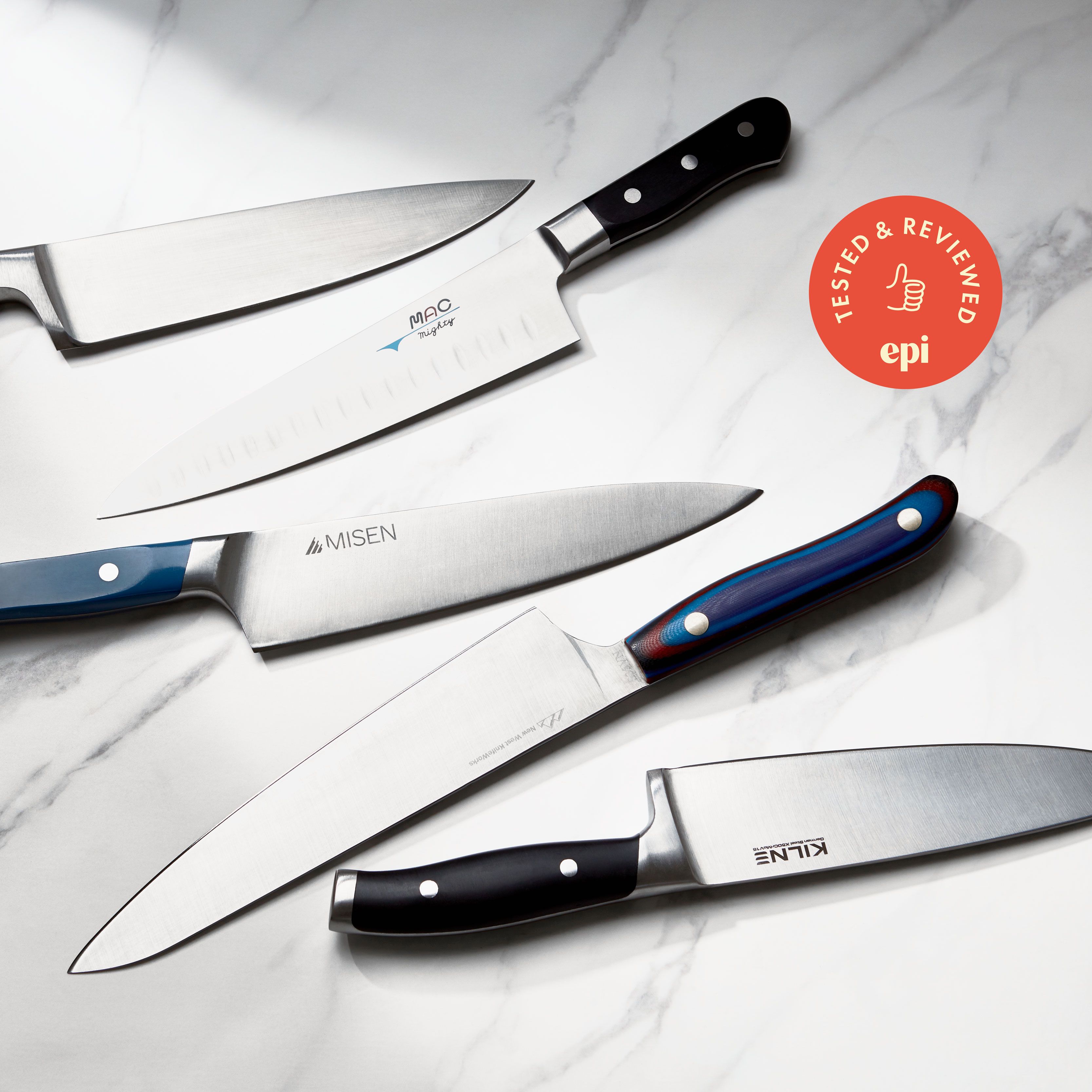
Best Kitchen Knives in 2026: Top Picks + Buying Guide
Five picks from budget to premium, the steel and edge specs that actually matter, and the care rules that decide whether a knife lasts 18 months or 30 years.
The best kitchen knife for most home cooks in 2026 is the Victorinox Fibrox Pro 8" Chef's Knife, a stamped, NSF-certified X50CrMoV15 blade (HRC ~56) that ships sharp and resharpens easily at home.
Where to buy these picks
Affiliate links: we may earn a commission on qualifying Amazon purchases. Policy. Prices show only when checked in the last 24 hours.
- Best Overall: Victorinox Fibrox Pro 8" Chef's Knife $47.00 at Amazon, Check price on Amazon →
- Best Value: Mercer Culinary M22608 Millennia 8" $30.98 at Amazon, Check price on Amazon →
- Best for Beginners: PAUDIN 8" Chef's Knife $29.99 at Amazon, Check price on Amazon →
- Best Premium: Shun Classic 8" Chef's Knife $140.15 at Amazon, Check price on Amazon →
- Budget Pick: DDF iohEF Santoku 7" $19.99 at Amazon, Check price on Amazon →
Which kitchen knife fits you
| Your situation | Buy | Why | Buy link |
|---|---|---|---|
| One knife that does nearly everything | Victorinox Fibrox Pro 8" Chef's Knife $47.00 | Stamped X50CrMoV15 (HRC ~56), 7.4 oz, NSF-certified; ships sharp and resharpens easily at home | Amazon → |
| Cheapest knife that still performs | Mercer Culinary M22608 Millennia 8" $30.98 | The culinary-school knife: non-slip Santoprene handle with a finger guard; thinner blade flexes on hard chops | Amazon → |
| A gift, or someone's first real knife | PAUDIN 8" Chef's Knife $29.99 | Forged 7Cr17MoV (HRC ~58), razor-sharp out of the box, gift box and knife guard | Amazon → |
| Precision cuts, and you will look after the edge | Shun Classic 8" Chef's Knife $140.15 | VG-MAX core in Damascus cladding (HRC 60–61), 16° edge per side; hand-wash only, never on bone | Amazon → |
| Mostly cutting vegetables | DDF iohEF Santoku 7" $19.99 | 7" santoku, 7Cr17MoV (HRC ~57); granton dimples keep slices from sticking to the blade | Amazon → |
Quick answer
Which kitchen knife fits a different budget or need?
The best value is the Mercer Culinary M22608 Millennia 8", the culinary-school standard with a non-slip grip and finger guard. For beginners, the PAUDIN 8" Chef's Knife is a forged 7Cr17MoV blade (HRC ~58) that arrives razor-sharp. The Shun Classic 8" Chef's Knife is the premium pick, a VG-MAX core in Damascus cladding (HRC 60-61) with a 16° edge, and the DDF iohEF Santoku 7" is the budget pick, a granton-edge blade for vegetable prep.
The three kitchen knives you actually need are an 8-inch chef's knife, a 3.5-inch paring knife, and a serrated bread knife. Buy them open-stock instead of a 17-piece block set — you'll get sharper steel and lifetime-class construction for the same money, and you'll skip the mediocre steak knives and dull utility blades that pad most boxed sets.
What you'll use with it
Every edge dulls. The sharpener guide’s pick is a combination whetstone with an angle guide, which gives a sharper edge than an electric machine and removes less steel. Read the knife sharpener guide →
Knife sharpener guide’s top pick: Sharp Pebble Premium Whetstone, 1000/6000 Grit, with Angle Guide $37.97 at Amazon, Check price on Amazon →A serrated bread knife is the second knife to buy after a chef’s knife: it saws through crusty bread, ripe tomatoes and cake layers without crushing them. Read the bread knife guide →
Bread knife guide’s top pick: Mercer Culinary M23210 Millennia 10-Inch $17.49 at Amazon, Check price on Amazon →
Introduction: the three knives that replace a 17-piece set
Walk into any big-box store and you'll see boxed knife sets stacked floor to ceiling — 12, 15, 17 pieces — each promising to outfit your kitchen for life. They don't. The chef's knife inside is mediocre, the steak knives are stamped sheet steel, and the "utility" blades duplicate work a properly-sized paring knife handles better. You're paying for a wooden block and the illusion of completeness.
The honest answer, supported by America's Test Kitchen's long-running knife reviews, Serious Eats, and basically every working line cook we've ever worked with, is this: buy three good knives open-stock and you cover 95% of home prep.
| Knife | Use case | Spend |
|---|---|---|
| 8-inch chef's knife | Onions, herbs, proteins, anything blocky | $25–$160 |
| 3.5-inch paring knife | Hulling strawberries, peeling shallots, deveining shrimp | $10–$40 |
| Serrated bread knife (8–10 inch) | Crusty bread, tomatoes, soft fruit | $15–$30 |
Add a honing steel and a pair of kitchen shears — both live under /k/utensils — and you're done. The full set typically lands between $80 and $230 depending on tier. Browse the full category at /k/knives.
Why does this matter for cooking? Because the moment your chef's knife is sharp enough to drop through an onion without crushing the cell walls, every other step in your cooking gets easier. Onion pieces cook evenly. Garlic releases its sulfur compounds cleanly instead of bruising. Herbs stay green instead of going gray. Try a knife-heavy recipe like Garcia's Classic Guacamole or Tomato and Basil Bruschetta with a dull blade vs. a sharp one — same recipe, completely different result.
Our Top 5 Knife Picks
#1 — Best Overall: Victorinox Fibrox Pro 8" Chef's Knife
This is the working line cook's knife. Stamped (not forged) high-carbon stainless from Switzerland, NSF-certified, weighs a feathery 7.4 oz, and ships sharp out of the box. The Fibrox handle is textured polypropylene — not pretty, but grippy when wet and dishwasher-safe (we still hand-wash it; see why below). Cook's Illustrated has named it their winner since 2008, and Wirecutter has held it as a top pick across multiple revisions.
Why it wins: the geometry is right (mild belly for both rock-chopping and push-cutting), the steel is X50CrMoV15 (HRC ~56) which is soft enough to resharpen on a $30 whetstone but holds an edge through a full Sunday meal-prep session, and the price floor means you stop being precious about it. You'll happily butterfly a chicken, hack through a butternut squash, and dice a 5-lb bag of yellow onions for a Black Sesame Chicken Stir Fry with Broccoli without thinking twice.
What to know: stamped construction means slightly less heft than a forged knife. If you prefer a knife that "falls through" food under its own weight, look at the Wüsthof Classic or the Dalstrong Gladiator below.
#2 — Best Value: Mercer Culinary M22608 Millennia 8"
Mercer is the knife every culinary school in North America hands its first-year students. The Millennia uses Japanese-imported high-carbon Taiwanese steel, an ergonomic Santoprene-over-polypropylene handle, and a generously curved belly. At ~$21 it costs less than dinner for two, and it'll outlast most of the $80 knives sold on Instagram.
Why it wins: the handle. Mercer molded a rubberized non-slip grip with a finger guard that genuinely protects your knuckles when you're slicing through a wet pile of Spring Garden Ratatouille prep. Edge retention is mid-pack but the soft steel hones back to sharp in 30 seconds on a ceramic rod.
What to know: the blade is thinner than the Victorinox and flexes slightly under hard chops — fine for vegetables, less ideal for splitting bone-in chicken. Pair with the Mercer M23210 10" wavy-edge bread knife for a sub-$40 starter pair.
#3 — Best for Beginners: PAUDIN 8" Chef's Knife
PAUDIN is the knife to put in the hands of someone who's never owned a real chef's knife. It's a forged 7Cr17MoV stainless blade (HRC ~58), comes razor-sharp from the factory (most users notice immediately), and ships in a magnetic gift box with a knife guard. At ~$24, it's cheap enough to be a gift but built well enough to be your knife for a year.
Why it wins: the out-of-the-box edge is genuinely impressive. The Pakka-wood handle has a comfortable bolster that teaches new cooks the proper pinch grip naturally. It feels expensive in the hand.
What to know: the soft 7Cr17 steel dulls a hair faster than the Victorinox under heavy use. If you cook nightly, plan on honing every 3-4 sessions and sharpening every 4-6 months. Perfect first knife; intermediate cooks usually graduate to the Victorinox or a real Japanese gyuto after a year.
#4 — Best Premium: Shun Classic 8" Chef's Knife
When you want a knife you'll feel through every cut: the Shun Classic. Hand-finished in Seki, Japan, the blade is a VG-MAX core sandwiched in 32 layers of Damascus stainless cladding (HRC 60-61), with a D-shaped Pakkawood handle that suits right-handed users (a left-hand version exists). At a 16° edge angle per side it's roughly half as obtuse as a typical German knife, which means it slides through food rather than crushing it.
Why it wins: it makes sushi-grade precision work — fish sashimi, paper-thin garlic for Hoisin-Tofu Stir-Fry with Bok Choy, pristine julienne for Vietnamese Fresh Spring Rolls — feel almost effortless. The Damascus cladding isn't decorative; the layered structure reduces stiction on starchy ingredients so cucumber slices don't fuse back together on the blade.
What to know: harder steel chips if you twist it sideways or hit bone. Never use it on bones, never lever it under a thick squash skin, and never put it in a dishwasher. Sharpen on a Japanese waterstone (1000/4000 grit) or send it back to Shun's free annual sharpening service.
#5 — Budget Pick: DDF iohEF Santoku 7"
If you cook mostly vegetables and want a Japanese profile without paying Shun money, the DDF iohEF Santoku is the smart move. 7CR17MoV Japanese stainless (HRC ~57), 7-inch blade, hollow-ground granton edge (the dimples that prevent food from sticking), non-slip Pakka-wood handle, and a $20 price tag that's hard to argue with.
Why it wins: the granton edge is genuinely useful — slice a Garden-Fresh Tomato & Zucchini Minestrone Soup prep load and the zucchini won't glue itself to the blade. The flat profile of a santoku rewards push-cutting (down-and-forward, no rocking), which is the more efficient motion for most vegetable work anyway.
What to know: at 7" with a flat profile, a santoku doesn't replace a chef's knife for protein work. It's the perfect "second knife" if you already own a Victorinox and want a dedicated vegetable blade. Don't make it your only knife.
Which One Should You Buy If…
Every pick is a single knife, because most cooks need one good chef's knife before anything else. Choose by situation:
- If you want one knife that does nearly everything: Victorinox Fibrox Pro 8". A light 7.4 oz blade that ships sharp, with a handle that stays grippy when wet.
- If you want the cheapest knife that still performs: Mercer Culinary Millennia 8". The culinary-school knife, with a non-slip handle and a finger guard.
- If it is a gift or someone's first real knife: PAUDIN 8" Chef's Knife. Razor-sharp out of the box and packed in a gift box with a knife guard.
- If you want precision cuts and will look after the edge: Shun Classic 8". A VG-MAX core at a 16° edge that slides through food. The handle suits right-handers, and a left-hand version exists.
- If you mostly cut vegetables: DDF iohEF Santoku 7". The dimpled granton edge keeps slices from sticking to the blade.
- If you are tempted by a 17-piece block set: three open-stock knives instead. An 8-inch chef's knife, a 3.5-inch paring knife and a serrated bread knife give you sharper steel for the same money.
What to look for: blade steel, edge angle, handle, balance, tang
Knife marketing throws around words like "Damascus," "VG-10," and "full tang" as if they're self-evidently good. They're not — each is a tradeoff. Here's how to read a spec sheet honestly.
Blade steel: hardness vs. resilience
Steel hardness is measured on the Rockwell C scale (HRC). The higher the number, the harder the steel, the longer it holds an edge, and the more brittle it is.
| Steel type | HRC | Edge retention | Re-sharpenability | Toughness |
|---|---|---|---|---|
| German X50CrMoV15 (Wüsthof, Henckels) | 54–58 | Moderate | Easy at home | High — won't chip |
| Japanese VG-10 / VG-MAX (Shun, MAC) | 60–61 | High | Needs waterstones | Lower — will chip if twisted |
| Japanese SG2 / R2 powder steel (Misono, Tojiro) | 62–64 | Very high | Pro service recommended | Brittle |
| Chinese 7Cr17MoV (PAUDIN, DDF) | 56–58 | Moderate | Easy | High |
| Swiss X50CrMoV15 (Victorinox) | 56 | Moderate | Easy | Very high |
Plain English: if you're a beginner or a high-volume cook who'll occasionally hit a chicken bone, stay in the HRC 56-58 range (Victorinox, Mercer, PAUDIN, Wüsthof). If you're a precision-minded cook who'll respect the blade and learn to sharpen on stones, HRC 60+ rewards you.
Edge angle: Japanese 15° vs German 20°
The bevel angle — measured per side — determines how thin the cutting edge is. Japanese knives are typically ground at 15° per side (30° inclusive); German knives at 20° per side (40° inclusive).
A thinner edge cuts more cleanly through soft food (think tomato skin, fish flesh, herbs) and requires less downward force. A thicker edge is more durable and forgiving when you hit something hard (frozen butter, a forgotten cherry pit).
A useful rule: if more than 70% of your prep is vegetables, fish, and herbs, the Japanese 15° pays off. If you butcher whole chickens and split squashes, the German 20° survives longer.
Handle material: pakkawood, micarta, polypropylene, G-10
- Pakkawood (resin-impregnated birch): warm, attractive, durable, dishwasher-vulnerable. Used by Shun, Wüsthof Classic Ikon, PAUDIN.
- Micarta (linen + resin): grippy when wet, takes a worn-in patina, indestructible. Used by Mac, some Dalstrong models.
- Polypropylene / Santoprene (Victorinox Fibrox, Mercer Millennia): NSF-grade, dishwasher-safe (in theory — we still hand-wash), grippy under fish slime and chicken juice. Ugly, but functional.
- G-10 (fiberglass laminate): the strongest synthetic, used on Dalstrong's tactical-feeling Shogun and Gladiator lines. Indestructible.
If you're working a wet station for hours, polypropylene or G-10 wins. If your knife mostly sits in a magnetic strip looking nice between Sunday cooking sessions, pakkawood is fine.
Balance + weight
Pick the knife up by the bolster (the thick collar between blade and handle). It should balance roughly at that point — neither blade-heavy (tips forward dangerously when you set it down) nor handle-heavy (you have to push harder to cut). The Victorinox Fibrox is famous for being almost perfectly balanced at the heel. Wüsthof Classics are deliberately blade-heavy so they fall through food under their own weight. Both philosophies work; pick what feels right in your hand at the store.
Full tang vs. partial tang
The "tang" is the steel that extends from the blade into the handle. A full tang runs the entire length and width of the handle, with the scales riveted to either side — strongest, but heavier. A partial (or "rat-tail") tang is a thin steel rod glued into the handle. Avoid partial-tang knives for any cutting harder than a soft apple — they snap at the joint under lateral force.
Visual check: look at the handle from above. If you see steel sandwiched between two scales, it's full tang. If you see only the handle material, it's partial.
How to care for your knives so they last decades
A properly-cared-for Victorinox lasts 30+ years. A dishwasher-abused one is dead in 18 months. The rules are simple and non-negotiable.
1. Hand-wash immediately after use. Warm water, a drop of dish soap, a soft sponge. Dry with a towel and put it away. Letting acidic food (lemon, tomato, vinegar) sit on the blade pits the steel.
2. Never the dishwasher. Detergent is abrasive, the high-pressure water bangs the edge against the rack, and the heat warps Pakkawood handles. Even "dishwasher-safe" Fibrox handles outlast the dishwasher abuse by a fraction of their hand-wash lifetime.
3. Cut on wood or polypropylene only. Glass, marble, and granite cutting boards destroy edges within months. End-grain wood (maple, walnut) is gentlest; edge-grain wood (most boards) is fine; quality polypropylene is dishwasher-friendly and gentle. Browse cutting surfaces alongside the knife category at /k/knives.
4. Hone before every session. A honing steel doesn't sharpen — it realigns the microscopic teeth of the edge that bend during use. 5-8 strokes per side, 20° angle for German knives, 15° for Japanese. Should take 10 seconds. Skip a week of honing and you'll think your knife is dull when it actually just needs straightening.
5. Sharpen 1-2x per year (more if you cook nightly). Use a Japanese waterstone (King or Shapton, 1000/4000 grit), a guided system (Work Sharp, Spyderco Sharpmaker), or send the knife out for service. Pull-through "V-sharpeners" grind away too much steel and ruin the geometry — avoid them.
Sharpening vs. honing: what's actually happening
This trips up almost every home cook. They're different operations.
Honing is mechanical realignment. Your knife's edge — at 15° or 20° per side — is just dozens of microscopic teeth. Cutting bends those teeth slightly to one side. A honing rod (steel or ceramic) pushes them straight again. No metal is removed. Frequency: every 2-3 sessions.
Sharpening is metal removal. Over months of use, those teeth break off entirely. The edge becomes rounded. Honing can't fix this — you have to grind away the rounded steel until you reveal a fresh, sharp edge underneath. Use a whetstone, guided system, or professional service. Frequency: 1-2x per year for daily-use knives.
The "tomato test" tells you which you need: a sharp knife slices a ripe tomato cleanly under its own weight. If your knife crushes or skids, try honing first. If 10 strokes per side on a steel doesn't fix it, you need to sharpen.
Storage: magnetic strip > block > drawer
Three options, ranked best to worst.
1. Magnetic strip on the wall. Knives stay dry (no trapped moisture), edges don't touch anything, and every blade is visible at a glance. Mount it above the counter near your prep area. The only downside: visible blades are a no-go in households with toddlers.
2. In-drawer knife organizer. A slotted bamboo tray that lives in your top drawer. Edges stay protected, knives stay hidden from kids. Second-best option if you can't mount hardware (renters).
3. Knife block on the counter. Looks tidy, but traps crumbs and moisture in the slots, dulls the edges over years of repeated insertion against the wood, and the block itself takes up valuable counter space. Acceptable, but not optimal.
Never store knives loose in a drawer where they'll bang against forks, spoons, and other knives. Every contact rolls the edge.
Common mistakes that ruin good knives
After fielding thousands of "is my knife dead?" questions, these are the top recurring failure modes:
- Twisting the blade in food. Pulling a chef's knife sideways to lever apart a squash chunk chips the edge — especially Japanese steel. Lift the knife, reposition, push straight down.
- Hitting bone. Even German knives chip on chicken thigh bones, pork chops, beef ribs. Use a cleaver or kitchen shears for bone work — both live in /k/utensils.
- Cutting frozen food. Frozen butter, frozen ground meat, ice cubes — all snap or chip the edge. Thaw first, or use a serrated knife.
- Storing acidic foods in contact with the blade. Slicing a lemon and leaving the knife on the cutting board for an hour will pit the steel. Wash and dry within minutes of use.
- Using a pull-through sharpener. They grind a fresh bevel at whatever angle the manufacturer chose (usually 20°, even for Japanese knives ground at 15°), removing 5x more steel than necessary and ruining the original geometry. One pass with a pull-through and your Shun isn't a Shun anymore.
- Storing in a humid drawer. Even stainless steel rusts if it sits wet against other wet metal. Dry fully before storing.
When NOT to spend more on a knife
A Shun Classic is a beautiful tool, but it's the wrong knife for some kitchens. Skip the premium tier if any of these apply:
- You cook fewer than 3 times a week. A $48 Victorinox at low use will outlast you. Spending $150+ won't make weekly stir-fry meaningfully better.
- You have a toddler or teenage assistant who'll handle the knife. Hard steel chips when dropped. Stick with Victorinox or Mercer.
- You bone out chickens or split squashes routinely. German-style soft steel survives; Japanese hard steel doesn't.
- Your cooking is mostly proteins and sauces, not vegetables. A premium Japanese knife shines on precision vegetable work — for a chuck roast and pan sauce kitchen, the Mercer Millennia is honest and right-sized.
- You won't learn to sharpen. A dull premium knife is worse than a sharp budget knife. Either commit to a waterstone, a guided system, or annual professional service — or buy a knife you can hone back to life with a $15 ceramic rod.
Where to start if you're building from zero
If you have $80 to spend total, here's the kit:
- Victorinox Fibrox Pro 8" Chef's Knife
- Victorinox Fibrox 3.25" Paring Knife
- Victorinox Fibrox 10.25" Wavy Bread Knife — $44 (the Mercer M23210 at $16 is the budget alternative)
- Honing rod (ceramic, 10")
- End-grain maple cutting board — $40-60
Add the bread knife and the rod after the chef's knife if you have to stage purchases. The single biggest upgrade for any home cook is the chef's knife — get it first, get it sharp, and use it for a month before you decide what else you need. Then start cooking — try a Best Korean Bibimbap or an Italian-Inspired Caprese Salad, both of which lean hard on knife work and reward a sharp blade immediately.
Related Buying Guides
- Best bread knives: serrated picks from budget to premium, and the scallop pattern that keeps a loaf from crushing.
- Best kitchen utensil sets: sets compared on silicone, nylon and stainless, plus the eight tools you really need.
Sources
- America's Test Kitchen — Chef's Knife Reviews
- Serious Eats — The Best Chef's Knives
- NYT Wirecutter — The Best Chef's Knife
- Manufacturer specifications: Victorinox, Mercer Culinary, Shun, PAUDIN
- Knife construction terminology: ANSI Z71.1 and ISO 8442 cutlery standards
A well-chosen, well-cared-for kitchen knife is a 30-year purchase. Spend honestly, hone often, and the same 8-inch blade that diced your first onion will still be the right tool a decade from now.
Frequently asked questions
What three knives do I actually need?
Are Japanese knives better than German knives?
How often should I sharpen my knives?
Can a knife go in the dishwasher?
How do I store knives safely?
How we picked
This guide is researched, not bench-tested. We shortlisted products from the AislePrompt kitchen catalog and compared them on published manufacturer specifications (such as materials, size and capacity), on what owners report in published reviews, and on any third-party sources linked in this guide. The guide was drafted with AI assistance. We did not run lab or hands-on tests of these products, so any measurement quoted here comes from the manufacturer or a cited source. Prices change often: use the “Check price on Amazon” buttons for today’s price.
Recipes to try with sharp knives
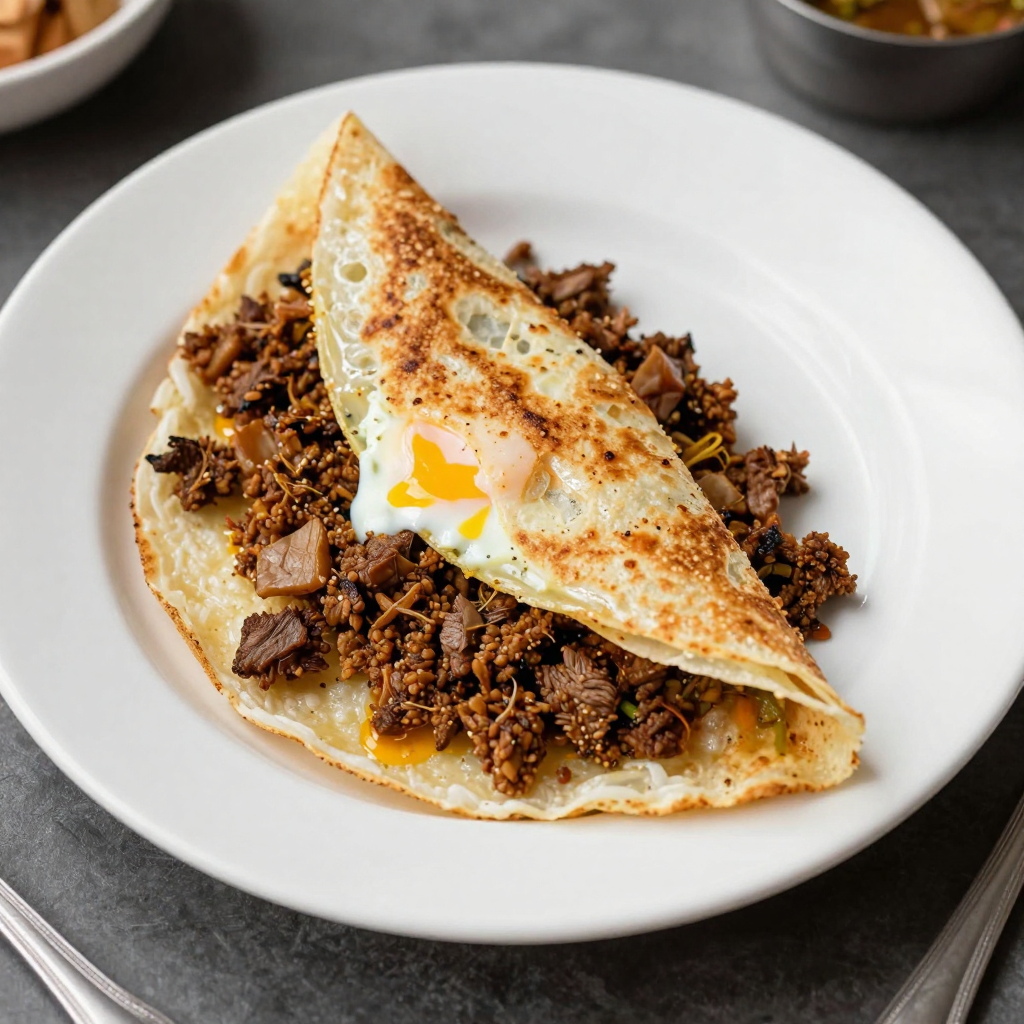
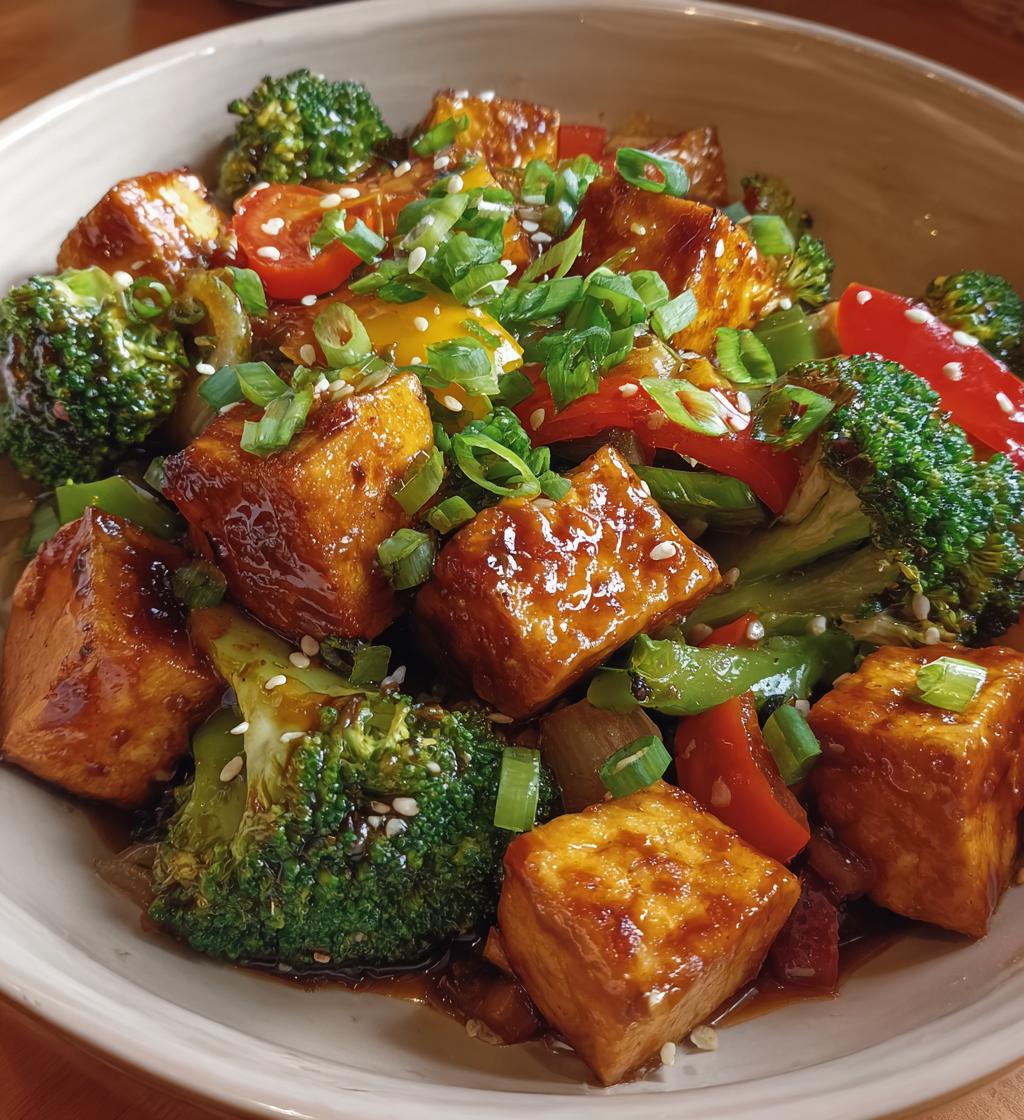
Put your gear to work — save any recipe to My Recipes (no account needed) and send its ingredients to Instacart in one tap.



Shop knives & cutting on AislePrompt →Browse the full kitchen shop →