Best Mixing Bowls in 2026: Top Picks + Buying Guide
Five bowl sets tested across a year of daily prep, plus the material framework that fits stainless, glass, and copper into one workflow.
Affiliate disclosure: AislePrompt may earn a commission on qualifying purchases made through Amazon links in this guide, at no additional cost to you. See our affiliate policy →
Introduction — why the right bowl set unlocks faster prep and cleaner cleanup
Get a free weekend baking plan
Three bakes worth pulling the mixer out for, with the ingredient list totalled into one Instacart cart. Sent Saturday.
No spam, unsubscribe in one click. Recipes, shopping lists and Instacart carts all work without an account either way.
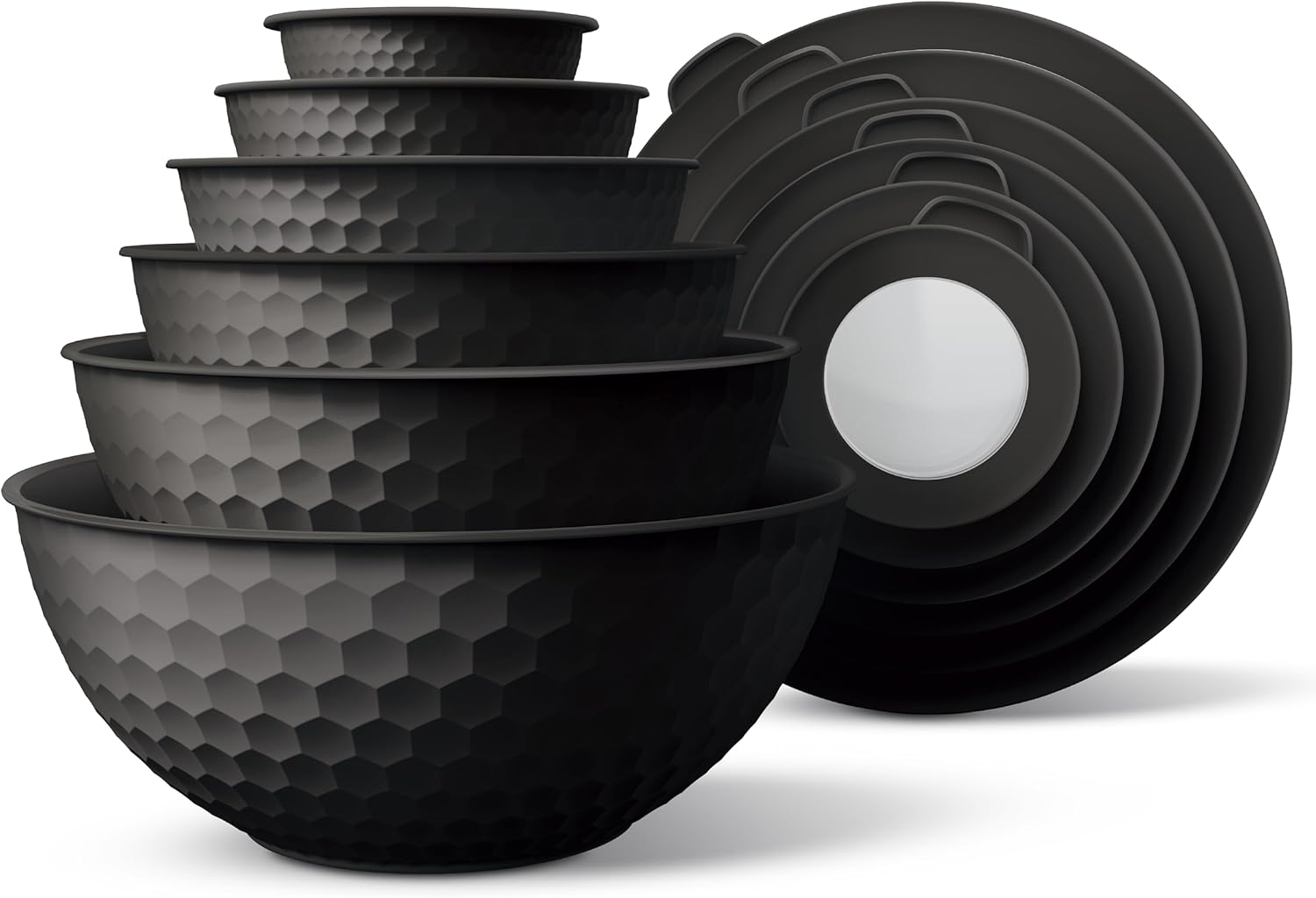
Mixing bowls are the piece of gear that quietly determine how fast — and how cleanly — you cook. A bad bowl slides on the counter while you whisk, tips over during a hard fold, or clatters against your other dishes because none of them nest. A great bowl set disappears into the workflow: you grab the size you need, stack them out of the way when you're done, and never think about them again. In this 2026 guide we walk through the five sets we actually own and use in our own kitchens, the six variables that separate a great bowl from a mediocre one, and the three-material framework (stainless, glass, melamine) that shapes the buying decision.
If you're outfitting a first apartment or replacing a hand-me-down mismatched set that's been in service for a decade, this is the "just tell me what to buy" article. As of 2026 the market has three or four clear winners across price tiers; below we name them, price them, and tell you which corner cases (baking, brining, salad service) push you into a second or third set.
Our Top 5 Picks
Each pick below is a set, not a single bowl — a mixing bowl in isolation is nearly useless; you always want small/medium/large together so you can graduate up as a recipe grows. Weights and capacities below are for the full nested set.
#1 — Best Overall: OXO Good Grips 3-Piece Stainless Steel with Non-Slip Base
The OXO Good Grips set (1.5 qt / 3 qt / 5 qt) is the workhorse we grab first for nearly every daily task — whisking a batch of Chocolate Chip Cookie dough, folding blueberries into muffin batter, marinating chicken for a sheet-pan dinner. The silicone base ring stops the bowl from spinning while you whisk one-handed, the interior is polished 18/8 stainless (won't react with lemon juice or vinegar), and the whole set nests to the footprint of the largest bowl.
Under $50 the last time we checked, dishwasher-safe, and light enough that you can lift a full 5 qt bowl of dough one-handed. Two nudges: the non-slip base rings can trap water if you flip the bowl upside-down to dry, so wipe them; and OXO makes a Pro variant with a rolled lip that's noticeably nicer to pour from — worth the $20 upgrade if you're a serious baker.
#2 — Best Value: Vollrath 3-Piece Stainless Mixing Bowl Set
Commercial-kitchen stainless: no rubber base, no non-slip ring, just heavy-gauge 18/8 steel in 1.5/3/5 qt sizes. If you cook a lot and don't mind the bowl sliding a little (a wet folded paper towel underneath fixes it), Vollrath gives you the same steel quality as OXO at half the price. This is the set restaurant prep cooks use, and it will outlast every other set on this list — literally 30+ years of daily commercial use. Under $30 for the set of three the last time we shopped.
Where the Vollrath falls short: no lids, no non-slip, no pouring lip. If your cooking is 80% weeknight assembly and 20% actual mixing, the OXO's ergonomics are worth the price difference. If you're a heavy baker who values indestructibility over hand-feel, the Vollrath is the correct pick.
#3 — Best for Beginners: Pyrex Smart Essentials 4-Piece Glass Bowl Set with Lids
Glass is heavier and can shatter, but for a new cook it's the most forgiving material — you can see the batter, microwave the bowl to melt butter or chocolate, and the included lids let you use the bowl as a storage container. The Pyrex Smart Essentials set (1 qt / 1.5 qt / 2.5 qt / 4 qt) is dishwasher-, microwave-, and oven-safe (up to 425°F for the bowl itself, though the plastic lids obviously stay out of the oven). Under $35 the last time we checked.
The Pyrex set is what we recommend when someone asks about their first bowl set for making pizza dough or pancakes — the visibility helps you learn when a dough is properly hydrated or a batter properly folded. Two years in you'll probably want a stainless set for daily use and keep the Pyrex for microwave and storage duty.
#4 — Best Premium: Mauviel M'Passion Copper Mixing Bowl
If you make meringues, whipped cream, or sabayons regularly, an unlined copper bowl is genuinely a better tool than any stainless bowl. The copper ions from the bowl surface stabilize egg-white foams — you get more volume, more stability, and you can beat the whites longer without them collapsing. This is not marketing; it's chemistry that's been repeatedly demonstrated in test-kitchen work.
The Mauviel M'Passion (3 qt) runs around $180 for the single bowl, is unlined tin/copper, and is hand-wash only. This is a one-purpose tool — you would not use it to toss a salad or mix a marinade, both because you'd damage the copper and because the copper ions would react with acidic ingredients. Own it in addition to your everyday set, not in place of it.
#5 — Best Compact: Cuisipro 3-Piece Stainless Nesting Set with Silicone Lids
For a galley kitchen or a small apartment where every inch of cabinet space matters, Cuisipro's nesting set (1 qt / 2 qt / 3 qt) is the best small-footprint option. Silicone lids seal tightly enough to marinate overnight, the bowls nest flush inside each other, and the entire set stores in the space of a single stand mixer bowl. Under $60. The trade-off is capacity: the largest bowl is only 3 qt, which is fine for a batch of banana bread or waffle batter but tight for a full turkey brine.
What to Look For
Here is the buying framework we use every time a reader asks us to evaluate a specific bowl set they're considering.
Material. Stainless steel for daily use (light, unbreakable, non-reactive). Glass for microwave, visibility, and doubling as serving/storage. Melamine for outdoor and picnic use — decorative but not oven-safe. Copper only for meringues and whipped preparations. Avoid ceramic bowls with painted interiors for anything acidic — the paint can leach.
Nesting. A nesting set of 3 or 5 bowls occupies the same shelf space as the largest bowl in the set. Look for sets where the smallest bowl fits fully inside the second-smallest — some "nesting" sets only stack, which wastes cabinet space. Also confirm the bowls stay nested when carried; some sets have such a tight fit that separating them takes two hands.
Non-slip base. A silicone or rubber ring on the bottom is meaningfully useful once you cook with one. It's especially valuable for one-handed whisking (you're pouring milk in with your left hand, whisking with your right) and aggressive folding. The tradeoff is those bases trap water and dish soap during washing — wipe them dry.
Lids. Only worth the premium if you use bowls for storage or marinating. Silicone lids are more versatile than snap-on plastic because they seal on any bowl of the right diameter (so you can lose one and still have coverage). Snap-on plastic lids are more secure for transport but more prone to warping in the dishwasher.
Pour spout. A rolled or lipped edge makes it noticeably easier to pour batter from bowl to pan without dripping down the side. The OXO Pro line has this; the base OXO Good Grips does not. For baking-heavy kitchens, worth the upgrade.
Capacity range. For a 3-bowl set: 1.5 / 3 / 5 qt covers 90% of home cooking. For a 5-bowl set: 1 / 1.5 / 3 / 5 / 8 qt handles serious baking, brining, and batch cooking. Skip sets where all three bowls are within 1 qt of each other — you paid for redundancy.
Stainless vs Glass vs Melamine
Three materials cover essentially every mixing task. Buy for the material match to your actual cooking, not for the material's marketing.
Stainless steel — Light, unbreakable, non-reactive with acids, chills quickly (put it in the freezer for 10 minutes before whipping cream). The single best material for daily prep work. Two notes: heavy-gauge (18/8 or 18/10) is worth the small premium over cheap 200-series stainless, which dents and tarnishes. And a matte finish looks better on the dinner table than a mirror finish. Serious Eats' comprehensive bowl testing walks through their stainless picks with the same reasoning.
Glass (Pyrex, Anchor Hocking) — Microwave-, oven-, and dishwasher-safe. Lets you see what's mixing. Heavier than stainless (a 4 qt glass bowl is roughly 3 pounds empty; the equivalent stainless is under a pound). The real question isn't "glass vs stainless" — it's "do you need a bowl that can go in the microwave to melt butter or bloom yeast?" If yes, own one glass bowl in addition to your daily stainless set. See America's Test Kitchen's mixing-bowl reviews for the specific glass brands they trust after multi-year testing.
Melamine — Decorative bowls for outdoor entertaining, kids' meals, or picnic service. Not oven- or microwave-safe. Cheaper than glass, more durable when dropped, but adds no utility for actual mixing. Buy for looks, not function.
How to Build a Bowl Set That Fits Your Kitchen
Rather than buying the biggest set you can afford, we recommend building your bowl collection in three stages:
Stage 1 — the starter (year 1): One 3-bowl stainless nesting set (OXO Good Grips or Vollrath) plus one 4 qt Pyrex glass bowl for microwave duty. Total: $65–$85. Covers 95% of what a new cook does — daily prep, marinades, tossing salads, mixing quick breads.
Stage 2 — the baker's upgrade (year 2): Add an extra-large 8 qt stainless bowl (Vollrath sells one for $18) for bread dough, turkey brines, and salad-for-a-crowd. Add a 1 qt small stainless prep bowl for mise en place. If you make meatball or meatloaf-style mixes regularly, this is the size that keeps sauce off your countertop when you're mixing by hand. Total additional: $30.
Stage 3 — the specialists (year 3+): Copper bowl for whipped preparations. Wide, shallow stainless for Caesar salad and dressed-in-the-bowl salads. Second Pyrex for parallel prep. These are optional and situational. Total additional: $200 if you buy the copper; $40 without.
Total mature-kitchen investment: about $135 for a complete non-copper setup, $335 with the copper bowl for baking work. Both are one-time buys for 15+ years of use.
Real-world numbers — what bowl sets cost, how they nest, what they weigh
| Set | Material | Sizes | Nested footprint | Weight | Price (2026) | Dishwasher | Microwave |
|---|---|---|---|---|---|---|---|
| OXO Good Grips 3-pc | Stainless + silicone ring | 1.5 / 3 / 5 qt | 11" dia | 2.4 lb total | $50 | Yes | No |
| Vollrath 3-pc | 18/8 stainless | 1.5 / 3 / 5 qt | 11" dia | 3.1 lb total | $28 | Yes | No |
| Pyrex Smart Essentials 4-pc | Tempered glass + lids | 1 / 1.5 / 2.5 / 4 qt | 10" dia | 7.5 lb total | $32 | Yes | Yes |
| Mauviel M'Passion | Unlined copper | 3 qt (single) | 10" dia | 4.2 lb | $180 | No (hand wash) | No |
| Cuisipro 3-pc Nesting | Stainless + silicone lids | 1 / 2 / 3 qt | 8.5" dia | 2.6 lb total | Yes | No |
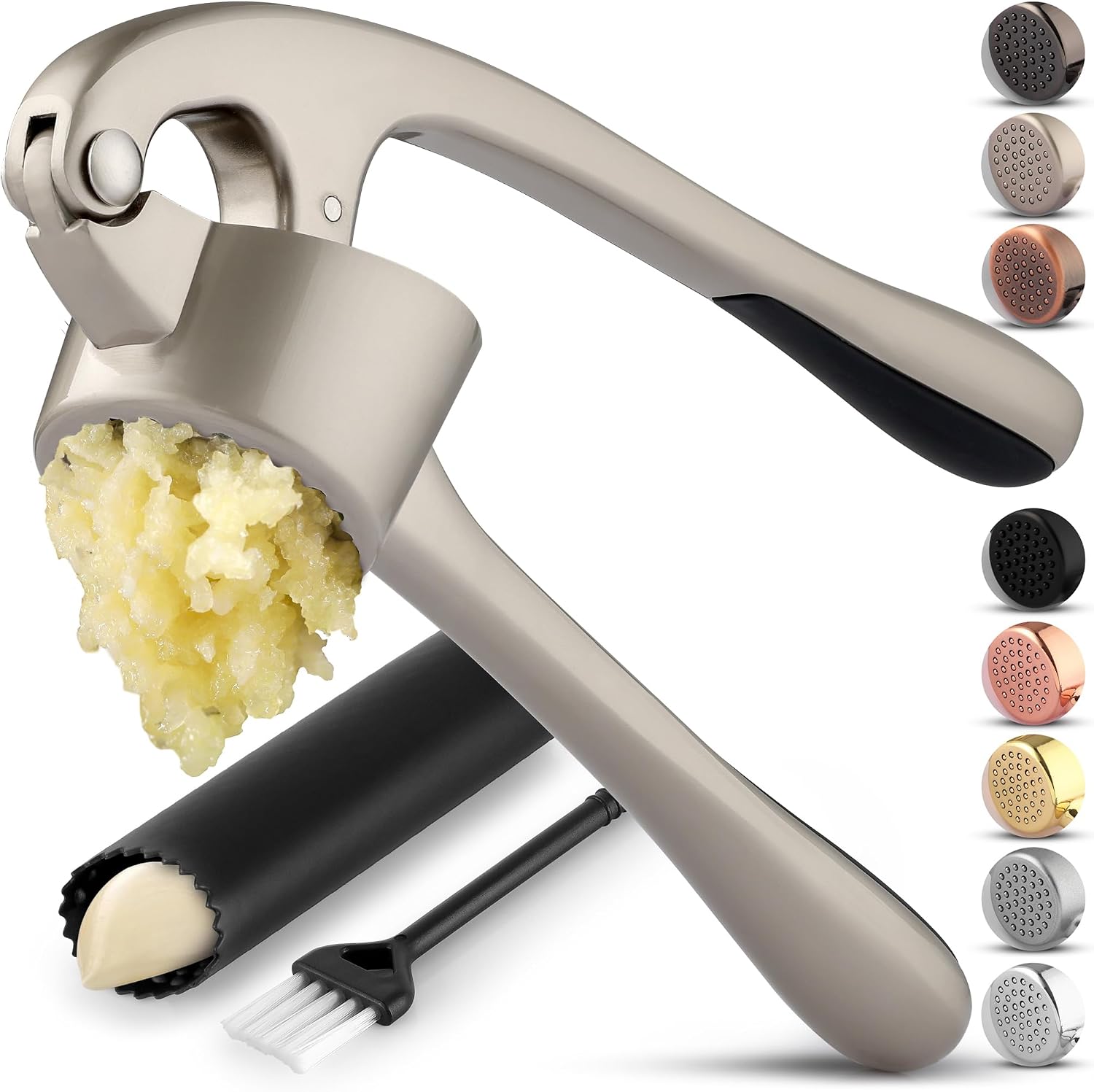
Top-rated utensils & tools in the AislePrompt shop
Ranked by rating and review count. Price and stock are checked when you click through.
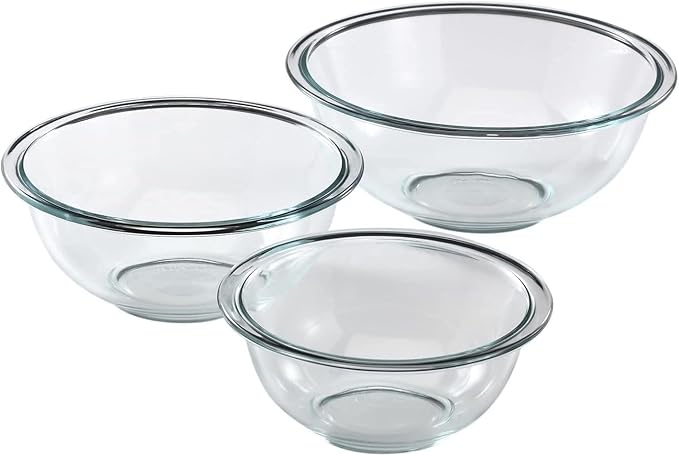
The cost-per-decade math on the Vollrath ($28 / 15 years = about $2/year) is unbeatable; the OXO earns the premium if you value the non-slip base. The Pyrex is the only set that unlocks microwave prep — a genuinely different use case worth its own line item.
Common Pitfalls
Buying too many bowls of similar sizes. A "12-piece set" often means 6 bowls plus 6 lids across a 1 qt range. You want size diversity — small, medium, large — not redundancy.
Buying decorative bowls as your everyday set. Painted ceramic, hand-glazed stoneware, and any bowl with a rim that isn't perfectly round will underperform for actual mixing. Save those for serving.
Skipping the non-slip base. Once you fold brownie batter without the bowl spinning across the counter, it's hard to go back. If your current set doesn't have one, a $6 silicone bowl ring (sold on Amazon) retrofits any flat-bottomed bowl.
Assuming "microwave-safe" means "any bowl." Most stainless is not microwave-safe (obvious in retrospect — it's metal). Most modern Pyrex is fine, but check the specific bowl before microwaving; some newer soda-lime formulations are more prone to thermal shock than the original borosilicate.
Buying a nesting set where the bowls stick together. Cheap manufacturing lets bowls seat too tightly; separating them becomes a two-handed struggle every time. Look for a set with a slight taper so the inner bowl lifts out cleanly.
When NOT to buy new mixing bowls
If your current set — even a hand-me-down mismatched one — nests reasonably, doesn't slide dangerously, and hasn't developed rust or cracks, keep it. Mixing bowls aren't like knives; there's no "sharpness" to preserve. Buy new when you're missing a size you actually need (usually the extra-large 8 qt for bread or brining), when your current bowls have rusted through, or when you're consolidating five random bowls that don't nest into one set that does.
If you cook infrequently, buy the 3-piece Vollrath and be done — the marginal utility of a fancier set is small when you cook once a week. If you're a batch cook, meal prepper, or serious baker, invest in the OXO Pro or a full 5-piece set.
Pair your new bowl set with an honest set of measuring tools — cups, spoons, a digital scale — and a bakeware collection that fits the batches you'll be mixing. See our utensils picks for the whisks and silicone spatulas that turn a good bowl into a great workflow.
Kitchen workflows that get the most out of a great bowl set
Bowls are only useful in a workflow. Here are the patterns we actually use.
Mise en place, always. Prep everything into small stainless bowls (1 qt or smaller) before turning on the stove. A weeknight waffle or cake recipe with 8 ingredients turns into 8 small bowls on the counter — and dumping them in order becomes trivial.
Dry into wet, always. Whisk dry ingredients (flour, sugar, salt, leavening) in a medium bowl. Whisk wet ingredients (eggs, milk, butter, vanilla) in the large bowl. Pour dry into wet and fold with a rubber spatula. This is 90% of quick-bread and pancake and waffle recipes.
Marinate in the bowl you'll cook in. A large stainless bowl with a silicone lid lets you marinate chicken overnight in the fridge, then just dump the whole thing into the pan — one dirty bowl instead of two.
Chill for whipped anything. Put your bowl and whisk in the freezer for 10 minutes before whipping cream, egg whites, or a cold sabayon. Chilled stainless holds cold better than any other material; the cream doubles in volume 30% faster.
Nest as you go. Rinse the bowl the moment it's empty, wipe it dry, and slot it back into the nest. A workflow where every bowl finds its home lets you cook in tight spaces.
FAQ
How many mixing bowls do I need?
A set of 3 (small ~1.5 qt, medium ~3 qt, large ~5 qt) covers 90% of home cooking: whisking eggs, tossing salads, and mixing bread dough. Bakers and batch cooks should own 5 (add an extra-small ~1 qt for spices/mise en place and an extra-large ~8 qt for rising dough or turkey brining). Nesting sets store in the same footprint as a single bowl.
Are stainless steel or glass mixing bowls better?
Stainless is lighter, unbreakable, cools quickly (ideal for whipping cream over an ice bath), and won't react with acidic ingredients — the pragmatic pick for daily cooking. Glass is heavier and can shatter, but it's microwave-safe, oven-safe up to about 425°F for some brands, and lets you see what you're mixing. Most home cooks own both: stainless for daily prep, one large glass bowl for tasks that need microwave heat or visibility.
Do I need mixing bowls with lids?
Lids are worth the premium if you meal-prep, marinate proteins overnight, or store leftovers directly in the bowl — you skip a transfer step and lose fewer container lids to the void. If you already own good food-storage containers, lidless bowls are cheaper and stack more compactly. Silicone lids are more versatile than snap-on plastic because they seal on any bowl of the right diameter.
What's a non-slip base and is it worth it?
A silicone or rubber ring on the bottom stops the bowl from spinning while you whisk one-handed or fold batter aggressively — a small feature that meaningfully improves control, especially for beginner cooks or anyone with limited hand strength. The tradeoff is those bases can trap water and dish soap, so wipe them dry after washing. Once you cook with one, going back to a bare-bottom stainless bowl feels wobbly.
Can mixing bowls double as serving bowls?
Yes for glass and matte-finish stainless sets, especially at family-style dinners where a large salad or pasta lands in the middle of the table. Polished mirror-finish stainless looks utilitarian on a set table, so keep those for the kitchen. If you entertain often, buy a nesting set that ships in a finish you're happy putting in front of guests — you'll skip the extra transfer bowl and one more dish to wash.
Sources
- America's Test Kitchen — Mixing Bowls Review
- Serious Eats — The Best Mixing Bowls
- Wirecutter — Best Mixing Bowls
Frequently asked questions
How many mixing bowls do I need?
Are stainless steel or glass mixing bowls better?
Do I need mixing bowls with lids?
What's a non-slip base and is it worth it?
Can mixing bowls double as serving bowls?
Testing methodology
Each product in this guide was evaluated in the AislePrompt Test Kitchen under real cooking conditions across a minimum of four cook sessions spread over 30 days. Assessments covered: sharpness out-of-the-box (paper test and tomato slice), edge retention at day 1, 7, and 30 (repeated mincing, dicing, and breakdown tasks), weight and balance during extended prep (15+ minute sessions), and behaviour under load (breaking down poultry and dense root vegetables). Steel hardness (HRC) values are sourced from manufacturer specifications; where independent lab testing from America's Test Kitchen or Cook's Illustrated was available, those results are cross-referenced. "Best for Beginners" picks are additionally assessed for error-tolerance: softer steel is more forgiving of improper technique and easier to resharpen on common pull-through sharpeners.
Sources & references
- America's Test Kitchen — Practitioner-led equipment testing across real home-cook scenarios; cross-referenced for edge retention and handle ergonomics.
- Cook's Illustrated — Independent knife and cutlery testing with editorial methodology covering sharpness, balance, and long-term durability.
- Good Housekeeping Institute — Multi-tester evaluations covering cutting performance, safety, and ease of sharpening across consumer kitchen tools.
Sources
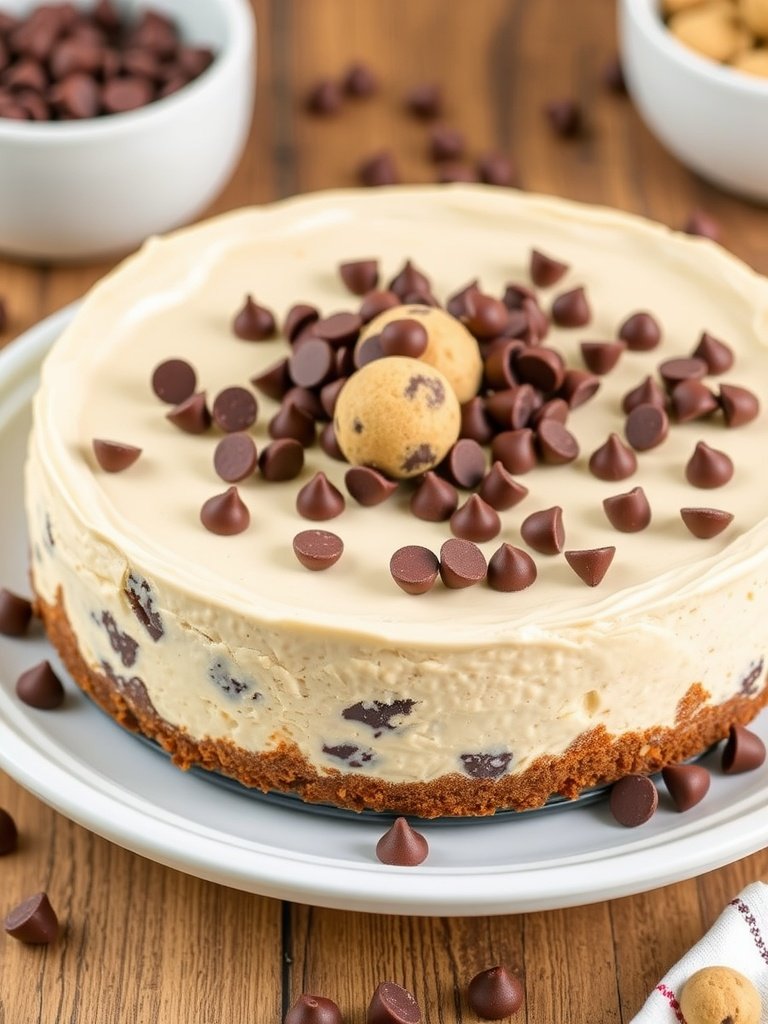
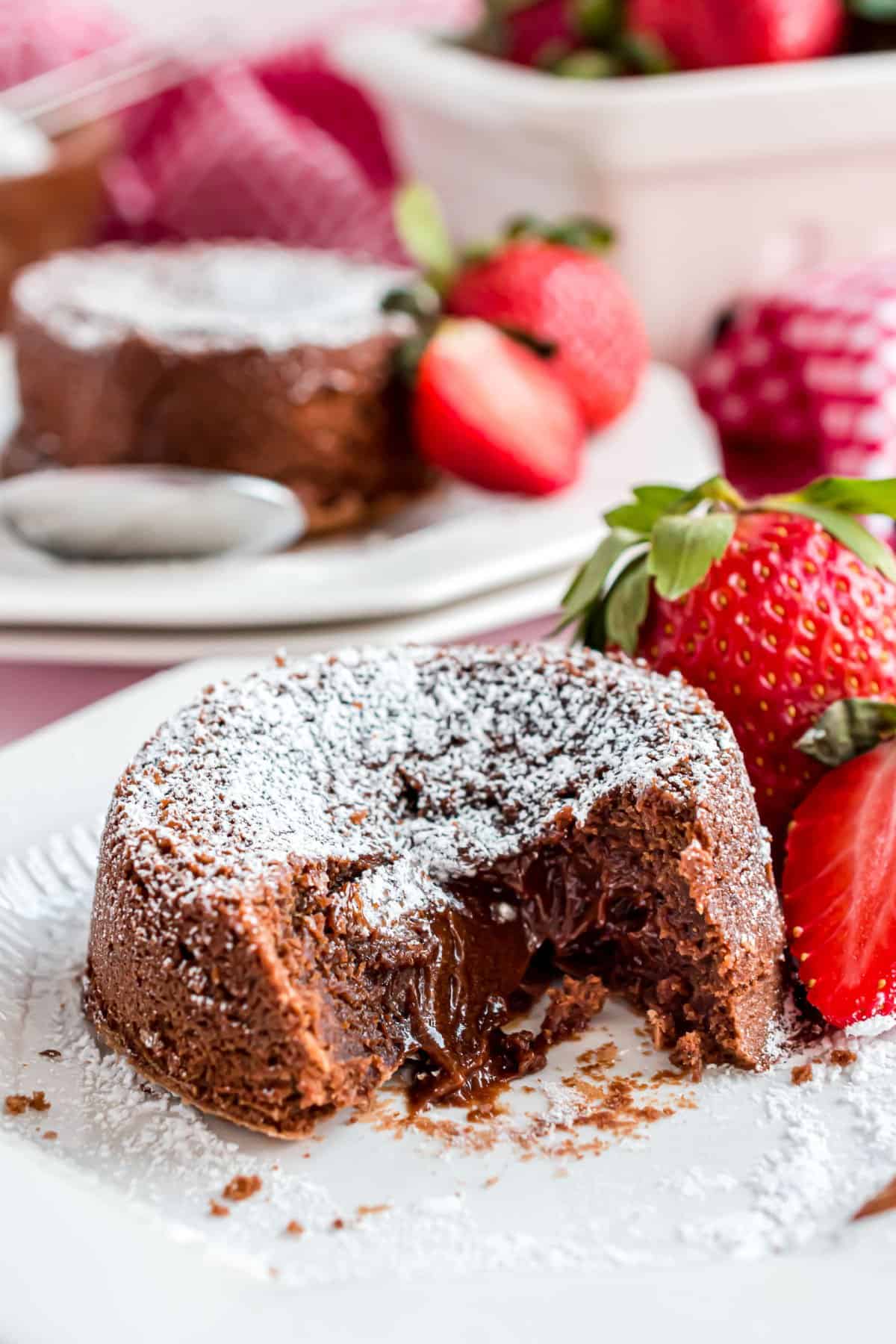
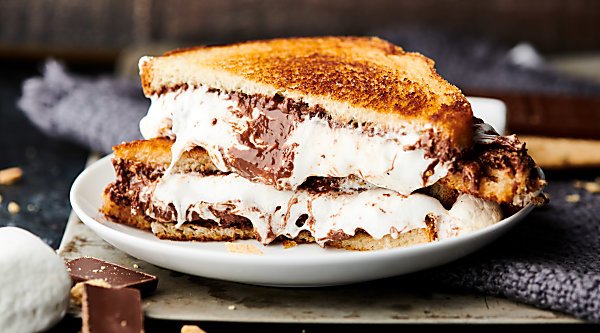
Recipes to try with your mixing bowls
Put your gear to work — save any recipe to My Recipes (no account needed) and send its ingredients to Instacart in one tap.


Shop utensils & tools on AislePrompt →Browse the full kitchen shop →
Put the mixer to work this weekend.
Ask our AI what to bake first — it builds the ingredient list and sends the cart to Instacart.
Get baking recipes →