
Best PFAS-Free Nonstick Pans for 2026: Ceramic Skillets by Oven-Safe Temperature
Five ceramic skillets ranked by the oven temperature each maker states, with every coating claim quoted in the maker's own words.
Where to buy these picks
Affiliate links: we may earn a commission on qualifying Amazon purchases. Policy. Prices show only when checked in the last 24 hours.
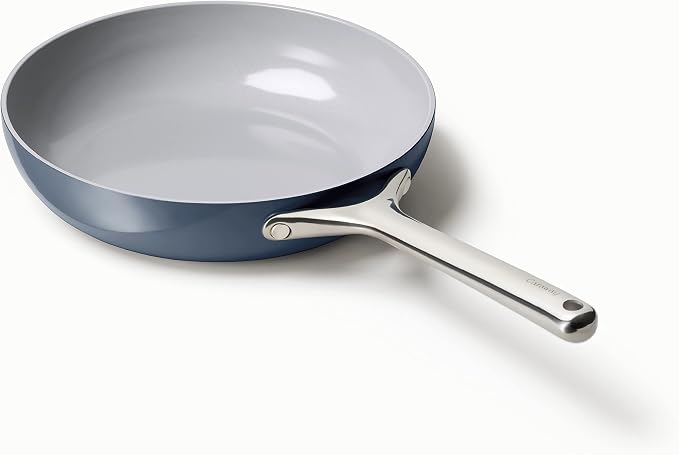
- Caraway 10.5-inch Ceramic Fry Pan (best overall)Check price on Amazon →
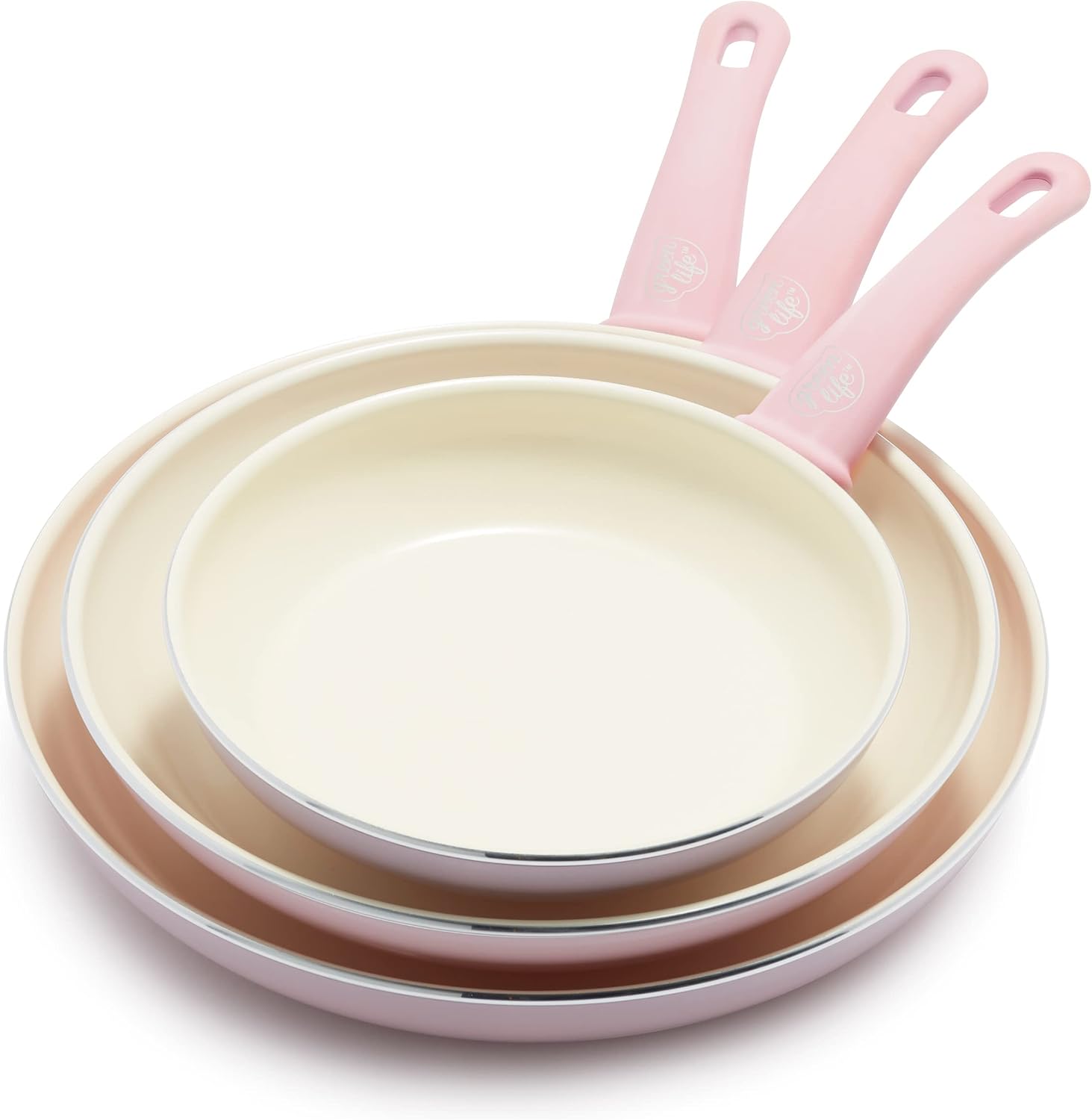
- GreenLife Soft Grip 8, 10 and 12-inch set (best value)Check price on Amazon →
- Blue Diamond 12-inch Frying Pan (highest oven limit)Check price on Amazon →
- OXO Enhanced 12-inch Frying PanCheck price on Amazon →
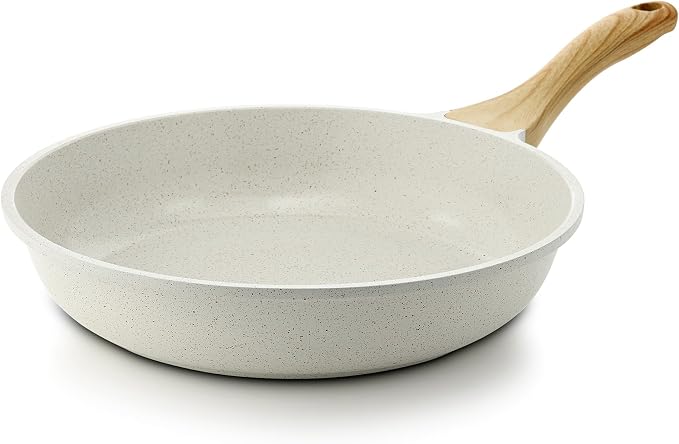
- SENSARTE 9.5-inch Ceramic SkilletCheck price on Amazon →
The best PFAS-free nonstick pan for most kitchens in 2026 is the Caraway 10.5-inch Ceramic Fry Pan (Check price), a premium pick (over $100) that works on induction and is oven-safe to 550°F. The value pick is the GreenLife Soft Grip three-pan set (Check price), under $75 for an 8, 10 and 12-inch pan, but it stops at 350°F in the oven and does not work on induction. That 200°F gap, plus the induction base, is most of what the extra money buys.
If you are shopping the Black Friday cookware sales, this guide sorts five ceramic skillets by the one spec that separates them most: the oven-safe temperature each maker states. Every coating claim below is quoted the way the maker words it, because "PFAS-free", "PTFE-free" and "made without PFAS" are not interchangeable marketing phrases.
Picks at a glance
| Pick | Best for | Maker's coating wording | Oven-safe (stated) | Induction | Price tier |
|---|---|---|---|---|---|
| Caraway 10.5" Fry Pan | Best overall, premium | "Made without PTFE, PFOA, and PFAS" | 550°F | Yes | Premium (over $100) |
| GreenLife Soft Grip 8/10/12" set | Best value set | "free of PFAS, PFOA, lead, and cadmium" | 350°F | No | Under $75 for 3 pans |
| Blue Diamond 12" Frying Pan | Highest oven limit, broiler use | "free of PFAS, PFOA, lead, and cadmium" | 600°F (oven and broiler) | No | Under $40 |
| OXO Enhanced 12" Frying Pan | Hard-anodized body, steel handle | "PFAS-Free Ceramic Nonstick" | 430°F | Not listed | $50 to $75 |
| SENSARTE 9.5" Ceramic Skillet | Budget induction egg pan | "free of PFOA, PTFE, PFAS, lead and cadmium" | 550°F, handle removed | Yes | Under $30 |
Oven temperatures and induction compatibility come from each maker's product listing as of November 2026. Prices move daily, especially this week, so the live price button on each product page is the number to trust.
Other gear this guide links
Prices are shown only when checked in the last 24 hours; otherwise check the current price on Amazon.
Where this guide fits
This page is the ceramic-only branch of our larger nonstick coverage. If you are open to traditional PTFE coatings, start with the parent guide, Best Nonstick Cookware for 2026, which covers the T-fal and All-Clad skillets that still give the slickest egg release. If you want a full matched set rather than one or two skillets, see Best Nonstick Cookware Sets in 2026. Still deciding between materials? Stainless or Nonstick Cookware Set? walks through that choice by what you cook most. You can also browse every pan we track in the cookware category.
The five ceramic picks
#1: Caraway 10.5-inch Ceramic Fry Pan (best overall)
Verdict: the most versatile ceramic skillet here, because it combines a high oven limit, an induction-ready base and a stainless handle that will not soften in the oven.
Coating, in Caraway's words: "Made without PTFE, PFOA, and PFAS, our non-stick ceramic coating is crafted with integrity." The Caraway fry pan product page also says the pan is "Compatible with all cooktops, oven-safe up to 550°F."
The 10.5-inch size is the sweet spot for two to three servings: big enough for four fried eggs or two salmon fillets, small enough to heat evenly on a standard burner. Caraway lists the pan at 2.7 lb, which sits between a thin budget pan and a heavy clad skillet. That middle weight matters with ceramic, because a thicker base spreads heat and keeps the coating from seeing the scorching hot spots that wear it out fastest.
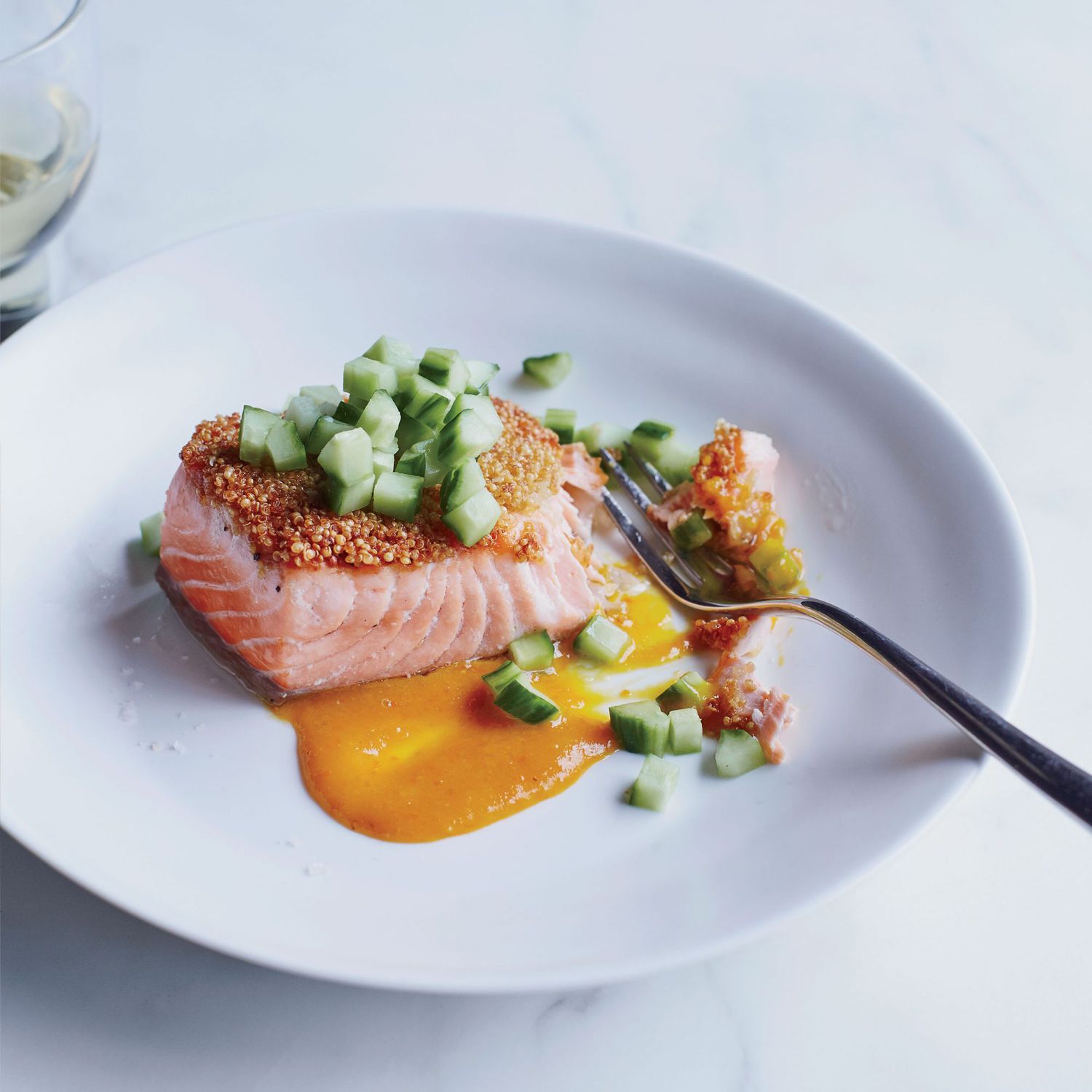
The 550°F oven limit is what makes this a one-pan dinner tool. You can sear a fillet for our Pan-Seared Salmon with Lemon-Dill Quinoa on the stovetop and finish it in a hot oven without moving it to a sheet pan. The same goes for a stovetop-to-broiler-adjacent frittata such as the One-Pan Veggie Frittata, as long as you keep it under the stated limit.
Who should skip it: anyone who wants more than one size, or who cooks on high heat every night. A premium price does not buy a longer-lived coating; ceramic is ceramic, and the care rules below apply to it as much as to the budget pans.
#2: GreenLife Soft Grip 8, 10 and 12-inch set (best value)
Verdict: three useful sizes for well under the price of one premium pan, as long as you cook on gas or electric and rarely use the oven.
Coating, in GreenLife's words: "Our coating is free of PFAS, PFOA, lead, and cadmium." GreenLife calls it its Thermolon ceramic nonstick and says it "starts with sand."
The listing is equally direct about the limits: "Delivers on all stovetops, except induction and oven safe up to 350˚F." That 350°F cap comes from the Bakelite Soft Grip handles, not from the coating. It is enough to keep a dish warm or finish a gentle egg bake, but not to roast or broil.
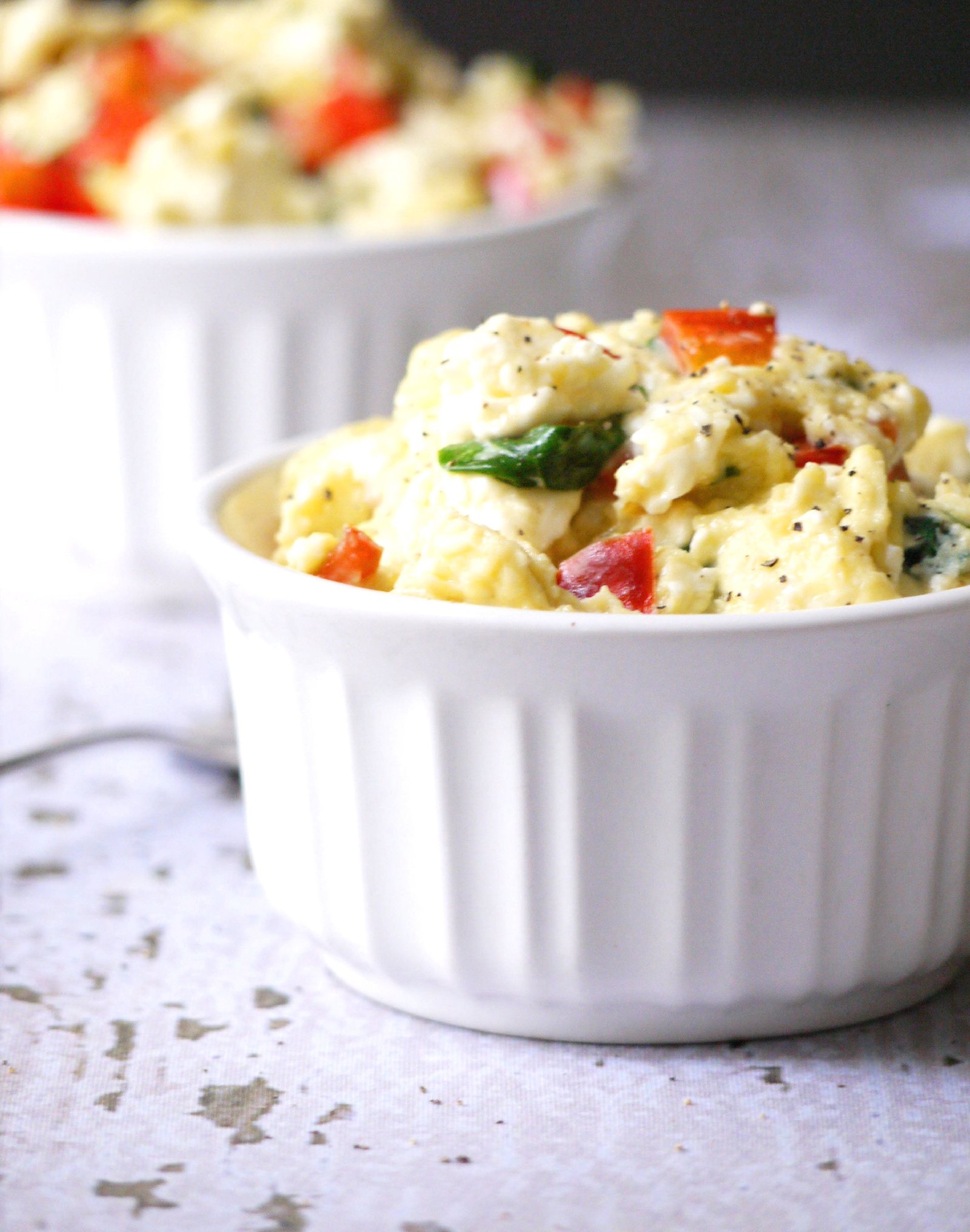
What you get in return is coverage. The 8-inch pan is the omelette pan, the 10-inch handles everyday eggs and vegetables, and the 12-inch is big enough for a family batch of Pan-Fried Scrambled Eggs with Spinach and Feta. The interiors are rivetless, so there is nothing for egg to cling to around the handle joint. Spreading your cooking across three pans also spreads the wear, which is a real advantage with a coating that fades with use.
Who should skip it: induction-range owners. The base is not magnetic, so the pans will not heat at all on an induction hob.
#3: Blue Diamond 12-inch Frying Pan (highest oven limit)
Verdict: the pick for cooks who want to put a ceramic pan under the broiler.
Coating, in Blue Diamond's words: "Toxin-Free coating - free of PFAS, PFOA, lead, and cadmium." Its listing title describes it as "Diamond Infused PFAS-Free Ceramic Nonstick," and it states "Oven and broiler safe up to 600°F."
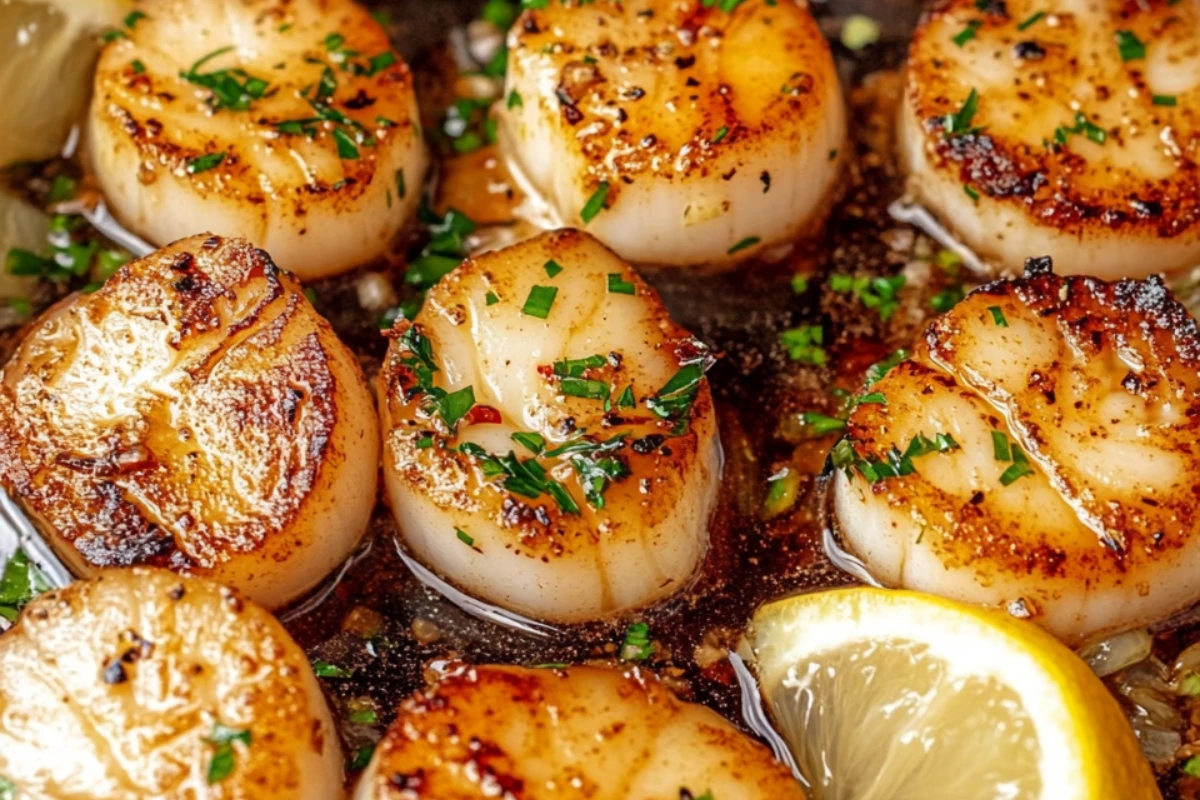
That is the highest stated oven figure in this guide, and the broiler mention is the important part. Few ceramic pans list broiler use at all. The riveted stainless steel handle is why the limit is so high. A 12-inch surface gives you room for a full batch of Pan-Seared Scallops with Lemon-Garlic Pan Sauce without crowding, which is the main reason scallops steam instead of sear.
Blue Diamond also calls the surface "metal utensil safe." Treat that as a statement about scratch resistance, not as a reason to scrape the pan with a steel spatula every day. Abrasion is one of the three things that dull any ceramic release.
Who should skip it: induction owners again. The listing says "Compatible with all stovetops, except induction."
#4: OXO Enhanced 12-inch Frying Pan (best hard-anodized body)
Verdict: a sturdier, heavier-feeling pan with a hard-anodized aluminum body, for cooks who prefer a classic restaurant-style skillet shape.
Coating, in OXO's words: the listing title calls it "PFAS-Free Ceramic Nonstick" on a "Durable Hard Anodized" body. The listing says it is "Oven safe up to 430°F/220°C."
Hard-anodizing toughens the outside of the aluminum, so the pan resists dents and the exterior scratches less in a crowded cabinet. The brushed stainless handle keeps the oven limit at a useful 430°F: enough to finish a thick pork chop or set the top of a frittata, short of the 550°F to 600°F cooks who broil will want.
The OXO listing does not claim induction compatibility. OXO sells a separate Professional line that it labels "Induction Suitable," so if you cook on induction, buy that line instead of assuming this one works.
Who should skip it: cooks on a tight budget. You are paying for the hard-anodized shell and the OXO handle, not for a different coating chemistry.
#5: SENSARTE 9.5-inch Ceramic Skillet (budget induction egg pan)
Verdict: the cheapest way to get a ceramic pan that works on induction, sized for eggs and single portions.
Coating, in SENSARTE's words: "Made of natural ceramic, free of PFOA, PTFE, PFAS, lead and cadmium." The listing says the pan is "Suitable for all stovetops, including Induction cooktop."
Read the oven line carefully: "The omelete pan is oven safe to 550°F (please remove the handle)." The woodgrain Bakelite handle is not rated for the oven. In practice this is a stovetop pan, and the oven figure only applies if you take the handle off first. The cast-aluminum body with an induction base is the main selling point at this price.
At 9.5 inches it is the right size for a French-Style Herb Omelette with Gruyère Cheese, where a sloped side and a slick surface matter more than oven range. It is also a sensible "eggs only" pan to keep the coating on your larger skillet fresh for longer.
Who should skip it: anyone who wants to move a pan from stovetop to oven without fuss.
Heat limits, and why ceramic release fades
Two different heat numbers matter with ceramic, and shoppers often mix them up.
The first is the coating's heat tolerance. According to Wikipedia's article on non-stick surfaces, ceramic nonstick is a silica finish applied with a sol-gel process "without the use of PFAS," and it starts to break down at about 700°F, compared with about 500°F (260°C) for PTFE. That is a real safety margin over traditional nonstick.
The second is the pan's oven rating, which the maker sets and which is usually limited by the handle. That is why the same family of ceramic coatings shows up in this guide with stated limits from 350°F to 600°F. Bakelite and silicone-wrapped handles cap it low, and bare stainless handles let it go high.
Heat tolerance is not the same as release life. Ceramic coatings lose their slickness faster than PTFE, and the causes are well known:
1. High heat on an empty pan. Preheating dry on high is the fastest way to dull the surface. Heat on medium, add fat, then add food.
2. Aerosol cooking spray. The propellants and lecithin leave a sticky film that carbonizes into the surface. Use a teaspoon of oil or butter instead.
3. Abrasive scrubbing. Steel wool and scouring powder strip the slick top layer. A soft sponge and warm water handle almost everything.
4. Thermal shock. Plunging a hot pan into cold water can stress the coating and warp a thin base. Let it cool first.
5. Dishwasher cycles. Several picks are listed as dishwasher-safe, but harsh detergent is a known wear factor. Hand-washing extends the coating's life.
Owners commonly report that a ceramic pan used daily loses noticeable release within one to two years. Following these rules stretches that, and a gentle baking-soda paste can lift the carbon film that makes an older pan feel sticky.
Common pitfalls
- Buying for the coating and ignoring the cooktop. Two of the five picks will not heat on induction. Check the base before Black Friday checkout, not after.
- Trusting "oven safe" without a number. A listing that says only "oven safe" tells you nothing. Every pick here has a stated figure; use it.
- Assuming "PFAS-free" means "ceramic." Wikipedia notes that at least one coating marketed as "PFAS free" was still developed using PTFE. If you specifically want a non-fluoropolymer pan, look for the word "ceramic" in the maker's own description.
- Cooking high-heat sears every night. Ceramic can take the heat, but its release cannot take nightly abuse. Keep a cast-iron or stainless pan for hard searing.
- Treating the premium pan as a lifetime pan. No ceramic coating is permanent. Budget for replacement whatever you pay.
Three ways to match a pan to how you cook
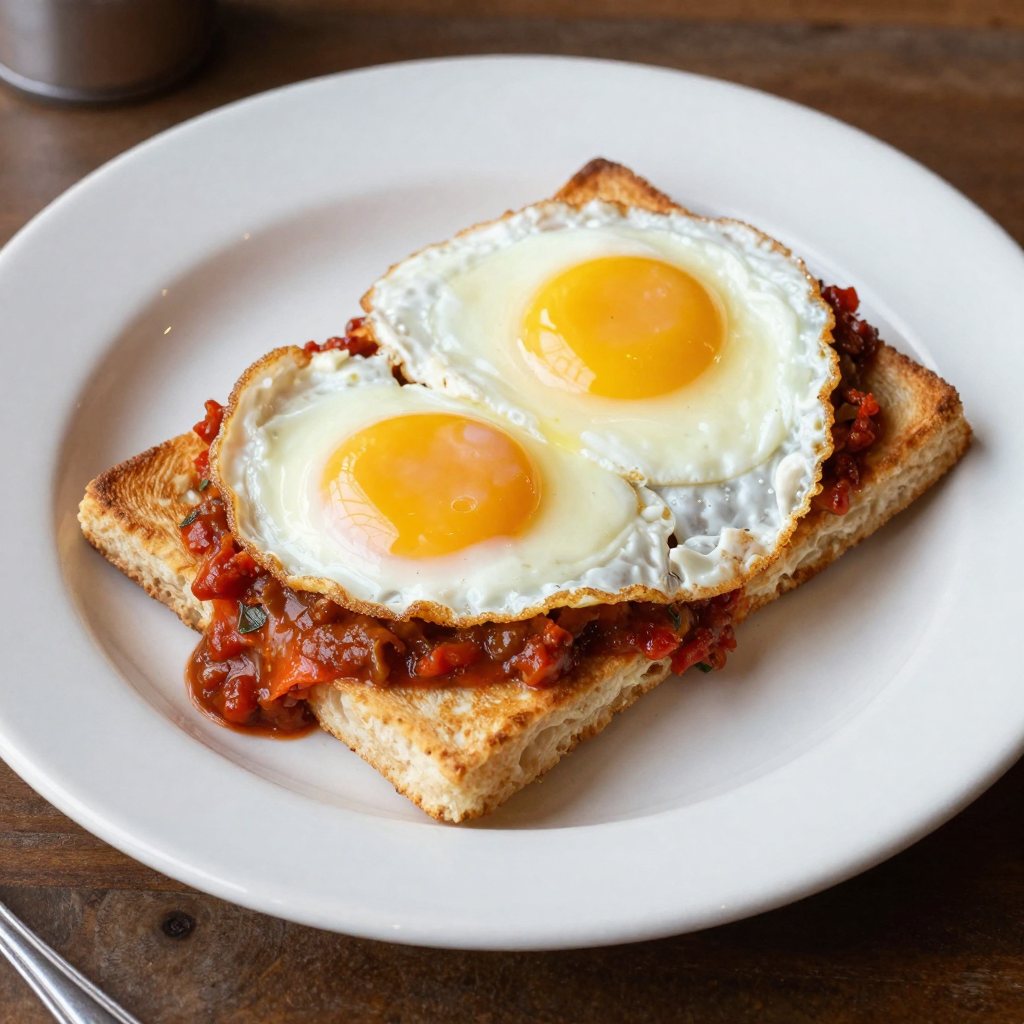
The weekday egg cook on induction. You make eggs most mornings and the occasional Gallo Pinto with Salsa Lizano and Fried Eggs for brunch. You never use the oven for a skillet. Buy the SENSARTE 9.5-inch (Check price) and keep it for eggs only.
The one-pan dinner cook. You sear, then finish in the oven, and sometimes broil a cheesy top. You want one skillet that can do all of it. Buy the Caraway for the 550°F rating and induction base, or the Blue Diamond 12-inch (Check price) if you cook on gas or electric and want broiler use.
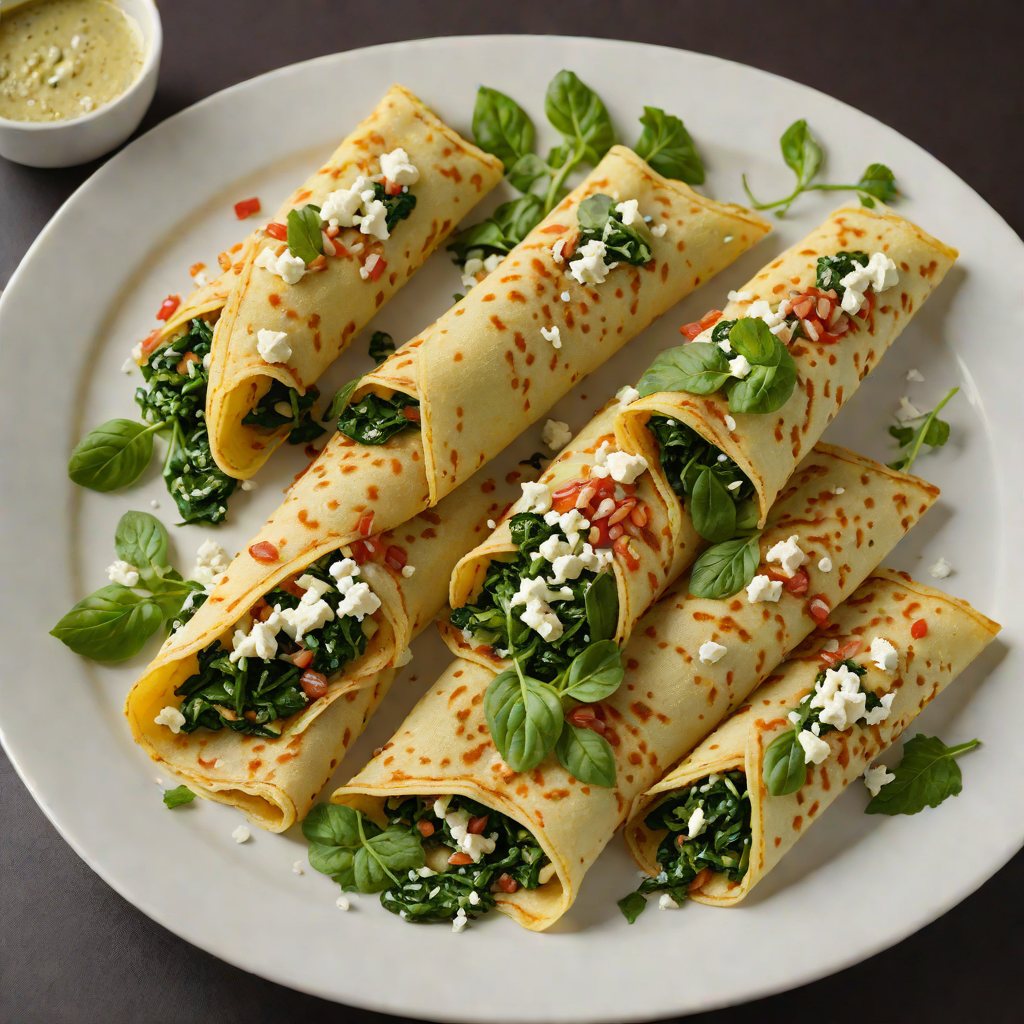
The new household setting up a kitchen. You need several sizes, you cook on a standard electric range, and you rarely finish anything in the oven. Buy the GreenLife set, then add one oven-capable pan, such as the OXO Enhanced 12-inch (Check price), later if you need one. Savory crepes like our Spinach and Feta Stuffed Crepes are a good first test of the 8-inch pan's release.
When NOT to buy a ceramic pan
Skip ceramic if your main goal is the longest possible life from a single nonstick pan. A PTFE skillet used at low-to-medium heat generally keeps its release longer, and the picks in our parent nonstick guide cover that route. Skip any nonstick at all if you mostly sear steaks, char vegetables or deglaze for pan sauces at high heat; carbon steel, cast iron or tri-ply stainless will outlast any coating and brown food better.
How we picked
We did not run our own cooking tests for this guide. We built the shortlist from the ceramic skillets in the AislePrompt cookware catalog, keeping only pans whose maker states three things in writing:
1. a coating statement naming PFAS (or PTFE and PFAS) explicitly;
2. a numeric oven-safe temperature;
3. a clear yes or no on induction, or a listing that does not claim it.
We then ranked by versatility, meaning oven range, cooktop compatibility and handle material, and spread the picks across price tiers. Coating wording is quoted from each maker's own page or listing, because the exact phrase is the only claim the maker stands behind. For background on how PFAS are regulated in cookware, we relied on the FDA's page on authorized uses of PFAS in food contact applications, which explains that PFAS in traditional nonstick are polymerized and baked onto the pan, and on the EPA's PFAS explainer, which describes why these "long lasting chemicals" break down so slowly in the environment.
One pan we left out: a popular 12-inch skillet from a well-known ceramic brand had no current US listing in our catalog when this guide was written, so we did not recommend it.
Sources
- FDA — Authorized Uses of PFAS in Food Contact Applications
- EPA — PFAS Explained
- Caraway — Ceramic-Coated Fry Pan product page
- Wikipedia — Non-stick surface
- Maker listings for GreenLife, Blue Diamond, OXO and SENSARTE on Amazon, accessed November 2026, for the quoted coating, oven and induction statements.
Frequently asked questions
Are ceramic pans PFAS-free?
Why does ceramic nonstick lose its release faster?
Can ceramic nonstick pans go in the oven?
Do ceramic pans work on induction?
Should I buy ceramic or traditional nonstick?
Recipes to try with the skillet
Put your gear to work — save any recipe to My Recipes (no account needed) and send its ingredients to Instacart in one tap.

Shop cookware on AislePrompt →Browse the full kitchen shop →